Using a Nakiri Knife in the Kitchen

A nakiri looks simple. A flat, rectangular blade, a straight edge, a tall face. People often pick one up expecting it to be a novelty, a vegetable cleaver with a Japanese name. Then they use it for a week and stop reaching for anything else when there is prep to do.
This article covers using a nakiri knife in a home kitchen: what it is actually good at, where it falls short, how to hold it, and how it fits alongside the knives you already own. If you are deciding whether one belongs on your board, this should help you answer that honestly.
What a Nakiri Actually Is
A nakiri is a double bevel Japanese vegetable knife. The blade is tall, usually somewhere between a santoku and a small cleaver in height, with a spine that runs almost flat to the tip and an edge that curves only gently near the front. The name translates roughly to leaf cutter, which tells you what it was designed around.
The tall blade is the whole point. Height gives you knuckle clearance, and it gives the blade a broad flat section that makes full contact with the board. That combination is what separates a nakiri from a chef knife in daily use. A gyuto cuts with a rocking motion and a curved belly. A nakiri cuts with a straight, downward commitment.
Most nakiri are light enough to use for long stretches, and the flat profile means the entire edge does work. On a gyuto, the back half of the edge often goes unused. On a nakiri, there is no back half that gets ignored.
It is often compared to a santoku, and the two are close cousins. A santoku has a slight belly and a tip, which makes it more of an all rounder. A nakiri gives up the tip and the rock in exchange for more height and a longer flat section. If you already own a santoku and rarely use the tip, a nakiri will feel like an upgrade for vegetables. If you use the tip constantly, it will feel like a step backward.
What a Nakiri Does Well
Vegetables are the obvious answer, and it is not a marketing claim. The flat edge, tall face, and thin grind are built for produce. Onions, cabbage, carrots, celery, zucchini, peppers, leeks, scallions, mushrooms, potatoes: all of it is comfortable work.
Two specific tasks stand out. The first is anything that benefits from a tall face to scoop with. Cut onions, slide the blade under the pile, and move them to the pan. No bowl, no bench scraper, no extra dish. The second is precision on straight cuts. Because the edge is flat, you can cut a baton or a dice and keep the wall of the piece vertical without thinking about it.
It is also a genuinely pleasant knife for people who do not like rocking. If you have ever felt uneasy with a curved chef knife, a nakiri gives you a straight, predictable motion that is easy to learn and easy to repeat.
What a Nakiri Does Not Do
Being honest here saves people money and disappointment. A nakiri is not a chef knife replacement for everything. The flat profile has no belly to rock with, so mincing herbs finely, breaking down a chicken, and cutting through a thick squash with a tough skin all become awkward.
The tip is the other limitation. There is almost no point on a nakiri, so detail work like trimming a mushroom stem or deveining a shrimp is not its job. It also should not be used for chopping through bones or frozen food. These are thin, hard blades, and they are not built for impact.
If your cooking is mostly protein, a nakiri will spend a lot of time in the drawer. If your cooking involves a cutting board full of vegetables several nights a week, it will not.

How to Hold and Use It
Grip the handle close to the bolster with your index finger and thumb pinching the blade just ahead of the handle. This pinch grip gives you control over the angle of the edge, which matters more on a flat blade than on a curved one. Keep the rest of your fingers wrapped around the handle.
Your guiding hand should curl into a claw, with fingertips tucked back and knuckles forward. On a nakiri the flat spine comes down level with your knuckles, which actually makes it easier to feel where the blade is. The tall face acts as a guide.
Keep the edge in contact with the board as much as possible. A nakiri rewards a continuous, connected cut. Lifting the whole blade up and down for every slice is slow and less accurate.
The push cut, and the walk
Two motions cover almost everything. The push cut is a straight downward stroke: place the edge on the food, push forward and down, and let the blade travel through to the board. It is direct and works well for onions, peppers, and anything firm.
The walk is a sequence of small forward cuts. Start at the front of the blade near the tip, push into the food, and bring the heel down as you finish. Your wrist stays loose, your arm does the travel, and the blade never fully leaves the board. On a tall pile of cabbage or a long carrot, the walk is faster and more controlled than chopping straight down.
For produce with a tough skin, like tomatoes or peppers, use a slight forward slide rather than a pure press. The edge bites and the cut follows. You do not need to force it.
Nakiri Knife Use in a Real Kitchen
Here is where a nakiri earns its place day to day:
- Onion, shallot, and garlic prep, including a clean dice from a flat edge.
- Shredding cabbage for slaw, stir fry, or tacos, with the tall face scooping as you go.
- Cutting carrots, celery, and zucchini into sticks or rounds.
- Breaking down broccoli and cauliflower into florets before the final trim with a paring knife.
- Herbs in rough cuts, when you want pieces rather than a fine mince.
- Potatoes, squash, and root vegetables, as long as the pieces are not too thick or too hard.
If you want a single knife for this kind of work and you cook mostly vegetables, the 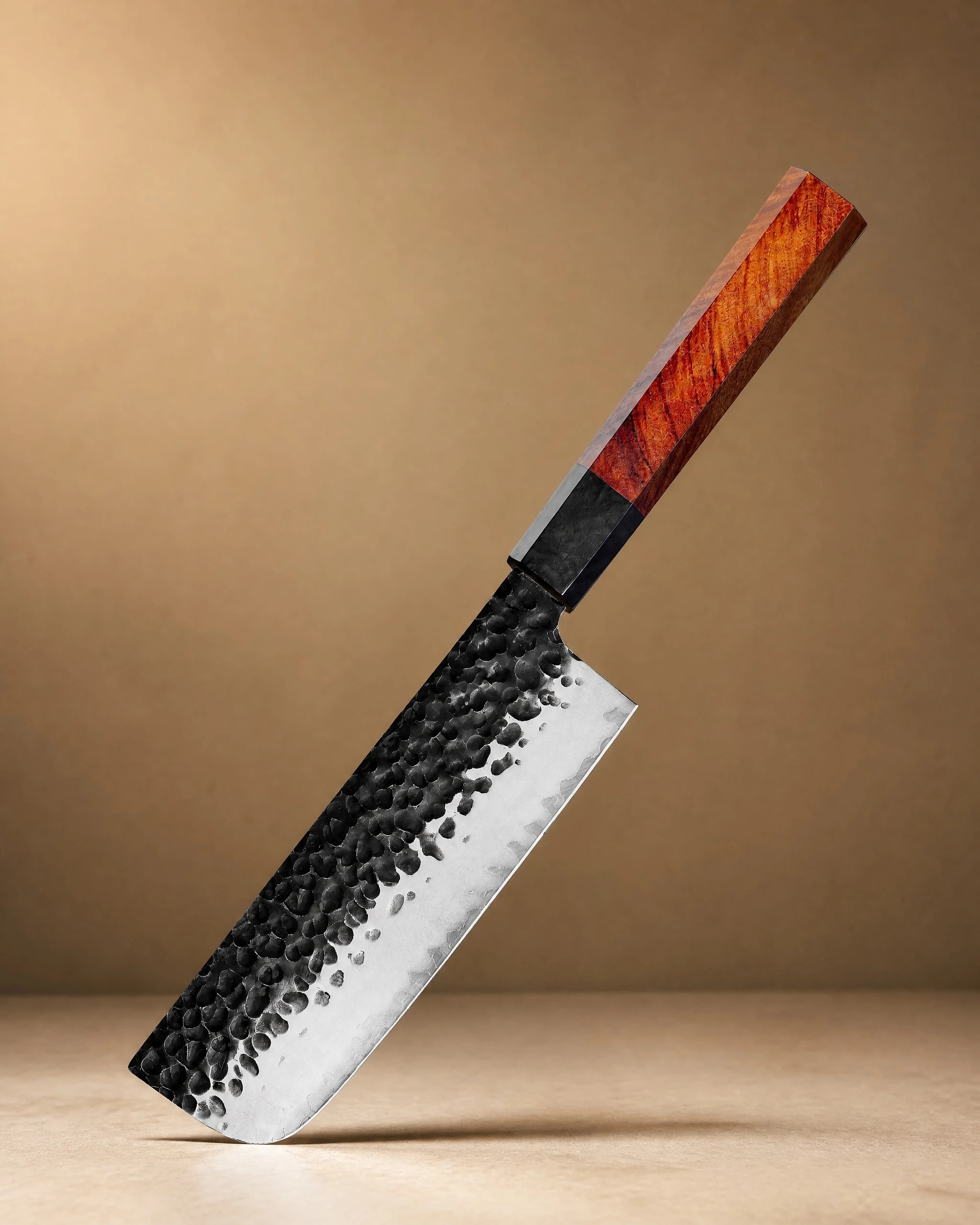 Kiso 7" Nakiri Knife 菜切り包丁$79.99View product → is the natural starting point. It has the height and flat edge that make the nakiri useful, and it handles the everyday prep load a home cook actually faces. If you already own a chef knife and want a dedicated vegetable blade to sit next to it, this is the same recommendation.
Care and Maintenance
Treat a nakiri like any good Japanese knife. Wash it by hand and dry it immediately. Do not put it in the dishwasher, and do not leave it wet on the board. A magnetic strip or a drawer insert keeps the edge safe. A loose drawer does not.
Hone lightly or not at all, depending on the steel and hardness of your blade. A fine ceramic hone used with almost no pressure is enough to realign an edge between sharpenings. Sharpen on a whetstone when the blade starts sliding on tomato skin instead of biting. The flat edge of a nakiri is easier to sharpen than a curved one, because the whole edge sits flush on the stone in one pass.
Full technique is covered in our knife care guide, including angles, stone grits, and how often to sharpen.
Building a Small Kit Around It
A nakiri works best as one part of a small, deliberate set rather than as your only knife. The most common pairing is a nakiri for vegetables and a gyuto for everything else: proteins, herbs, citrus, and any cut that wants a tip. The 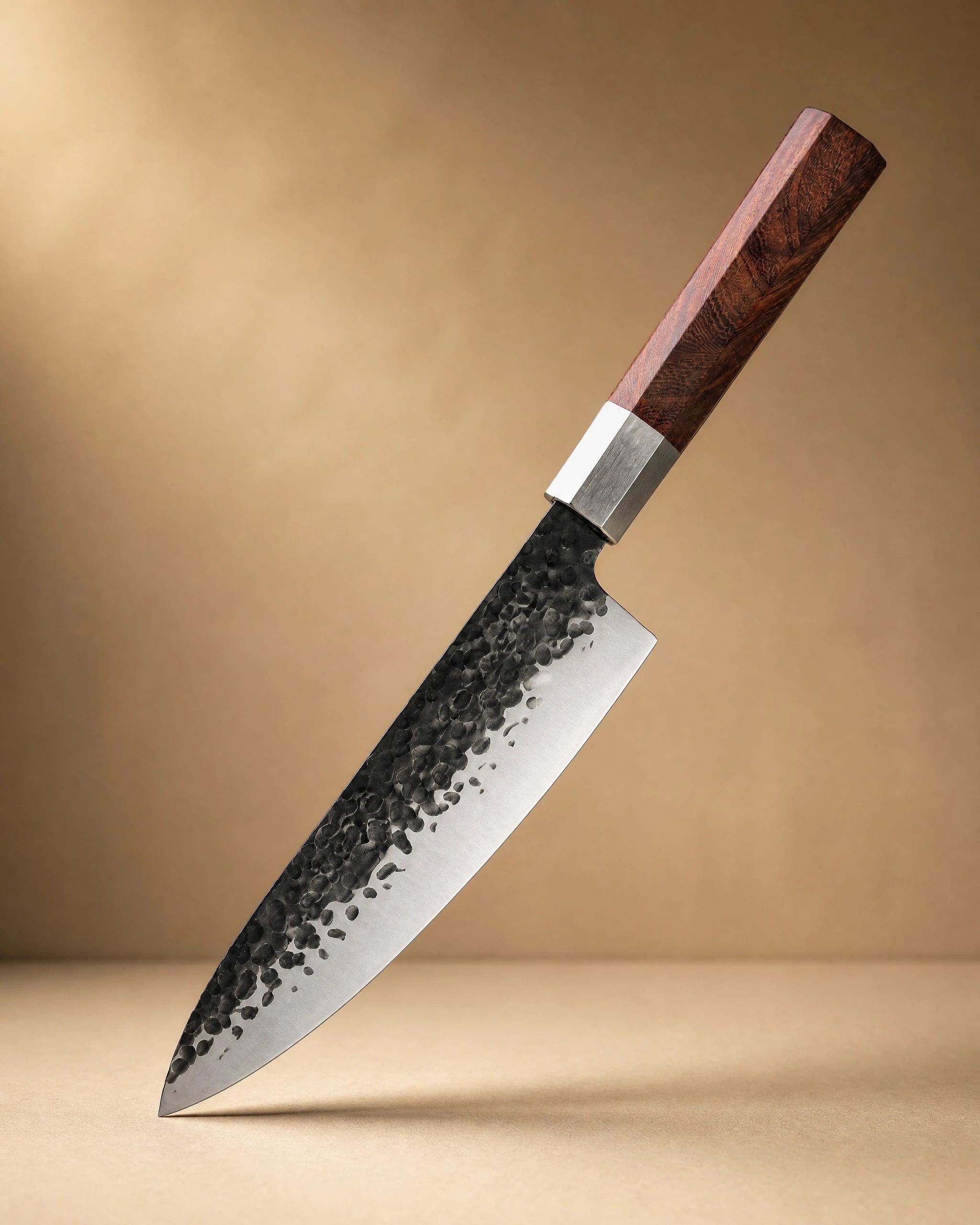 Sendai 8" Steel Gyuto Knife 牛刀$64.99 · currently out of stockView product → covers that role well and gives you a curved belly and a point when the flat blade is the wrong tool.
If you prefer a slightly different feel in the hand, the 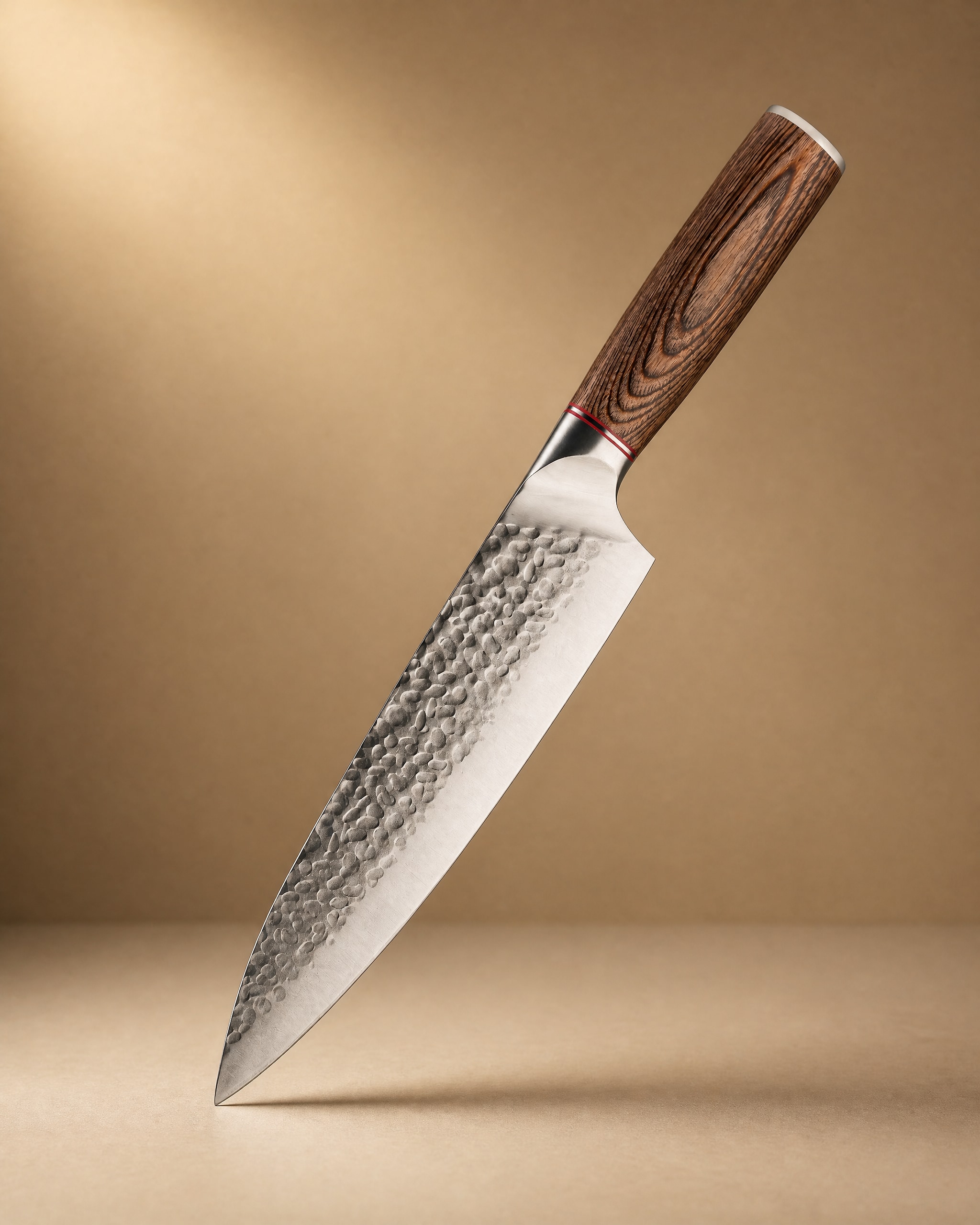 Akan 8'' Gyuto Knife 牛刀$64.99View product → is another gyuto option to compare side by side. Both are all purpose knives, and the choice between them is mostly about length and how the handle sits in your grip.
Bread is the third gap. A serrated blade does what a nakiri cannot, which is saw through a crust without crushing the crumb. The 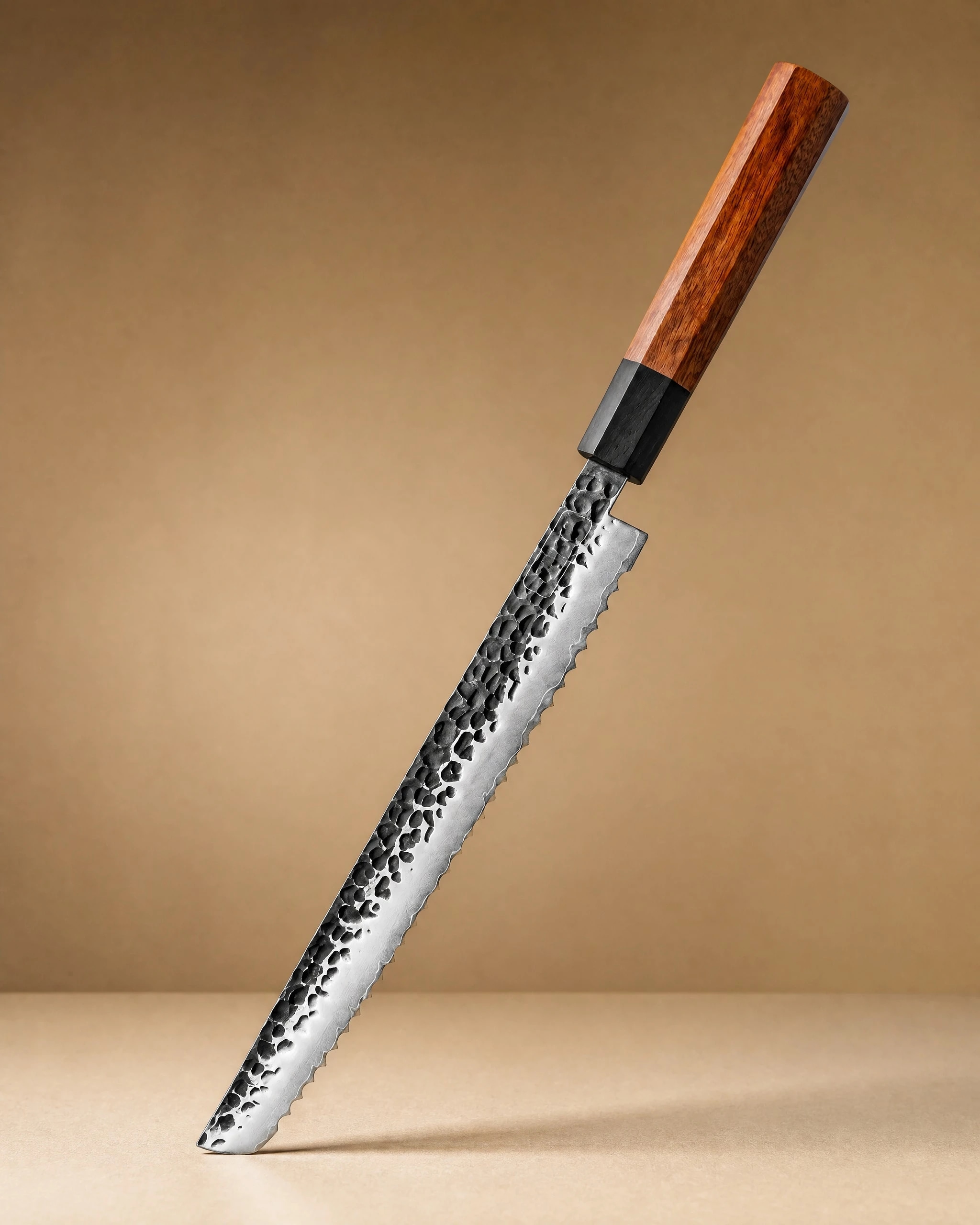 Rumoi 10" Japanese Bread Knife パン切りナイフ$79.99View product → handles that job and keeps your nakiri away from tasks it was never designed for.
You can browse the full range in our nakiri category, or see all our knives in one place. If you are still mapping out what you need, the knife guide walks through blade shapes and how they match different cooking styles.
Who Should Buy One
Buy a nakiri if you cook vegetables often, if you like a straight cut, and if you already have a chef knife or plan to add one. It is a specialist that earns its keep through repeated use, not through versatility.
Skip it if you want one knife that does everything, if you break down a lot of poultry, or if your prep is mostly meat and fish. A gyuto will serve you better, and there is no shame in that. The right knife is the one that matches your board, not the one that looks best in a photo.
For most people, using a nakiri knife comes down to a simple realization: the tall, flat blade is not a compromise. It is a design choice that makes a whole category of daily work faster, cleaner, and easier to control.
Photography: Alyson McPhee via Unsplash.


