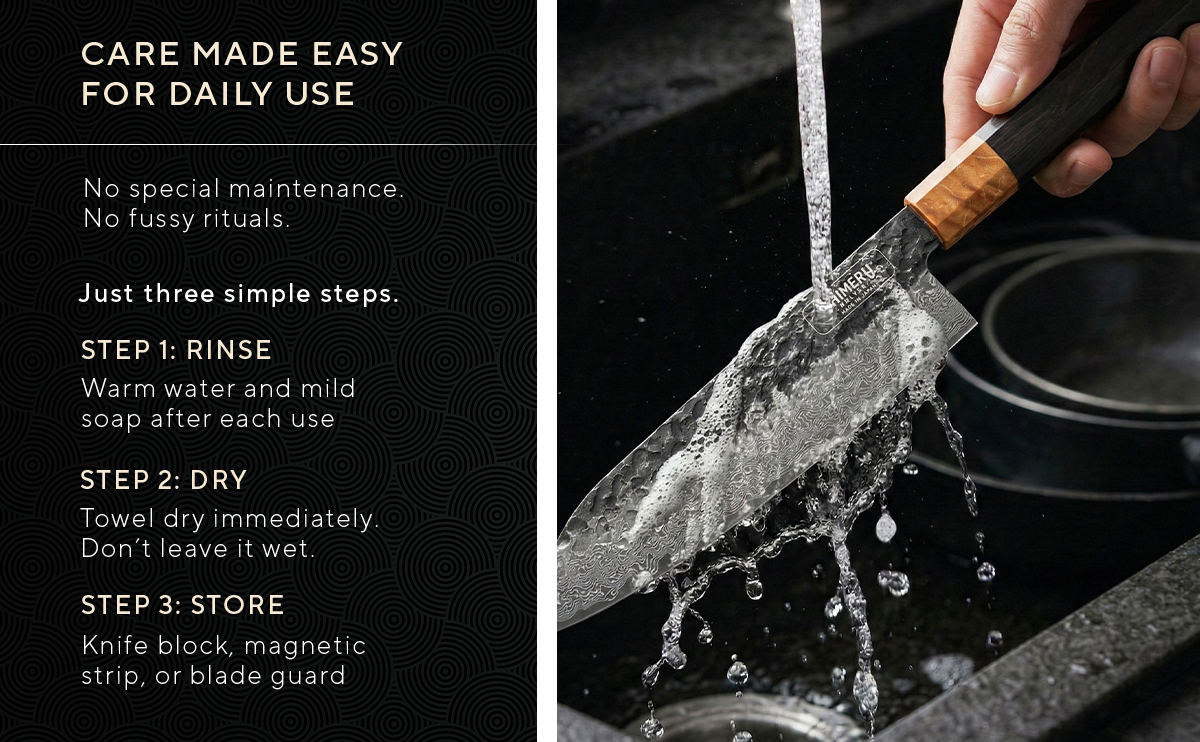
No special maintenance. No fussy rituals. Just three simple steps.
Step 1: Rinse
Warm water and mild soap after each use. Never put your knife in the dishwasher, the harsh detergents and jostling will damage the edge and handle. A quick hand wash takes seconds and keeps your blade in perfect condition.
Step 2: Dry
Towel dry immediately after washing. Don't leave it wet or sitting in the sink, even stainless steel can develop spots or discoloration if left damp. A quick wipe with a clean cloth is all it takes.
Step 3: Store
Use a knife block, magnetic strip, or blade guard. Never toss your knife loose in a drawer, it dulls the edge, damages the blade, and is a safety hazard. A proper storage solution keeps your knife sharp and ready.
Sharpening
Japanese knives hold their edge far longer than Western knives thanks to harder steel (60+ HRC). Most home cooks will only need to sharpen every few months with regular use.
- Honing rod: A quick realignment before each use keeps the edge straight. Use a ceramic rod rather than steel, it's gentler on harder Japanese blades.
- Whetstone: For proper sharpening, use a 1000/3000 grit combination whetstone. Maintain the original edge angle (typically 15° per side for Japanese knives).
- Rolling sharpener: If you're not confident with a whetstone, a rolling knife sharpener is a foolproof alternative, check out our sharpening tools.
What to Avoid
- Dishwashers: heat, harsh chemicals, and rattling against other items will ruin your edge and handle
- Glass or ceramic cutting boards: these destroy edges instantly. Use wood or soft plastic boards
- Cutting frozen food or bones: Japanese blades are hard but thin. Use a cleaver or deba for heavy tasks
- Twisting or prying: these knives are designed for slicing, not leveraging. Lateral force can chip the blade