
The Best Santoku Knife for Everyday Home Cooking

For many home cooks, the santoku knife is the ultimate everyday workhorse. Its name translates to "three virtues," a reference to its ability to handle meat, fish, and vegetables with equal skill. Unlike a Western chef's knife, a santoku blade is typically shorter, with a flatter edge and a sheepsfoot tip that allows for precise push cuts and rocking mincing. Whether you are dicing onions, slicing boneless chicken, or mincing garlic, a good santoku gives you control and comfort. But with so many options on the market, from Damascus steel to lightweight stainless, choosing the best rated santoku knife can be overwhelming. We have tested and used many santoku knives in real home kitchens, and in this guide we share what we have learned so you can find the santoku that fits your cooking style.
What Makes a Santoku Blade Ideal for Daily Use?
A well designed santoku blade typically has a blade length of 5 to 7 inches, which is shorter than a standard chef's knife. This shorter length gives you better maneuverability in tight spaces, like a crowded cutting board or when working near the sink. The flat edge of a santoku makes it excellent for chopping, especially the push cut technique common in Japanese cooking. Many santoku knives also have a granton edge (small indentations along the blade) to reduce friction and prevent food from sticking. The thinner blade profile, often with a harder steel core, allows for cleaner cuts with less damage to delicate ingredients. For home cooks who want one knife that can handle 90 percent of daily prep tasks, a santoku is a smart choice.
Key Considerations When Choosing a Santoku Knife
Not all santoku knives are the same. When shopping for a top rated santoku knife, you want to consider steel type, blade construction, handle comfort, and balance.
Steel and construction. Many premium santoku knives use Damascus steel, which layers high and low carbon steels to create a hard, sharp edge with a beautiful wavy pattern. Damascus steel can hold an edge longer and is easier to sharpen, but it requires a bit more care to avoid rust. Other options are high carbon stainless steel, which offers a good balance of sharpness and stain resistance. For a top rated santoku knife, look for a hardness rating around 60 to 62 HRC for edge retention without brittleness.
Handle and balance. Handles come in various materials such as wood, synthetic (like G10 or Micarta), or even stainless steel. A well balanced knife should feel nimble in your hand, with the weight distributed evenly between blade and handle. For everyday use, a handle that fills your palm comfortably and provides a secure grip even when wet is important. You can explore different options at our full santoku collection to see what suits you.
Blade shape and grind. Some santoku blades have a flat grind (scandi or convex), while others have a hollow grind. The choice affects how the knife releases food and how it feels when cutting. A Damascus santoku knife often has a convex grind that is both sharp and strong.
If you are new to santoku knives, we recommend reading our how to choose a knife guide for a deeper understanding of these factors.
Our Top Picks for the Best Santoku Knife
After testing many santoku knives from our own shop and from years of home cooking experience, we have selected four that stand out for different reasons. Each one excels in everyday prep, but the best choice for you depends on your budget and preferences.
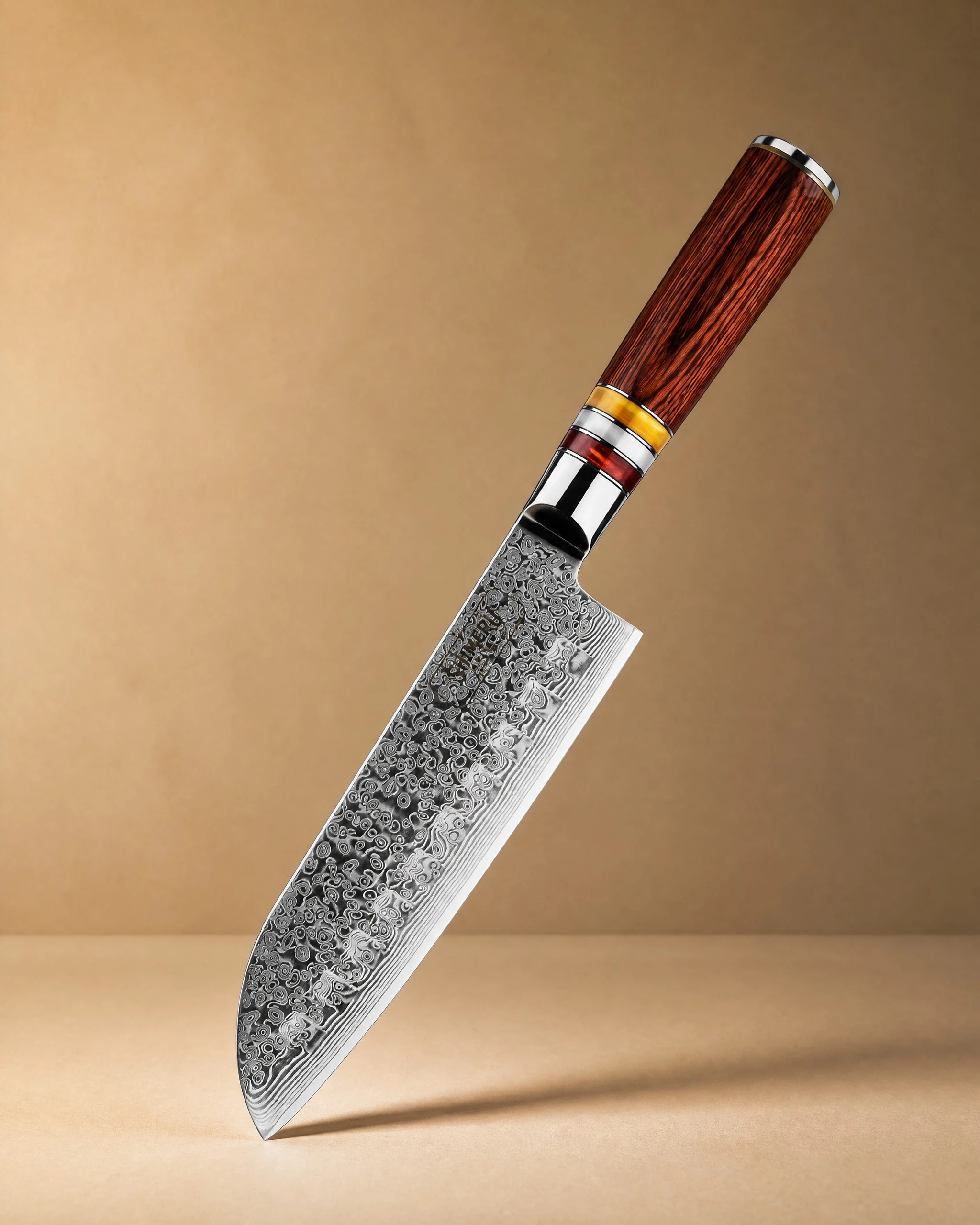 Hikari 光 7" Damacus Steel Professional Santoku Knife 三徳包丁$74.99View product → is the premier choice for home cooks who want professional performance. The 7 inch blade is forged from a core of high carbon steel with Damascus cladding, giving it exceptional sharpness and a striking appearance. The handle is crafted from premium materials for a confident grip. This knife is best for home cooks who value edge retention and are willing to hand wash and dry it immediately. It is a top rated santoku knife for those who appreciate fine craftsmanship.
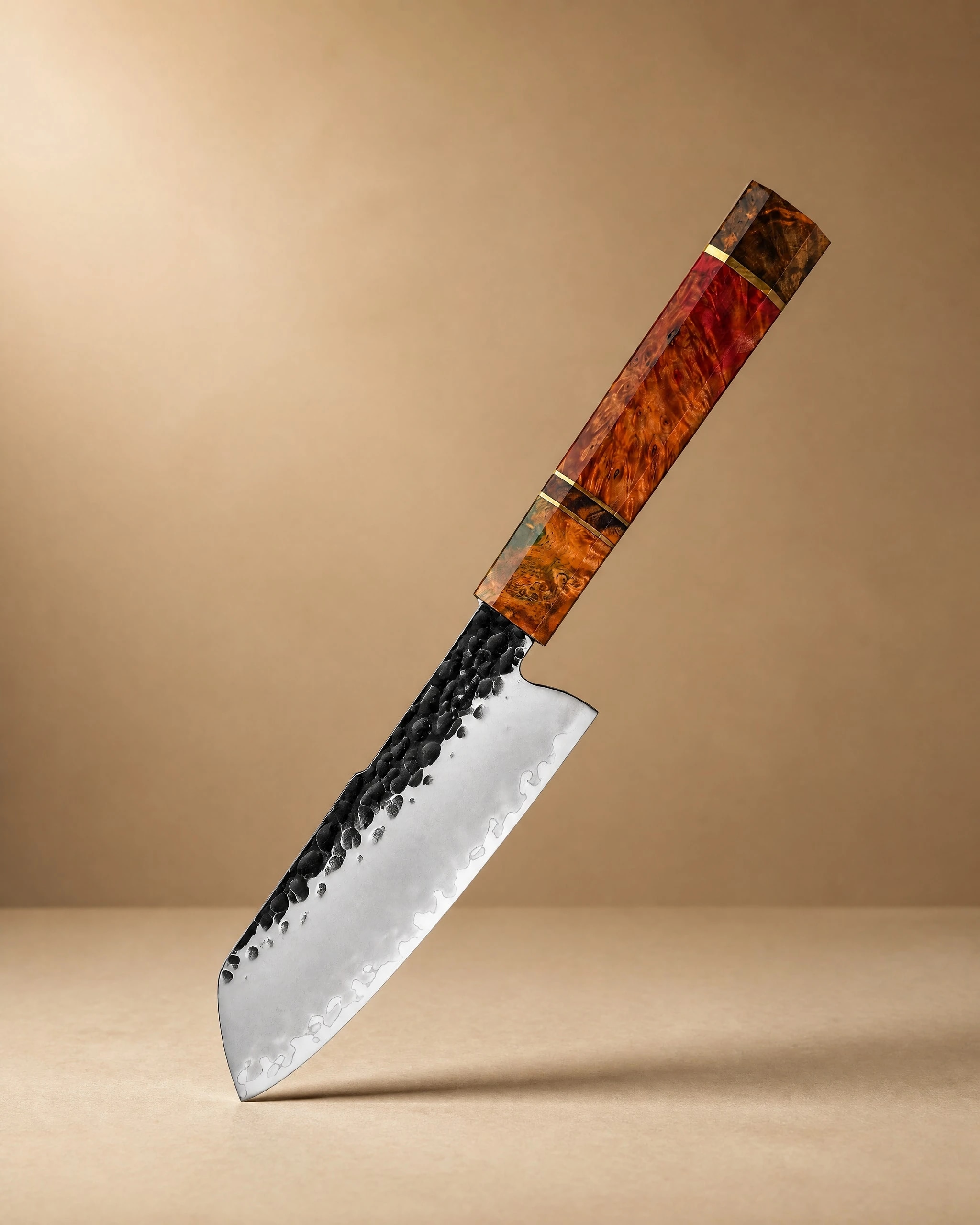 Ishikari 5" Santoku Knife 三徳包丁$64.99View product → offers a slightly shorter 5 inch blade, which makes it incredibly nimble for small tasks like trimming vegetables, slicing fruit, or breaking down smaller cuts of meat. It is a great option for cooks with smaller hands or anyone who wants a more compact santoku for quick prep. The handle is comfortable and the blade maintains a good edge. This is a best rated santoku knife for anyone seeking a budget friendly yet quality knife.
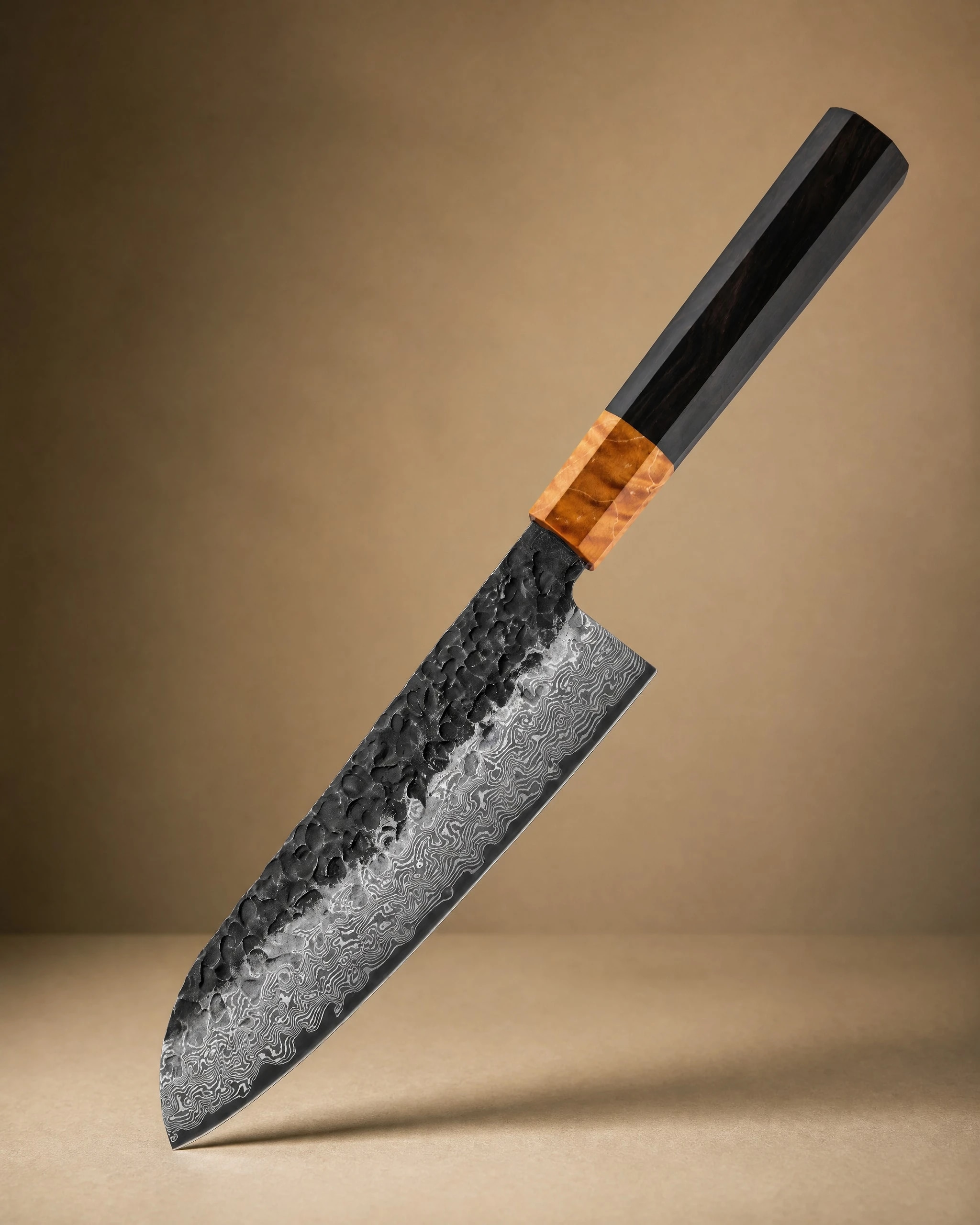 Dark Grain 7" Damascus Steel Santoku Knife 三徳包丁$79.99View product → is a 7 inch Damascus steel santoku that balances beauty and everyday durability. The layered steel creates a visually stunning pattern while the core steel keeps the blade sharp through many meals. The handle design offers a secure grip, and the knife feels well balanced. This damascus santoku knife is ideal for home cooks who want a knife that performs beautifully and looks great on the counter.
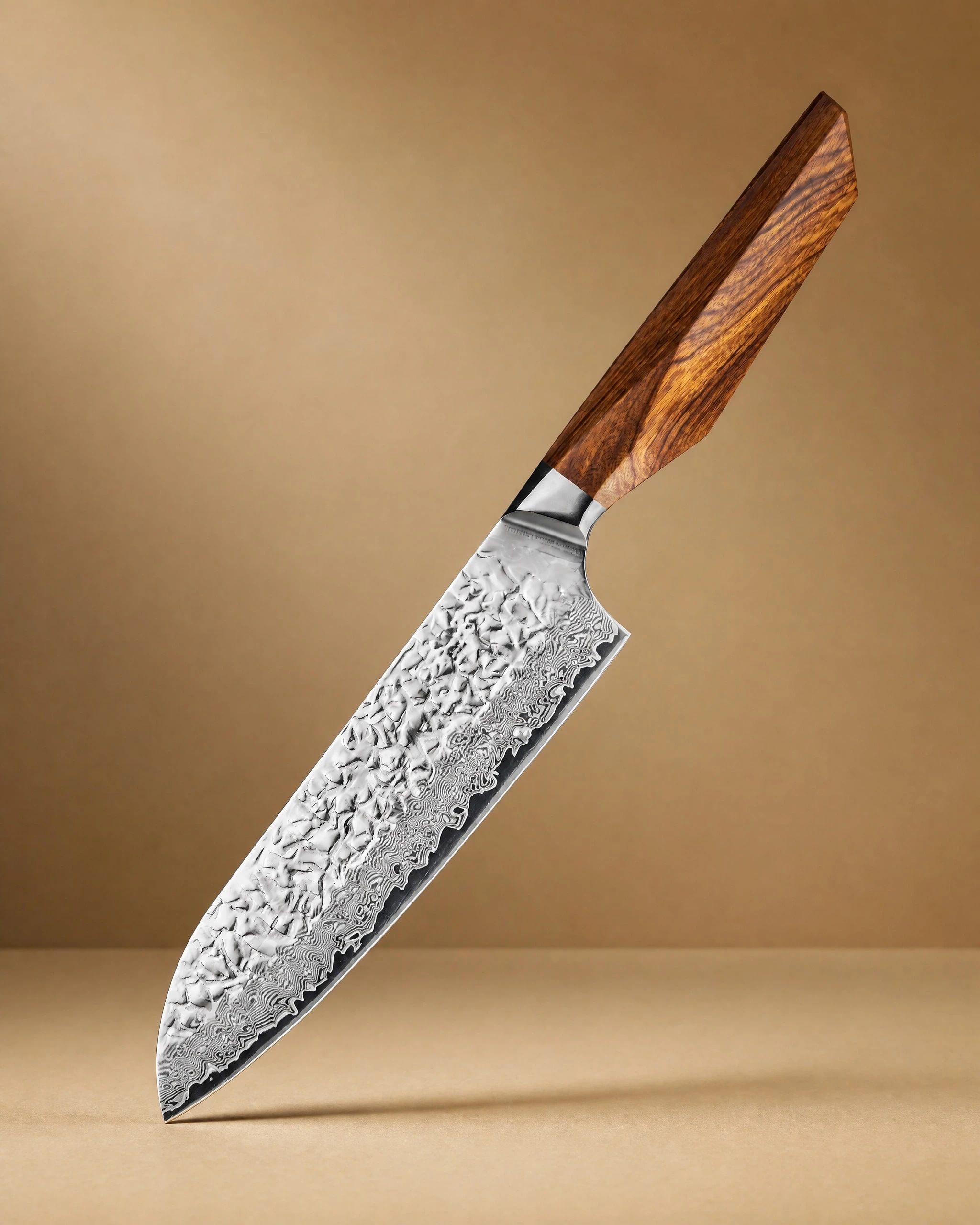 Shikoku 7" Damascus Steel Kengata Santoku 三徳包丁$79.99View product → is a kengata (pointed) style santoku with a 7 inch Damascus blade. The kengata tip allows for occasional piercing tasks like scoring chicken skin or making small cuts. The blade is ground thin for excellent slicing performance. For cooks who want the versatility of a santoku with a pointed tip for more precision, this is an excellent choice.
To see all our santoku offerings together, visit our complete knife shop.

How to Care for a Santoku Blade
A santoku knife, especially one with a hard steel blade, requires a few simple care steps to stay sharp and rust free. Always wash the blade by hand with mild soap and water, then dry it immediately. Do not put it in the dishwasher, as high heat and harsh detergents can damage the edge and handle. Store your santoku in a knife block, on a magnetic strip, or in a dedicated sheath to avoid dulling the edge against other utensils. Honing with a ceramic or steel rod before each use helps maintain alignment, but for a true sharpening you will need whetstones or professional service. For a full care guide, see our knife care instructions.
If you notice the blade is becoming difficult to push through tomatoes or paper, it is time to sharpen. A santoku blade that is maintained properly will last for decades and become a trusted part of your cooking routine.
Santoku vs. Chef's Knife: Which One for You?
A common question is whether to choose a santoku or a traditional Western chef's knife. A chef's knife typically has a curved belly that allows for a rocking chop motion, and it usually comes in 8 or 10 inch lengths. A santoku's flatter blade favors a straight push cut, which many home cooks find more efficient for vegetables. The santoku also tends to be lighter and allows a more natural wrist angle. If you often cut large items like squash or need to rock chop herbs, a chef's knife may be better. But for everyday vegetable prep, protein slicing, and general cutting, a top rated santoku knife is hard to beat. Many home cooks end up with both, but if you want one knife that does most tasks well, the santoku is a strong candidate.
Selecting the Right Santoku for You
Ultimately, the best santoku knife is the one that feels right in your hand and matches your cooking habits. If you do a lot of precise vegetable work, a 7 inch santoku knife with a sharp edge and good food release will save you time and effort. If you have limited counter space or prefer a smaller blade, a 5 inch santoku can be a marvel of efficiency. For those who love the idea of a knife that is both a tool and a work of art, a damascus santoku knife adds an element of beauty to each meal prep. The four knives we featured above are all excellent choices. Visit our santoku collection to explore them and find the perfect partner for your kitchen.
Photography: wu yi via Unsplash.

