Choosing the Best Knife Sharpener for Your Kitchen

There is an old saying among cooks: a dull knife is more dangerous than a sharp one. It is true. A dull blade requires extra force, slips more easily, and makes every cut a chore. The most reliable way to keep your kitchen knives razor ready is a good knife sharpener. But with so many options on the market, how do you choose the best knife sharpener for your kitchen? This guide will help you understand sharpening basics, how to sharpen a knife with a knife sharpener, and which tools truly deliver consistent edges without damaging your blades.
We focus on manual rolling sharpeners because they are simple, fast, and gentle on steel. The two models we recommend are designed for everyday home cooks who want a sharp knife in seconds, not minutes. They work on a wide range of knives, from thin slicing blades to heavy chef knives, and they suit both carbon and stainless steels.
Why a Manual Rolling Knife Sharpener?
Electric sharpeners remove metal aggressively and often leave a rough edge. Pull through sharpeners with carbide blades can chip your knife. A manual rolling sharpener, on the other hand, uses diamond abrasive wheels that you roll along the blade. The angle is preset, so you cannot mess it up. You control the pressure and the number of passes. That means less waste, a finer finish, and longer knife life. Diamond abrasives also stay flat and consistent, unlike water stones that dish out over time.
If you have ever wondered “how do I use a knife sharpener?” the answer is simpler than you think. A rolling sharpener works like a miniature skateboard for your blade. You place the knife on the counter, roll the sharpener over the edge, and repeat a few times. It takes under a minute. There is no water soaking, no angle gauges, no mess. That convenience makes it easy to sharpen more often, which keeps your knives in peak condition.
Two Top Choices for Everyday Prep
At our shop we offer two manual rolling sharpeners that cover most home needs. Both use diamond plates for long life and consistent grit. The difference is the range of grits and whether you need extra coarse stones for heavy repairs or just a fine finish for touch ups.
The first option is the 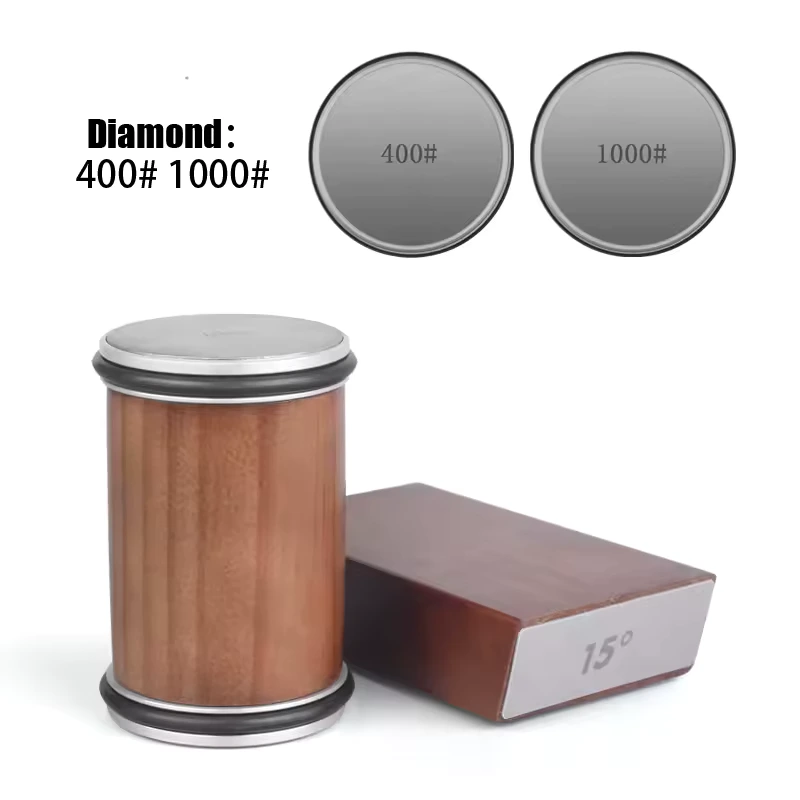 Magnetic Rolling Knife Sharpener$59.99 · currently out of stockView product →. It has a #400 coarse diamond wheel and a #1000 fine diamond wheel. #400 is perfect for restoring a slightly dull edge or for sharpening a knife that has not been touched in months. #1000 gives a kitchen ready finish that glides through tomatoes and onions. The handle is comfortable and the magnetic base holds the sharpener steady on any steel surface. The diamond wheels are plated onto a solid steel core, so they resist wear and maintain their cutting speed for years.
If you work with very dull knives or want the ability to sharpen single bevel blades or heavier chefs knives, consider the . It adds a #240 coarse diamond wheel and a #600 medium diamond whetstone to the same #400 and #1000 diamond wheels. That means you can re profile a chipped edge with #240, smooth it with #600, sharpen with #400, and finish with #1000. It is an all in one sharpening station that saves you from buying separate stones. The handle is the same ergonomic design, and the magnetic base is equally strong. The two extra grits add only a little weight, so it is still easy to use.
Which one is right for you? If you maintain your knives regularly, the two grit model (Magnetic Rolling Knife Sharpener$59.99 · currently out of stockView product →) is plenty. If you rescue old knives or sharpen for friends and family, the four grit model () gives you more flexibility. Both are made from the same high quality materials and feel identical in hand. They also suit different steel types: the #240 works well on harder steels like VG-10 or high carbon, while the #400 and #1000 are universal.
How to Sharpen a Knife with a Kitchen Knife Sharpener
Now let us cover the step by step process. If you have never used a rolling sharpener, do not worry. It is intuitive.
- Place the sharpener on a flat, stable surface with the magnetic base secured. Most kitchen counters are steel? if not, the sharpener sits firmly on its own rubber feet. Make sure the counter is clean and dry.
- Hold the knife with the edge facing away from you. Rest the spine of the knife flat on the counter. The angle is set by the sharpener, but keep the blade perpendicular to the wheels for even contact.
- Roll the sharpener along the blade from heel to tip, applying light pressure. The diamond wheels will cut the metal. Do not push hard; let the abrasive do the work. A consistent, moderate speed works best. For longer knives, roll in sections to cover the entire edge.
- Repeat 5 to 10 passes on each side, alternating. For the two grit sharpener, start with the coarse wheel and finish with the fine wheel. For the four grit model, start with the coarsest grit you need and progress to finer grits. Count passes to keep both sides even.
- Test the sharpness on a piece of paper or a tomato. If it catches easily, you are done. If not, do a few more passes. With practice, you will learn how many passes your knives need.
That is how to sharpen knives with a knife sharpener. No angle guides, no water soaking, no mess. You can do it right before you start cooking and the edge will last for weeks of normal use. The diamond wheels also create a fine burr that you can remove with a few passes on the finest grit.

Choosing the Right Grit for Your Knife
Grit refers to the size of the diamond particles. Lower numbers are coarser and remove more metal. Higher numbers refine the edge. For most kitchen knives, a medium coarse to fine progression is ideal. However, the hardness of your knife steel also matters. Softer stainless steels (e.g., German blades around HRC 56) benefit from the #400 grit to cut quickly, then #1000 to polish. Harder steels (Japanese blades at HRC 60+) may require starting at #600 to avoid chipping, then finishing at #1000. The #240 is best reserved for heavy damage or reshaping.
Knife size also influences grit choice. Thin petty knives and paring knives need fewer passes and finer grits. Large chef knives and cleavers have more edge surface and can handle coarser grits for faster sharpening. The diamond wheels on these sharpeners are wide enough to cover most blade widths, but for very wide blades you may need to roll in two passes.
- #240: Use only for repairing chips or reprofiling a blade. Rarely needed.
- #400: Best for sharpening a knife that has lost its edge but has no major damage. Works on all steel types.
- #600: A nice intermediate step if you want a slightly finer finish before the final grit. Helps remove scratches from coarser grits.
- #1000: The standard finish for a kitchen knife. It leaves a very sharp but slightly toothy edge that excels on vegetables and meat.
If you only have the two grit sharpener, your routine will be #400 then #1000. That is enough for 95% of home cooks. If you have the four grit set, you can skip #240 unless you need it, and use #600 between #400 and #1000 for an even smoother edge. The progression reduces burr formation and gives a cleaner cut.
Maintaining Your Knife Sharpener
A diamond sharpener cleans itself as you use it, but metal filings can build up on the surface. After every few uses, rinse the wheels under warm water and scrub gently with a soft brush. Dry thoroughly. Avoid soaking or using harsh detergents. The magnetic base should remain free of metal shavings. For long term storage, keep the sharpener in a dry place away from humidity. The diamond coating is very durable, but it can wear if used on extremely hard ceramics or glass knives, which are uncommon in home kitchens.
Periodically check the wheels for uneven wear. If you notice the sharpener not cutting as quickly, it might need a light cleaning. With proper care, these sharpeners can last for hundreds of sharpenings. For more tips on keeping your knives and tools in top shape, visit our knife care guide.
Who Each Knife Sharpener Suits
The two grit model (Magnetic Rolling Knife Sharpener$59.99 · currently out of stockView product →) is ideal for home cooks who sharpen their knives every few weeks and want a fast, no fuss solution. It suits those with a small collection of knives, mostly stainless steel, and who prefer a simple tool. The handle is light and easy to control, making it good for smaller hands or occasional use.
The four grit model () suits more serious cooks who maintain a larger set of knives, including carbon steel and harder Japanese blades. It also appeals to those who hone their own edges and want the ability to do minor repairs. The extra grits give you control over the finish, from a coarse edge for heavy chopping to a polished edge for slicing. If you frequently sharpen knives for other people, the four grit model is a better investment because it handles a wider range of conditions.
Both sharpeners work with any standard kitchen knife from 140mm to 240mm. The magnetic base is strong enough to hold the sharpener on most steel surfaces, but you can also use it on a wooden cutting board if you press down lightly. For longer blades, use a steady rolling motion from heel to tip in one smooth pass or two overlapping passes.
Which Sharpener Should You Buy?
Both of our manual rolling sharpeners are designed for durability and ease of use. If you are still unsure, ask yourself how often you sharpen your knives. If you sharpen once a month, the two grit model (Magnetic Rolling Knife Sharpener$59.99 · currently out of stockView product →) is sufficient. If you sharpen less frequently or work with harder steel, the four grit model () gives you more control. Also consider your comfort: the handle size and shape are the same, so neither has an ergonomic advantage.
Either way, you are investing in a tool that will keep your knives performing like new for years. No electric sharpeners, no messy whetstones, no guessing. Just a quick roll and you are back to slicing.
Browse our full selection of sharpeners in the sharpener category or explore all products to see if a different tool fits your kitchen. If you are new to sharpening, our knife guide also covers how to choose a knife and maintain it.
Final Thoughts
A good knife sharpener is an essential part of any kitchen. It saves you money on professional sharpening and keeps your knives safe and effective. We hope this guide answers your questions about how to sharpen a knife with a knife sharpener and helps you choose the best knife sharpener for your kitchen. If you have further questions, reach out to us.
Photography: Manki Kim via Unsplash.