
How to Sharpen a Japanese Chef Knife

A Japanese chef knife rewards a little patience at the stone. It is not delicate, and it is not hard to sharpen, but it asks you to leave behind a few habits learned from softer European blades. The steel is harder, the edge geometry is thinner, and the bevel is usually narrow. Those details decide which tool you use, what angle you hold, and how much pressure you apply.
Why a Japanese knife needs its own approach
Most Western kitchen knives are heat treated for toughness. That is what lets them survive a honing rod, heavy chopping, and the occasional pull-through sharpener. Japanese blades are generally treated harder, which is what gives a gyuto its clean cut through an onion and its edge retention through a long prep session. Hard steel also means a brittle apex. Bend it or chip it and you feel it right away.
The practical consequence is that you want an abrasive that cuts cleanly and runs cool. A water stone does that. It removes metal in a controlled way, releases fresh abrasive as it wears, and keeps heat low. A pull-through carbide sharpener scrapes rather than grinds, removes far more metal than a thin bevel can spare, and leaves a ragged apex that dulls within a week.
What you actually need
One good medium stone will sharpen a knife. A finer stone refines the edge and is worth owning, but it is not the entry fee.
- A medium water stone, roughly 800 to 1200 grit, for the actual sharpening.
- A finer stone, roughly 3000 to 6000 grit, to finish the edge.
- A flattening plate or flattening stone to keep the stones true.
- A stone holder, or a damp towel on a counter that does not move.
- A bowl of water and a towel you do not mind staining.
Leave the 240 grit on the shelf unless you are repairing a chip or resetting a badly neglected bevel. Coarse stones remove metal fast, and on a thin Japanese blade that is the exact mistake you are trying to avoid.
Match the grit to the job
The 800 to 1200 range is where edges are made. It cuts fast enough to reshape a bevel and leaves an edge with bite for tomatoes and peppers. The 3000 to 6000 range refines that edge, which matters most for slicing protein and fish cleanly.
For most home cooks, one 1000 grit stone used well beats three stones used reluctantly. Learn to raise a burr along the full length of the edge on a medium stone first. Everything after that is refinement.
Water stones, oil stones, diamond plates
Water stones are the default for Japanese knives because the abrasive is soft and releases fresh grit, which keeps the cut fast and cool. Oil stones work, but they cut more slowly on hard steel and need their own oil. Diamond plates cut anything, including hard steel, and leave deep scratches while removing metal aggressively. Use one for flattening stones and for real repair, not for routine sharpening.
Find your angle, then hold it
Most Japanese double bevel knives are ground near 15 degrees per side. Many Western style knives sit closer to 20. If you do not know your knife, start at 15 and verify with a marker.
Color the bevel with a fine marker, take a few light passes at your chosen angle, and look at where the ink came off. If ink remains at the shoulder but not at the apex, your angle is too shallow. If it remains at the apex but not the shoulder, you are too steep. Adjust and repeat. Two minutes with a marker saves you from grinding a wrong bevel into a good knife.
Hold the angle by locking your wrists and moving your whole arm. Keep the stone wet, keep the blade flat, and keep the pressure light.
Sharpening, step by step
Soak the stone if it needs soaking, set it on a stable surface, and start with the coarser of the two. Lay the blade on the stone with the edge facing away from you, rest the knife at your angle, and spread the fingers of your free hand across the blade just behind the edge. Push the knife forward and slightly across the stone so the scratch pattern covers the full bevel from heel to tip.
Work one side until you feel a burr along the entire opposite side. The burr is a thin ridge of displaced steel, and it is the only reliable sign that you reached the apex along the whole edge. Feel for it across the edge, never along it. Heel, middle, and tip all need to raise it. If the burr shows up only near the heel, you are not lifting the handle enough as you approach the tip.
The tip needs its own attention. As you reach the last inch of the blade, lift the handle slightly so the curve of the belly stays on the stone, and let the tip travel off the end rather than pressing down on it. A rounded tip almost always comes from the end of the stroke, not from the steel.
Flip and repeat until that burr is raised in turn. Move to the finer stone and repeat with lighter pressure. Finish with a few very light alternating passes, edge trailing if you want a polished apex, then rinse and dry the blade.
Test on a ripe tomato or a sheet of paper. A finished edge bites without pressure. If it skids, go back to the medium stone instead of chasing the edge with more passes on the fine one.
Single bevel knives are a separate job
Yanagiba, usuba, and other traditional single bevel knives have a flat back and a long bevel on one face. They are sharpened almost entirely on the bevel side, with only light work on the back to remove the burr. That takes practice. Learn on a gyuto, which is far more forgiving.
Honing, stropping, and the rod question
A honing rod straightens a rolled edge. On a hard Japanese blade the edge is less likely to roll and more likely to micro chip, so the rod is not the maintenance tool it is on a soft European knife. If you use one, use a smooth steel at a shallow angle with almost no pressure, or leave it in the drawer.
Stropping on leather, or even newspaper loaded with fine compound, is gentler. Twenty light edge trailing passes will bring back a fading edge between full sharpenings and buy you a few weeks. It does not replace the stone.
How often to sharpen
A home cook using one gyuto daily should touch up on a fine stone or a strop every few weeks and do a full sharpening every two to three months. Professional volume changes that considerably. Watch the edge rather than the calendar. When tomatoes bruise instead of slicing, the edge is telling you something.
Do not let a knife go completely blunt. Restoring a neglected edge means coarse work, more steel removed, and a shorter working life for the blade.
Mistakes that shorten a knife's life
Too much pressure is the big one. Pushing hard does not sharpen faster, it flexes the edge and rounds the bevel. A wandering angle is second: an inconsistent wrist turns a crisp bevel into a curve that never quite gets sharp. Third is skipping the burr. If you never raise it, you never reached the apex, and the knife will feel dull no matter how long you work.
Keep the stone wet as well. A water stone that has dried out stops cutting and starts glazing.
After the stone
Wipe the blade dry before it goes back on the magnet or in the block. Water left sitting on a fine edge does more damage than most people expect, and a knife that lives in a drawer with other tools will lose its edge to contact rather than to cutting. Wash by hand, dry it immediately, and store it where nothing harder than wood touches the edge.
Choosing a knife you will enjoy sharpening
Good sharpening starts with a blade whose bevel you can see and follow. If you are buying your first Japanese knife, 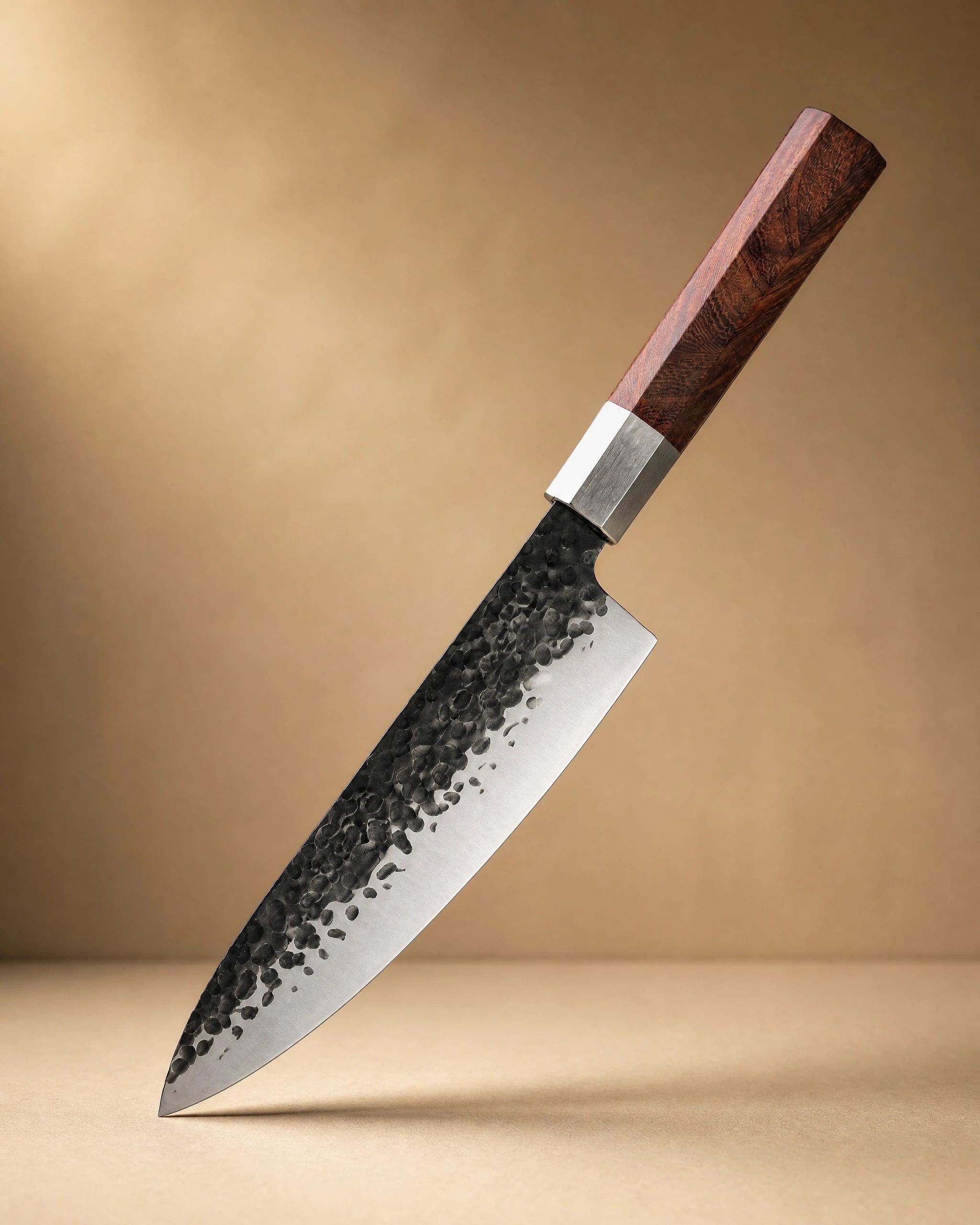 Sendai 8" Steel Gyuto Knife 牛刀$49.99View product → is a sensible everyday starting point.
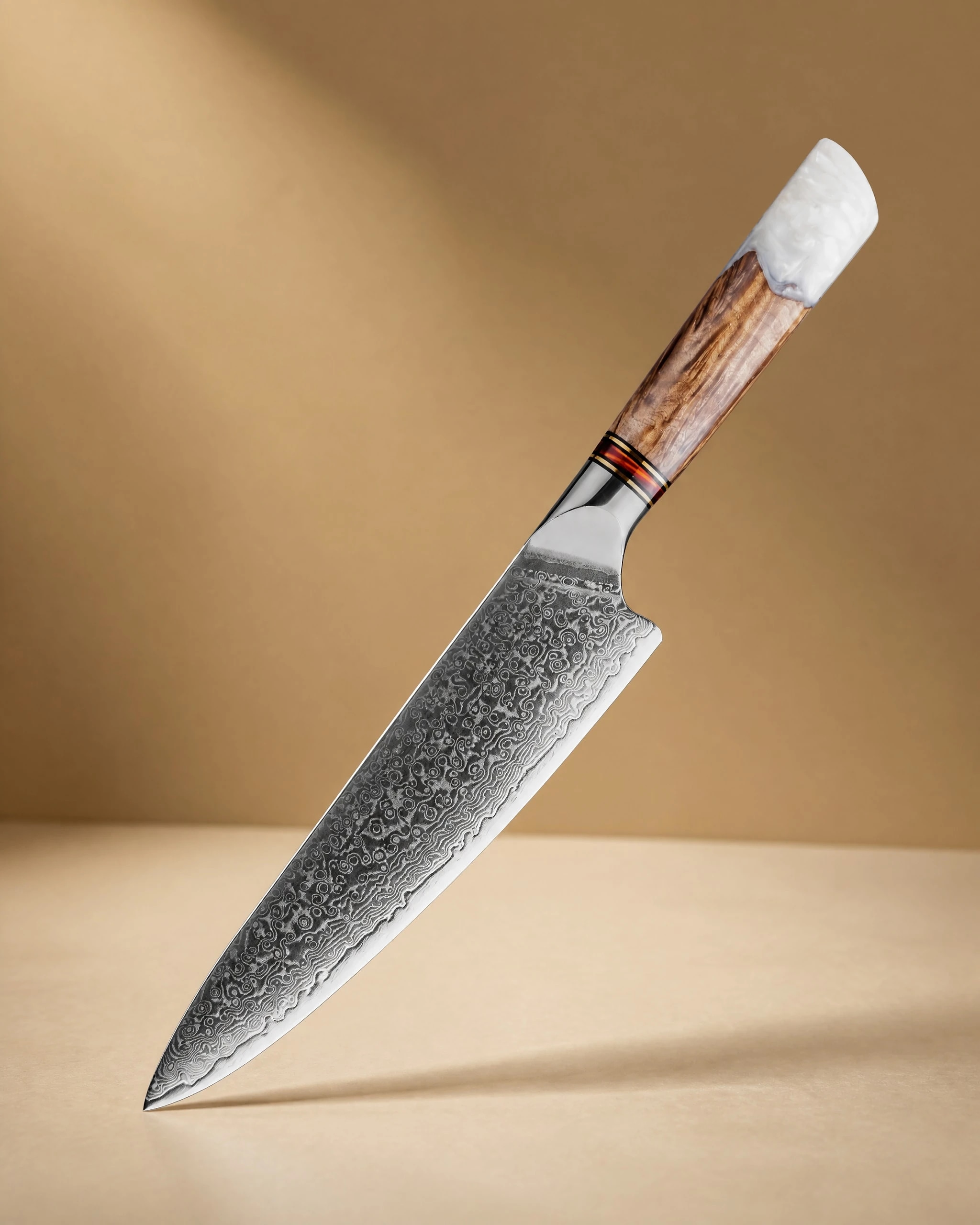 Shirakawa 白川 8" Damascus Steel Gyuto Knife 牛刀$74.99View product → adds a Damascus finish for anyone who wants more visual character in the same daily role. For a little more reach on the board, look at
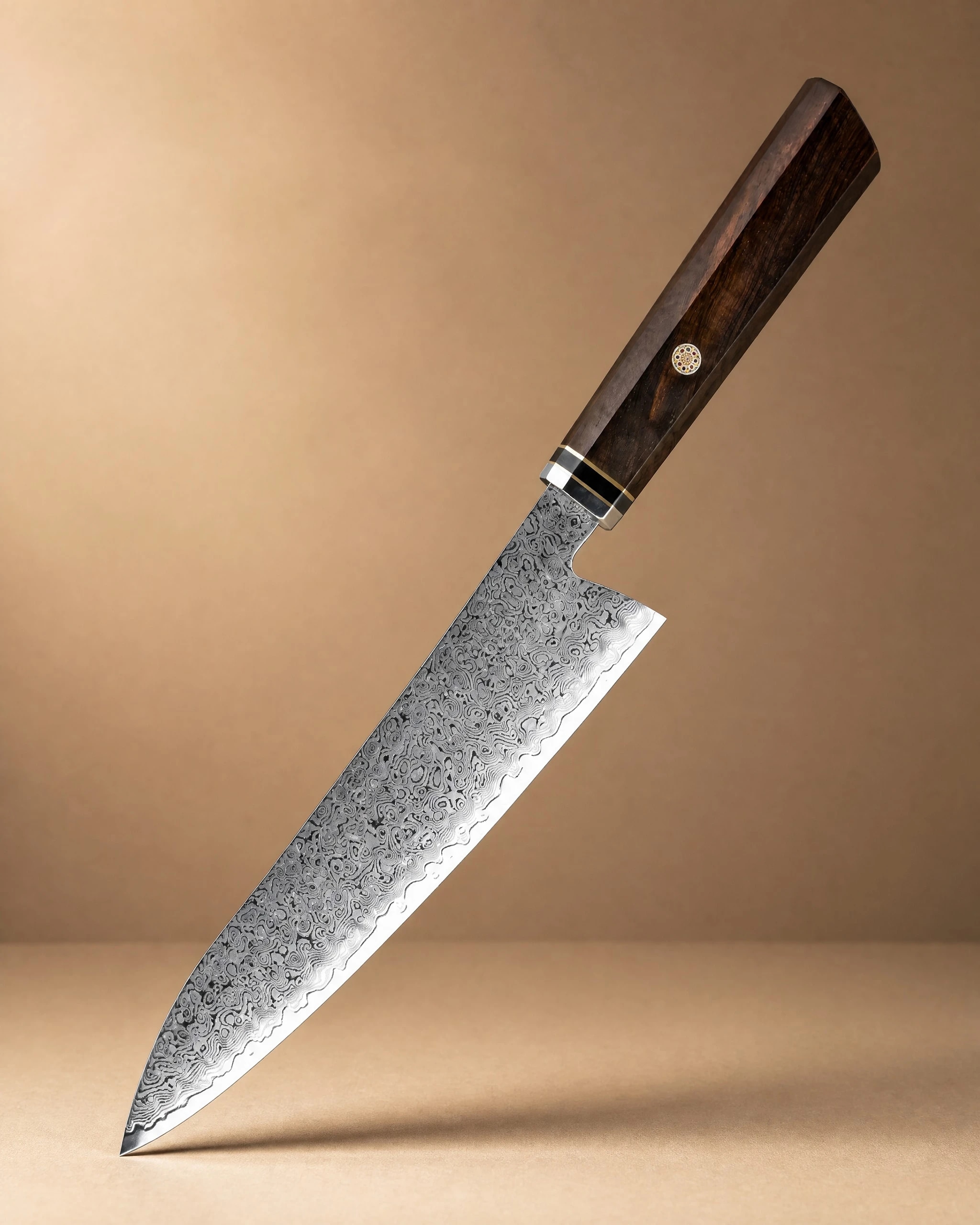 Sakawa 8.5" Damascus Steel Gyuto Knife 牛刀$74.99View product →, and
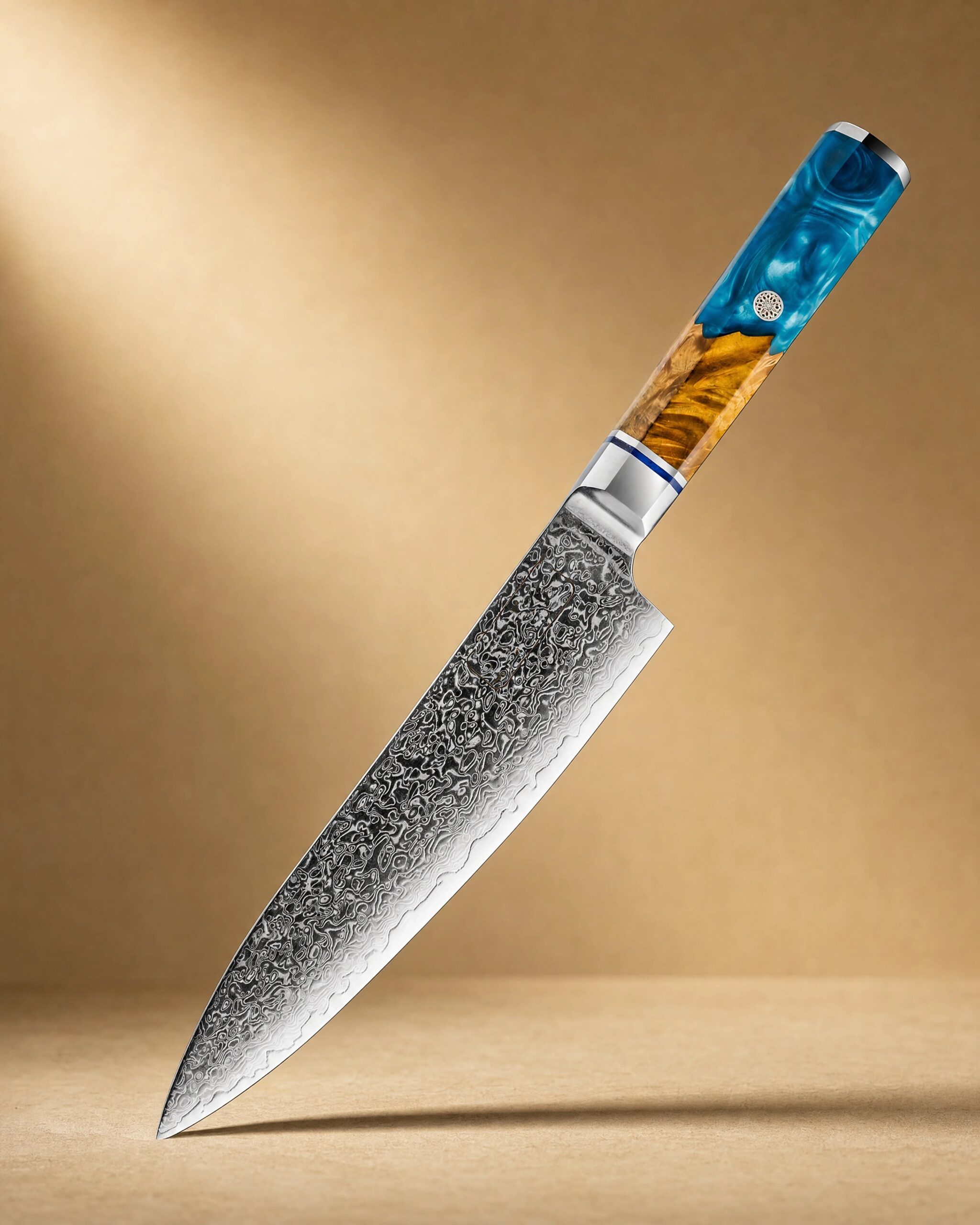 Mogami 最上川 8" Damascus Steel Gyuto Knife 牛刀$79.99View product → is another Damascus option in the 8 inch class.
Whichever you choose, the knife care guide covers the washing and storage habits that keep an edge alive between sessions. If you are still working out what shape and length suits your cooking, the knife guide walks through the tradeoffs. You can browse the full gyuto collection or see the whole shop.
The short version
Learn one medium stone, learn to raise a burr along the full edge, and keep your angle steady. That is most of sharpening a Japanese chef knife. Everything else is refinement you can add later. A stone, water, and ten minutes of attention once a month will keep a good gyuto cutting better than most knives in the block next to it.
Photography: Richard Iwaki via Unsplash.


