
Bunka Knife: The Versatile Japanese Blade

The bunka knife is one of those Japanese shapes that looks unusual until you use it, and then it makes sense. Short, tall, and light in the hand, it has a flat edge for chopping and an angled tip for detail work. In Japan it is a general purpose kitchen knife, the kind a cook reaches for without thinking about it. In a US kitchen it covers most of what a chef's knife does, with a different set of strengths.
This guide explains what a bunka is, how it differs from the santoku that most people cross shop against it, where it excels, and where it will frustrate you if you expect it to be something it is not.
What Makes a Bunka a Bunka
The name comes from bunka hocho, which translates roughly as culture knife, a mid twentieth century Japanese design meant to serve as a single all purpose blade for the home kitchen. The shape has three defining features. First, a tall blade, which gives your knuckles clearance and lets you scoop food off the board with the flat of the blade. Second, a mostly flat edge with only a gentle curve toward the front, which suits push cutting and chopping more than rocking. Third, the K-tip, an angled drop of the spine that meets the edge in a sharp point.
That combination makes the bunka a compact, precise, and surprisingly comfortable knife. It is not a laser and it is not a cleaver. It is a middle knife that handles vegetables, herbs, boneless proteins, and fruit with equal ease.
The K-Tip, Explained
The spine of a bunka slopes down toward the tip at a sharp angle, forming a shape that resembles an inverted K. This is often called a kiritsuke tip, and it does two useful things. It puts a fine point at the end of the blade, which makes short work of shallots, garlic, scoring, and trimming. It also lowers the height of the front of the blade, so the tip feels nimble when you turn the knife in your hand.
The trade off is durability. That point is thin, and thin points do not like lateral force. Do not twist the tip inside hard food, do not use it to pry, and do not hack through bone or frozen items with any part of the blade. Treated as a cutting tool rather than a lever, a K-tip holds up well.
Bunka vs Santoku: Which Shape Fits Your Hand
Most people shopping for a bunka are also looking at santoku, and the two are close cousins. Both are short, tall, and flat edged. The difference is the tip. A santoku has a rounded, sheep's foot profile with a sturdier tip that stands up to rougher work. A bunka has the pointed K-tip, which is better for precision and slightly more fragile.
If you rock chop with a long Western chef's knife and want to keep that motion, neither shape is ideal. If you push cut, chop, and slice with a forward motion, both feel natural.
If the rounded tip sounds better for your cooking, the 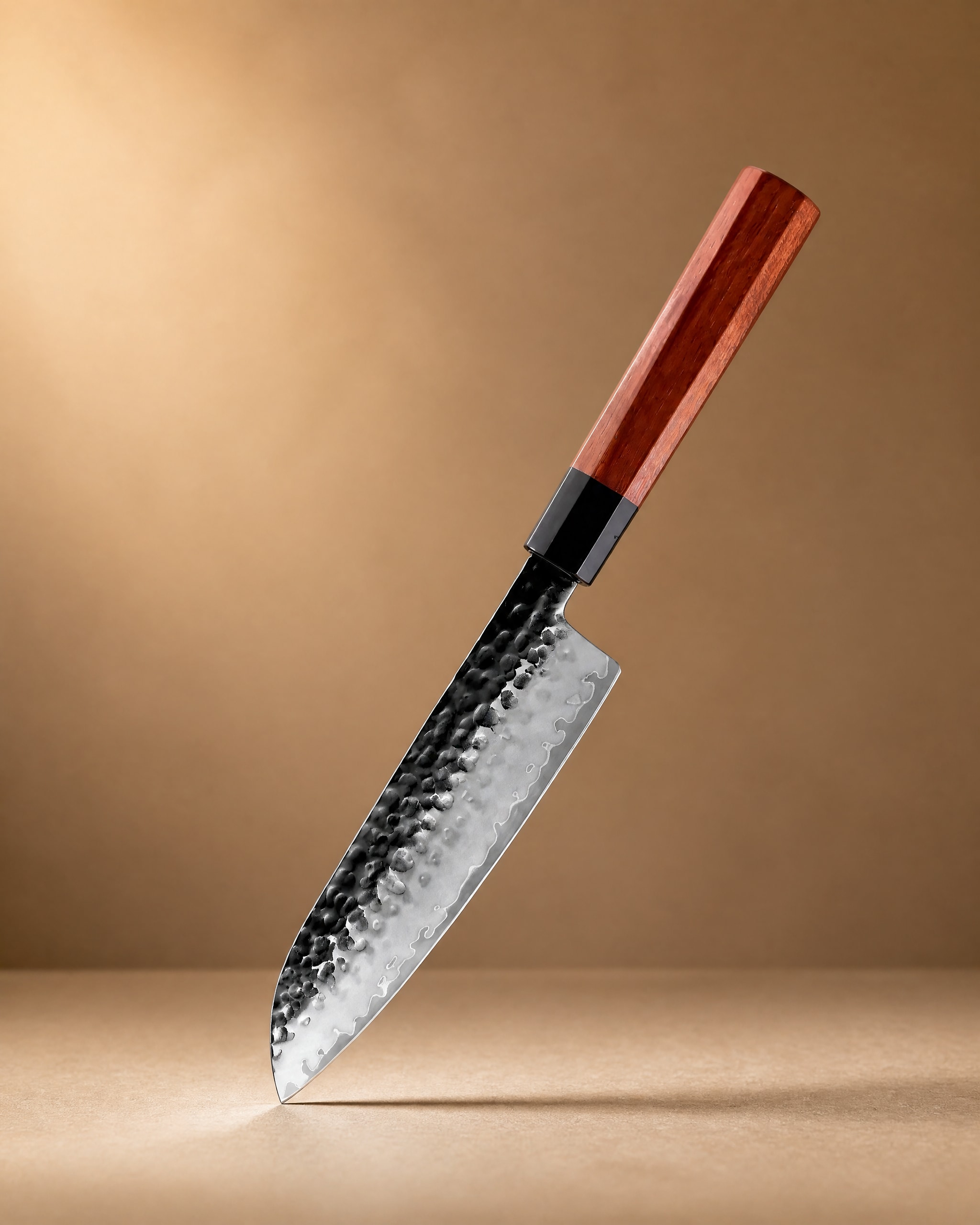 Yodo 7.5" Santoku Knife 三徳包丁$69.99View product → and the
 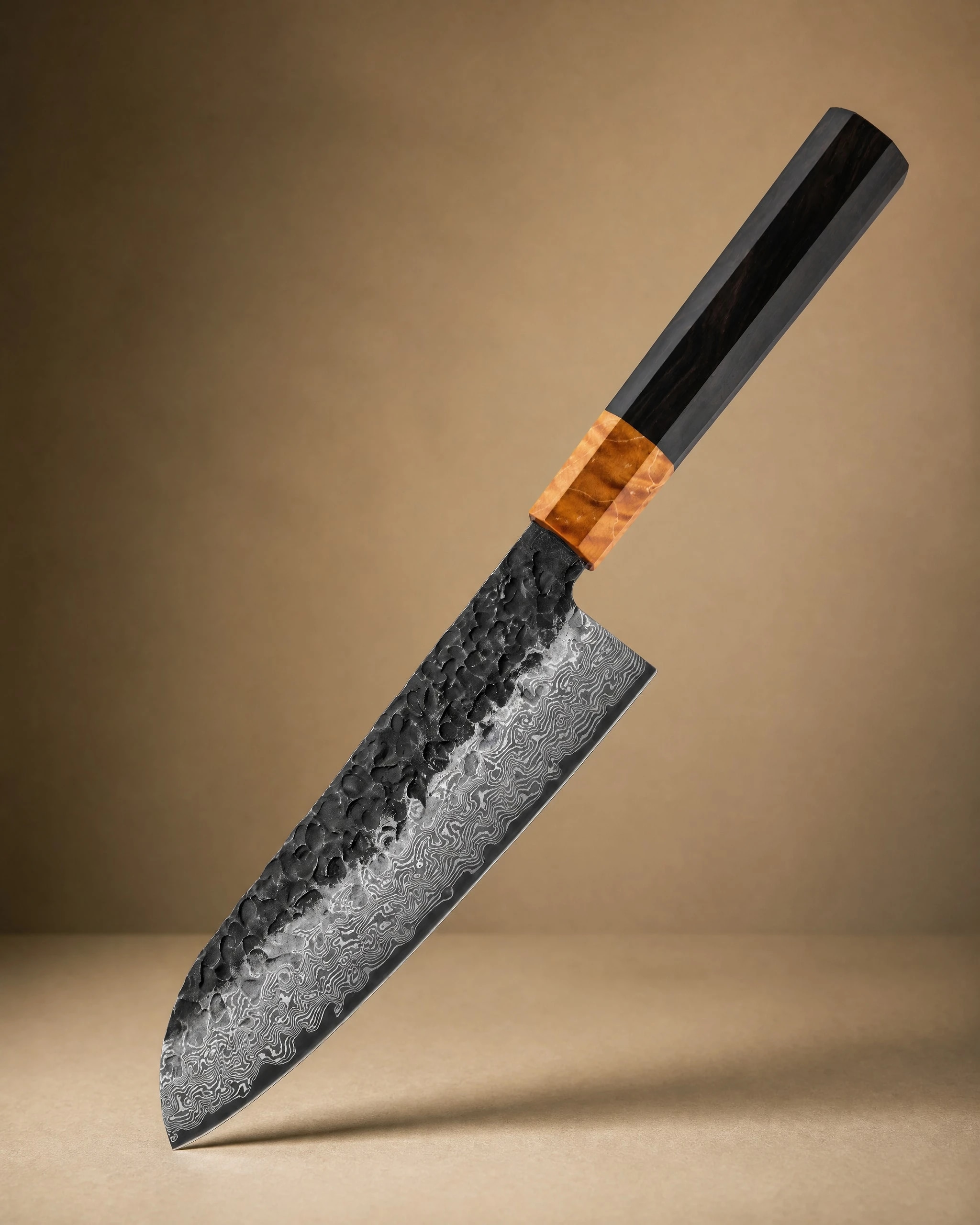 Dark Grain 7" Damascus Steel Santoku Knife 三徳包丁$99.99View product → are everyday prep knives built for exactly that kind of work. Both are santoku, so you get the same short, tall footprint with a more forgiving front end. If you want that profile in a shorter blade, the
 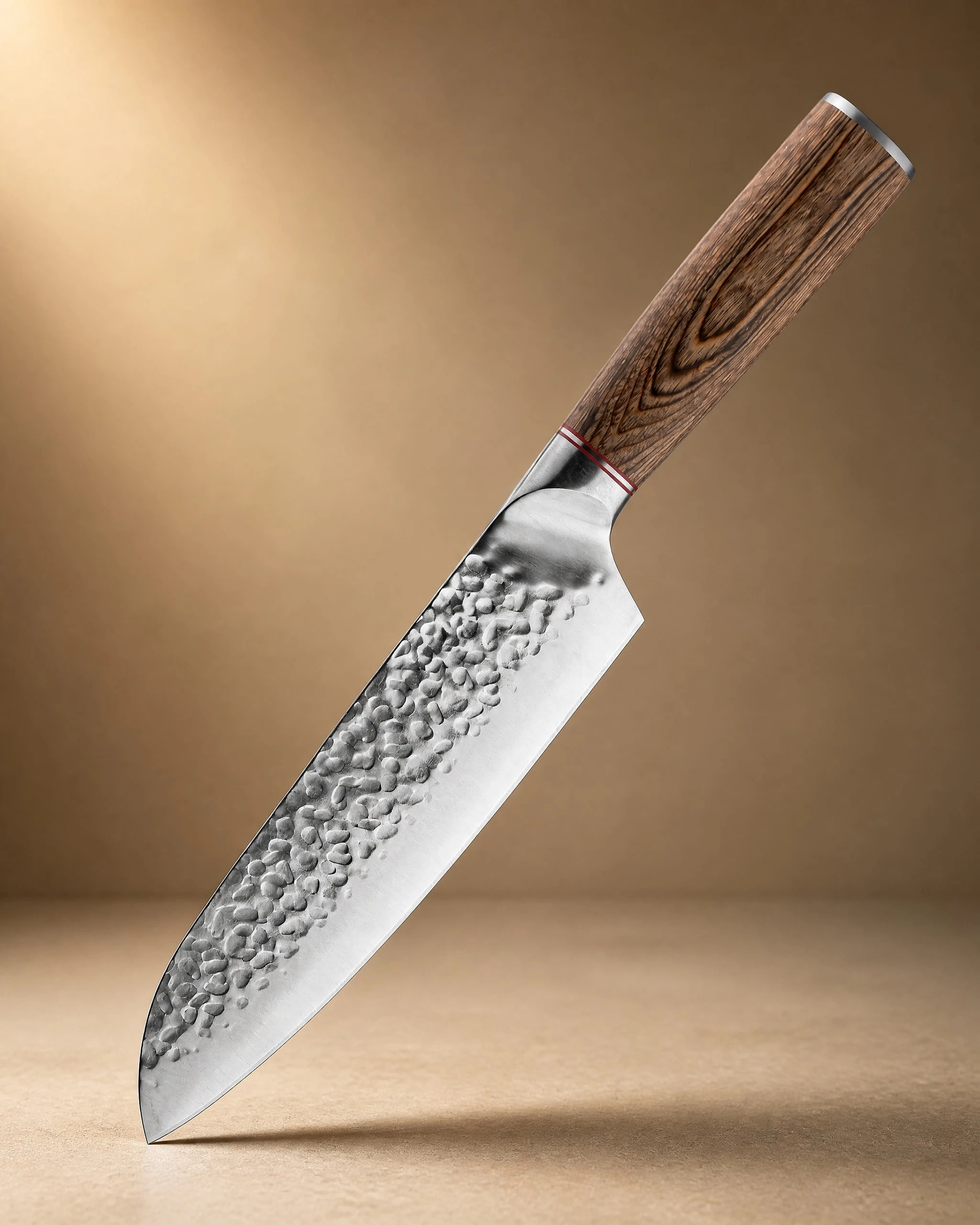 Raikou 6.5" Santoku Knife 三徳包丁$54.99View product → is a compact option, and the
 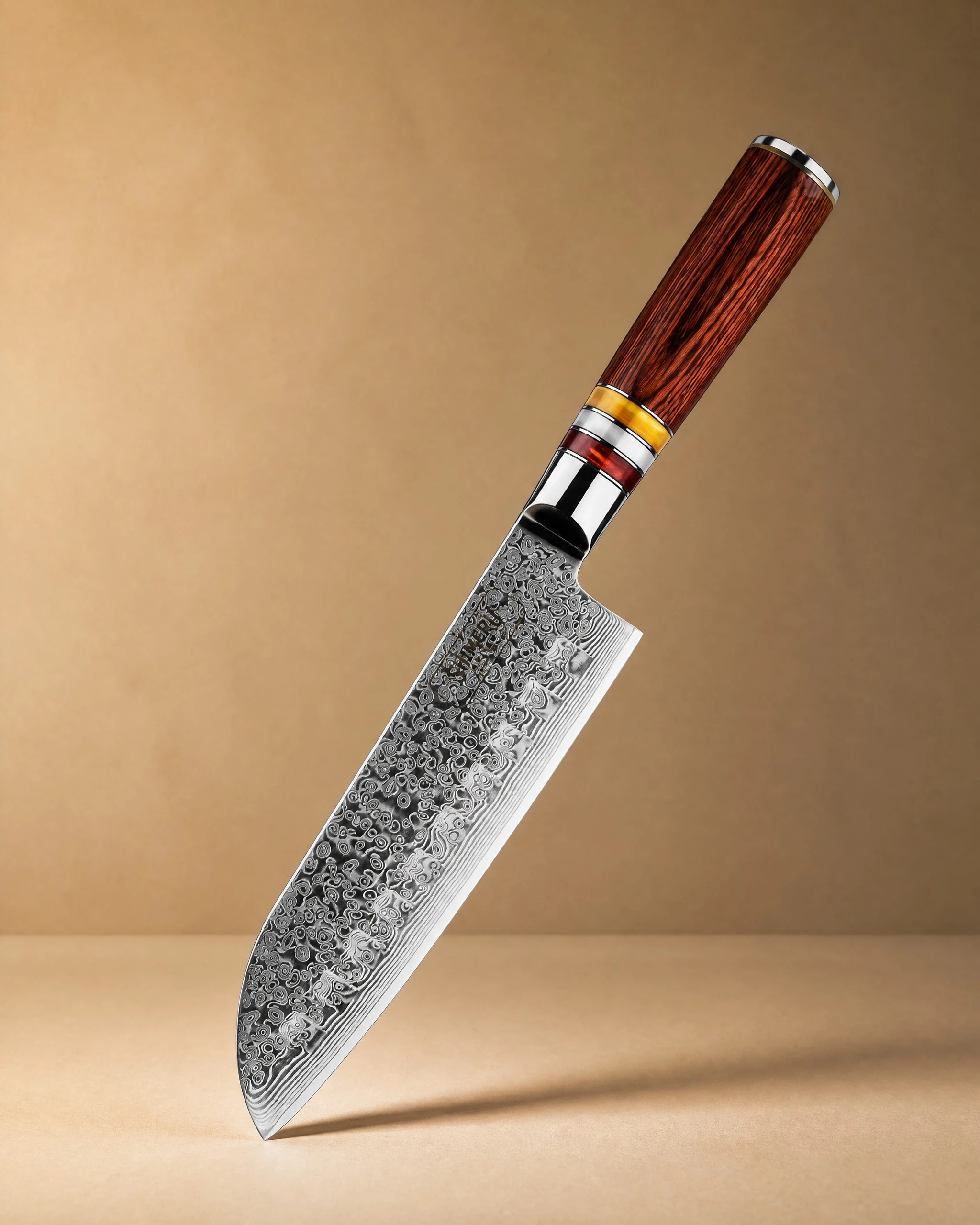 Hikari 光 7" Damacus Steel Professional Santoku Knife 三徳包丁$94.99View product → suits cooks who prefer a little more reach at the board. You can see the full range on our santoku page.
Blade Length and Board Fit
Bunka are mid size knives, generally shorter than a full length chef's knife but taller than a petty. That size is the point. A bunka is long enough to break down a head of cabbage or slice a chicken breast, and short enough to feel controlled when you are dicing an onion or working near the tip. On a small board or in a small kitchen, the shorter length is a real advantage because you are not fighting the counter or the wall behind it.
Handle length matters as much as blade length. A knife that is slightly too short forces your hand forward. One that is too long pushes your grip back and tires your wrist. If you can, hold the knife before you buy, or buy from a shop with a clear return policy.

What a Bunka Does Well
Vegetables are the bunka's home ground. Onions, carrots, peppers, cabbage, zucchini, and potatoes all fall to the flat section of the edge with a push cut. The tall blade makes scooping easy, so you can move a pile of diced onion from board to pan without reaching for a bench scraper.
Herbs are another strength. The pointed tip lets you strip leaves from stems and mince finely without crushing them. Shallots, garlic, ginger, and chile peppers all benefit from the same precision.
Boneless proteins are fine. You can slice a chicken breast, trim a pork loin, or portion a salmon fillet. The bunka is not built for bone, so keep a heavier knife for that work.
Fruit is where the tip earns its keep. Coring, peeling, segmenting citrus, and trimming strawberries all go quickly with a pointed blade.
Where a Bunka Falls Short
Be honest about the limits. A bunka is not a substitute for a long slicing knife when you are carving a roast or cutting a large brisket, because the blade is too short to complete a slice in one stroke. It is not a butchery knife. It is not a rocking knife either, at least not comfortably, since the edge is flat and the tip area is thin.
Some cooks also find the K-tip awkward at first. The front of the blade is lower than the rest, so the knife feels like it wants to dive. That sensation fades within a week of regular use.
If you already own a chef's knife and want a second blade for vegetables and detail work, a bunka is a smart addition. If you want one knife to do everything, including heavy tasks, a gyuto or a santoku is a better first purchase.
Steel, Grind, and Handle
Steel matters less than geometry for most home cooks, but it still matters. A harder steel holds an edge longer and takes a keener angle, at the cost of being more brittle. A softer steel forgives sloppy technique and sharpens easily, though it dulls faster. Thin behind the edge cuts better. Thick behind the edge lasts longer.
Handles come in two broad families. Traditional Japanese wa handles are light and push the balance forward. Western style handles are heavier and often more familiar to cooks who grew up with European knives. Neither is better. The right answer is the one that fits your hand.
If you are unsure which combination suits you, our knife guide walks through the trade offs in detail.
Keeping a Bunka in Good Shape
A bunka rewards basic care. Wash it by hand and dry it right away, especially if the blade is carbon steel. The dishwasher is the enemy of every Japanese knife, since heat, moisture, and rattling against other items will ruin an edge and can damage a handle.
Use a wood or soft plastic board. Bamboo is harder than most people expect, and glass or stone boards will dull any edge quickly. Avoid cutting through bones, frozen food, and anything you would not want to bite through.
For edge maintenance, a strop or a fine ceramic hone used gently can extend the time between sharpenings. When the knife starts to slide off a tomato skin instead of biting in, it is time to sharpen. A sharpening stone, used at the correct angle, gives the best result. Our knife care guide covers angles, stones, and storage in more depth.
A Simple Buying Checklist
- Length: shorter for small boards and precision, longer for bigger prep sessions.
- Tip: K-tip for detail work, rounded santoku for a more forgiving front end.
- Steel: stainless for low maintenance, carbon for keenness if you will dry it every time.
- Handle: wa for a lighter forward balance, Western for a more familiar grip.
- Budget: spend on the blade you will use daily, not the one that looks best in a drawer.
- Return policy: if you cannot hold it first, make sure you can send it back.
You can browse everything we carry, including santoku and other Japanese shapes, on our product page.
Picking the Right Blade for Your Kitchen
The bunka is a precise, compact, vegetable friendly knife with a tip that does detail work better than most shapes its size. It is not the right answer for everyone. If the K-tip makes you hesitate, a santoku gives you the same flat profile with a sturdier nose, and a knife like the Yodo 7.5" Santoku Knife 三徳包丁$69.99View product → is a lower risk first Japanese blade. If you want the pointed tip and the light, quick feel that comes with it, a bunka will earn its place on your board quickly.
Whichever shape you choose, buy the one you will actually use. A knife that fits your hand and your cutting style will outperform a more expensive knife that does not.
Photography: Kevin Doran via Unsplash.


