
Which Cutting Board Material Is Safest and Best?

Why the Board Under Your Knife Deserves Real Thought
Most cooks spend weeks researching a knife and five minutes grabbing whatever board is on sale. That order is backwards. A cutting board is the surface your edge meets hundreds of times a week, and it quietly decides how long that edge lasts, how often you need to sharpen, and how much bacteria has somewhere to hide. The question of the best cutting board material is really two questions folded together: what is safest for your health, and what is kindest to your knife. Those answers are not identical in every kitchen, but they are far less mysterious than board marketing suggests.
The Short Answer
For most home cooks, wood is the best cutting board material overall. A well made hardwood board is naturally resistant to bacteria, forgiving under a sharp edge, and heavy enough to stay put while you work. Plastic is a fair second, especially when you keep a separate board for raw meat and wash it thoroughly or run it through a dishwasher. Bamboo, glass, marble, and ceramic all have legitimate uses, but as a primary prep surface under a good knife they are compromises. If you want one board that serves hygiene, durability, and edge retention at the same time, buy a hardwood board and take care of it.
Wood: The Material That Earns Its Reputation
Hardwood boards, typically maple, walnut, cherry, or teak, are the reference standard for good reason. Food safety researchers, including the well known work done at the University of California, Davis, have found that bacteria applied to wooden boards tend to die off rather than multiply, even when the board is left out overnight. The porous structure draws moisture and organisms below the surface, where they do not survive long. That is the opposite of what most people expect, and it is one of the strongest arguments for wood as the safest cutting board material in a home kitchen.
Wood also absorbs the impact of a blade. Instead of chipping or rolling an edge, the fibers part and close again. That is the difference between a knife that holds a working edge for months and one that needs attention every few weeks. End grain boards, where the fibers stand vertically like a bundle of straws, are the gentlest of all and hide cut marks best. Edge grain boards are less expensive, lighter, and perfectly good for daily cooking. Whichever you choose, look for a board made with a food safe glue and finished with mineral oil or a beeswax blend rather than a film forming varnish.
The tradeoffs are real. Wood needs hand washing, periodic oiling, and it should never sit in a sink full of water. It is also heavier and more expensive than plastic. In exchange you get a surface that can last for decades when treated well, and one that will not quietly chew through your edges.
Plastic: Practical, With Conditions
Plastic boards, usually high density polyethylene, are the workhorses of professional kitchens and they deserve respect. They are inexpensive, light, dishwasher safe, and easy to color code: red for raw meat, green for vegetables, white for bread. For handling raw chicken or fish, a plastic board that goes straight into a dishwasher is a genuinely safe choice, and many health departments prefer it for exactly that reason.
The catch is wear. Every knife stroke leaves a groove, and deep grooves are where bacteria survive a quick rinse. A badly scarred plastic board is no longer the safest cutting board material in your kitchen, it is a hygiene problem. Replace plastic boards once the surface is heavily scored, sanitize after raw proteins, and never cut cooked food on a board that just held raw meat. Avoid plastic sold with antibacterial additives, which offer little benefit and raise questions a plain board does not.
Bamboo: Good, Not Great, Under a Knife
Bamboo is technically a grass, and bamboo boards are made by laminating strips with adhesive under heat and pressure. They are hard, light, affordable, and they look good on a counter. As a serving board or a surface for bread, fruit, and vegetables, bamboo is a reasonable good cutting board material.
Under a fine Japanese knife, though, bamboo is hard on edges. Its density and silica content are less forgiving than maple or walnut, and the glue lines can be rough on a thin, hard edge. If you cook with carbon steel or a high hardness blade, keep bamboo for lighter tasks and reserve a hardwood board for real prep. Cheap bamboo also varies widely in adhesive quality, so buy from a maker who will tell you what the binder is.

Glass, Marble, and Ceramic: Clean but Cruel
These surfaces are nonporous, easy to sanitize, and completely unforgiving. A glass or marble board will dull a knife within a few sessions and can chip a hard edge outright. The sound alone tells you what is happening. Use them for serving cheese, rolling dough, or setting down a hot pan. Do not use them for chopping, no matter how convenient they seem, unless you enjoy sharpening.
Composite and Rubber Boards
Rubber and composite boards, including the wood fiber composites popular in professional kitchens, sit between wood and plastic. They are gentle on edges, often dishwasher safe, and resist deep scoring. They are heavier and pricier than plastic, and some composites are hard enough to feel slightly slick under the blade. For a cook who wants low maintenance without sacrificing edge life, a quality composite board is a sensible compromise. Inexpensive versions can be too soft and shed material, so buy from a known maker.
The Non Toxic Question
If your goal is the best non toxic cutting board, the material matters less than the finish and the adhesive. Bare, oiled hardwood is about as clean as it gets: wood, mineral oil, and beeswax. Look for boards finished with food safe oils rather than lacquers, and ask about the glue if the board is laminated. Avoid boards treated with antimicrobial chemicals, and skip anything with a strong solvent smell out of the box. Plastic is fine when it is plain, food grade polyethylene and you replace it as it wears. Bamboo is fine when the adhesive is a reputable food contact product. Nobody needs a board with a coating.
How Board Material Affects Your Knives
A board is half of every cut. The other half is the blade, and the pairing is worth thinking about. A soft hardwood board and a thin, hard Japanese gyuto are a natural match: the edge holds longer and the board absorbs the shock. Our 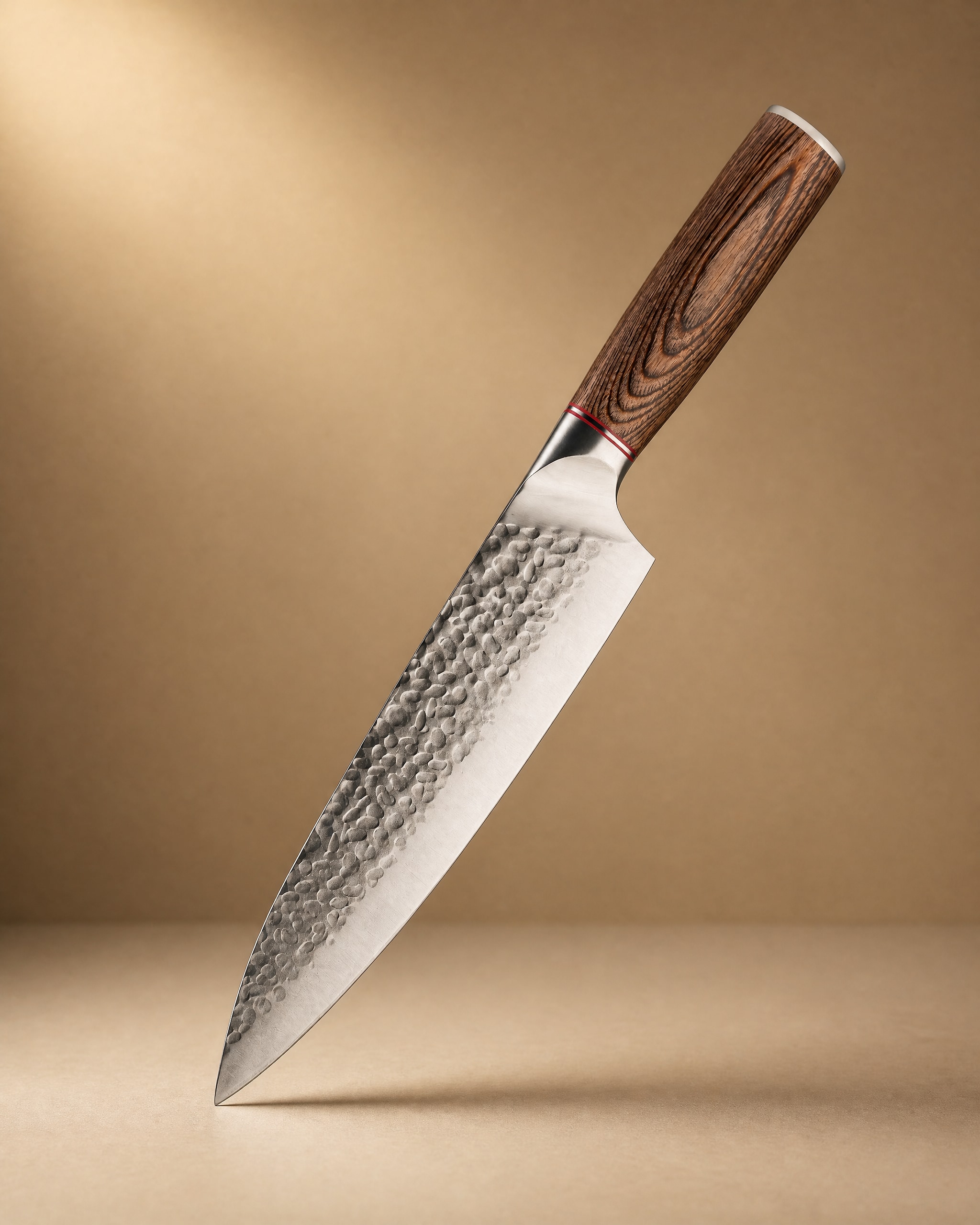 Akan 8'' Gyuto Knife 牛刀$49.99View product → is a good example of a knife that rewards a wood surface, and the
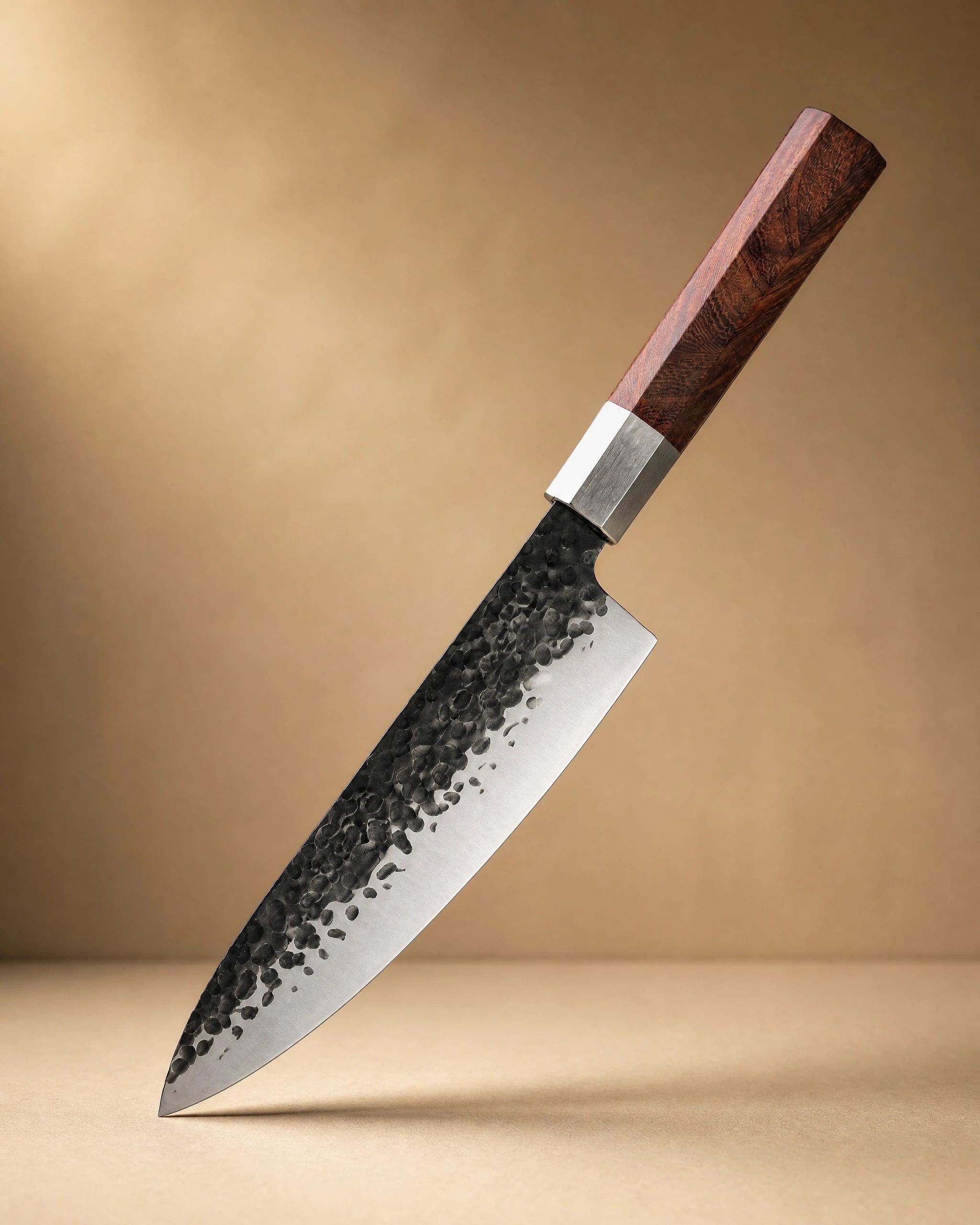 Sendai 8" Steel Gyuto Knife 牛刀$49.99View product → suits the same setup if you prefer a different feel in the hand.
If you bake a lot of crusty bread, keep a separate board and a dedicated serrated knife nearby. Sawing through a hard crust on wood is fine, but a glass board is not kind to any edge. The 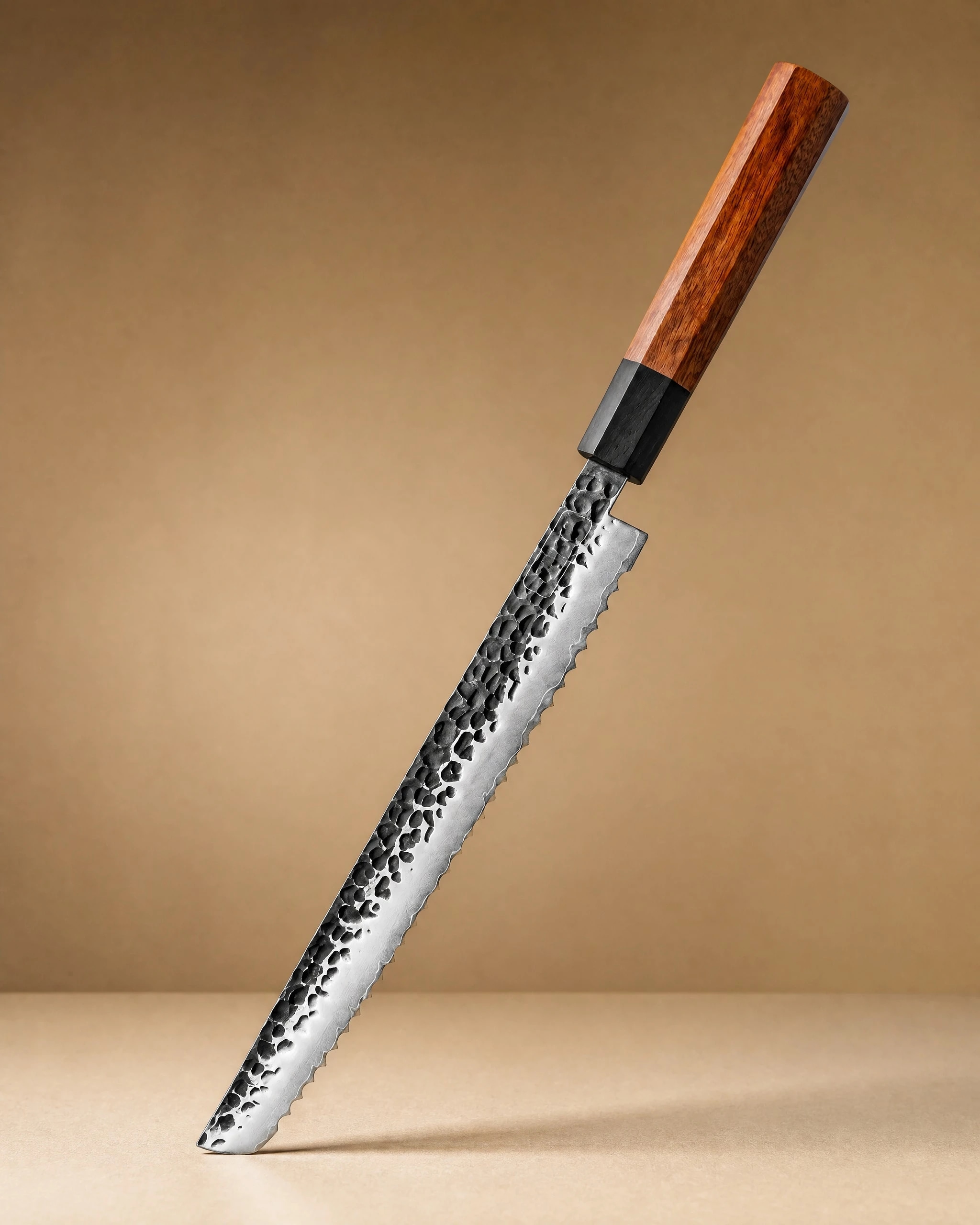 Rumoi 10" Japanese Bread Knife パン切りナイフ$59.99View product → makes short work of loaves without crushing the crumb. Cooks who want one coordinated setup for the whole kitchen can look at the
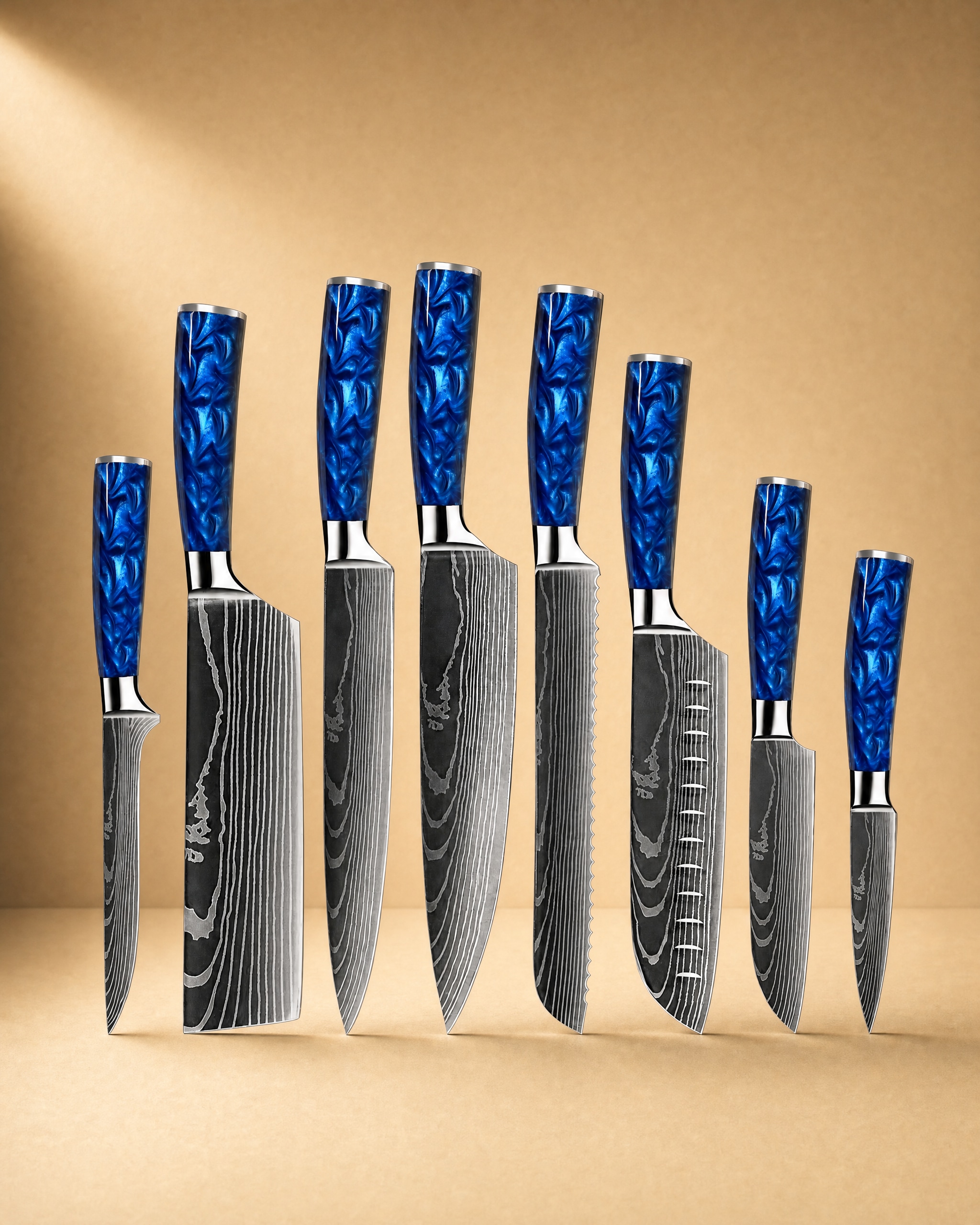 Shinano 信濃川 Damascus Pattern Stainless Steel Kitchen 8 Knife Set$149.99View product →, which covers the core tasks without asking you to juggle several board types. If you are still deciding which blades to pair with which surfaces, our knife guide walks through steel, grind, and length, and our knife care guide covers edges, stones, and storage. You can browse the full range on the knife shop page.
A Practical Setup for Most Kitchens
Two boards cover almost everything. A large hardwood board for vegetables, bread, and cooked food, and a smaller plastic or composite board dedicated to raw meat and fish. Add a third board only if you bake heavily or cook a lot of fish. Wash wood by hand with hot water and a little soap, dry it standing on edge, and oil it monthly or whenever it looks dry. Plastic goes in the dishwasher and gets replaced when the grooves deepen. Never leave either soaking.
Care Rules That Keep Any Board Safe
- Wash wood by hand, dry it immediately, and oil it monthly.
- Replace plastic once the surface is deeply scored.
- Keep a separate board for raw meat, and never reuse it for ready to eat food without washing it first.
- Sanitize with a dilute vinegar solution or a dishwasher cycle, whichever the board allows.
These habits matter more than the material itself. A well kept maple board is safer than a neglected plastic one, and vice versa. Consistency is the whole game.
The Bottom Line
Wood is the best cutting board material for most cooks, and it is the safest cutting board material for anyone who is willing to wash and oil it. Choose a hardwood board for prep, keep a plastic or composite board for raw proteins, and treat glass and marble as serving pieces rather than chopping surfaces. Your knife will stay sharp longer, your counter will look better, and the hygiene question becomes easy to answer instead of something you worry about after dinner.
Photography: Mike Gattorna via Unsplash.


