
Steak Knives Set: Choosing Quality Blades

Why a steak knife set deserves real thought
A steak knife looks simple: a short blade, a handle, a place at the table. In practice, the difference between a set that works for years and one that frustrates you by the second dinner is in the details. The blade geometry, the edge type, the handle shape, the balance, and the way the knife sits in your hand all matter. The phrase steak knives knife set is clumsy, but the intent is clear: you want a set that cuts steak cleanly, feels secure, and does not make dinner feel like a wrestling match.
This is a practical steak knives buying guide, not a list of claims. Table knives live by different rules. A steak knife is used by guests with different grips, on a plate, often with a fork in the other hand. It has to be forgiving. It also has to be sharp enough to cut through a seared crust without tearing the meat. That balance separates a useful steak knife set from a drawer full of dull metal.
What a steak knife set should do
A good steak knife set does three jobs. It cuts cleanly through meat, it feels stable in a range of hands, and it holds up to repeated use without rattling apart. Those jobs sound basic, but they are not automatic. Many sets are sold on appearance alone. A handsome handle and a shiny blade tell you little about how the knife will cut a ribeye or how it will feel after ten dinners.
Start with the cut. The blade should pass through meat with light pressure. You should not have to saw hard against a plate. A dull steak knife is more dangerous than a sharp one because it forces you to push and slip. A sharp edge also protects the meat: a clean cut keeps juices in the steak instead of smearing them across the plate.
Serrated or straight edge
Most steak knife sets use serrated edges. Serrations bite into a seared crust and keep cutting after some wear. They are forgiving at the table, which is why they are common. A serrated steak knife is a good choice for mixed guests, outdoor meals, and anyone who does not want to sharpen table knives often. The quality of the serration matters. Teeth should be cut cleanly and evenly, not stamped as rough waves.
Straight-edge steak knives cut with a cleaner slice. They suit people who like precise portions and who will maintain the edge. A straight edge can be sharpened at home, while a serrated edge is harder to restore without the right tools. If you serve steak often and care about clean slices, a straight-edge set can be rewarding. If you want low maintenance and a confident bite on crusty steak, serrated is the safer default.
Neither style is automatically better. The best steak knives for your table depend on how you eat, how often you host, and how much care you will give the blades. A set that stays sharp because it is easy to maintain will beat a set that is technically superior but neglected.
Blade quality without the marketing
You do not need a metallurgy lesson to judge a steak knife. Look at the blade for clean grinding, a straight spine, and an edge that meets the tip without a lump or a gap. Run a finger along the back, not the edge, and feel for burrs or rough spots. Open and close the set, if it comes with a block or case, and listen for loose fittings.
Thickness matters in the hand. A blade that is too thin can feel flexible against a plate. A blade that is too thick can wedge into the meat instead of slicing. You want a blade that feels rigid enough to guide but not heavy enough to tire your wrist. At the table, control matters more than raw power.
Handles, balance, and the hand that holds it
The handle is half the knife. It should fill your hand without forcing your fingers into a cramped position. The transition from handle to blade should be smooth, with no sharp step or gap where food and water can collect. Rivets should sit flush. A handle that looks good but feels slick when your hands are damp is a poor choice for a dinner table.
Balance is personal. A steak knife should feel settled, not tip heavy. Hold the knife as you would use it, with your index finger and thumb controlling the blade. If the knife wants to roll or twist, the handle shape is wrong for you. Guests will use the same set, so choose a shape that is not too sculpted or too narrow. Simple, neutral handles are usually the most forgiving.
Set size, storage, and the table
Most homes do well with a steak knife set of four to eight. Four covers a small household and a few guests. Six is a useful middle ground. Eight suits regular entertaining. Before you buy, think about storage. A block takes counter space. A tray takes drawer space. A case is good for occasional use but awkward for daily access. The set you can store neatly is the set you will actually use.
Check the set contents carefully. Some sets include a sharpener, a block, or a case, and those extras can be useful or just filler. If you are shopping for a dedicated steak knife set, browse the steak knife category and compare blade style, handle shape, and set size. Do not pay for a large set if you only need four good knives.

Steak knives versus kitchen knives
A steak knife is a table tool. It is not a chef's knife, and it should not be asked to break down a roast or chop vegetables. If you are building a kitchen from scratch, separate the two purchases. Buy a steak knife set for the table and a proper kitchen knife for the board. Our knife guide explains the basic shapes and what each one does.
For kitchen prep, a gyuto is a Japanese kitchen knife for everyday work. The 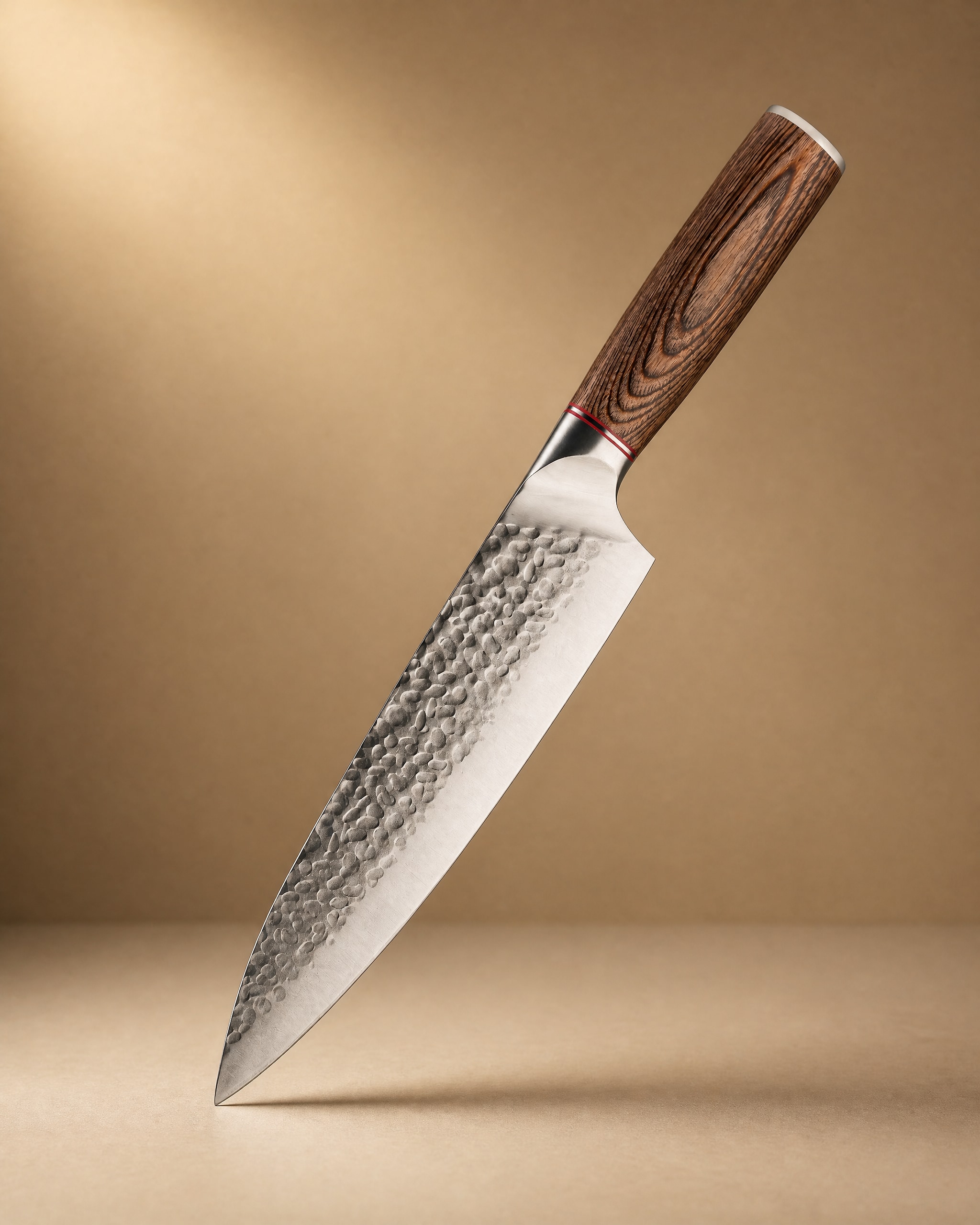 Akan 8'' Gyuto Knife 牛刀$49.99View product → is one option to compare if you want a single knife for prep. The
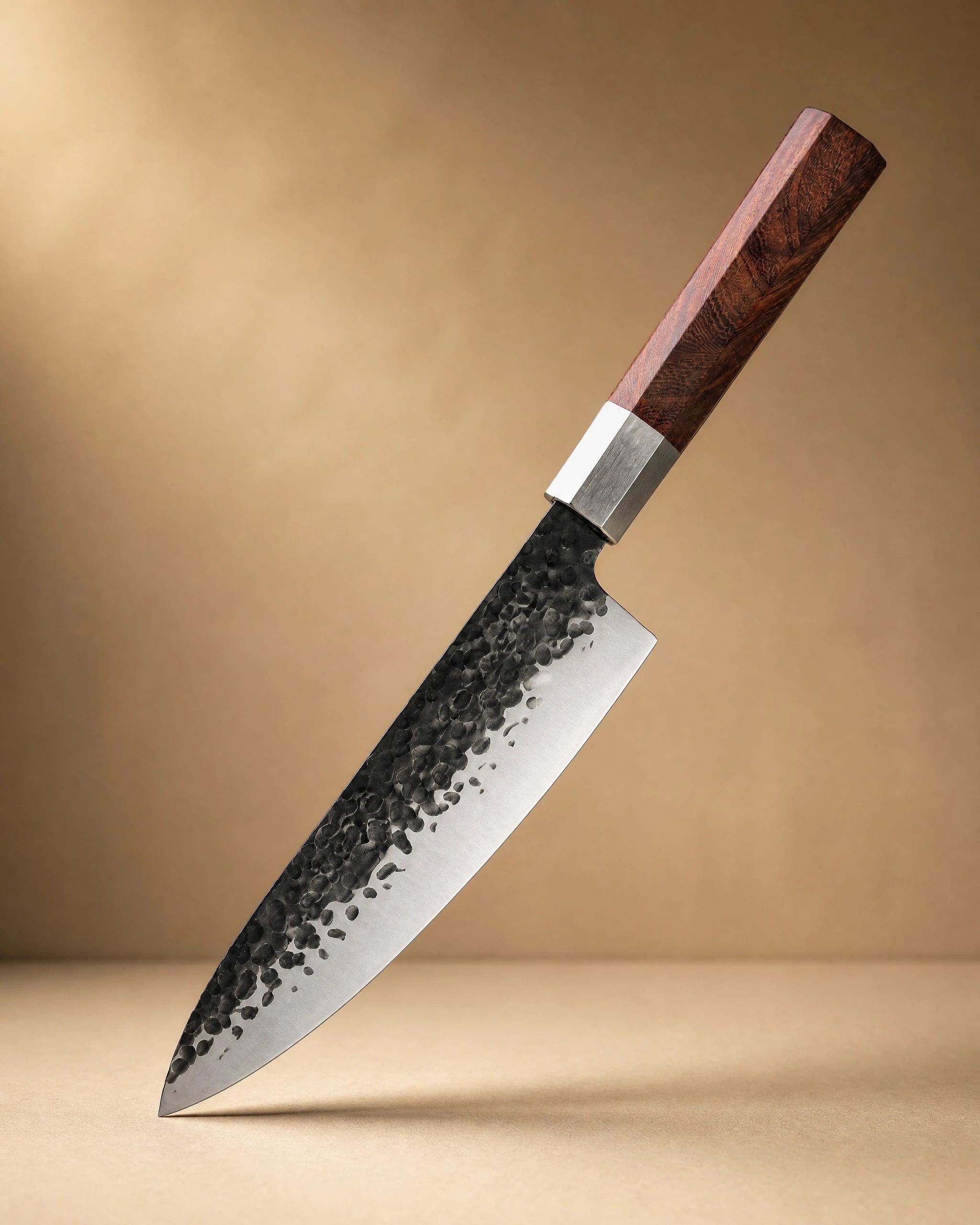 Sendai 8" Steel Gyuto Knife 牛刀$49.99View product → is another. Neither is a steak knife. Use them on a cutting board, then serve the steak with a table knife. Using a kitchen knife at the table is awkward for guests and hard on the edge.
Serrated kitchen knives have their own place. A bread knife needs clean teeth to cut crust without crushing the crumb. The 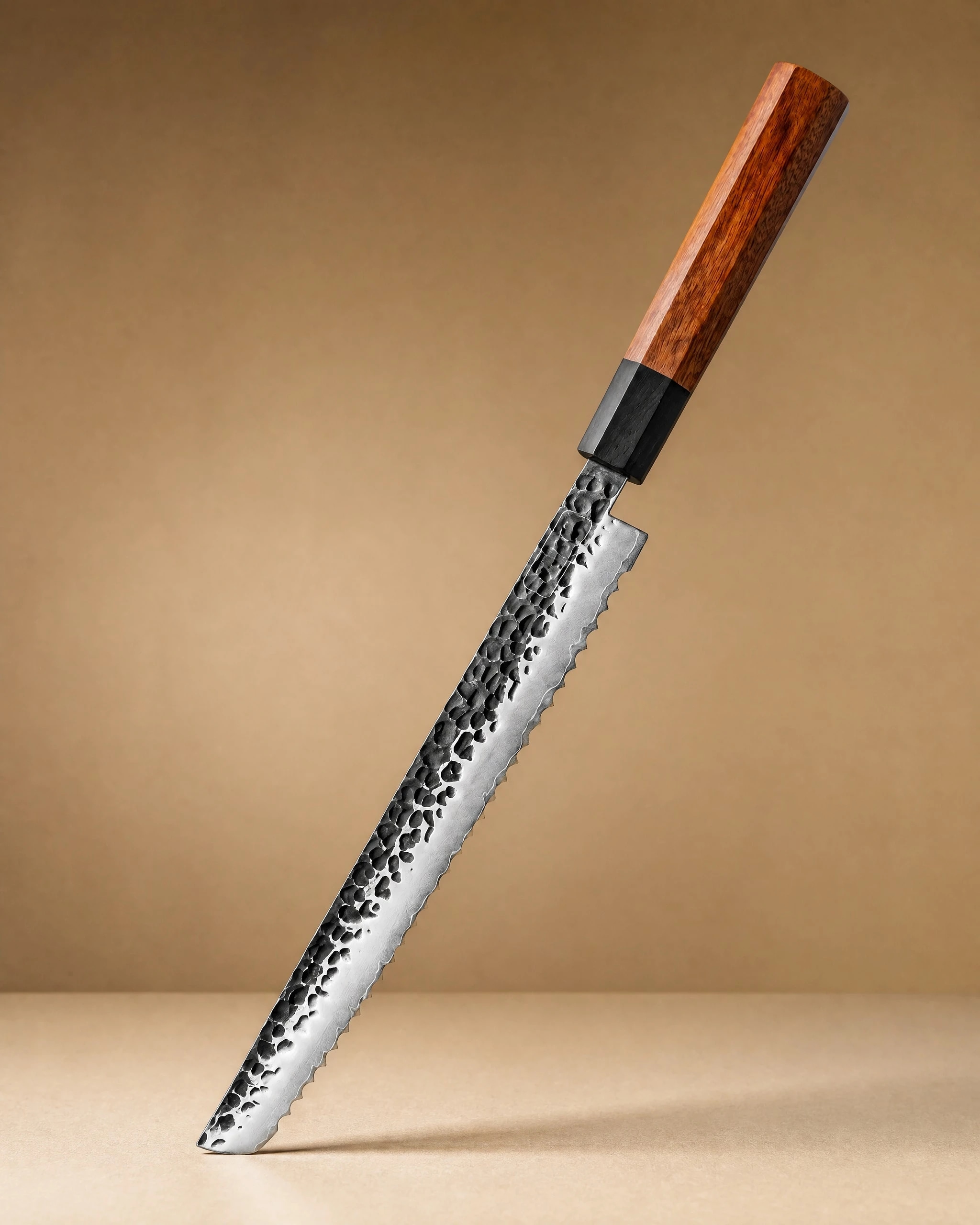 Rumoi 10" Japanese Bread Knife パン切りナイフ$59.99View product → is worth a look if you need a serrated blade for bread and you understand that it is not a substitute for a steak knife. The geometry is different, and the length is different. A bread knife belongs beside the cutting board, not at each place setting.
If you want a matched kitchen set rather than a dedicated steak knife set, the 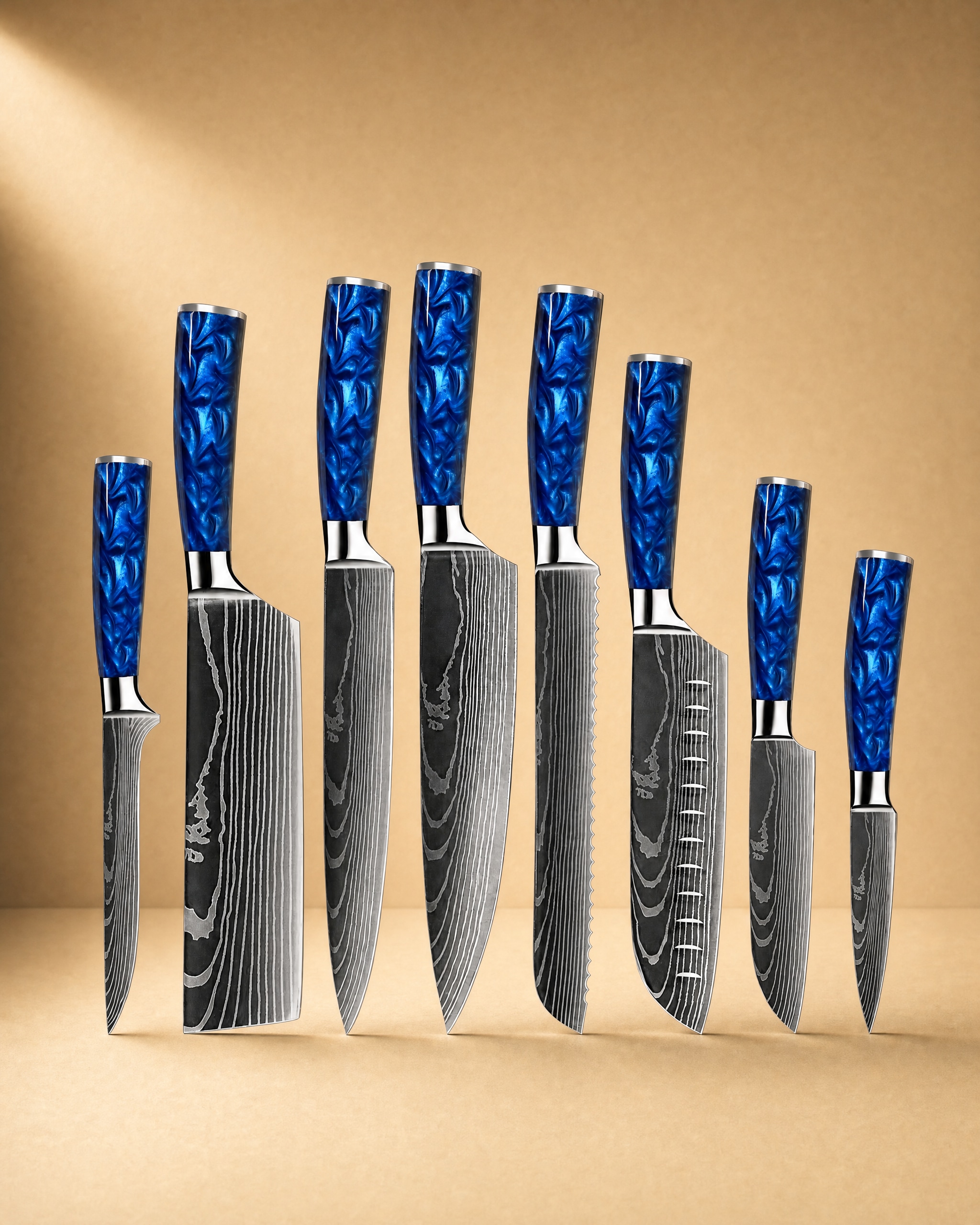 Shinano 信濃川 Damascus Pattern Stainless Steel Kitchen 8 Knife Set$149.99View product → is a broad option to review. Check what the set actually contains before you buy. A large set can be good value if you will use most of the knives. It can also add clutter if you only need two or three blades. Match the set to your cooking, not to a photo of a full block.
A steak knives buying guide for the store aisle
When you handle a steak knife set in person, slow down. These checks take a minute and tell you more than a label:
- Hold one knife as if you are cutting. The handle should fill your hand without pressure points.
- Look at the blade to handle joint. It should be tight, smooth, and free of gaps.
- Check the edge for even grinding. A wavy or uneven edge will cut poorly.
- Feel the balance. The knife should not tip forward or backward when you hold it lightly.
- Set the knife on a flat surface. It should sit stable, not rock on the handle or bolster.
- Open and close the storage case or block. Loose slots and rough edges are a bad sign.
If you buy online, read the return policy and check the set size. Photos can hide a rough joint or a thin handle. Reviews can help, but ignore claims that sound like a press release. Look for comments about balance, comfort, and how the edge holds up after normal use.
Care that keeps a set working
Steak knives take more abuse than most kitchen knives. They meet plates, bones, and the occasional dropped fork. Hand wash and dry them promptly, even if a maker claims they are dishwasher safe. Heat and detergent can dull edges and dry out handles. Store them in a block, a tray, or a case so the edges do not knock against other metal. Our knife care guide covers the basics for kitchen blades, and the same habits apply at the table.
Sharpen straight-edge steak knives when they start to slide instead of bite. Serrated knives need less frequent attention, but they still need care. Use a sharpening method that matches the edge, or have them professionally serviced. Do not use a pull-through sharpener on a serrated blade unless the tool is made for it. A few minutes of maintenance a few times a year will keep a set useful far longer than a fancy handle ever will.
Budget and value
A steak knife set does not need to be expensive to be good, but very cheap sets often cut corners in the joint, the handle, or the edge. Spend enough to get clean construction and a comfortable handle. Beyond that, price often reflects finish, brand, and packaging more than cutting performance. Set a budget for the number of knives you need, then compare within that range.
Value is not the same as low price. A set of four well-made knives that feel good and hold an edge is a better buy than eight knives that rattle and tear your steak. If you host often, buy the set you can maintain. If you host rarely, buy a smaller set and store it well. A steak knife set should make dinner easier, not become another thing to manage.
Choosing with confidence
The best steak knives are the ones that fit your table, your guests, and your habits. Decide between serrated and straight edges. Choose a handle that feels neutral and secure. Buy the set size you will store and use. Keep the blades clean and sharp. If you also need kitchen knives, shop the full knife shop and keep the roles separate. A good steak knife set is not flashy. It simply cuts well, feels right, and disappears into the meal.
Photography: amirali mirhashemian via Unsplash.


