
Best Non Slip Chopping Board Mat

A non slip chopping board mat is a small piece of kitchen gear that solves a simple problem: the board moves while you cut. That movement is more than an annoyance. It breaks concentration, forces your knife off line, and raises the risk of a slip. A mat adds friction between the board and the counter, so the board stays put while you work.
This guide covers what these mats do, when they help, what to look for, and how to set up a safer cutting station.
What a Non Slip Chopping Board Mat Actually Does
A mat is not a cutting surface. It is a grippy layer that sits under your board. Most are made from food grade silicone or a rubber like material. The top and bottom have some texture, and the material grips a dry countertop while the board grips the mat. The result is less sliding and less need to steady the board with your free hand.
The mat also creates a thin barrier between the board and the counter. That can keep moisture from a freshly washed board off the counter, and it can soften the clatter of a light board. It does not make a thin board feel heavy, and it does not fix a warped board. It simply improves the contact point.
Think of it as part of a system: a stable counter, a flat board, a clean mat, and a sharp knife. Each part matters. A mat cannot compensate for a dull knife or a board that rocks on its own.
When a Mat Helps and When It Does Not
A mat helps most with light boards, small prep boards, and smooth countertops. If you cut on a poly board that slides when you chop, a mat is an easy fix. It also helps if you use a board on a stone or quartz surface where water and crumbs reduce friction. Cooks who prep one handed, or who stop and start often, tend to notice the difference right away.
A mat is less useful if your board is already heavy and stable, or if your counter is uneven. It is not a replacement for a board that has warped, cracked, or lost its flat face. It is also not a cutting surface. Do not cut directly on the mat. Knives need a board with some give, and a mat is too thin for that job. If you are choosing a board and knife together, our knife guide can help you match the tool to the task.

Materials to Look For
Food grade silicone is the most common material for a non slip chopping board mat. It grips well, rinses clean, and does not hold odors when it is washed and dried properly. Look for a mat that feels dense and flat, not spongy. A very soft foam mat can let the board rock, which defeats the purpose.
Rubber mats can also work, but check that they are food safe and easy to clean. Avoid mats with fabric tops or open cells that trap water and crumbs. A closed surface is easier to keep sanitary. If the mat has a strong chemical smell out of the package, wash it and let it air out.
Texture matters on both sides. A smooth mat on a smooth counter can slide just as much as the board did. A light texture gives the material somewhere to grip without being so bumpy that the board wobbles.
Size, Thickness, and Fit
The mat should be close to the footprint of your board. If it is much smaller, the board can overhang and lift. If it is much larger, the edges can curl or catch crumbs.
Thickness is a balance. The mat should be thin enough that the board does not feel unstable, yet thick enough to grip and cushion. A mat that is too thick or too soft lets the board rock, especially during heavy chopping. A thin, dense mat is usually the better choice for daily prep.
Check the mat on your actual counter, not just in the package. Set it down, press the board on top, and try a few cuts. If the board moves, the mat is not doing its job. If the board rocks, the mat is too soft or the board is not flat. For a larger board and a larger knife, browse the full knife shop to compare sizes and shapes before you commit.
How to Set Up a Safe Cutting Station
Start with a clean, dry counter. A wet counter reduces friction, even under a good mat. Wipe the surface, let it dry, then place the mat. Set the board on top and press down with both hands. Give the board a gentle push. It should stay put. If it slides, remove the mat, dry both surfaces, and try again.
Keep the mat flat. Do not fold it or crease it in storage. A curled edge can lift the board and create a new wobble. Store it flat in a drawer or hang it if it has a hole. Before each use, check that no crumbs or moisture are trapped between the mat and the counter.
Use the right board for the job. A small board is fine for a few herbs. A larger board is safer for meat, squash, and long cuts. A mat helps in both cases, but it does not make a small board suitable for a large task. Keep your knives sharp and your workspace clear.
Cleaning and Care
Wash the mat with warm water and dish soap after use, especially after raw meat, poultry, or fish. Rinse it well and dry it before storage. If the manufacturer says it is dishwasher safe, follow that guidance. If not, hand wash it. Do not put a wet mat back in a drawer.
Inspect the mat now and then. Replace it if it tears, curls, hardens, or loses its grip. A worn mat can trap moisture and crumbs, and it will not hold the board the way it once did. For general knife and board care, our knife care guide covers cleaning, drying, and storage in more detail.
Matching the Mat to Your Knives and Board
A mat is only one part of prep. The knife matters too. For everyday vegetables, proteins, and general chopping, a gyuto is the flexible choice. 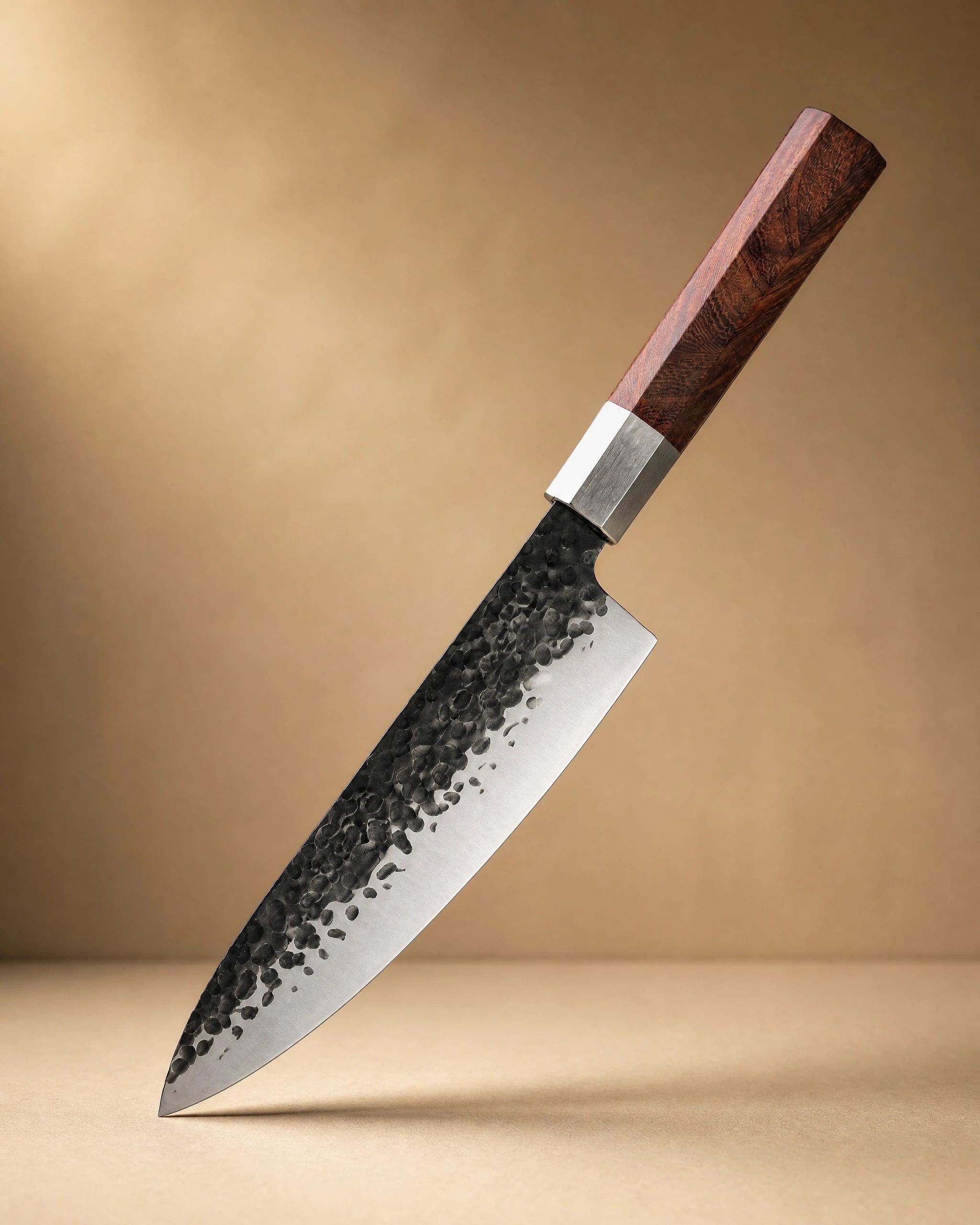 Sendai 8" Steel Gyuto Knife 牛刀$49.99View product → and
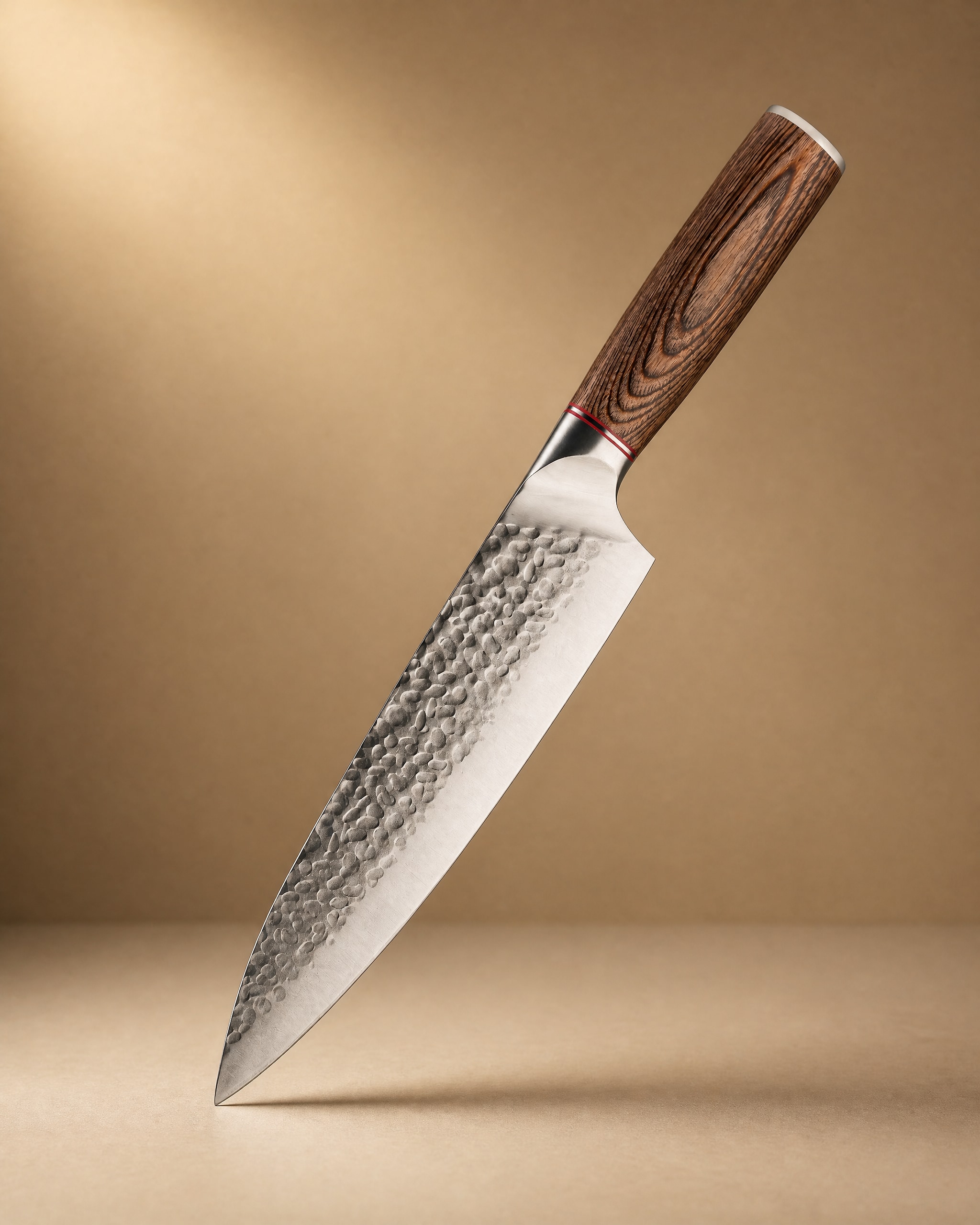 Akan 8'' Gyuto Knife 牛刀$49.99View product → are both listed for everyday prep, so either can sit at the center of a simple cutting station. If you cut crusty bread often, add a serrated knife.
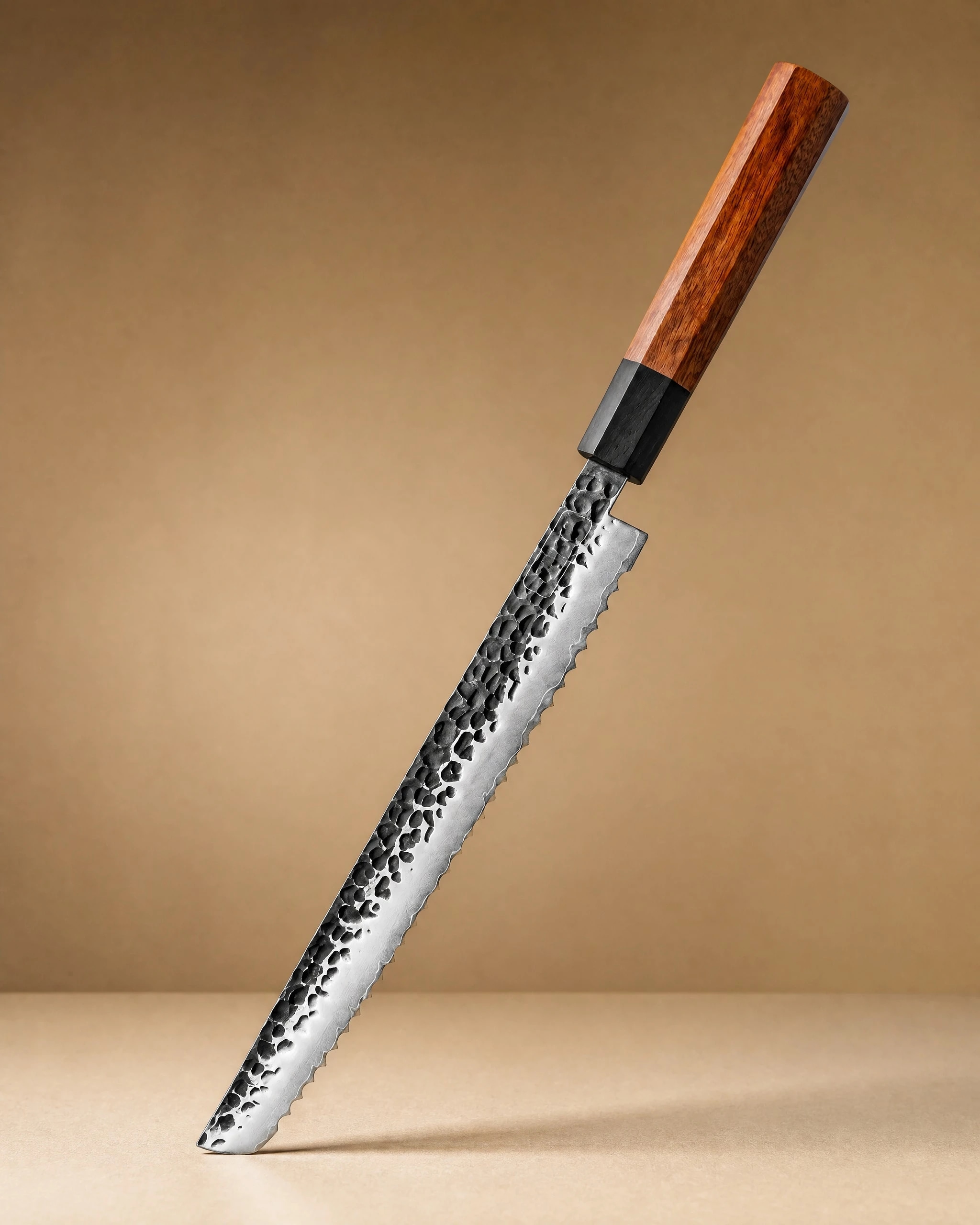 Rumoi 10" Japanese Bread Knife パン切りナイフ$59.99View product → is the bread knife in this group, and it can help you cut through a loaf without crushing it.
If you are building a kitchen from scratch, or replacing a mixed drawer of old knives, 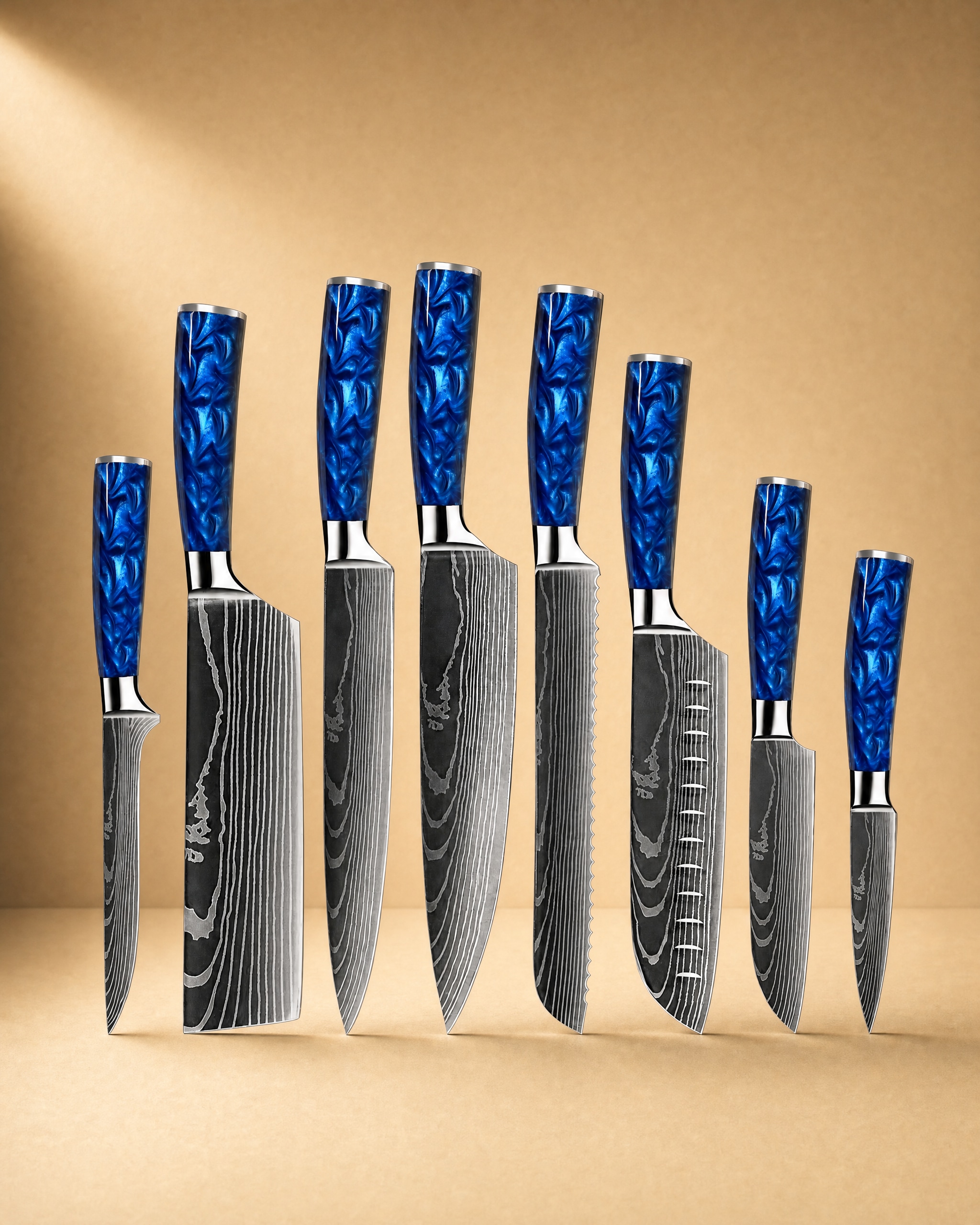 Shinano 信濃川 Damascus Pattern Stainless Steel Kitchen 8 Knife Set$149.99View product → is a set option to consider. A set does not replace good habits, but it can give you a consistent starting point. Match the board to the knife, and match the mat to the board. A large board on a small mat is less stable than a large board on a mat that fits.
Common Mistakes to Avoid
One common mistake is using a wet or greasy mat. Water and oil both reduce friction. Dry the counter and the mat before you set up. Another mistake is choosing a mat that is too soft. A spongy mat can let the board rock, which is worse than a little sliding because it changes the angle of your cut.
Do not cut directly on the mat. Do not use a mat to prop up a warped board. Do not ignore a board that has become smooth and slick on the bottom. Wash the board, dry it, and check it on the mat. If it still moves, the mat may be too small or too smooth. Also, do not store the mat under a heavy pile of pans. Long term pressure can leave a crease.
A Simple Buying Checklist
Use this list to narrow the options. It is short on purpose. A good mat is a simple tool.
- Food grade material with a dense, flat feel.
- Texture on both sides, not just one.
- A size close to the footprint of your main board.
- Thin enough to avoid rocking, thick enough to grip.
- Easy to wash and quick to dry.
- No strong chemical odor and no curling edges.
Price matters, but fit matters more. A cheap mat that is the right size and material will do more for safety than an expensive mat that is too thick or too small.
A Practical Choice for Safer Prep
A non slip chopping board mat is a small addition with a clear job. It keeps the board from sliding, protects the counter from moisture, and helps you keep your attention on the knife. It will not replace a good board, a sharp knife, or careful technique, but it can make those things easier to use.
Set up a dry counter, a flat board, and a mat that fits. Check the grip with a gentle push before you cut. Wash and dry the mat after use. If you are upgrading your prep tools, start with the knife you reach for most, then choose a board and mat that support it.
Photography: Sergey Kotenev via Unsplash.

