
Best Wood Cutting Board: Choosing the Right Hardwood

A cutting board is the one surface your knife edge meets every day, which makes it the most important piece of kitchen equipment you rarely think about. Choose the wrong one and you will spend more time at the whetstone. Choose the right one and your edges hold up, your prep gets quieter, and the board itself lasts long enough to hand down. This guide covers the wood types worth buying, how grain and hardness affect your knives, and how to size a board to the food you actually cook.
Why Wood Works Better Than Most Surfaces
Wood is not the hardest material in your kitchen, and that is exactly the point. A good hardwood board has enough give at the surface that the thin edge of a knife sinks in a hair and springs back, rather than folding over or chipping. Plastic is soft, but it is uniform, and it scars into deep grooves that trap moisture and harbor bacteria while shedding fine particles as you cut. Glass, stone and ceramic boards are unforgiving: the edge has nowhere to go, so it rolls or chips on contact.
Wood also has natural antimicrobial properties that have been studied for decades. Bacteria that land in the grain tend to die off as the wood dries. That does not replace basic hygiene, but it is one reason butcher blocks and wooden prep surfaces have stayed in professional kitchens for a century.
The Best Wood Material for a Cutting Board: The Short List
Three North American hardwoods do nearly all the work in a serious kitchen: hard maple, black cherry, and black walnut. Everything else is either a specialty or a compromise.
Cutting Board Wood Types, Compared Honestly
- Hard maple. The standard for a reason. Closed, tight grain, very hard, pale and neutral. It resists deep scarring, takes oil well, and does not transfer color or odor to food. It is heavy, it is not cheap, and it is the board most butchers use.
- Black cherry. Softer than maple, warmer in color, and easier on an edge. It darkens with age and light. A good middle option if you want something gentler on thin Japanese blades.
- Black walnut. The softest of the three and the most beautiful. Excellent on delicate edges and light in feel for its size. It shows knife marks sooner and needs more frequent oiling.
- Beech. Common in European blocks, hard and tight, often more affordable than maple. Perfectly good, slightly less stable in wide panels.
- Acacia and teak. Widely sold and variable in quality. The grain can be interlocked, which makes it harder to keep flat. Teak's natural oils help with water resistance, but the wood varies a lot between pieces.
- Bamboo. Not a hardwood at all, it is a grass. It is hard, but it is also hard on edges, and the resin glues holding it together vary widely. Fine as a light secondary board, not the one I would build a kitchen around.

Hardness, Grain, and What It Means for Your Edge
Hardness matters in both directions. A harder board resists gouging, which means a flatter surface and fewer deep grooves for a thin edge to catch in. A softer board gives more, which spares very thin edges, especially the acutely ground Japanese knives many of us use.
Grain matters just as much. Closed, straight grain woods like maple and cherry present a dense, even surface. Open grain woods, and woods with interlocked or figured grain, can wear unevenly and feel rough under the knife after a few years of use.
The best type of wood for a chopping board is not automatically the hardest one available. It is the one hard enough to stay flat, tight-grained enough to be easy to maintain, and soft enough that a thin edge does not suffer. For most kitchens, that is maple.
End Grain vs Edge Grain
Edge grain means the working surface is the side of the boards, running lengthwise. These boards are simpler to build, lighter, more affordable, and perfectly good for daily prep. They will show knife marks sooner and need resurfacing eventually.
End grain means the surface is the cut ends of the blocks, so the knife edge parts the fibers instead of slicing across them. End grain boards are gentler on edges, self-healing in a visual sense, heavier, and more expensive. They also need more oil and more careful drying because they move more with humidity. If you cook daily and want one board, buy a thick edge grain maple. If you want the best surface for thin Japanese knives and you will maintain it, end grain is worth the money.
Size and Thickness: Get This Right
Buy bigger than you think you need, within your counter and sink. A board that fits comfortably beside the sink but cannot hold a pile of diced onion and a whole chicken is a board you will fight. For most home cooks, a rectangle around 18 by 12 inches is the useful minimum, and something closer to 20 by 15 is a genuine upgrade in how easy prep feels.
Thickness adds stability and weight. Thin boards slide and warp. Something in the 1.25 to 2 inch range sits still without a towel under it and gives you material to sand back later. Feet or a routed finger groove help, and a juice groove is worth it if you carve. Reversible boards double the surface, but only if both faces stay flat.
What Wood Does to Your Knives
The board is the other half of the cutting equation. A gyuto with a thin, hard core steel will hold its edge noticeably longer on maple or cherry than on bamboo or plastic, and it will never chip the way it can on glass. If you are still choosing a blade, our knife guide covers steel types, profiles and length so you can pair the two deliberately.
For everyday prep on a hardwood board, an 8 inch gyuto is the workhorse. The 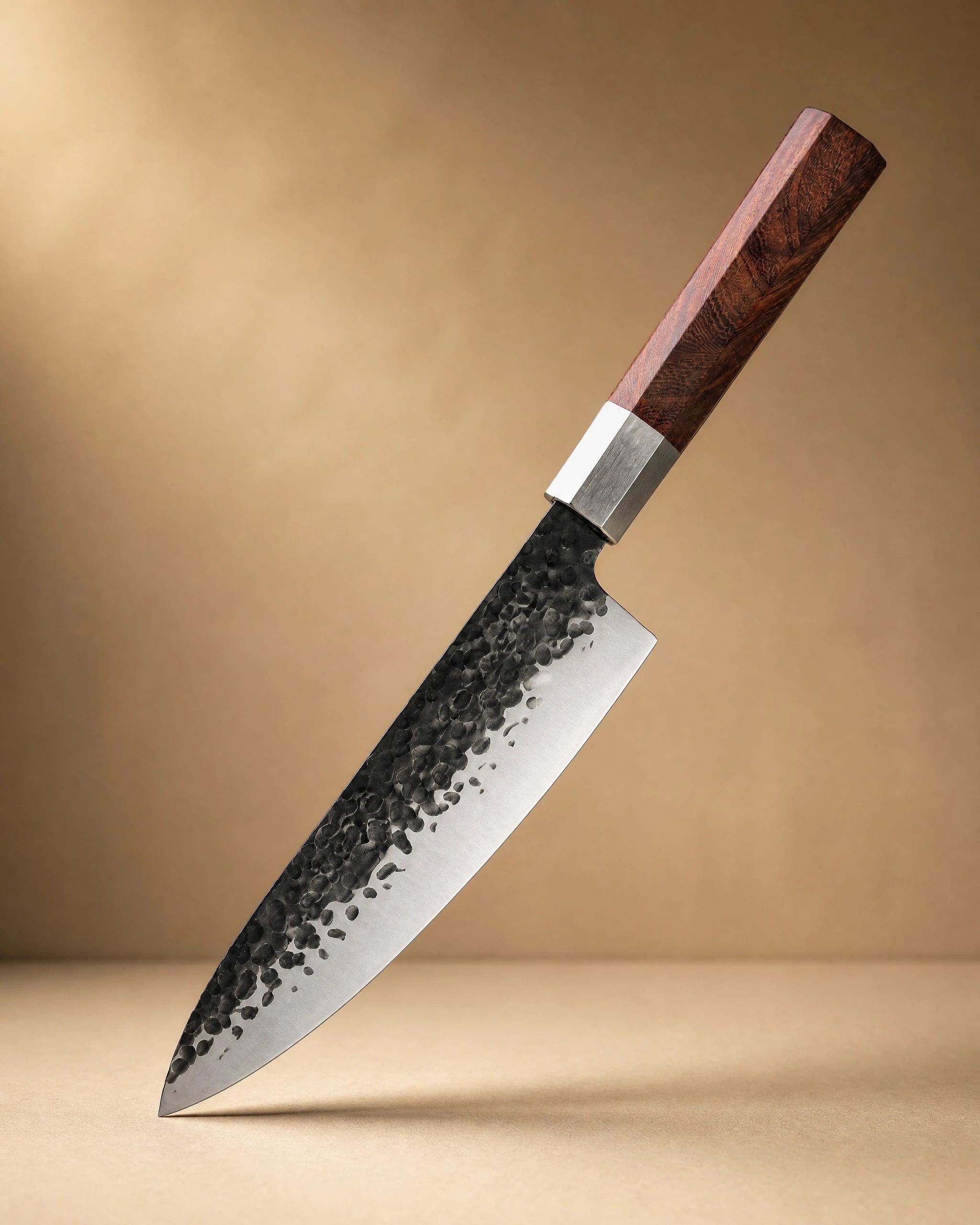 Sendai 8" Steel Gyuto Knife 牛刀$49.99View product → handles onions, proteins and vegetables with a thin grind that rewards a forgiving surface. The
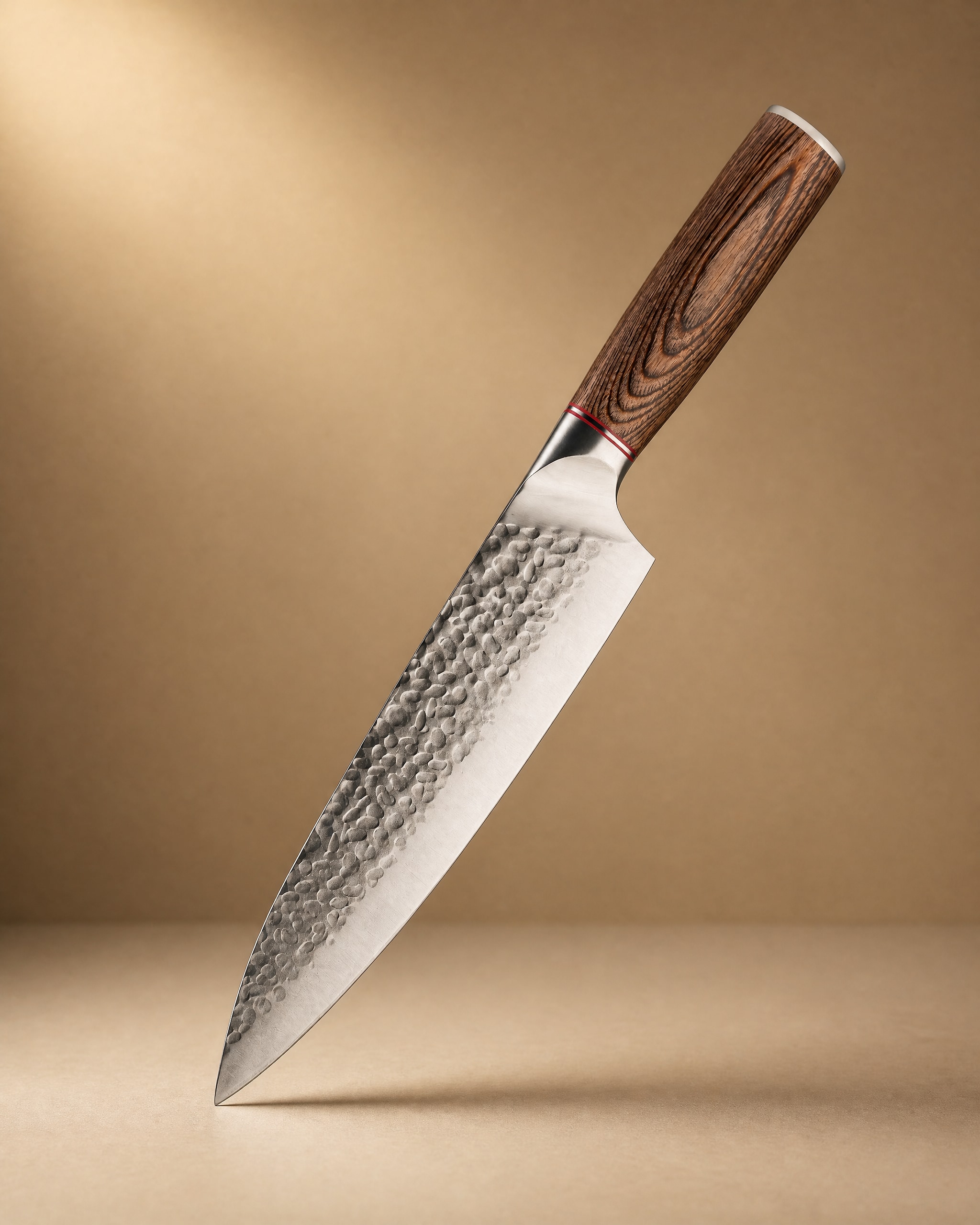 Akan 8'' Gyuto Knife 牛刀$49.99View product → is the same size in a different handle configuration, so the choice between them comes down to how the handle feels in your hand.
Bread is the one job where a board protects you as much as the knife. The 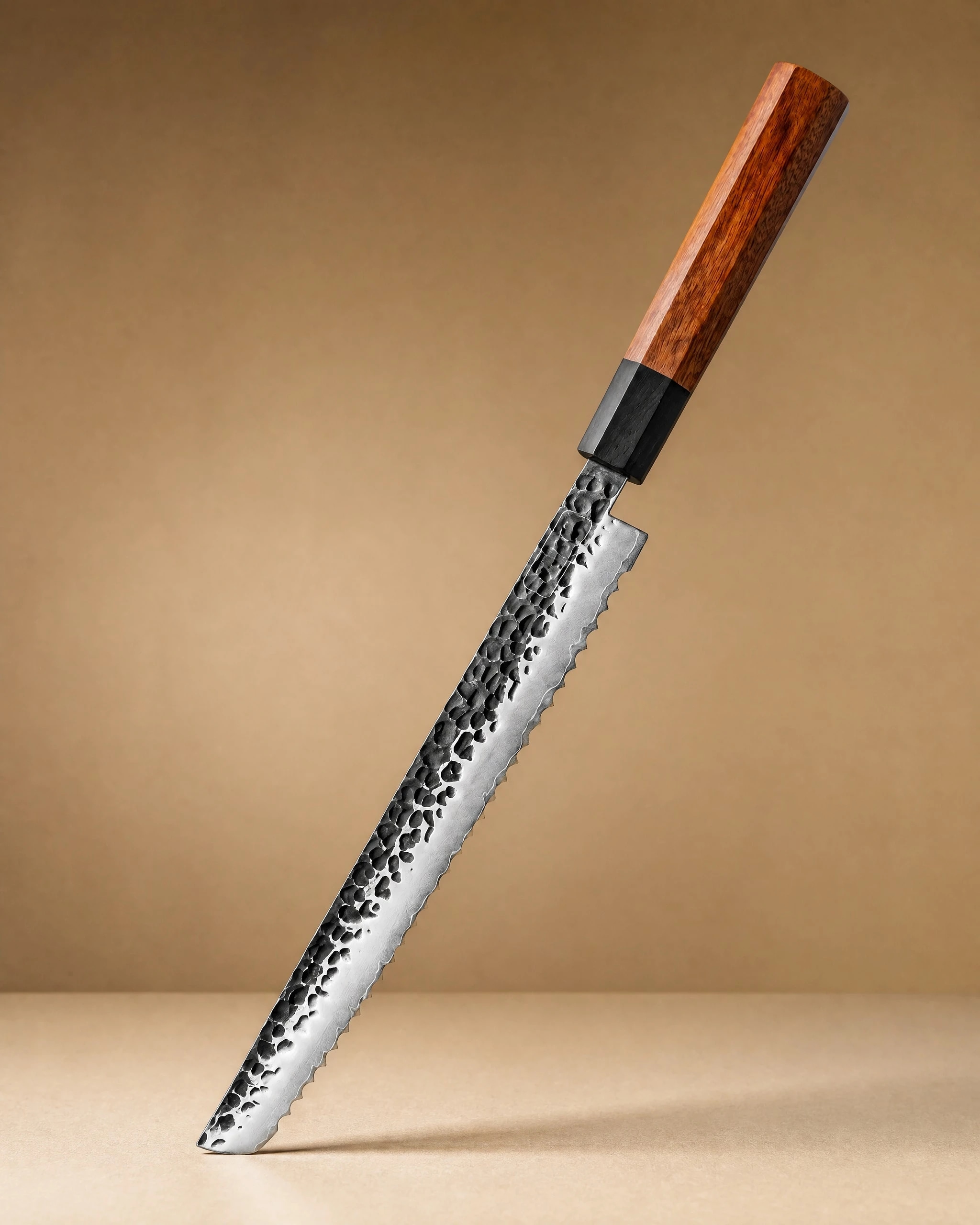 Rumoi 10" Japanese Bread Knife パン切りナイフ$59.99View product → cuts through crust without crushing the crumb, and a wood surface keeps the serrations from skating the way they do on a hard laminate. If you are outfitting a kitchen from scratch, the
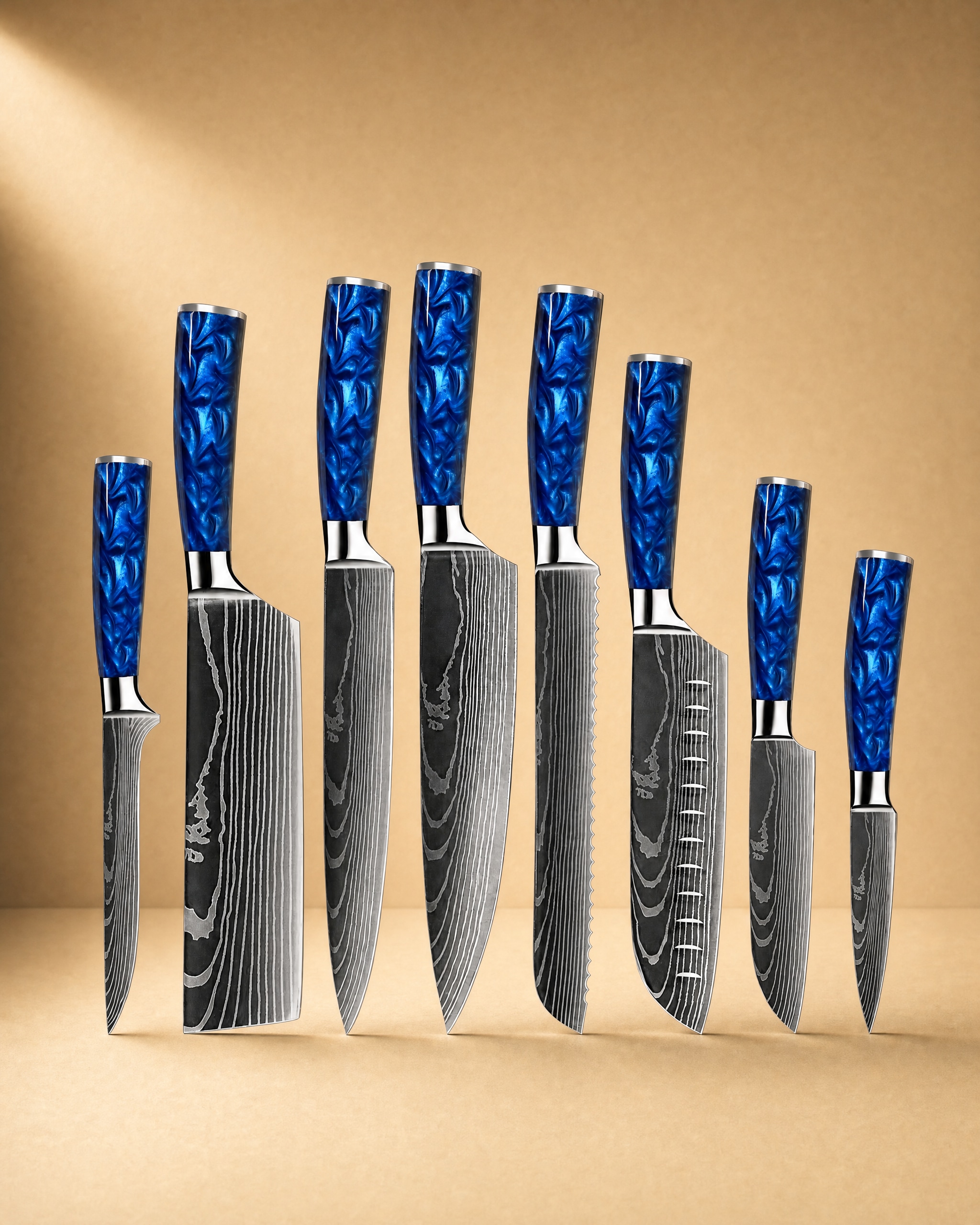 Shinano 信濃川 Damascus Pattern Stainless Steel Kitchen 8 Knife Set$149.99View product → covers the range from paring to slicing, and it pairs naturally with one large board and one small one.
Care That Keeps a Board Alive
Never put a wood board in the dishwasher. Heat and prolonged soaking swell the fibers, open glue lines, and warp the panel. Wash both faces quickly with warm water and a drop of mild soap, rinse, and stand it on edge to dry with air on both sides. Do not leave it flat on a wet counter.
Oil monthly with food safe mineral oil, more often in dry winter air, and let it soak in overnight before wiping off the excess. A board that looks pale and thirsty is a board that will crack. Skip vegetable oils that go rancid, and skip anything labeled as a finish if you plan to cut on it. Deep scratches can be sanded out with the grain and re-oiled. Use vinegar or dilute bleach for sanitizing, then rinse and dry completely. Our knife care guide covers the blade side of the same routine.
A Buying Checklist
Look for a board with straight, evenly spaced grain and no visible gaps or knots at the edge. Check that it sits flat on the counter with no rock. Confirm the actual dimensions and thickness, not the shipping box. Ask what finish was used. Prefer a maker who tells you the species and where it was assembled. Then buy the largest board your counter allows, oil it before the first use, and give up on the idea that it will stay pristine. A board with honest knife marks is a board that is doing its job.
Wood is the one surface that protects both your knives and your hands. Pick a hardwood that matches your blades, size it for the food you actually cook, and maintain it with ten minutes a month. Browse the full selection of knives in our shop when you are ready to pair board and blade.
Photography: Sergey Kotenev via Unsplash.


