
Best Knife Sharpening Stone for Japanese Knives

A Japanese knife is a thin, hard blade with an edge ground at a shallow angle. That edge rarely fails because the steel was wrong. It fails because the tool used to keep it sharp was wrong. A honing rod pushes a soft Western edge back into line. On a hard, thin Japanese blade it chips the edge instead. A pull through sharpener cuts a rough scraper edge that feels sharp for a week and then never comes back.
A whetstone removes steel and rebuilds the apex. That is the only thing in a kitchen that actually sharpens. The rest rearranges the damage. If you own one good Japanese knife, one good stone will outlast it. Most cooks need fewer stones than they think, and the one they buy first should be better than the rest.
Why a Whetstone Sharpens and a Rod Does Not
Sharpening is a controlled act of removing metal at a consistent angle until two planes meet at a line thinner than a human hair. A whetstone does this because it is abrasive and flat. The flat part matters as much as the abrasive part. A flat surface holds the bevel at a fixed angle, so each stroke repeats the last. A rod is round, and a pull through sharpener is a pair of carbide cutters. Neither gives you a reference plane.
Japanese blades are often thin behind the edge, and many are ground with a slight asymmetry. A stone lets you work each side deliberately: more time on the front bevel, a burr check, then a few light strokes on the back. Nothing else in the kitchen does that.
Grit Is the First Decision, and Usually the Only One
Grit is abrasive particle size, and it sets the job the stone can do. Coarse stones shape. Medium stones sharpen. Fine stones polish. Buy in the wrong order and you will either spend an hour on a dull knife or remove more steel than the edge can spare.
- 220 to 400 grit: repairs. Chips, a broken tip, a bevel that needs to be reset. Most home cooks use this a few times a year at most.
- 800 to 1200 grit: the working edge. This is the stone you touch up on. It leaves a slightly toothy edge that bites into tomato skin and it does not wear out fast.
- 3000 to 5000 grit: refinement. It polishes the bevel and reduces the bite. Good for proteins and clean slices, less useful for peppers and tomatoes.
- 8000 grit and up: a finishing stone for people who sharpen often and know why they want it. Not a starting point.
If you buy one stone, buy a 1000 grit. If you buy two, buy a 400 and a 1000, or a 1000 and a 3000. A 1000 grit kitchen knife sharpening stone handles a dull gyuto in five minutes and a touch up in ninety seconds. That ratio is what makes it the best knife sharpening stone for most households, and it is the purchase I would make first.
What Separates a Good Stone From a Cheap One
Two stones can both say 1000 grit and behave nothing alike. The differences are in the binder, the hardness of the abrasive, and how consistently the stone releases fresh grit as it works.
Hardness and Feedback
A harder stone stays flat longer and cuts slower. A softer stone releases abrasive faster, cuts quicker, dishes out of flat sooner, and gives more feedback through your fingers. Neither is better in the abstract. A hard stone rewards a hand that already holds an angle. A softer stone is more forgiving for someone still learning.
Cheap stones are soft in a bad way. They gouge, they shed grit unevenly, and the surface goes out of flat within one session. You end up fighting the stone instead of the edge.
Size, Thickness and Base
A full size stone is roughly 210 mm long and 70 mm wide. Anything under about 180 mm makes it hard to stroke a long gyuto in one pass. Thickness is lifespan. A holder or a non slip base is not a luxury, because a wobbling stone rounds over the bevel you are trying to set.
Soaking or Splash and Go
Soaking stones are porous and need ten to fifteen minutes underwater before use. They feel creamy and are the traditional choice for Japanese blades. Splash and go stones are resin or ceramic bonded, need only a splash of water, and suit a quick touch up. Both work. Soaking stones ask for planning, splash and go stones ask for more money at the same quality of finish.
The Knives You Are Sharpening
Stone choice follows the blade. A thin, hard gyuto with a shallow bevel wants a stone that cuts cleanly and stays flat. A softer steel wants a coarser working grit, because it will need touch ups more often. Take stock of what is actually in the block before you buy.
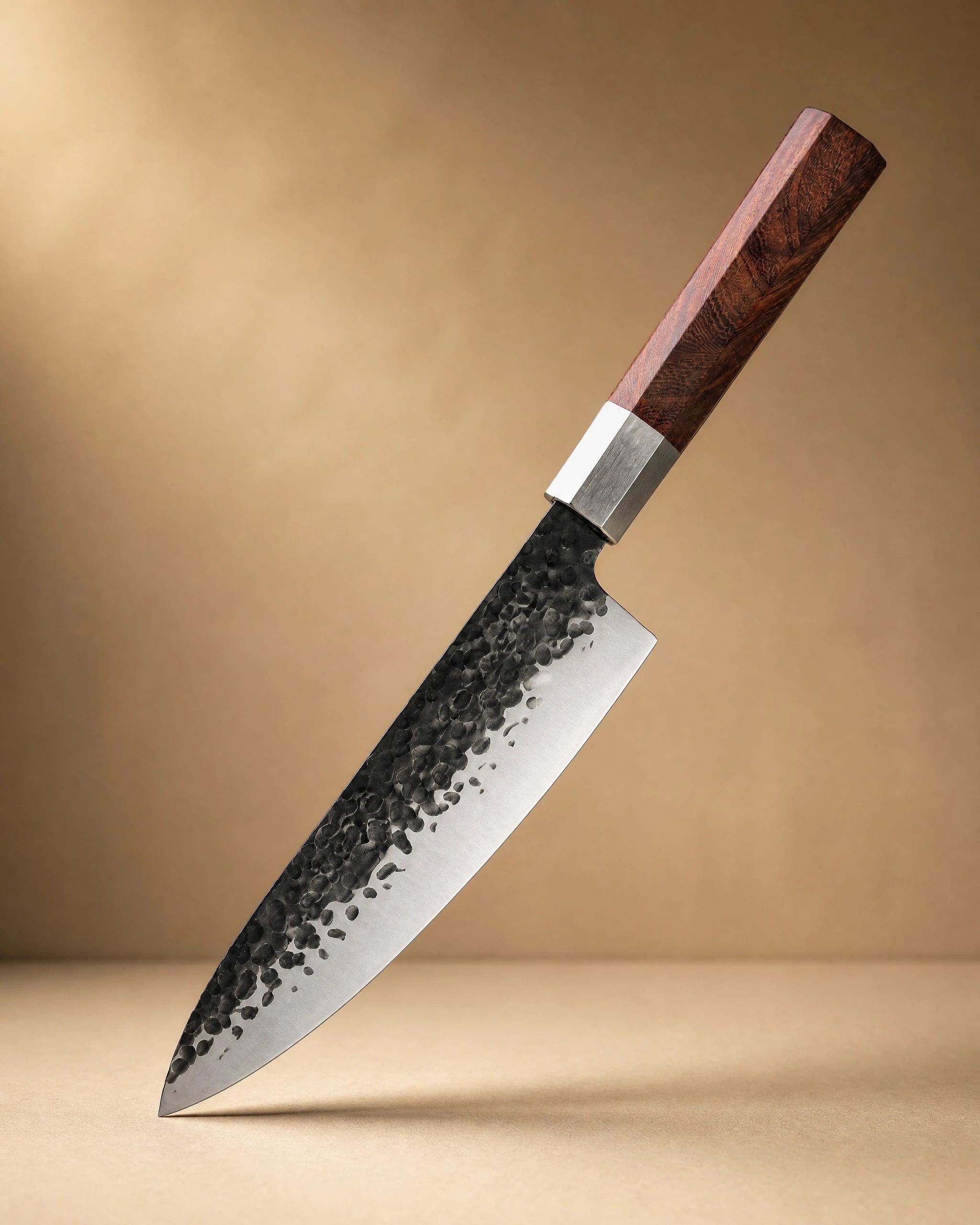 Sendai 8" Steel Gyuto Knife 牛刀$49.99View product → and
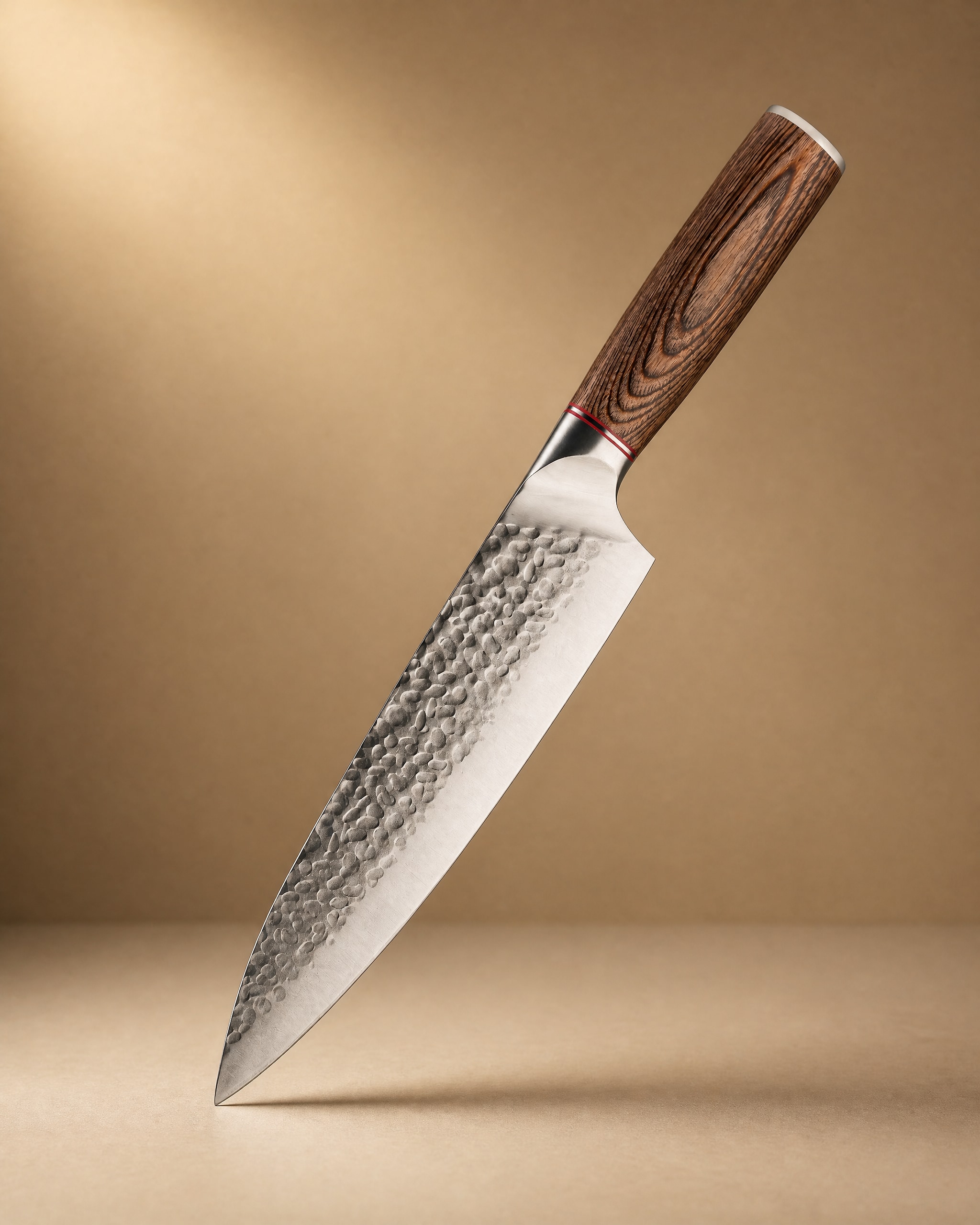 Akan 8'' Gyuto Knife 牛刀$49.99View product → are both 8 inch gyuto shapes, the all purpose blade most cooks reach for first. They are the knives a 1000 grit stone will spend most of its life on. Work them at a shallow angle, keep the pressure light, and finish on a 3000 if you want a cleaner slice through fish or raw protein.
A serrated blade is a different job. 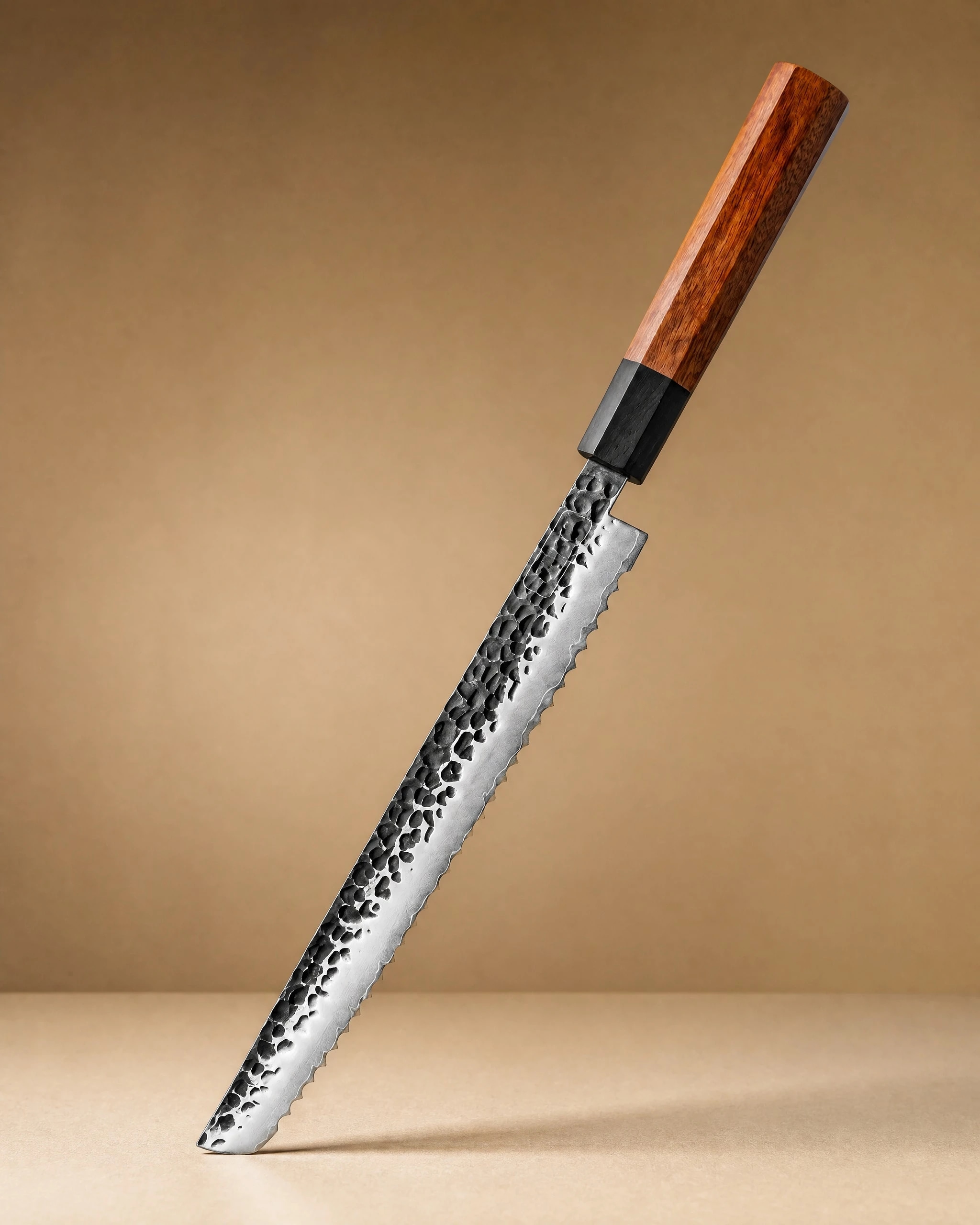 Rumoi 10" Japanese Bread Knife パン切りナイフ$59.99View product → should not go flat against a stone. Sharpen the scallops one at a time with a thin rod or the edge of a fine stone, and leave the flat side alone. Sharpening a bread knife like a gyuto rounds the teeth and ruins it.
If you are sharpening for a household rather than one cook, 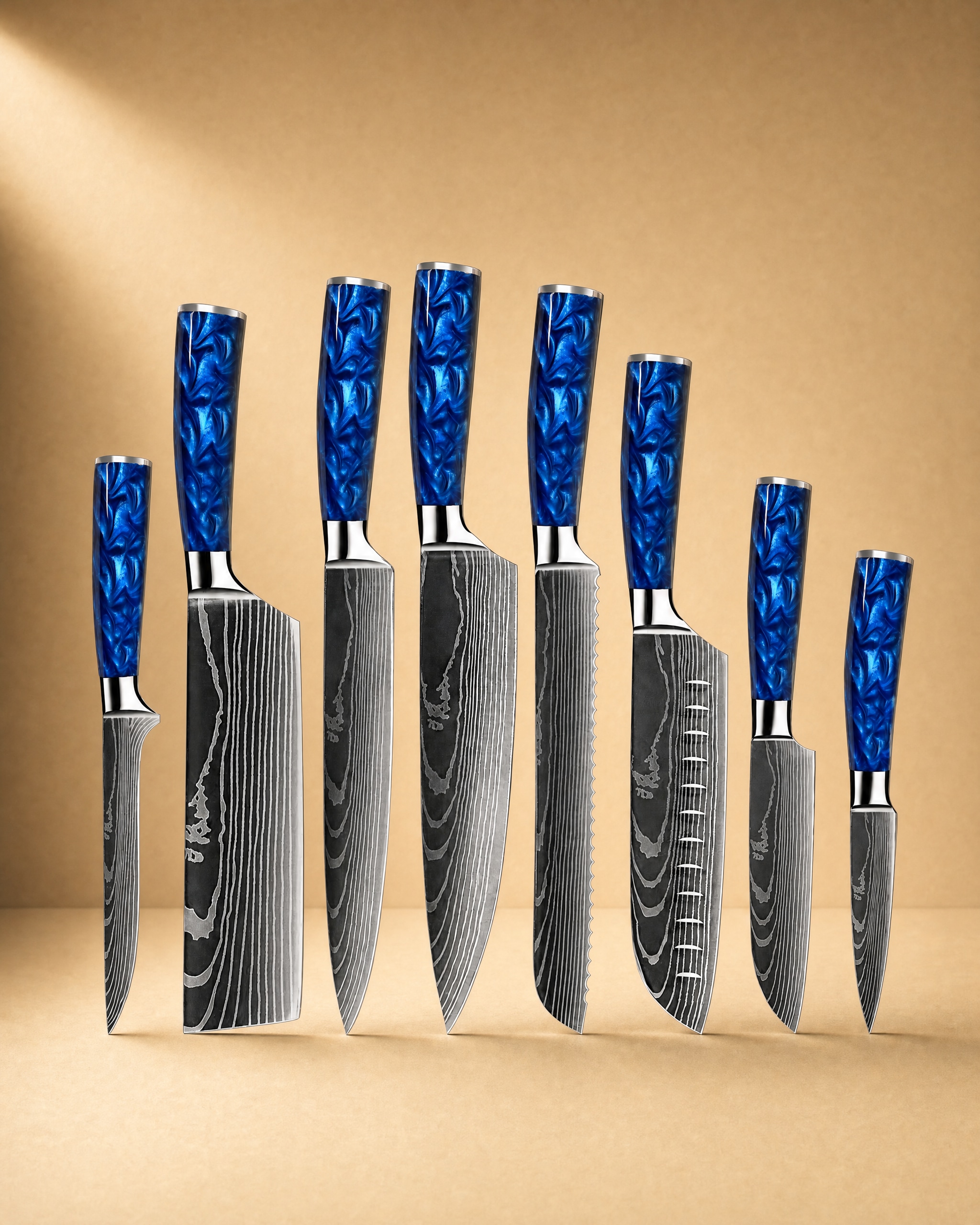 Shinano 信濃川 Damascus Pattern Stainless Steel Kitchen 8 Knife Set$149.99View product → covers more ground, and a set means more blades in rotation. A 1000 grit stone plus a coarse stone for the occasional chip covers that whole drawer. Browse the full range at our knife shop if you are still deciding which blade comes first.
Angle and Pressure: The Two Things That Decide the Result
Japanese knives are usually sharpened at about 15 degrees per side. Western knives sit closer to 20. A degree or two of drift matters less than consistency, so pick an angle and repeat it. The marker trick is the cheapest way to check: color the bevel with a felt tip pen, take one stroke, and see where the ink came off. Ink left at the top of the bevel means you are too shallow. Ink gone only at the very edge means you are too steep.
Start with moderate pressure and finish light. Heavy pressure removes steel and raises a burr, which is what you want early. Light pressure refines the apex and clears the burr, which is what you want at the end. Most dull knives were not sharpened too little. They are dull because the burr was never fully removed and the edge folded on the first onion.
Work one side until you feel a burr along the full length of the edge, then match the stroke count on the other side. Feel the burr with a fingertip moving across the edge, never along it. Then reduce pressure with each alternating pass until you are barely touching the stone.
Keep the Stone Flat
A dished stone cannot produce a flat bevel, no matter how good your technique is. Check flatness with a straightedge, or draw a pencil grid on the surface and lap until the grid is gone. A diamond flattening plate is the practical tool, and it takes about a minute on a 1000 grit stone. Flatten before you sharpen, not after, so every session starts from a known surface.
A Starter Setup That Actually Works
One 1000 grit stone, one flattening plate, one holder. That is the whole kit, and it will sharpen every straight edged knife in a normal kitchen. Add a 3000 or 4000 grit later if you want a cleaner finish on raw fish or if you sharpen often enough to notice the difference. Add a coarse stone only when you have a chip to fix.
Skip the bargain combo stones with a coarse side glued to a fine side. The coarse side is usually too soft, and the seam collects grit. Skip electric sharpeners with carbide wheels, and skip angle clips until you can hold a steady angle by hand, because they teach you to lean on the clip instead of reading the bevel.
Care and Storage
Soak a soaking stone fully, then let it dry slowly and evenly, away from direct heat. Do not leave it in water for days and do not put it in a dishwasher. Rinse it after use and refresh the surface with a nagura stone or a diamond plate when it loads with metal. Store it dry and flat.
Sharpen before the knife is truly dull. Two minutes on a 1000 grit stone every few weeks is easier on the blade than an hour of repair once a year. Wipe the blade dry after washing and keep it out of the sink. Our knife care guide covers the daily habits that keep an edge alive between sessions, and the knife buying guide explains bevel geometry if you want to know what the stone is actually doing.
What to Buy First
If you take one thing from this, take the grit. A good 1000 grit whetstone sharpening stone from a maker with honest grit and hardness will beat a five stone set of no name stones every time. Buy one stone you trust, learn to hold an angle on it, and let the collection grow when you have a reason.
The best knife sharpening stone is the one you will actually soak, flatten and use. For most kitchens that is a 1000 grit water stone, a flattening plate and ten minutes every few weeks. A hard, thin Japanese blade rewards a flat stone and a steady hand, and it will hold that edge for years if you give it both.
Photography: Zhao Wenjie via Unsplash.


