Top Japanese Knife Brands for Home Cooks

Buying a Japanese knife for a home kitchen is less about finding a magic brand and more about matching a blade to the way you cook. A brand can tell you who made the knife, what kind of quality control to expect, and how easy it is to get help after the sale. It cannot tell you whether the handle fits your hand or whether the profile suits your cutting board. This guide covers the Japanese knife brands US home cooks ask about most, including Kai knives Japan, Mac Japanese knives, and the Miyabi lines, plus smaller names such as Seido knives and Sunnecko knives. Use it as a starting point, then check the specific knife, not just the logo.
Start With the Work, Not the Logo
A home cook usually needs three things: a knife that feels controlled, an edge that suits the food, and a maintenance routine that will actually happen. That is why the same brand can be a great choice for one cook and a poor choice for another. A thin, light blade may feel wonderful on vegetables and delicate proteins. A heavier blade may feel more stable for squash and dense prep. Neither is wrong. They solve different problems.
Before you compare brands, decide what you cut most often, who else will use the knife, and how much care you want to give it. Our knife guide walks through blade shapes, lengths, and handle styles without pushing one answer. If you already know you want a Japanese knife, the brand shortlist below will make more sense after that step.
Kai Knives Japan: A Familiar Entry Point
Kai knives Japan is a name many home cooks meet before they know much about Japanese kitchen knife manufacturers. Kai is a large Japanese company with a broad range, and that breadth matters. A Kai knife from one line may be aimed at casual home use while another line is built for cooks who want a more specialized blade. The brand name alone is not a quality grade. Look at the specific series, the steel, the grind, and the handle before you decide.
For a first Japanese knife, Kai can be a sensible brand to research because the company is easy to find and the lineup is wide. The tradeoff is that wide lineups can be confusing. Do not assume every Kai knife has the same feel. Read the product details, check the return policy, and choose a seller who can answer questions about the actual knife you are buying.
Mac Japanese Knives: Practical and Widely Understood
Mac Japanese knives have a long reputation as practical tools for home and professional kitchens. Home cooks often like the brand because the shapes are familiar and the care requirements are usually straightforward. That does not mean every Mac knife is identical. Steel, handle design, and blade finish change from one model to the next, so compare the exact knife.
If you want a Japanese knife that does not feel like a museum piece, Mac is worth a look. It is a good middle path for cooks who want Japanese manufacturing and a shape that feels natural in a Western kitchen.
Miyabi Knives: Japanese Kitchen Knives With a Familiar Feel
Japanese kitchen knives Miyabi makes are often chosen by cooks who want Japanese blade geometry with a handle that feels closer to a Western knife. That combination is not a compromise. It is a design choice, and for many home cooks it is a comfortable one. The brand is widely available, which makes it easy to compare models in person or to find clear product information online.
A Miyabi knives santoku is one of the most common first purchases in this category. The santoku shape is useful for vegetables, sliced proteins, and general prep. If you already have a chef knife and want a shorter, versatile blade, a santoku can fill a real gap. If you are building from zero, a gyuto may be the more flexible first choice. The right answer depends on your board and your habits.

Sakai Takayuki and Sakai Japan Knives
Sakai Takayuki is one of the names that comes up when cooks start reading about Japanese imports knives. The Sakai region of Japan is known for knife-making workshops, and Sakai japan knives often carry a workshop character that large factory brands do not. A Sakai Takayuki knife can be an excellent choice for a cook who wants a more traditional Japanese knife, but the brand covers many lines. Steel, finish, and grind vary, so the line matters as much as the name.
Buying a Sakai Takayuki knife from the US means paying attention to the seller. A good seller will list the steel, the blade length, the handle material, and the care needs clearly. If those details are missing, ask. A knife is a long-term tool, and the information should be as solid as the blade.
How to Compare Japanese Kitchen Knife Manufacturers
A useful comparison starts with four questions. What is the steel, and how much care does it need? How thin is the edge, and does that suit your cutting board? Does the handle fit your hand? Who is selling the knife, and what happens if it arrives with a problem? A brand can guide you, but these questions do the real work. If a seller cannot answer them, treat that as a warning. If a product page lists them clearly, you can compare brands on equal terms instead of guessing from the name. This is especially true with Japanese imports knives, where care and seller support vary.
Seido Knives and Sunnecko Knives: Smaller Names, Same Rules
Seido knives and Sunnecko knives appear in more searches than they do in most knife shops, and that is not a criticism. Smaller brands can offer good value, but they can also be harder to evaluate. The same rules apply: check the steel, the grind, the handle, the seller, and the return policy. Do not buy a smaller name just because it sounds Japanese. Buy it because the specific knife makes sense for your kitchen.
For any less familiar brand, look for clear specifications and a seller who stands behind the product. A lower price is not a reason to accept vague information. A higher price is not a guarantee of a better knife. The useful question is whether the knife fits your prep and whether you can care for it.
What Matters More Than the Brand
Blade geometry, steel, handle shape, and balance matter more than the name on the box. A well-made knife from a smaller brand can outperform a poorly chosen knife from a famous one. A famous brand can also make a knife that simply does not suit your hand. This is why product cards and return policies matter. They let you compare the actual object rather than the marketing story.
Care is part of the choice. A knife that stays sharp and dry will serve you better than a more expensive knife that sits wet in the sink. Our knife care guide covers washing, drying, storage, and edge maintenance in plain terms. Read it before you buy if you are unsure whether you will keep up with the routine.
Everyday Picks and Where to Start
For a first Japanese knife, a gyuto is the most flexible shape for most home cooks. The Sendai gyuto 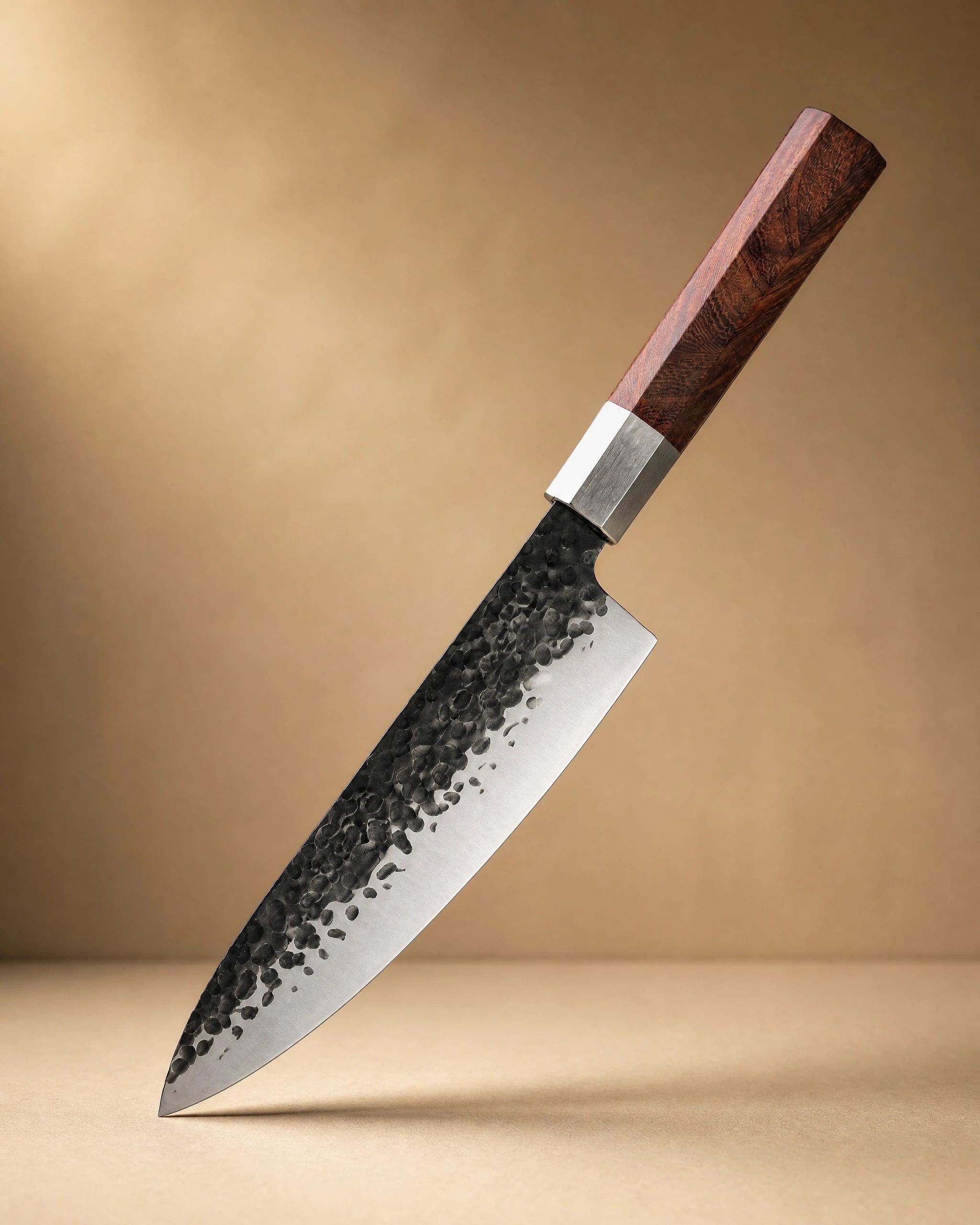 Sendai 8" Steel Gyuto Knife 牛刀$49.99View product → is a straightforward place to start, and the Akan gyuto
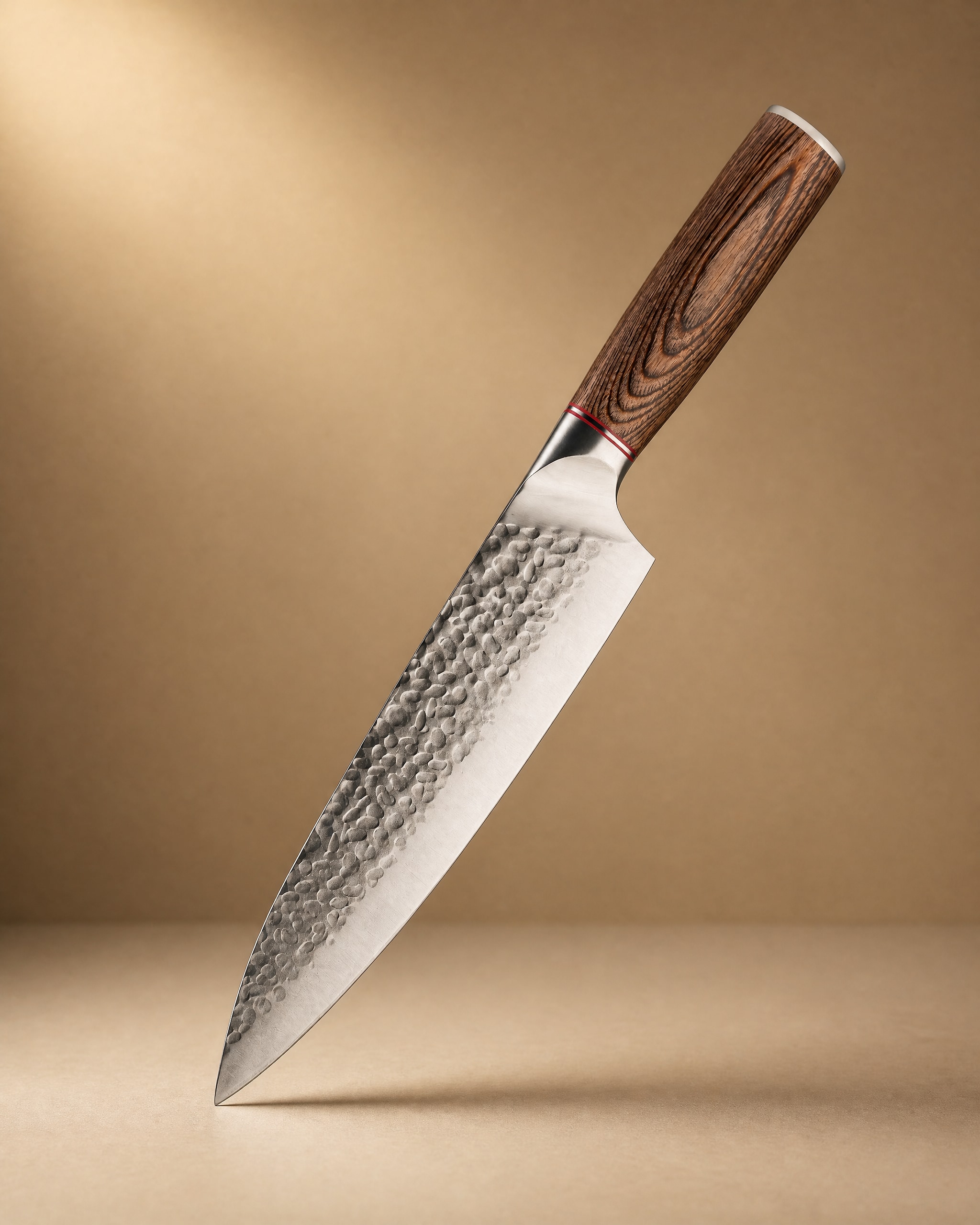 Akan 8'' Gyuto Knife 牛刀$49.99View product → is another everyday option to compare. Both are listed with the details you need to judge fit, so use the cards rather than guessing from a brand name. If you are unsure between two gyuto, compare the handle and the return policy first. The blade shape is similar enough that comfort and after-sale support will decide which one you reach for. If you already have a chef knife and mainly need a bread knife, the Rumoi bread knife
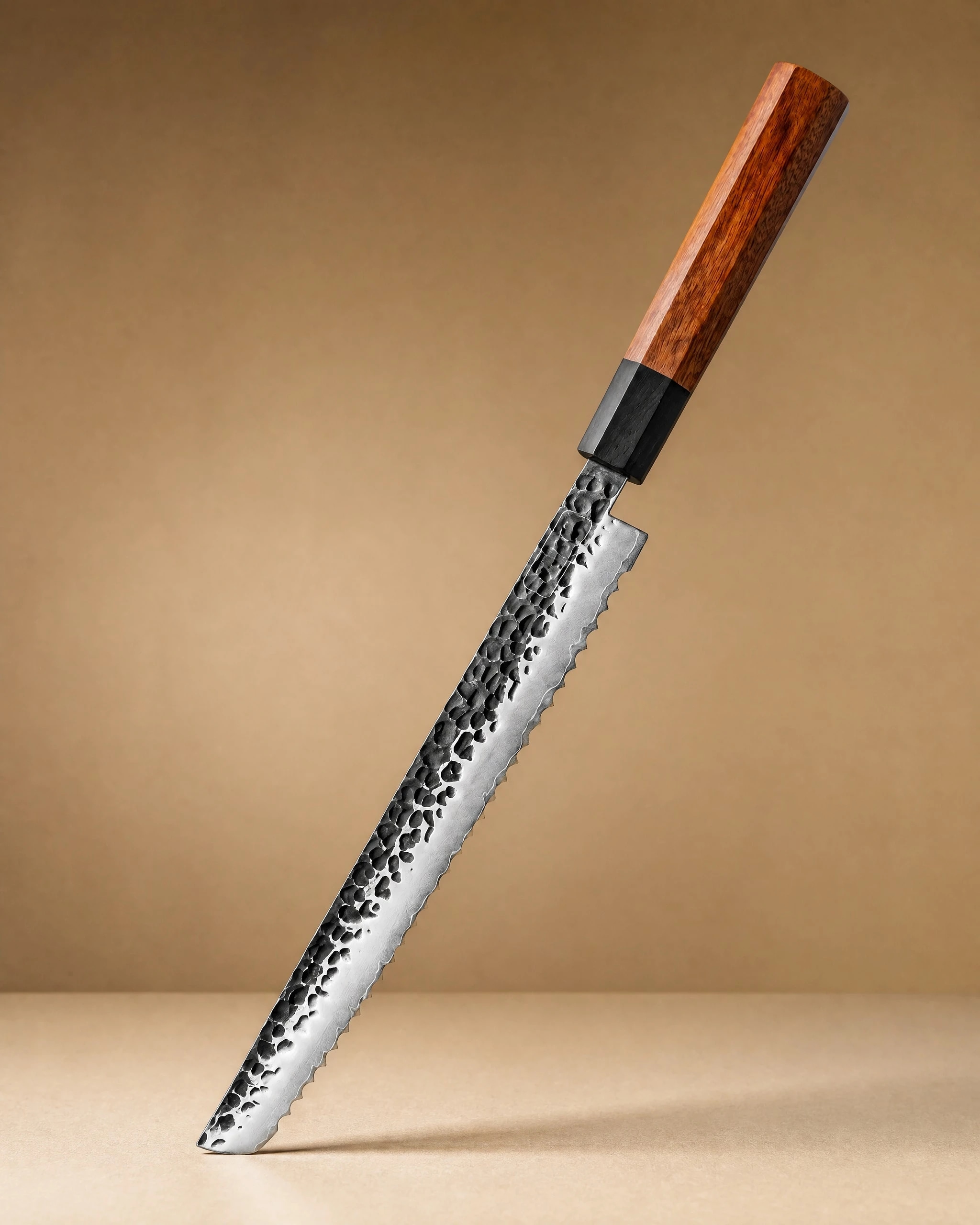 Rumoi 10" Japanese Bread Knife パン切りナイフ$59.99View product → is the practical add-on. For cooks who want to set up a kitchen at once, the Shinano set
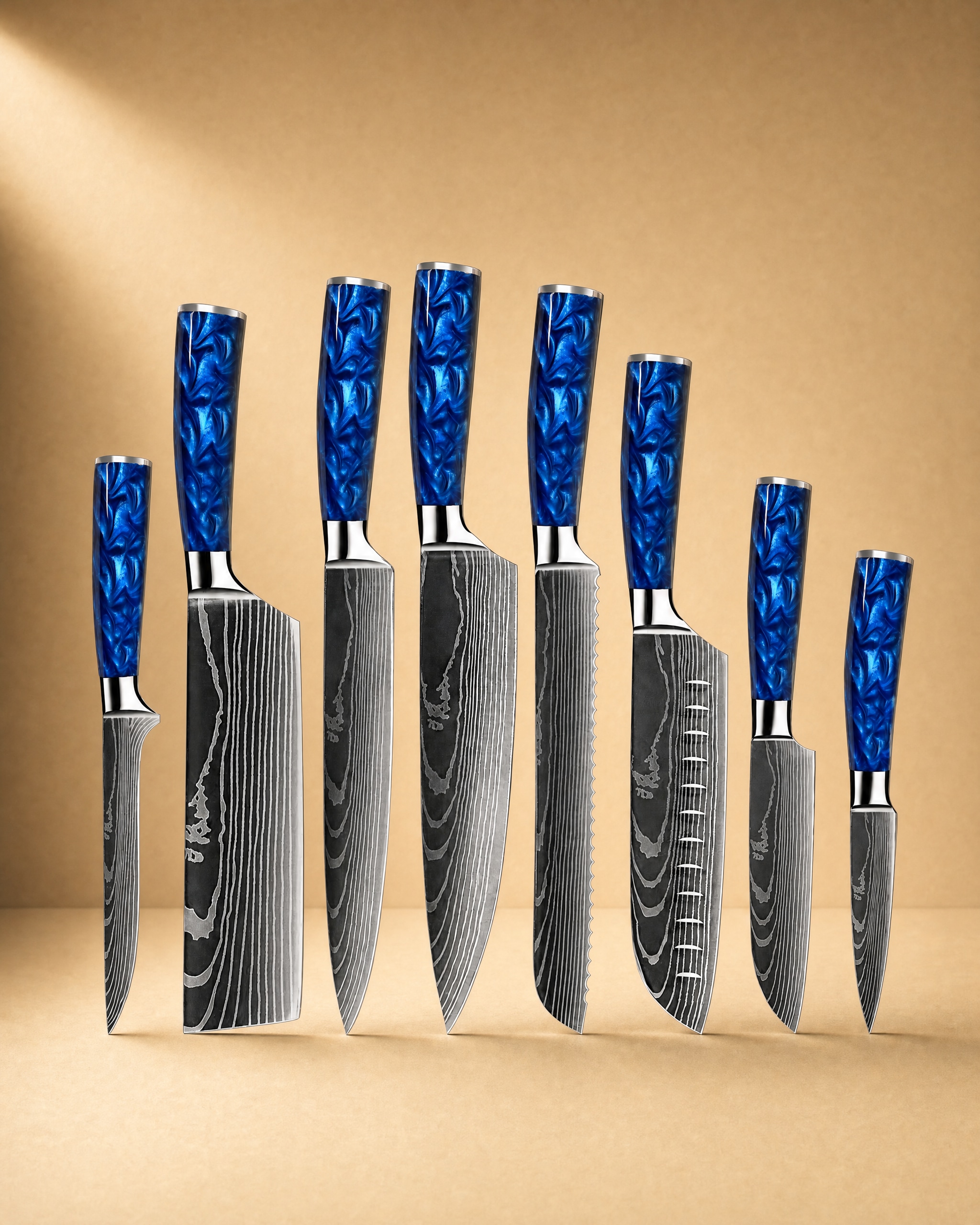 Shinano 信濃川 Damascus Pattern Stainless Steel Kitchen 8 Knife Set$149.99View product → is worth reviewing as a complete option.
You can browse the full knife shop to compare shapes and handles, but keep your own prep in mind. A set can be a good value if you will use most of the pieces. A single knife is often the better choice if you are still learning what you like. There is no prize for buying more knife than you need.
Handle and Maintenance Notes
Handle style is personal. A handle that feels too small, too slick, or too heavy will affect control no matter how good the blade is. If you can hold the knife before buying, do it. If you cannot, buy from a seller with a clear return policy and read the handle description carefully. Do not choose a handle only because it looks traditional or modern. Choose the one you can grip safely for the length of a meal.
Japanese knives are not fragile by definition, but many are thinner behind the edge than a typical Western chef knife. Use a stable board, avoid chopping through frozen food or bones, and store the knife so the edge is protected. These habits matter more than brand loyalty.
A Sensible Shortlist for Home Cooks
If you want a widely available brand with a broad range, start with Kai knives Japan and compare the exact line. If you want a practical Japanese knife with familiar shapes, look at Mac Japanese knives. If you want Japanese kitchen knives Miyabi with a more Western feel, compare a Miyabi santoku or gyuto. If you want a workshop-oriented Sakai Takayuki knife, check the specific line and seller. If you are curious about Seido knives or Sunnecko knives, demand clear details before you buy.
The best brand for you is the one that makes the knife you will actually use, sharpen, and keep dry. Start with the work, choose the shape, check the care, then pick the brand that supports that choice. That approach will serve you better than any ranking. The best brand is not the one with the loudest story. It is the one whose knife you reach for without thinking.
Photography: Richard Iwaki via Unsplash.

