
Best Santoku Knives: Top Rated Picks for Home Cooks

A santoku is one of the most useful knives a home cook can own. Its shape supports slicing, dicing, and light chopping, and it feels less intimidating than a long chef knife to many people. But searching for a top rated santoku knife can get noisy. Every product page promises more than the next. The useful approach is simpler: understand what the santoku does well, judge the build and comfort in front of you, and choose the size and style that match your prep. This guide covers that ground, with honest picks from our shop and clear reasons to choose one over another.
What Makes a Top Rated Santoku Knife
A santoku earns good reviews for reasons that have little to do with marketing. The blade profile should feel stable at the heel and controlled at the tip. The edge should meet the cutting board cleanly without forcing you to saw. The handle should give you a secure grip even when your hands are damp. Balance matters too, because a knife that feels tip heavy or handle heavy will tire your wrist during a long prep session. These qualities show up in everyday prep.
Steel and construction matter, but they are not the whole story. A hard steel can hold an edge well, yet it may need more careful handling. A softer steel may be easier to maintain but lose sharpness sooner. Grind, geometry, and heat treatment often matter more than a single number on a spec sheet. For a home cook, the best rated santoku knife is usually the one that fits your hand, suits your cutting style, and survives your normal maintenance routine. Use our knife guide to compare shapes and sizes before you narrow the field.

How to Read Best Santoku Knife Reviews
Good reviews repeat. One person who loves a knife is a data point. Twenty people who describe the same handle comfort or the same edge behavior are a pattern. Read for comments about balance, board contact, and how the knife feels after twenty minutes of prep. Look for notes about maintenance, especially if you are not ready to baby a blade. Ignore claims that a knife never needs sharpening or that one steel solves every problem. No santoku does everything, and no honest review should pretend otherwise.
Also separate the knife from the seller. A product can be excellent and still be a poor fit for your kitchen. If you mostly cut soft vegetables and herbs, a thinner, lighter santoku may feel wonderful. If you break down squash or work with denser ingredients, you may want a more substantial blade and a grip that gives you confidence. The best santoku knife reviews are specific about the tasks the reviewer performs. They tell you what the knife is good at and where it asks for care.
Everyday Picks for Most Home Cooks
For most home cooks, the everyday santoku is the one that stays on the board. It should be easy to reach for, comfortable during a full meal prep, and simple enough to maintain. The Raikou santoku is a strong first look for a focused all-purpose knife: 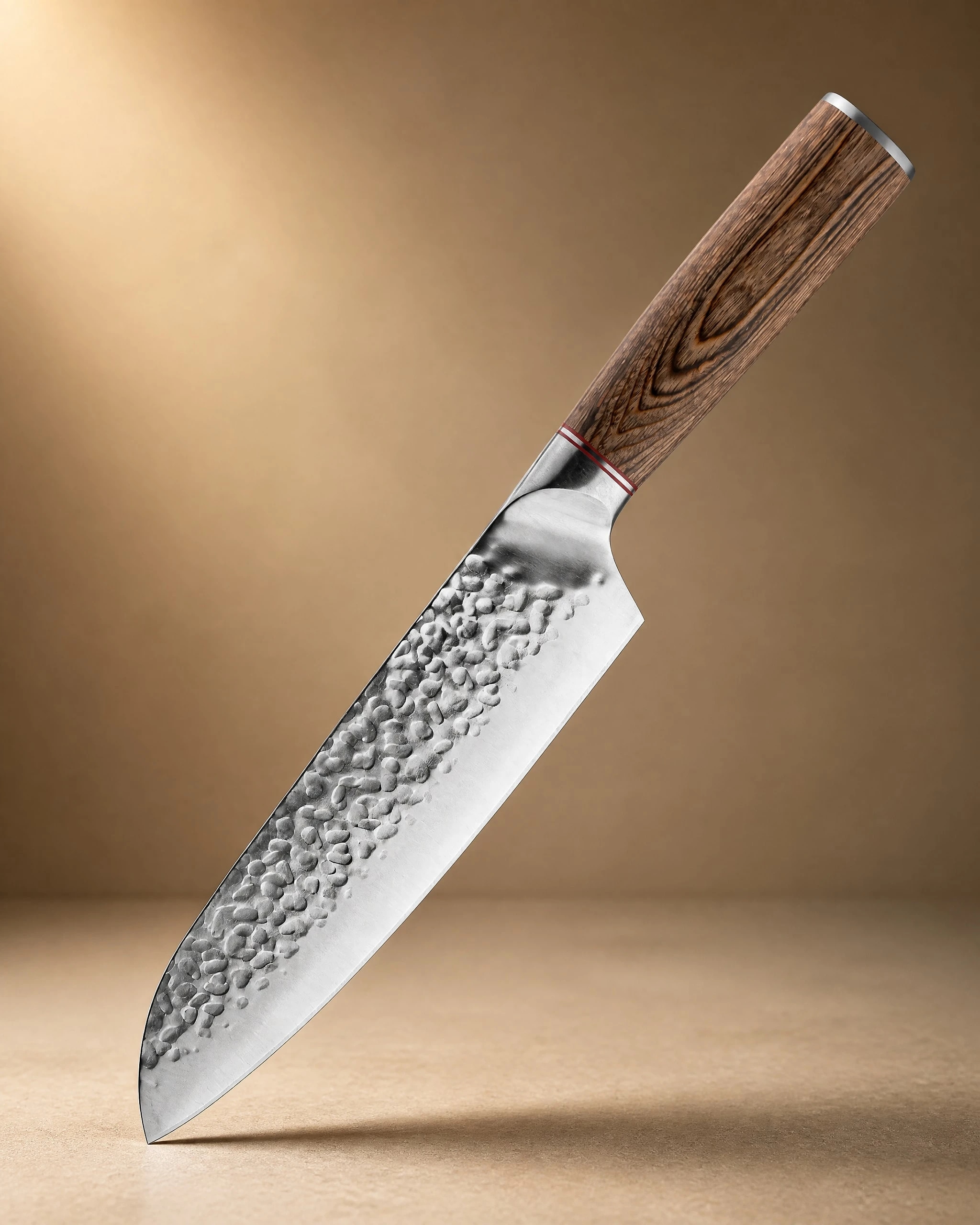 Raikou 6.5" Santoku Knife 三徳包丁$64.99View product →. It suits the cook who wants one santoku to handle the daily round of vegetables, herbs, and smaller proteins. If you are building a small core kit, this is the kind of knife that earns its space.
The Yodo santoku is the other everyday option to compare: 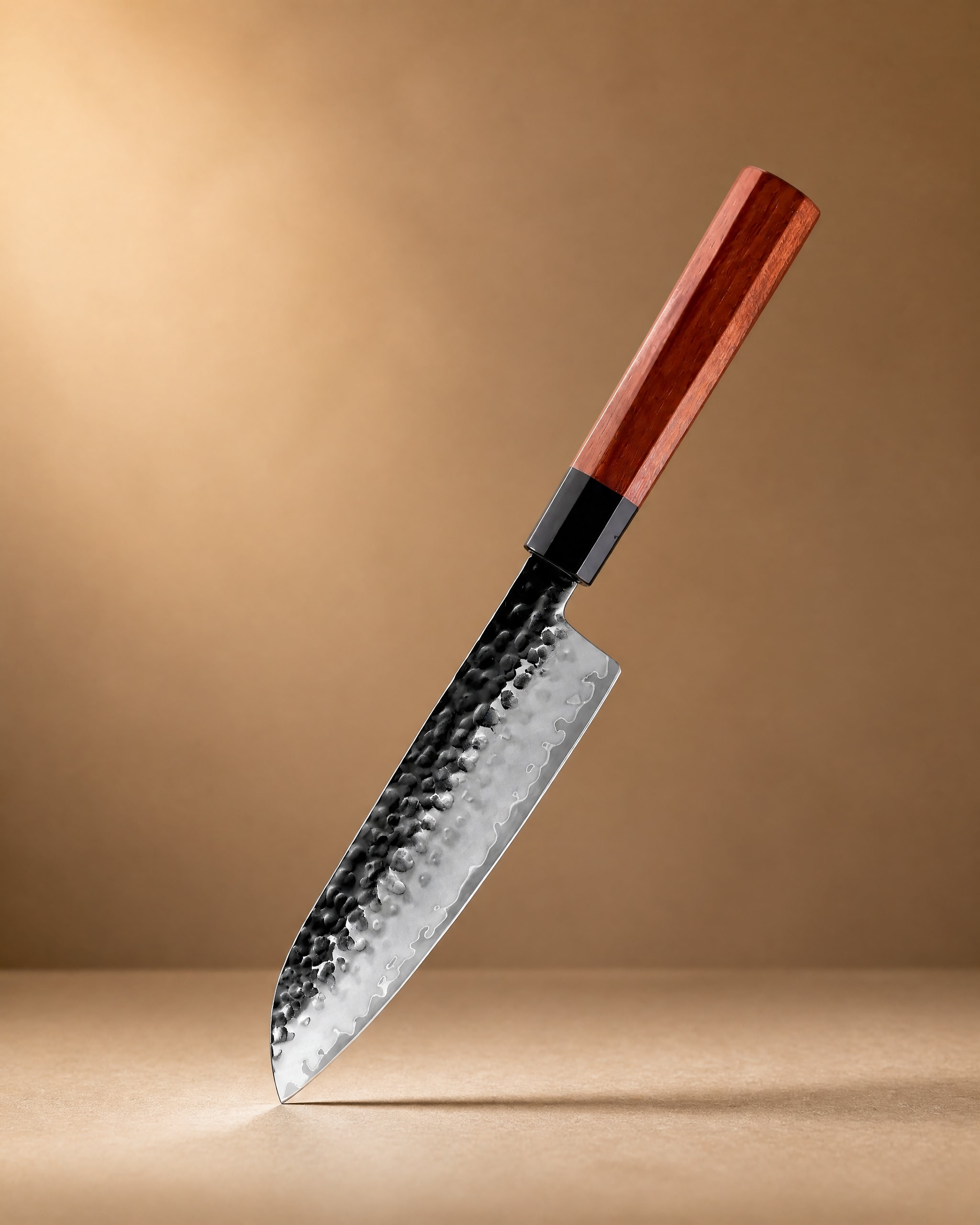 Yodo 7.5" Santoku Knife 三徳包丁$69.99View product →. Two santoku knives can look similar online and feel different in the hand, so compare the profile, the handle, and the way the blade sits on the board. Neither knife needs a dramatic story. The right one is the one you can use comfortably for a whole meal, then wipe down and put away without fuss. For many cooks, that practical fit matters more than a long list of features.
If you want to see the full range side by side, browse the santoku category. It is a better way to compare shapes than jumping between search results. Pay attention to the blade length that feels natural for your board and your storage. A santoku that is too long for your space can become awkward, while one that is too small may leave you reaching for another knife.
When a Kengata Santoku Makes Sense
Kengata santoku profiles have a distinct look and a slightly different feel in use. The shape can appeal to cooks who like a more purposeful tip and a blade that guides food as they work. The Shikoku kengata santoku is worth a close look if that profile suits you: 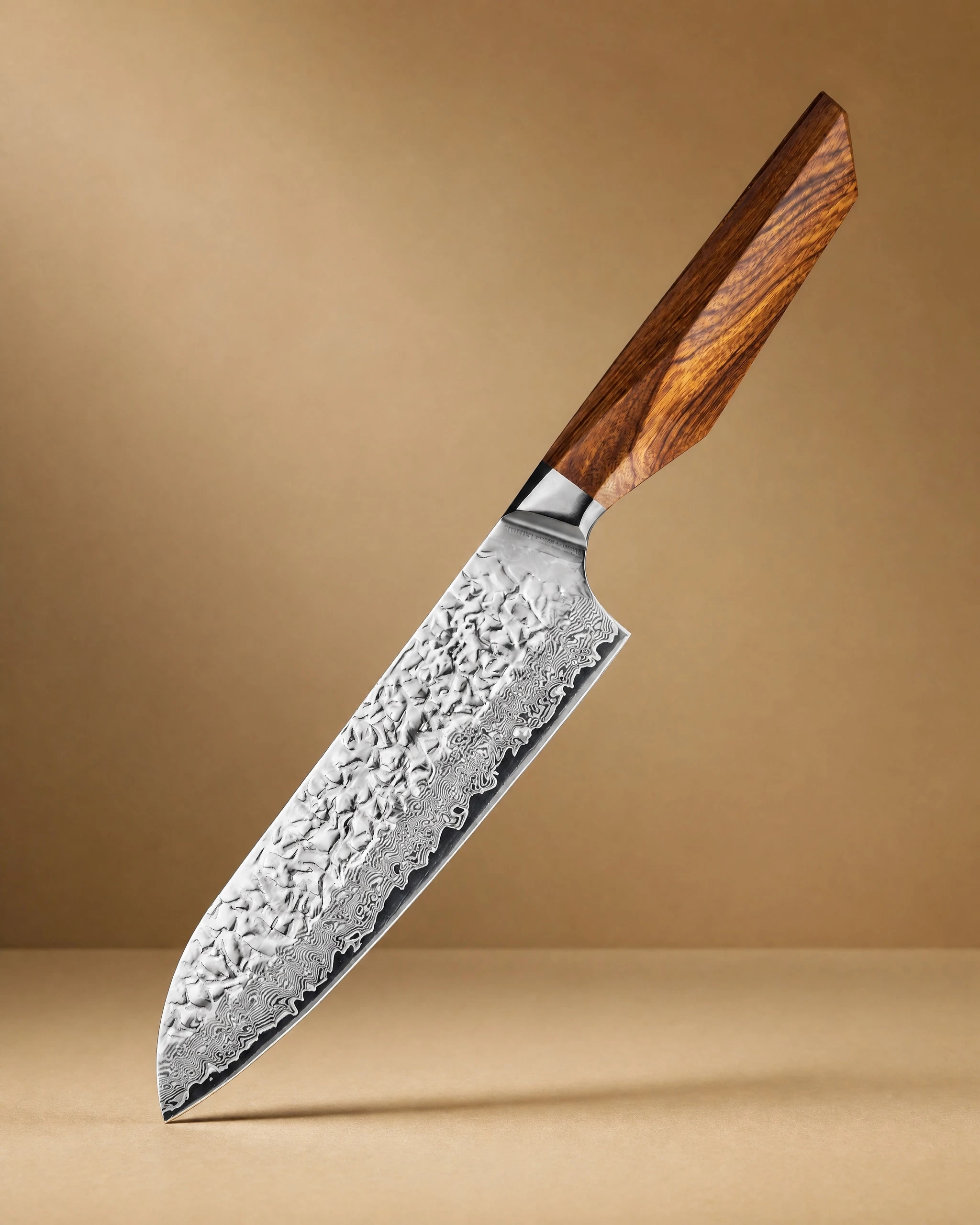 Shikoku 7" Damascus Steel Kengata Santoku 三徳包丁$109.99View product →. It is still a santoku at heart, so it belongs in the same everyday role as the other picks. The difference is in the profile and the way it presents itself on the board.
Choose a kengata style if you want a santoku with a little more visual character and you are comfortable adjusting to its shape. The knife still needs to feel balanced and controlled in your hand. A good kengata santoku should guide clean cuts without asking you to change your whole technique. If you are new to Japanese knives, compare it with a standard santoku before you decide.
Compact Santoku for Smaller Tasks
Not every cook needs a large santoku. A smaller blade can be handy for quick prep, smaller boards, and kitchens with limited counter space. The Ishikari santoku is the compact option in this group: 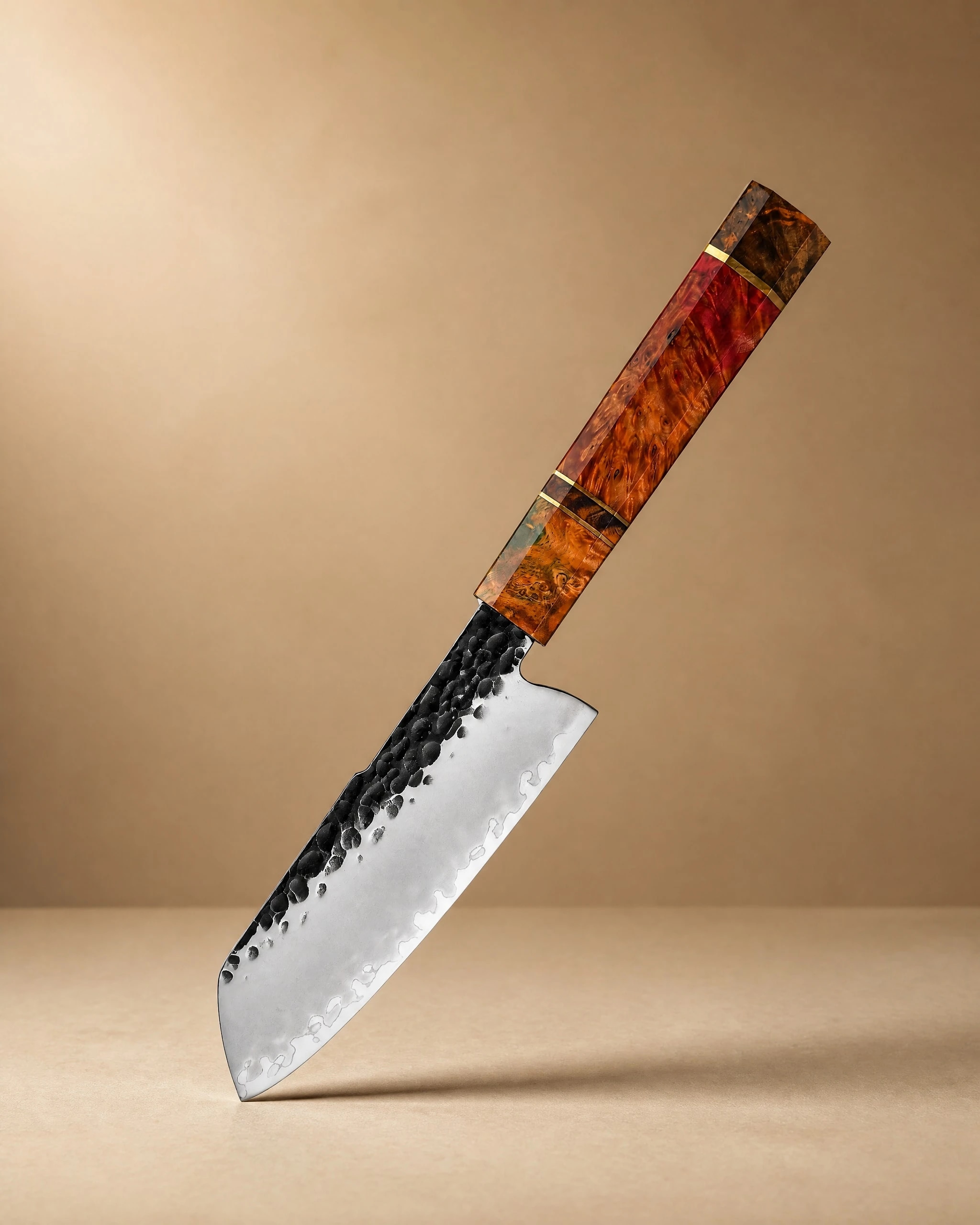 Ishikari 5" Santoku Knife 三徳包丁$84.99View product →. It fits the cook who wants santoku control for lighter tasks and does not need a full-size blade for every meal. A compact santoku can also work well as a second knife for people who already own a larger chef knife or gyuto.
Think about your most common prep before you size up or down. If you often cut a few vegetables for lunch, a smaller santoku may be all you need. If you cook large meals several times a week, a larger santoku may feel more efficient. The useful question is which blade you will actually pick up.
Santoku Knife Set or Single Knife?
A santoku knife set can be tempting because it looks like a complete solution. In practice, a set is only a good buy if every piece matches the way you cook. Many home cooks do better with one santoku they love and one or two supporting knives, such as a paring knife or a bread knife. A set can make sense if you are outfitting a new kitchen, if the knives share a handle style you find comfortable, and if you will use the extra pieces rather than store them in a drawer.
Before you buy a set, check the sizes and the shapes. A set built around a santoku should still give you a useful small knife and a knife for foods that need a serrated edge. If the set includes pieces you will never use, a single santoku plus a few carefully chosen additions is often the wiser path. You can compare individual knives in the full knife shop and build a kit that reflects your real cooking.
Handle, Balance, and Maintenance
The handle is where the knife meets your hand, so treat it as a serious decision. A handle that feels too small can make a good blade feel unstable. A handle that is too large can reduce control. Grip the knife as you would in use, with your hand relaxed. Check that the transition from handle to blade does not create a hot spot. If you share your kitchen, make sure the handle works for more than one person.
Maintenance keeps a good santoku good. Wash and dry the knife by hand, store it so the edge is protected, and sharpen or hone on a schedule that matches your use. Do not leave a knife soaking in the sink. Small habits protect the edge and make the knife safer to use. Our knife care guide covers the basics in plain language, including storage and board choices.
How to Choose Your Santoku
Start with the task, then the size, then the feel. If you want one knife for everyday prep, compare the Raikou and the Yodo first. If you prefer a kengata profile, review the Shikoku. If you want a smaller santoku, look at the Ishikari. Read the product card for each one, check the current details, and think about the board you use most. A top rated santoku knife should make your normal cooking easier, not add a new routine.
- Choose a size that fits your board, storage, and most common meals.
- Grip the handle before you commit if you can, or buy from a seller with a clear return policy.
- Plan for maintenance before you buy any knife.
- Buy a set only if you will use every piece.
Good santoku knife reviews will not decide for you, but they can help you ask better questions. Use the knife guide for shape and size advice, and keep your expectations practical. A knife that feels balanced, cuts cleanly, and fits your hand is worth more than a flashy label.
Final Buying Advice
The best santoku for a home cook is the one that matches daily prep and feels natural in the hand. A top rated santoku knife is not a trophy. It is a tool you reach for when dinner needs to happen. Compare the Raikou, Yodo, Shikoku, and Ishikari with that standard in mind. Read the cards, check the current details, and choose the blade that makes your kitchen work feel calmer and more controlled.
Photography: Sergey Kotenev via Unsplash.

