
Large Wood Cutting Boards: High Quality Options Guide

A large wood cutting board is one of those kitchen purchases that quietly changes how you cook. It gives you room to spread out, keeps ingredients contained, and provides a stable surface for knife work. Size alone does not make a board good, though. A board can be big and still be warped, gummy under the knife, or too heavy to move. This guide focuses on high quality options and the details that separate a board you keep for years from one you replace in a season.
Why a Large Wood Board Changes Your Prep
A larger board reduces clutter. You can pile chopped onions on one side, keep a pile of carrots on the other, and still have space to cut. That matters when you cook from scratch, when you prep several meals at once, or when you work with long vegetables and large cuts. A stable board also makes knife work safer. Ingredients do not roll off the edge, and you are less likely to crowd the blade.
The size has a cost. Large boards take up counter space and can be awkward to wash. They also weigh more. The right board is large enough to be useful but not so large that you avoid using it. For most home cooks, a board that covers a good part of the counter in front of the sink is more practical than a board that fills the entire counter.
What High Quality Means in a Large Wood Cutting Board
High quality in a wood board is mostly about construction and material honesty. The board should be flat, with tight joints and no gaps that trap moisture. The surface should be sanded smooth but not sealed with a thick, plastic-like finish. Good boards are finished with food-safe oil or wax so the wood can breathe and the surface can be refreshed.
A high quality cutting board also has a clear grain direction. Edge grain boards are common, stable, and easier to maintain. End grain boards are gentler on knife edges and show fewer marks, but they cost more, weigh more, and need more careful care. Neither style is automatically better. The right choice depends on how you use the board and how much maintenance you will actually do.
- Check for flatness by sighting across the surface and along the edges.
- Look for tight glue lines and no visible gaps or loose knots.
- Confirm the wood is dry and the board has a clean, even finish.
- Ask how the board should be oiled and whether it can be refinished.
- Pick a size and weight you can lift and wash without strain.
Wood Species and Construction: Honest Tradeoffs
Hard maple is a standard for a reason. It is dense, closes well after cuts, and takes oil readily. Cherry and walnut are attractive and work well, though walnut is softer and will show marks sooner. Bamboo is not a wood in the same sense, and its hardness can vary. It can be a practical choice, but a premium wood cutting board usually means solid hardwood, not a thin veneer or a composite core.
Construction matters as much as species. A board made from narrow, well-glued strips can be stable and strong. A board made from wide, poorly matched pieces may look dramatic and move later. End grain boards need precise assembly because the blocks run in different directions. If the joints are loose or the board is not flattened after assembly, it will cup or rock.
Thickness is part of quality. A thin board flexes, slides, and feels hollow under the knife. A thicker board stays put and can be sanded and re-oiled over time. The tradeoff is weight. A very thick large board may be too heavy for everyday washing. Look for a thickness that feels solid but still allows you to handle the board safely.
Thickness, Footprint, and Storage
Measure your counter before you buy. A large wood cutting board should fit your main prep area with a little room to spare. If it overlaps the sink or blocks a drawer, you will move it constantly. Think about where it will live. Some cooks leave a board on the counter all day. Others store it upright against a wall or on a rack. A board that is too tall for your storage will end up in the way.
Feet and grips are small details that matter. Rubber feet keep a board from sliding, but they can make it harder to flip for drying. A recessed grip helps you lift a heavy board without fumbling. If you wash at the sink, check that the board fits flat in your sink or can be wiped down in place. A premium board should fit your kitchen routine, not force a new one.
Pairing a Large Board with Japanese Knives
A large board and a sharp knife are a team. The board gives the knife room, and the knife rewards the space with cleaner cuts. Japanese knives often have thin, hard edges, so a wood board is a sensible surface. It is softer than glass or stone and less likely to chip an edge when used with normal care. The board should be clean, flat, and free of grit.
For everyday prep, the 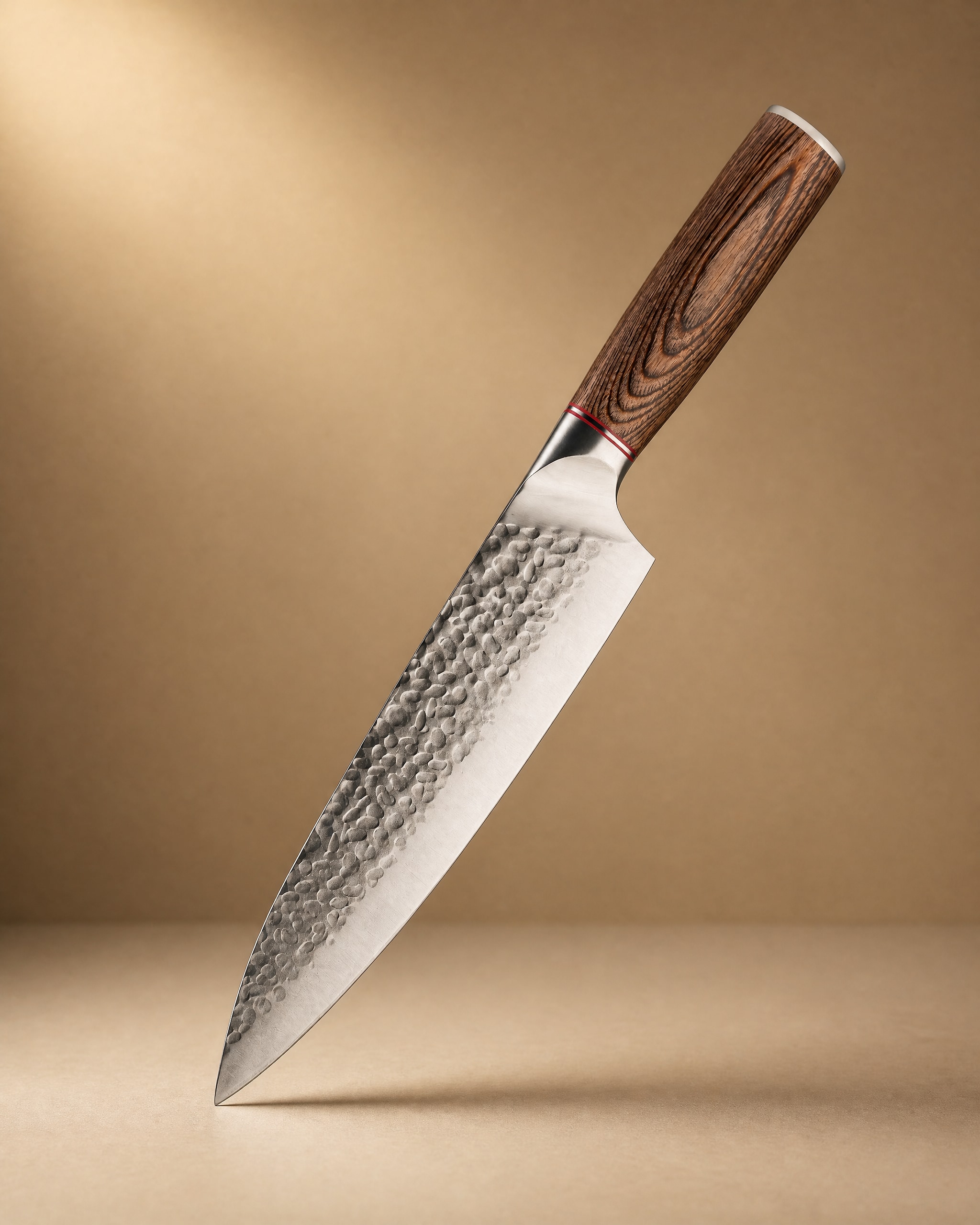 Akan 8'' Gyuto Knife 牛刀$49.99View product → or the
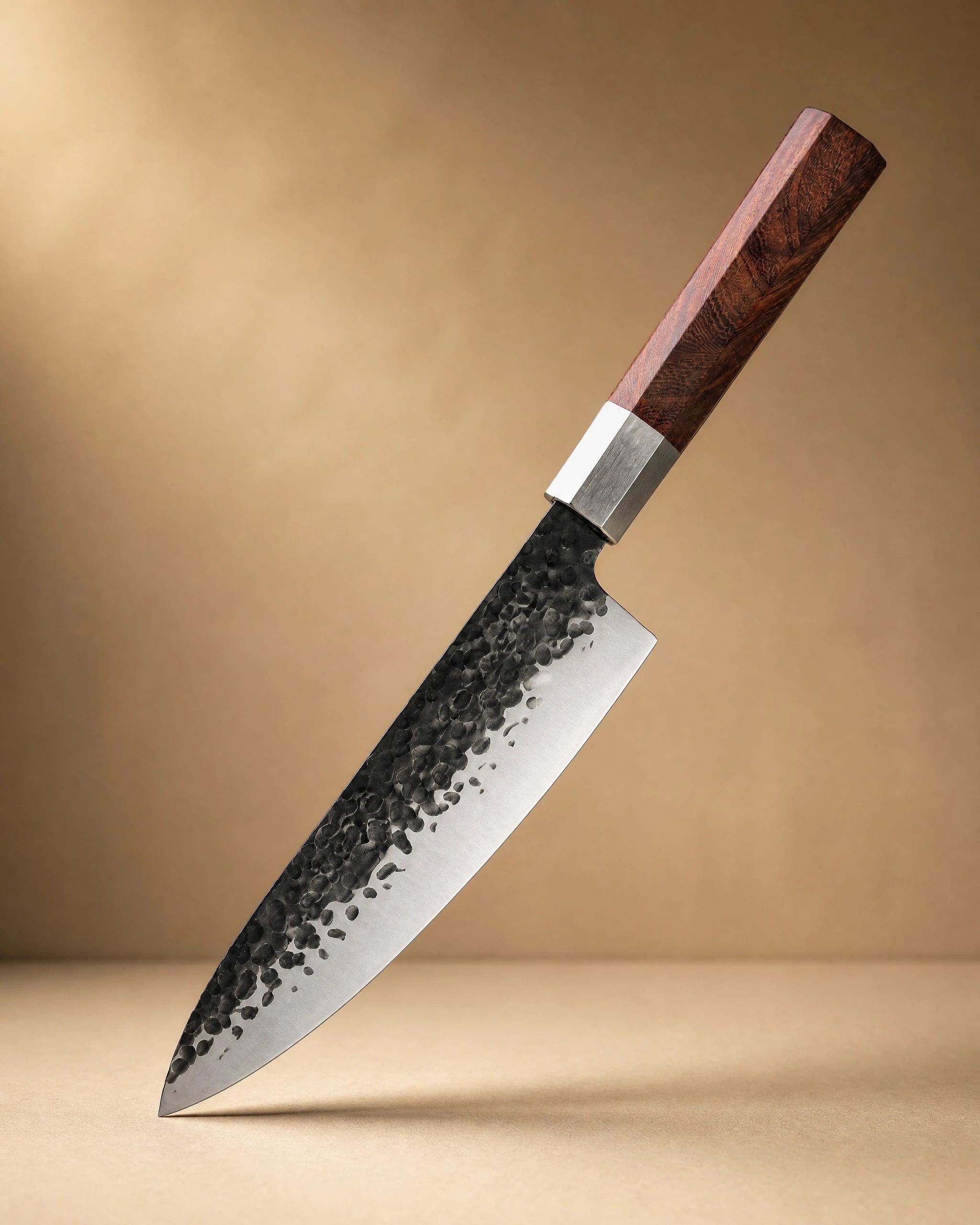 Sendai 8" Steel Gyuto Knife 牛刀$49.99 · currently out of stockView product → are natural matches for a large board. Both are built for daily cutting, and the extra surface lets you use the full length of the blade instead of chopping in a cramped corner. If you are still deciding which knife shape fits your cooking, the knife guide can help you compare profiles and lengths before you commit.
Bread is a different job. A long serrated knife needs a board with enough length to saw through a crust without the tip running off the edge. The 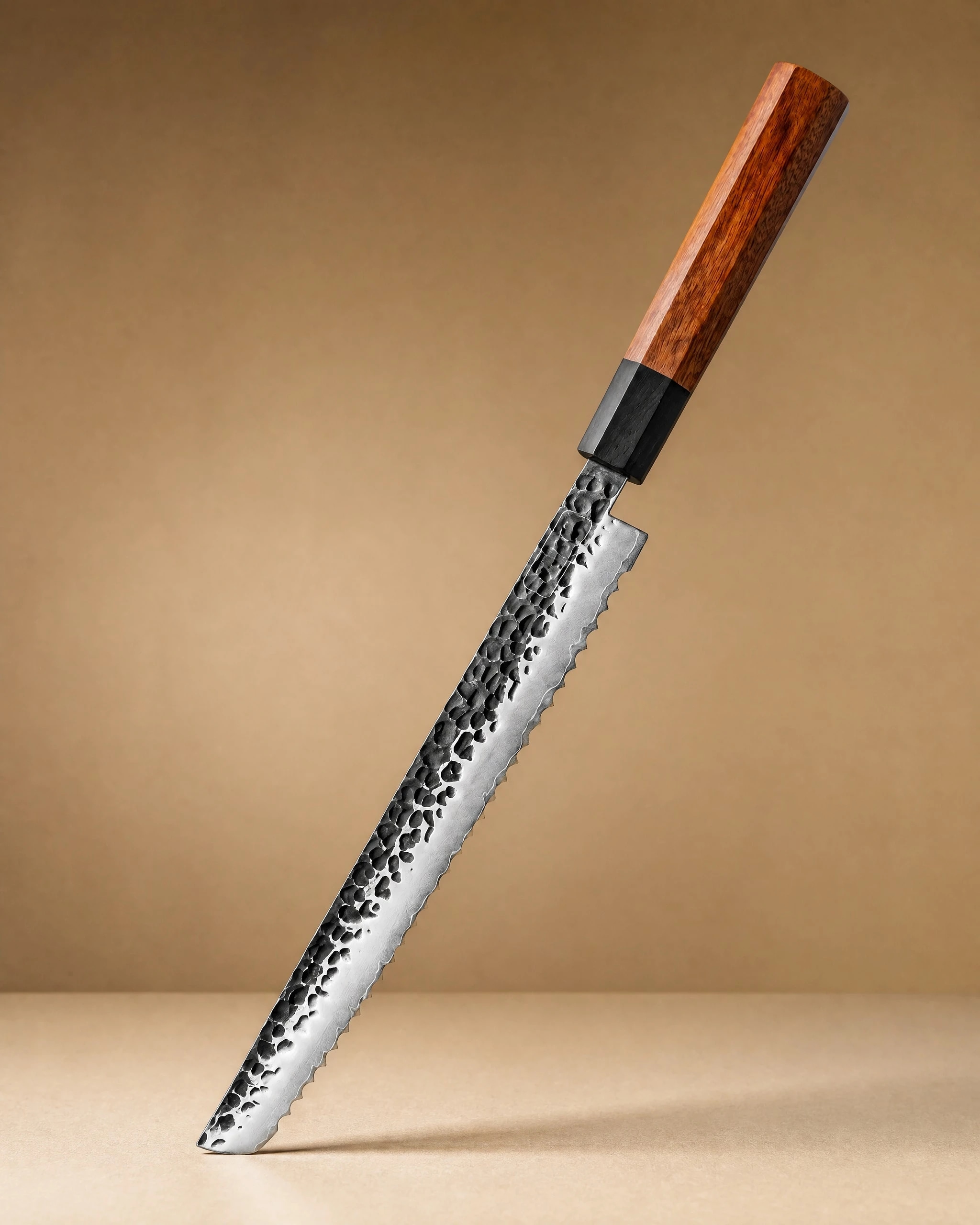 Rumoi 10" Japanese Bread Knife パン切りナイフ$59.99View product → is made for that work. Keep a separate board or a clean corner for bread if you can, since crumbs and moisture are not kind to a board used for raw proteins.
If you are outfitting a kitchen from scratch, the 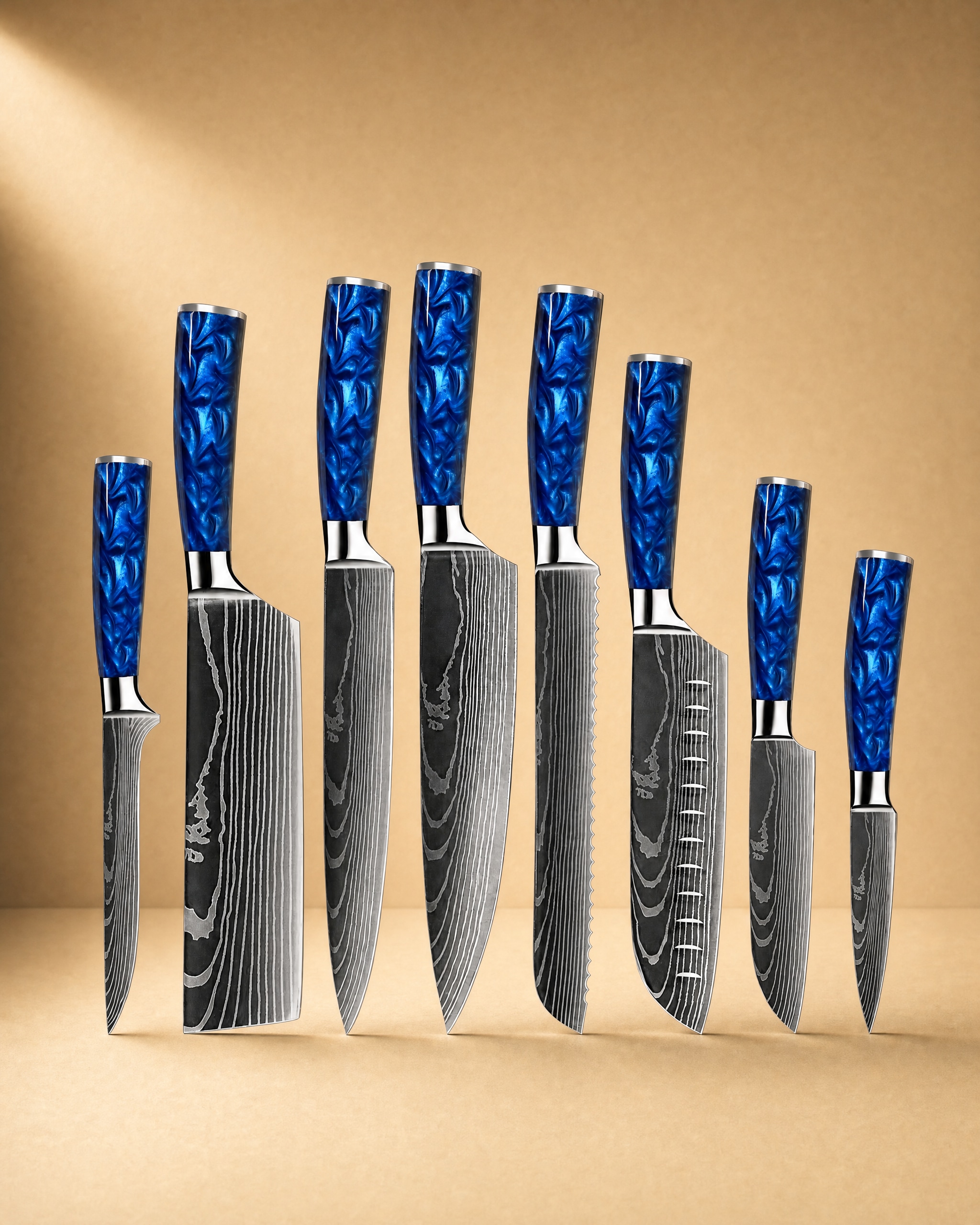 Shinano 信濃川 Damascus Pattern Stainless Steel Kitchen 8 Knife Set$149.99View product → gives you a coordinated set rather than one knife at a time. A large board supports that kind of setup because it gives each knife room to do its job. You can browse the full range in the knife shop when you are ready to match a board to your current knives.

Care That Protects Both Board and Edge
Wood boards need regular care, but the routine is simple. Wash with mild soap and warm water, then dry immediately with a towel. Do not soak a wood board or put it in the dishwasher. Let it air dry fully before storing it flat or upright. If the surface feels dry or looks faded, apply a food-safe board oil or wax. Let it absorb, wipe off the excess, and allow it to cure before use.
Knife care and board care overlap. A clean board prevents grit from dulling an edge, and a sharp knife makes lighter contact with the wood. The knife care guide covers sharpening, honing, and daily handling in more detail. If you use a premium wood cutting board every day, expect to refresh the surface a few times a year. Light sanding can remove shallow cuts and stains, followed by re-oiling.
Keep raw meat and vegetables separate when possible. If you use one board for everything, wash and sanitize it between tasks. Wood has natural antimicrobial properties, but that is not a substitute for basic hygiene. A board that stays damp, sits in a puddle, or is stored in a closed cabinet can warp or grow mildew. Good airflow matters.
How to Choose Without Overbuying
Start with the board you will actually use. A huge board that stays in a closet is less useful than a medium large board that lives on the counter. Consider your sink, your storage, and your strength. If you cook often, a solid hardwood board in a practical size is a better investment than a decorative board that is hard to maintain.
Check the return policy and the care instructions before you buy. A high quality cutting board should come with clear guidance on oiling, washing, and storage. Avoid boards with vague claims about being maintenance free. Wood is a living material. It responds to moisture, heat, and dryness, and it needs some attention to stay flat and clean.
Price is not a perfect guide, but very cheap large boards often use thin stock or hidden gaps. A premium wood cutting board costs more because the material is selected and the assembly is careful. You are paying for stability, thickness, and a surface that can be refreshed. That is a fair trade if you plan to keep the board for years.
Practical Final Checks
Before you commit, lift the board. Set it on your counter. Rock it gently to check for wobble. Run your hand across the surface and feel for rough spots or raised glue lines. Look at the end grain and the edges. A well-made board looks clean and consistent, not patched together. Then think about your knives. A large wood board and a well-matched knife make prep calmer, safer, and more precise. That is the real reason to buy a good one.
Photography: Sergey Kotenev via Unsplash.


