
Gyutou Chef Knife: Sizing and Buying Basics

A gyutou is the knife most Japanese chefs reach for first in the morning and last at night. It is a general purpose blade, shaped for slicing, chopping, and rock cutting through vegetables, fish, and meat. If you are building a kitchen knife collection and want one knife that handles nearly everything, a gyutou chef knife is the right place to start. This guide covers the sizing questions buyers ask most, the spelling confusion around the name, and the practical details that separate a knife you use daily from one that sits in the drawer.
Gyutou vs Gyuto: Same Knife, Two Spellings
The first thing most shoppers notice is that the word appears two ways. Gyutou and gyuto are the same knife. The Japanese word is 牛刀, which translates as beef sword, and it entered English through romanization systems that handle long vowels differently. The ou spelling follows a more literal transliteration of the Japanese characters, while gyuto reflects how the vowel sounds to an English speaker. Neither is wrong, and neither describes a different blade shape.
What matters is what you find under the name. A gyutou knife has a double bevel, meaning it is sharpened on both sides, which makes it easier to use for cooks coming from Western knives. It typically has a fairly flat profile near the heel and a gentle curve toward the tip, so you can push cut, chop, or rock depending on the ingredient. The tip is thin and pointed enough for detail work. That combination is why the shape has spread well beyond Japan.
You will also see the gyutou compared to the santoku. The santoku is shorter, taller, and has a flatter edge with a sheep foot tip. The gyutou is longer and more versatile in the hand, with a curved belly that makes continuous rocking cuts smoother. If you already own a santoku and find it cramped on larger tasks, the gyutou is the natural next step.
Why This Shape Handles So Much of the Work
Most home cooks end up using one knife for eighty percent of their prep. Onions, carrots, garlic, chicken breasts, herbs, squash: the same blade goes through all of it. The gyutou was designed for exactly that kind of broad use. Its length gives you a full slicing stroke through a cabbage or a piece of protein. Its height gives your knuckles room to clear the cutting board. Its thin grind lets it move through dense food without wedging.
The trade-off is that a gyutou is not a cleaver and not a bread knife. Do not cut through bones or frozen food with it, and keep it away from crusty loaves. Treat it as a precision tool for soft and firm ingredients, and it will stay sharp for a long time.
Sizing: Where Most Buyers Get Stuck
Gyutou lengths are usually given in inches or millimeters, and the most common sizes sit between 7 and 10 inches. The right length depends on your board, your counter space, and the size of your hands more than on your skill level.
The 8 Inch Standard
An 8 inch blade is the most common size sold in the US, and for good reason. It is long enough for a full cut through most vegetables and proteins, short enough to control on a crowded board, and light enough to use for a long session without fatigue. For a first gyutou, this is where most people should start.
Two options in this size stand out for everyday prep. 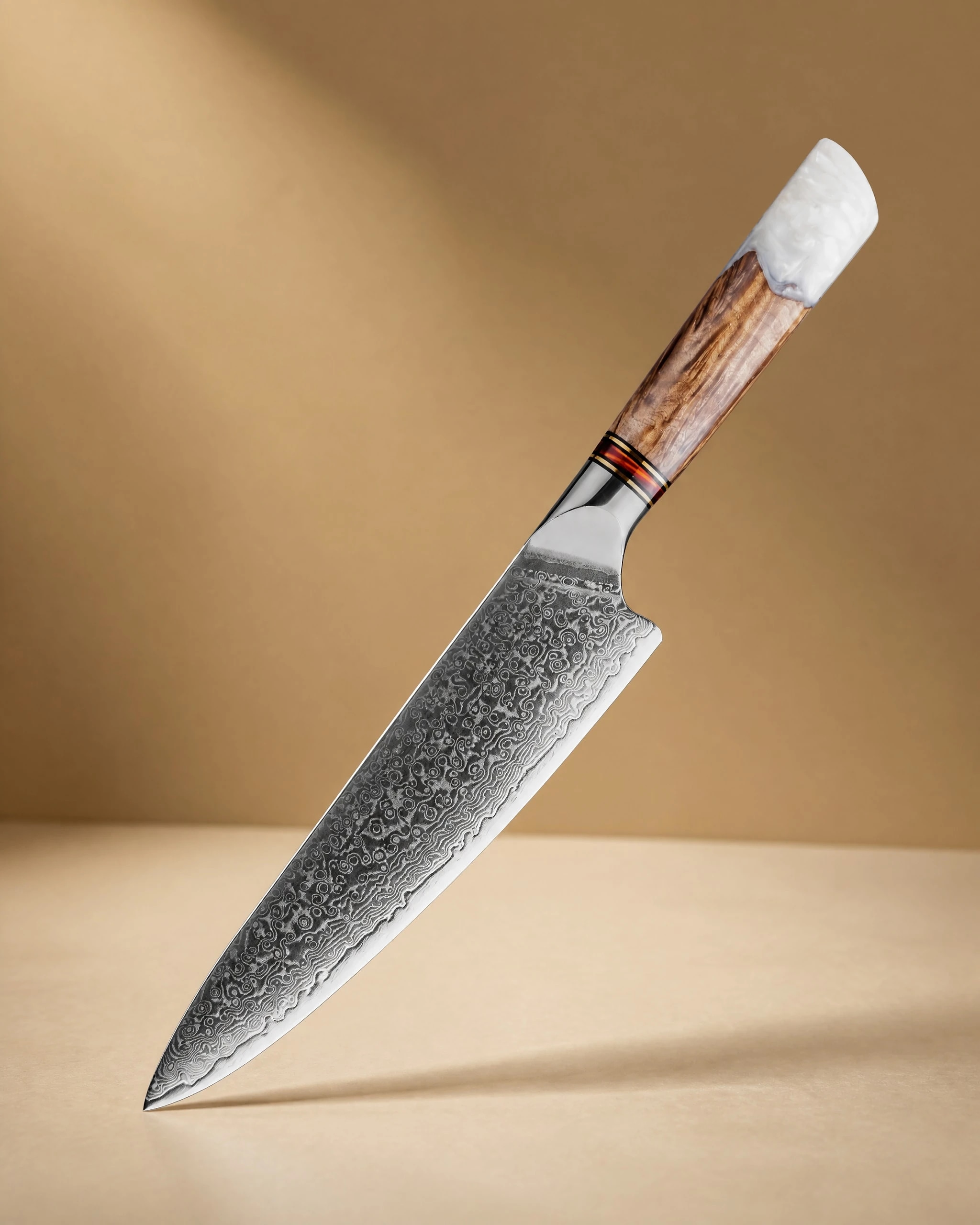 Shirakawa 白川 8" Damascus Steel Gyuto Knife 牛刀$74.99View product → and
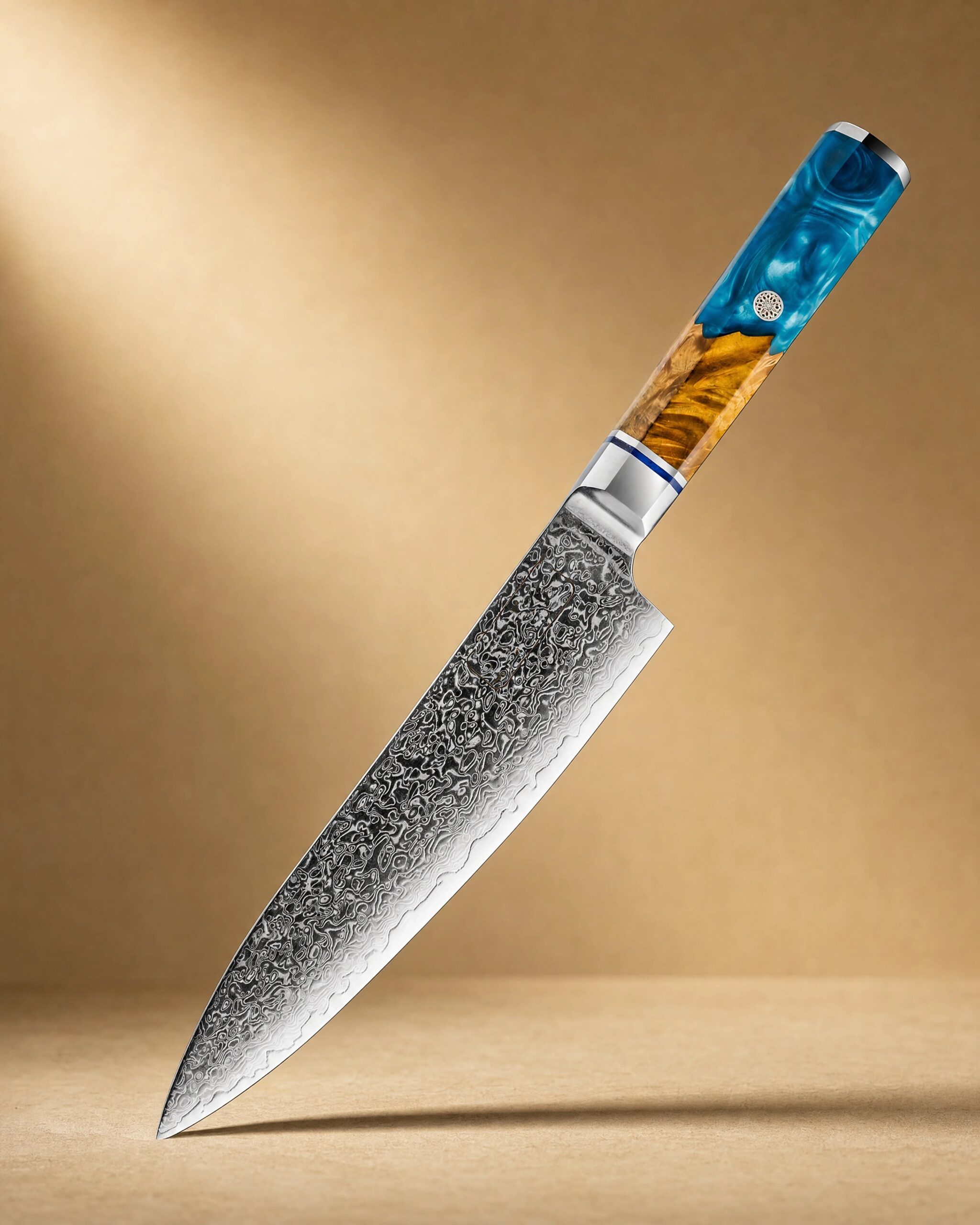 Mogami 最上川 8" Damascus Steel Gyuto Knife 牛刀$79.99View product → both come in at 8 inches with a Damascus finish, which gives the blade a visible layered pattern and adds a bit of extra care in the finish. Either one will cover the daily rotation of onions, greens, and protein without asking you to change how you cook.
8.5 Inches and the Case for a Little More Length
If you cook in larger batches, work on a wide board, or simply have larger hands, a slightly longer blade can feel more natural. An extra half inch changes the balance point and lets you finish a cut in one motion rather than two. 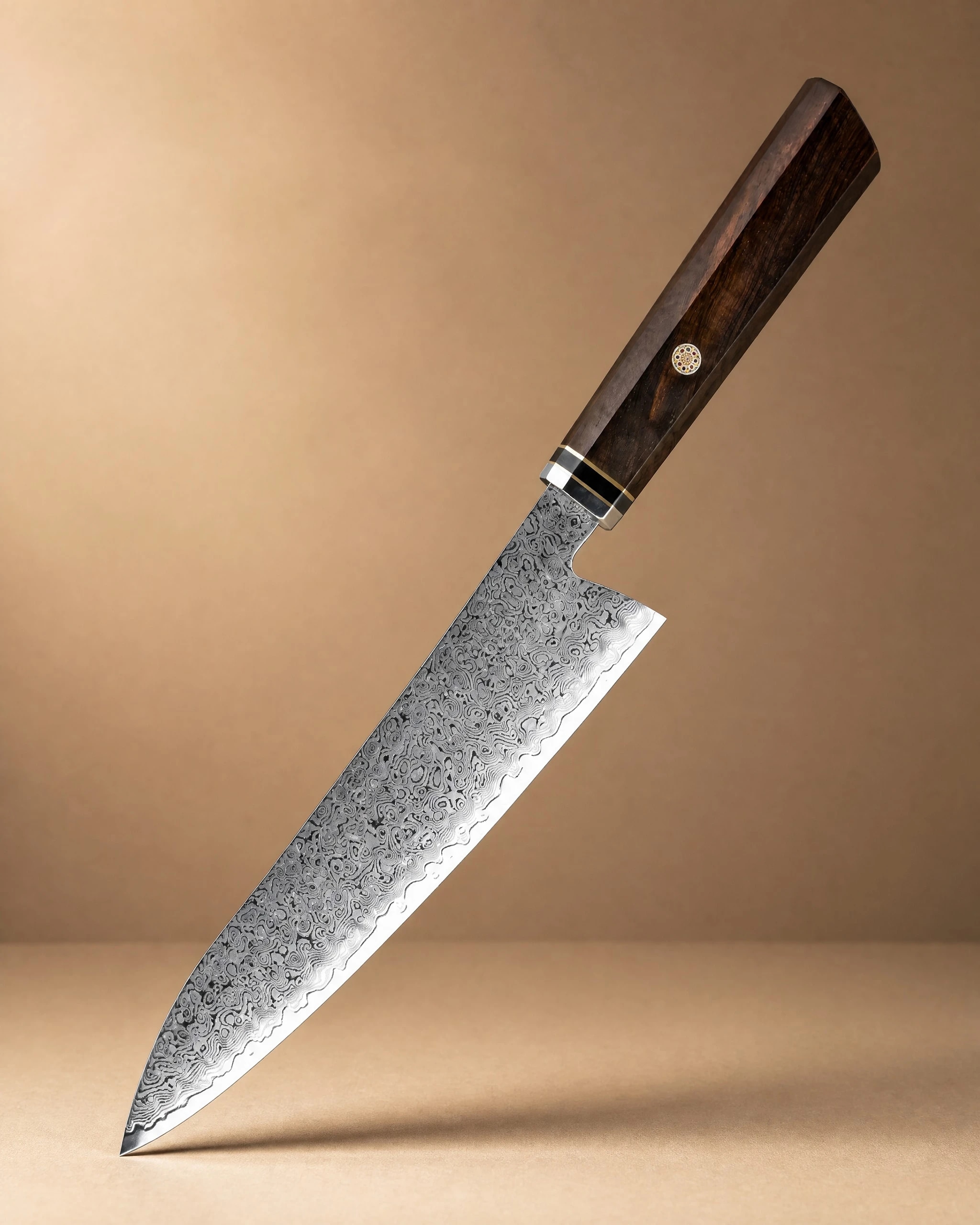 Sakawa 8.5" Damascus Steel Gyuto Knife 牛刀$74.99View product → is the option here at 8.5 inches, and it suits cooks who find an 8 inch blade just short of comfortable on cabbage, squash, or long cuts of meat.
Going longer is not automatically better. A 9.5 or 10 inch gyutou is a real tool for professional line cooks and people who break down large fish, but in a home kitchen with limited counter space, the extra length mostly adds weight and reduces control in tight quarters.
Steel and Finish: Damascus vs Stainless
The steel question is simpler than the marketing makes it sound. Damascus refers to the layered pattern visible on the blade face, not to a different kind of cutting edge. A Damascus gyutou can have a core of harder steel with softer layers cladding it, and the pattern is a byproduct of that construction. It looks distinctive and it signals a certain level of finishing work, but it does not make the knife cut better than a well made plain blade.
What matters more is how the steel behaves in your kitchen. Harder steels hold an edge longer but demand more care and are less forgiving of a stray twist. Softer stainless steels are tougher and easier to maintain, which is why they suit shared kitchens and busy weeknights. 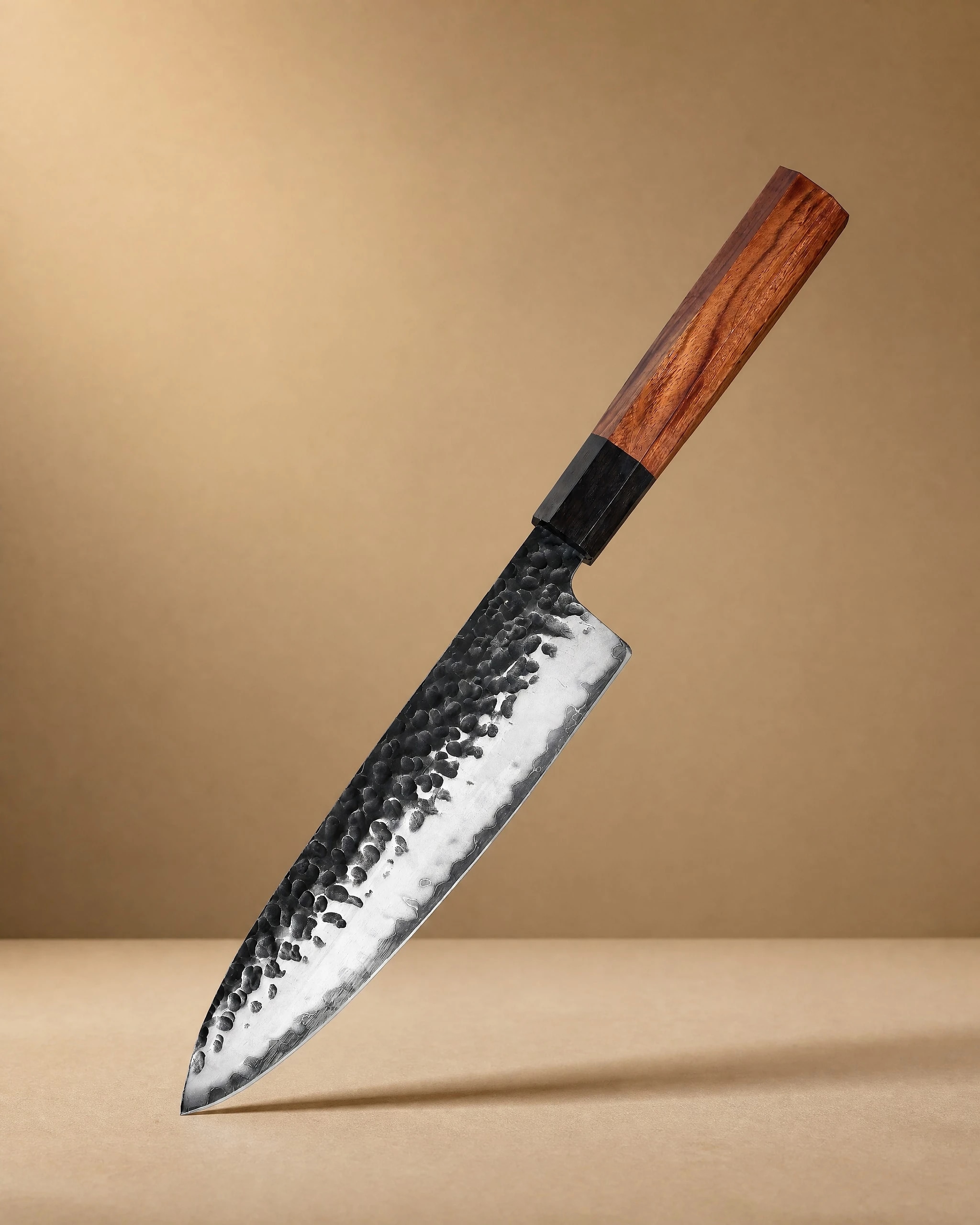 Tenjin 8" Stainless Steel Gyuto Knife 牛刀$59.99View product → is a stainless steel gyutou at 8 inches, and it is a sensible pick if you want low fuss upkeep and a blade you can hand to another cook without a lecture.

Handle and Balance
The handle is the part of the buying decision people underrate. A Western style handle with a full tang gives a familiar grip and shifts weight toward the back of the knife. A traditional Japanese handle, usually octagonal or oval, is lighter and moves the balance point forward toward the blade. Depending on the handle material and construction, you may also see different levels of water resistance, which matters if you tend to leave a knife on the board while you eat.
There is no universally correct answer. The test is whether the knife feels controlled when you pinch the blade at the bolster and make a cut. If the handle is too thick, your grip will fatigue. If it is too thin, you will over grip. Buy from a shop that describes the handle honestly and lets you compare, rather than one that hides the details behind a photo.
A Practical Buying Checklist
Use this as a quick gyutou chef knife guide when you are comparing listings.
- Length first: measure your board and your most common tasks before choosing between 8 and 8.5 inches.
- Steel second: decide whether you want a harder, higher maintenance blade or an easier stainless one.
- Handle third: pick a shape that fits your hand and grip style, not just the one in the photo.
- Check the grind: a thin edge behind the bevel cuts better than a thick one, whatever the finish looks like.
- Confirm care requirements: know whether the maker recommends hand washing and immediate drying before you buy.
Care That Keeps a Gyutou Working
Any gyutou knife will last decades if you treat it reasonably. Hand wash and dry it right after use, especially if the core steel is reactive. Store it on a magnetic strip, in a saya, or in a knife guard rather than loose in a drawer. Use a wood or soft plastic board, and avoid glass and stone surfaces that dull an edge in a single session.
Sharpening is the other half of ownership. A gyutou with a thin grind benefits from a light touch up on a fine stone rather than aggressive steeling. If you are new to water stones, start with a higher grit and practice on a cheaper knife first. Our knife care guide walks through the routine in more detail.
Choosing Between the Four
If you want the short version: start at 8 inches unless your board or your hands tell you otherwise. Shirakawa 白川 8" Damascus Steel Gyuto Knife 牛刀$74.99View product → and Mogami 最上川 8" Damascus Steel Gyuto Knife 牛刀$79.99View product → are both everyday 8 inch Damascus options, and the choice between them comes down to which handle and finish you prefer in the hand. Sakawa 8.5" Damascus Steel Gyuto Knife 牛刀$74.99View product → is the pick for cooks who want a little more reach. Tenjin 8" Stainless Steel Gyuto Knife 牛刀$59.99View product → is the straightforward stainless choice for a shared kitchen or a first serious knife.
None of these are compromises. A well made gyutou at any of these sizes will outperform a drawer full of cheap mismatched blades, because you will actually use it.
Where to Go From Here
If you are still deciding on shape and size, our knife guide covers the broader question of how to choose a knife for your cooking style. When you are ready to compare models side by side, browse the full gyuto category or see all products in the shop.
Photography: Kevin Doran via Unsplash.


