
Best Chopping Board for Meat: Raw Poultry and Beef

Choosing a board for raw meat is less about finding one perfect surface and more about building a system that keeps raw poultry and beef away from food you will eat uncooked. A board that is easy to clean, stable under a knife, and large enough to hold a whole chicken or a beef roast without juice running onto the counter will do more for your kitchen than a board with a fancy logo. The best chopping board for meat is the one you can sanitize thoroughly, dry completely, and use without wobbling while you trim, portion, or break down protein.
Start With Food Safety, Not Marketing
Raw poultry and beef carry bacteria that can make you sick, and the board is one of the easiest places for those bacteria to spread. Food safety educators consistently recommend using a separate board for raw meat, poultry, and seafood, or cleaning and sanitizing the board between raw and ready-to-eat foods. That means a board used for chicken should not be the same board you use for salad without a full wash and sanitize step in between. A dedicated raw meat board is the simplest way to make that separation automatic. It can be plastic, wood, or rubber, but it should be non-absorbent enough to clean well and small enough to fit in your sink or dishwasher if that is how you plan to sanitize it.
Plastic, Wood, and Rubber: The Honest Tradeoffs
Plastic boards are inexpensive, light, and often dishwasher safe. They are a practical choice for a dedicated raw meat board because you can run them through a hot dishwasher cycle, and they dry quickly. The downside is that plastic scratches, and deep scratches can hold moisture and debris if the board is not cleaned well. Replace plastic boards when the surface becomes heavily scored or stained. Thin plastic boards can also slide on the counter, so look for one with a textured back or set it on a damp towel.
Wood boards are heavier, stable, and gentle on knife edges. Hardwoods such as maple are common in kitchens for good reason, but wood requires more care. It should not sit in water, and it needs to dry fully between uses. Some wood boards are finished with food-safe oil or wax, which helps slow water absorption but does not make the board waterproof. Wood can be used for raw meat if you wash and sanitize it properly and keep it dry, but many home cooks prefer to reserve wood for vegetables and cooked foods and use a separate plastic board for raw protein. That is a practical split, not a rule.
Rubber boards are dense, grippy, and often used in professional kitchens. They are heavy enough to stay put and less prone to deep scoring than soft plastic. They can be more expensive and may not fit in a home dishwasher. If you break down whole chickens often, a rubber board with a juice groove is a solid investment, provided you have a sink large enough to wash it.
Size, Juice Groove, and Stability
A board for raw meat needs enough room to hold the protein and your knife without crowding. For a whole chicken or a small beef roast, a board around 15 by 20 inches is useful. For steaks and boneless chicken breasts, a smaller board around 12 by 18 inches can be enough. Bigger is not always better if the board will not fit in your sink or dishwasher. Measure your sink and your counter space before you buy.
A juice groove is not a gimmick. Raw poultry and beef release liquid, and a groove around the edge gives that liquid somewhere to go instead of running onto the counter. Look for a groove that is deep enough to be useful but not so deep that it collects debris. A board with a slight slope or a well at one corner can be helpful, but a simple perimeter groove is usually enough.
Stability matters for safety. A board that slides while you are cutting raw chicken is a knife risk. Look for rubber feet, a textured back, or a board heavy enough to stay put. A damp towel under a plastic board works well and costs nothing. If the board has feet, check that they are not cracked or missing.
Keep Raw Meat Separate From Everything Else
The best chopping board for raw meat is the one you use only for raw meat. Color-coding is a simple system: red for raw meat, yellow for poultry, green for vegetables, blue for seafood. You do not need a full rainbow, but two boards, one for raw protein and one for produce, are a good start. If you use the same board for both, wash and sanitize it between tasks. Do not rinse it and call it clean. Hot soapy water followed by a sanitizing solution, or a hot dishwasher cycle if the board is dishwasher safe, is the standard. Let the board dry completely before storing it. Do not stack a wet board against another board or leave it flat on the counter with water underneath.
Cross-contamination also happens through knives, towels, and hands. If you trim raw chicken with a knife, wash the knife before you use it on anything else. Do not set a raw meat knife on the board and then pick up a pepper with the same hand. This is basic kitchen hygiene, but it is easy to skip when you are moving fast.
Knife Care While Working With Raw Meat
Raw meat is not hard on a knife edge in the same way that bone or frozen food is, but the cleanup matters. Wash and dry your knife as soon as you are done, especially if the blade is carbon steel. Do not leave it in the sink or on the board with juices on it. A gyuto is a good all-purpose shape for trimming and portioning, and a sharp edge makes clean cuts instead of tearing. For everyday prep, a gyuto such as 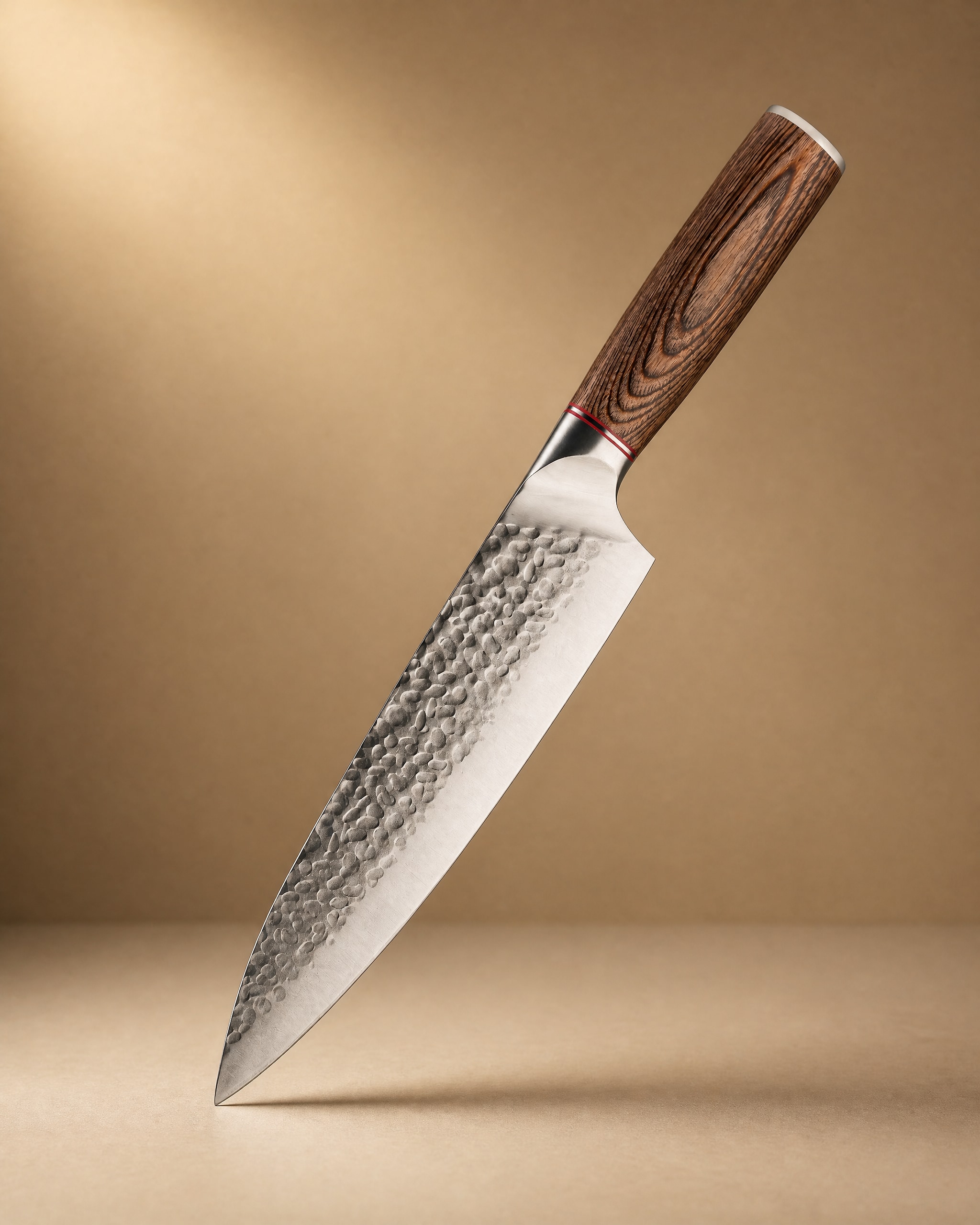 Akan 8'' Gyuto Knife 牛刀$49.99View product → is a practical choice. If you prefer a heavier feel,
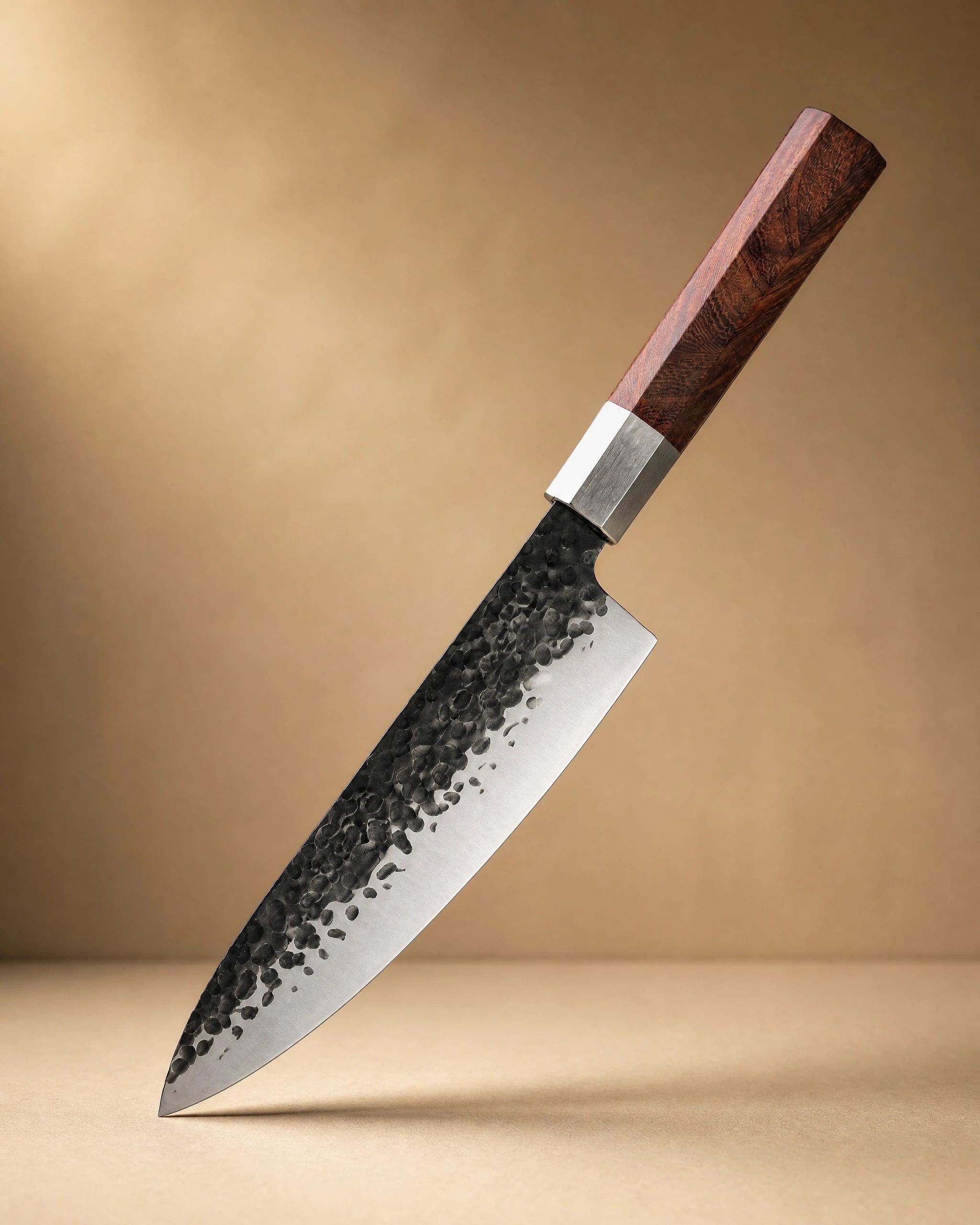 Sendai 8" Steel Gyuto Knife 牛刀$49.99View product → is another option. Neither knife should be used to chop through bone. Use a cleaver or ask your butcher to break down the bone for you.
A bread knife has no place in raw meat prep. Its serrations are designed for crusty bread, not for slicing protein, and sawing at meat with a bread knife makes a mess. A bread knife such as 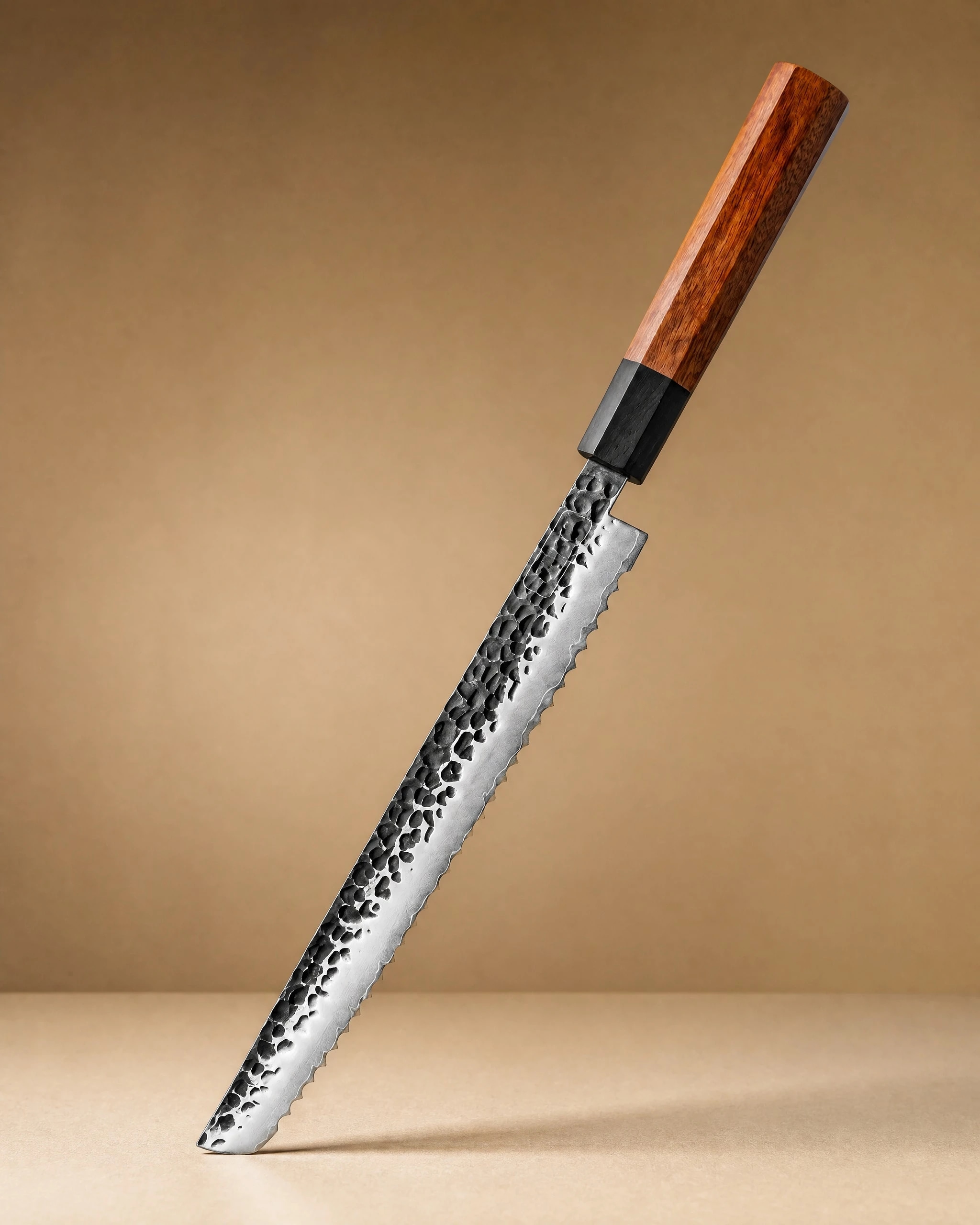 Rumoi 10" Japanese Bread Knife パン切りナイフ$59.99View product → should stay on the bread board. If you are outfitting a kitchen from scratch, a set such as
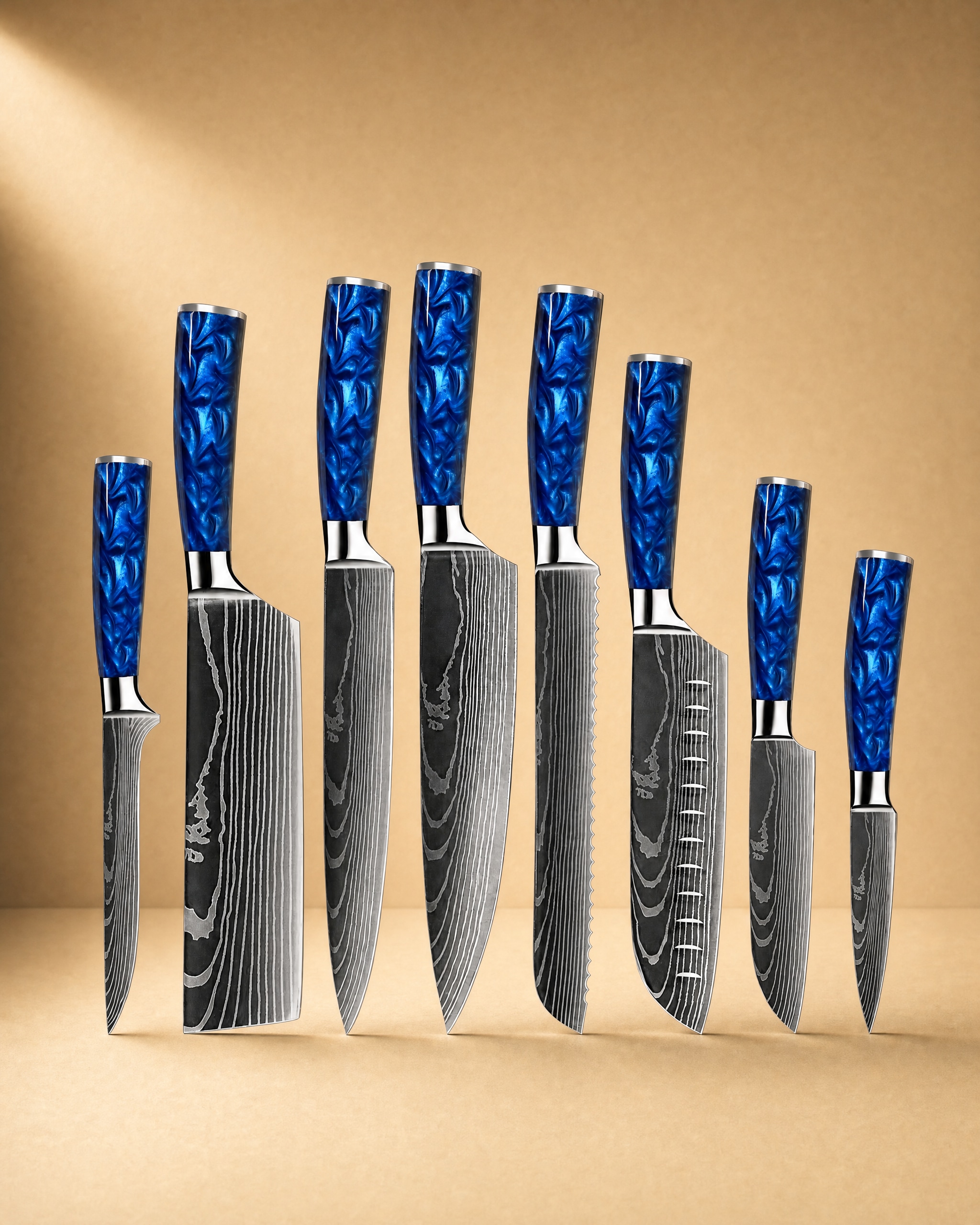 Shinano 信濃川 Damascus Pattern Stainless Steel Kitchen 8 Knife Set$149.99View product → can cover several everyday tasks, but you still need a separate board plan for raw meat. For more on keeping blades in good shape, see our knife care guide.

Board Care After Raw Poultry or Beef
After you finish with raw meat, scrape off any solids and wash the board with hot soapy water. If the board is dishwasher safe, run it through a hot cycle. If it is not, use a sanitizing solution according to its label, or a diluted bleach solution if that is appropriate for the material. Follow the manufacturer's instructions for the board. Rinse well and dry with a clean towel or let it air dry in a rack with space for air to circulate. Do not put a wet wooden board away in a cabinet. Do not oil a board that is still wet or has not been cleaned. For wood boards, a light coat of food-safe mineral oil after the board is completely dry can help maintain the surface, but oil is not a substitute for cleaning and sanitizing.
Inspect your board regularly. Deep cuts, cracks, and dark stains are signs that the surface is not cleaning well. Plastic boards with deep grooves can be sanded lightly if the manufacturer allows it, but replacement is often the safer choice. Wood boards with cracks should be retired from raw meat use. A board is a tool, and like any tool it has a service life.
How to Choose the Best Cutting Board for Meat and Poultry
If you cook raw poultry or beef a few times a week, a dishwasher-safe plastic board dedicated to raw meat is the lowest-friction choice. If you break down whole animals or cook a lot, a heavy rubber board with a juice groove is worth the space. If you prefer wood, use a separate plastic board for raw protein and keep the wood for vegetables and bread. Whatever you choose, buy a board that fits your sink, your storage, and your cutting style. A board that is too big to wash will not get washed properly. A board that slides will make you nervous. A board with a shallow groove will let juice onto the counter.
Knives and boards work together. A stable board lets you cut with control, and a sharp knife lets you cut without forcing. If you are choosing a knife for trimming and portioning, our knife guide explains the shapes and sizes. You can also browse the full knife shop to compare options. For most home cooks, one gyuto and one dedicated raw meat board cover a lot of ground. Add a bread knife if you bake, and add a set if you are starting from zero. The best cutting board for raw meat is not the most expensive one. It is the one you can clean, dry, and use safely every time you handle raw poultry or beef.
Photography: engin akyurt via Unsplash.

