
Whetstone Knife Sharpeners: What They Are and How to Pick

A whetstone knife sharpener is a simple tool: an abrasive stone, a little water, and the discipline to hold a consistent angle. It is also the most honest way to keep a good kitchen knife cutting. Unlike a pull-through gadget or a high-speed electric sharpener, a stone removes metal slowly and leaves a clean, predictable edge. That control is why cooks who care about their knives keep coming back to stones. It is also why beginners sometimes get frustrated. A whetstone rewards practice, not speed.
What a Whetstone Knife Sharpener Actually Is
A whetstone is a block of abrasive material. You wet the surface, place the knife edge against it at a chosen angle, and stroke until the abrasive grinds a fresh edge. The water does two jobs: it floats away metal particles and keeps the stone cutting smoothly. A water stone knife sharpener is usually softer than an oil stone, so it releases abrasive grit as you work. That grit, often called mud, helps polish the bevel. The tradeoff is that soft stones wear faster and need to be flattened now and then.
Whetstones come in natural and synthetic versions. Synthetics are consistent, predictable, and easier to buy in a specific grit. Natural stones can be lovely, but they vary from stone to stone and cost more. For a home sharpener, a good synthetic water stone is the sensible start.
Water Stones, Oil Stones, and Diamond Plates
A water stone knife sharpener is the common choice for kitchen knives because it cuts quickly and leaves a refined edge without deep scratches. Oil stones work too. They are slower, they need oil instead of water, and the mess is different. Diamond plates are not stones in the traditional sense, but they are useful. A coarse diamond plate can repair a chipped edge or flatten a worn water stone. Most home cooks do not need a full rack of options. They need one medium stone, one way to keep it flat, and a little patience.
If you see a listing called a bester whetstone, treat the word as marketing, not a recognized grade. There is no official bester category. Look for a clear grit rating, a known abrasive type, and a seller who tells you whether the stone needs soaking or just a splash of water.
Grit Ranges Without the Guesswork
Grit numbers tell you how coarse the abrasive is. Lower numbers cut faster and leave a rougher edge. Higher numbers polish and refine. The numbers are not standardized across every brand, but the general ranges are useful.
- Coarse, roughly 220 to 600 grit: repairs chips, sets a new bevel, and handles very dull knives. Most home cooks do not need to start here every time.
- Medium, roughly 800 to 3000 grit: the working range for most kitchen knives. A 1000 grit stone sharpens, and a 3000 grit stone refines.
- Fine, roughly 4000 grit and above: polishes an edge and is useful for some Japanese knives, but it will not fix a dull edge on its own.
For most people, the best whetstone knife sharpener is not a single super fine stone. It is a combination stone in the 1000 and 3000 range, plus a coarse plate for occasional repair. That setup covers daily maintenance and keeps you from over-polishing a knife that needs real work.
How to Pick a Whetstone Knife Sharpener
Start with size. A stone that is too short makes long strokes awkward, especially on a chef knife. A stone around 8 inches long and 2 to 3 inches wide is a practical benchmark for home use. Thickness matters less for performance, but a thicker stone lasts longer and feels more stable. A base or holder helps. So does a stone that comes with a flattening plate or at least a clear note about how to flatten it.
Next, decide between a combo stone and separate stones. A combo stone saves money and space, which is why it is the usual first purchase. Separate stones let you replace one grit at a time and often give you a larger surface. Neither choice makes you a better sharpener by itself. Consistency matters more than having three stones.
Check the soak requirement. Some water stones need ten or fifteen minutes in water. Others are splash and go. Both work. A stone that needs soaking is not a problem if you plan for it. A splash and go stone is convenient if you sharpen in short sessions. Do not buy a stone that comes with vague instructions and no grit label. That is a gamble, not a bargain.
The best knife stone sharpener for you should also match your knives. A very hard, high alloy knife may wear a soft stone quickly. A soft stone can still work, but it needs more flattening. A hard stone cuts more slowly and feels less forgiving. Honest sellers will describe the stone's behavior instead of promising a miracle edge.
Matching the Stone to the Knives You Own
If your main knife is a gyuto like the Akan 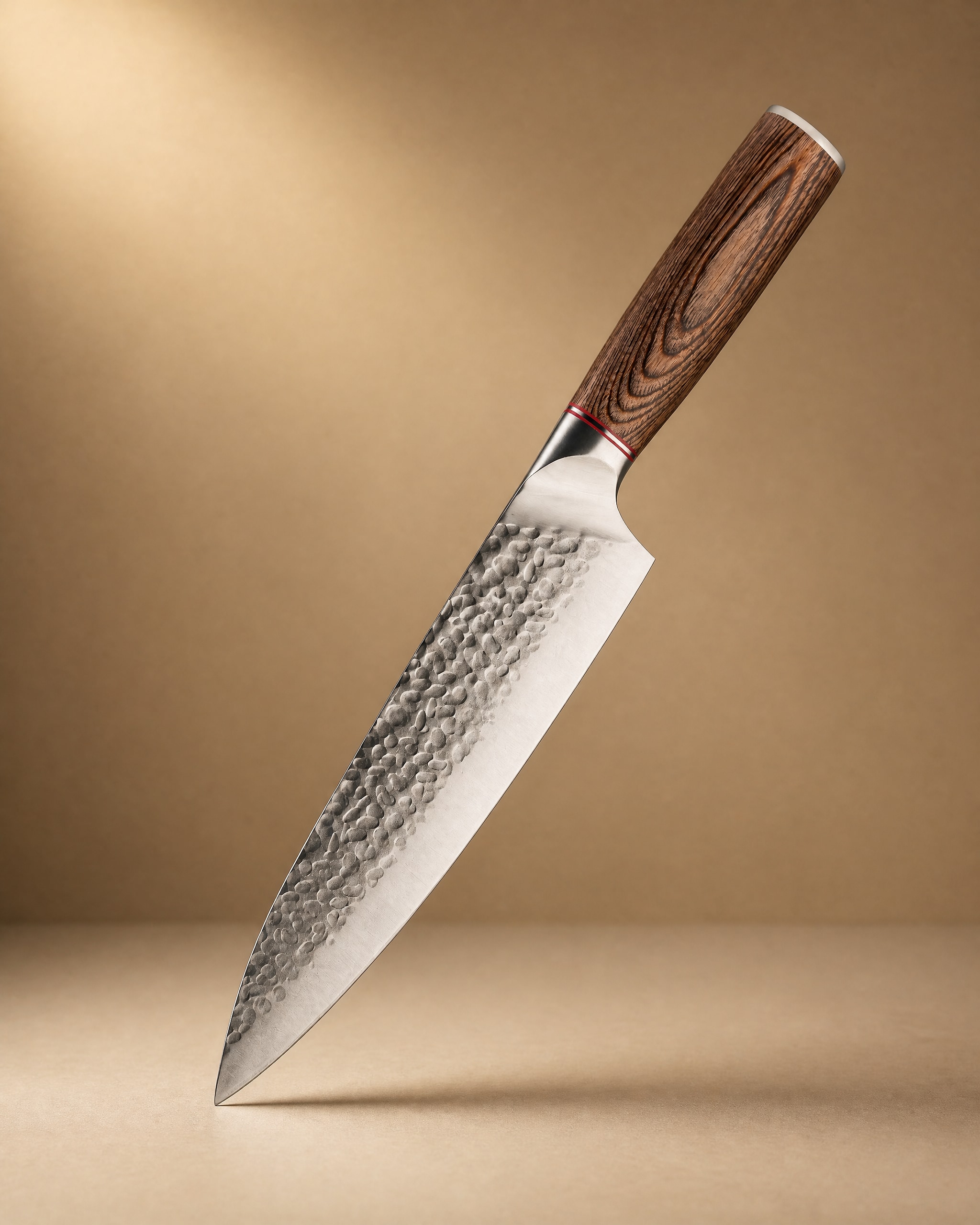 Akan 8'' Gyuto Knife 牛刀$49.99View product →, a 1000 grit stone and a 3000 grit refining step will handle almost everything. The same range suits the Sendai gyuto
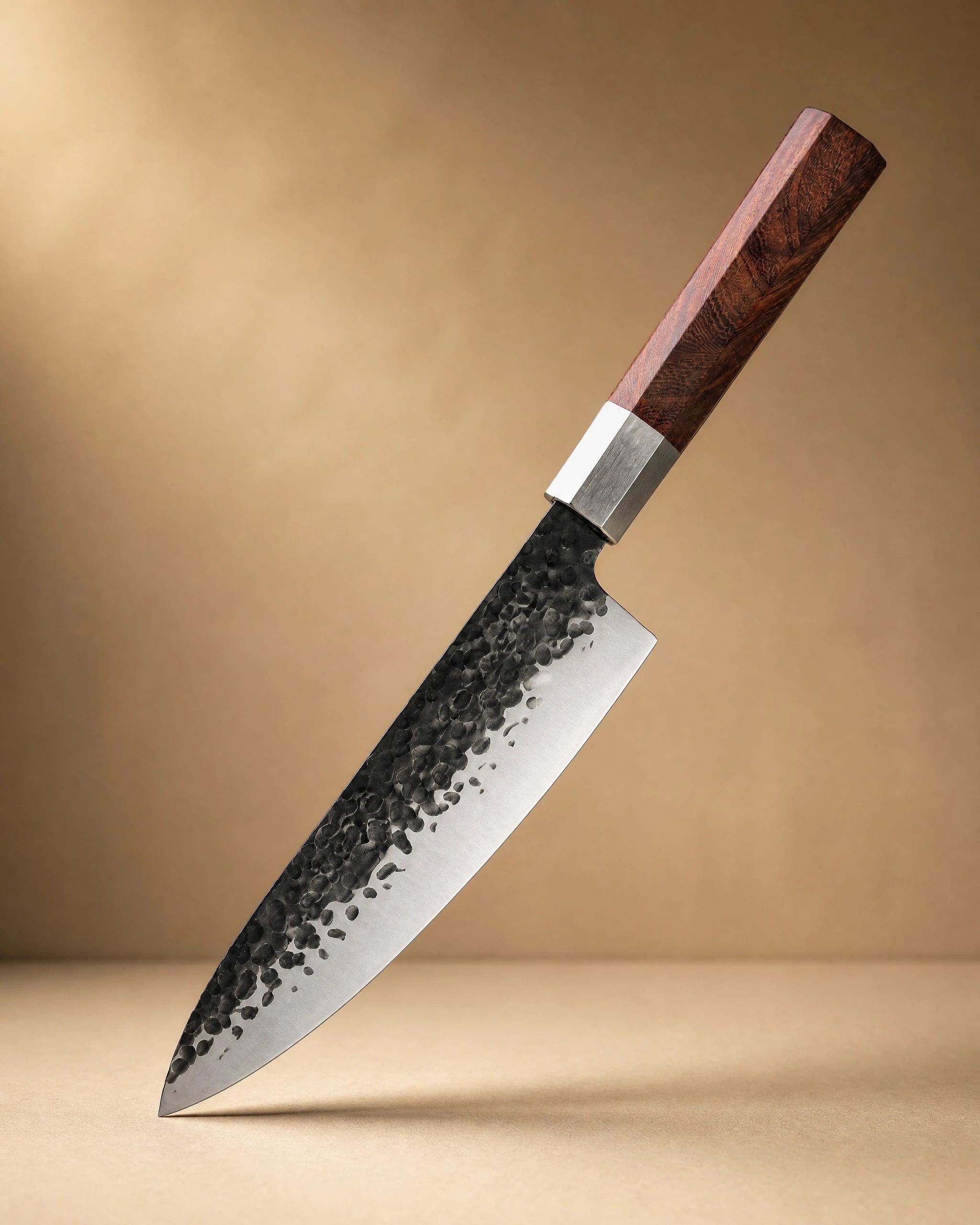 Sendai 8" Steel Gyuto Knife 牛刀$49.99View product →. You do not need a different stone for every knife. You need to learn one stone well, keep the angle steady, and stop before you create a wire edge.
A bread knife such as the Rumoi 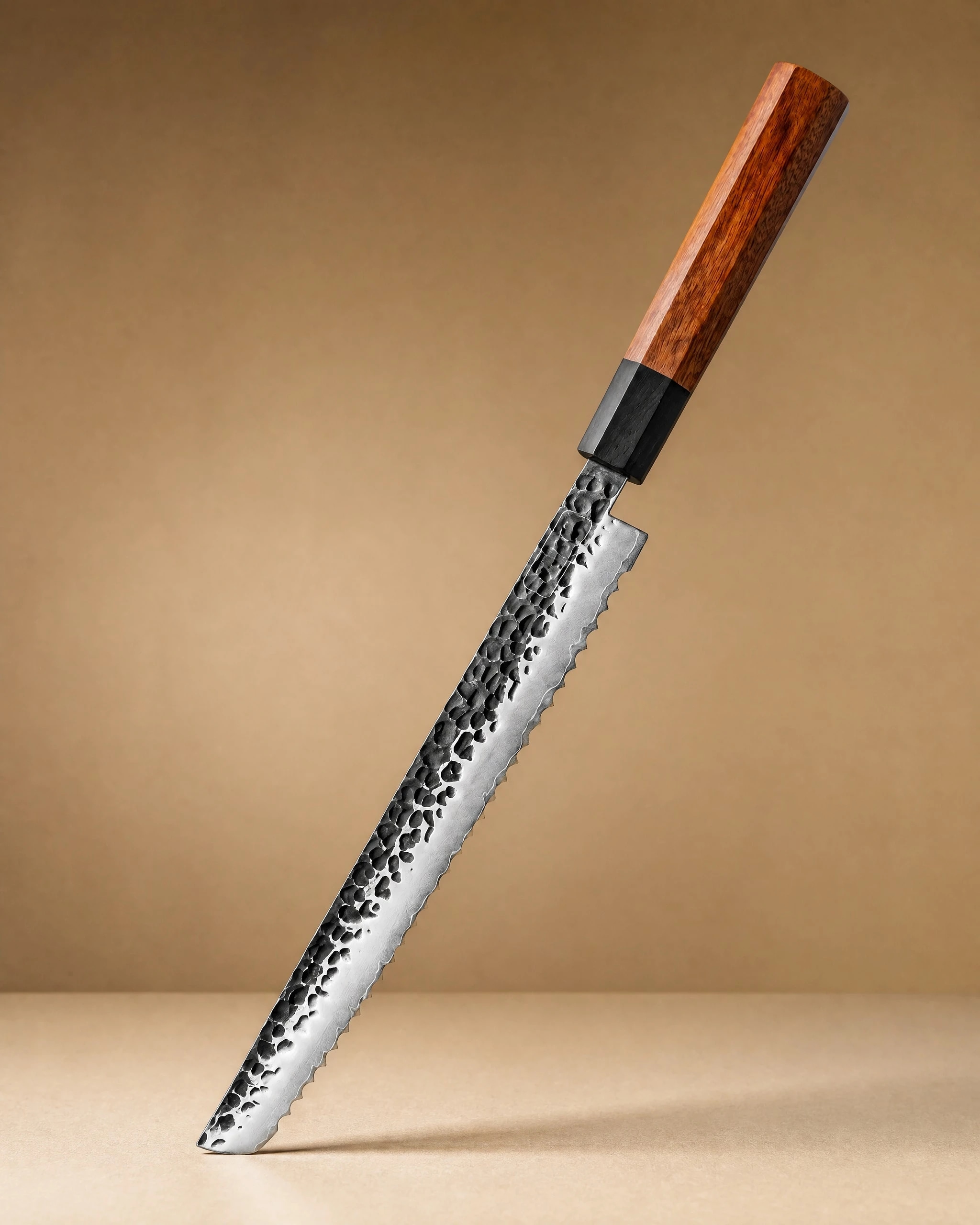 Rumoi 10" Japanese Bread Knife パン切りナイフ$59.99View product → is a different job. Serrations, if present, need a tapered rod made for them, or a professional service. Running a serrated edge over a flat stone rounds the points and makes the knife worse. Keep the flat stone for plain edges.
If you own a full set, such as the Shinano knife set 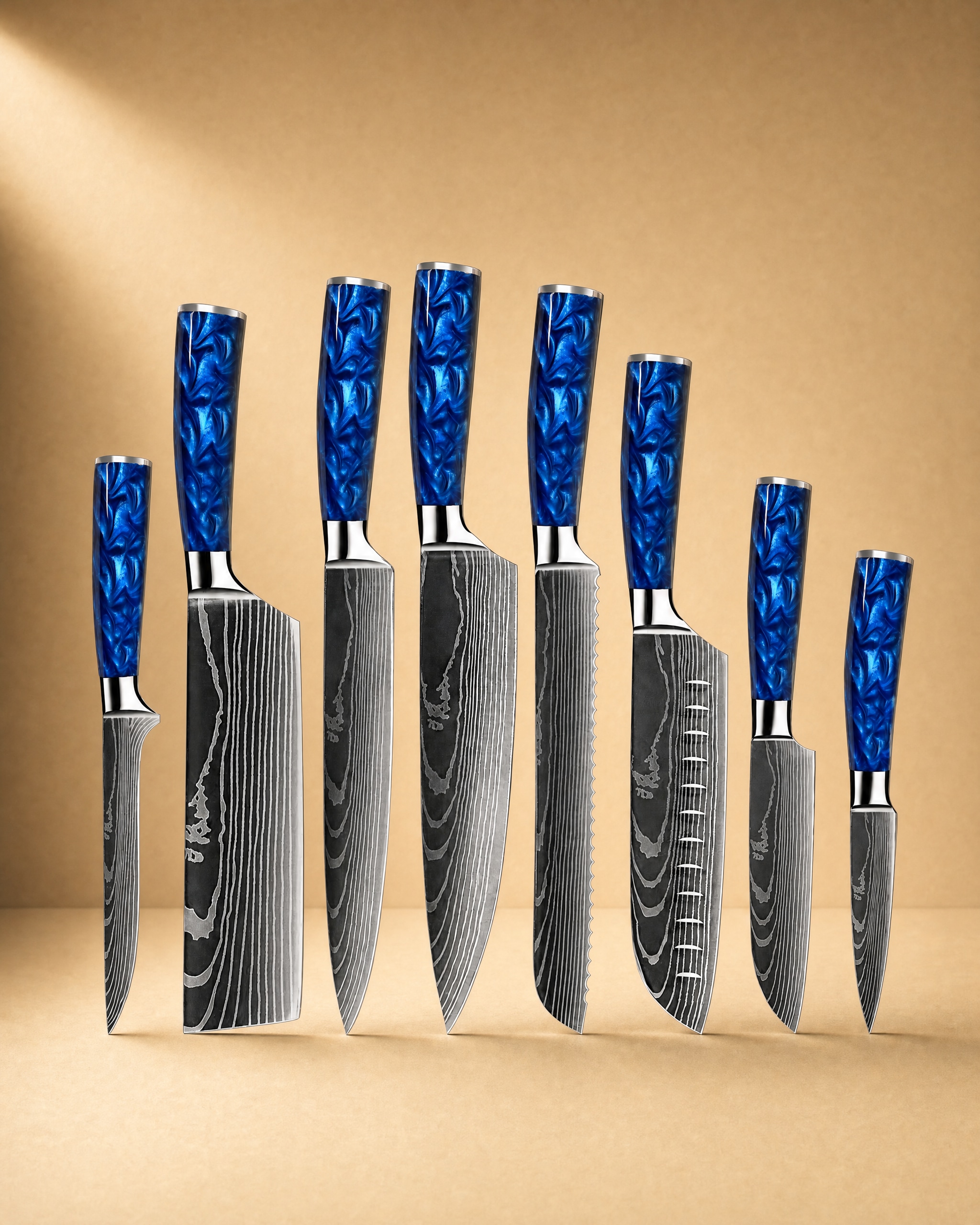 Shinano 信濃川 Damascus Pattern Stainless Steel Kitchen 8 Knife Set$149.99View product →, you still do not need a complicated sharpening station. One medium combo stone, one flattening plate, and a towel will maintain the plain edges in the set. Check each knife before you sharpen. A knife that still cuts cleanly through paper or tomatoes usually needs a few light passes, not a full session. Our knife care guide covers the daily habits that keep edges out of trouble.
Technique Beats Gear
The most common sharpening problem is not a bad stone. It is a changing angle. Pick an angle and keep it. Most Western kitchen knives do well around 15 to 20 degrees per side. Most Japanese knives can take a lower angle, but you should follow the maker's guidance and your own comfort. Use light pressure. Let the abrasive work. Do not saw fast and hard, because that creates a rounded edge and a messy bevel.
Work one side until you feel a slight burr along the opposite edge, then switch. Keep the stone wet or splashed as needed. After sharpening, rinse and dry the knife, then dry the stone. Flatten the stone after a few sessions, or sooner if it develops a hollow. A flat stone is not a luxury. It is the difference between a sharp edge and a frustrating one.
If you are new, practice on a less expensive knife first. Learn the feel of the bevel locking into the stone. Ten focused minutes once a month will do more than an hour of rushed work once a year. If your knives are due for a full reset, browse the sharpeners and stones category before you buy. Buy for the edge you actually maintain, not for the collection you imagine.
What to Skip
Skip pull-through sharpeners for good knives. They remove a lot of metal and can leave a rough edge. Skip electric sharpeners unless you have a specific reason and understand what they do. Skip very cheap stones with no grit label. Skip a 6000 grit stone as your only stone. It will polish a dull edge without making it sharp. Also skip the idea that a more expensive stone will fix an inconsistent angle. It will not.
If you want to compare knife types before you invest in stones, read our knife guide. The right stone depends on the blade in front of you, not on a ranking list. You can also view the full knife shop to see how different profiles fit your cooking.
A Simple Starter Kit
A practical kit is short: one 1000/3000 combo water stone, one flattening plate or coarse diamond plate, a stable base, and a clean towel. Add an angle guide if you want help at the start. Add a leather strop later if you want to refine an edge between sharpenings. That is enough for most home kitchens. The best whetstone knife sharpener is the one you will actually use, not the one with the longest feature list.
Keep the stone clean, keep it flat, and keep your angle steady. Those three habits matter more than brand names. If you take care of the edge, a good knife will reward you for years. If you ignore it, even the finest stone will only slow the decline.
Photography: Zhao Wenjie via Unsplash.

