
High Quality Cutting Boards: What to Look For

A cutting board takes more punishment than any other tool in your kitchen. It gets hit three times a day, scrubbed, dried, and hit again. It also decides how long your knife edge lasts. A surface that is too hard dulls an edge in a few strokes. A surface that is too soft traps moisture and scratches into a mess of grooves. The right board sits in the middle: firm enough to feel solid under the blade, forgiving enough to protect the edge, and stable enough to stay flat for years.
Most shoppers pick a board by size and price, then wonder why their knives feel dull after a month. This guide walks through what actually separates a high quality cutting board from one that only looks the part: material, grain, thickness, construction, finish, and how the board behaves after a year of daily cooking.
Start with the material
Every board material is a trade between edge life, hygiene, weight, and maintenance. There is no single winner, only the right compromise for how you cook.
Wood is the standard for a reason. Maple, walnut, cherry, and hinoki all have enough give to let a thin edge sink in slightly rather than skid across the surface. That give is what keeps a gyuto sharp. Wood also looks better with age and can be sanded back to new. The cost is maintenance: it needs oiling, it should not sit in water, and it reacts to neglect faster than plastic.
Plastic and poly boards are cheap, light, dishwasher safe, and easy to replace. They are a reasonable choice for raw poultry and fish, where you want a surface you can sanitize aggressively. They are less kind to a fine edge, and soft poly develops deep grooves that hold residue over time. Once a plastic board is heavily scarred, replace it.
Bamboo sits between wood and plastic on price. It is dense, stable, and often sold as eco-friendly. That density has a cost: bamboo is harder on edges than maple or hinoki, and many inexpensive bamboo boards are thin glue-ups that warp or split. A well-made bamboo board is fine for vegetables. It is not the surface to choose if edge retention matters most to you.
Glass, stone, and ceramic boards should stay out of a kitchen that uses Japanese knives. A single session of chopping on glass can roll or chip an edge that took care to produce. Use them as serving platters, not cutting surfaces.

End grain versus edge grain
With wood, construction matters as much as species. Edge grain boards are made with the long grain facing up. They are simpler to build and perfectly good for most home cooks. End grain boards are built with the wood's end grain facing up, like a butcher block. The fibers stand vertically, so the knife edge parts them instead of slicing across them.
End grain boards feel softer under the blade, hide cut marks better, and tend to last longer in heavy use. They also cost more, weigh more, and need more careful oiling because the open pores drink up moisture. If you cook daily and want one board for the next decade, end grain is worth the money. If you chop a few times a week, a solid edge grain board from a reputable maker will serve you well.
Thickness, size, and weight
Thin boards slide, flex, and cup. A high quality wood cutting board is usually at least 1 to 1.5 inches thick, and thicker is better for stability and for absorbing impact. Thickness also leaves enough material to refinish the board if it does warp or scar.
Size depends on your counter and your cooking. A board should give you room to work without crowding the stove, and it should be big enough that you are not chasing chopped onion across the counter. For most home kitchens, a board around 16 by 12 inches handles daily prep. If you break down whole chickens or process large batches of vegetables, go bigger. Many cooks keep a large board for volume work and a small one for garlic, citrus, and quick jobs.
Weight is the trade-off. Heavier boards stay put without feet or a towel underneath. Lighter boards are easier to lift to the sink. Think about which one you will actually do at the end of a meal, because a board that is too heavy to wash gets left dirty.
The details that separate a high end cutting board from a cheap one
Look at the edges. A high end chopping board has chamfered or rounded edges that feel smooth in the hand and do not split when the board is washed. Sharp, unfinished edges are the first sign of a board built to a price.
Look at the joints. On a glued board, the seams should be tight and even, with no gaps, no filler, and no visible glue lines. A board made from narrow strips glued under pressure is more stable than one made from a few wide planks that were never properly dried.
Look at the finish. Food-safe oil or a blend of oil and beeswax should soak into the wood, not sit on top like a plastic film. A tacky or heavily lacquered surface will flake under a knife and leave residue in your food.
Look at the base. Rubber feet or a recessed grip stop a board from sliding, which matters more than most people realize. A board that shifts while you chop is a safety problem, not just an annoyance. Juice grooves are useful on meat boards and mostly irrelevant for vegetable prep.
Care decides how long it lasts
Most boards do not fail from use. They fail from water. Wood expands when it takes on moisture and shrinks as it dries, and repeated swings between wet and dry will crack any board, no matter how well made. Wash wood by hand, dry it standing on edge so both faces breathe, and never leave it soaking. Oil it monthly for the first year, then whenever the surface looks dry and pale.
Plastic boards belong in the dishwasher, and that is a real advantage for raw proteins. Wood and bamboo do not. For a workflow that keeps everything in good shape, read our knife care guide, which covers board hygiene, drying, and storage alongside blade care.
Pair the board with the knife you actually use
A board is half of a cutting system. The other half is the blade, and the two should suit each other. A thin, hard Japanese edge benefits most from a wood surface with some give. A heavy Western-style blade tolerates more, but still does not belong on glass.
For everyday prep, the 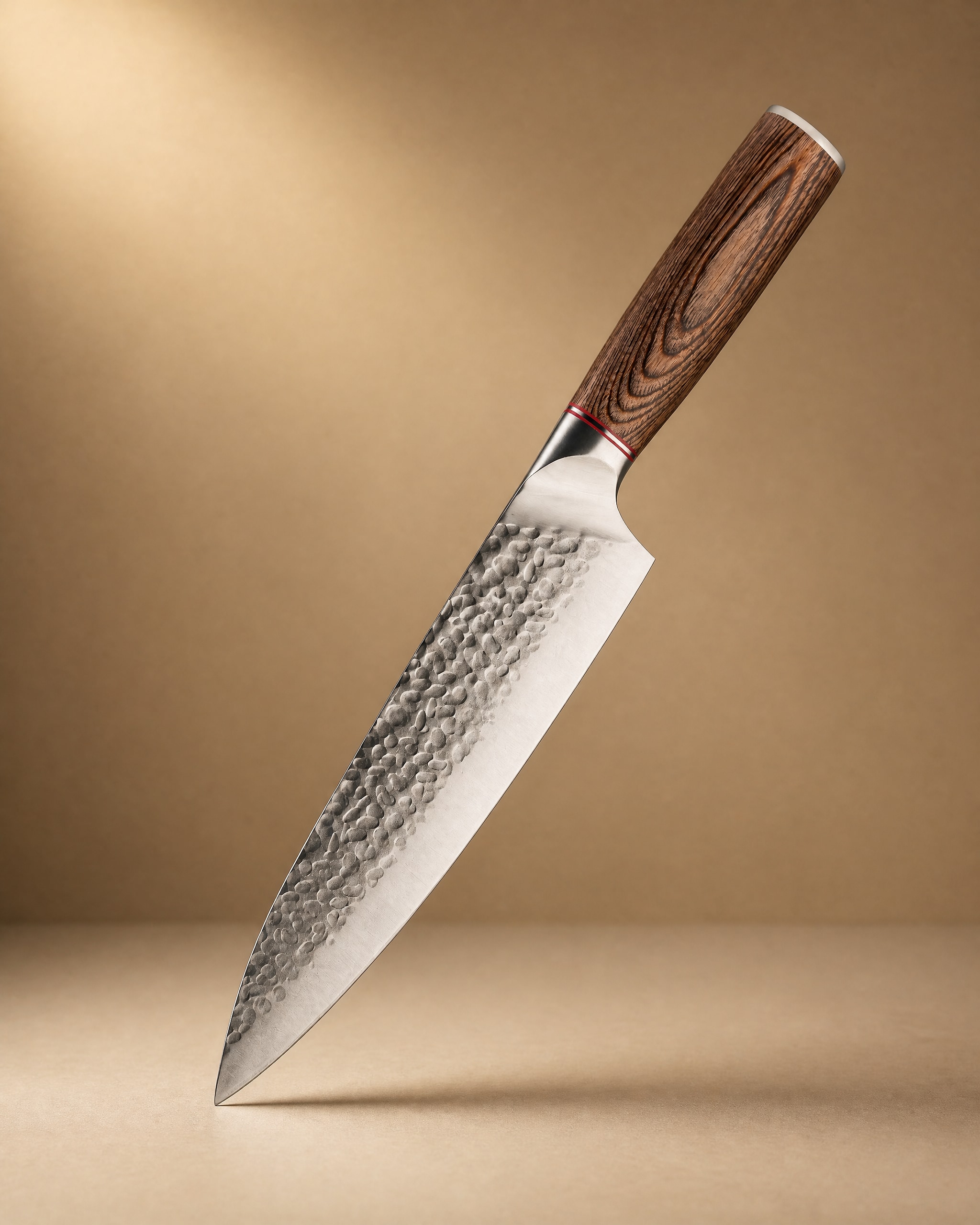 Akan 8'' Gyuto Knife 牛刀$49.99View product → is the kind of knife that spends its life on a board, so give it a surface that protects the edge: a solid maple or hinoki board, oiled and kept dry. If you slice a lot of crusty loaves, the
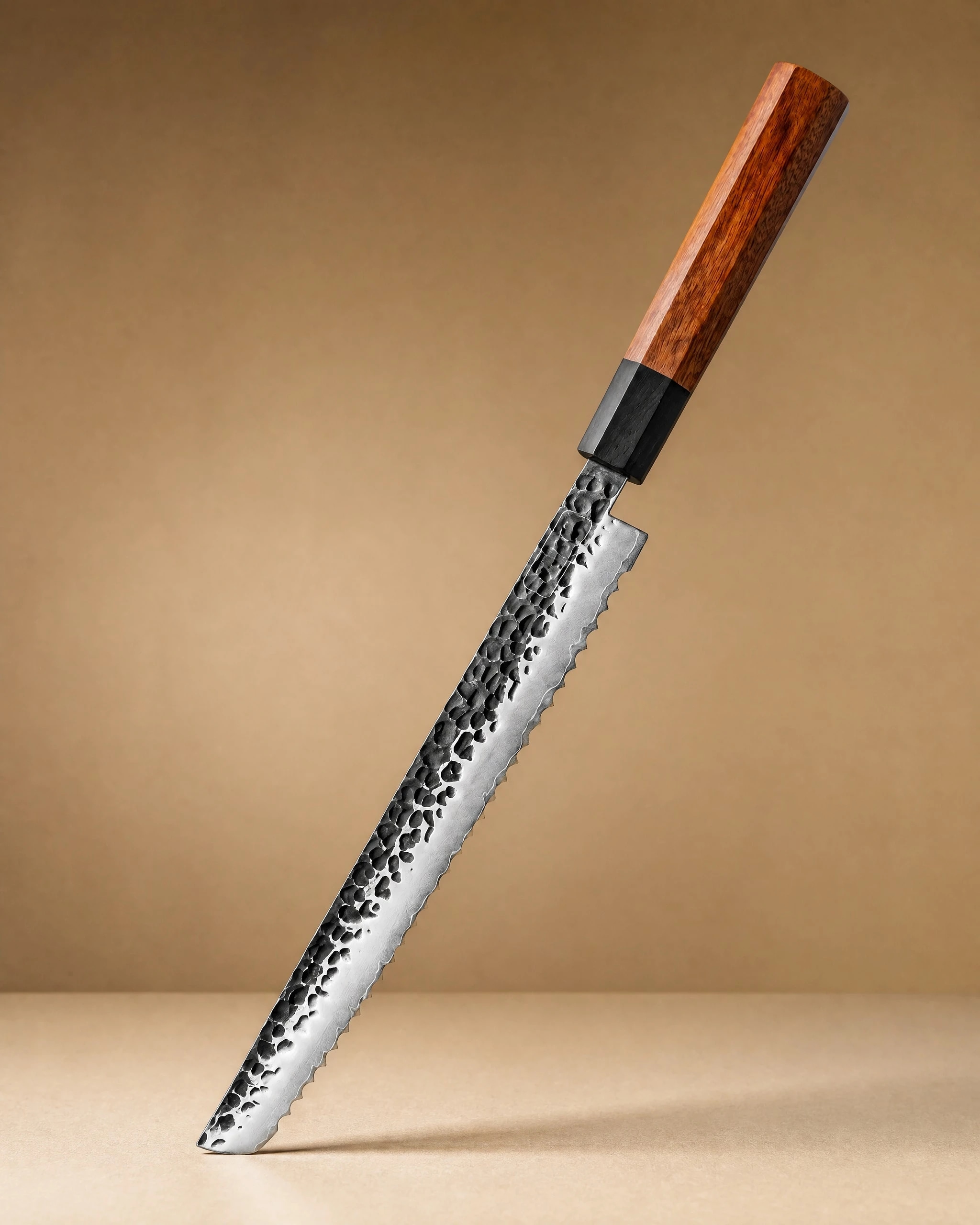 Rumoi 10" Japanese Bread Knife パン切りナイフ$59.99View product → keeps the sawing work off your main board and away from your fine edge, which is how most chips happen in home kitchens.
If you prefer a steel-forward blade for heavier tasks, the 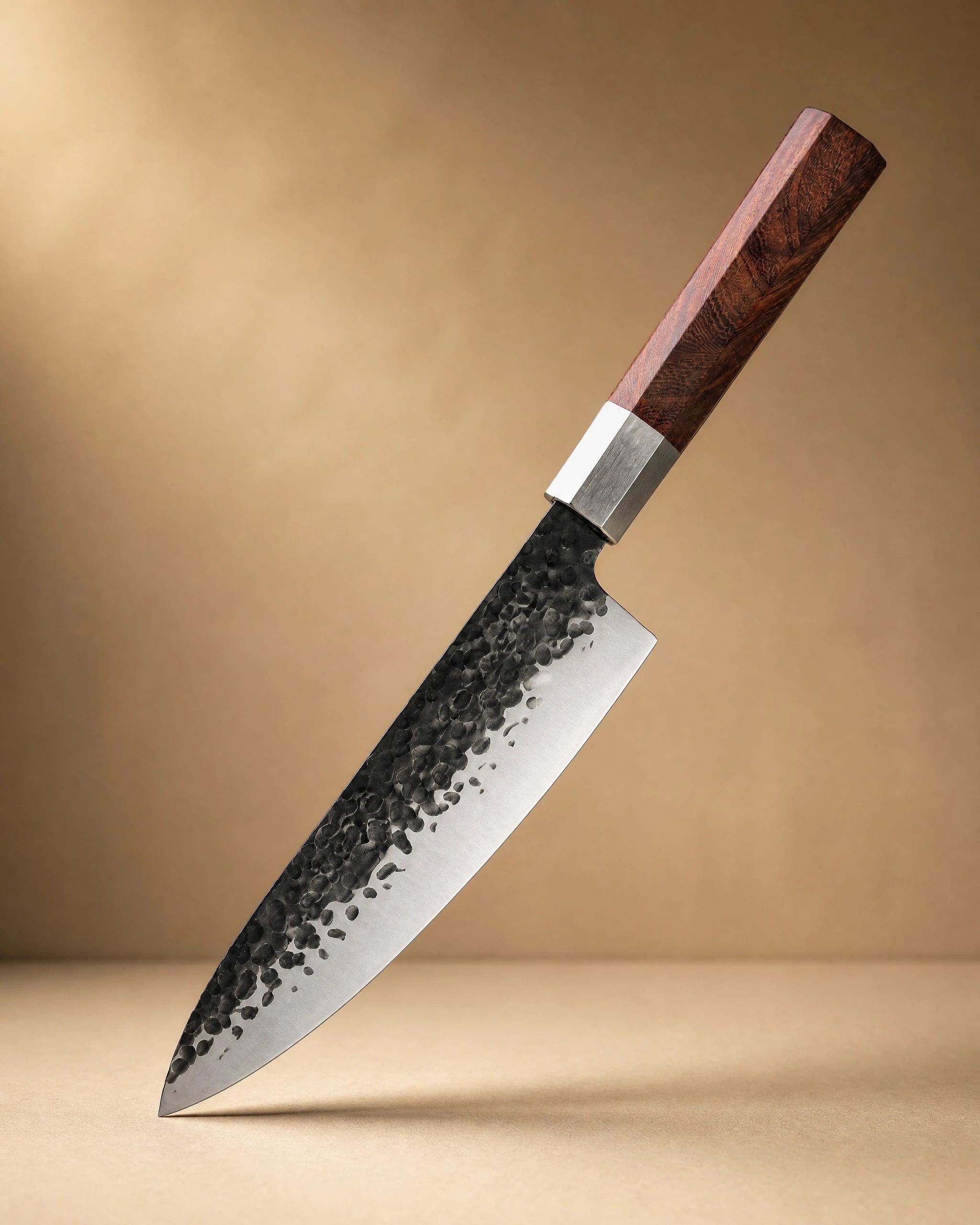 Sendai 8" Steel Gyuto Knife 牛刀$49.99View product → handles board work well, and a thicker board with a juice groove is a sensible match for roasts and proteins. If you are outfitting a kitchen from scratch, the
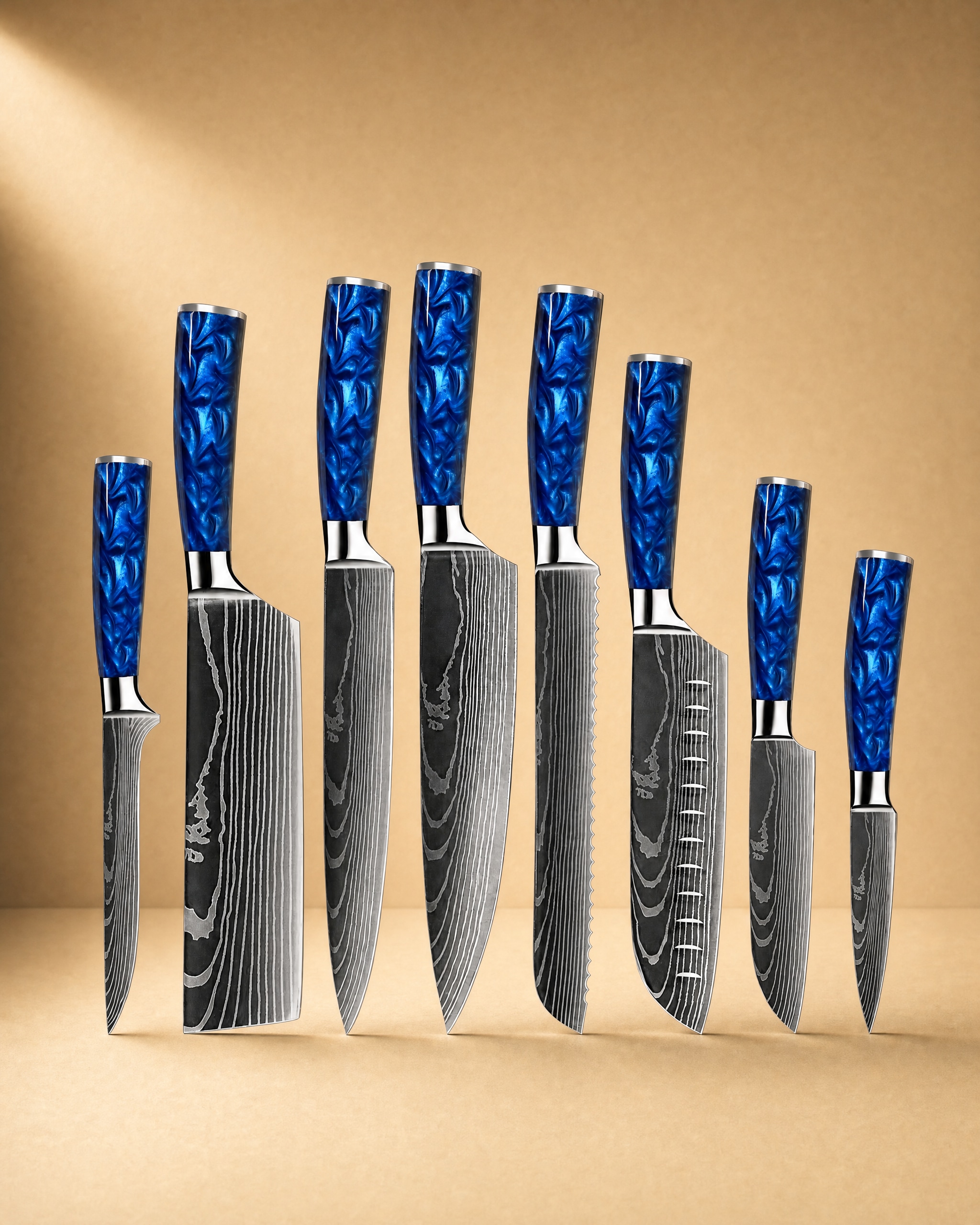 Shinano 信濃川 Damascus Pattern Stainless Steel Kitchen 8 Knife Set$149.99View product → covers the range of daily tasks, so one good large board plus a small secondary board will serve the whole set. You can browse the full range in our knife shop, and our knife buying guide explains how blade geometry and board choice work together.
Red flags worth walking away from
Boards with no species listed. Boards described only as wood with no origin or construction detail. Boards that smell strongly of solvent when you open the packaging. Boards priced far below the cost of the raw material, which usually means thin stock, poor drying, or filler. Boards with painted designs over the cutting surface, where the paint will wear into your food.
None of these guarantee a bad board. They are signs that the maker is not telling you what you need to know. A serious maker will name the wood, describe the grain, and explain how to care for it.
A short buying checklist
- Material suits your knives: wood with some give for fine Japanese edges, poly for raw proteins if you want dishwasher sanitation.
- Thickness of at least 1 to 1.5 inches for stability and refinishing.
- Tight, even glue joints and no visible filler.
- Chamfered edges and a food-safe oil finish, not a lacquer coat.
- Feet or a non-slip base, or enough weight to stay put.
- A size you can lift and wash without dread.
- A maker who names the species and the construction.
Buy once, then take care of it
A high quality chopping board is one of the few kitchen purchases that gets cheaper over time. Buy a solid board from a maker who tells you what it is made of, keep it dry, oil it now and then, and it will outlast several rounds of cheap replacements. Your knives will hold their edges longer, your prep will feel steadier, and a high quality wooden chopping board will look better in five years than it did on day one.
Photography: Mike Gattorna via Unsplash.

