
Best Type of Cutting Board: A Buying Guide

A cutting board is not glamorous gear, but it touches every meal. It also decides how much wear your knife edge sees, how often you wash a heavy slab, and whether raw chicken juices end up near your salad. The best type of cutting board is not one material for every kitchen. It is the board that fits your knives, your cleaning habits, and the food you cook most.
This guide compares wood, plastic, composite, bamboo, and the materials to avoid. It also covers size, care, and the details that separate a board you love from one you hide in a cabinet. If you are shopping for knives too, start with our knife guide.
The Short Answer: Wood First, Plastic Second, Glass Never
For most home cooks, a wood board is the best type of cutting board to use daily. Wood is gentle on knife edges, stable under the blade, and pleasant to work on. Plastic earns a place for raw meat and messy jobs, especially if it goes through a dishwasher. Composite or rubber boards suit heavy use. Glass, stone, marble, and ceramic boards are for serving, not chopping.
- Best all-around: wood, either edge grain or end grain, for vegetables, fruit, bread, and cooked foods.
- Best for raw meat: plastic that fits your dishwasher and can be replaced when deeply scored.
- Best for heavy volume: composite or rubber, if you accept the weight and cost.
- Avoid for knife work: glass, stone, marble, and ceramic, which are hard on edges.
Why Cutting Board Material Matters for Your Knives
Every cut sends force into the board. A soft surface lets the edge sink slightly and preserves the fine geometry that makes a knife cut well. A hard surface reflects force back into the edge. Over time, glass or stone can roll, chip, or flatten an edge, even with careful cutting. Wood and rubber are the friendliest surfaces. Plastic sits in the middle. Bamboo is harder than most people expect. Board material also affects control: a board that slides or flexes makes cutting feel unstable, and a board that is too small forces cramped strokes. The 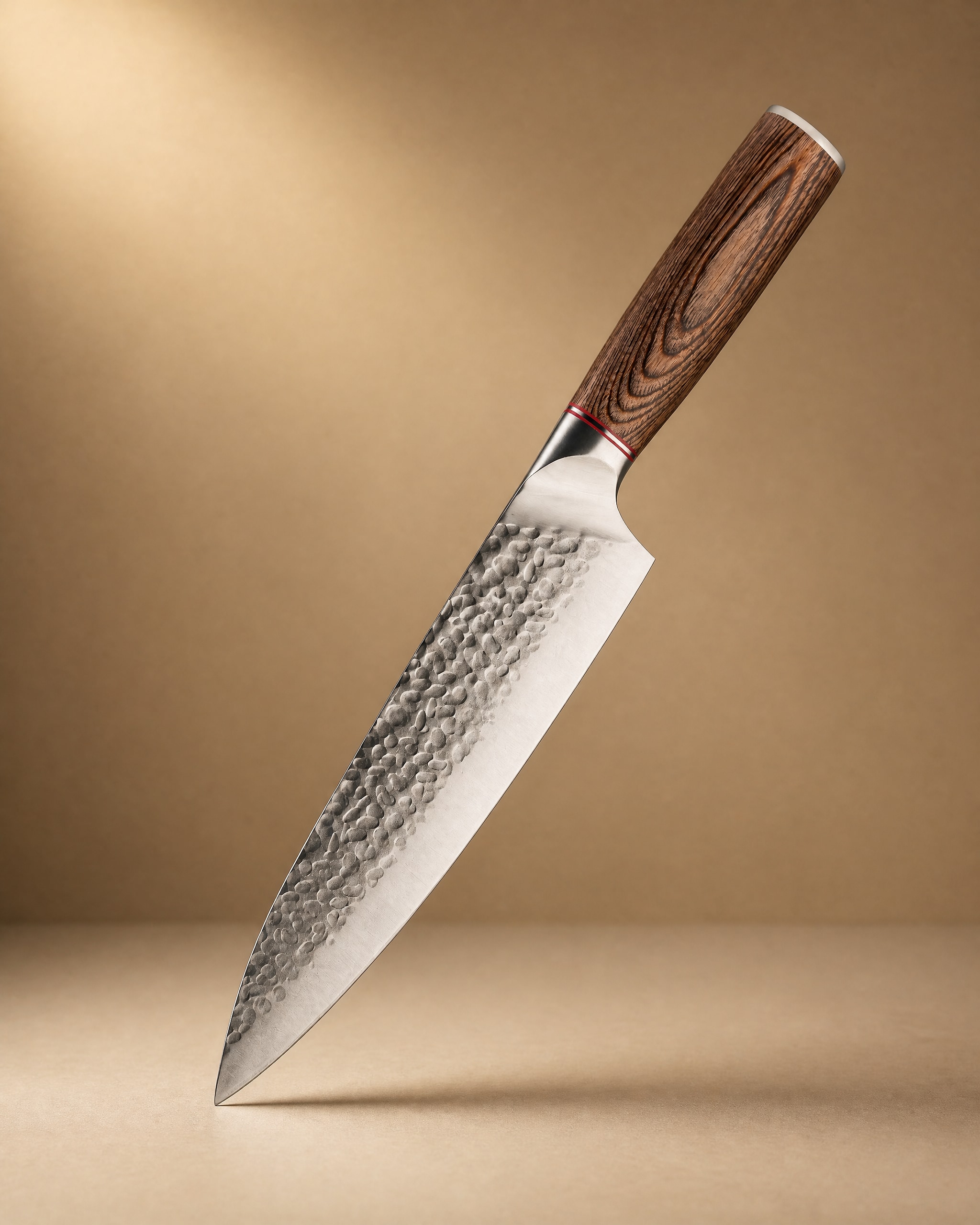 Akan 8'' Gyuto Knife 牛刀$49.99View product → is a practical example of an everyday knife that benefits from a stable, forgiving surface.
Wood Cutting Boards: End Grain, Edge Grain, and What You Give Up
Wood is the traditional choice because it works. Edge-grain boards are made from strips glued side by side, with the edge of the grain facing up. They are durable, less expensive than end grain, and common in maple, walnut, and cherry. End-grain boards are built from small blocks set with the end of the grain up. The surface looks like a checkerboard, and the fibers can separate slightly under the knife, which is why end grain is often described as self-healing. It is also heavier and more expensive to make.
Both types are good for knives. Edge grain is the sensible starting point for most homes. End grain is worth the extra cost if you chop often and want a softer feel under the edge. The trade-off is care. Wood should not soak, should not go in the dishwasher, and needs periodic oil. If you leave it wet or store it near heat, it can warp or crack. A board you maintain lasts. A board you neglect becomes a guilt object.
Wood is generally safe for food contact when cleaned and dried properly. Wash with hot soapy water, rinse, dry promptly, and sanitize when needed. Do not let raw meat juices sit on any board.

Plastic Cutting Boards: Hygiene, Dishwashers, and Trade-offs
Plastic boards are cheap, light, and dishwasher safe. That makes them the best type of chopping board for raw meat in many homes. You can color-code them, stack them, and replace them without much pain.
The weakness is scoring. Knives leave grooves in plastic, and those grooves can hold moisture and food particles even after washing. Once a plastic board is deeply scored, replace it. Thin boards can also slide or flex, which is annoying and less safe. Use plastic for messy jobs and wood for everyday prep.
Composite and Rubber Boards: The Restaurant Workhorse
Composite and rubber boards are engineered for commercial kitchens. They are dense, stable, and often dishwasher safe. They resist deep scoring better than cheap plastic, and they are gentler on edges than glass or bamboo. The drawbacks are weight and price. A large composite board can be heavy to lift and awkward to store. Some are not meant for a home dishwasher, so read the maker's care instructions.
For a home cook who cooks every day and wants a board that can take a beating, composite is a strong choice. It is less romantic than wood, but it is practical. The 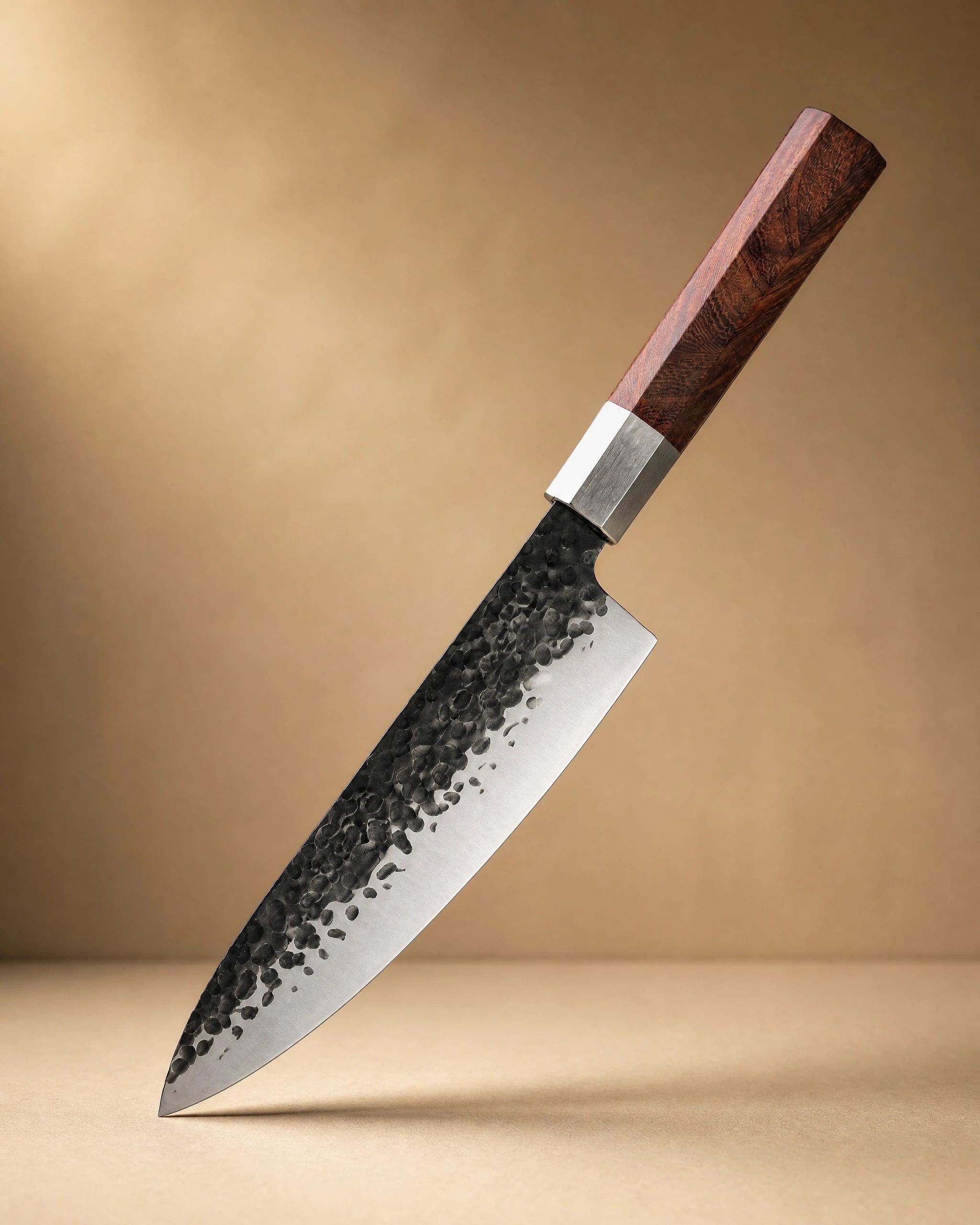 Sendai 8" Steel Gyuto Knife 牛刀$49.99View product → is the kind of everyday knife that does not need a delicate board, but it still deserves a surface that will not chip the edge.
Bamboo and Other Options: Read the Label
Bamboo boards are popular because they are affordable, light, and often marketed as eco-friendly. Bamboo is a grass, and it can be hard. Some boards are also made with adhesives that add hardness. They can be serviceable, but they are not the best type of cutting board for a thin, hard Japanese edge. If you use bamboo, keep your knife sharp and avoid heavy chopping.
Glass, stone, marble, and ceramic boards should stay on the table. They are easy to clean and look good under cheese, but they are punishing on knives. A single careless chop on glass can do more edge damage than a week of normal cutting on wood. If you want a serving board, buy a serving board.
The Best Type of Chopping Board for Different Tasks
The best kitchen cutting boards are the ones you can use without thinking. That usually means one large board for everyday prep and one smaller board for raw meat or quick jobs. A large board gives you room for a full knife stroke and a pile of chopped vegetables. A small board is fine for a lemon or a sandwich, but it is frustrating for dinner prep.
Bread is its own case. A long, serrated knife needs a board with enough length and a surface that will not dull the points. The 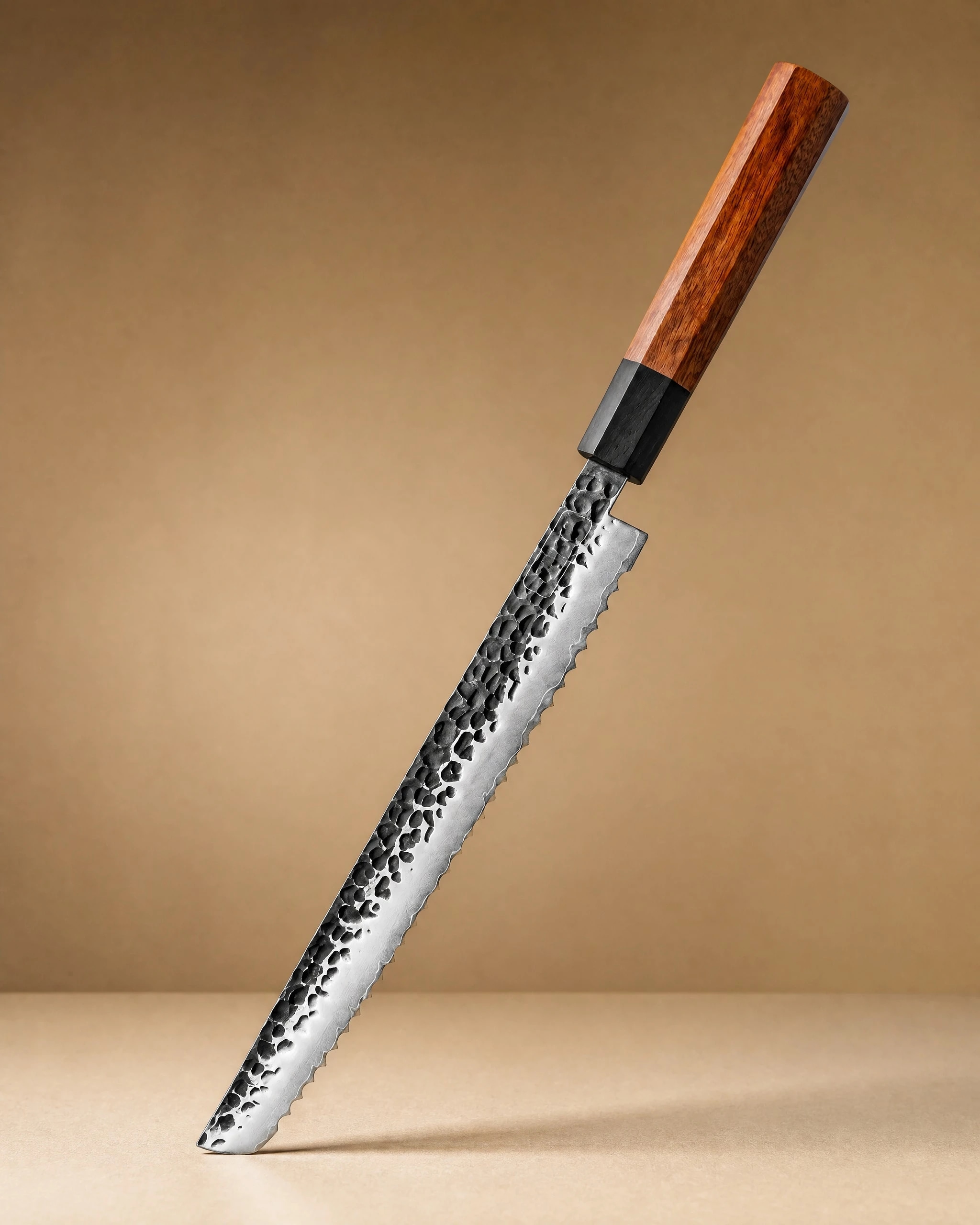 Rumoi 10" Japanese Bread Knife パン切りナイフ$59.99View product → is designed for crusty loaves, and it pairs best with a board that lets you use the full length of the blade. Do not saw bread on a tiny plastic board and wonder why the slices are ragged.
For protein, keep a separate plastic or composite board if you can. For vegetables and cooked food, use wood. If you have limited space, choose one medium-large wood board and one flexible plastic board that stores flat. That covers most home cooking.
Size, Thickness, and Features That Actually Matter
Buy the largest board your counter and storage can handle. A cramped board is less safe and less pleasant. Thickness adds stability but also weight. Measure your sink and cabinet before you fall in love with a slab.
A juice groove helps with roasted meat, but it reduces usable surface and can be hard to clean. Feet keep a board from sliding, but they can trap water if the board is washed in a sink. Handholds are useful on large boards. Reversible boards give you two surfaces, but both sides need care. None of these features matter as much as a flat, stable surface and a size that fits your work.
Cutting Board Care and Hygiene
Wood boards need washing with hot soapy water, a quick rinse, and immediate drying. Stand them on edge so air can reach both faces. Oil them when they look dry, not on a strict schedule. Avoid soaking, dishwashers, and prolonged sunlight. If a board develops a smell, sanitize it according to the maker's instructions or retire it.
Plastic boards should go through the dishwasher when possible. If yours cannot, wash it carefully and replace it when the surface is deeply scored. Composite boards vary, so follow the maker's care guide. Never cut raw meat on a board and then use it for salad without washing it first. A clean board is part of knife safety. Our knife care guide covers the knife side of that routine.
What Wirecutter-Style Reviews Get Right, and What They Miss
You may search for the best cutting board Wirecutter has reviewed, or for a wirecutter cutting board recommendation, because you want a shortcut. Rigorous reviews are useful. They test for knife dulling, warping, staining, and cleaning. They compare materials under controlled conditions. That is real information, and it can save you from a bad purchase.
What a review cannot tell you is whether you will actually oil a wood board, whether your sink is big enough for a heavy composite slab, or whether you will replace a scored plastic board when you should. The best type of cutting board for you is the one that fits your routine. If you will maintain wood, buy wood. If you will not, buy composite or plastic and replace it when it wears.
How to Choose Without Overthinking It
Start with one good wood board for everyday prep. Add a plastic board for raw meat if you cook protein often. Choose composite if you want dishwasher convenience and do not mind weight. Skip glass and stone for cutting. Buy the largest board you can store and wash.
If you are building a kitchen from scratch, the 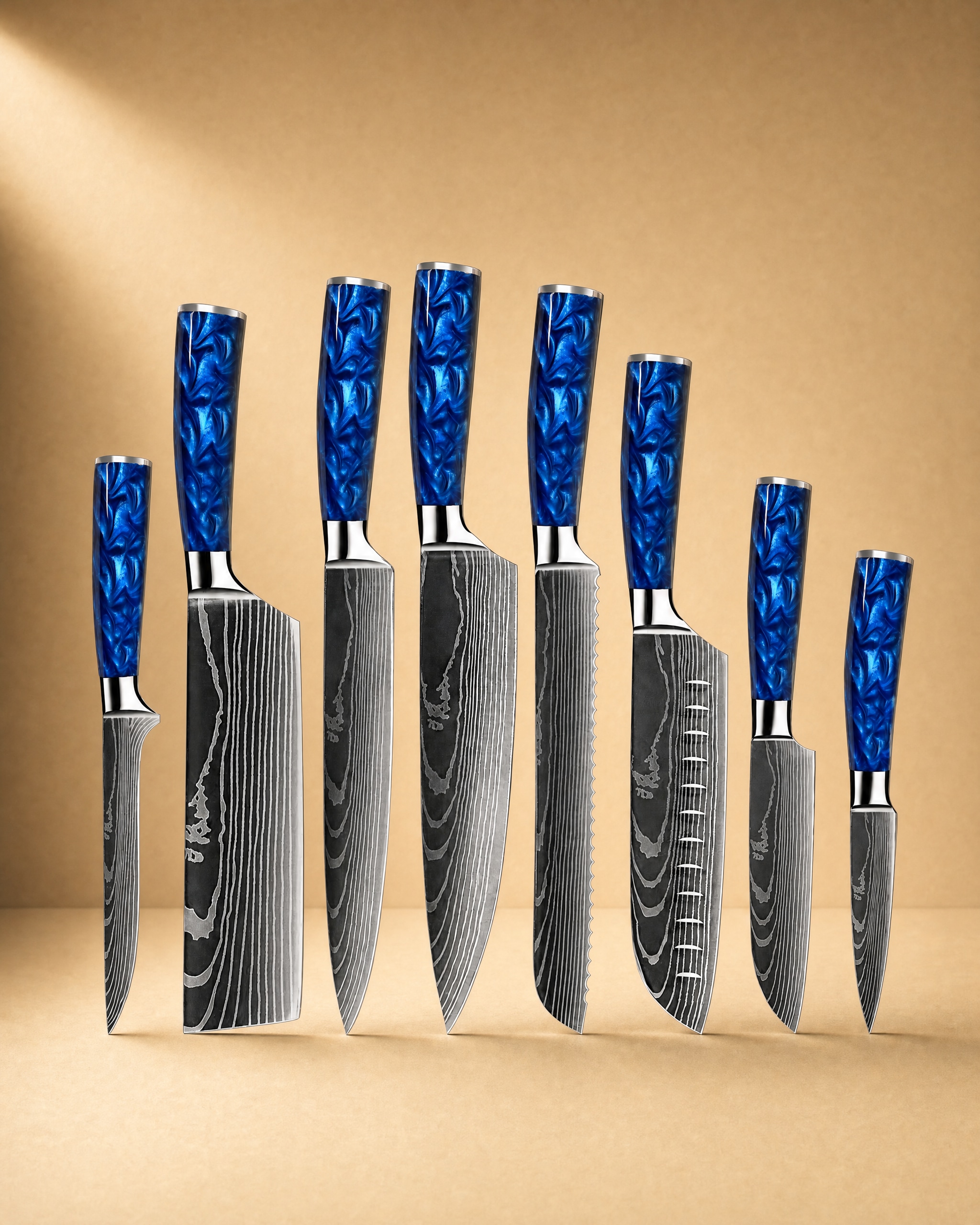 Shinano 信濃川 Damascus Pattern Stainless Steel Kitchen 8 Knife Set$149.99View product → gives you a set to grow with, and a good board will help those knives last. If you prefer to choose one knife at a time, browse the full knife shop and match the blade to the board. A calm, stable cutting surface and a sharp knife make prep faster, safer, and quieter.
Photography: engin akyurt via Unsplash.


