What Is a Gyuto Knife Used For

The gyuto is the knife most Japanese professional kitchens reach for first, and it has become the most popular Japanese knife in American home kitchens as well. The name translates roughly to beef sword, which is a historical accident rather than a description of the blade. In practice, a gyuto is an all-purpose chef's knife, built along the lines of a French or German chef's knife but usually thinner behind the edge, lighter in the hand, and finished with harder steel.
If you plan to own only one good knife, this is the shape to own. What follows is what a gyuto is actually used for, where it stops being the right tool, and how to choose one that fits the way you cook.
What a Gyuto Actually Is
A gyuto is a double-bevel knife with a gently curved edge that sweeps up to a fine, pointed tip. The profile splits the difference between a Western chef's knife and a Japanese slicer: enough belly to rock through herbs and garlic, and a long, nearly flat rear section that lets you push-cut or chop without lifting the blade off the board.
Blade lengths run from about 180mm to 270mm, which in US terms is roughly 7 to 10.5 inches. For most home cooks, 8 inches is the sweet spot. It is long enough to break down a whole chicken or split a head of cabbage, and short enough to feel controlled when you are dicing a shallot.
What separates a gyuto from a generic chef's knife is geometry, not marketing. The stock is thinner, the edge angle is more acute, and the handle is usually lighter, which shifts the balance point forward toward the blade. That combination is why the knife tends to fall through food rather than push through it.
What You Use a Gyuto For
Almost everything that happens on a cutting board. A gyuto covers the daily work of a home kitchen from prep through plating:
- Breaking down proteins: chicken, fish fillets, trimming beef and pork
- Vegetable prep: onions, carrots, peppers, potatoes, squash, cabbage
- Slicing cooked meat, roast chicken, steak, and fish
- Herbs, garlic, shallots, and other small aromatics
- Chopping nuts, cutting sandwiches, portioning dough
Because the blade is thin and the tip is fine, a gyuto handles detail work that a thick, heavy chef's knife struggles with. You can mince a shallot, then turn around and split a butternut squash, though the squash is where you begin to feel the limits of a thin edge.
What it is not built for: frozen food, bones, and anything that requires prying or twisting. A gyuto is not a cleaver and not a boning knife. If you break down whole chickens or cut through ribs regularly, keep a heavier knife for that job and save the gyuto's edge for everything else.

How a Gyuto Differs from a Western Chef's Knife
A German or French chef's knife is designed to be durable and forgiving. It is thicker behind the edge, heavier, and ground at a wider angle, which makes it happy to work around chicken bones and stubborn squash. It is also more likely to bruise delicate herbs and to wedge in a tall onion.
A gyuto trades some of that toughness for precision. The thinner grind means less resistance, so slices come out cleaner and your wrist does less work over a long prep session. The trade-off is real: a gyuto can chip if you treat it like a cleaver, and it needs more care around bone and frozen food.
For a home cook doing normal weekday cooking, the gyuto's balance of precision and versatility is hard to beat. For someone who butchers, the answer is usually to own both.
Blade Length: 8 Inches, 8.5 Inches, and Everything Between
The most common sizes sold in the US are 8 inches and 8.5 inches. The difference sounds trivial and mostly is, but the extra half inch shows up in two places: slightly longer, cleaner slices on proteins, and a bit more reach when you cut through a wide cabbage or a sheet of pastry.
An 8-inch gyuto is the safer first purchase. It fits most hands, most boards, and most drawers, and it is the size most people picture when they think of a chef's knife.
An 8.5-inch gyuto suits cooks who already know they like a longer blade, or who do a lot of protein work and want fewer strokes per slice. Either length handles the full range of everyday tasks, so choose on comfort rather than on the idea that one is objectively better.
Smaller 7-inch gyutos work well in tight kitchens or for cooks with smaller hands. Larger 240mm and 270mm versions are professional tools, excellent for volume prep and long slicing cuts, and awkward in a small home kitchen.
Handle Styles and Grip
Japanese knives come with two broad handle families. A Western handle, sometimes called a yo handle, is shaped like a traditional chef's knife handle with a full tang running through it. It feels familiar and works with a hammer grip or a pinch grip.
A Japanese handle, often a wa handle, is lighter and straight-sided, usually octagonal or oval, mounted on a partial tang. It shifts the weight forward and encourages a pinch grip, with your thumb and index finger on the blade and the handle resting in your palm. Neither style is better. A pinch grip gives you more control with either one, and it is the grip most professional cooks use.
Steel Choices and What They Mean in Practice
You will see three broad categories. Carbon steel takes a keen edge easily and sharpens quickly, but it stains, patinas, and rusts if left wet. Stainless steel resists corrosion and is the practical choice in a busy kitchen. Laminated blades pair a hard core with softer outer layers, which gives you edge retention along with a bit of toughness and a look many cooks enjoy.
Harder steel holds an edge longer but is more brittle. Softer steel is tougher but dulls faster. Match the knife to your habits: if you sharpen regularly, a harder blade rewards you. If you go months between sharpenings, a slightly softer stainless knife with a durable grind may serve you better.
Whichever you choose, a gyuto needs a few passes on a whetstone or a ceramic rod to stay at its best. Our knife care guide covers angles, storage, and board choice in detail.
Choosing a Gyuto for Your Kitchen
Good gyutos exist at nearly every price point. What changes as you spend more is steel quality, grind consistency, fit and finish, and how much hand work went into the blade. If you are still deciding what you need, our knife guide walks through the questions worth asking before you buy.
For a first serious knife, pick something you will use daily. The 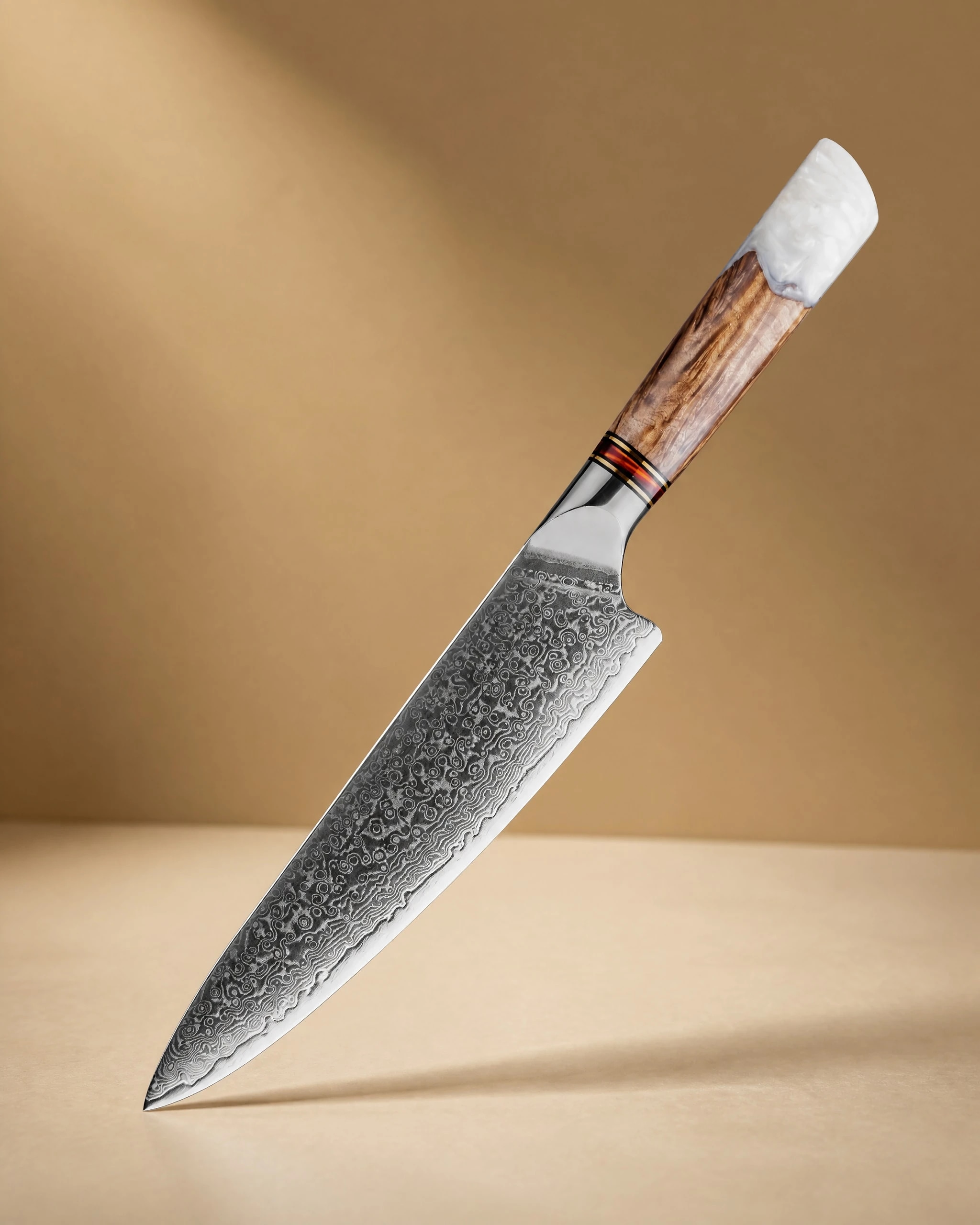 Shirakawa 白川 8" Damascus Steel Gyuto Knife 牛刀$74.99View product → is a well-rounded everyday gyuto and the one we point to most often when someone wants a single knife to cover most of their prep.
If you prefer a little more reach for protein work and long slicing cuts, the 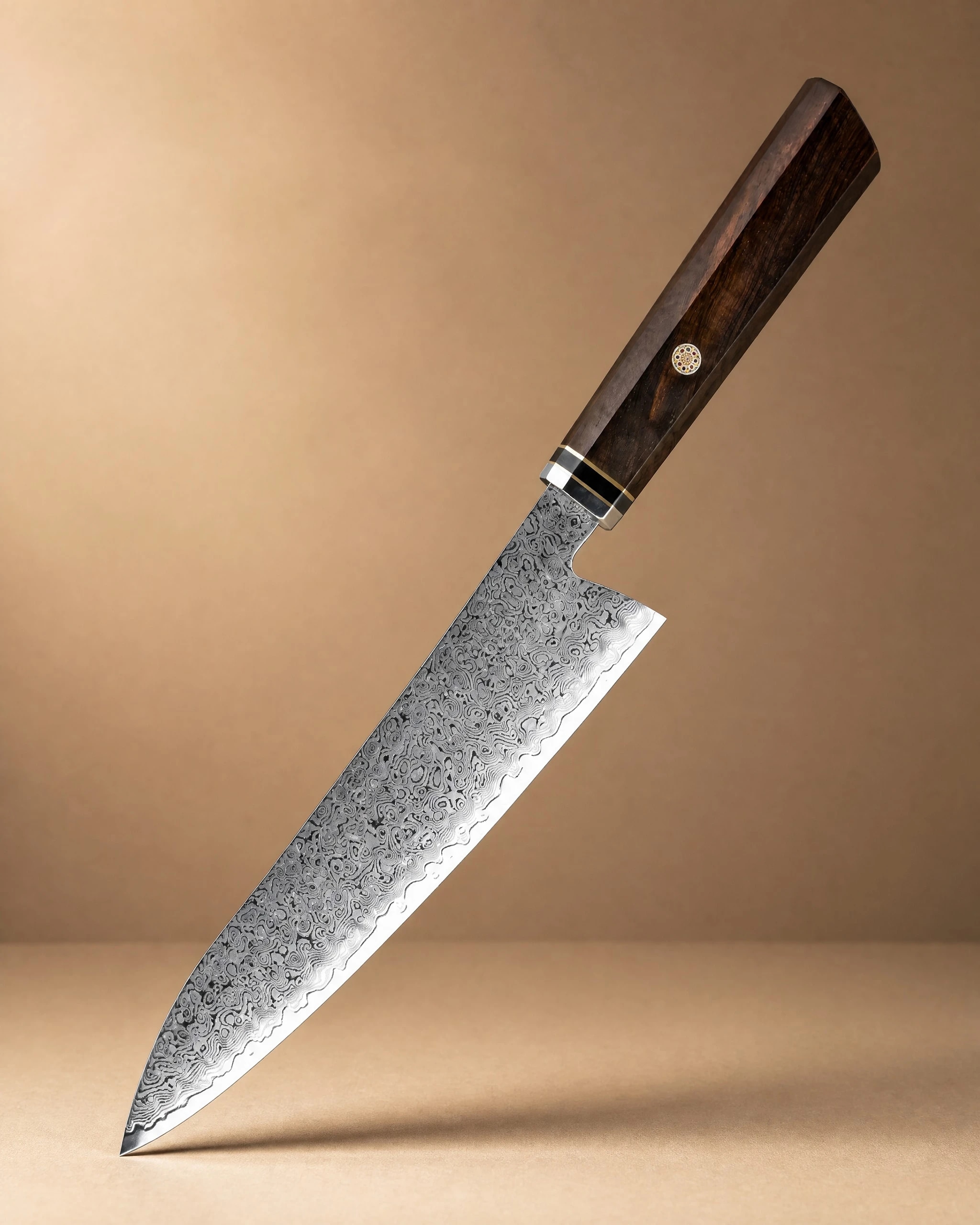 Sakawa 8.5" Damascus Steel Gyuto Knife 牛刀$74.99View product → adds that without changing the feel of the knife in any fundamental way.
Cooks who would rather not think about rust and patina will be happier with the 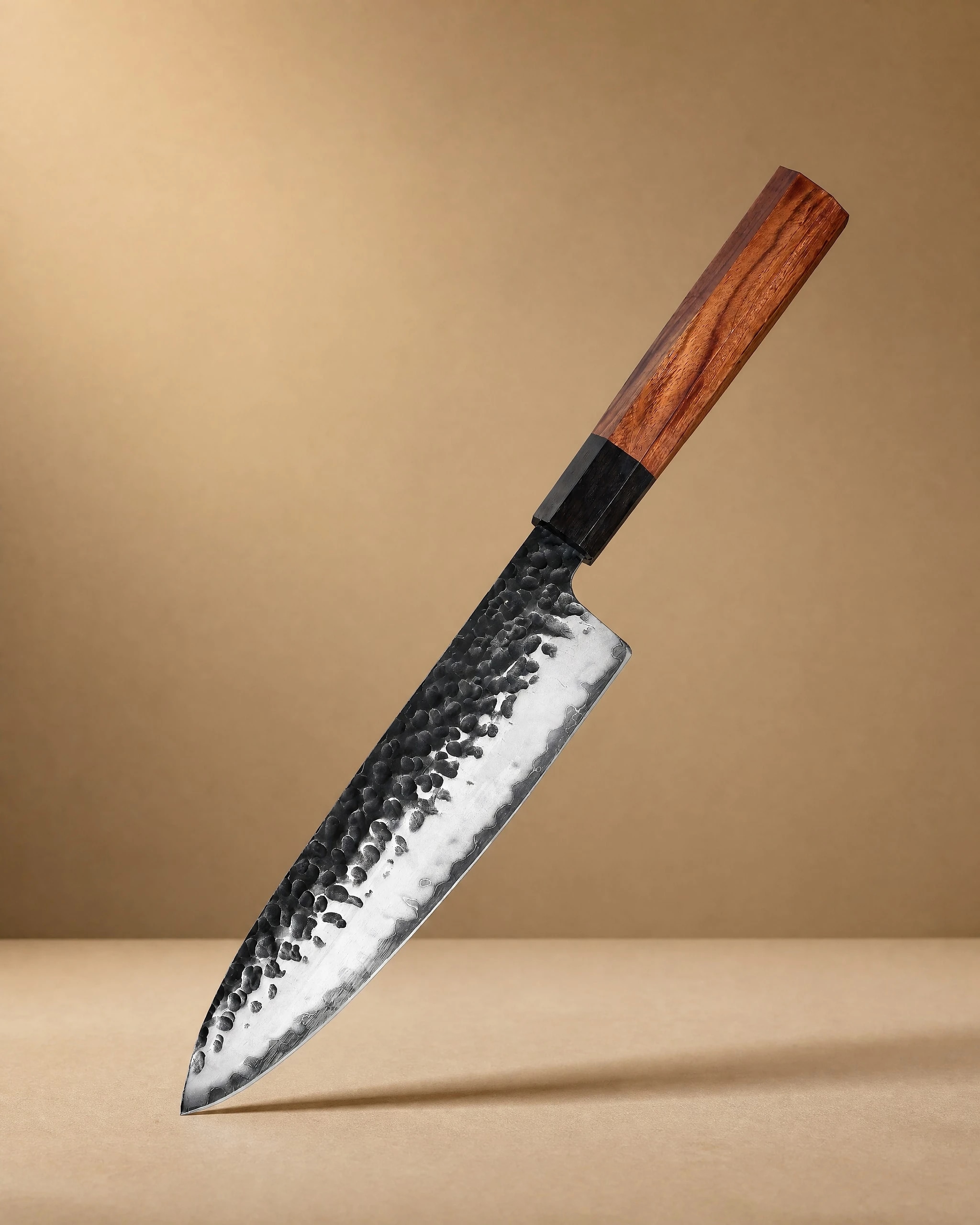 Tenjin 8" Stainless Steel Gyuto Knife 牛刀$59.99View product →, which keeps maintenance simple without giving up the gyuto profile.
The 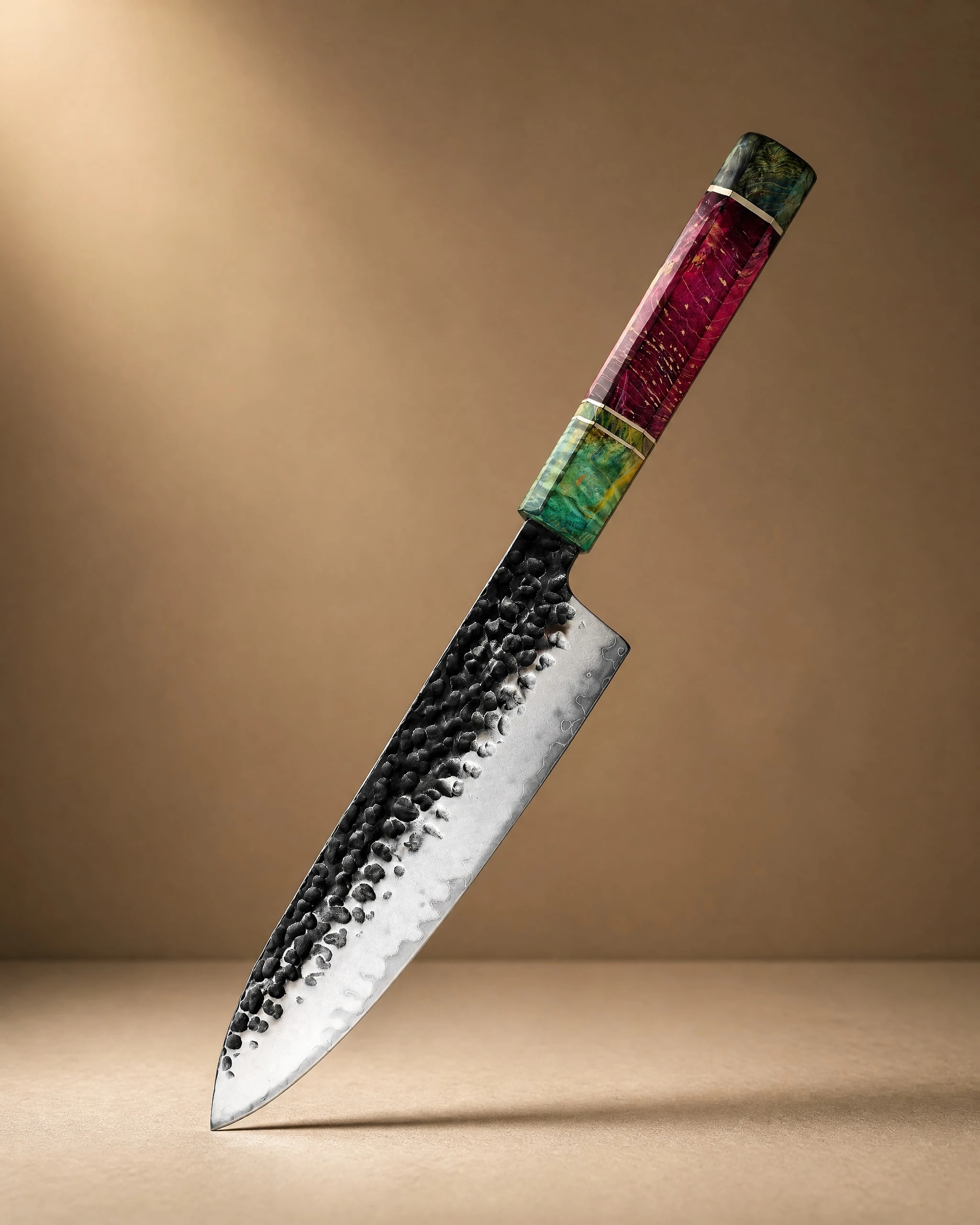 Natori 8" Gyuto Knife 牛刀$69.99View product → is another 8-inch all-rounder. When two knives look similar on paper, the deciding factor is usually how the handle feels in your hand and how the blade balance suits your grip.
You can see the whole lineup in our gyuto category, or browse everything else we carry in the full shop.
Common Questions
Can a gyuto replace every other knife in my kitchen? For most home cooks, it can replace the chef's knife, and that is the majority of the work. It cannot replace a bread knife, a paring knife, or the knife you keep specifically for bone.
Is a gyuto good for beginners? Yes. The learning curve is short because the shape is familiar, and a thin, sharp blade is safer than a dull one. The main habit to build is keeping it away from bones and frozen food.
Do I need to sharpen it? Yes, eventually. All knives dull. A gyuto with a thin grind stays useful longer between sharpenings, but it will need attention, and how often depends on your board, your technique, and how much you cook.
A Reasonable Place to Start
If you take one thing from this article, let it be this: the gyuto is the workhorse, and buying one good version of it will change more of your cooking than buying three mediocre knives. Choose the length that fits your board and your hand, the steel that fits your habits, and the handle that feels right when you pick it up.
Start with the gyuto collection if you know what you want, or the full knife shop if you are still comparing shapes.
Photography: Kevin Doran via Unsplash.


