Sujihiki Knife: The Slicing Specialist

A sujihiki is the knife most home cooks do not own and most professionals would not work without. It is a long, narrow, double beveled Japanese slicing knife, built around a single purpose: cutting cleanly through proteins and other soft foods in one unhurried stroke instead of sawing back and forth.
If you have ever carved a roast with a chef's knife and ended up with ragged, uneven slices, the problem was probably not your skill. It was the tool. A sujihiki exists to solve exactly that problem, and once you use one, the difference is obvious.
What a Sujihiki Actually Is
The name says most of it. "Suji" refers to sinew or muscle fiber, and "hiki" comes from the verb to pull or draw. Put together, it means a knife for cutting through the grain of a piece of meat. In Japanese kitchens it handles the same work a carving knife or a long slicer does in a Western one.
The key difference from its closest Japanese cousin, the yanagiba, is the grind. A sujihiki is double beveled, sharpened on both sides, which makes it symmetrical, easier to maintain, and just as comfortable for a right handed or left handed cook. A yanagiba is single beveled, built specifically for sashimi and for the kind of surface finish that only a one sided edge produces. The sujihiki trades a little of that precision for a lot of everyday usefulness.
Blade height is low, usually somewhere between 30 and 40 millimeters, and that number matters more than it sounds. Length runs from around 210 millimeters on the short end to 360 millimeters for large fish work, with 240 to 300 being the sweet spot for most kitchens.
Why the Shape Works So Well
Two design choices do all the heavy lifting: a long edge and a short blade height.
Length lets you complete a cut in one continuous motion. Instead of pressing down and working the blade back and forth through a roast, you place the heel near the far end of the meat and draw the knife toward you in a single pass. Every fiber along that line is severed once, cleanly, rather than crushed and torn by repeated strokes.
Low height reduces drag. A tall chef's knife has a lot of side surface area contacting the food, which creates friction and pulls the slice out of alignment. A narrow slicer glides. The geometry also keeps the blade stiff and straight, so it tracks true instead of wandering.
The result is a slice with a clean, glossy face, less juice on the board, and better texture on the plate. For raw fish, that difference is the whole point. For a holiday roast, it is the difference between a nice presentation and a pile of shreds.

Sujihiki, Gyuto, or Yanagiba?
These three get confused constantly, so here is the short version.
A gyuto is a Japanese chef's knife. It is taller, has a gentle curve along the edge, and is designed to rock, chop, dice, and slice. It is the one knife that can do almost everything reasonably well. If you only own one good knife, it should be a gyuto. Both 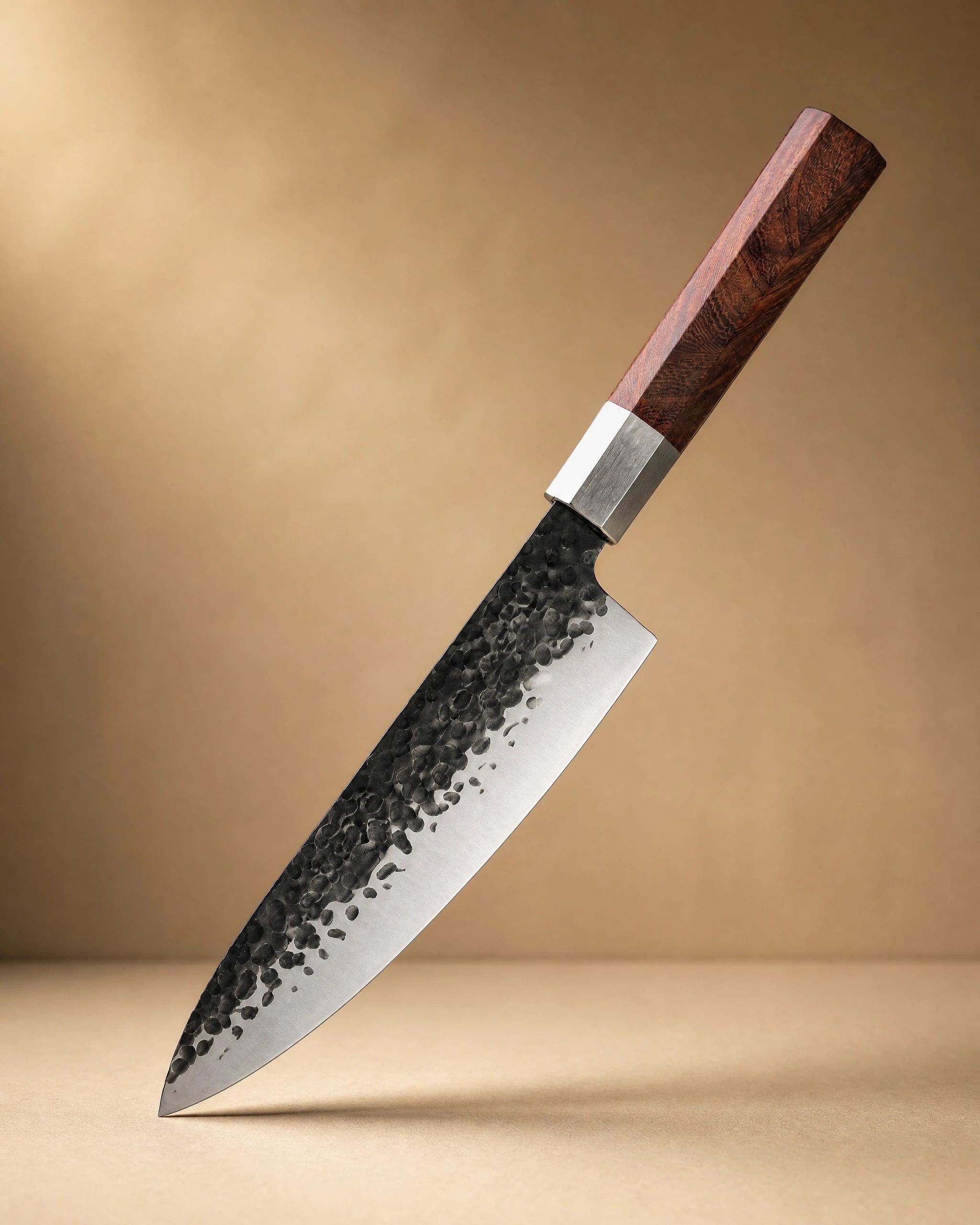 Sendai 8" Steel Gyuto Knife 牛刀$49.99View product → and
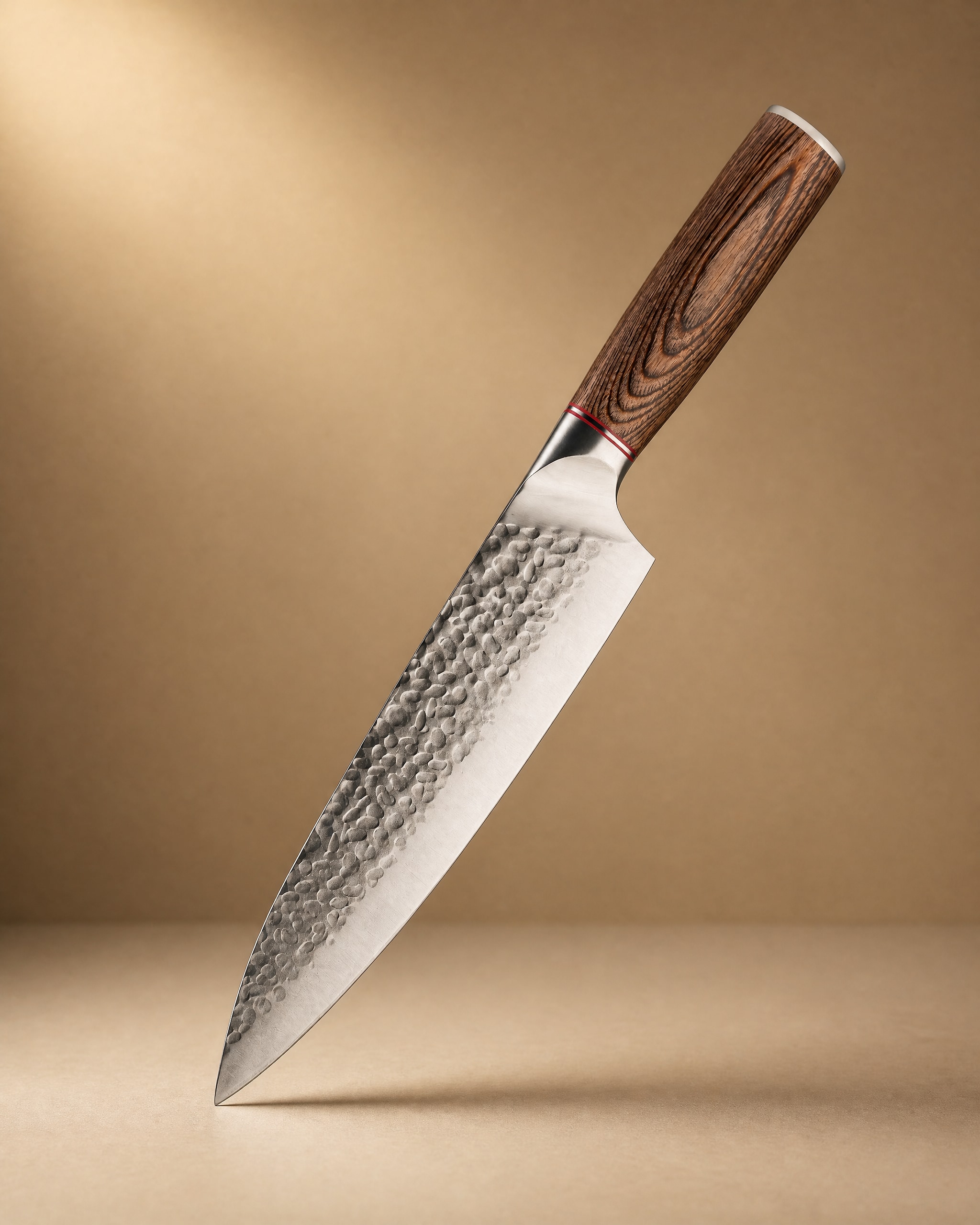 Akan 8'' Gyuto Knife 牛刀$49.99View product → are 8 inch gyutos that cover everyday prep, and either one is a sensible anchor for a home kitchen.
A sujihiki is a specialist. It does not chop, it does not rock, and it is not the knife you reach for to break down an onion. What it does is slice, better than anything else in the drawer.
A yanagiba is a single beveled sashimi knife. It is magnificent for its narrow purpose and demanding to maintain. Unless you are working with sashimi regularly, a sujihiki gives you most of the benefit with far less fuss.
What a Sujihiki Does Best
- Carving roasts: prime rib, leg of lamb, pork loin, brisket, roast chicken
- Slicing cured and smoked items: smoked salmon, gravlax, ham, bacon slabs
- Portioning raw protein: breaking a whole tenderloin into steaks, cutting fish fillets
- Sashimi and crudo, where a clean cut matters most
- Soft items that squash under a taller blade: terrines, pate, cake layers, rolled dough
Notice what is not on that list. Nothing hard, nothing that requires force, and nothing with a crust that fights back. A sujihiki is also excellent for portioning work, cutting a whole tenderloin into steaks or a side of salmon into fillets, with edges that seal rather than shred.
What It Should Not Be Used For
A sujihiki is thin behind the edge and relatively delicate. Chopping through garlic, mincing herbs, or hacking at a squash will twist the edge and eventually chip it. Bones are off limits. Frozen food is off limits. So is anything you would normally handle with a cleaver.
Bread is its own category. A sujihiki will crush a crust before it cuts it, and the crumb will tear. Bread wants serrations, and a dedicated bread knife like 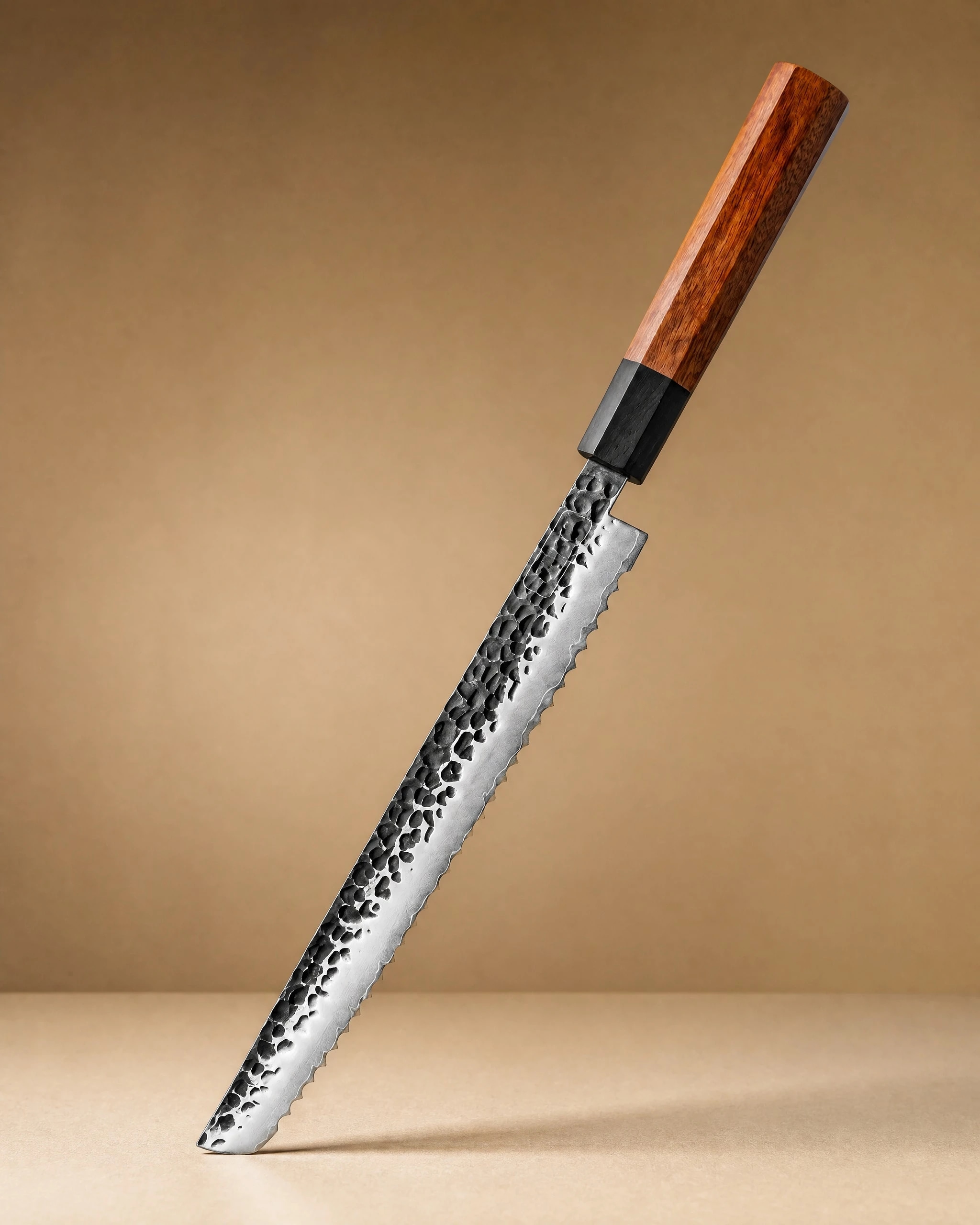 Rumoi 10" Japanese Bread Knife パン切りナイフ$59.99View product → is the right answer. Keep the two separate and both will last.
Length: How Long Should You Go?
The rule of thumb is simple: the blade should be longer than the food you are slicing, with room to spare. If you are cutting a ten inch tenderloin, a 240 millimeter sujihiki means one pass. A shorter knife means two, and two passes never match.
For most home kitchens, 240 to 270 millimeters is ideal. It handles roasts, large fish fillets, and holiday birds without feeling unwieldy. If you break down whole tuna or large salmon, or you carve multiple roasts at once, 300 millimeters and up starts to make sense. Shorter sujihiki, around 210 millimeters, suit small kitchens and lighter work.
If you are unsure, err on the longer side. A slightly long sujihiki is still easy to control because the blade is narrow. A slightly short one cannot be fixed.
Steel and Edge Geometry
Sujihiki are commonly made in both carbon and stainless steels. Carbon steels take a very fine edge and sharpen easily, but they patina and rust if left wet. Stainless and semi stainless options hold their edge longer and ask less of you day to day.
The grind matters as much as the steel. You want a thin, even edge and a blade that is flat or very gently curved along the profile, with a long, straight section for drawing cuts. Too much belly and you lose the slicer's advantage.
Hardness is a tradeoff. Harder steel holds an edge longer but is more prone to chipping if you twist it. Softer steel is tougher but needs more frequent touch ups. Neither is wrong. They suit different habits.
Handle, Balance, and Grip
Japanese wa handles, often octagonal or oval, push the balance point forward and encourage a pinch grip just ahead of the bolster. Western style handles move the weight back toward the hand for a more familiar feel. Neither is better, but the balance point should sit at or just behind the heel so the blade feels controlled rather than nose heavy.
Use a pinch grip with three fingers on the blade and your index and thumb guiding. Your wrist should stay locked, and the motion should come from your shoulder and elbow. That is what keeps a long blade tracking straight.
Choosing Your First Sujihiki
Start by measuring the proteins you actually cook. A home cook who roasts a chicken and slices salmon a few times a month will be very happy with 240 millimeters. Someone who carves regularly, or who buys whole fish, should look at 270.
Then think about the rest of your block. A sujihiki is a companion knife, not a replacement for a chef's knife. If you need the prep workhorse first, Sendai 8" Steel Gyuto Knife 牛刀$49.99View product → or Akan 8'' Gyuto Knife 牛刀$49.99View product → will handle the daily cutting, and the sujihiki sits beside it for carving. If you are setting up a kitchen from scratch and want the whole layout decided at once, a set like 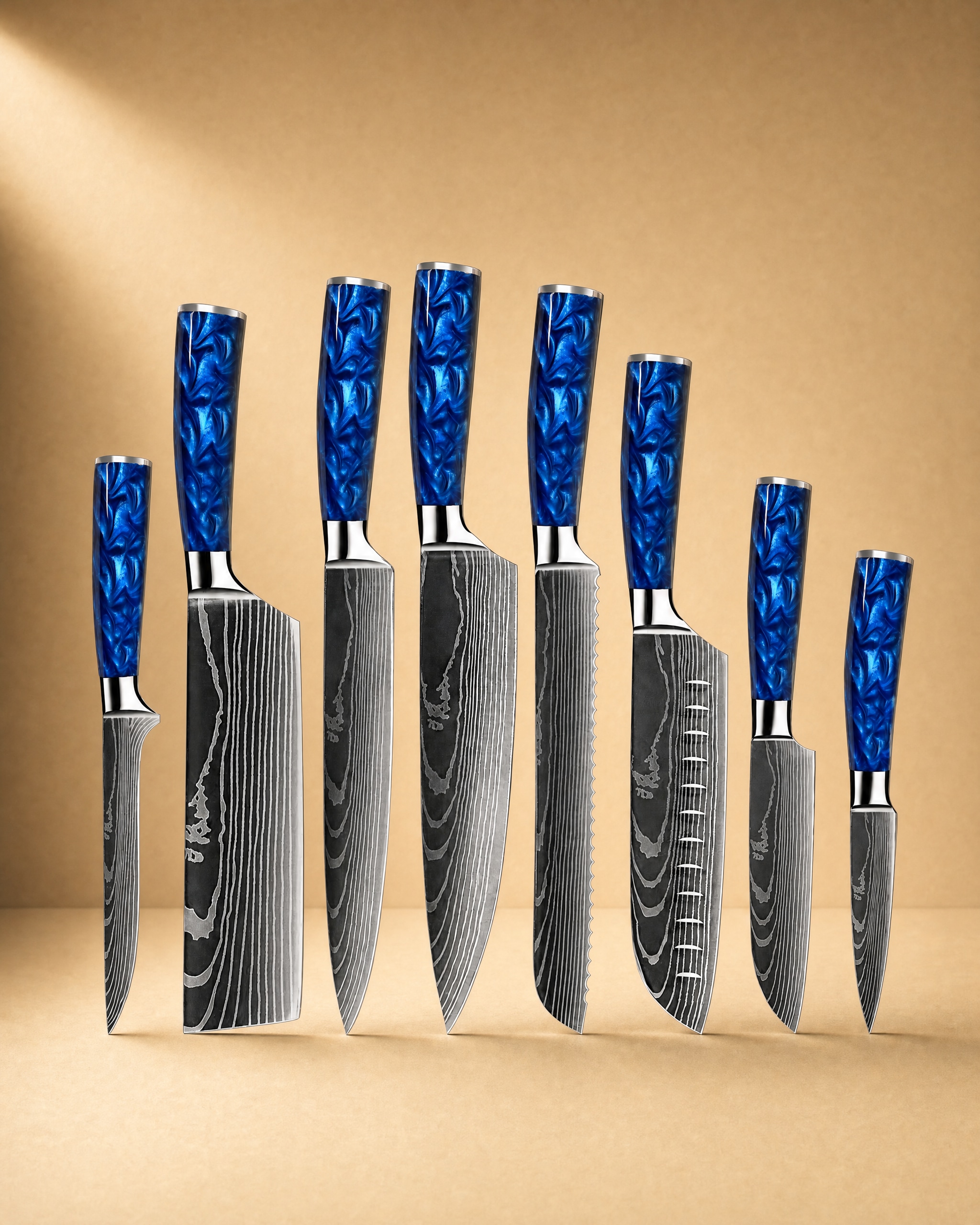 Shinano 信濃川 Damascus Pattern Stainless Steel Kitchen 8 Knife Set$149.99View product → covers the core pieces, and you can add the slicer on top. You can see the full range at our knife shop.
Care That Keeps the Edge Honest
Wipe the blade dry after use, especially with carbon steel. Acidic and salty foods will mark a blade quickly if left on it. Hand wash and dry rather than leaving it in a sink or a dishwasher, where the edge will contact other items and the handle will suffer.
Store it where nothing touches the edge: a magnetic strip, a saya, or a knife guard. For maintenance, a few light strokes on a fine stone or a loaded strop will keep the edge aligned. A honing rod is not the right tool for a thin Japanese edge. Our knife care guide walks through the full routine, including sharpening angles and how often to do it.
Slicing Is a Skill Worth a Dedicated Knife
Most kitchens try to slice with a knife that was designed for something else. It works, in the way that using a screwdriver as a chisel works. A sujihiki removes that compromise. It gives you length for a single pass, a narrow profile for clean separation, and an edge thin enough to cut without crushing.
If you are still deciding how a sujihiki fits alongside your other knives, our knife guide covers blade types, lengths, and what each one is genuinely good at. Buy the knife that matches the food you cook, keep it dry, and sharpen it when it asks. That is the whole secret.
Photography: blackieshoot via Unsplash.


