Cheftoku Knife: What This Hybrid Blade Offers

What a Cheftoku Knife Actually Is
A cheftoku knife is a hybrid kitchen blade that borrows from the chef's knife and the santoku. The name blends those words, and the idea is simple: the pointed tip and curved edge of a Western style chef's knife, with some of the height and clean chopping feel of a santoku. It is not a formal category. Makers use the label differently, so the knife in front of you matters more than the word on the box.
That flexibility is useful. A cheftoku can be an everyday knife for cooks who like a gentle rock but want a more compact blade. It can also suit cooks who like santoku style chopping but miss a defined tip. The result often feels familiar right away.
Because the term is loose, check the profile, edge curve, blade height, grind, and handle. Those details tell you how the knife will cut. The label only tells you where the designer started.
Why the Hybrid Shape Exists
Home cooks rarely do one kind of cutting. One meal might call for slicing onions, dicing carrots, mincing garlic, cutting protein, and portioning vegetables. A dedicated knife for each task is nice, but most kitchens have limited space. The cheftoku shape tries to cover more ground with one blade. It keeps enough belly for a gentle rock, but usually feels flatter and more direct than a full Western chef's knife.
The santoku influence shows in how the blade meets the board. Santoku style knives encourage a straight chop or a slight forward push. A cheftoku can soften that feel by adding a little curve and a more defined tip. It is a compromise, and compromise is useful in a home kitchen. A knife you enjoy using for most tasks beats a perfect specialist that stays in the drawer.
Cheftoku Knife Uses in a Home Kitchen
A cheftoku knife is at its best with medium sized prep. It can handle more than a santoku for some cooks because of the tip, and it can feel less intimidating than a long chef's knife on a crowded board. Think of it as a general purpose blade with a bias toward clean, controlled chopping.
- Vegetable prep: onions, peppers, carrots, zucchini, and herbs.
- Protein portioning: trimming chicken, slicing cooked meat, and cutting firm fish.
- Everyday fruit and vegetable slicing: apples, cucumbers, tomatoes, and citrus.
- Light board work: garlic, shallots, ginger, and small aromatics.
It is not the right tool for every job. Do not use a cheftoku on frozen food, bones, or packaging. Those habits damage edges and can be unsafe. For crusty bread, a serrated blade does a cleaner job. If you want a dedicated bread knife, 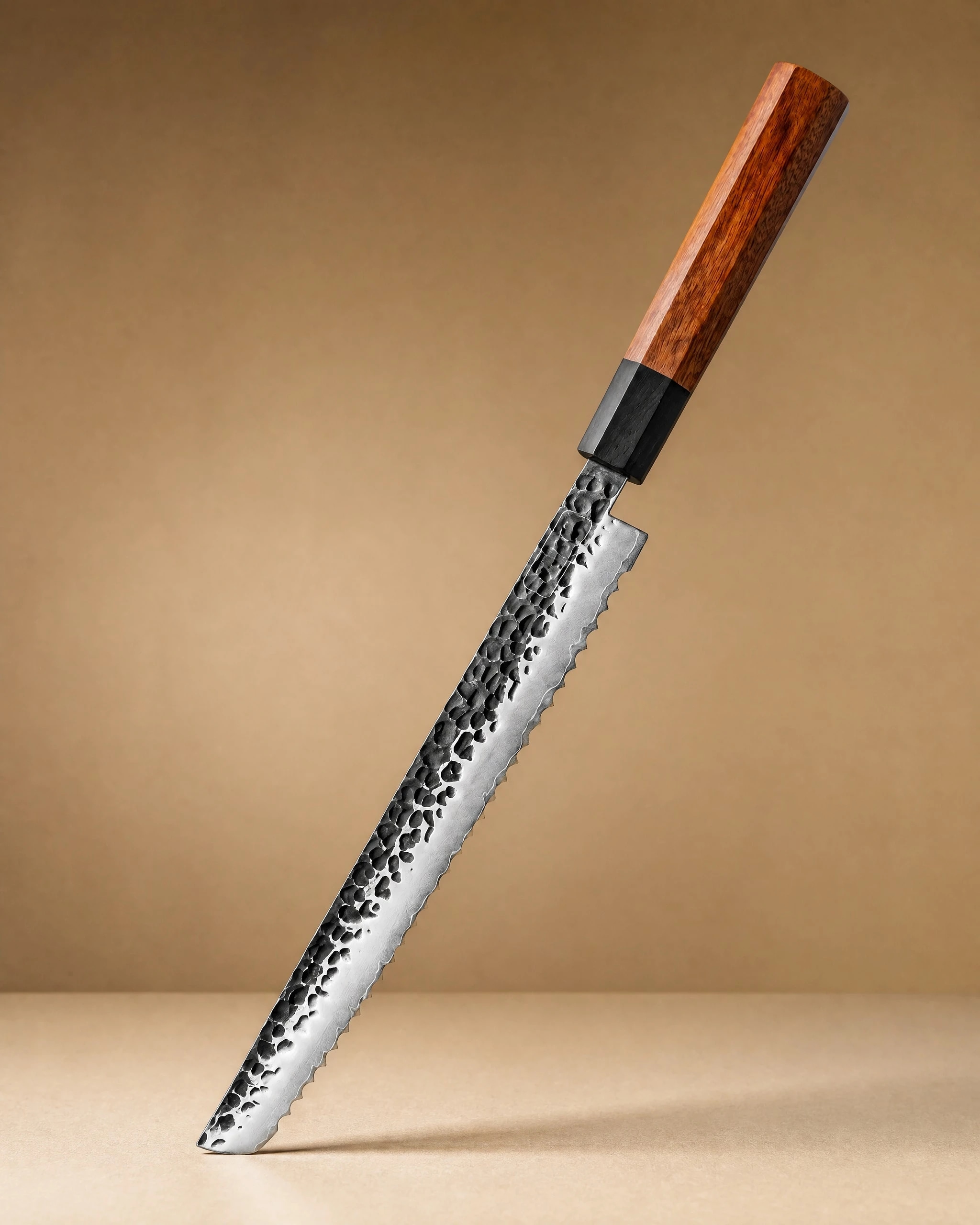 Rumoi 10" Japanese Bread Knife パン切りナイフ$59.99View product → is a sensible addition. A cheftoku can slice a soft sandwich, but it will crush a hard crust compared with a proper serrated knife.
Cheftoku vs Santoku: The Differences That Matter
The cheftoku vs santoku question usually comes down to tip and edge curve. A santoku tends to have a flatter edge, a taller blade, and a rounded tip. That shape supports straight chopping and push cuts. A cheftoku usually keeps more of a point and a little more curve. That gives you a place to start a rock cut and a tip for trimming and detail work.
Blade height also matters. Santoku knives are often tall, which gives knuckle clearance. Some cheftoku knives are tall too, while others lean closer to a chef's knife. If you have large hands or use a pinch grip, check the height and handle shape together. A tall blade can feel secure, but it can also feel blocky if the spine is thick or the handle is cramped.
Neither shape is better in every kitchen. A santoku is a calm choice for cooks who prefer push cutting. A cheftoku is more flexible for cooks who want a little rocking action and a usable tip. If you own a santoku and wish it had a sharper point, a cheftoku is worth a look. If you own a chef's knife and want something shorter, the same is true.
Cheftoku vs Gyuto: Where the Line Blurs
The cheftoku vs gyuto comparison is trickier because both are meant to be all purpose. A gyuto is the Japanese take on a chef's knife. It usually has a curved edge, a pointed tip, and a profile that supports slicing and rocking. A cheftoku often sits between a gyuto and a santoku. It may be shorter, taller, or flatter, but details vary by maker. The label alone will not tell you which one suits your hand.
If you cook with a lot of rocking and long slicing, a gyuto is still the safer reference. The 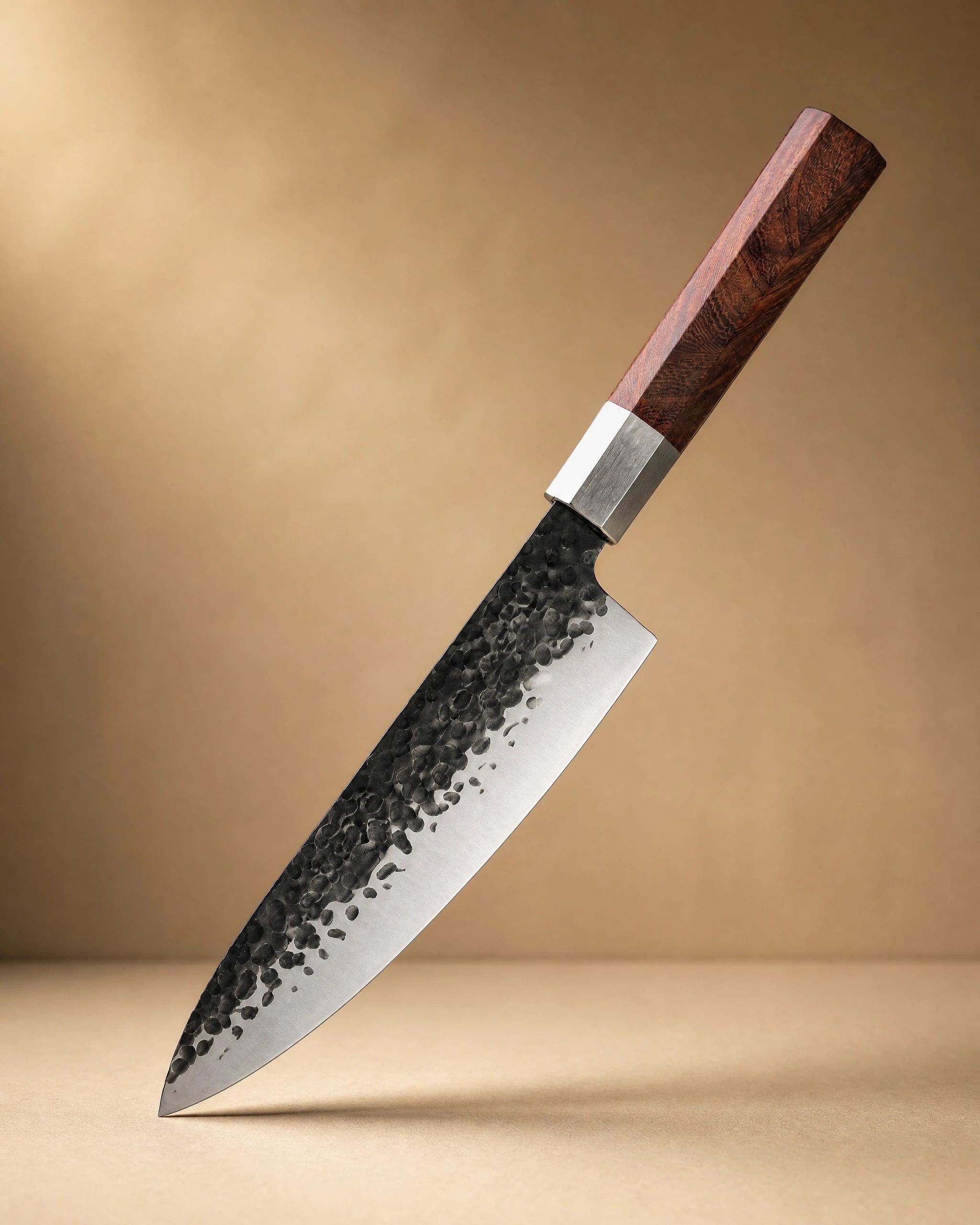 Sendai 8" Steel Gyuto Knife 牛刀$49.99View product → is a straightforward choice for everyday prep, and
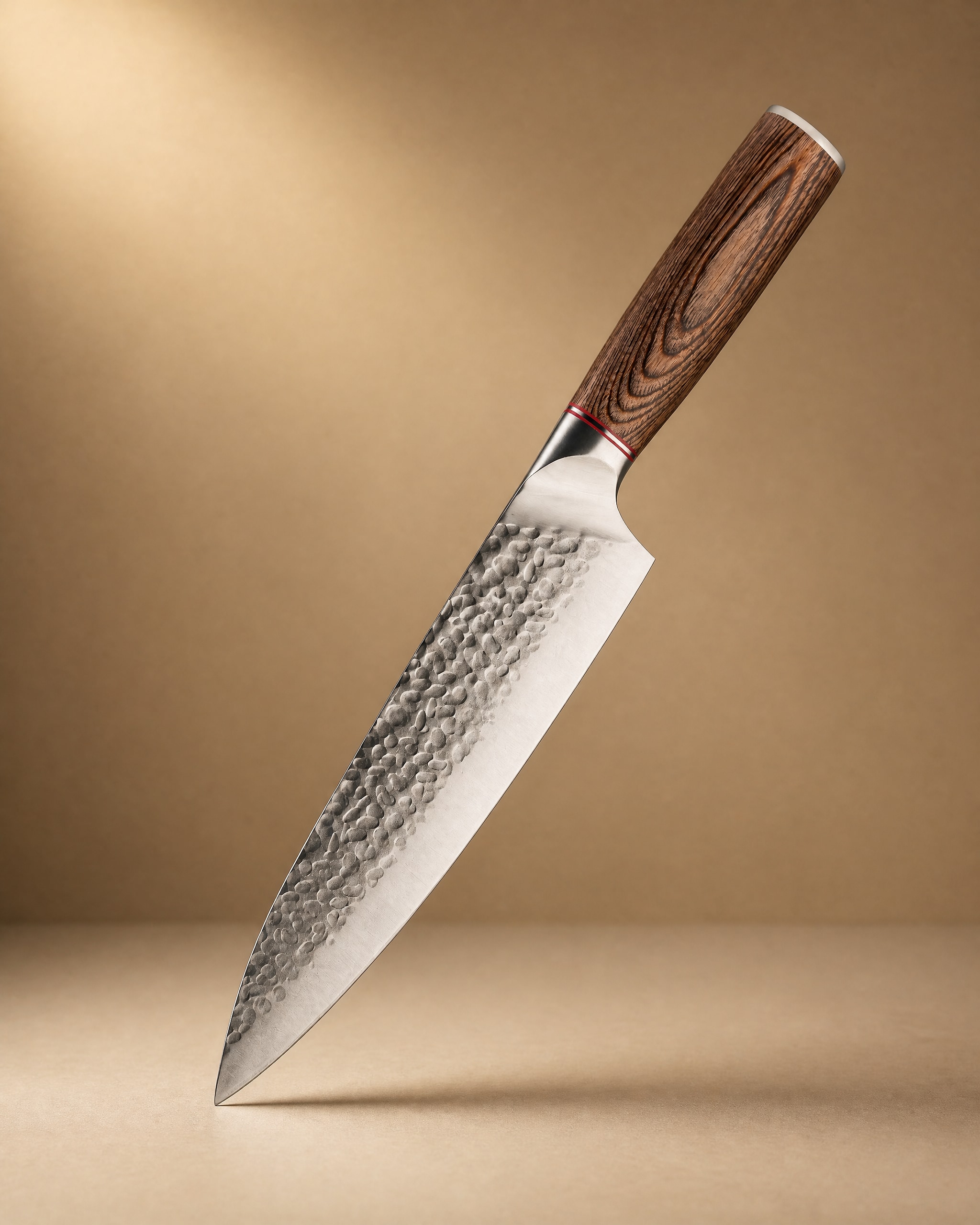 Akan 8'' Gyuto Knife 牛刀$49.99View product → is another gyuto option for comparing feel and balance. Use the product cards to check current details, then think about your cutting motion. A gyuto rewards a cook who likes a continuous rhythm and a clear tip.
A cheftoku can be better if you want a compact blade with santoku influence. It may feel less long on a small board and more controlled for push cuts. You lose some slicing length and belly. Neither loss is fatal. It depends on what you cut most and how much space you have.

Balance, Steel, and Handle: What to Check
Do not buy a cheftoku just because the name sounds modern. Check the basics. A good blade should feel balanced where you grip it, not just at the bolster. The spine should be comfortable if you use a pinch grip. The handle should fill your hand without forcing your wrist into an odd angle. These points matter more than the label, and they explain why two similar knives can feel different after ten minutes of prep.
Steel and heat treatment matter, but they are not the whole story. A hard, thin blade can cut beautifully, yet it may need careful use. A softer, tougher blade is more forgiving, but it may lose its edge sooner. For home cooking, match the blade to your habits. If you are unsure how to choose between profiles, our knife guide walks through the questions worth asking.
The handle deserves attention. A cheftoku is often used for long prep, so comfort matters. Check the shape, material, and the way the handle meets the blade. A rough transition can catch your hand. A small handle can make the knife feel unstable. If you are outfitting a kitchen from scratch, a set can be practical, and 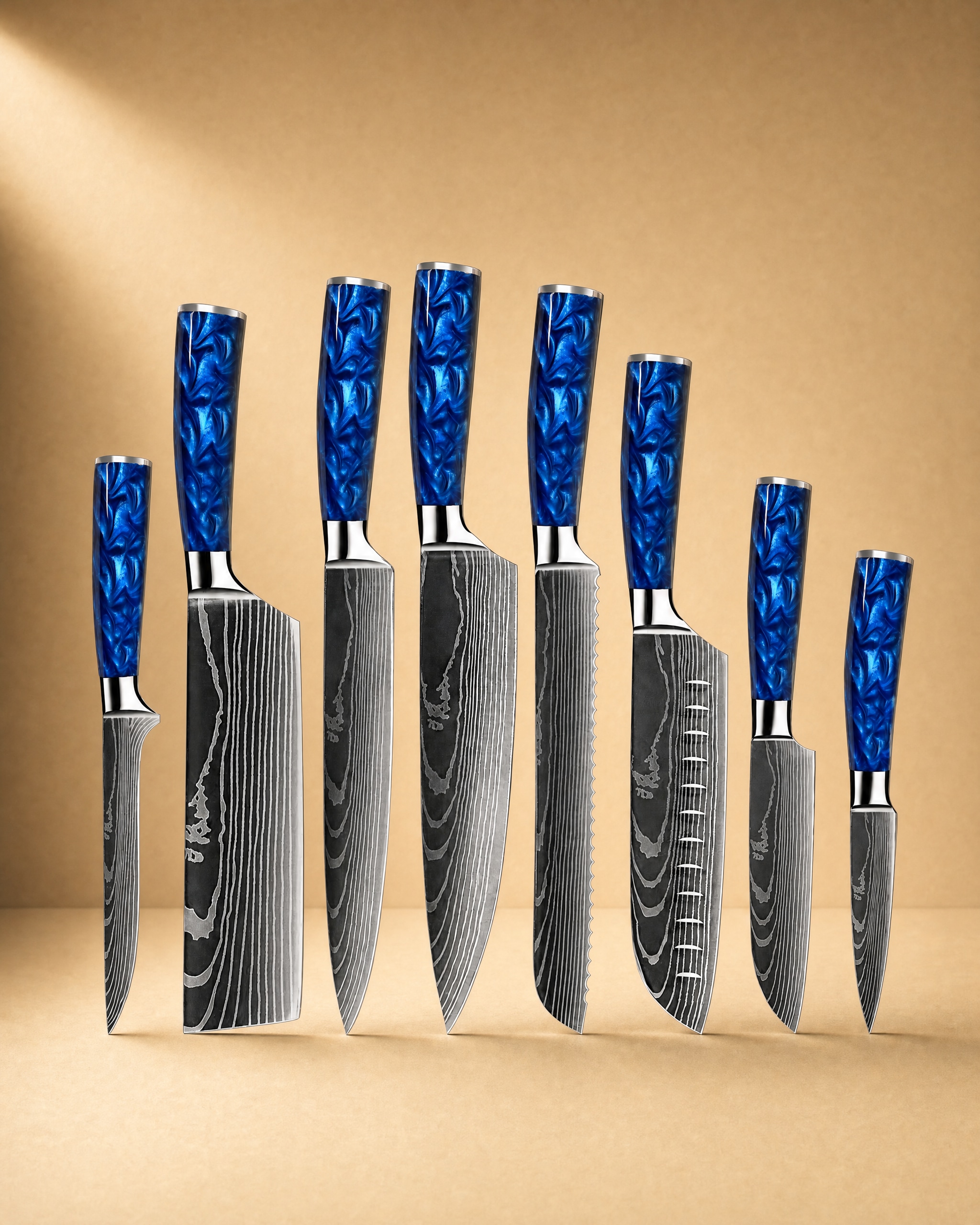 Shinano 信濃川 Damascus Pattern Stainless Steel Kitchen 8 Knife Set$149.99View product → is one way to cover core tasks. If you prefer to build slowly, start with the knife you use most.
Who Should Buy a Cheftoku Knife
A cheftoku makes sense for a cook who wants one main knife for vegetables, proteins, and everyday slicing. It fits someone who likes santoku control but misses a pointed tip. It also fits someone who finds a long chef's knife tiring on a small board. In those cases, the hybrid shape can feel like a practical middle path.
It is not the best first choice for every cook. If you love a full chef's knife or gyuto, a cheftoku may feel like a compromise. If you do heavy rocking or long slicing, a gyuto is more natural. If you mostly push cut vegetables and want a tall blade, a santoku may be simpler. The cheftoku is a useful shape, not a universal upgrade.
How to Choose Without Chasing the Label
Start with your cutting motion. Do you rock, push, or chop? Do you use the tip often? Do you work on a small board? These questions narrow the field faster than marketing terms. Then look at the blade profile. A curved edge supports rocking. A flatter edge supports push cuts. A taller blade gives knuckle clearance. A longer blade gives slicing reach. You want the combination that fits your hand and board.
Next, think about the work you do most. If you cook a lot of vegetables, a cheftoku or santoku can be excellent. If you slice a lot of protein, a gyuto may feel more natural. If you bake bread, keep a serrated knife on hand. The Rumoi 10" Japanese Bread Knife パン切りナイフ$59.99View product → is a dedicated option for that job, and it can save your main knife from wear. Browse the full knife shop to compare shapes, but compare by profile and feel, not by name alone.
Finally, be realistic about care. A sharp knife is safer than a dull one, and a well maintained edge is a pleasure to use. Wash and dry your knife by hand, store it so the edge is protected, and touch up the edge before it becomes badly dull. Our knife care guide covers the routine without turning it into a hobby.
A Calm Verdict
The cheftoku knife is a useful hybrid, not a magic blade. It blends the pointed tip and gentle curve of a chef's knife with the compact feel of a santoku. For the right cook, that combination is a daily pleasure. For another cook, a gyuto or santoku will feel more honest. Both outcomes are fine. Choose a knife that matches your hand, your board, and the food you cook.
If you want a hybrid for everyday prep, start with a cheftoku that feels balanced to you. If you want a conventional all purpose blade, compare a gyuto such as Sendai 8" Steel Gyuto Knife 牛刀$49.99View product → or Akan 8'' Gyuto Knife 牛刀$49.99View product →. If you need a bread knife, add Rumoi 10" Japanese Bread Knife パン切りナイフ$59.99View product →. If you are building a full kitchen, Shinano 信濃川 Damascus Pattern Stainless Steel Kitchen 8 Knife Set$149.99View product → can cover the basics. Buy for the work, not the label.
Photography: Sergey Kotenev via Unsplash.


