
The Kiritsuke Knife: A Guide to This Versatile Blade

A kiritsuke knife has a shape that stands out on any rack: a long, straight edge, a tall flat profile, and a spine that angles down to a sharp point instead of curving toward it. In Japanese kitchens it has carried real status for generations. In Western kitchens it is often bought for the look and then set aside, because the owner never learned what the geometry is for. This guide covers what a kiritsuke is, what it does better than a chef's knife, where it struggles, and whether it belongs in your kitchen.
What Is a Kiritsuke Knife?
Traditionally the kiritsuke is a single bevel knife, ground flat on one face and beveled on the other, and it was considered the head of the Japanese kitchen. It paired the long slicing blade of a yanagiba with the flat, thin geometry of an usuba, which is why it became a mark of a head chef: one knife that could break down fish and handle precise vegetable work. Traditional kiritsuke are right handed, thin behind the edge, and unforgiving of sloppy technique.
Most kiritsuke sold in the US today are a different animal. Makers took the silhouette, the angled tip and the flat profile, and applied it to a double bevel blade, often with a hard core steel clad in softer stainless. The result goes by several names: kiritsuke gyuto, kiritsuke shaped gyuto, or simply kiritsuke. It is tougher, easier to sharpen, and usable by anyone. The shape stayed, the fragility mostly did not.
What defines the knife either way is the tip. A gyuto's spine curves down to meet the edge in a gentle arc. A kiritsuke's spine runs flat toward the front, then drops at an angle and meets the edge in a point. That one geometric choice changes how the whole knife behaves.
Kiritsuke vs Gyuto: Profile Is the Difference
Compare the two side by side and the difference is profile, not purpose. Both are all around knives. A gyuto has a curved belly, so it rocks: you can mince garlic, rock through a pile of herbs, and walk the tip through onions with a steady up and down motion. A kiritsuke has a nearly flat edge from heel to tip, so it does not rock well at all. It cuts by traveling forward or backward through food, or straight down.
For a cook raised on a Western chef's knife, that flat edge feels strange for the first ten minutes. Then it usually clicks. A flat edge gives you a long, stable contact point with the board, which means cleaner slices and less bruising on delicate items.
Why the Profile Matters
Push cutting is where the design pays off. The edge meets the board along more of its length, so you finish a cut in one motion instead of a rocking arc. Onions, peppers, leeks, and cabbage all come apart cleanly. The tall heel and flat spine also give your knuckles clearance and a straight reference line, which helps with even dice and uniform batons.
The narrow tip is the second half of the story. It is built for detail: trimming silverskin, cutting around a bone, portioning a loin into medallions, or making the shallow cuts for decorative vegetable work. On a gyuto you would use the front third for those jobs. On a kiritsuke the front third is more precise and easier to place.

What a Kiritsuke Does Well
- Long slices of protein: the flat edge draws through a roast or a fillet in one motion instead of sawing.
- Vegetable prep: push cuts, julienne, brunoise, and any task that calls for straight, square cuts.
- Portioning fish and poultry: the fine tip works around bones and tendons.
- Slicing on a crowded board: no belly means no accidental rocking into the wrong ingredient.
What It Does Not Do Well
Rock chopping is the honest limitation. If your style is a constant rocking motion through herbs, nuts, and garlic, a kiritsuke will frustrate you. The flat edge slaps the board instead of rolling across it.
Heavy work is out as well. A kiritsuke is not a cleaver, so keep it away from chicken bones, squash stems, and anything frozen. Traditional single bevel versions are even less tolerant and can chip if you twist the blade inside a cut. Mincing is possible but awkward: without a belly, you work the tip in small downward cuts or reach for a different knife.
Single Bevel vs Double Bevel Kiritsuke
Know which one you are buying before you spend money. A traditional single bevel kiritsuke is a specialist tool. It is ground flat on the back, so it steers slightly in tall cuts, it is right handed by design, and sharpening follows a different sequence: work the bevel, then remove the burr with a few light passes flat on the back. It rewards patience and punishes force.
A double bevel kiritsuke is the practical choice for most home cooks and for line cooks who want the shape without the ritual. It sharpens like any other double bevel knife, cuts straight, and tolerates more abuse. If you are buying your first knife with this profile, buy double bevel.
Choosing a Kiritsuke
Start with length. A 210mm blade covers most home prep. A 240mm blade gives you more slicing room for large proteins and suits cooks with bigger boards and longer reach. Going beyond 240mm makes the knife harder to control on a standard home counter.
Then think about steel. Carbon steel takes a keener edge and sharpens quickly, but it discolors with use and rusts if you ignore it. Stainless and clad stainless options hold up in a busy kitchen with less attention. If you know you will not dry the blade after every use, choose stainless. Our knife guide covers steel, geometry, and handle types in more depth.
If the flat profile appeals to you but you are not ready to give up rocking, a gyuto is the safer first purchase. The 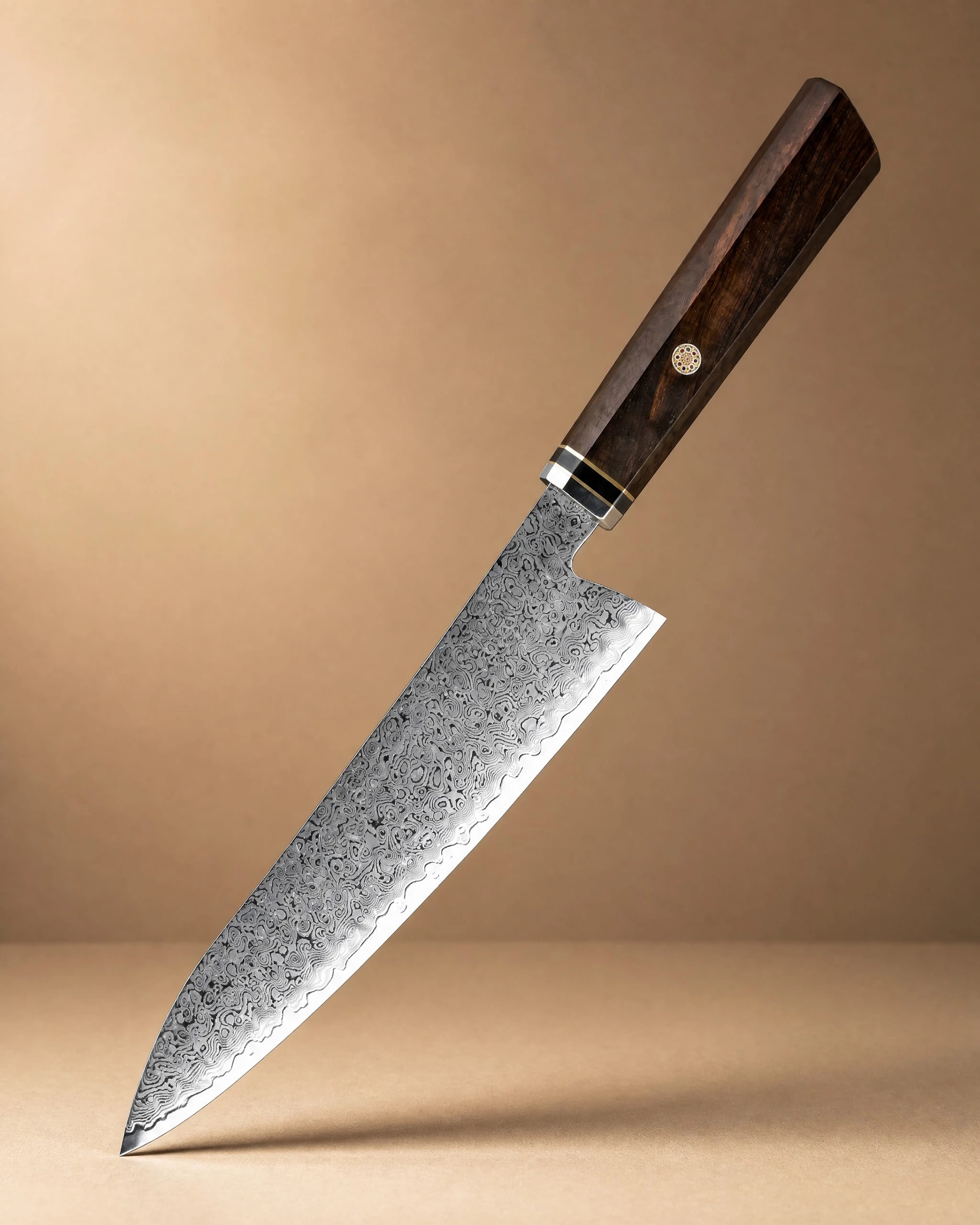 Sakawa 8.5" Damascus Steel Gyuto Knife 牛刀$94.99View product → is an 8.5 inch Damascus steel gyuto, the shape most cooks reach for when they want to rock through herbs and still slice a roast. For lighter everyday prep, the
 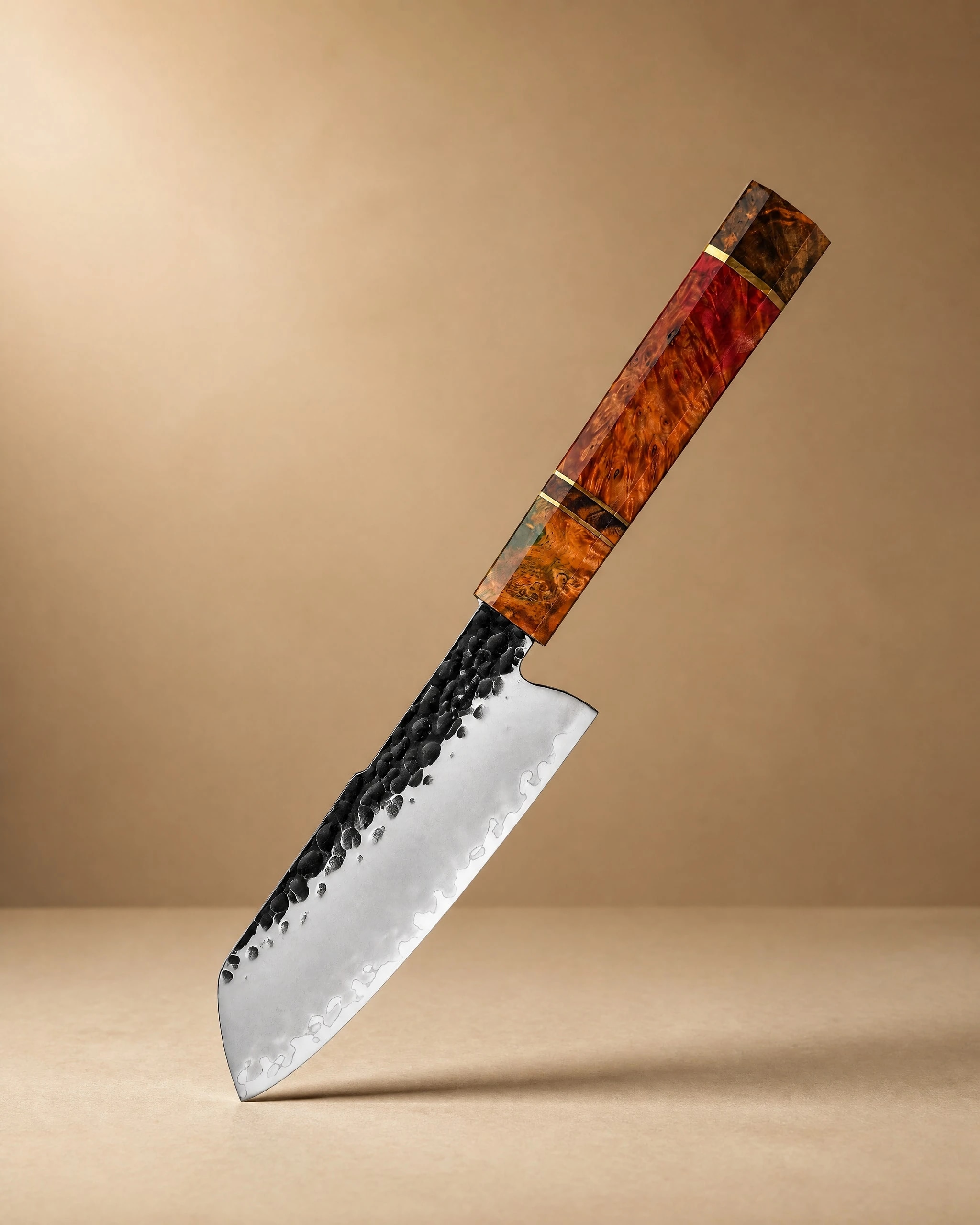 Ishikari 5" Santoku Knife 三徳包丁$79.99View product → pairs a shorter blade with an easy feel on the board.
If low maintenance matters most, the 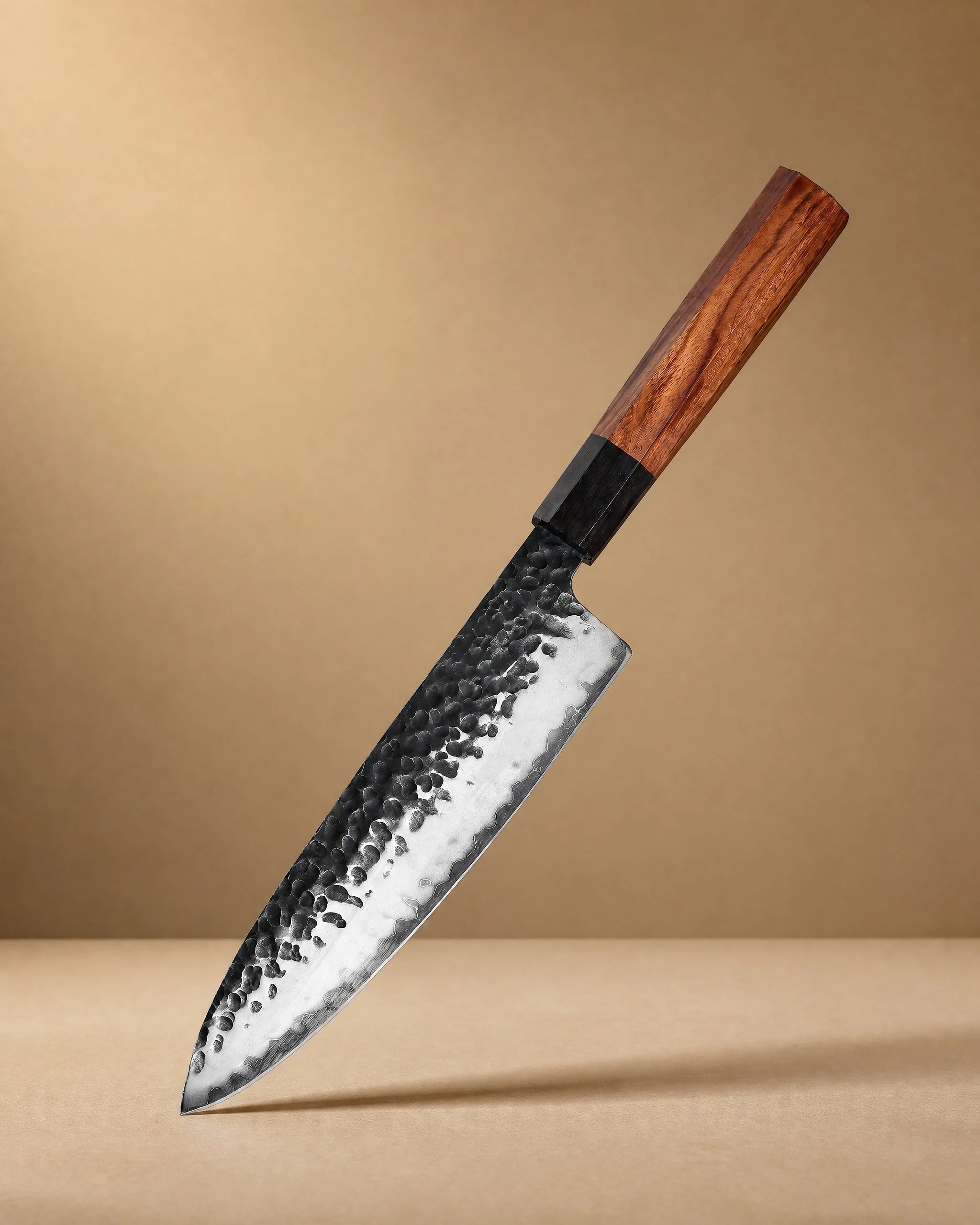 Tenjin 8" Stainless Steel Gyuto Knife 牛刀$69.99View product → covers the same ground in stainless steel. If you want a straightforward steel gyuto with no fuss, the
 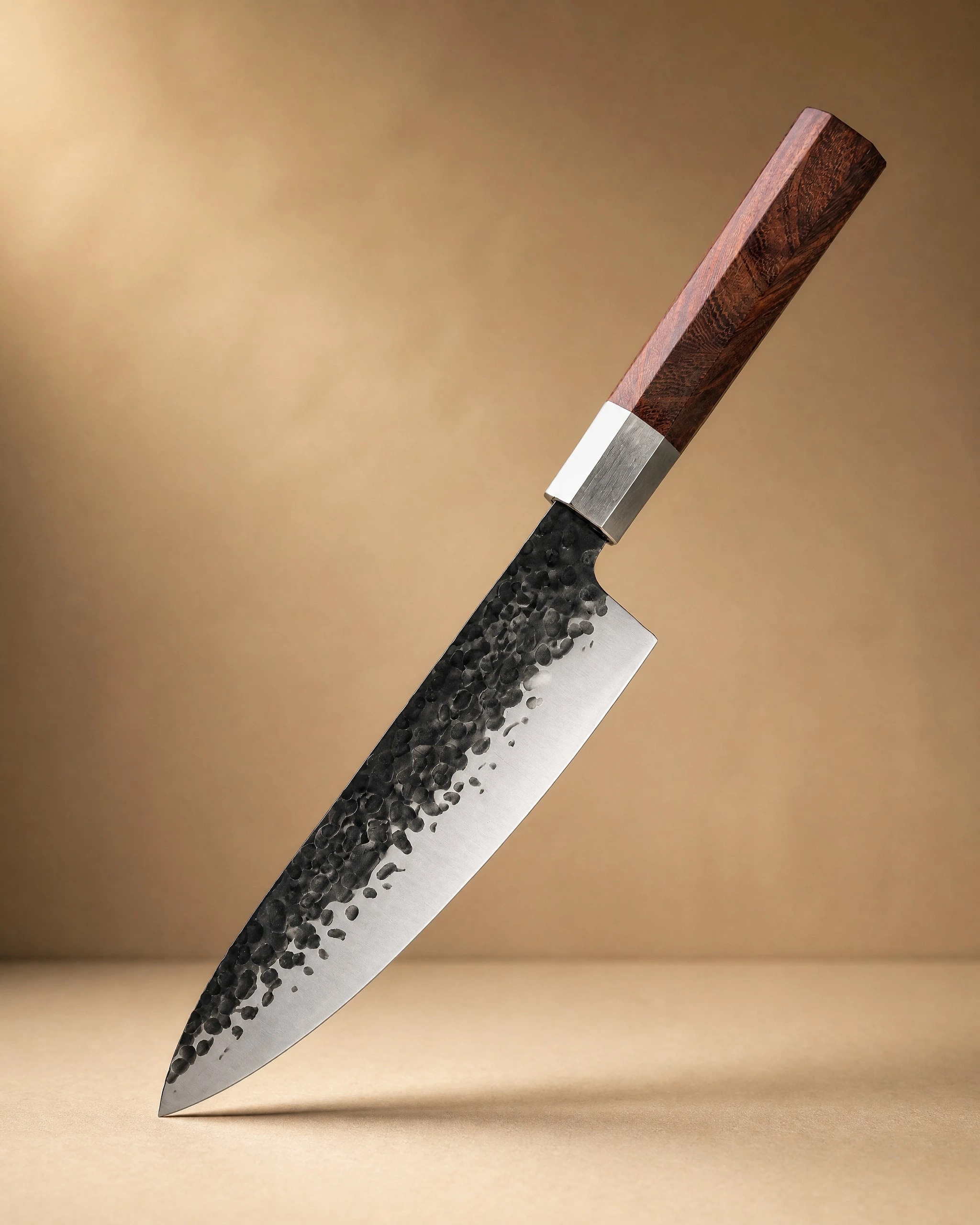 Sendai 8" Steel Gyuto Knife 牛刀$54.99View product → is the workhorse version of the same idea. Browse the full range at our knife shop to compare profiles side by side. If a kiritsuke is not in stock, a gyuto with a flatter profile is the closest substitute.
Care and Sharpening
The thin tip is the most fragile part of the knife. Store it on a magnetic strip, in a saya, or in a roll where nothing presses against the point. Left loose in a drawer, a kiritsuke will eventually lose its tip.
Wash by hand and dry it right away. Dishwashers are hard on handles, and heat plus knocking against other items can chip an edge you spent time sharpening. Cut on wood or soft plastic. Glass and stone boards dull any edge quickly.
Sharpen on water stones rather than pulling the knife through a carbide gadget, which removes far more steel than needed. Double bevel blades need you to follow the existing angle and finish with light alternating strokes. Single bevel blades require a different sequence and are best sharpened by someone with experience. Our knife care guide walks through the full routine.
Who Should Buy One
A kiritsuke suits cooks who already push cut and want a longer, flatter blade for it. It suits anyone who slices a lot of fish or protein and wants a tip fine enough for detail work. It also suits cooks who want one knife to handle most of a meal.
It does not suit someone who rock chops by reflex, who wants a single knife for everything including bones, or who is not ready to care for a thin, hard edge. That is not a knock. A gyuto or santoku will serve most kitchens better, and you can add a kiritsuke later, once the flat profile looks useful rather than merely beautiful.
Common Questions
Is a kiritsuke hard to use?
Not inherently. It is hard to use the way you use a chef's knife. Once you switch to push cuts and stop rocking, it feels natural.
Can a kiritsuke replace a gyuto?
For many cooks, yes. If your prep is mostly slicing and push cutting, one kiritsuke covers it. If you mince and rock chop often, keep a gyuto as well.
Why do kiritsuke knives cost so much?
Traditional single bevel versions take real skill to grind and finish, and that labor shows in the price. Double bevel versions vary by steel and construction.
The Bottom Line
The kiritsuke is not a gimmick and not a magic knife. It is a flat profiled, fine tipped blade that does slicing and push cutting extremely well and does almost nothing else. Buy one if that matches how you cook. Buy a gyuto first if you are still deciding. Either way, the shape is worth understanding, because once you see why the tip is cut that way, you notice it every time you pick up a knife.
Photography: Richard Iwaki via Unsplash.


