
The Bunka Knife: A Multi-Purpose Japanese Blade

The bunka is one of those Japanese shapes that takes a few minutes to understand and then feels obvious. It has a tall blade, a straight edge through the back half, and an angled tip that drops toward the point. If you have used a santoku, a bunka will feel like a close cousin. If you have used a Western chef's knife, it will feel like a lighter, more precise version of the same idea.
In Japanese, bunka means culture. That is a grand name for a kitchen tool, but it hints at the intent. This is a general purpose blade built around the way Japanese cooks work, with a profile designed for push cuts, fine tip work, and clean slicing rather than heavy rock chopping.
What Makes a Bunka a Bunka
Three features define the shape, and all three matter more than the marketing copy.
The first is the tip. A bunka ends in a k-tip, also called a kiritsuke tip. Instead of curving up into a rounded point, the spine runs straight toward the front and then angles down sharply to meet the edge. That geometry gives you a thin, almost needle-like point for detail work: scoring, deveining shrimp, cutting small garnishes. It also means the tip is less forgiving of sideways force.
The second is height. A bunka is tall from spine to edge at the heel. That height does two things. It gives your knuckles clearance when you are chopping, and it turns the blade into a scoop for moving cut food off the board.
The third is the edge profile. The back half of the edge is nearly flat, with a gentle rise toward the tip. That flat section is what makes the bunka feel so stable on a push cut. You are not balancing on a curve, you are driving a straight edge down through the food.
How the Bunka Compares to a Santoku and a Gyuto
These three shapes get mixed up constantly, and the differences are simpler than they sound.
A santoku has a sheep's foot profile. The spine curves down to meet the edge at the front, and the edge has a little more belly. It is a wonderfully forgiving all rounder, and for many home cooks it is the right single knife.
A gyuto is the Japanese take on a Western chef's knife. It is longer, has more curve along the edge, and offers more room for slicing strokes across large proteins. It is the knife you reach for when you break down a whole chicken or cut a roast into portions.
A bunka sits between them in feel. You get the height and push cutting comfort of a santoku, plus a tip that is finer and more accurate than either. The tradeoff is that the flat edge and pointed tip make it less comfortable for rocking and less suited to heavy work.
What a Bunka Does Well
If your cooking leans toward vegetables, the bunka is close to ideal. Onions, peppers, carrots, cabbage, herbs, garlic: the flat edge and tall face handle all of it, and the tip lets you do the fine work without switching knives.
- Push cutting onions and dense vegetables with the flat rear section of the edge.
- Slicing proteins and portioning fish with a single draw stroke.
- Fine tip work: shallots, chili, citrus supremes, trimming silverskin.
- Scooping and transferring cut food with the wide blade face.
A bunka plus a paring knife covers a large share of daily cooking.
Where a Bunka Falls Short
Honest limits are worth knowing before you buy. The flat edge makes rock chopping awkward, so if you learned to cook with a rhythmic rocking motion, a bunka will slow you down until you adjust. The pointed tip is thinner than a santoku's, so it is not the tool for prying or twisting. And a bunka is not a cleaver: bones, frozen food, and hard squash should go to a heavier blade.
If you regularly break down large cuts, a gyuto is the better primary knife. The 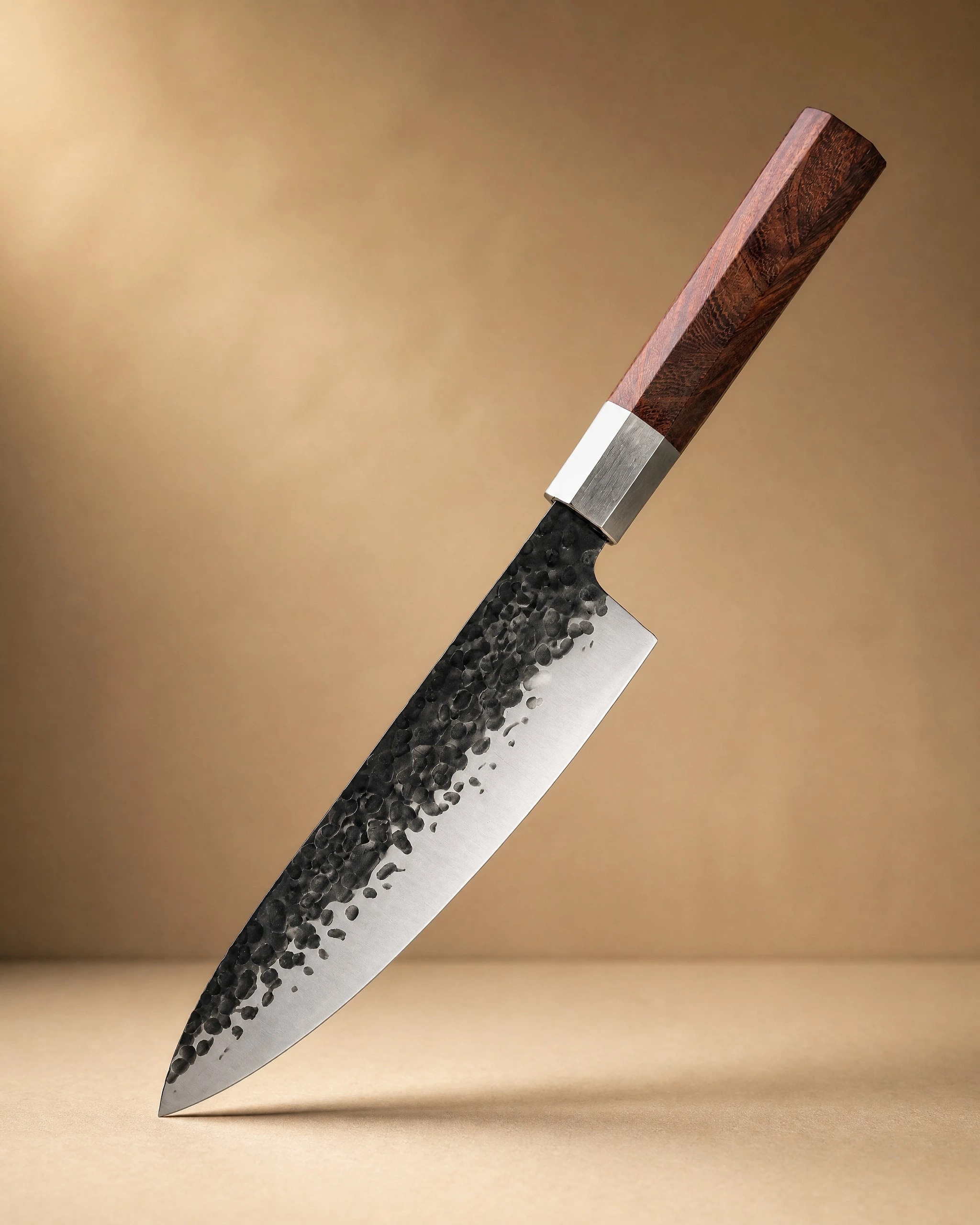 Sendai 8" Steel Gyuto Knife 牛刀$54.99View product → is a traditional choice for that kind of work, and it pairs naturally with a bunka in a two knife kit.

Blade Length and Kitchen Reality
Most bunka sold today fall in the 165 mm to 180 mm range. The shorter ones feel quick and precise, and they suit small kitchens and smaller hands. The longer ones give you more flat edge for push cutting and more reach across a big board. A 180 mm bunka is a reasonable sweet spot for most home cooks who want one knife to do the bulk of the work.
There is also a larger relative, the kiritsuke, which shares the angled tip but runs much longer and is often a single bevel design. It is a beautiful knife and a poor first purchase. Start with a bunka.
Steel, Grind, and Handle
Steel choice affects how a knife feels on the board and how much attention it demands. Stainless steels are the practical pick for most homes: they tolerate a wet sink and a busy weeknight. Carbon steels take a keener edge and reward the cook who dries the blade immediately after use, but they will show a patina and will rust if neglected.
Grind matters just as much as steel. A thinner blade behind the edge cuts with less effort, and a bunka with a thin grind feels almost weightless through an onion. Thicker grinds are more durable and less likely to chip, which is a real consideration for the pointed tip. For a first bunka, lean toward something thin but not fragile.
Handles come in two broad families. Wa handles are light and shift the balance forward. Western style handles are heavier and often feel familiar to cooks coming from European knives. Balance is personal. Our knife guide walks through the questions worth asking before you buy.
Building a Small Kit Around a Bunka
A bunka can anchor a compact collection, but what you pair with it depends on what you cook.
If you want a compact all rounder for small jobs, topping and tailing, trimming, working near the tip, the 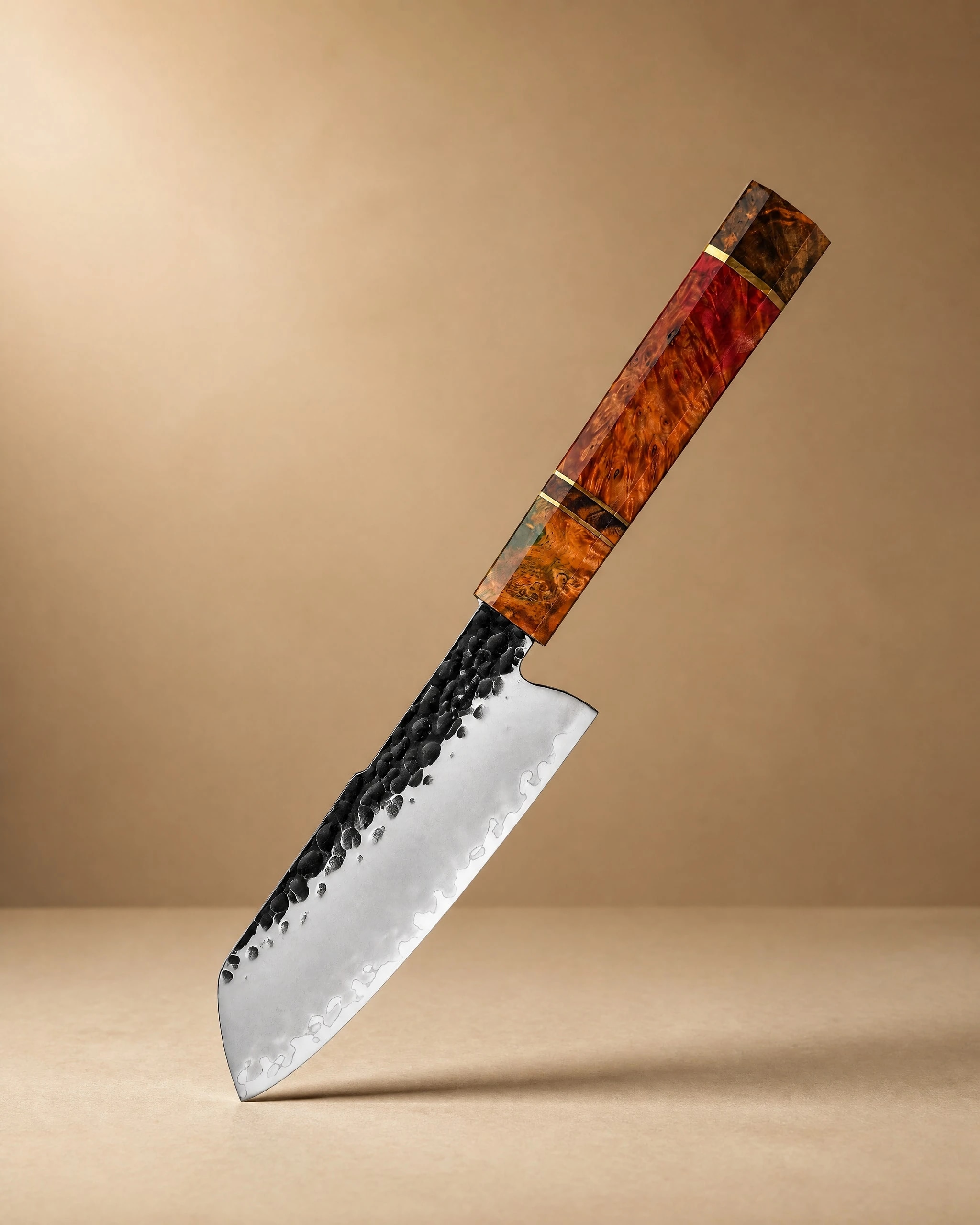 Ishikari 5" Santoku Knife 三徳包丁$79.99View product → is a sensible companion. It covers the smaller prep that a taller bunka handles less nimbly.
If you want a dedicated slicer for roasts, large fish, and long draw cuts, the 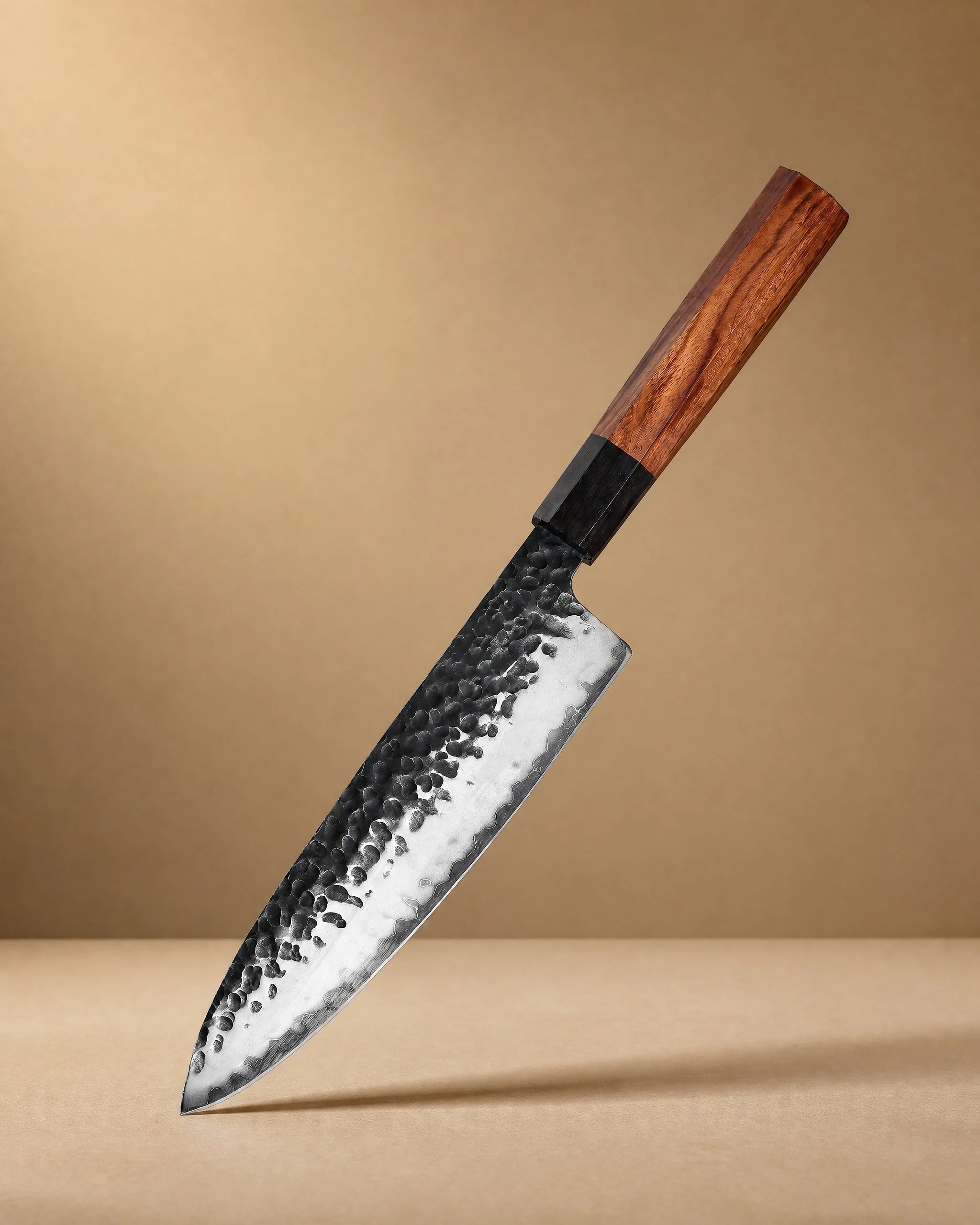 Tenjin 8" Stainless Steel Gyuto Knife 牛刀$69.99View product → is a straightforward everyday option, and the
 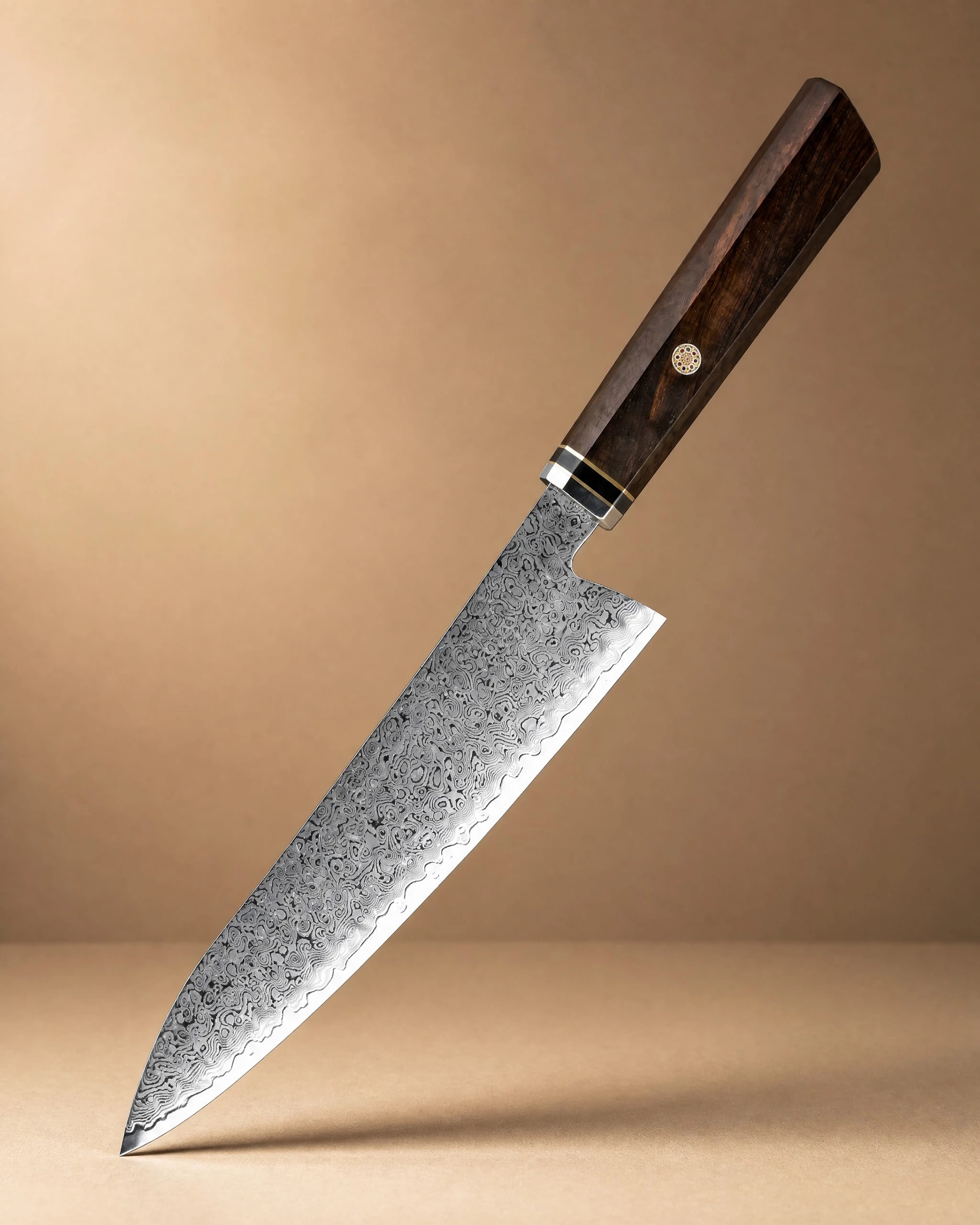 Sakawa 8.5" Damascus Steel Gyuto Knife 牛刀$94.99View product → adds a Damascus finish if you like the look and want a slightly more substantial feel in hand. Either one gives you the length and curve that a bunka deliberately lacks.
You can browse the full range on our knife shop page to compare shapes side by side.
Technique That Suits the Blade
A bunka rewards a few specific habits. Keep the tip of the blade on or near the board and drive the knife forward and down through the food, rather than chopping straight down with the whole edge. For proteins, start the cut near the heel and draw the blade toward you in one smooth motion, letting the length of the edge do the work.
Use the flat rear section for anything dense. Use the front third for detail work, and keep your off hand in a claw. Do not twist the blade while it is inside a dense item like a squash or a block of cheese, since that is how thin tips chip.
Care and Sharpening
A bunka is not fragile, but it is thinner than a typical Western knife, so a few habits go a long way. Hand wash and dry it right away. Store it on a magnetic strip, in a saya, or in a drawer with a blade guard rather than loose with other tools. Avoid the dishwasher entirely, both for the edge and for the handle.
For edge maintenance, a fine ceramic rod or a leather strop used lightly will keep a sharp knife sharp. When the knife stops biting into a tomato skin, it is time for a real sharpening session on water stones, or a trip to a professional. Our knife care guide covers angles, stones, and the mistakes that shorten a blade's life.
Common Buying Mistakes
The most common one is buying too much knife. A long, heavy bunka feels impressive in a store and tiring after twenty minutes of prep. Match the length to your board and your counter space.
The second is choosing a very hard, very thin blade as a first Japanese knife. Those knives are wonderful in experienced hands and unforgiving in a shared kitchen with a ceramic sink and a roommate who cuts frozen pizza. A middle ground steel with a thin but sensible grind will serve you better while you build habits.
The third is expecting a bunka to replace every other knife. It will not break down a chicken or split a squash. That is fine. Add the right tool when you actually need it.
The Short Version
The bunka is a tall, flat edged Japanese knife with an angled tip, built for push cutting and precise detail work. It is an excellent primary knife for vegetable heavy cooking, a strong second knife for anyone who already owns a gyuto, and a poor substitute for a cleaver. Buy one in a length that suits your board, choose a steel you will maintain, and learn to use the flat of the edge rather than fight it.
Photography: Kevin Doran via Unsplash.


