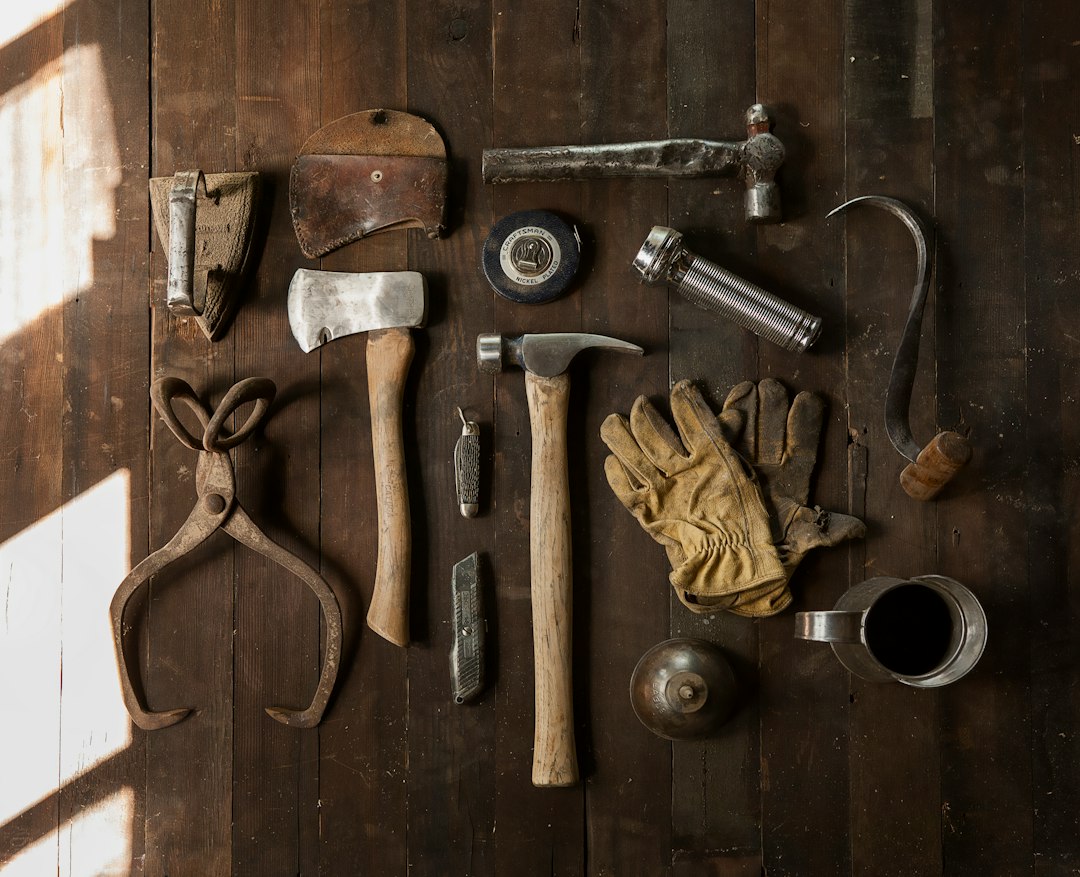
The Best Japanese Bread Knife for Perfect Slices

A good loaf deserves a clean cut. Whether you bake at home or buy from a local bakery, the knife you use decides whether you get even slices or a pile of crushed crumbs. Japanese bread knives are built with a different philosophy than many Western serrated knives. They prioritize a sharp, controlled cut that protects the crumb structure while still handling a hard crust.
Why Japanese Bread Knives Cut Differently
Most bread knives are fully serrated from tip to heel. That works, but it tears as much as it slices. A Japanese bread knife typically uses a scalloped or wavy edge with a thin, hard blade. The scallops are shallow and sharp, so they bite into crust without shredding the soft interior. The blade is also often longer and narrower than a Western bread knife, which gives you a longer draw and fewer sawing motions. Fewer strokes mean less crumb disturbance.
Another difference is the grind. A Japanese bread knife is ground thin behind the edge, even with serrations. This reduces friction. That thin geometry is why these knives work well on crusty sourdough, baguettes, and even delicate pastries if you use a light touch. It is also why they need a bit more care than a heavy, soft-steel serrated knife.
Serration Patterns and Crumb Control
Not all serrations are the same. A pointed, aggressive serration grabs the crust and can tear the inside. A rounded, wave-like serration slices more gently. Japanese makers often use a wave or a scallop pattern with micro-serrations along the edge. This combination starts the cut cleanly and then lets the blade follow through. If you cut a lot of soft sandwich bread, a finer serration helps. For thick, hard crusts, a slightly deeper scallop gives more bite.
The angle of the cut matters too. Do not press straight down. Use a gentle sawing motion with the knife at a slight angle, letting the serrations do the work. A long blade makes this easier because you can use the full length in one motion. That is one reason a dedicated bread knife beats a chef's knife on crusty loaves.

Blade Length, Height, and Loaf Size
Blade length should match the loaves you cut most often. A shorter blade is nimble for small rolls and sandwich bread. A longer blade handles large boules and wide pan loaves without sawing back and forth. Japanese bread knives often come in lengths that match the local style of bread, but the principle is universal: you want at least an inch of blade longer than the width of your typical slice. If you cut a lot of large sourdough, go longer. If you mostly cut bagels and baguettes, a shorter blade is fine.
Blade height also matters. A taller blade is stiffer and can guide itself through a tall loaf. A narrower blade is lighter and more precise for delicate work. Most people do best with a middle ground. The goal is a knife that feels like an extension of your hand, not a saw you have to muscle through the bread.
Handle and Balance
The handle affects control more than many people expect. A bread knife is used with a long, slicing motion, so balance matters. You want the knife to feel neutral or slightly blade-heavy, which helps the blade follow through the cut. A handle that is too light makes the blade feel like it is falling. A handle that is too heavy makes you push harder than you should.
Japanese handles are often lighter and more slender than Western handles. They encourage a pinch grip near the bolster, which gives you better control and less fatigue. If you are used to a thick, contoured handle, give yourself a few cuts to adapt. The lighter handle usually wins once you are used to it, especially for long slicing sessions.
The Rumoi Bread Knife in Practice
For everyday prep, the 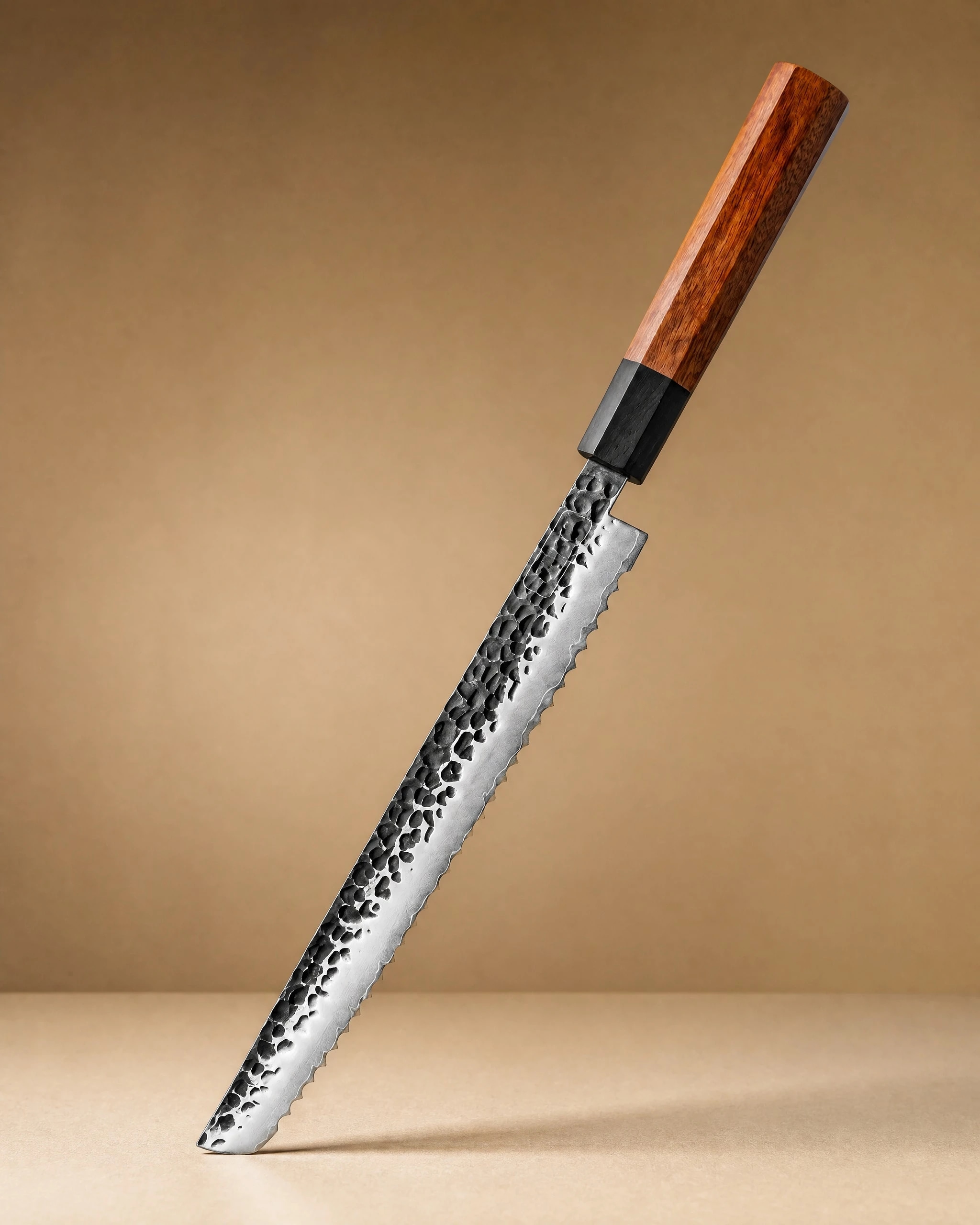 Rumoi 10" Japanese Bread Knife パン切りナイフ$59.99View product → is the knife we recommend first. It is built for the way most people actually cut bread: a few slices at breakfast, a sandwich at lunch, a loaf for dinner. The blade is long enough for a standard boule, and the serration pattern is designed to start a cut on crust without crushing the interior. The handle is comfortable for a pinch grip, and the balance keeps the blade moving through the loaf rather than stalling.
What I like most is the restraint. It does not try to be a chef's knife. It is a bread knife, and it does that one job very well. If you cut a lot of soft bread, use a light touch and let the serrations glide. For hard crusts, use a gentle sawing motion and let the weight of the blade do the work. It is also easy to maintain if you keep it dry and store it safely. You can read more in our knife care guide.
Companion Knives for Bread and More
A bread knife is not the only knife you need. If you bake at home, you also need a knife for trimming dough, cutting sandwiches, and prepping toppings. A gyuto is the Japanese equivalent of a chef's knife, and it is the most useful companion to a bread knife. The 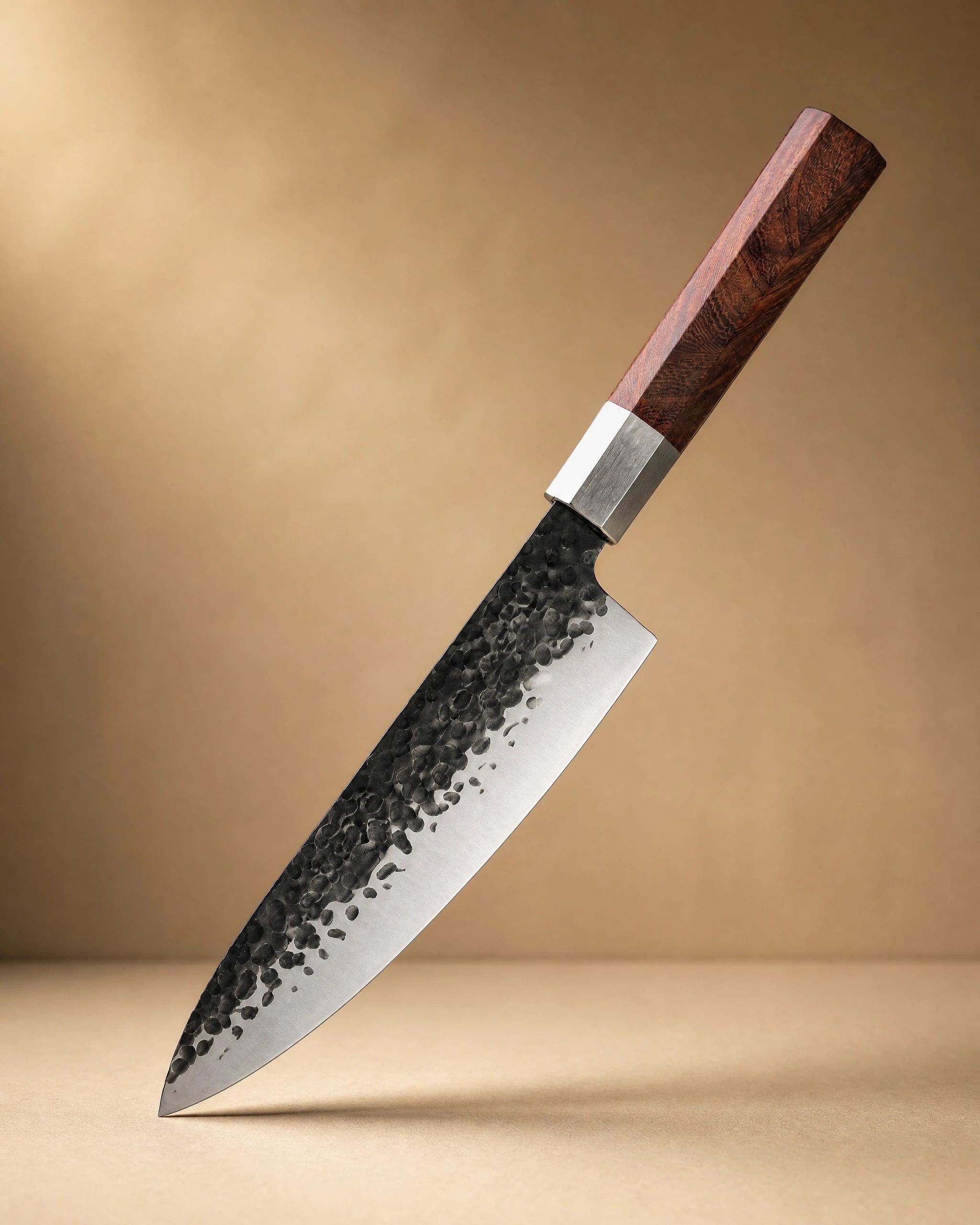 Sendai 8" Steel Gyuto Knife 牛刀$49.99View product → is a solid choice for everyday prep. It handles vegetables, herbs, and proteins with ease, and it can take over when a bread knife is too long or too serrated.
If you prefer a slightly different feel, the 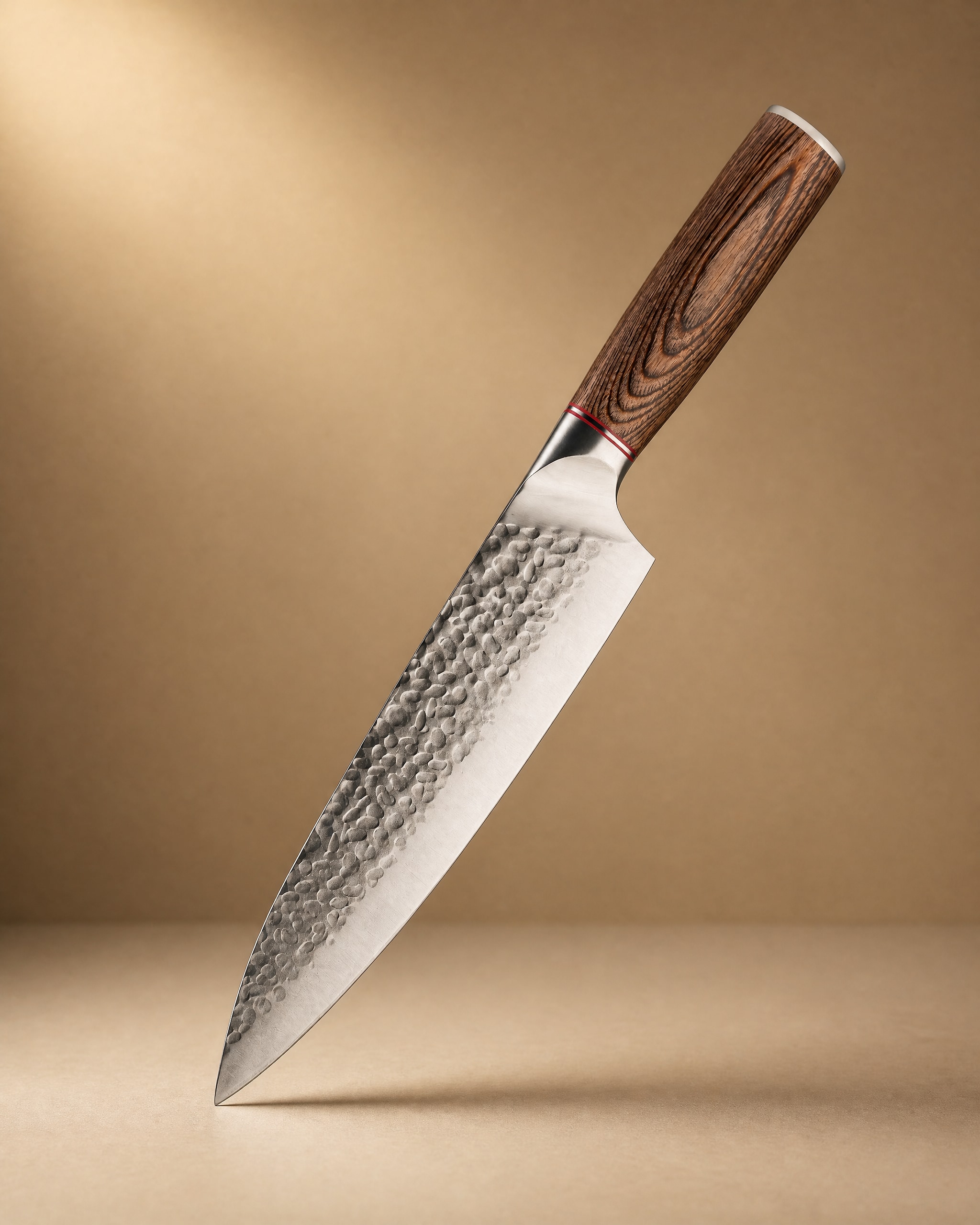 Akan 8'' Gyuto Knife 牛刀$49.99View product → is another gyuto option. Both are general-purpose knives that work well alongside a bread knife. Use the bread knife for bread. Use the gyuto for everything else. That division of labor keeps your bread knife sharp and your prep efficient.
Caring for a Serrated Japanese Knife
Serrated edges are harder to sharpen than plain edges. You cannot use a standard whetstone on the scallops without practice. Most home cooks should use a tapered rod or a professional sharpening service. Hone the knife lightly, if at all, and avoid pulling it through a carbide sharpener. Those pull-through tools remove too much metal and can ruin the geometry.
Wash the knife by hand and dry it immediately. Do not leave it in the sink or soak it. Even stainless steel can stain or pit if left wet with acidic bread or dough. Store it in a drawer with a blade guard or on a magnetic strip. If you use a magnetic strip, place the knife with the spine touching the magnet, not the edge. That avoids dulling the serrations.
For more detail on daily care, including sharpening and storage, visit our knife care guide.
Building a Set Around a Bread Knife
If you are starting from scratch, a set can be a practical way to cover the basics. The 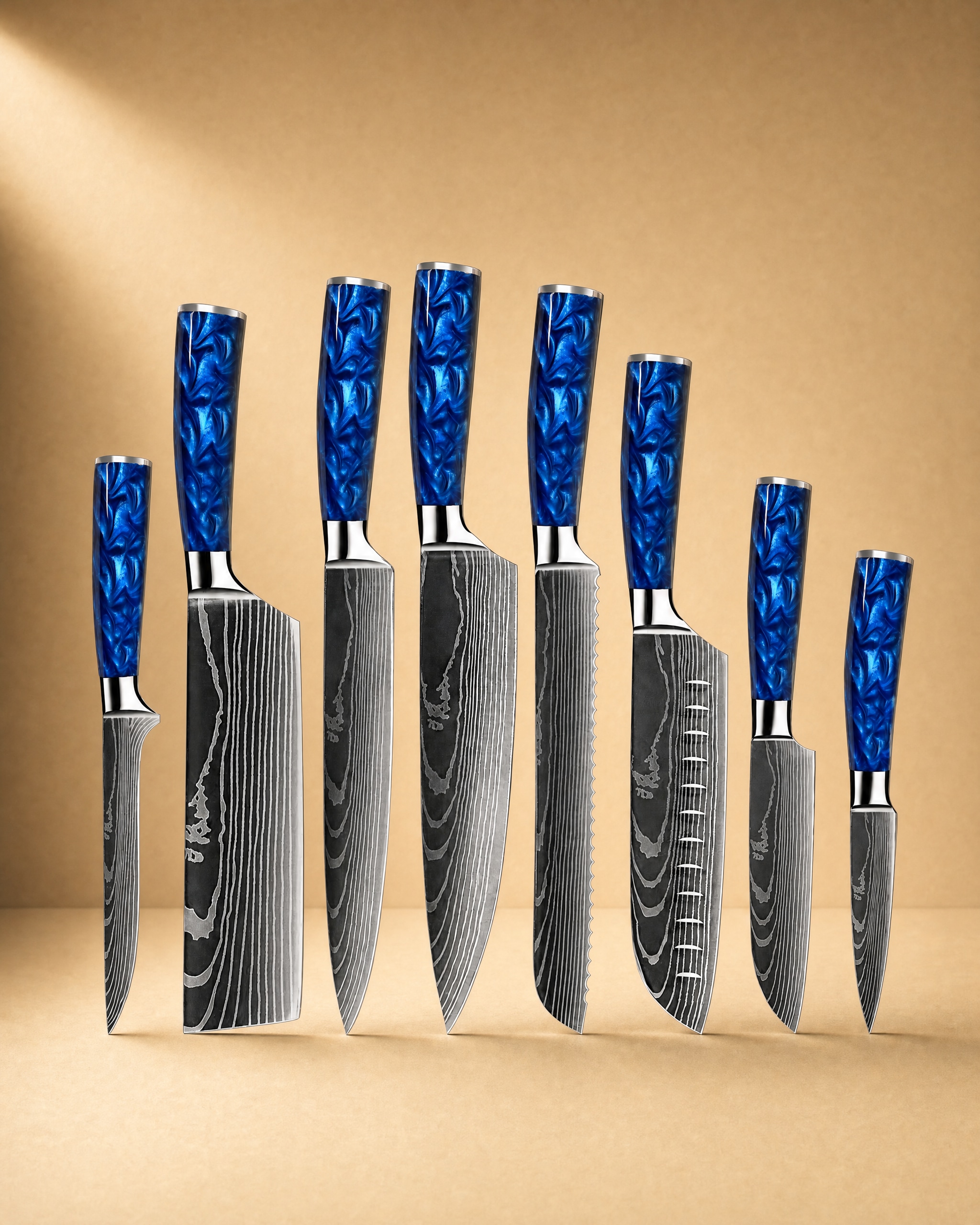 Shinano 信濃川 Damascus Pattern Stainless Steel Kitchen 8 Knife Set$149.99View product → includes a range of knives for different tasks. It is not a replacement for a dedicated bread knife, but it gives you a foundation. Add a bread knife if you cut fresh loaves often. Use the set's smaller knives for fruit, cheese, and garnishes.
If you already have a few knives, buy the bread knife first. It is the one knife that does something no other knife can do well. A gyuto can cut bread in a pinch, but it will crush soft loaves and struggle with hard crusts. A bread knife is a specialist, and that is exactly why it earns its place.
How to Choose Your Japanese Bread Knife
Start with the bread you eat most. If you eat soft, sliced bread, choose a finer serration and a shorter blade. If you bake crusty sourdough, choose a longer blade with a slightly deeper scallop. If you cut a mix, choose a middle ground. Handle material matters less than balance. Hold the knife if you can, or buy from a shop that describes the balance honestly.
Also think about sharpening. A serrated knife lasts a long time, but it will eventually need service. If you are not comfortable sharpening serrations, plan to send it out or learn on a cheap knife first. A good bread knife can last decades if you care for it.
For a broader look at Japanese knife types and how they compare, see our knife guide. You can also browse the full Japanese bread knife category to compare options side by side.
Quick Checklist Before You Buy
- Match blade length to your typical loaf width.
- Choose a serration pattern that suits your crust: finer for soft bread, deeper for hard crust.
- Check the balance: the knife should feel neutral or slightly blade-heavy.
- Plan for sharpening: serrated edges need a rod or professional service.
- Buy the bread knife first, then add a gyuto for other prep.
A Final Slice of Advice
The best Japanese bread knife is the one that matches your bread and your hand. Do not overthink the specs. A sharp, well-balanced knife with a serration pattern that suits your loaves will outperform a more expensive knife that does not fit your style. Start with a dedicated bread knife, add a gyuto for general prep, and keep both clean and dry. Your slices will be cleaner, your crumb will stay intact, and your bread will look as good as it tastes.
If you are ready to compare, start with the Rumoi 10" Japanese Bread Knife パン切りナイフ$59.99View product → for everyday bread, then look at the Sendai 8" Steel Gyuto Knife 牛刀$49.99View product → or Akan 8'' Gyuto Knife 牛刀$49.99View product → for all-purpose prep. For a full kit, consider the Shinano 信濃川 Damascus Pattern Stainless Steel Kitchen 8 Knife Set$149.99View product →. You can also explore the entire knife shop to see everything we carry.
Photography: Tommaso Urli via Unsplash.