
Japanese Cleaver Knife Buying Guide

A Japanese cleaver is not simply a heavier chef's knife. It is a different tool with a different logic, and buying one without understanding that logic is how a beautiful blade ends up living in a drawer. This guide covers the shapes, the steels and the honest trade-offs, so you can decide whether a cleaver earns its place on your board and, if it does, which one to buy.
One warning before anything else: most knives sold in the US as Japanese cleavers are one of three quite different tools. They cut differently, they sharpen differently, and they suit different cooks. Confusing them is the most common buying mistake in this category.
The Three Knives Behind the Word Cleaver
Chuka bocho. The tall, rectangular, forward-heavy blade most people picture. Chinese in origin, refined by Japanese makers. It feels substantial at the spine yet is usually ground thin behind the edge, so it slices rather than wedges. Scooping, smashing and transferring food are part of the job description.
Nakiri bocho. A rectangular vegetable knife, thinner and lighter than a chuka bocho, with a straight edge, a flat profile and no tip. It is a push cutter for vegetables and it does not pretend otherwise. Many home cooks find a nakiri is the sane entry point into cleaver shapes, because it weighs about as much as a chef's knife.
Usuba bocho. The traditional single-bevel vegetable knife of professional Japanese kitchens. Flat at the front, angled at the back, ground on one side only. Excellent on daikon and cucumber, demanding to sharpen, and unforgiving of sloppy technique. Not a first rectangular knife.
If you want the tall, heavy, do-most-things version, choose a chuka bocho. If you want a light vegetable specialist, choose a nakiri. If you already sharpen confidently and want a traditional single bevel, an usuba is the one.
Geometry Matters More Than Length
Blade height is what makes a cleaver feel like a cleaver. A tall blade gives your knuckles room above the board, keeps your guide hand clear, and provides a flat face for scooping. Height also changes the cutting motion: with a tall, flat blade you push down and forward rather than rock.
Spine thickness decides how the knife enters food. A thin blade glides, a thick one splits. For a home kitchen, a moderately thin chuka bocho is more useful than a heavy one, because the weight of a very thick blade only pays off when you are processing volume. If the spine looks like a wedge in photographs, expect the knife to behave like one.
Look at the grind next. The bevel should start high enough that the blade thins out behind the edge, which is what allows clean cuts through onions and cabbage. A short, abrupt bevel turns the knife into a splitter.
Edge profile is the last piece. A dead flat edge works like a guillotine and is excellent for herbs and fine slicing. A slight curve at the heel and toe lets you rock a little. Neither is wrong, but flat is the more traditional choice on Japanese rectangles.
Steel: Carbon, Stainless, and the Honest Trade-Off
Carbon steel takes a keener edge and sharpens faster on the stones. It also rusts, stains, and reacts with onions, citrus and anything acidic left on the blade. Stainless is forgiving, and a stainless blade left wet overnight will still be there in the morning.
Most practical Japanese cleavers split the difference: a hard carbon core clad in softer stainless steel. You get the edge feel of carbon with the maintenance of stainless on the outside, provided you keep the exposed edge dry.
Hardness is not the same thing as toughness. Japanese blades are commonly run hard, which means they hold an edge well and chip rather than roll when abused. A cleaver used to twist through a joint or hack at a frozen block will show it. Choose steel that matches your habits, not the number that looks best on a spec sheet.

Handle, Balance, and Control
A traditional wa handle is light, replaceable, and pushes the balance forward into the blade. A Western riveted handle adds weight at the back and feels familiar to cooks raised on European knives. On a heavy blade, a forward balance makes the knife feel heavier than it is; on a light nakiri, it barely matters.
Test balance with your index finger under the heel of the blade. A chuka bocho should feel neutral to slightly forward. If the handle drags the balance back, your wrist will do work the blade should be doing.
Handle size deserves more attention than it gets. Too small and the knife rotates in your hand under load; too large and you lose the fine control that makes a cleaver usable for garlic and ginger.
Size, Weight, and Your Cutting Board
Length matters less than height on these knives, but it still sets the workload. Most home nakiri are short enough to be nimble on a small board, while chuka bocho run longer and give you more scooping surface at the cost of weight and counter space.
Measure your board before you buy. A cleaver longer than your board is a cleaver you will not use, because you cannot push it through a full stroke without running off the end. Check the vertical clearance under your cabinets as well if you store knives on a magnetic strip.
Weight is personal. A heavy blade tires some cooks and feels natural to others, and no chart settles it. If you can hold the knife first, do. If you cannot, be honest about how much chopping you do in one session and buy accordingly.
What a Cleaver Will Not Do
It will not chop through bone. Japanese edges are thin and hard, and a chicken backbone is enough to chip one. It will not survive frozen food, and it will not tolerate being used as a scraper or a garlic press. Twisting the blade while it is buried in food is the fastest route to a chipped edge.
The honest case for a cleaver is volume and control: lots of vegetables, scooped and moved without a second tool, plus a tall face that guides the knife straight. If that is not your cooking, the knife will not create the need.
When a Cleaver Is the Wrong Purchase
If you cook mostly boneless proteins and want one knife that handles everything, an 8 inch gyuto covers more ground with less weight. 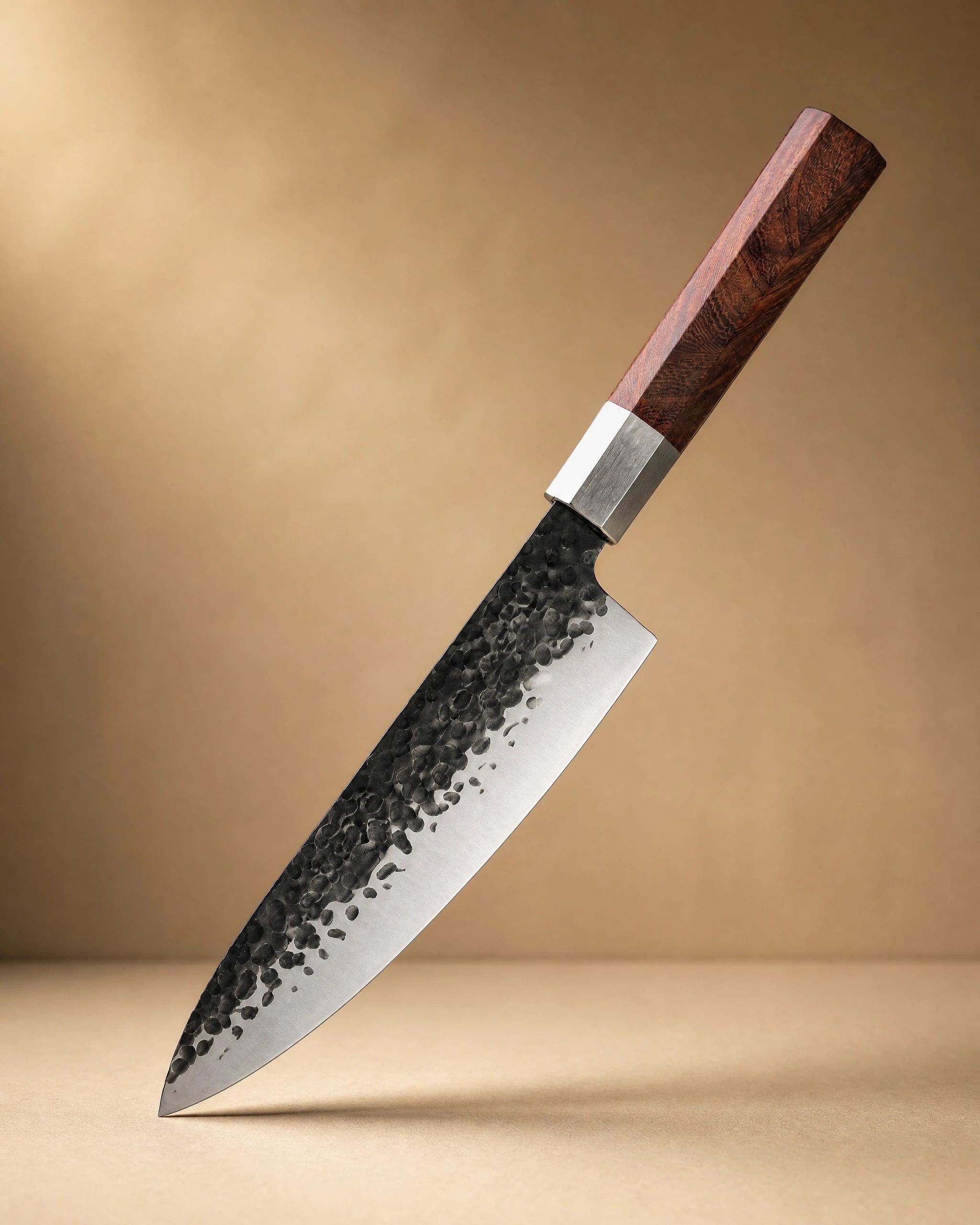 Sendai 8" Steel Gyuto Knife 牛刀$64.99 · currently out of stockView product → is the everyday option in that role, and
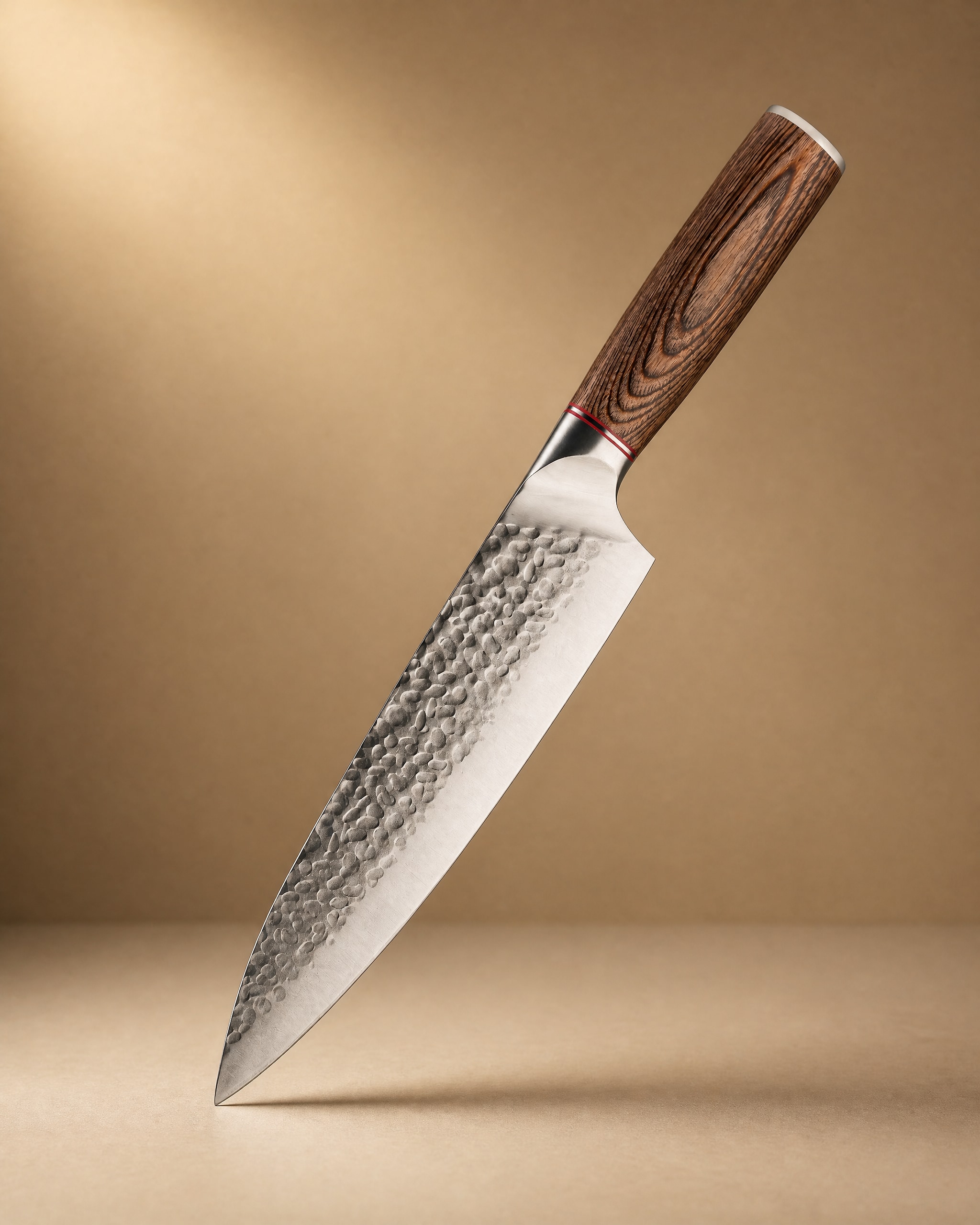 Akan 8'' Gyuto Knife 牛刀$64.99View product → is the same idea from a different line, with a different handle and a different feel in the hand. Either will out-cut a cleaver on fish, chicken breasts and trimming work.
If your bread is crusty and your current knife crushes it, the answer is a serrated blade, not a tall one. 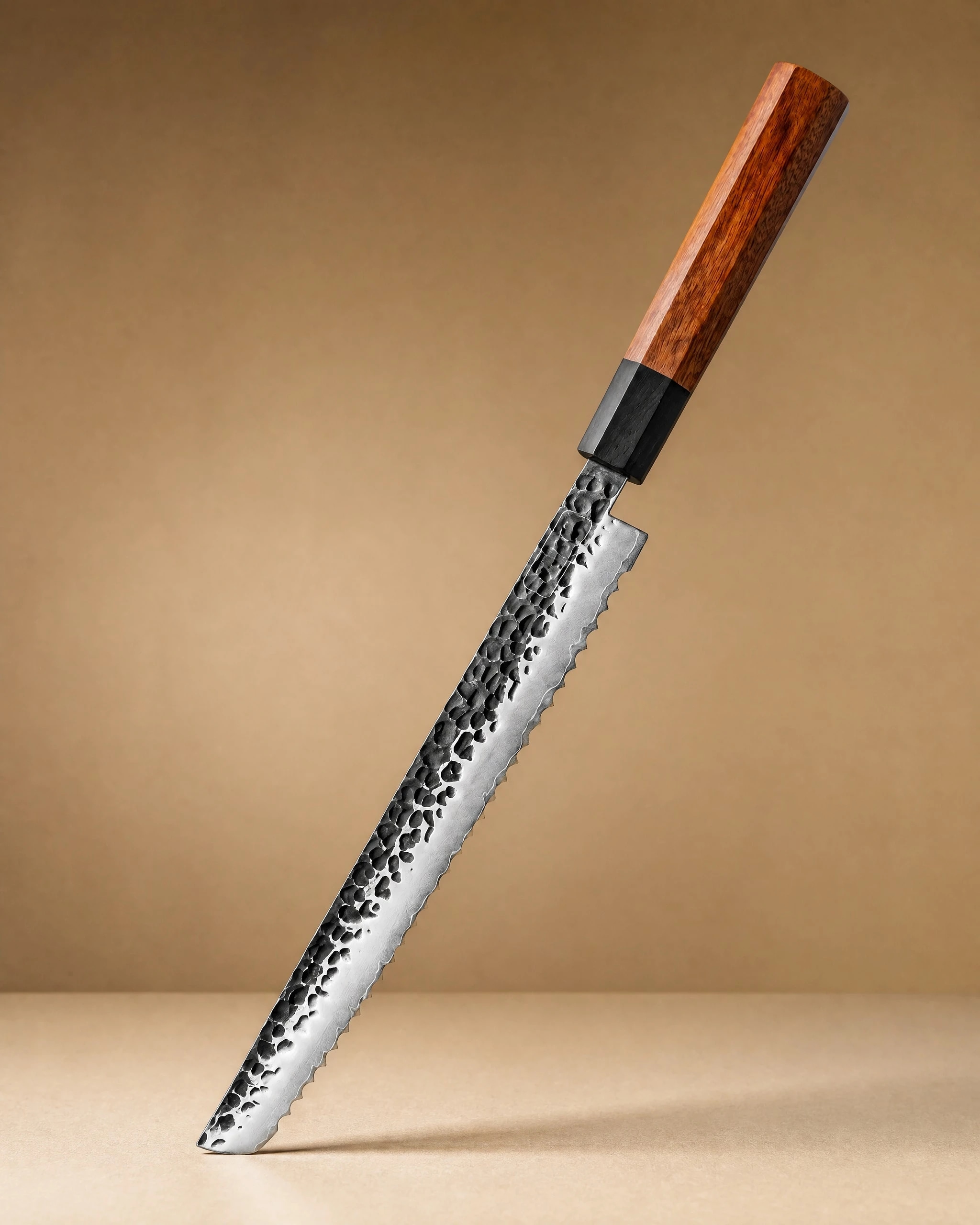 Rumoi 10" Japanese Bread Knife パン切りナイフ$79.99View product → handles loaves and delicate pastries without a cleaver's weight behind it.
If you are outfitting a kitchen from nothing, a matching set is usually a better first purchase than a single specialist. 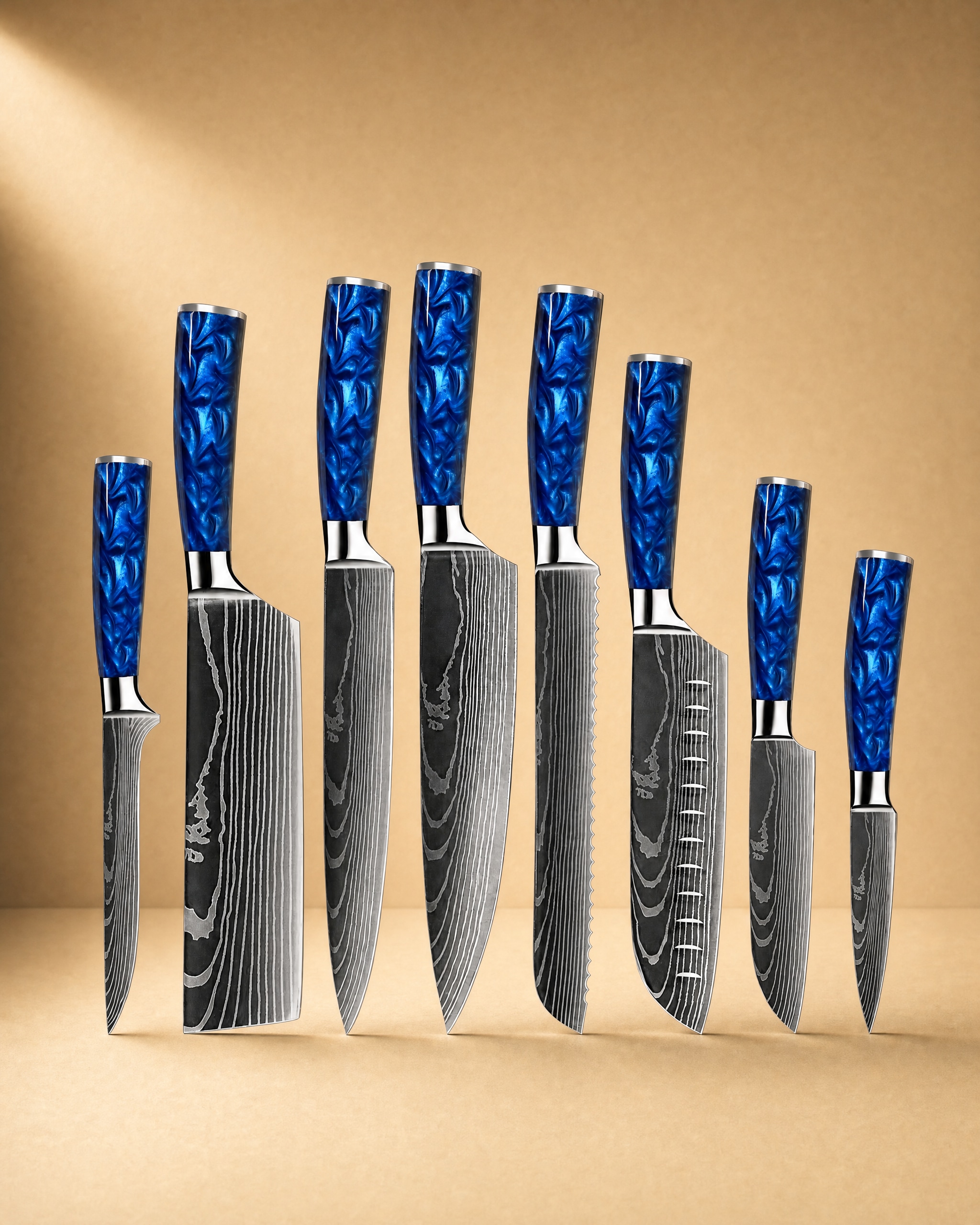 Shinano 信濃川 Damascus Pattern Stainless Steel Kitchen 8 Knife Set$199.99View product → covers the core tasks, and you can add a cleaver later once you know which board you actually stand at.
Buy a cleaver because your cooking is vegetable heavy and your board is large, not because a photograph looked good.
Care That Keeps a Thin Edge Intact
Hand wash and dry immediately, especially at the edge and around the handle. Store it on a magnetic strip, in a saya, or in a drawer guard, never loose with other tools. Sharpen on water stones rather than pulling a hard Japanese blade through a carbide pull-through. Our knife care guide covers angles, stones and rust prevention in detail.
A Practical Buying Checklist
Before you buy, work through these in order:
- Decide the shape first: chuka bocho for general work, nakiri for vegetables, usuba only with sharpening experience.
- Match the weight to your volume. Lighter for daily home cooking, heavier only if you process a lot of produce.
- Confirm the blade is thin behind the bevel, not just sharp at the very edge.
- Check handle length and balance in your own hand.
- Choose carbon only if you will dry the blade every single time.
- Budget for a stone and a guard, not just the knife.
Where to Start
If you have decided a cleaver is right, browse the cleaver category and compare shapes side by side. If you are still weighing a cleaver against a chef's knife, read our knife buying guide first, then look through the full knife shop to see what the alternatives actually cost.
The right Japanese cleaver is the one whose shape matches the food you cook most. Everything else, steel, handle, finish, follows from that decision.
Photography: Savernake Knives via Unsplash.


