
Best Non Plastic and Non Toxic Cutting Boards

If you are shopping for the best non plastic cutting board, you are probably trying to solve two problems at once: keeping microplastics and unknown additives out of your food, and keeping your knives sharp. That is a reasonable goal. It is also a goal that requires some honesty, because no cutting board is sterile, and no material is perfect. The best choice depends on what you cut, how you clean, and whether your knives are thin Japanese blades or heavier workhorses.
What Non Plastic and Non Toxic Really Mean
Non plastic is straightforward. The board is made from wood, bamboo, wood fiber composite, glass, stone, or another non polymer material. Non toxic is less straightforward. It is a marketing term, not a regulated standard. A wood board can still use an adhesive or finish you would not want near food. A bamboo board can be glued from many strips. A composite board can contain resins. Read the maker's material list, look for food contact ratings, and avoid boards with a strong chemical odor or vague claims about antimicrobial additives. For wood, a simple mineral oil and beeswax finish is a good sign. For any board, a clear statement about food safe glue matters more than a dramatic label.
The Best Non Plastic Cutting Board Materials by Use
There is no single winner for every kitchen. The right material depends on whether you prioritize edge retention, easy cleaning, weight, or dishwasher convenience.
- Maple: The most common all around choice. It is dense enough to hold up, but still softer than glass or stone. Edge grain maple is a sensible first wood board.
- Walnut and cherry: Slightly softer and often darker. Good for lighter use and for cooks who want a board that shows less staining. They still need oil and hand washing.
- End grain wood: The gentlest common surface for a thin knife edge. It costs more, weighs more, and needs more oil, but it is a strong choice for serious prep.
- Bamboo: Affordable and stable, often glued from strips. It is harder and denser than many woods, so check the adhesive and do not expect it to feel soft under a delicate edge.
- Wood fiber composite: Dense, consistent, and sometimes dishwasher safe. It is not a traditional wood board, but it can be a practical non plastic option if the maker lists food safe materials.
Glass and stone are non plastic, but they are harsh on knife edges. I would use them for serving or dough, not for daily chopping with a good Japanese knife.
Solid Wood Is the Safest Default for Most Home Kitchens
For most home cooks, a solid wood board is the best non plastic cutting board because it balances knife friendliness, repairability, and cleaning. A medium maple edge grain board is easy to find, easy to oil, and easy to sand back when it gets scored. End grain is even gentler on edges, but it is heavier and less forgiving if you leave it wet. Walnut and cherry are attractive alternatives, though they may show scratches and stains differently.
Wood is not self cleaning. The cleanest cutting board is the one you wash and dry properly, not the one with the boldest label. Scrub with hot soapy water, rinse, and stand it on edge to dry. Do not soak it. Do not put it in the dishwasher unless the maker explicitly says it is safe. Oil it when it looks dry, usually every few weeks in a home kitchen. A board that stays damp, grows cracks, or smells sour should be retired. If you use one board for raw meat and vegetables, wash it between tasks. A separate meat board is simpler and safer.
A thin Japanese knife benefits from a forgiving surface. If you use a santoku for vegetables and boneless proteins, the 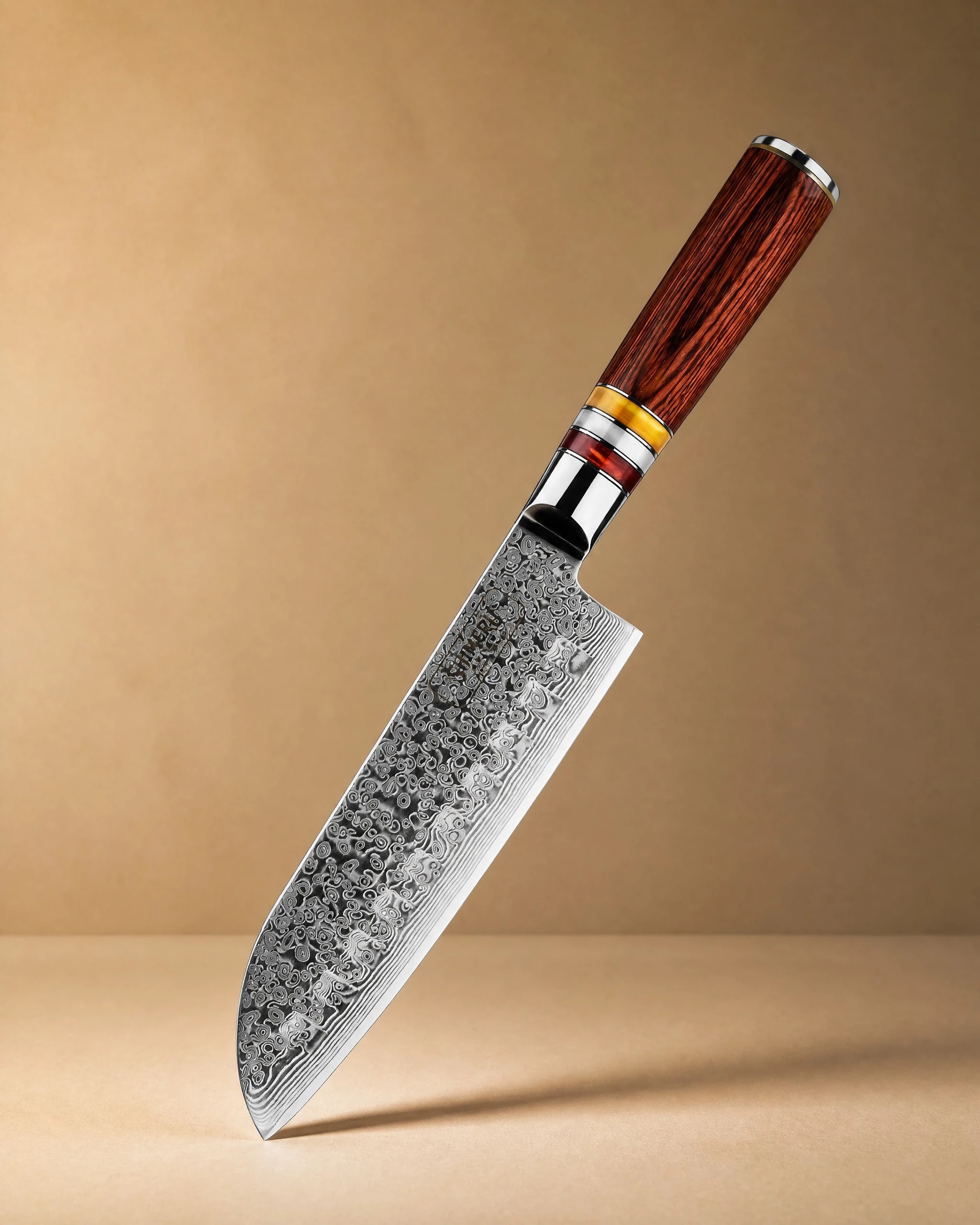 Hikari 光 7" Damacus Steel Professional Santoku Knife 三徳包丁$99.99View product → is a natural match for a medium wood board, and it rewards a light touch. Keep the edge clean and dry after use, and see the knife care guide for routine maintenance.

Bamboo and Composite Boards: Good Options With Caveats
Bamboo is often sold as the sustainable answer, and it can be a good one. It is stable, affordable, and widely available. The caveat is construction. Many bamboo boards are glued from thin strips, so the adhesive matters. Look for a food safe binder and a finish you trust. Bamboo is also dense, and some cooks find it less gentle on a fine edge than maple or end grain wood. It still needs hand washing and oiling, even if the label says otherwise.
Composite boards made from wood fiber or paper composite are another non plastic route. They are dense, consistent, and less likely to warp than a cheap wood board. Some are labeled dishwasher safe, but read that label carefully. Heat and water are hard on any wood based product. A composite board can be a good fit for a household that wants one easy to clean board, as long as you accept that it will not feel like a traditional butcher block.
Glass, Stone, and Rubber: Where They Fit
Glass and stone are easy to clean and completely non plastic, but they are unkind to knife edges. A thin Japanese blade can chip or roll on glass, and the sound alone is a warning. Use glass for serving, for dough, or for tasks where the knife never touches the surface. Stone is heavy and abrasive in the same way. Rubber like boards are often polymers, so they are not truly non plastic, even when they are marketed as alternative materials. If your goal is a non plastic board, do not count them.
If You Still Want Plastic: The Best Plastic Chopping Board Material
Plastic still has a place. Commercial kitchens use it because it is inexpensive, lightweight, and dishwasher safe. For raw meat, a dedicated plastic board that goes straight into the dishwasher can be a practical choice. The best plastic cutting board material is usually food contact rated high density polyethylene, often called HDPE, or polypropylene. These are common, durable, and well understood. Avoid unidentified recycled plastic, soft mats with a strong odor, and boards with deep gouges that no longer dry cleanly.
The best plastic chopping board is thick enough to stay put, reversible if you want two sides, and labeled dishwasher safe. Replace it when the surface is deeply scored. Knife marks trap moisture and food, and a dishwasher cannot reach every cut. Plastic is not automatically the cleanest cutting board, and wood is not automatically dirty. Cleaning and drying matter more than the material name on the package.
The Best Dishwasher Safe Cutting Board Is a Compromise
If the dishwasher is nonnegotiable, the best dishwasher safe cutting board is usually a composite or HDPE board, not a wood board. Most solid wood and bamboo boards will warp, crack, or lose their finish in a dishwasher. Some composite boards are built for it, but even those can dull, stain, or warp over time. Check the maker's care instructions and do not assume that a board is dishwasher safe because it looks sealed. A board that survives the dishwasher but wobbles or splits is not a good deal. For wood, hand washing is part of the ownership cost.
Size, Thickness, and Juice Grooves
Buy a board that fits your counter and your sink. A large board is safer for big knives and piles of vegetables, but it is harder to wash. A small board is handy for a snack or a single onion. Thickness matters for stability and for how many times you can refinish the surface. A juice groove is useful for roasted meat, but it reduces usable space and can be annoying for bread. Feet or a damp towel under the board will keep it from sliding. Weight is a tradeoff: a heavy board stays put, but you may avoid using it if it is hard to lift.
How to Clean and Maintain a Non Plastic Board
Wash after every use with hot soapy water. Rinse well. Dry upright so air can reach both faces. For raw meat, use a separate board and wash it before any produce touches it. Once a month, or when the surface looks dry, apply a thin coat of mineral oil and let it soak in. Do not use cooking oils that can turn rancid. For stains, a paste of baking soda and water can help, but do not scrub so hard that you gouge the surface. If the board develops cracks, deep grooves, or a persistent odor, replace it or have it professionally refinished. A clean, dry board is the cleanest cutting board, whatever the material.
Matching Your Board to Your Knives
Wood and bamboo are gentler than glass, but they still ask something of your knife. Let the edge do the work, keep the blade straight, and avoid chopping through bones on a thin board. For everyday prep, a gyuto is the knife most cooks reach for, and the 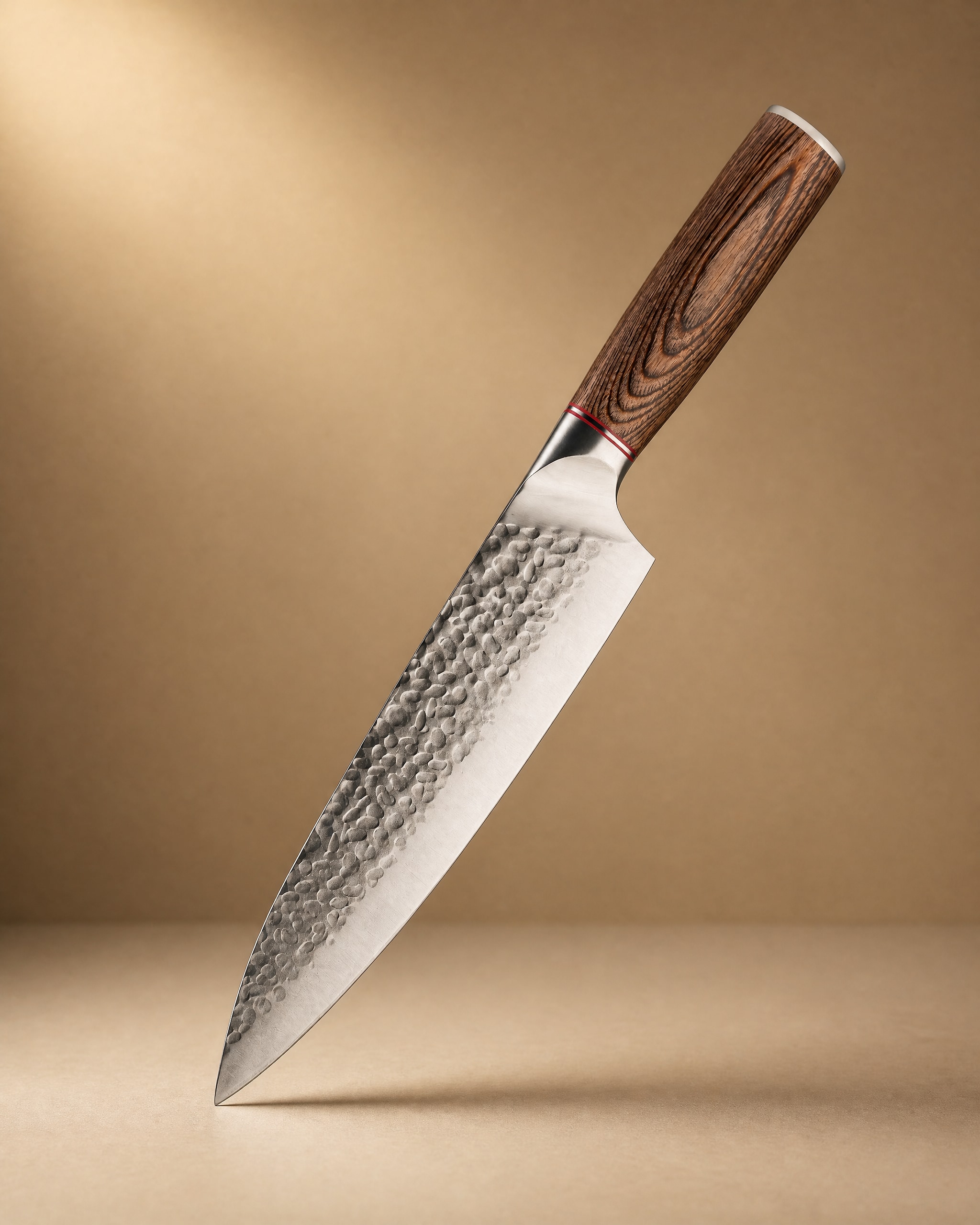 Akan 8'' Gyuto Knife 牛刀$64.99View product → is a sensible core knife for a board that sees vegetables, herbs, and boneless proteins. If you are still choosing a blade, the knife guide explains the shapes without the hype.
Bread is a separate job. A serrated knife needs a board that can take a light sawing motion without dulling the teeth, and wood or bamboo is a better surface than glass. The 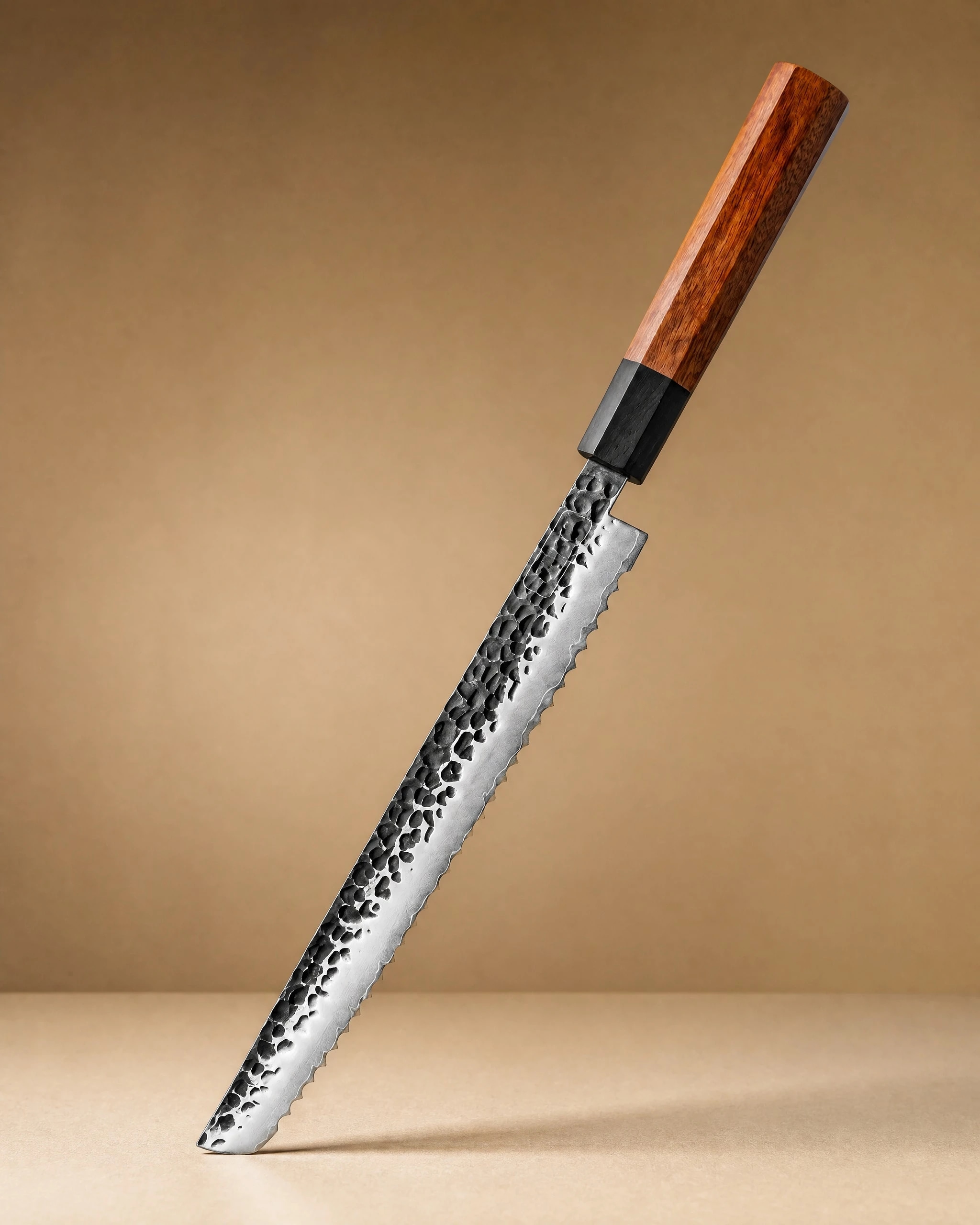 Rumoi 10" Japanese Bread Knife パン切りナイフ$79.99View product → is the kind of bread knife that belongs beside a wood board, not on a stone countertop. For households with several cooks, a set can keep the right knife near the right board. The
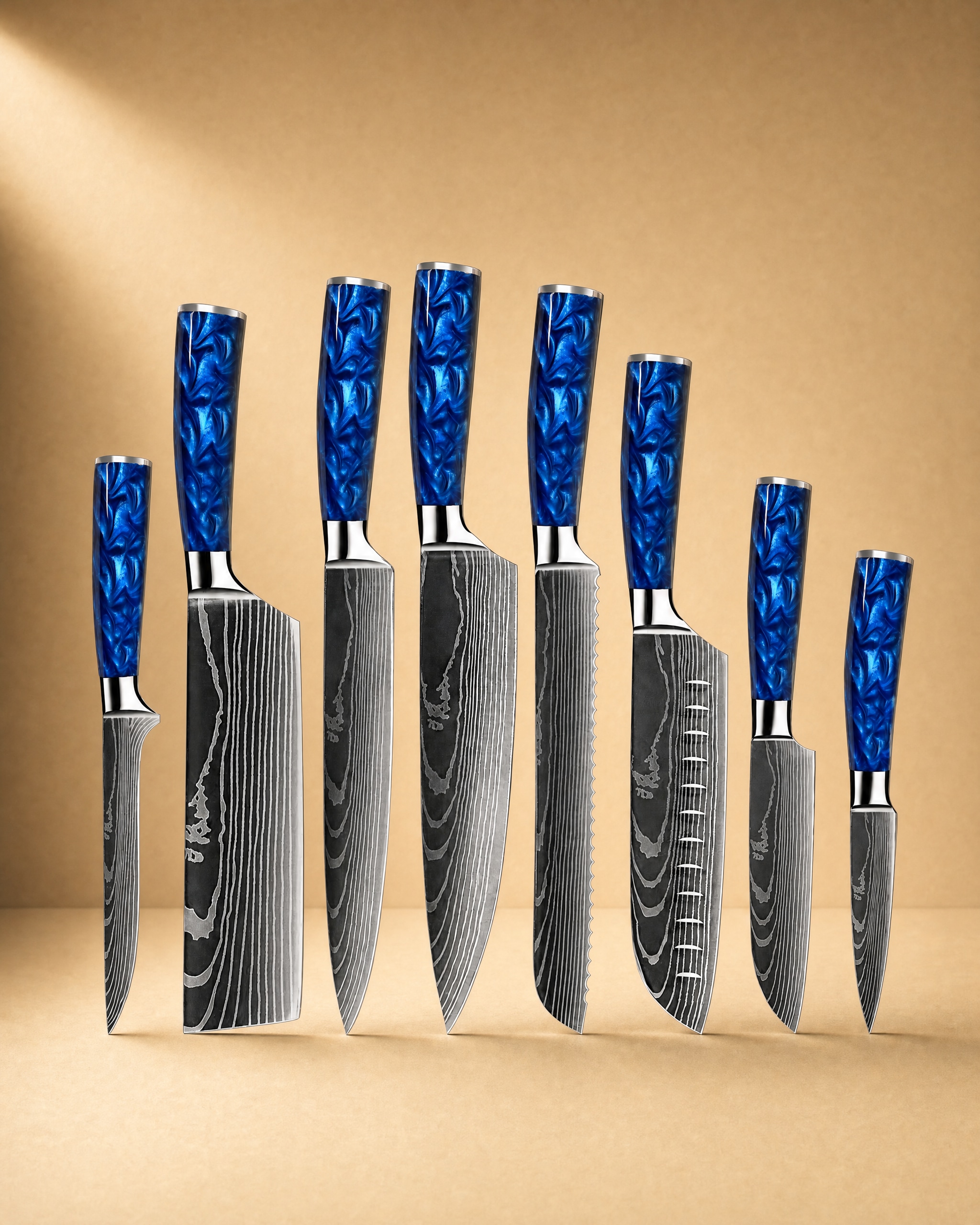 Shinano 信濃川 Damascus Pattern Stainless Steel Kitchen 8 Knife Set$199.99View product → covers that role, and you can see the full range in the knife shop. A board is not a knife, but the two work as a system. Buy a surface you can maintain, and buy knives you will actually care for.
Photography: engin akyurt via Unsplash.


