
Oxo Good Grips Carving and Cutting Board Reviewed

Most kitchen gear earns attention by being clever. A carving board earns it by being boring in the right ways: stable, easy to clean, and quiet under a knife. The OXO Good Grips carving and cutting board is one of the most familiar boards in American kitchens, and this OXO carving board review looks at why it works, where it does not, and how to get the most from it. If you are considering an OXO cutting board for a first real kitchen setup or replacing a warped board, the details below should help you decide.
What a carving board has to do
A board used for carving has a strict job. It has to hold a roast steady while you draw long slices. It has to catch juices before they reach the counter. It has to give the knife clearance so your knuckles do not hit the surface. And it has to survive hot drippings, salt, and repeated washing without turning into a science project.
A general cutting board has a different job. It needs flat area for onions and carrots, and a surface that will not punish a thin edge. The OXO Good Grips cutting board tries to do both jobs. That dual role is the source of its usefulness and its limits.
What the OXO Good Grips board gets right
OXO builds its reputation on small ergonomic decisions, and this board follows the same logic. The features you notice first are the ones that matter during a carve: a juice groove around the perimeter and a stable footprint that keeps the board from walking across the counter. Those details do more for a home cook than a decorative finish.
The board also has the right attitude for everyday use. It is not precious. You can set a hot roast on it, carve, wipe it down, and move on. For a tool that sees raw meat and cooked meat in the same week, that lack of ceremony is a feature.
The juice groove is not a gimmick
Carve a chicken on a flat board and you will see the problem. Liquid runs to the edge, over the side, and under the board. A groove catches that liquid before it reaches the counter. It also gives you a visual boundary for the carving area, which helps you keep the roast centered instead of chasing it toward the edge.
How it treats a knife
The surface is soft enough that a normal slicing motion does not instantly roll the edge the way glass or stone would. That is the baseline any board should meet. The rest is technique. If you scrape the edge across the board to push food aside, or chop with a heavy downward strike on a thin blade, you will dull the knife regardless of what it is sitting on. The board cannot save a bad habit.
For everyday maintenance, a few passes on a honing rod before you carve keep the edge aligned. For a fuller look at edge care, see our knife care guide. The short version: slice, do not scrape, and wash and dry the knife before you put it away.
Where the board asks you to compromise
No board is perfect, and this one has honest tradeoffs. Size is the first. A board large enough to hold a whole roasted chicken or a rib roast takes up real counter space, and it can be awkward to wash in a small sink. Wear is the second. Any polymer board will develop scratches over time, especially if you use it for heavy chopping. Those scratches are a cleaning issue more than a knife issue, but they are worth watching. Stability when wet is the third. If the board's edges are sitting in a puddle, it can slide. Dry the counter before you set it down.
None of these are deal breakers. They are the normal costs of a low maintenance board that you can use without ritual.

Polymer versus wood, without the drama
Wood boards are kinder to edges and they self-heal around small cuts. They also need oiling, careful drying, and a little attention. Polymer boards are easier to sanitize, easier to store, and less expensive to replace. Neither surface is automatically better. The right choice depends on how you cook and how much maintenance you will actually do.
If you carve a few times a month and want a board that can go in the sink without a second thought, polymer is the practical answer. If you keep a knife for decades and want the softest possible landing for the edge, wood is the traditional answer. The OXO board sits firmly in the practical camp.
Matching the board to the right knife
A board is only half of the carving equation. The other half is the blade. For a roast, a long, thin blade gives you clean slices with fewer sawing motions. The 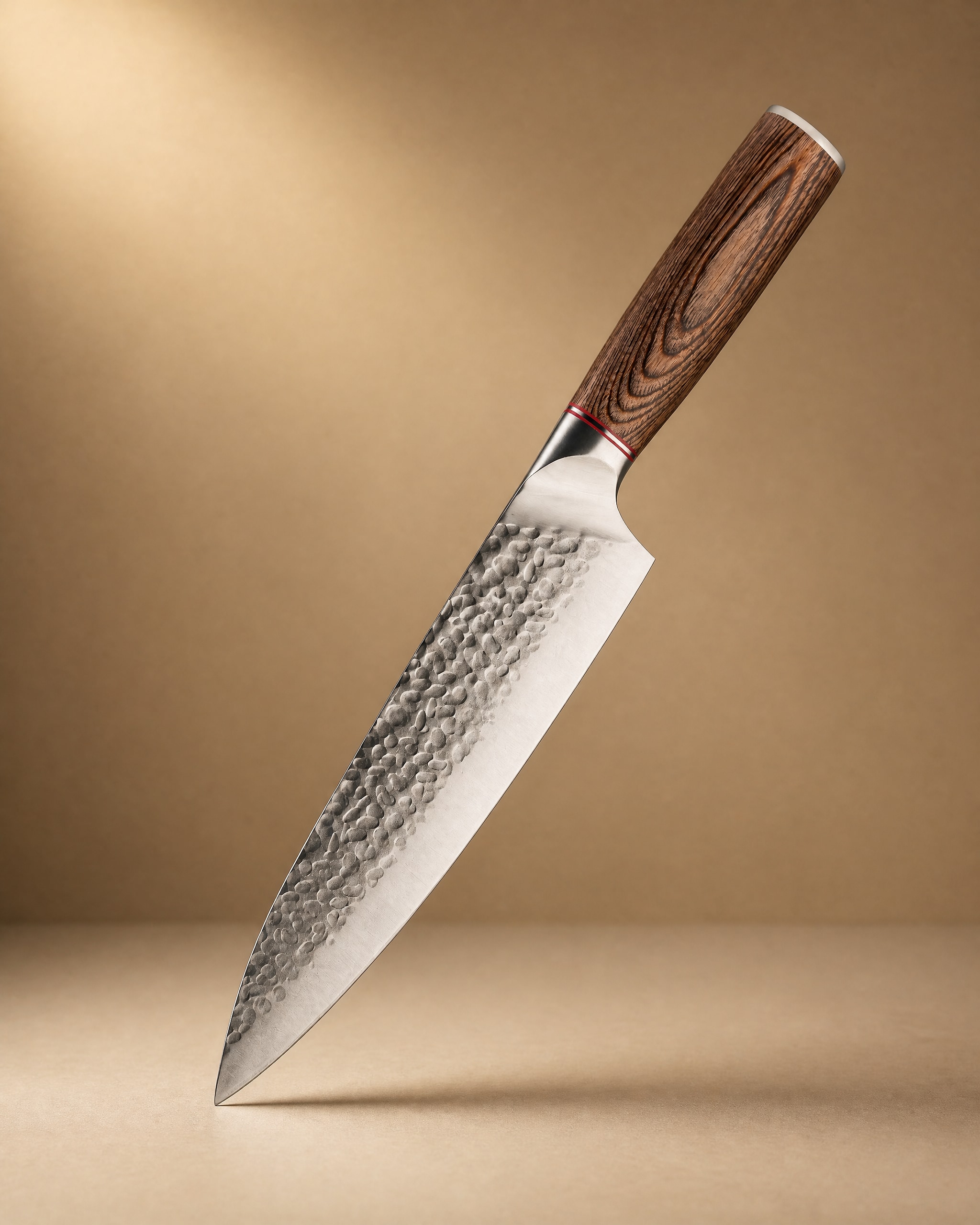 Akan 8'' Gyuto Knife 牛刀$64.99View product → is the kind of knife that makes a carving board feel purposeful: a gyuto profile with enough length to draw through a roast and enough height to handle vegetables on the same board.
If you prep vegetables before the meat goes on, a santoku is a natural fit. The 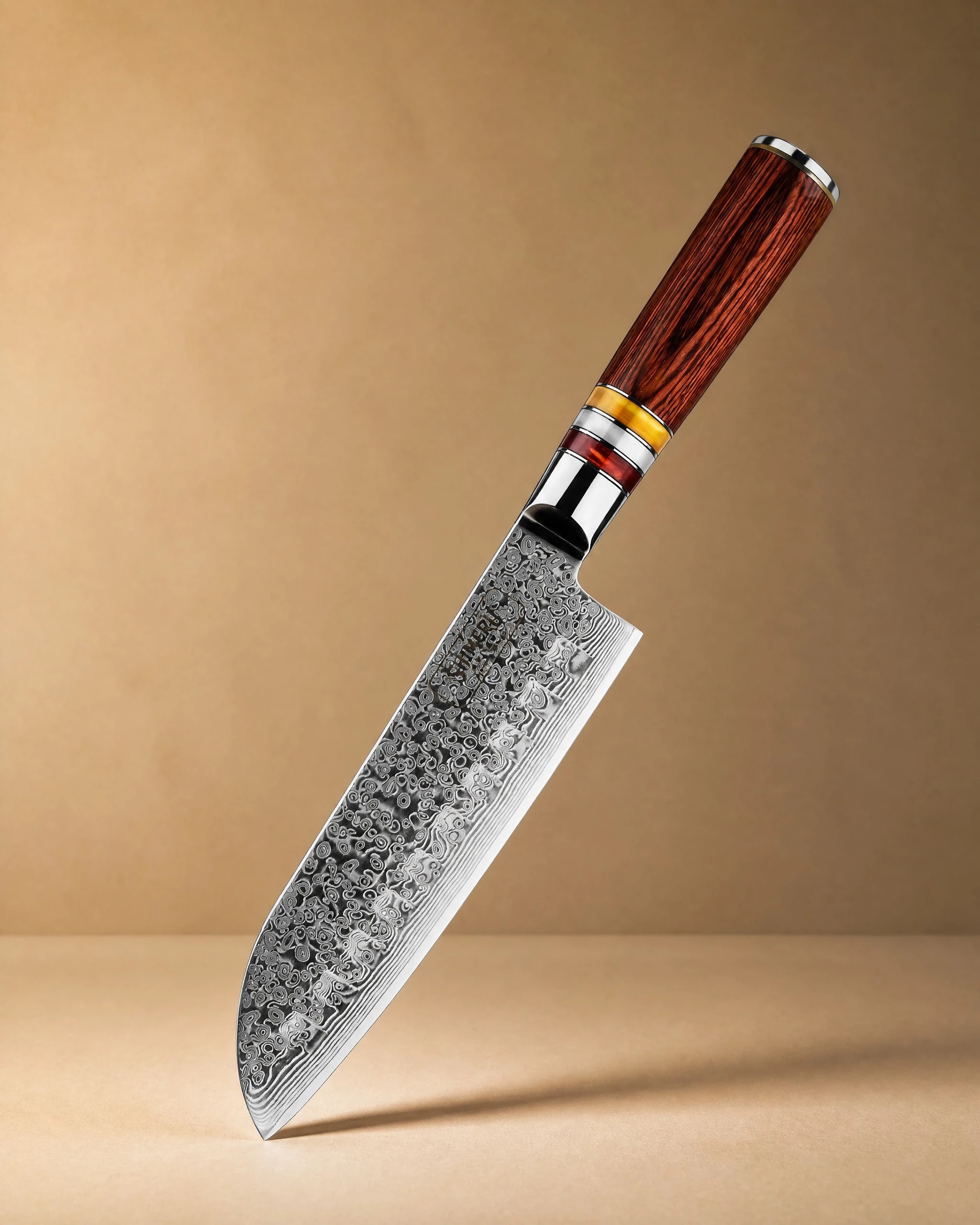 Hikari 光 7" Damacus Steel Professional Santoku Knife 三徳包丁$99.99View product → has a shorter profile that many home cooks find easier to control on a crowded board. Use the flat section for herbs and the tip for detail work, and keep the board clear so the knife has room to finish each cut.
Crusty bread is the other test. A bread knife needs a serrated edge and a long stroke so the teeth do the work. The 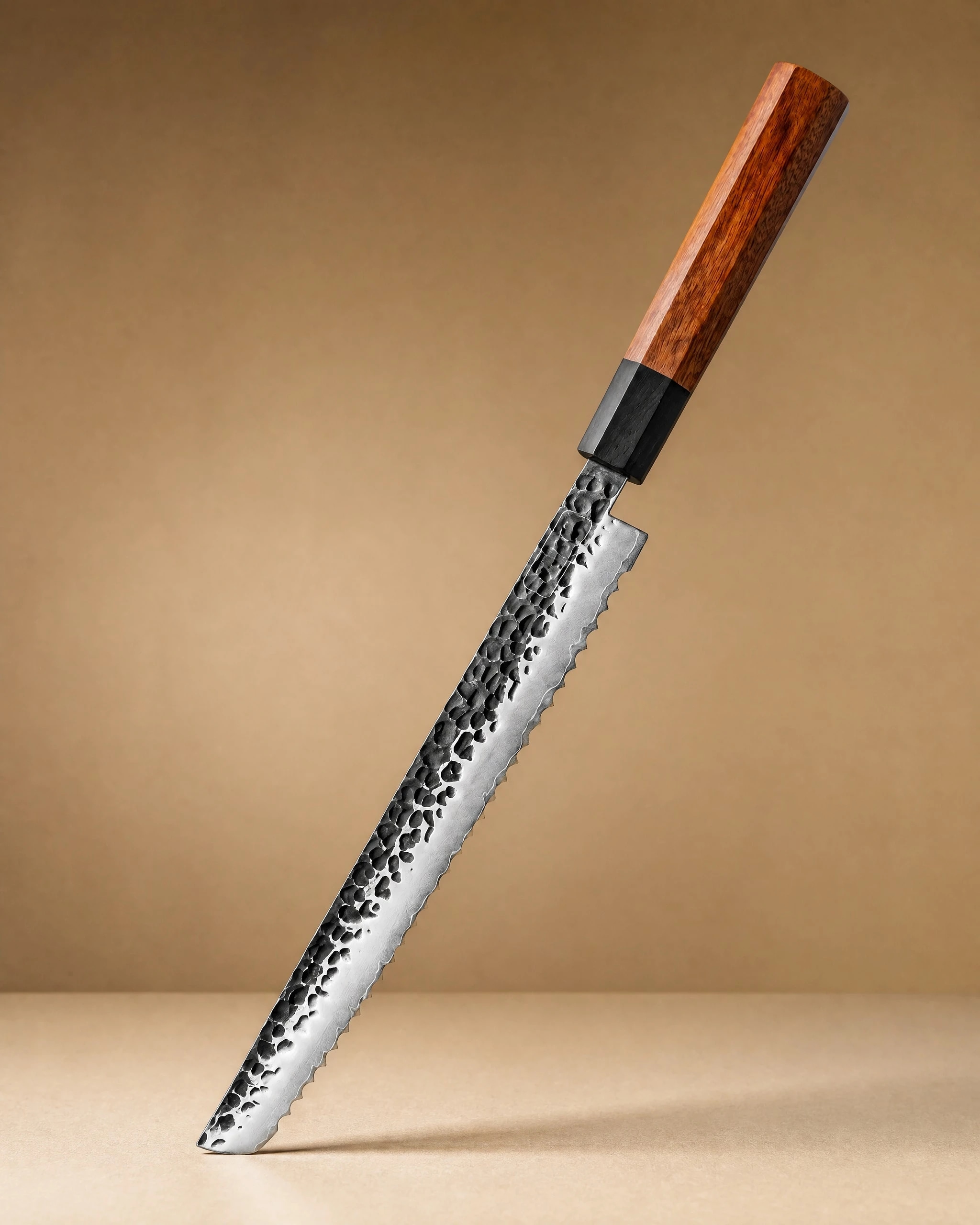 Rumoi 10" Japanese Bread Knife パン切りナイフ$79.99View product → is built for that job, and it is the knife to reach for when the board is already out and the roast is resting. Do not press hard. Let the serrations saw.
If you are outfitting a kitchen from scratch, the 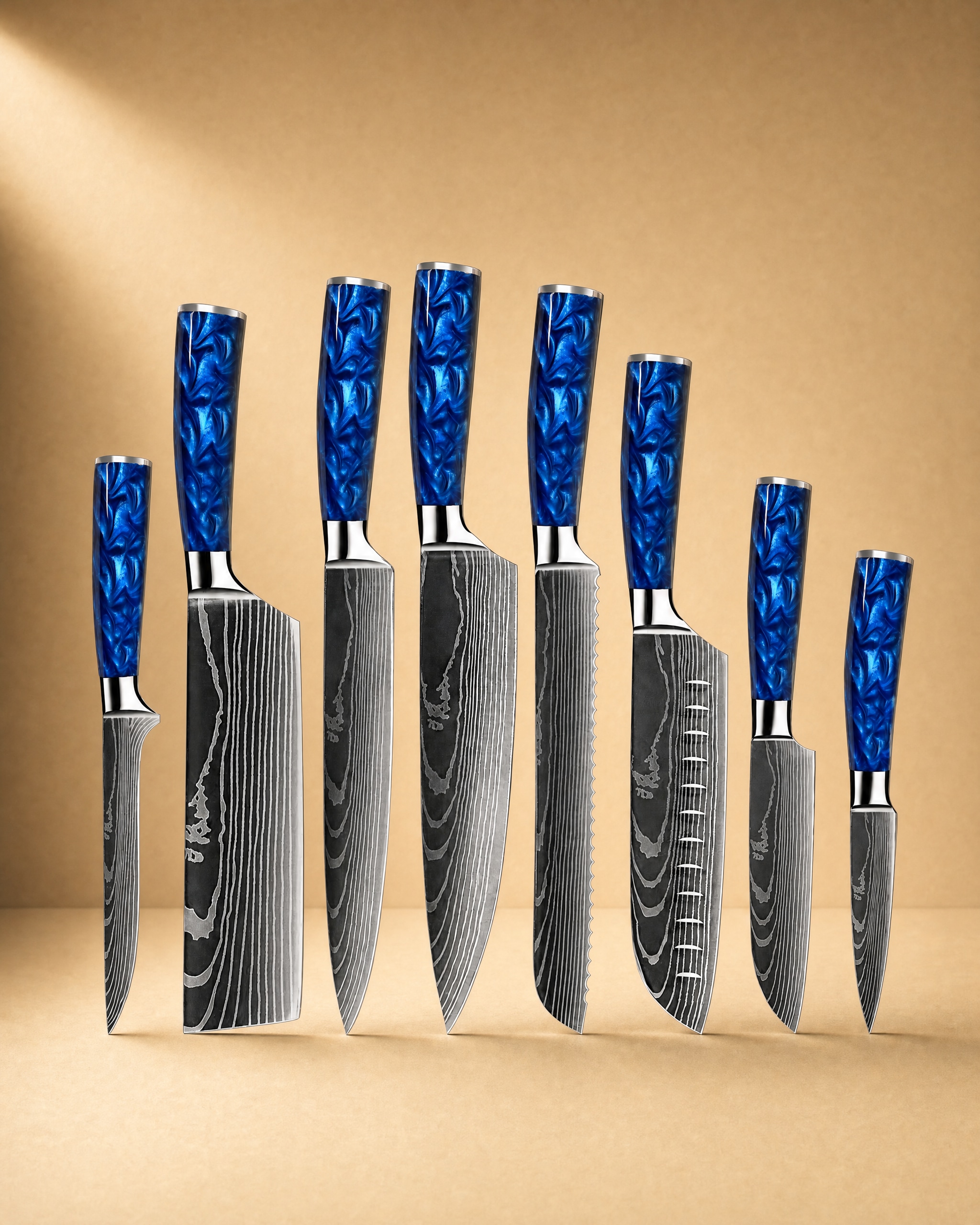 Shinano 信濃川 Damascus Pattern Stainless Steel Kitchen 8 Knife Set$199.99View product → covers the core tasks in one box. It is a sensible starting point if you want a consistent set rather than a drawer of mismatched blades. For more on selecting shapes and sizes, see our knife guide.
Cleaning and everyday care
Wash the board with hot soapy water after raw meat, and dry it standing on edge so air can reach both faces. If the manufacturer lists the board as dishwasher safe, follow that guidance, but do not assume every board in the line is the same. Check the care instructions that come with yours. For knives, hand washing and immediate drying remain the safest routine. The knife care guide covers the details without turning it into a project.
Size and workflow
Board size is a workflow decision, not a spec sheet contest. Measure the space between your sink and your stove, then measure your largest roasting pan. If the board cannot sit flat with room for the knife at the end of the stroke, it is too small for carving. If it covers the only counter you have, it is too large for daily prep. The OXO board is sized for a typical home roast, which is the right target for most cooks.
Who should buy it
This board makes sense for a home cook who carves a roast or a bird a few times a month and wants a surface that can go from raw prep to cooked meat with a quick wash. It also suits anyone who prefers low maintenance to a wood board that needs oiling and careful drying. It is a practical choice for a small kitchen that cannot dedicate counter space to a display board.
It is a less obvious fit for three types of cooks. If you do heavy cleaver work, you want more mass and a different surface. If you want a board that stays beautiful enough to leave out, polymer will not stay beautiful. And if you are chasing the last few percent of edge retention, a soft wood board is the more traditional answer. Those are preferences, not failures.
The verdict
The OXO Good Grips carving and cutting board does the job it is designed to do. It holds a roast, catches the juice, and gives you a stable surface for everyday prep. It does not pretend to be a heritage wood board, and it does not need to be. If you want a board you can use hard, wash, and put away without a ritual, it is a reasonable buy.
Pair it with a knife that suits the work, keep the edge maintained, and the board will stay out of your way. That is the highest compliment a cutting surface can earn. Browse the full range at our knife shop when you are ready to match the board to a blade.
Photography: Sergey Kotenev via Unsplash.

