
End Grain Cutting Boards: Benefits and Buying Tips

A cutting board is the one surface your knives touch every day, and it shapes how long an edge lasts more than most cooks expect. End grain boards cost more, weigh more, and ask for a little maintenance, so it is fair to ask whether they earn their place. Here is an honest look at what they do well, where they fall short, and how to choose the best end grain cutting board for the way you actually cook.
What End Grain Actually Means
Every piece of lumber has three faces. The wide surface is face grain, the narrow side is edge grain, and the cross section, where the rings show, is end grain. Most boards are built edge grain up, with long strips glued side by side. An end grain board stands those strips on their ends, so the surface you cut on is a field of small squares, each one the cross section of the tree.
That arrangement costs more to build. The wood is cut into short blocks, flipped, glued in one direction, planed, then glued again to form the checkerboard. More steps, more waste, more clamps, more time. You are paying for labor as much as for material, which is why the best end grain wood cutting board sits a tier above a comparable edge grain board in price.
None of this makes edge grain a bad choice. A well built edge grain maple board is cheaper, lighter, and easier to move from counter to sink. It simply asks more of your knife edges over time. The decision is a trade between cost and convenience on one side, and edge life and feel on the other.
Why the Surface Feels Different Under a Knife
Face and edge grain present long, stiff fibers to the blade. End grain presents those fibers head on, like a bundle of straws pointed at the ceiling. A knife entering that surface pushes fibers apart instead of slicing through them, and the wood closes back up as the blade withdraws. That is the whole idea behind the self-healing reputation.

In practice this means less rolling of the edge, less stropping between sessions, and a surface that shows fewer scars over years of use. It is not magic. A thin, hard steel knife used with force will dull on any board, and no board will fix a habit like scraping the edge across the surface to push chopped onion aside.
The Real Benefits
The first benefit is edge retention. If you cook daily, the difference between a board that lets an edge last two weeks and one that lets it last three is real money, because every sharpening removes steel. Less sharpening means a longer life for the knife. If you own something like the 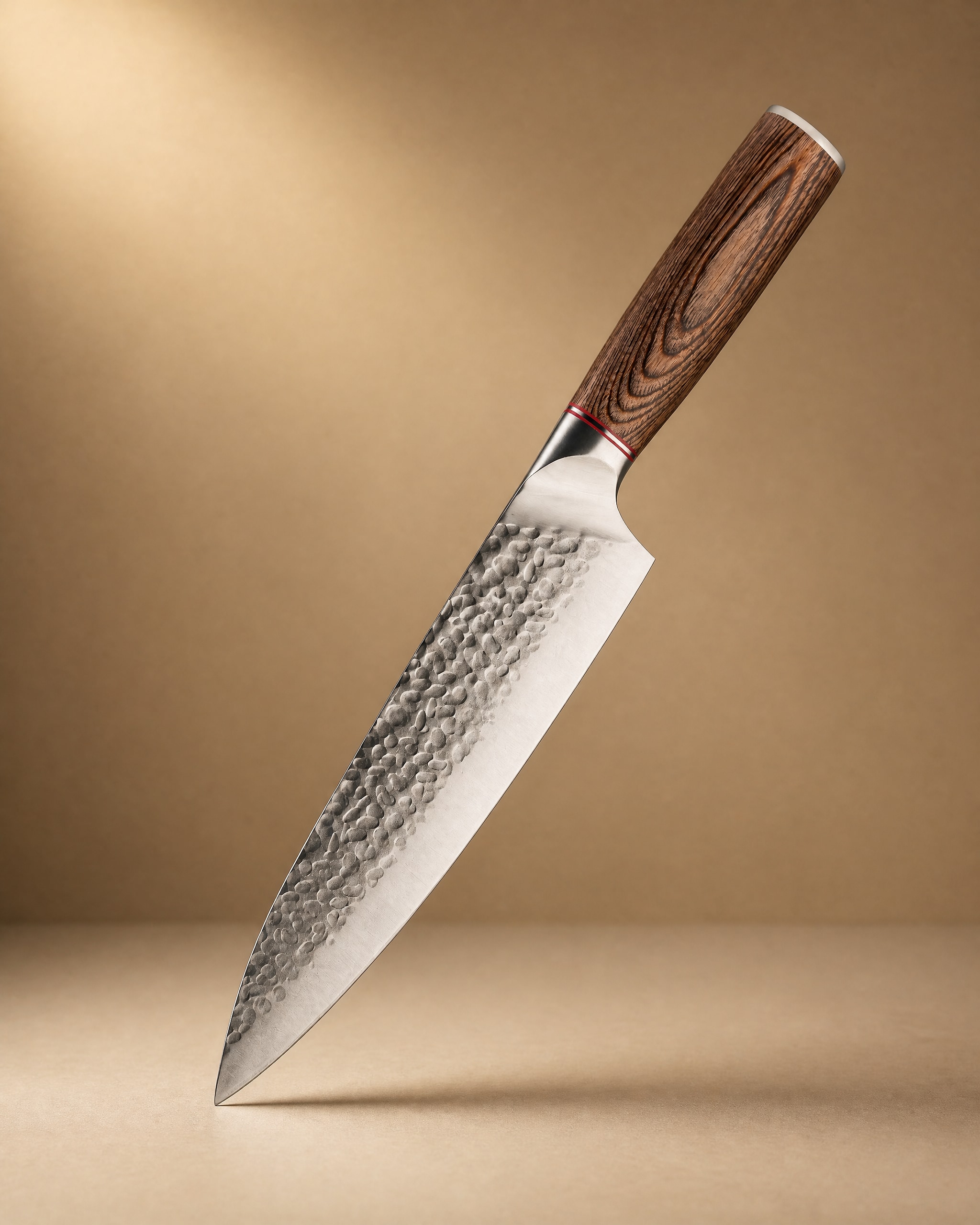 Akan 8'' Gyuto Knife 牛刀$64.99View product → and want that thin edge to hold, a forgiving wood surface is a sensible pairing.
The second is feel. End grain absorbs some of the impact, so the knife does not ring or skid, and heavy chopping feels less like hammering. The third is longevity. A well built end grain board can be sanded back into service several times over its life, which is not true of thin edge grain boards or composite surfaces.
The fourth is looks. It is honest to admit that part of the appeal is visual. A maple and walnut checkerboard on the counter is a nice object, and a board you enjoy using is a board you take care of.
Where End Grain Falls Short
Weight and price are the honest downsides. A thick end grain board is heavy, awkward to carry to the sink, and not something you want to lift one handed. It also needs oiling more often than edge grain during its first year, and it can crack if it is left wet or stored next to a heat source.
The antibacterial claim deserves a caveat. Wood has tested better than plastic in several studies, but the difference between end grain and edge grain on that front is not well established. Treat any board that has held raw poultry as contaminated and wash it properly. If you cook a lot of meat, a second, cheaper board for protein is a good habit.
Cheap end grain is also worse than good edge grain. A budget board with thin blocks, weak glue joints, and soft wood will cup, split, and shed glue lines within a year. Construction quality matters far more than the label on the box.
The Best Wood for an End Grain Cutting Board
Hard maple is the standard, and for good reason. It is dense, closed grain, light in color, and takes oil well. If you want one answer to the question of the best wood for end grain cutting board construction, maple is it. Cherry and walnut are common as accent strips. Both are softer than maple, fine in narrow bands, less ideal as the entire cutting surface. Beech and ash work but run more open. Birch is acceptable.
Avoid softwoods like pine and cedar, which dent and splinter. Avoid open pore species like red oak, which can trap moisture and food. Avoid tropical exotics unless the species is named, since some contain silica that dulls edges quickly. Bamboo is not end grain at all, it is a grass pressed into boards, and it is hard on edges. Skip anything described only as hardwood with no species on the label.
Construction Details Worth Checking
Look at the blocks. Small, uniform squares with tight, even glue lines suggest careful work. Large blocks with thick glue lines are more likely to move and separate. Check that the board has feet or a recessed base so air can move underneath, and check the thickness. An inch and a half is a reasonable minimum for a board you plan to chop on. Thicker boards are heavier but more stable.
Ask about the finish. A board should arrive oiled with food grade mineral oil or a mineral oil and beeswax blend, never varnish or lacquer. Run a hand along the edges, since a chamfer or roundover is easier on your palms when you lift it. If the maker offers a juice groove, decide whether you want one. Grooves help with a resting roast and get in the way when you scrape.
Size and Weight
Measure your counter before you fall in love with a board. One that lives on the counter permanently can be large, and 18 by 24 inches is generous but realistic in many kitchens. A board you lift and store should be smaller, closer to 12 by 18. Thickness adds weight fast, so a two inch maple board is seriously heavy. Pick a size you can actually handle with wet hands.
Keeping It Alive
Wash with mild soap and warm water, rinse, and dry standing on edge so both faces dry evenly. Never soak it, never put it in the dishwasher, and never leave it flat on a wet counter. Oil it monthly for the first six months, then whenever the surface looks pale or dry. A beeswax conditioner once in a while helps seal it. Light scratches sand out with fine paper and a fresh coat of oil.
Climate matters too. In a dry winter house or near a forced air vent, a board loses moisture quickly and can open small cracks at the joints. Keep it away from the radiator, and oil more often in the cold months.
Your knives deserve the same attention. The knife care guide covers sharpening, honing, and storage in detail, and it pairs well with a board that keeps edges intact.
Matching the Board to Your Knives
Think about how you cut. If you rock the knife, as many cooks do with a chef knife, a large end grain board gives you room and a forgiving surface. A santoku like the 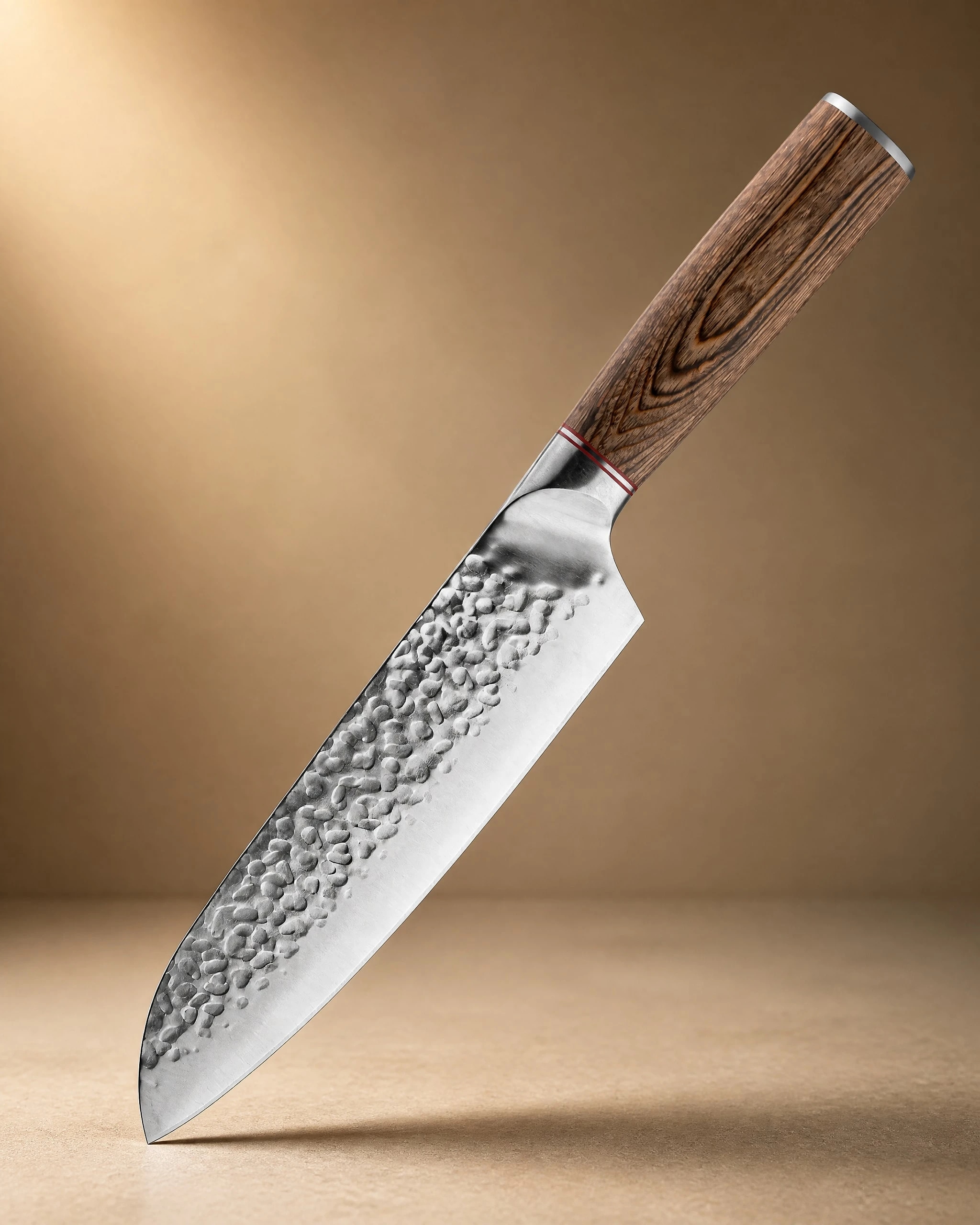 Raikou 6.5" Santoku Knife 三徳包丁$64.99View product → works best with a downward push cut, and a board with a little give keeps that thin edge in shape. For bread, a serrated blade needs a surface that will not chip it. The
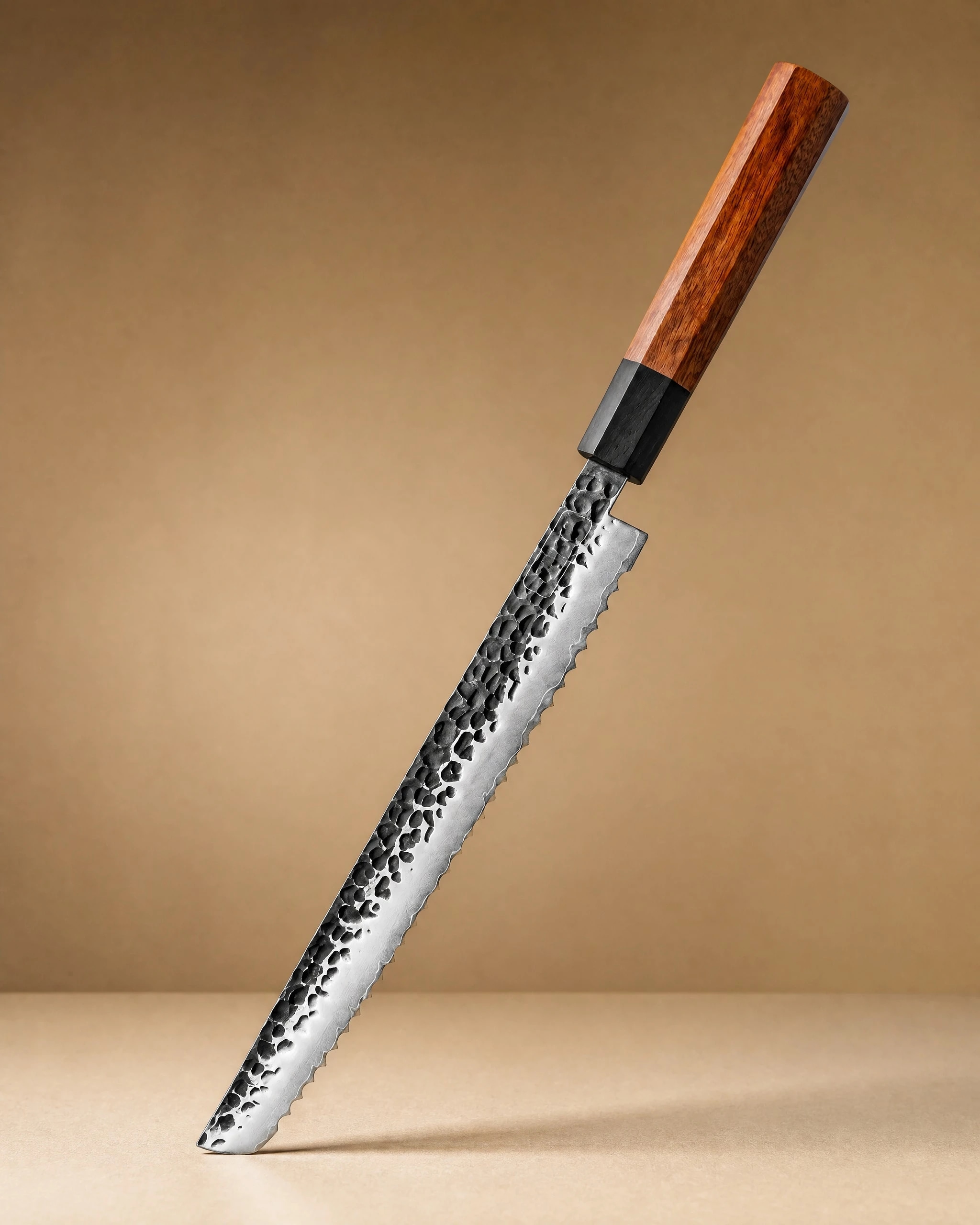 Rumoi 10" Japanese Bread Knife パン切りナイフ$79.99View product → is happiest on wood, not glass or stone.
If you are outfitting a kitchen from scratch, the 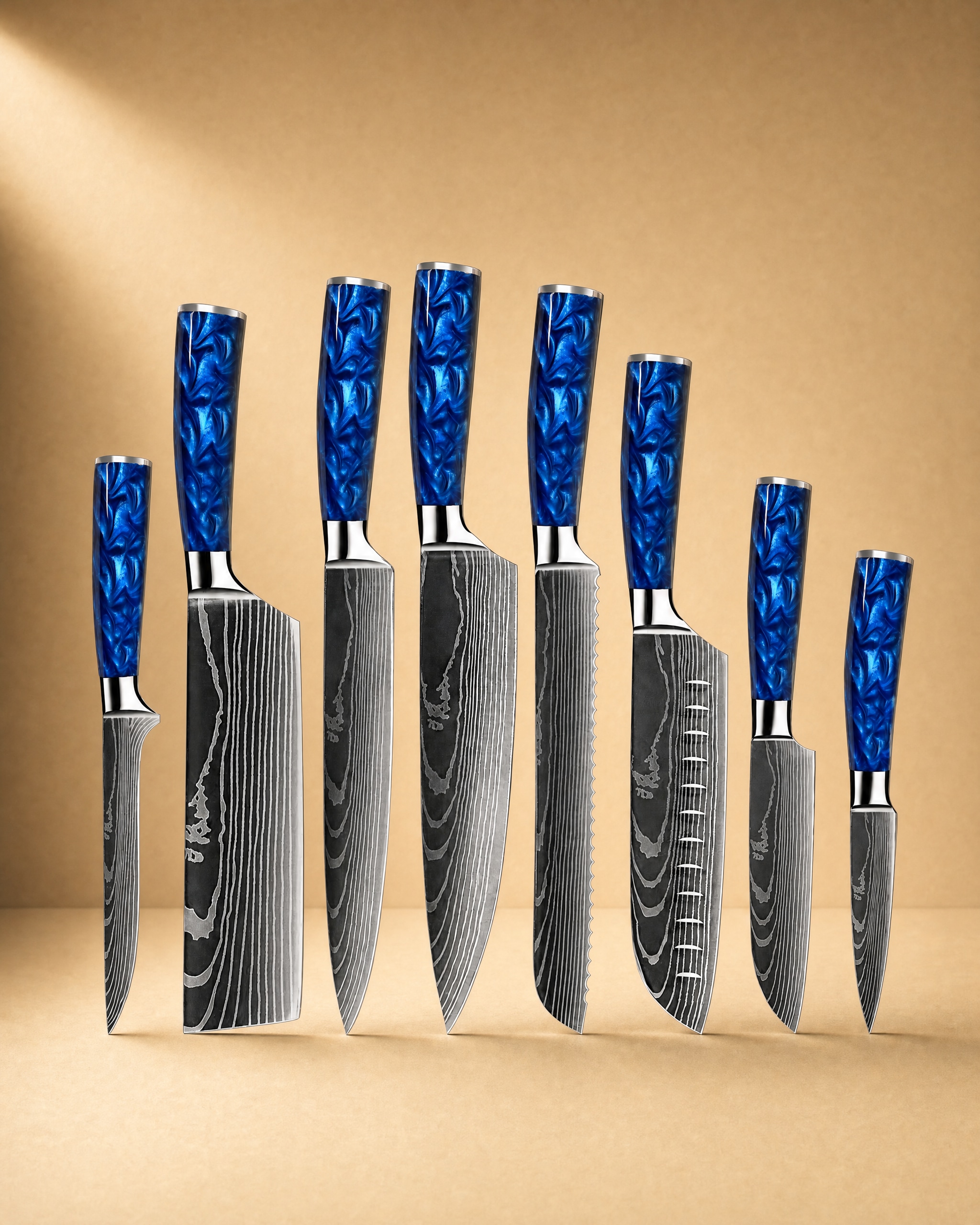 Shinano 信濃川 Damascus Pattern Stainless Steel Kitchen 8 Knife Set$199.99View product → covers a lot of ground, and one good board under all of it makes more sense than three mediocre ones. If you are still choosing blades, the knife guide walks through shapes and steel types, and the full knife shop has everything in one place.
A Short Buying Checklist
- Species named, with hard maple preferred for the main surface
- Small, uniform blocks and tight glue lines
- At least 1.5 inches thick, with feet or a recessed base
- Food grade mineral oil finish, no varnish or lacquer
- Chamfered edges that are comfortable to grip
- A size that fits your counter and your lifting ability
- A clear return policy, because wood moves and defects show up early
None of this is complicated. Buy a board with named hardwood, honest thickness, and careful construction, oil it when it looks thirsty, and keep it dry. Do that and the best end grain cutting board in your kitchen will outlast several knives. If you want help pairing a board with the blades you already own, our team is glad to talk it through.
Photography: Pawel Wertel via Unsplash.

