
Best Japanese Knife Block Sets

A knife block is the least glamorous purchase in a kitchen, and it is often the one that decides whether your Japanese knives stay sharp for years or pick up chips in months. Japanese blades are thinner, harder, and lighter than the German knives many US cooks learned on, and the block you already own was almost certainly cut for a different animal. This guide walks through what actually matters in a block sized for Japanese knives, and which knives are worth building one around.
Why a Standard Block Usually Fails a Japanese Knife
Walk through the knife aisle of any big box store and you will see blocks with wide, deep slots angled back at maybe 15 degrees. Those are sized for a 10 inch chef's knife with a thick spine and a full bolster, the kind of blade that shrugs off being dropped into a slot. A Japanese gyuto is a different shape entirely: narrow spine, thin behind the edge, usually a lighter handle, and a profile that tapers to a fine point.
Put that knife in the wrong block and one of three things happens. The blade rattles, so the edge taps against the wood every time a door or drawer moves. The knife sits too deep, so the tip contacts the bottom of the slot. Or the slot is too tight at the heel, which means you are scraping the finish every time you pull it out. None of these ruin a knife in the first week. All of them add up.
The other factor is hardness. Japanese knives are commonly heat treated harder than their European counterparts, which is what gives them their edge retention. Hard steel does not roll when it meets a hard surface, it chips. An edge that contacts wood at a bad angle is a small problem. An edge that contacts another blade, a ceramic rod left in the block, or the bottom of a slot is a bigger one.
What to Look For in a Knife Block for Japanese Knives
You do not need an expensive block. You need one that respects the geometry of the knives going into it. These are the points that matter most:
- Slot width that matches a thin spine, so the blade sits upright instead of leaning to one side
- Enough depth that a long blade rests on its heel and back, never on the tip
- Angled or horizontal slots for anything over about 9 inches, because a vertical slot that tall is a tipping hazard
- A base heavy enough that pulling a knife out one handed does not move the block
- No ceramic honing rod parked in the middle of the block, since it is the fastest way to chip an edge you just finished
Wood type matters less than people think. Maple, walnut, acacia, and bamboo all work. What matters is that the slots are cut cleanly, without splinters or a rough interior that can catch a thin edge. If you are buying online, look for a block described as holding knives by the blade rather than pinching them at the bolster.

Start With the Knife You Use Every Day
Most people do not need eight knives. They need two or three good ones and a block with room to grow. The 8 inch gyuto is the workhorse of a Japanese kitchen, the equivalent of a Western chef's knife but lighter and usually with a flatter profile toward the heel. If you cook most nights, that is the blade doing most of the work.
Two solid options for that role are 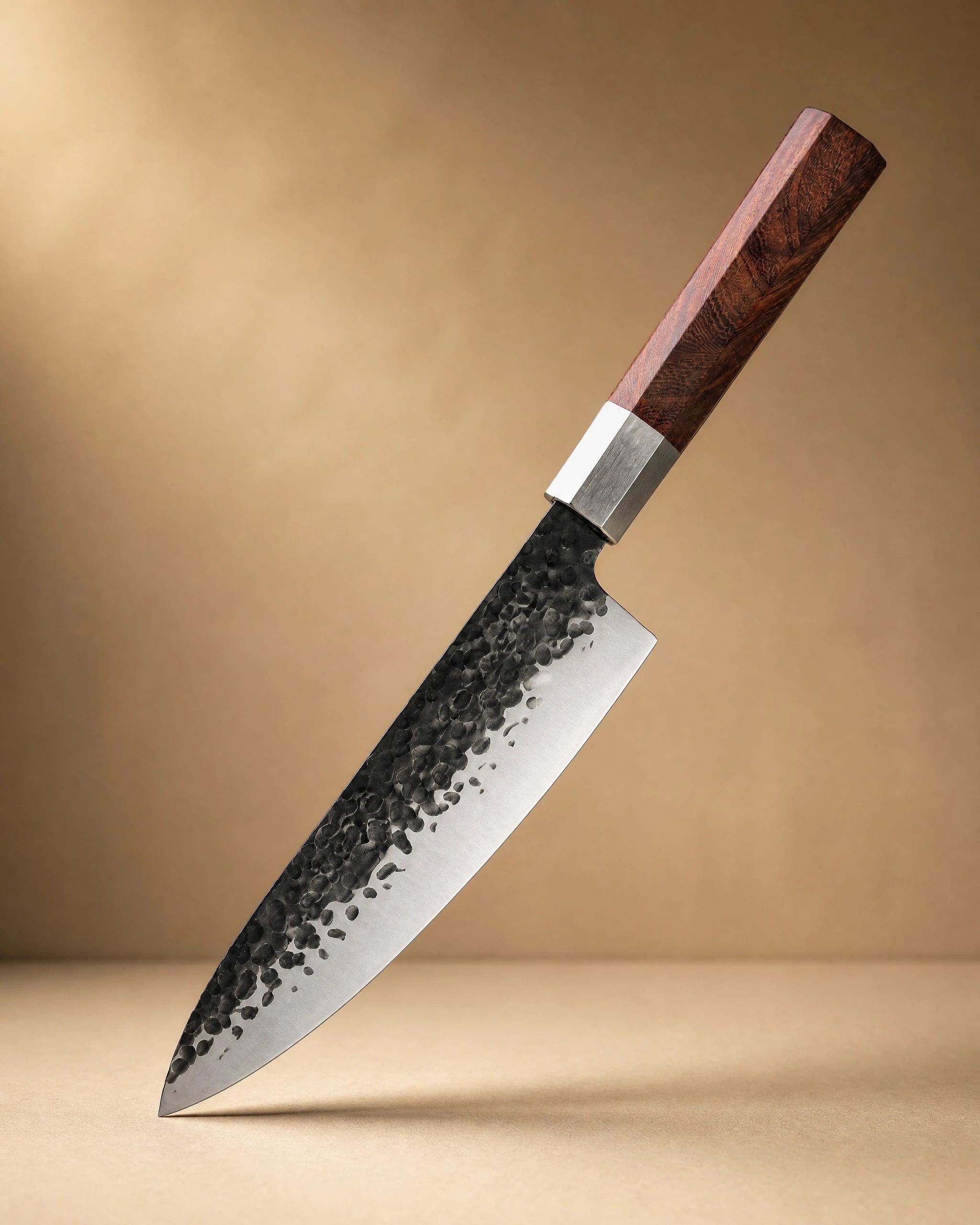 Sendai 8" Steel Gyuto Knife 牛刀$49.99View product → and
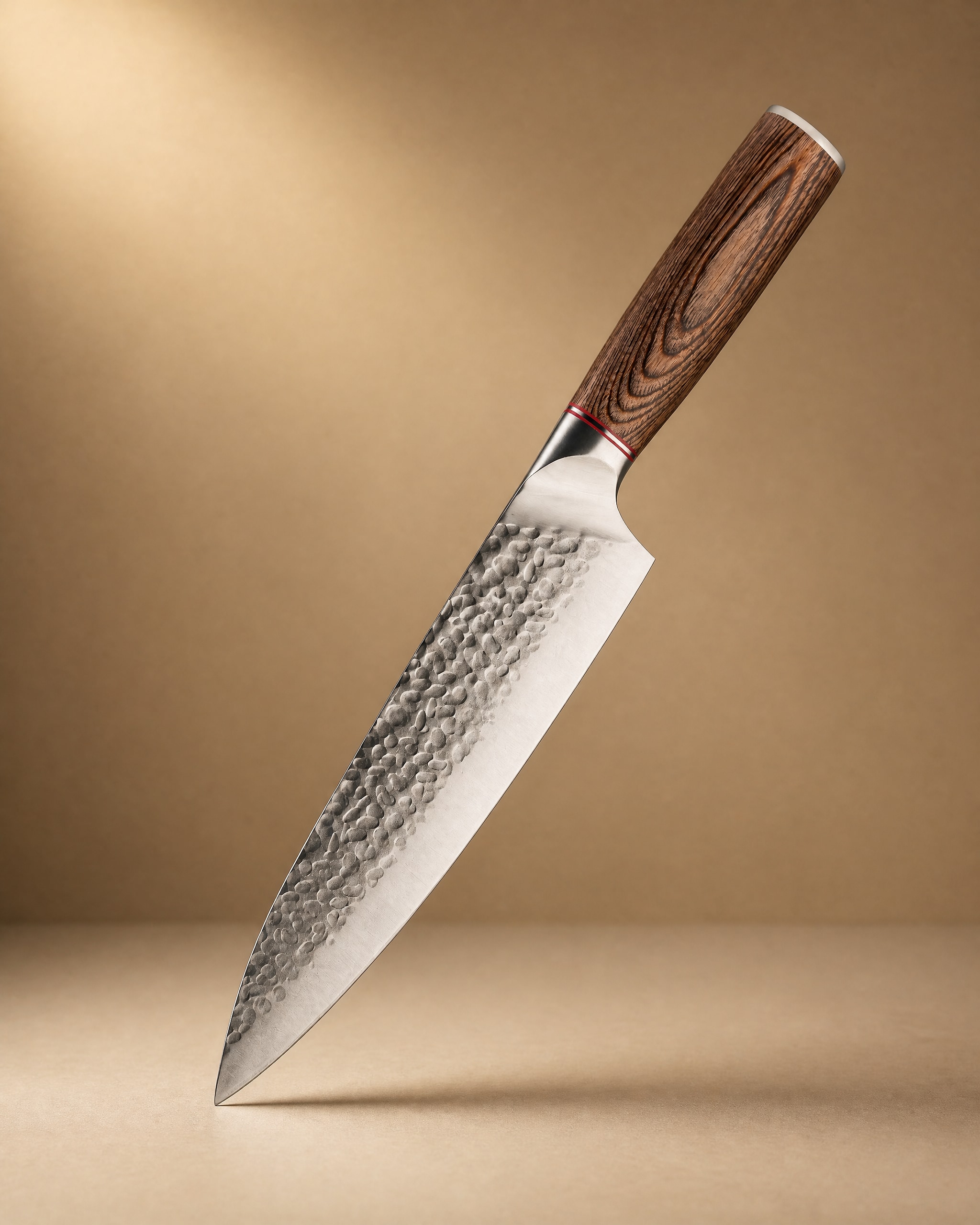 Akan 8'' Gyuto Knife 牛刀$49.99View product →. Both are 8 inch gyutos built for everyday prep, and either one is a reasonable first Japanese knife. The difference between them comes down to finish and handle feel, so if you are deciding between the two, think about which one you would rather hold through twenty minutes of onion dicing.
Where a Bread Knife Earns Its Slot
A serrated knife is the one blade people underestimate. It is what you reach for with crusty bread, tomatoes, and anything with a tough exterior and a soft interior. A good serrated knife does the cutting with the teeth, not with pressure, which means it needs almost no downward force and it will not crush what you are slicing.
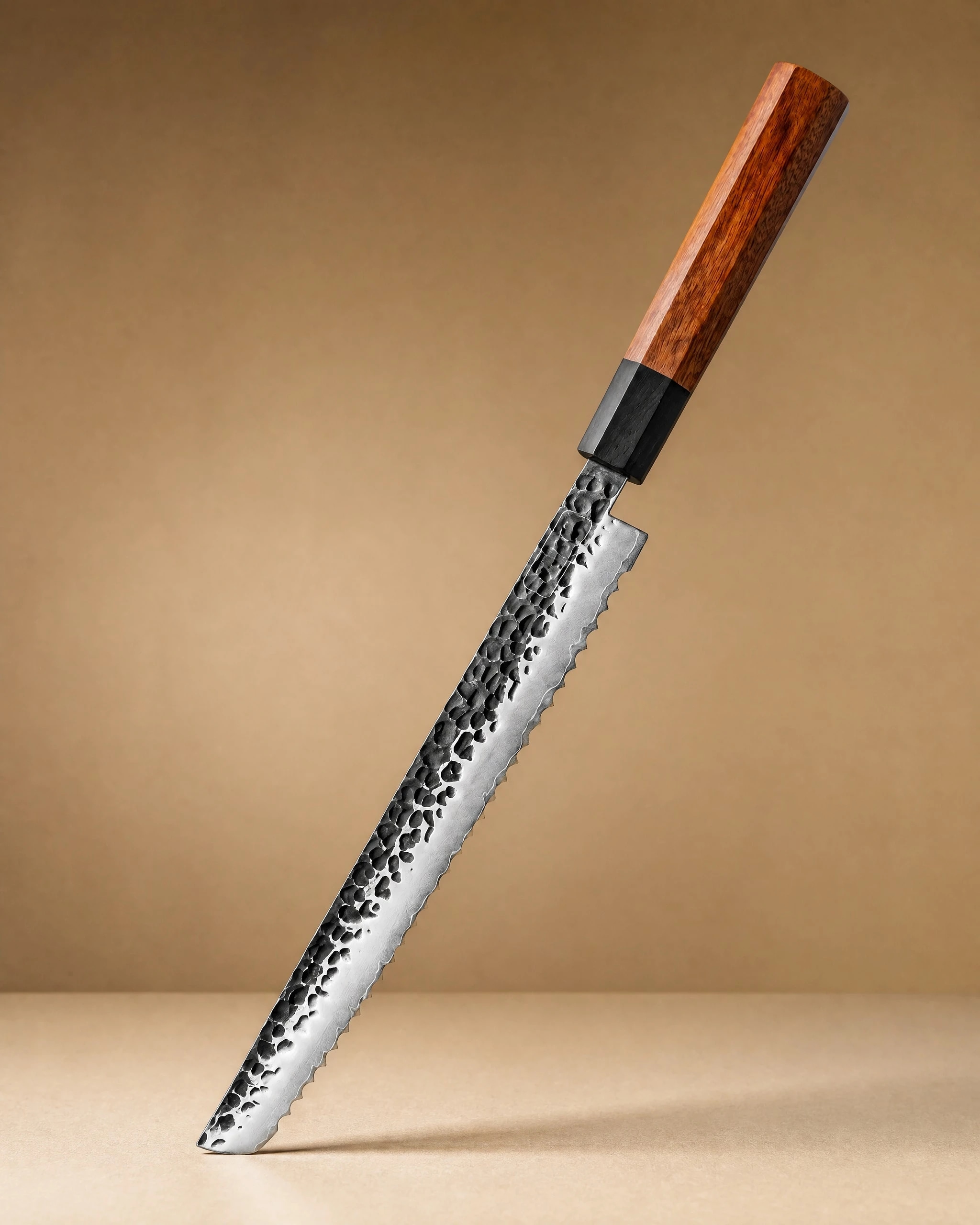 Rumoi 10" Japanese Bread Knife パン切りナイフ$59.99View product → is a 10 inch bread knife, longer than most of what you will find in a typical set. That length matters more than it sounds. A longer serrated blade lets you complete a slice in one stroke instead of sawing back and forth, and one stroke is what gives you a clean cut instead of a ragged one.
When a Full Set Makes More Sense
Buying one knife at a time is the advice most knife people give, and it is usually right. You learn what you actually reach for, and you avoid paying for a slicer you never use. There is a case for the other approach though, and it is a plain one: if you are outfitting a kitchen from nothing, or replacing a worn out block with matching knives, a set gets you there in one purchase and usually at a lower total cost.
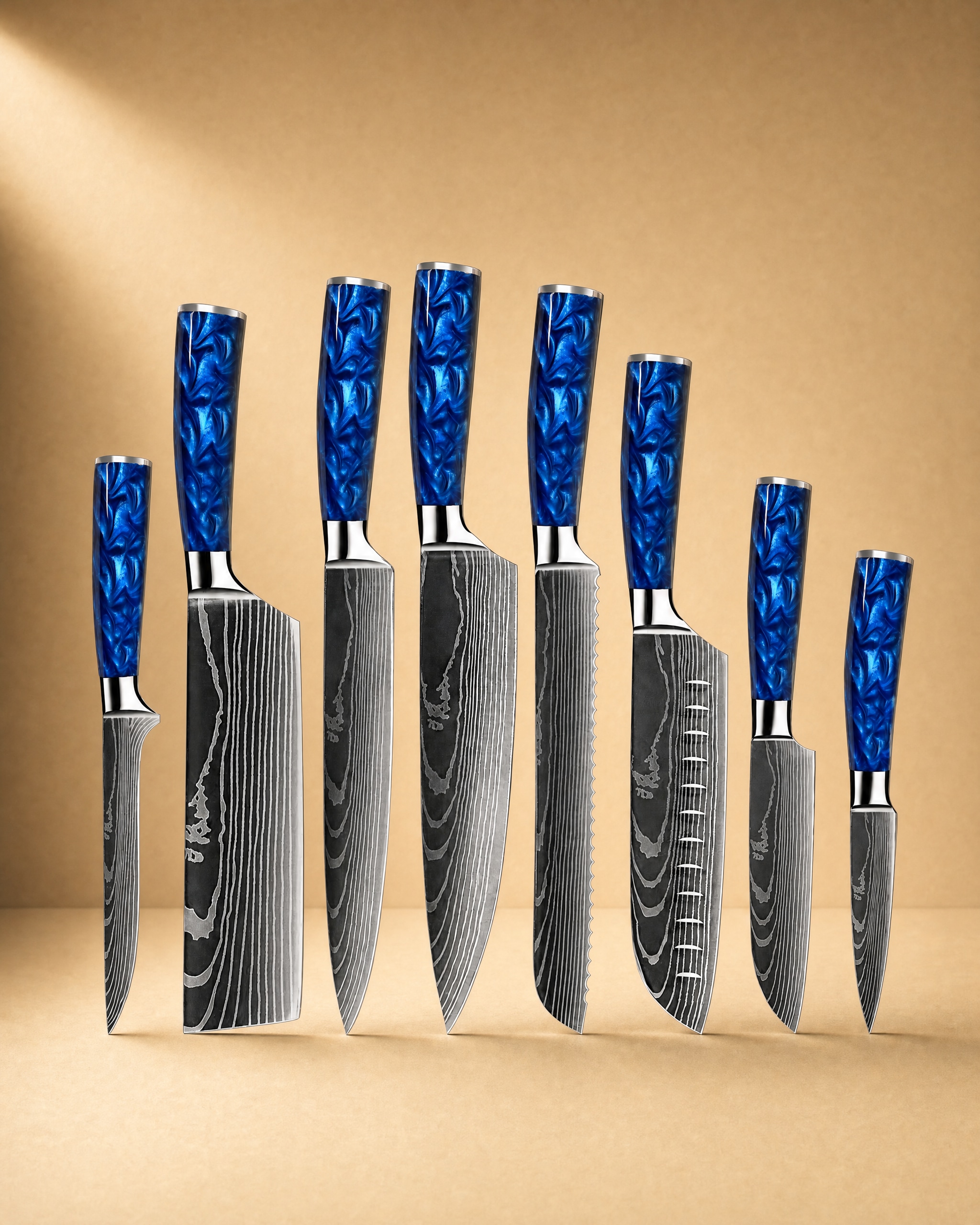 Shinano 信濃川 Damascus Pattern Stainless Steel Kitchen 8 Knife Set$149.99View product → is an 8 piece set with a Damascus pattern stainless steel finish. A set like this covers the core tasks in a home kitchen and pairs with a block designed for those exact knives, which solves the slot geometry problem before you ever have to think about it. If you want one decision instead of six, that is the appeal.
Open Blocks, Magnetic Strips, and Drawer Storage
Not everyone wants a block. Magnetic strips keep knives visible and off the counter, and they work well for thin Japanese blades because the flat side of the blade contacts the magnet. The catch is that a strip needs a wall with nothing behind it, and a hard knock can send a knife to the floor.
Drawer inserts are the safest option for edge retention, since the knife lies flat and nothing touches the edge. The downside is that flat storage eats drawer space and you cannot see what you have. If you have a spare drawer and a house with kids or pets, it is worth considering.
A counter block is the middle ground: visible, stable, and easy to load one handed. For a Japanese knife with a thin spine, look for a block with slanted slots, since they hold a blade by gravity rather than friction.
How Many Slots Do You Really Need
Count the knives you use in a normal week. For most home cooks that is a gyuto, a paring knife, a serrated knife, and maybe a petty. That is four. Add a slicer or a nakiri if you break down large cuts or cook a lot of vegetables, and you land at six.
A block with twelve slots and four knives is not a problem, as long as the empty slots hold whatever you add later without letting it rattle. A block with four slots and six knives is a problem, because the extras end up loose in a drawer with their edges touching.
Keeping the Set in Good Shape
Storage is half of knife maintenance. The other half is what you do at the board. Hand wash and dry immediately, do not leave anything sitting wet, and put the knife away dry. If you want the full routine, our knife care guide covers sharpening angles, honing, and what to do about rust spots.
One habit worth building: never put a knife into the block wet. Moisture trapped in a slot is how you get a swollen block and a spot of surface rust on a blade that was otherwise perfectly fine. Thirty seconds with a towel prevents both.
Choosing Your Setup
If you are still deciding what belongs in the block, start with our knife buying guide for a plain explanation of blade shapes and what each one is actually for. Once you know the shapes you want, you can browse the full range on our product page and match a block to it.
The short version: buy a block sized for thin blades, start with the gyuto you will use daily, add a serrated knife if you eat bread or tomatoes, and only add pieces you have a reason for. A block is not a display case. It is a tool that keeps a hard, thin edge out of trouble between uses, and a modest block that fits properly will do that better than an expensive one that does not.
Photography: Richard Iwaki via Unsplash.


