
Santoku Knife Uses and Buying Guide

The santoku is one of the most recognizable knives in a Japanese kitchen. Its name translates to three virtues, referring to its ability to slice, dice, and mince. For many home cooks in the US, a santoku has become the first Japanese knife they buy, and often the one they reach for every day. This guide covers what a santoku is for, how it differs from a chef knife, and what to look for when you buy one.
The Three Virtues of a Santoku
The word santoku means three virtues. Different sources describe them slightly differently, but they generally refer to slicing, dicing, and mincing. That naming is a useful reminder of what the knife is designed to do. It is not a heavy cleaver, and it is not a flexible fillet knife. It is a middle-weight, all-purpose blade for clean, controlled cuts.
Because the blade is tall, you can use the full length for scooping cut food from the board to the pan. That tall profile also gives you more control when you chop. The flat section near the heel is ideal for push cuts. The curved front section allows a gentle rock for herbs and garlic.
What a Santoku Knife Is For
The santoku knife purpose is straightforward: it is an all-purpose prep knife. It handles vegetables, fruit, boneless proteins, and herbs with ease. The blade is typically shorter than a Western chef knife, which makes it nimble on a cutting board. The profile is taller, so your knuckles clear the board when you chop. The tip is sheepsfoot style, meaning it drops down rather than sweeping up to a point. That shape makes it good for push cuts and rocking, though less ideal for detailed tip work.
Common santoku knife use includes slicing cucumbers, dicing onions, mincing garlic, cutting chicken breasts, and portioning fish. It is not a cleaver, and it should not be used on bones or frozen food. Treat it as a precision prep tool, not a heavy-duty chopper.
The Santoku Blade Explained
The santoku blade is defined by its wide, flat profile and a spine that runs straight before curving down to the tip. Many santoku knives have a granton edge, which is a series of small dimples or hollows along the side. These dimples reduce friction and help food release, which is useful for potatoes, cucumbers, and cheese. The blade is usually thinner behind the edge than a German chef knife, so it cuts with less resistance. That thinness also means you should avoid twisting or prying with it.
Steel choice matters. Most santoku knives are made from high-carbon stainless steel, which balances edge retention and corrosion resistance. Some are clad with softer stainless for durability. The handle can be Western style or Japanese wa style. Neither is better, but they feel different in the hand. If you can, hold a few before you buy.

Santoku vs Chef Knife
The chef knife and santoku overlap in function, but they are not identical. A Western chef knife, also called a gyuto in Japanese style, usually has a longer blade. It has a curved belly that supports a rocking motion, and a pointed tip for delicate work. The santoku is shorter, flatter, and taller. It excels at push cuts and chopping, while the chef knife is more versatile for slicing large roasts or making long, clean cuts.
Many cooks own both. If you cook a lot of vegetables and prefer a compact blade, a santoku may become your primary knife. If you break down larger cuts of meat or do a lot of rocking, a gyuto might suit you better. You can browse both profiles on our full knife shop to compare shapes.
Common Uses for a Santoku Knife
A use for santoku knife tasks is broad, but here are the areas where it shines:
- Vegetable prep: onions, carrots, peppers, cabbage, and herbs.
- Fruit: apples, pears, melons, and citrus.
- Boneless proteins: chicken breast, fish fillets, and tofu.
- Garlic and ginger: mincing and slicing.
- Cheese and charcuterie: soft cheeses and thin slices.
It is less suited for butternut squash, large sweet potatoes, and anything with a bone. For those jobs, a longer, heavier knife is safer and more efficient.
Small Santoku Knives and Why They Matter
A small santoku knife is a useful companion to a larger knife. It is light, easy to control, and perfect for shallots, garlic, small fruits, and trimming. It also works well for people with smaller hands or limited grip strength. If you want a santoku that feels like an extension of your hand, a small one is worth considering.
Our 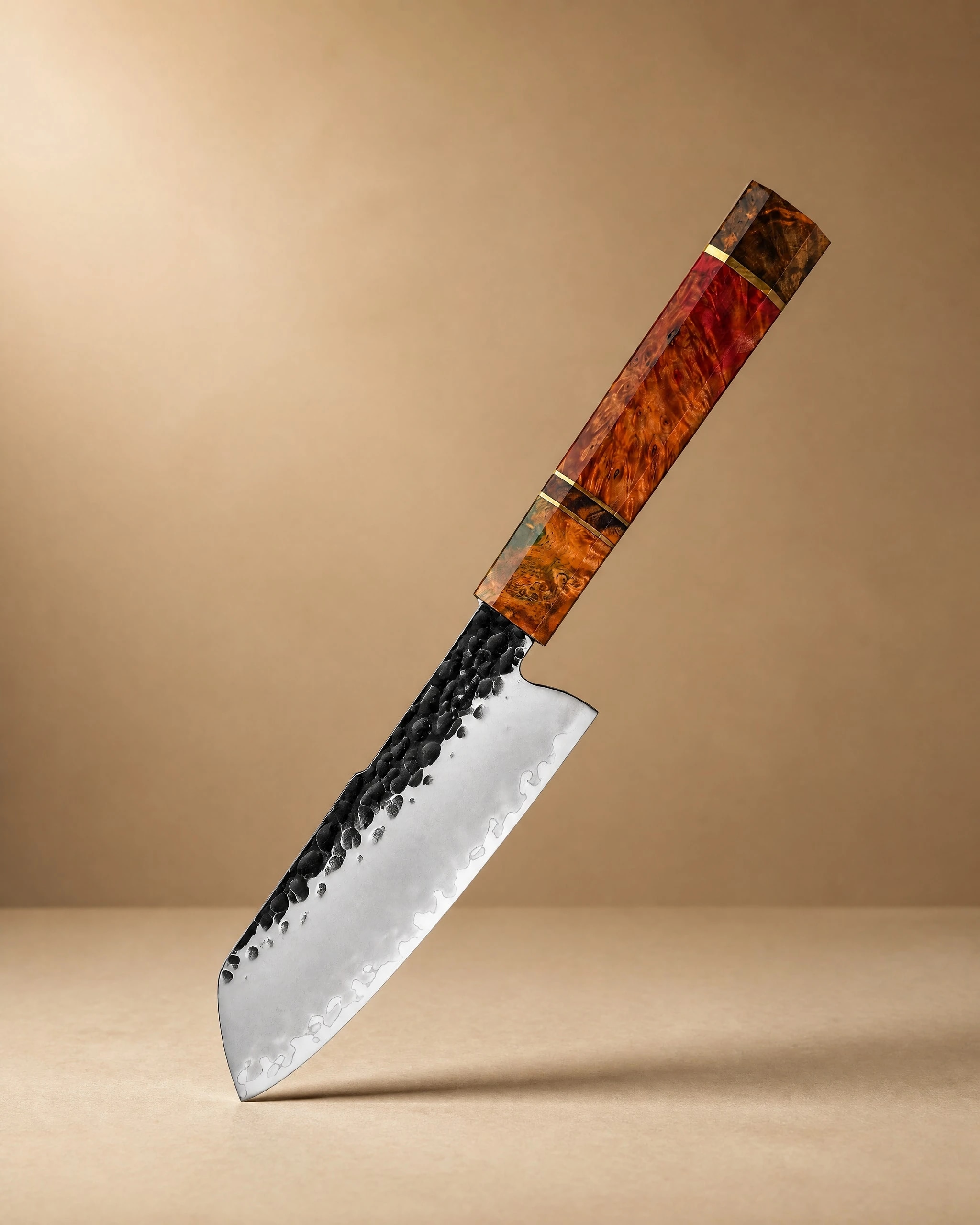 Ishikari 5" Santoku Knife 三徳包丁$79.99View product → is a compact santoku that fits this role. It is best for everyday prep when you want something agile. Keep it sharp and it will handle most of your daily cutting.
Choosing the Right Santoku for You
Buying a santoku comes down to three things: length, steel, and handle. Length is personal. A shorter santoku is great for small tasks. A longer santoku is more of an all-rounder. Steel affects edge life and maintenance. High-carbon steel takes a keener edge but needs more care. Stainless steel is more forgiving. Handle shape determines comfort. A traditional Japanese handle is light and balanced forward. A Western handle is often heavier and shaped for a full grip.
If you are new to Japanese knives, read our how to choose a knife guide. It walks through blade shapes, steel types, and handle styles without jargon.
If you are searching for a top rated santoku knife, remember that ratings reflect other people's hands and habits. The best rated santoku knife for you is the one that feels balanced, fits your board, and matches the food you cook most.
Santoku Knife Sets vs Individual Knives
A santoku knife set can be a good value if you need several knives at once. A typical knife set santoku combination might include a santoku, a paring knife, and a bread knife. But sets often include knives you will rarely use. If you already have a paring knife and a slicer, buying a single santoku is smarter. You can see our current santoku options in the santoku category.
If you prefer a set, look for one that includes a santoku and a longer chef knife. That pairing covers most kitchen tasks. A santoku plus a gyuto is a strong two-knife kit.
Damascus Santoku Knives
A damascus santoku knife has a layered steel pattern that is visible on the blade face. The pattern is created by folding and forging different steels together. It is mostly aesthetic, though the cladding can add durability. A damascus knife santoku is often a showpiece, and it can perform just as well as a monosteel knife if the core steel is good.
If you like the damascus look, our 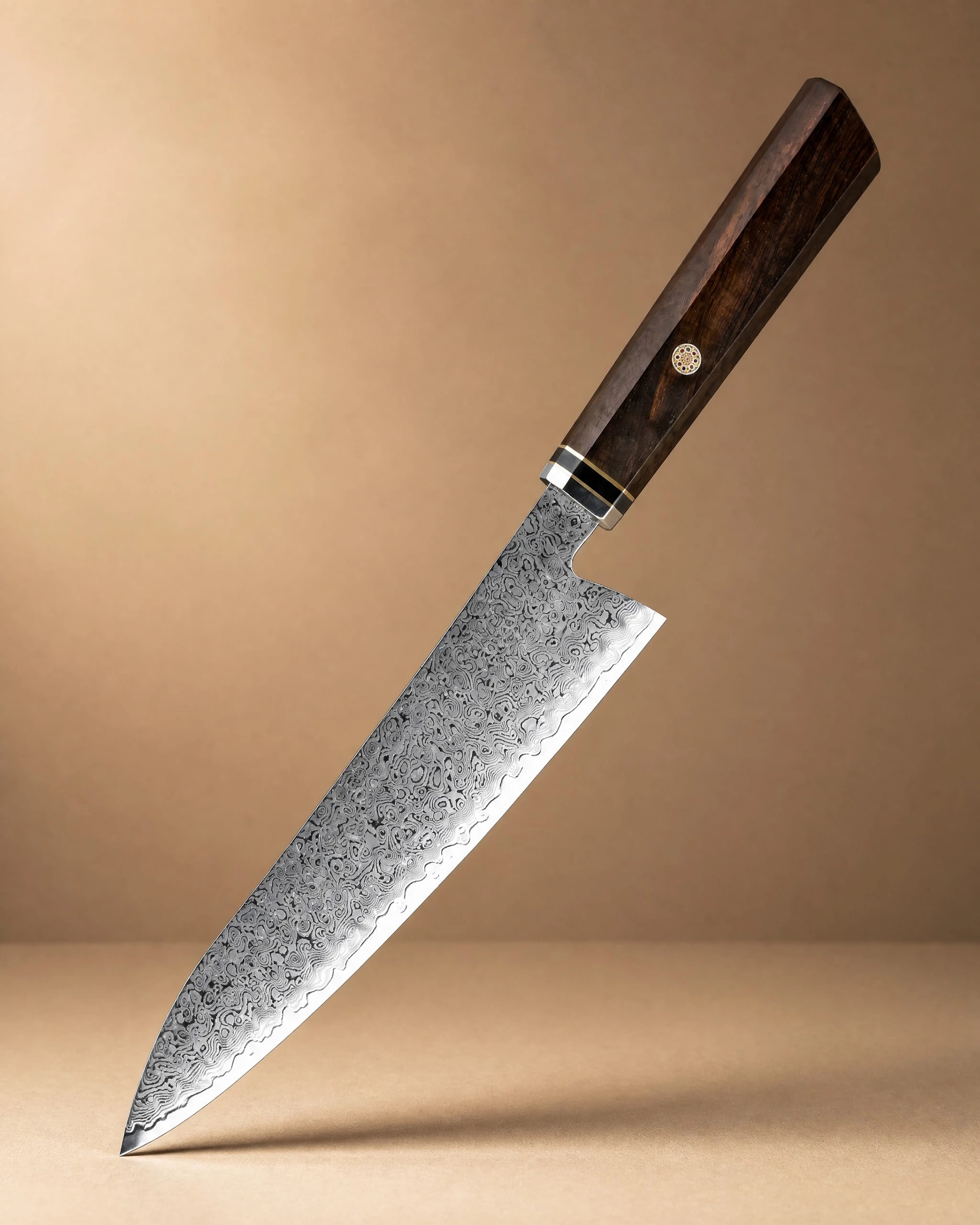 Sakawa 8.5" Damascus Steel Gyuto Knife 牛刀$94.99View product → offers a damascus pattern in a gyuto profile. It is a gyuto, not a santoku, but it shares the same care requirements and offers a longer blade for slicing. For a damascus santoku specifically, check the santoku category for current availability.
Gyuto Alternatives to a Santoku
Some cooks try a santoku and find they want a longer blade. A gyuto is the Japanese equivalent of a chef knife. It has a curved belly, a pointed tip, and more length for slicing. If you do a lot of meat carving or prefer a rocking cut, a gyuto may be a better fit.
Our 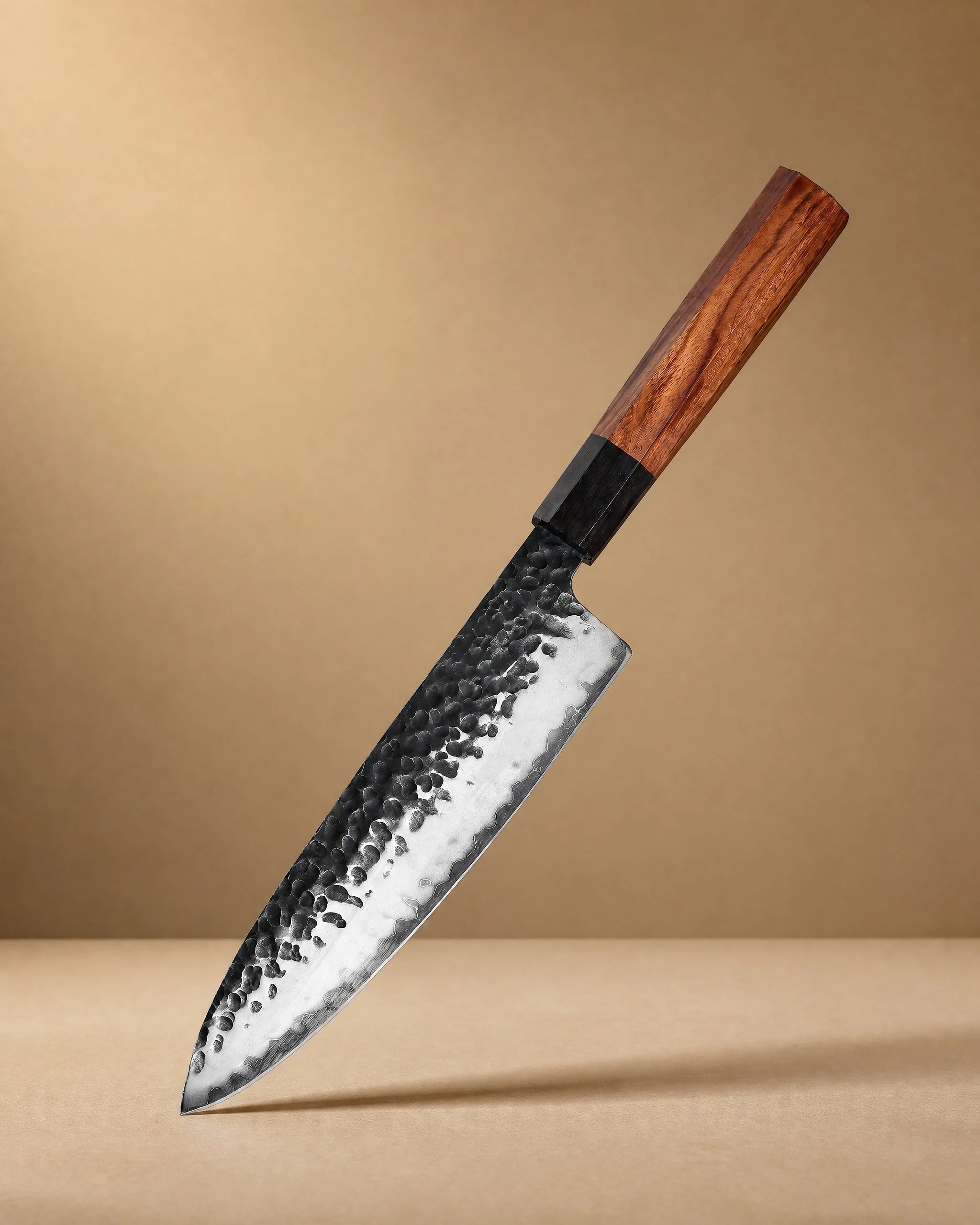 Tenjin 8" Stainless Steel Gyuto Knife 牛刀$69.99View product → is a gyuto that is best for everyday prep and offers a familiar chef knife feel. Our
 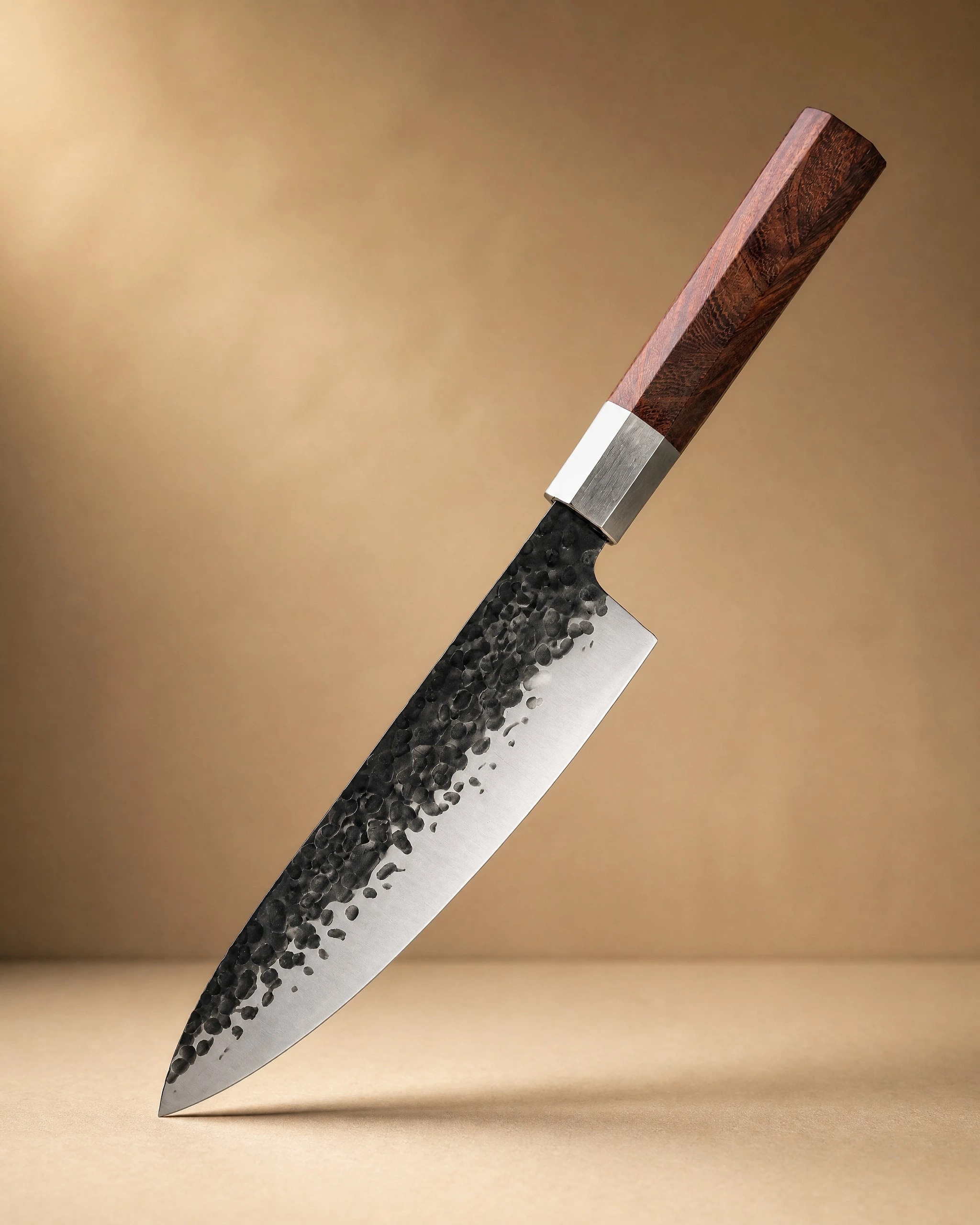 Sendai 8" Steel Gyuto Knife 牛刀$54.99View product → is another gyuto with a slightly different profile. Both are worth considering if you want a direct alternative to a santoku.
You can compare all of them in the shop.
Care and Maintenance
A santoku is a precision tool, so treat it well. Hand wash and dry it after use. Do not put it in the dishwasher. Avoid cutting on glass, stone, or bamboo boards that are very hard. Use a wood or plastic cutting board. Hone it lightly as needed, and sharpen it when it stops gliding through tomatoes.
For a full routine, see our knife care guide. It covers sharpening angles, storage, and everyday habits that keep an edge alive.
How to Decide
Start with the food you cook most. If you chop vegetables daily and want a compact, agile knife, a santoku is a great choice. If you break down chickens or slice roasts, a gyuto may serve you better. Many cooks end up with both, and that is a practical duo.
If you want a small santoku for quick tasks, the Ishikari 5" Santoku Knife 三徳包丁$79.99View product → is a solid starting point. If you prefer a longer blade, the Tenjin 8" Stainless Steel Gyuto Knife 牛刀$69.99View product → and Sendai 8" Steel Gyuto Knife 牛刀$54.99View product → are gyutos that share the same everyday prep role. And if you want a damascus finish, the Sakawa 8.5" Damascus Steel Gyuto Knife 牛刀$94.99View product → offers that look in a gyuto profile.
Whatever you choose, buy from a shop that tells you what the knife is made of and how to care for it. That honesty matters more than any label.
Photography: Sergey Kotenev via Unsplash.


