
Most Hygienic Chopping Board Material

If you want the short answer: a tight-grained hardwood board, cleaned promptly and dried completely, is the most hygienic chopping board for a home kitchen. Plastic is not automatically cleaner. Glass is not automatically safer. What decides the outcome is how the surface behaves when it is wet, scratched, and sitting on your counter every single day.
This is not a marketing position. It is roughly where food safety researchers and professional knife users have landed after decades of watching how bacteria survive on different surfaces. Below we go through each common material, explain where the real risks live, and cover the knife side of the equation, because a dirty board and a dull edge usually show up in the same kitchen.
What Actually Makes a Cutting Board Hygienic
Three things decide how clean a board can get, and none of them is printed on the package.
Surface condition. Bacteria settle into cuts, gouges, and knife scars. A board that resists deep scoring stays cleaner than one that shreds under a chef's knife. This is why a heavily scarred board of any material is a worse surface than a lightly used board of a different material. Scratches are the variable that most comparisons ignore.
How fast it dries. Moisture is the actual problem. A board that traps water in its pores, or sits wet in a dish rack overnight, supports more bacterial growth than one that dries within minutes. Drying speed depends on grain structure, thickness, and whether air can reach both faces.
What you do with it. A cheap board washed and dried right after raw chicken is safer than an expensive board left on the counter with juices on it. Material sets the ceiling. Habit decides whether you reach it.
Hardwood: The Best Cutting Board Material for Health in Most Kitchens
Hard maple, walnut, cherry, teak, and similar closed-grain hardwoods are the sweet spot. The fibers are dense and tightly packed, so knife edges part the wood instead of tearing it. Fewer tears means fewer places for bacteria to take hold, and a surface you can scrub without carving new grooves into it.
Wood also does something that surprises people. It pulls moisture away from the surface. Food science studies have found that bacteria applied to wood tend to die off over time rather than multiply, while on some plastic surfaces they can persist and even increase inside the scratches left by knives. Wood is not sterile and it is not magic, but it is far less hospitable than its reputation suggests.
The catch is that this only holds for real hardwood. A thin decorative board, a softwood board, or a board glued up from scrap with gaps in the seams can split and trap moisture, which is the opposite of what you want. Buy thicker stock, look for tight end-grain or edge-grain construction, and check that the seams are solid and flush.
Plastic and Composite Boards
Plastic is easy to clean, dishwasher safe, and inexpensive. It is also the material most likely to develop the deep gouges that make cleaning genuinely difficult. Once a plastic board is visibly scarred, replacing it is the honest advice, not scrubbing harder with a brush that cannot reach the bottom of the cuts.
There is a real place for plastic: raw poultry and fish, where you want a board that can go straight into a hot dishwasher. Keeping one plastic board for raw meat and using wood for produce, bread, and cooked food is a practical split that solves most cross contamination problems without any special equipment. Color coding works for the same reason, as long as you actually follow it every time.
What plastic is not is automatically more hygienic than wood. If it is scratched, stored wet, or washed in a sink where raw meat juice splashed earlier, it becomes a worse surface than a clean hardwood board.

Bamboo, Glass, Marble, and Other Options
Bamboo is dense and often marketed as naturally antimicrobial. It dries reasonably well and costs less than hard maple, but most bamboo boards are laminated strips, and the glue lines can open over time. Bamboo is also hard on knife edges. Treat it as a secondary board for quick jobs rather than your daily prep surface.
Glass and marble are non-porous, which sounds ideal, and they wipe clean in seconds. The trade-off is brutal for knives. These surfaces have no give at all, so a fine edge folds, chips, or flattens with every stroke. A board that protects hygiene but destroys your edge is a bad bargain in a kitchen where you cook often, because you end up sharpening constantly or working with a dull blade.
Composite boards made from wood fiber and resin are a reasonable middle ground. Many are dishwasher safe and they are gentler than glass, though they still dull an edge faster than hardwood. If you want one board that can take abuse, a composite is not a bad choice. If you want the cleanest cutting board for daily knife work, hardwood still wins.
Separating Food Safely
Cross contamination is the largest hygiene risk in a home kitchen, and it has almost nothing to do with which material you bought. Keep raw meat, poultry, and seafood on their own board. Keep a second board for produce, and a third, or the same clean one, for bread and ready-to-eat food. Wash boards with hot soapy water, rinse them, and stand them on edge so air reaches both faces.
Never put a wood board in the dishwasher. Heat and long soaking cycles dry the wood too quickly, open the seams, and leave you with a board that warps, cups, and cracks. Wash by hand, towel it dry, and let it finish air drying on edge.
The Knife Side of Hygiene
A knife is a food contact surface too, and it matters more than most cooks realize. A sharp edge makes clean cuts that release less moisture and fewer cells from whatever you are cutting. A dull edge crushes and smears, which leaves more residue behind on both the board and the blade, and residue is what bacteria feed on.
A well maintained edge also reduces slips. Most serious kitchen cuts happen when a dull knife skids off a tomato or a squash and finds a finger instead. Clean hands, a clean board, and a sharp knife is the full picture.
For everyday prep, a Japanese gyuto is the blade most cooks reach for first. The 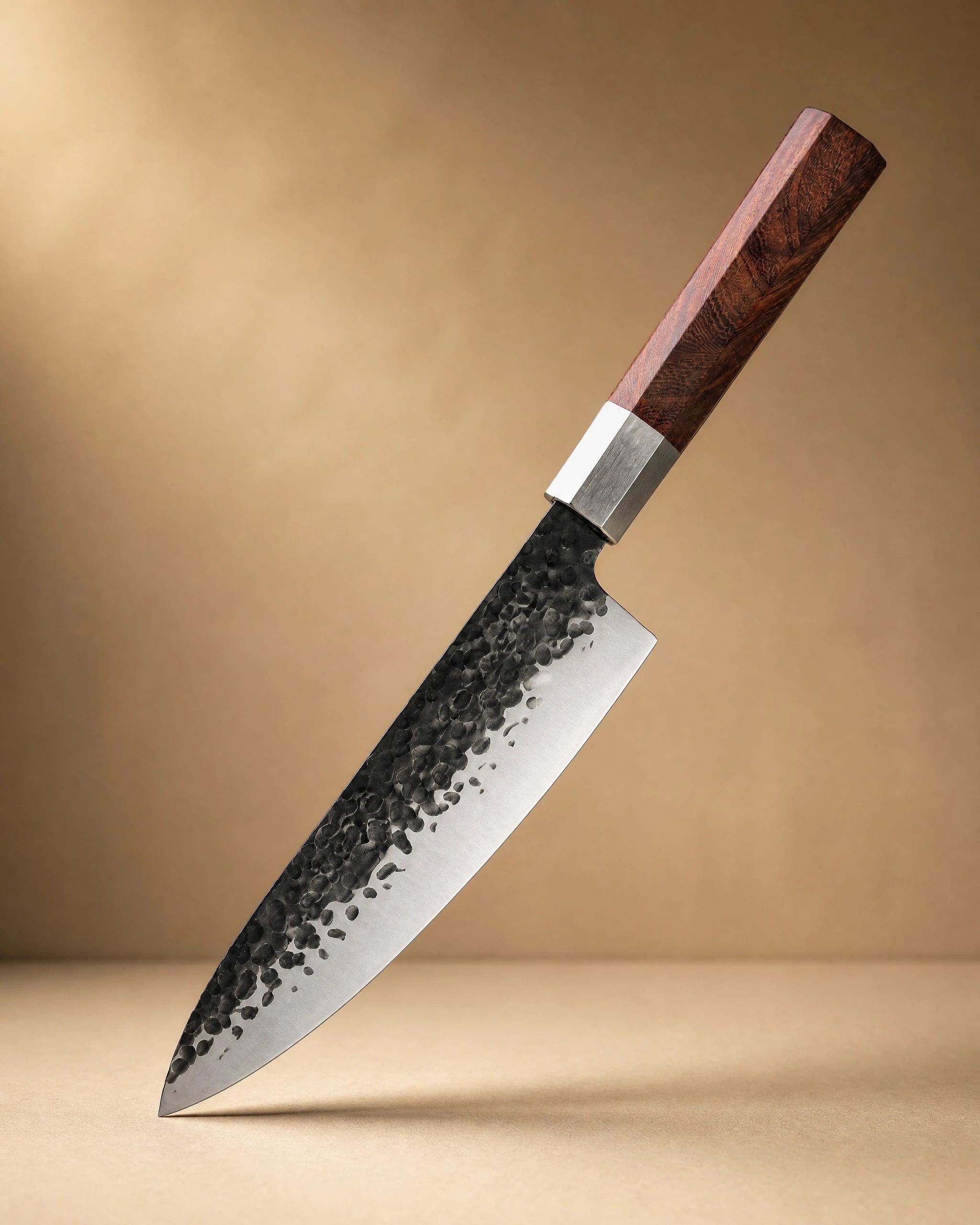 Sendai 8" Steel Gyuto Knife 牛刀$49.99View product → covers slicing, dicing, and proteins in one knife, which means less shuffling between tools and fewer chances to leave a mess on the board. If you prefer a slightly different balance in hand with a similar all-purpose profile, the
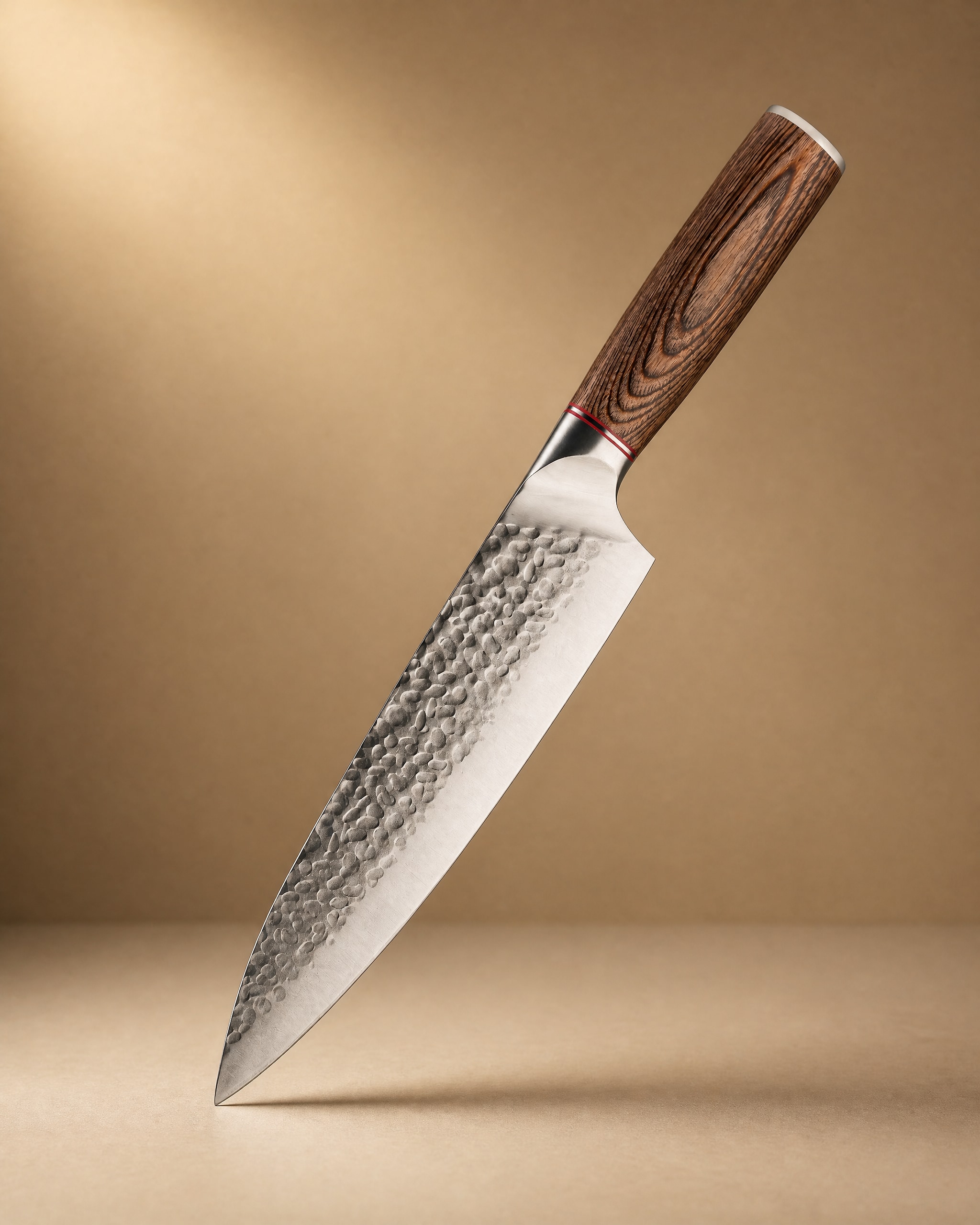 Akan 8'' Gyuto Knife 牛刀$49.99View product → does the same work with its own feel at the handle and through the cut.
Board and Knife Care That Keeps Both Working
Wood needs oil. A food safe mineral oil or a board butter applied monthly, and more often in dry winter air, keeps the surface sealed so it stops absorbing juices and stops cracking. A sealed board is a hygienic board, and it is also a board that will outlast three cheap ones.
Knives need the same discipline. Hand wash, dry immediately, and store them so edges are not knocking against anything hard. Our knife care guide covers sharpening angles, honing, and storage in detail if you want a routine you can run in a few minutes a week.
Here is a routine that works for both:
- Rinse and scrape the board right after use, before residue dries.
- Wash with hot soapy water and a soft sponge, never a steel scouring pad that carves grooves.
- Sanitize after raw meat with a dilute bleach solution or a food safe sanitizer, then rinse.
- Towel dry and stand the board on edge so both faces get air.
- Oil wood monthly, and replace any board with deep cracks or a splitting seam.
Matching Your Board and Knives to Your Kitchen
If you bake a lot of bread, or you buy crusty loaves regularly, a serrated blade belongs next to your board. The 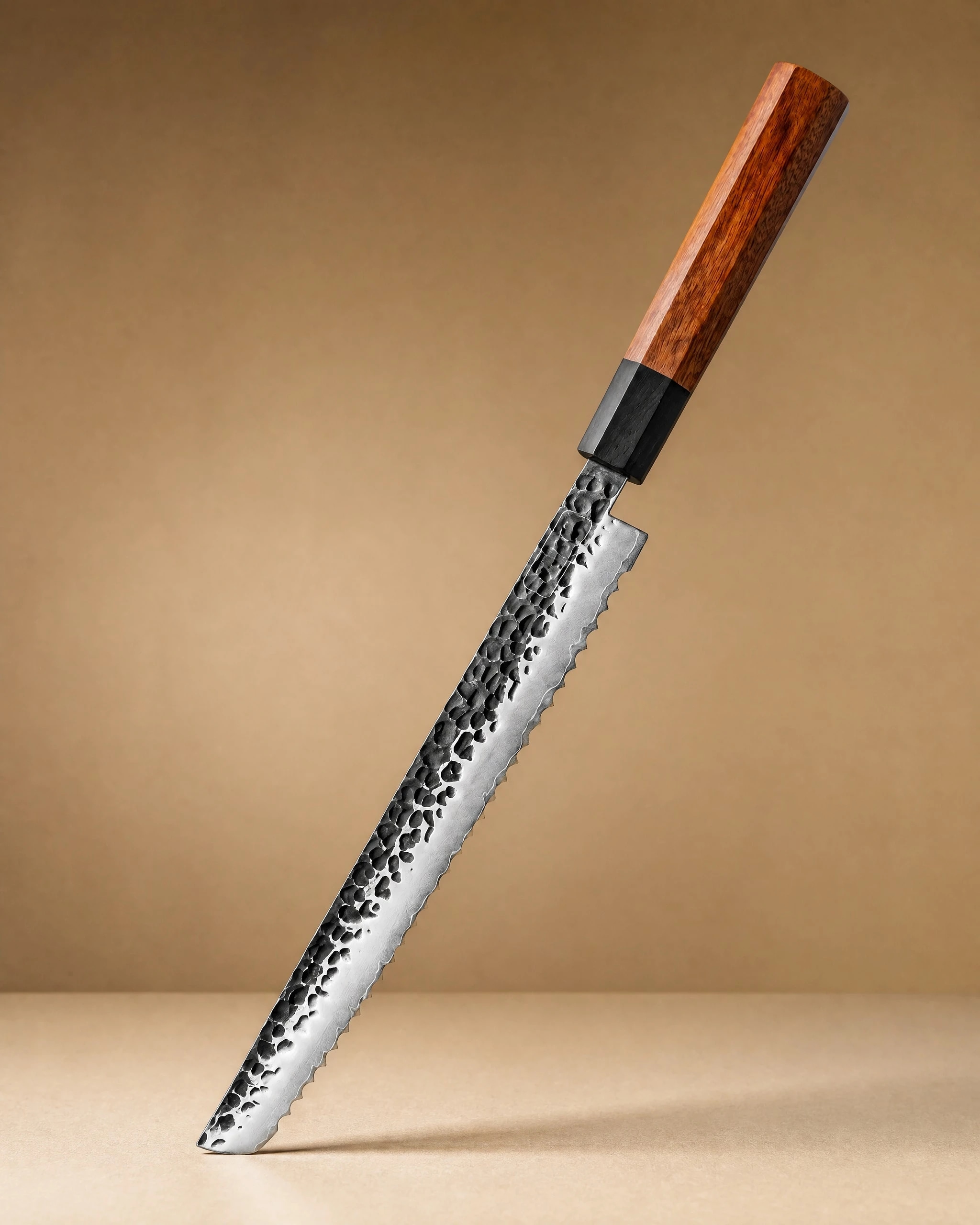 Rumoi 10" Japanese Bread Knife パン切りナイフ$59.99View product → handles crust without crushing the crumb, which keeps crumbs and moisture on the surface instead of grinding them into the wood grain.
If you are setting up a kitchen from scratch, or replacing a drawer full of mismatched blades, buying as a set usually makes more sense than piecing it together one knife at a time. The 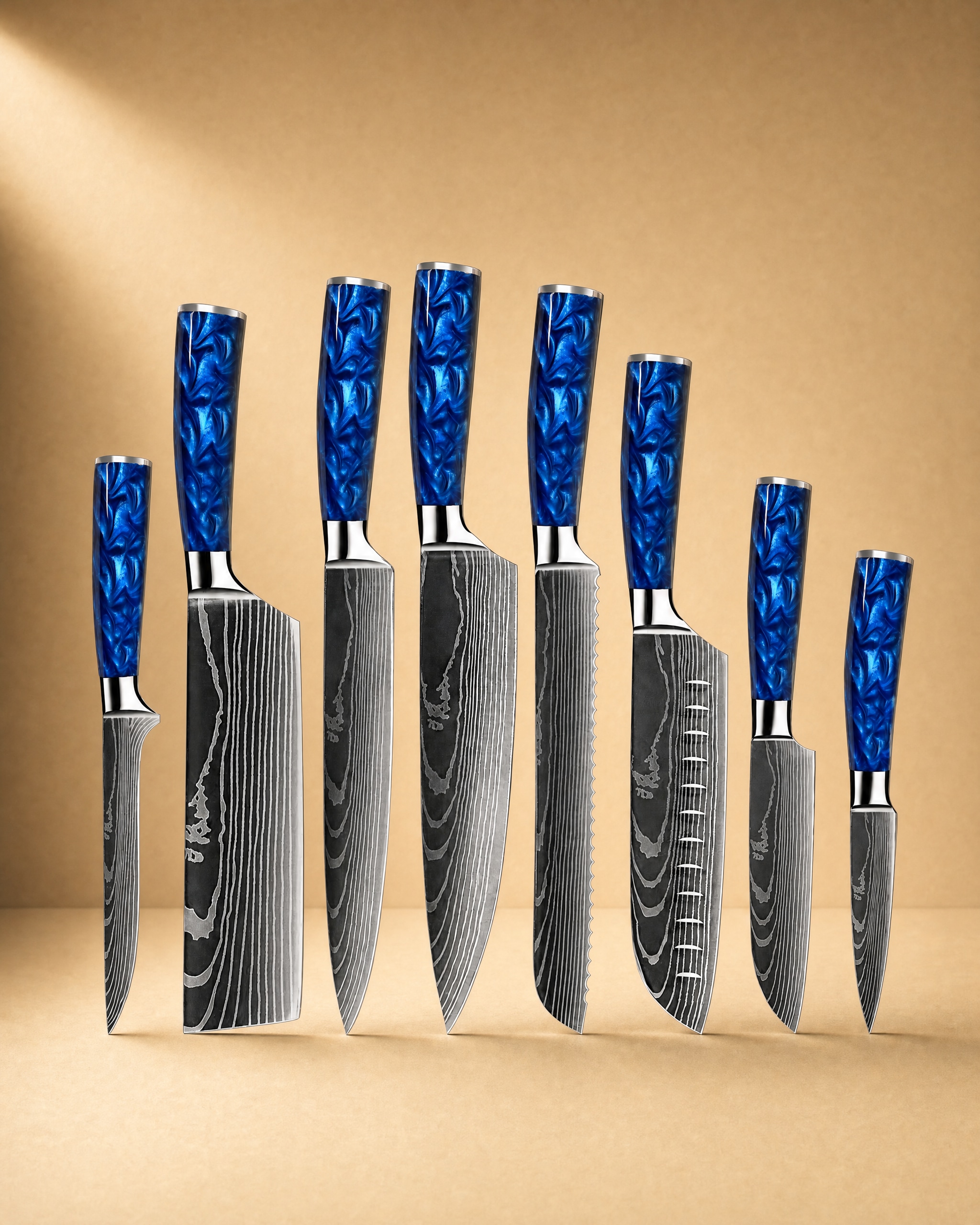 Shinano 信濃川 Damascus Pattern Stainless Steel Kitchen 8 Knife Set$149.99View product → covers the core tasks, which lets you put your remaining budget into one proper hardwood board rather than another compromise blade. You can browse everything in one place at our full knife shop.
Not sure which blade profile fits how you actually cook? Our knife guide walks through shapes, lengths, and handle styles without steering you toward the most expensive option in the catalog.
Bottom Line
The most hygienic chopping board is a tight-grained hardwood board that you wash and dry promptly, sanitize after raw meat, and replace once it cracks. Plastic earns a place for raw proteins if you can run it through a dishwasher. Glass and marble are hygienic but they punish your knives. Bamboo and composites are usable middle ground, better than a scarred old board and worse than good hardwood.
Material gets you most of the way there. Habits finish the job, and so does a knife you actually maintain. Buy the board you will clean, buy the knife you will sharpen, and keep both dry.
Photography: Mike Gattorna via Unsplash.


