
Kiritsuke Knife: Uses and Buying Guide

The kiritsuke is the most misunderstood knife in the Japanese kitchen. It looks aggressive, almost sword-like, with a long straight edge and a clipped, angled tip. Plenty of home cooks buy one because it looks impressive, then discover it behaves nothing like the santoku or gyuto already hanging on their wall. Others avoid it completely, assuming it is a single-purpose sushi knife that belongs behind a restaurant counter. Neither reaction is quite right. A kiritsuke can be a genuinely useful daily knife if you understand what it was designed to do and pick the version that matches your cutting style.
What Is a Kiritsuke Knife?
The kiritsuke (切り付け包丁) is a traditional Japanese blade shape. In its classic form it is a single bevel knife: flat on the back, long and straight along the edge, with a spine that angles down to the tip. Historically it was a head chef's knife in Japanese kitchens, used for slicing and fine garnish work, and it often stood in for a yanagiba when a dedicated sashimi knife was not available.
Most kiritsuke knives sold in the United States today are different. The majority are double bevel, which makes them easier to sharpen and far more forgiving for a cook who did not grow up using single bevel knives. They keep the silhouette and the flat profile, but they behave more like a tall, flat chef's knife than a specialized slicer.
That distinction matters. A double bevel kiritsuke is an all-purpose knife with an unusual profile. A true single bevel kiritsuke is a specialist tool that asks for technique and a different sharpening routine. Both are legitimate. They are not the same product, and reviews that blur the two are not much help.
How a Kiritsuke Differs from a Gyuto and a Santoku
The gyuto is the Japanese interpretation of the Western chef's knife: a curved belly, a pointed tip, and enough height for rock chopping. The santoku is shorter and flatter, with a sheep's foot profile and a straight edge that rewards push cuts.
A kiritsuke sits closer to the santoku in profile but runs longer, often 9 to 10 inches. The edge is nearly flat from heel to tip, and the spine drops toward the point. That flat edge is the entire reason the shape exists. It lets you make long, unbroken push cuts and take a piece of fish or a pork loin in one stroke instead of three.
The trade-off is the belly and the tip. With almost no curve, rock chopping feels stiff and awkward. The pointed tip is thin and precise, which is excellent for detail work, but it is also the part most likely to dig into a cutting board if you get sloppy with your angle. If you mostly rock chop herbs and onions, a gyuto will feel more natural. If you push cut, slice proteins, and want a long flat edge under your knuckles, a kiritsuke starts to make real sense.
What a Kiritsuke Knife Is Good For
A kiritsuke earns its place when your cooking leans toward clean, deliberate cuts rather than fast chopping. The flat edge and stiff spine make it predictable, and predictability is what you want when the cut matters.
- Long push cuts through onions, cabbage, leeks, and other tall vegetables
- Slicing cooked proteins and raw fish in a single stroke
- Portioning chicken and trimming smaller cuts of meat
- Detail work with the pointed tip, such as scoring fish skin
- Lifting prepped ingredients on the flat of the blade
In practice, the kiritsuke earns its keep on a normal weeknight: you break down a head of cabbage, slice a couple of chicken breasts, and mince garlic, and the knife never feels like the wrong tool. It is a prep knife first, not a showpiece.
Where a Kiritsuke Struggles
Rock chopping is uncomfortable. The profile is too flat for the rhythm most cooks learn on a Western chef's knife, and forcing it puts stress on the tip. Heavy butchery is out as well. These blades are thin behind the edge and built for slicing, not for going through chicken bones or splitting a squash with a mallet. The pointed tip is also unforgiving: one bad twist against a hard board and you have a bent or chipped point. If you are used to a curved belly for scooping and mincing, give yourself a few weeks before the shape feels natural.

Blade Length, Steel, and Handle
Length is the first decision. An 8 inch blade is manageable in a small kitchen and works for most home prep. A 9.5 inch blade gives you the long, single-stroke cuts that make the shape worth owning, but it needs counter space and a board to match. Cook for two on a small board and the shorter blade is the better call. Break down larger cuts for a family and the longer blade pays off.
Steel choice is next. Damascus-clad blades look striking and, more practically, the layered cladding protects a hard core. Stainless steel is the low-maintenance option for anyone who does not want to think about wiping the blade every few minutes. Carbon steel takes a keener edge and patinas with use, but it rusts if you leave it wet, which makes it a poor fit for a shared kitchen where nobody else knows the rules.
The handle matters more than most buyers expect. A handle that is too small for your hand forces a tight grip, and a tight grip on a long flat blade leads to fatigue. Hold the knife before you commit if you can. If you cannot, stick to a handle shape you already know you like. Our knife buying guide walks through profile and length questions in a useful order.
Single Bevel or Double Bevel?
For most home cooks in the United States, double bevel is the answer. A double bevel kiritsuke is sharpened symmetrically, so you can maintain it on a standard whetstone without learning a new technique, and it steers less in the cut. Single bevel blades naturally pull to one side, which is useful for a trained slicer and confusing for everyone else.
Buy single bevel only if you already sharpen single bevel knives and you want the traditional geometry for slicing fish. Otherwise you are paying for an experience you did not ask for and cannot easily maintain. Before your first sharpening session, spend ten minutes with our knife care guide.
Which Kiritsuke Should You Start With?
If you want one knife that covers the shape properly and handles daily prep, the 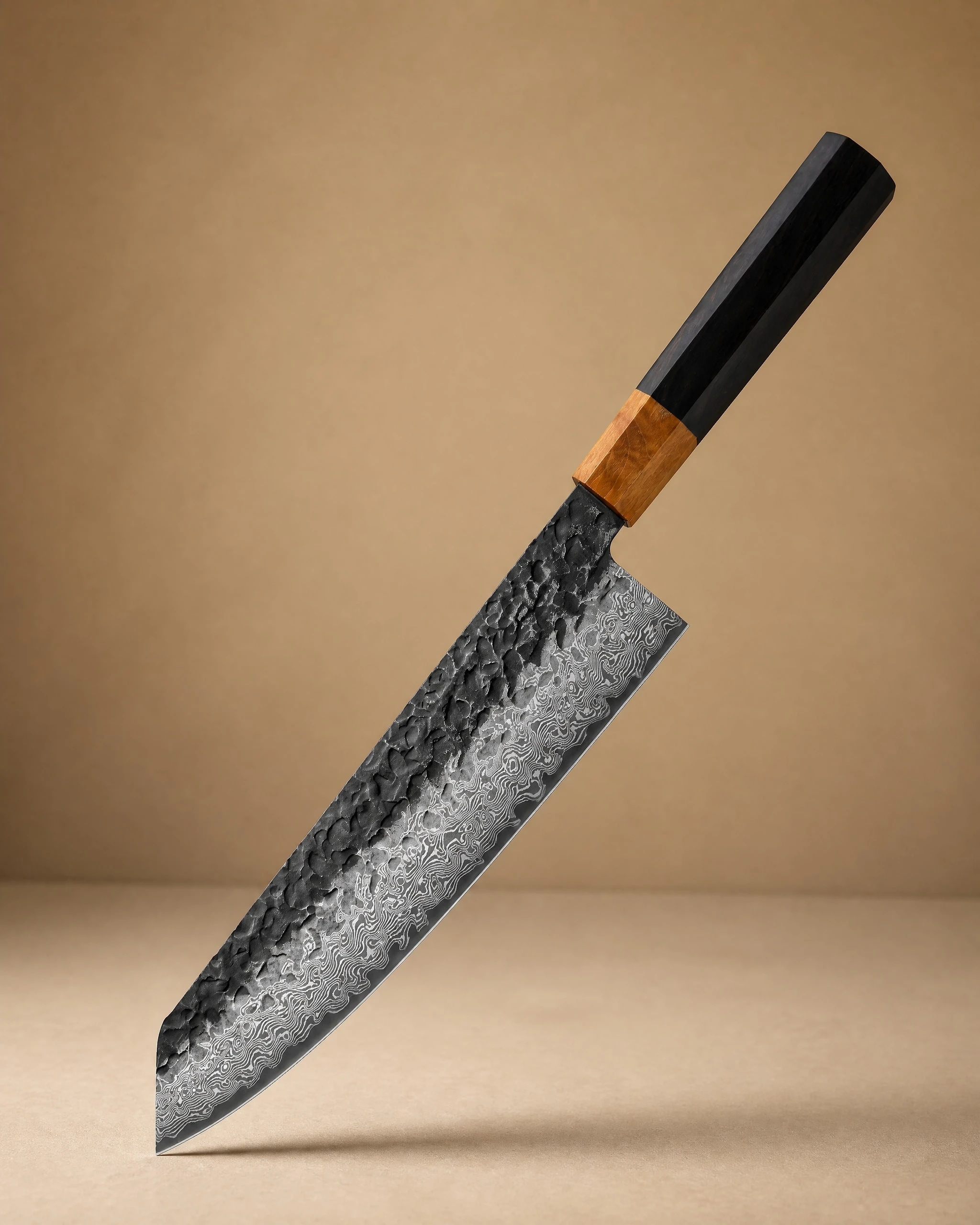 Kurobe 9.5" Damascus Steel Kiritsuke Knife 切り付け包丁$99.99View product → is the straightforward pick. It gives you the long flat profile in a length that suits real home cooking, and it is built for everyday prep rather than occasional use. That makes it a reasonable first kiritsuke and a reasonable only kiritsuke.
You can compare the other shapes in our kiritsuke collection, or browse all the knives we carry if you would rather look at profiles side by side.
If a Kiritsuke Is Not the Right Knife for You
There is no shame in deciding the shape is not for you. If you rock chop, if you want one knife that does everything without thinking, or if you are buying a first serious knife, a gyuto is the safer and more versatile call.
The 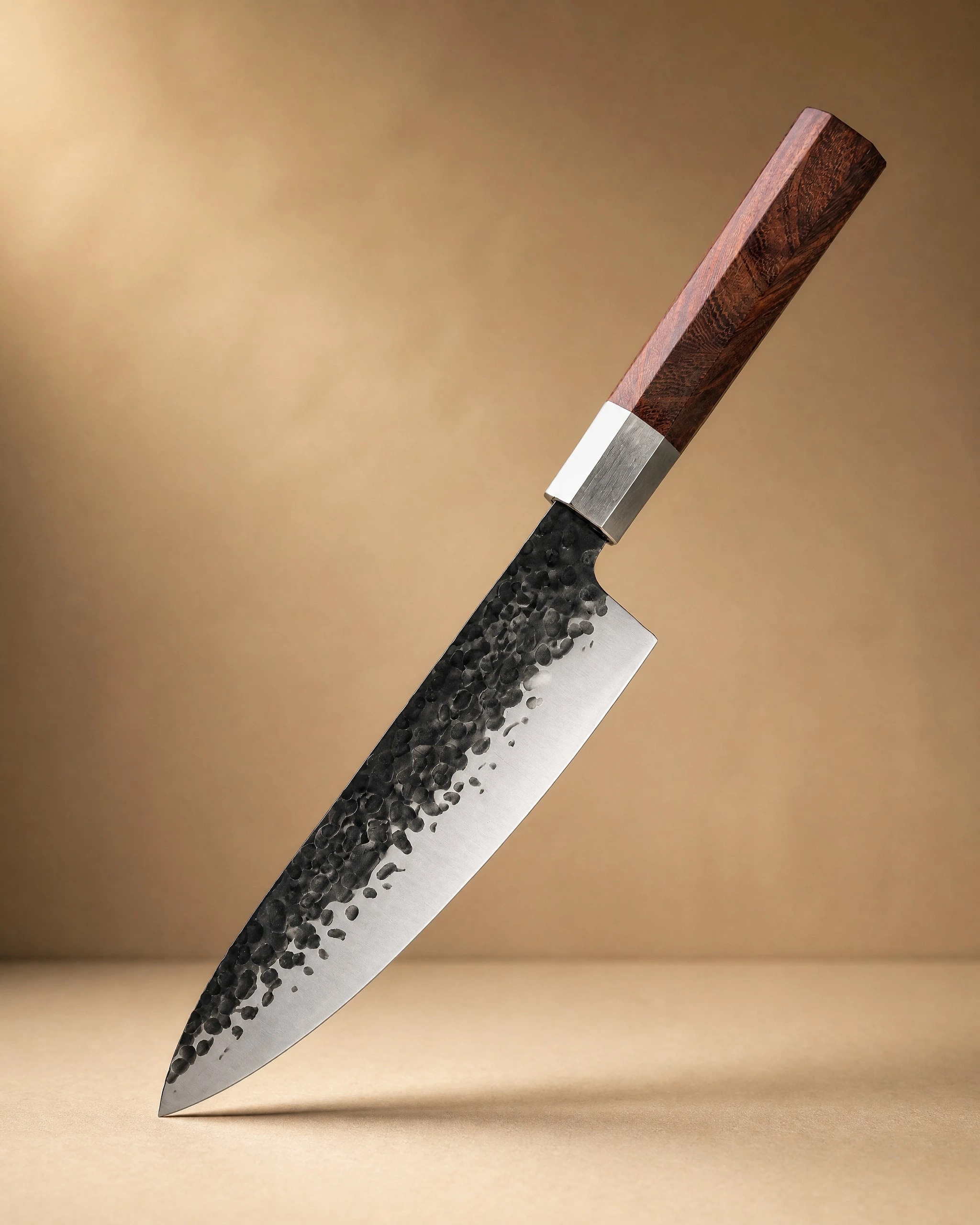 Sendai 8" Steel Gyuto Knife 牛刀$54.99View product → is a strong everyday option with a familiar profile that most cooks adapt to immediately. The
 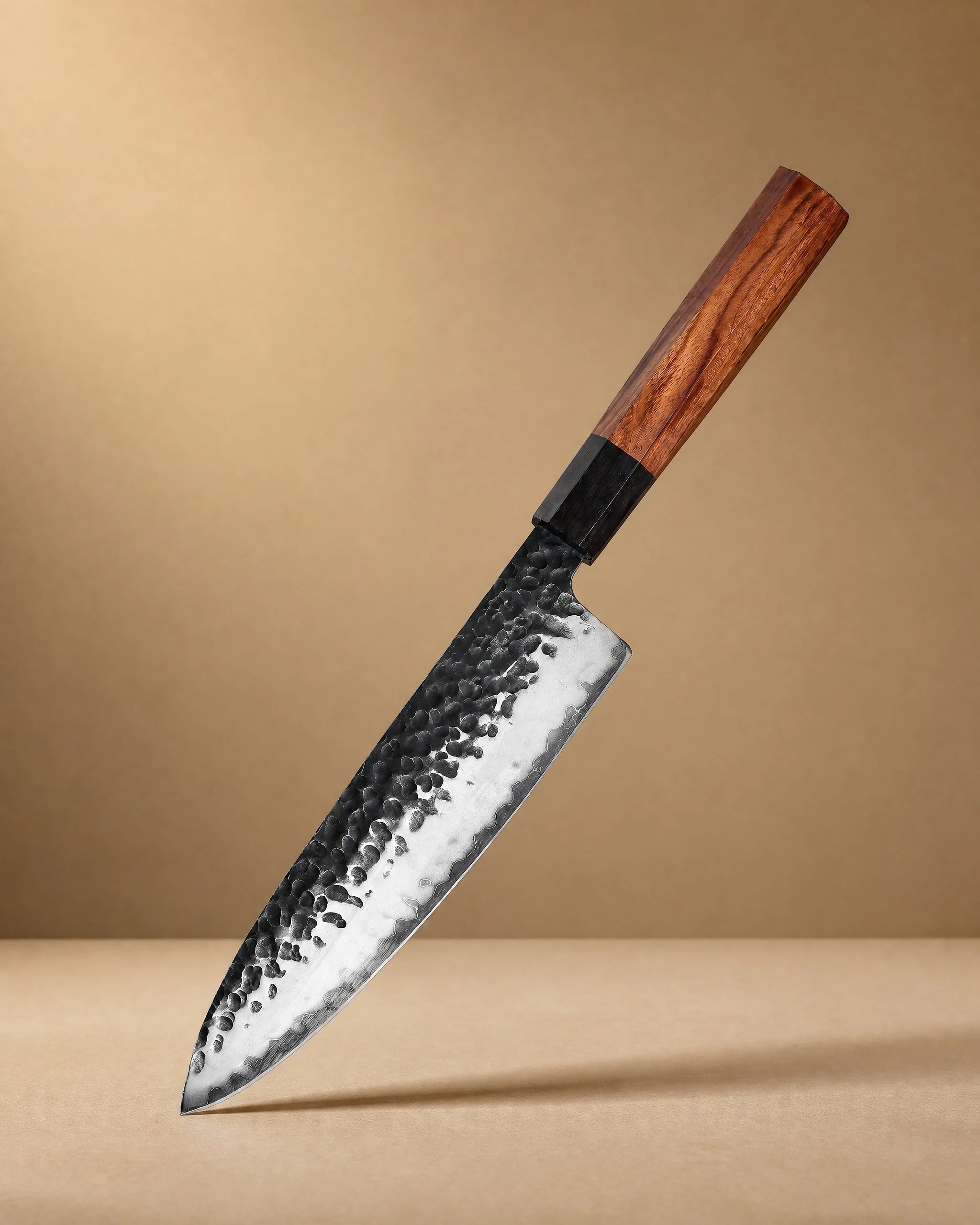 Tenjin 8" Stainless Steel Gyuto Knife 牛刀$69.99View product → is the stainless choice for anyone who wants low maintenance. The
 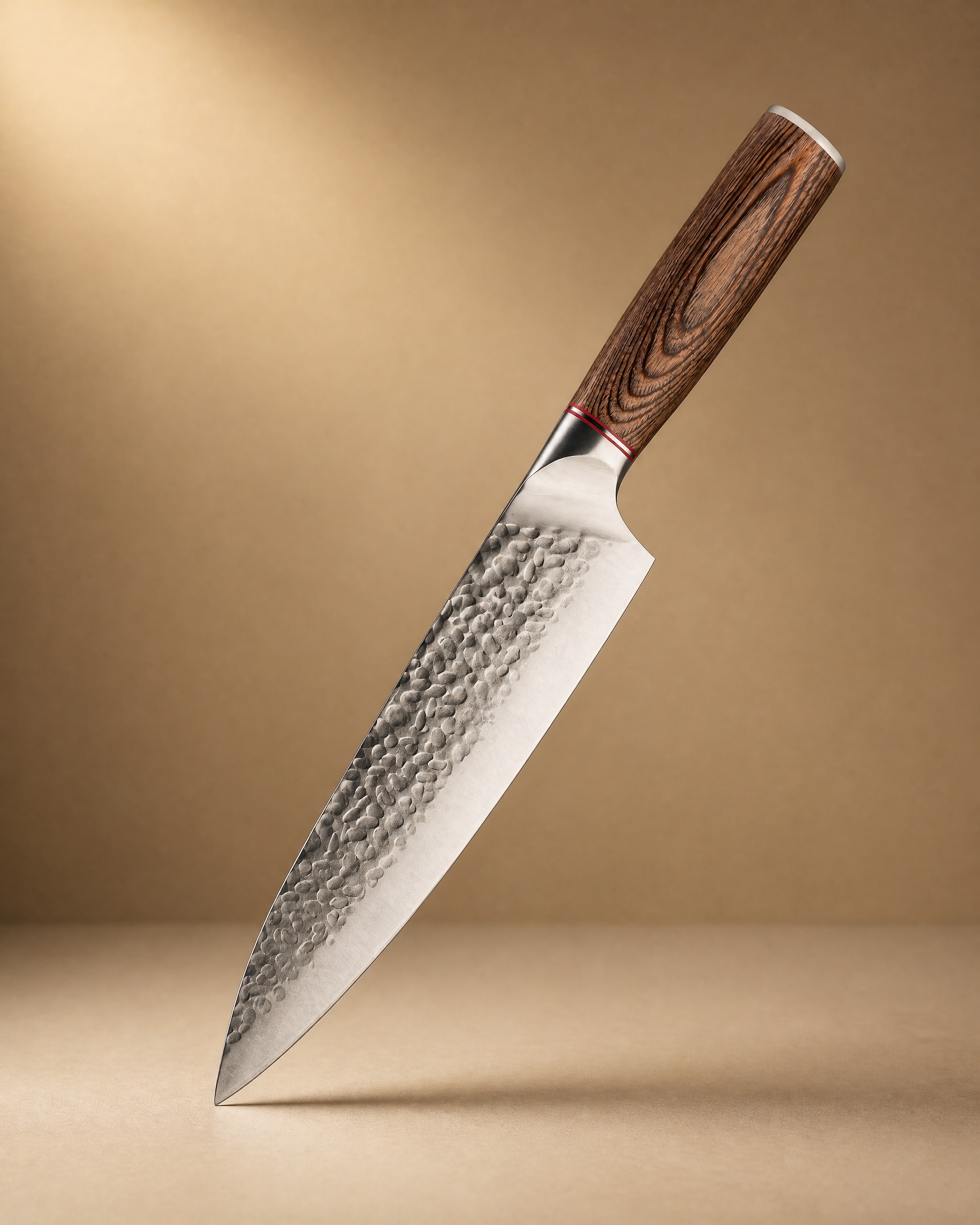 Akan 8'' Gyuto Knife 牛刀$54.99View product → rounds out the group at a similar size. All of the knives mentioned here are built for everyday prep, which is exactly what a home cook should be optimizing for.
Caring for a Kiritsuke Knife
The long flat edge is easy to maintain if you keep two habits. First, cut on wood or a soft synthetic board. Glass and bamboo are hard enough to roll an edge quickly, and the kiritsuke tip suffers first. Second, do not twist the blade in the cut. Pull it straight through. Twisting is how points break.
Hand wash and dry immediately, especially with carbon steel. Store the knife on a magnetic strip or in a saya so the edge is not knocking against other knives in a drawer. Sharpen on a whetstone, or have it professionally sharpened once or twice a year if you are not confident yet. Angle consistency matters more than the stone you buy.
Common Questions About Kiritsuke Knives
Is a kiritsuke hard to sharpen? Not the double bevel versions. They sharpen like any other double bevel knife, which means a medium stone, a consistent angle, and a few minutes of patience. Single bevel blades are a different project and take practice to keep flat.
Can a kiritsuke replace a chef's knife? For slicing and push cutting, largely yes. For rock chopping and heavy work, no. Most people who love the shape still keep a gyuto within reach for the tasks it does better.
What size should a beginner buy? Start at 8 inches unless you already know you want the reach of a longer blade. A long knife you do not have room to use is a knife you will not use.
A Quick Buying Checklist
Before you buy, confirm four things. Blade length matches your board and your cooking volume. The bevel type matches your sharpening ability. The steel matches your willingness to dry the knife after every use. The handle fits your hand. If all four line up, you will reach for the knife daily instead of leaving it in the block.
Photography: Richard Iwaki via Unsplash.


