
Japanese Steak Knives: A Complete Buying Guide

A steak knife has one job: cut a piece of cooked meat cleanly, without tearing it, without dragging the crust loose, and without making the person holding it work for their dinner. Most knives sold as steak knives do that job poorly, with thick blades, coarse serrations, and handles designed to look expensive on a shelf. A Japanese steak knife takes a different approach, and once you have used a thin, sharp, well ground blade on a rested ribeye, it is hard to go back.
This guide covers what actually matters while you shop: geometry, steel, edge type, length, handle, and how the knife fits the table you set. It is written for people who cook, not for collectors chasing a logo.
What a Japanese Steak Knife Actually Is
In Japan, the knife that ends up beside a steak is rarely a dedicated steak knife in the Western sense. It is more often a small slicing knife, a petty, or a short sujihiki, all of which share the same design philosophy as the rest of a Japanese kitchen: a thin blade, a hard, finely sharpened edge, and a grind that tapers to something genuinely thin behind the edge.
That thinness is the whole point. A blade that measures a fraction of a millimeter just behind the cutting edge passes through a seared crust and into the muscle with very little resistance. It separates the fibers instead of crushing them. You feel the difference immediately in the juice that stays in the meat rather than running out under the knife.
Japanese knives also tend to be lighter than European knives of the same length. Less weight in the hand means less fatigue and more control, which matters when you are slicing a portion at the table rather than working over a board with a full grip.
Geometry Matters More Than the Name on the Blade
Two knives can be made from the same steel, heat treated the same way, and still cut nothing alike. The difference is geometry: how thick the spine is, how quickly the blade tapers toward the tip, how thin the steel is right behind the edge, and how the bevel is shaped.
For steak, thin behind the edge wins. A blade with a wide, blunt shoulder has to push meat apart. A blade with a long, gradual taper glides. Look at the choil, the unsharpened section where the blade meets the handle. If the steel there is thick and squared off, the knife will feel like a wedge in a dense steak. If it is thin and tapered, the knife will feel like it disappears into the cut.
Edge angle matters too. Japanese knives commonly carry a more acute edge than Western knives, which is why they slice so well and also why they ask for a little more care. An acute edge is a fine edge. It does not enjoy being scraped across a ceramic plate or dropped into a sink full of dishes.
Plain Edge or Serrated?
Serrated steak knives exist for a reason. They stay usable for years without sharpening, and they will saw through a steak on a plate that would ruin a fine edge. If your household treats knives roughly, serrations are a practical compromise.
A plain edge cuts better. It moves through a crust in one motion, it does not shred the surface of the meat, and it can be sharpened back to full performance. If you are willing to cut on wood or to be gentle with your plates, a plain edge is the better long term choice.
Blade Length: Match the Knife to the Cut
Traditional steak knives run roughly 4 to 5 inches. That is enough for a single portion on a plate, and short for a thick cut or for slicing a roast before it reaches the table.
If you want one knife that handles the board and the plate, 8 inches is a useful compromise. It is longer than a classic steak knife, so it can break down a whole tenderloin or slice a roast into portions, and it is still manageable at the table when you use a pinch grip and let the blade do the work. 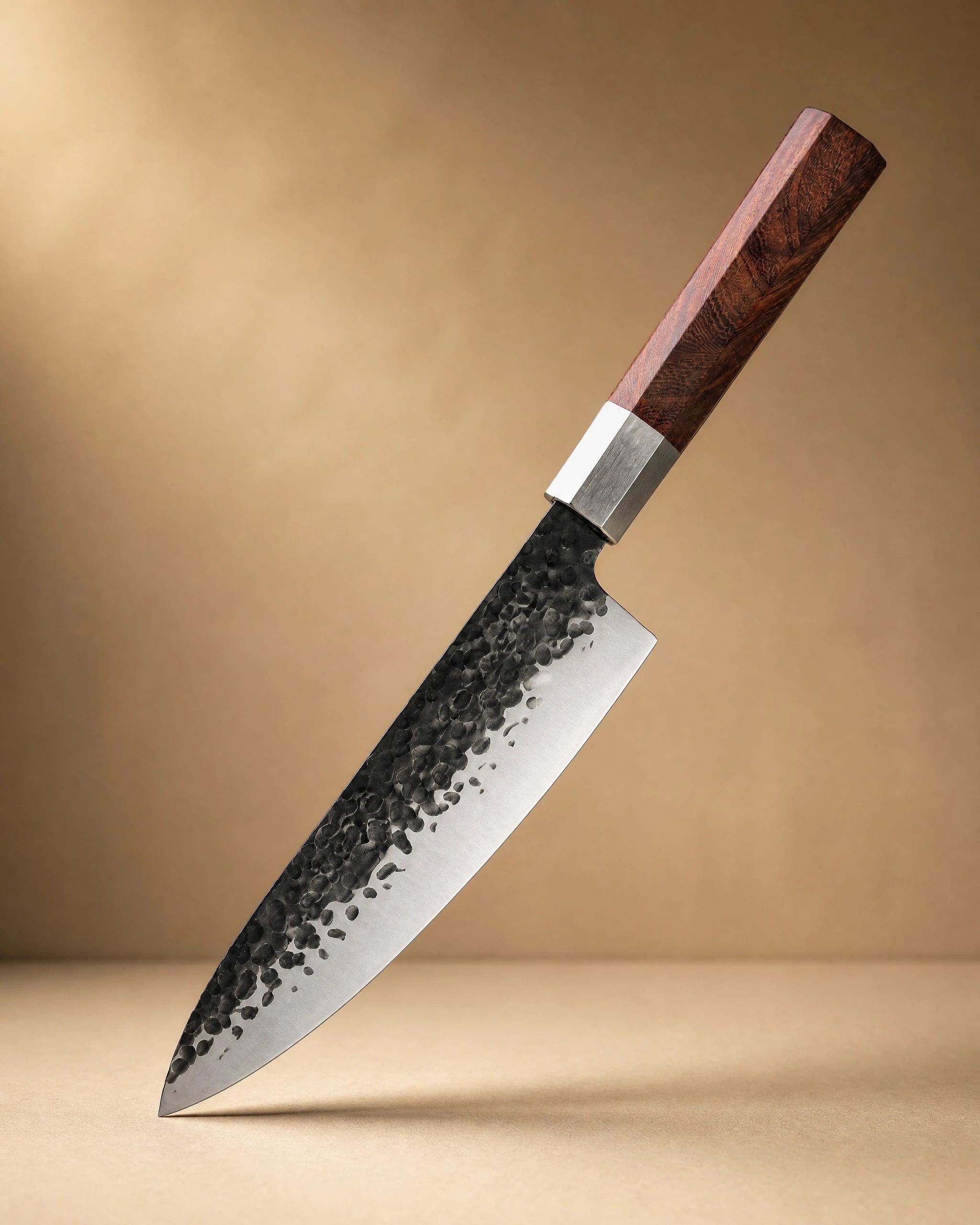 Sendai 8" Steel Gyuto Knife 牛刀$49.99View product → is a good example of that idea: an 8 inch gyuto that is thin enough for clean slicing and versatile enough to earn its place in the kitchen even when steak is not on the menu.
If you would rather compare two blades of the same length before you commit, 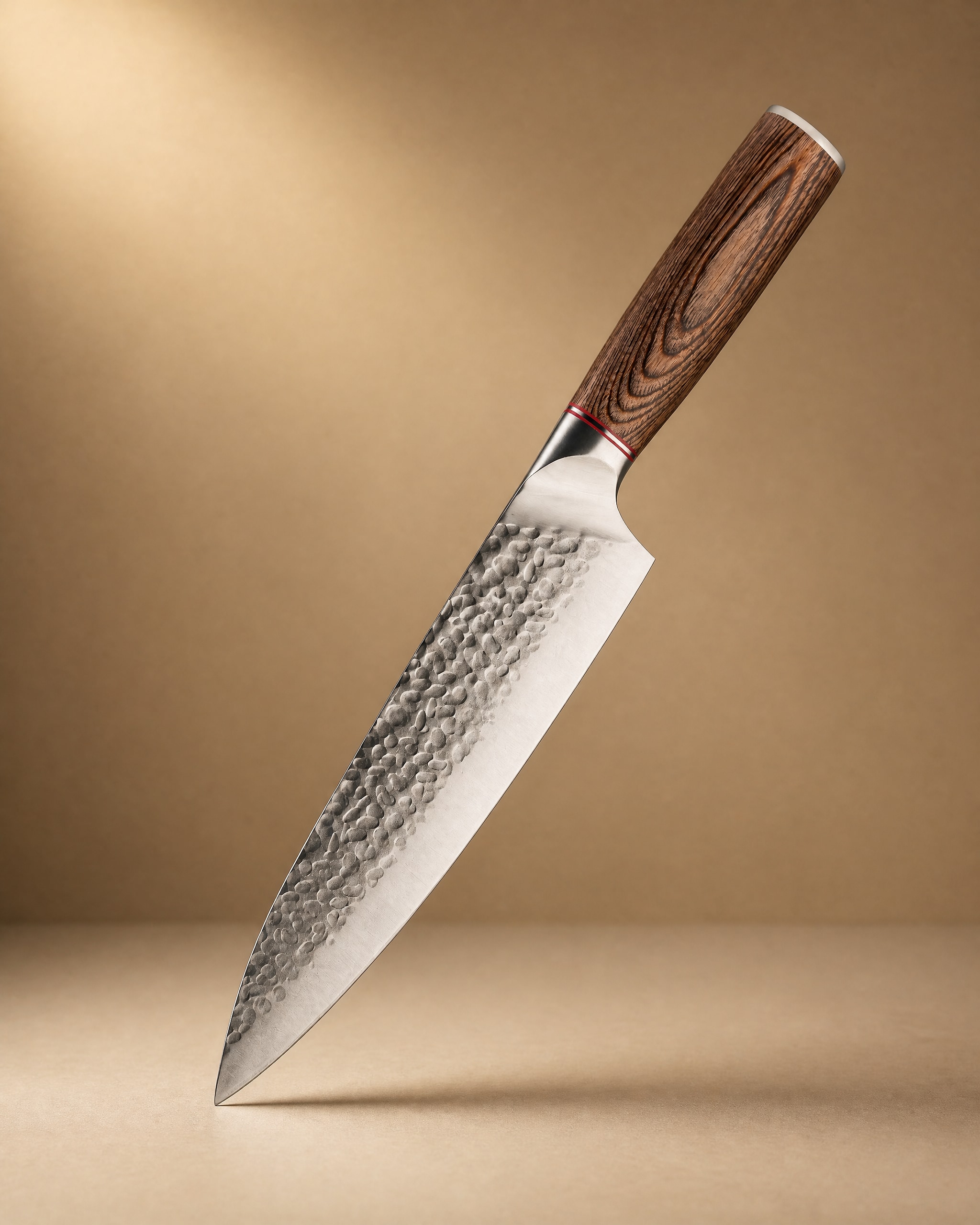 Akan 8'' Gyuto Knife 牛刀$49.99View product → is the other 8 inch gyuto worth looking at. Two knives of identical length can feel very different in the hand, and that difference is easier to judge side by side than in a description.
Bread Knives Belong at the Table Too
Most people think of a bread knife as a bakery tool, and it is one. It is also one of the most useful knives to have within reach during a meal. A long serrated blade gets through crusty bread without crushing the crumb, and it handles tomatoes and citrus without bruising them. 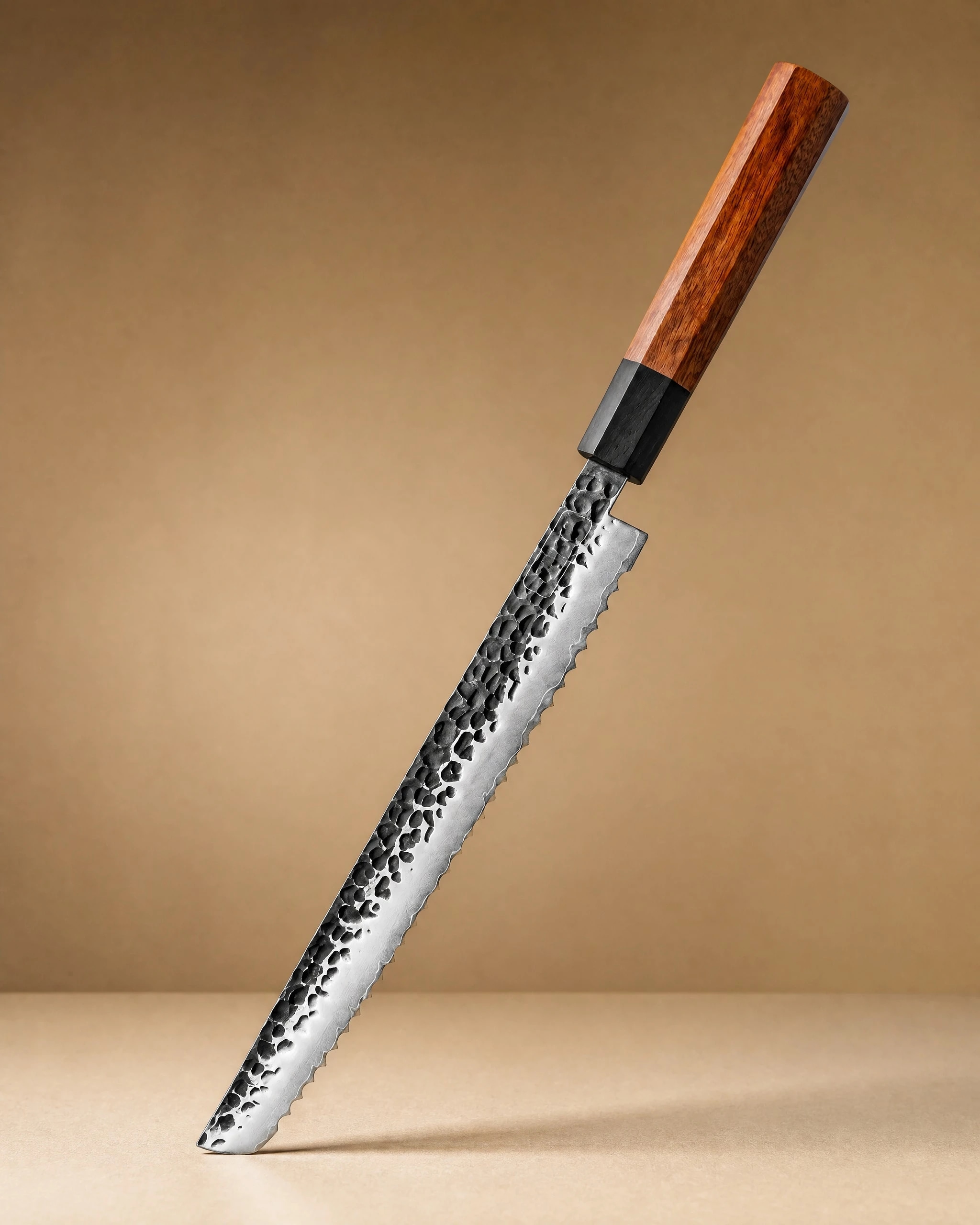 Rumoi 10" Japanese Bread Knife パン切りナイフ$59.99View product → is a 10 inch bread knife, long enough to cut a full loaf in a single draw and fine enough to slice rather than saw.
Set it on the table next to your steak knives and you have most of what a dinner actually requires.

Handles and Balance
A handle has three jobs: give you a secure grip, put the balance point where you want it, and survive contact with water and heat. Handle material matters, but handle shape matters more. If the handle is too small, your hand closes too tightly and you lose control. If it is too large or too slick, the knife twists while you slice.
Balance is personal. Some cooks want the weight forward, near the heel, because it helps the blade fall through the cut. Others prefer a neutral balance for control at the table. There is no universally correct answer, only the knife that feels right in your hand, which is why it helps to think about the grip you actually use before you buy.
Care Decides How Long the Knife Stays Sharp
A thin, acute edge is a maintained edge. Three habits keep it that way.
- Cut on wood or a soft composite board. Glass, stone, and ceramic will roll a fine edge quickly.
- Wash by hand and dry the blade right away. Do not leave it sitting wet.
- Hone lightly and often, and sharpen once honing stops bringing the edge back.
Our knife care guide covers the details, including angles, stones, and how to tell a dull edge from a rolled one.
Should You Buy a Set or a Single Knife?
A set solves a logistics problem. If you are setting a table for four or six and want matching knives that all perform the same way, a set removes the guesswork. 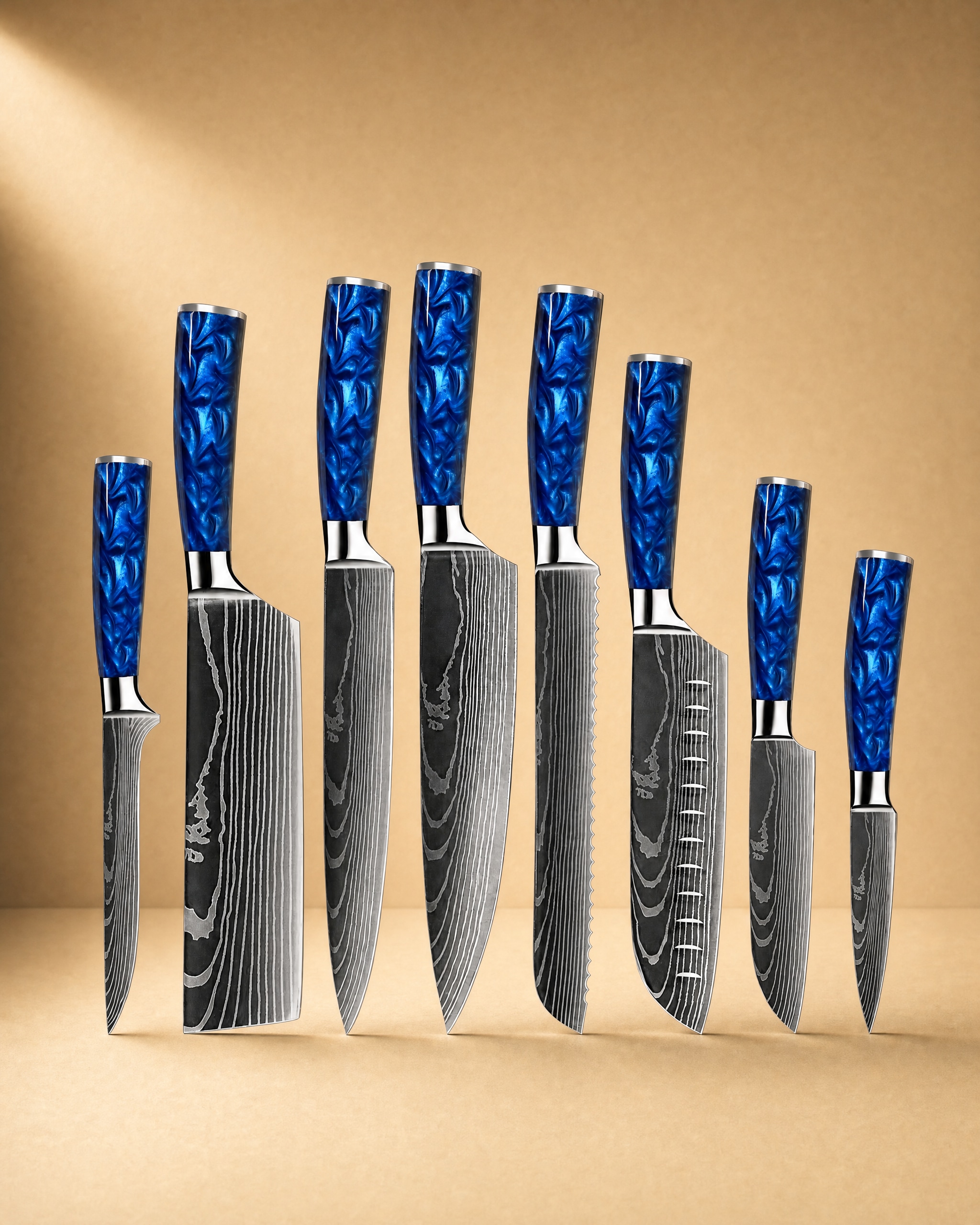 Shinano 信濃川 Damascus Pattern Stainless Steel Kitchen 8 Knife Set$149.99View product → is an 8 piece Damascus pattern stainless steel set, which covers a full place setting and then some. Damascus pattern steel is as much about looks as performance, and there is nothing wrong with that. A knife you enjoy looking at is a knife you are more likely to take care of.
Buying singles is the other path. It costs less up front, it lets you choose each blade for a specific job, and it means you are never storing six knives when you only needed two good ones.
How Much Should You Spend?
Spend enough to get good steel and clean geometry, and not much more until you know what you like. The step from a cheap stamped blade to a well made thin knife is large and immediately noticeable. The step from a good knife to a very expensive one is smaller, and it is mostly about finish, handle material, and the pleasure of owning something made with care.
If you are unsure where to begin, read our knife buying guide for a framework, then look at what is actually available. You can browse the full knife shop or go straight to steak knives if you already know what you need.
Common Questions
Can I use an 8 inch gyuto as a steak knife? Yes, and many people do, especially for larger cuts and for carving. It is longer than a classic steak knife, so give yourself room on the plate and use a pinch grip for control.
Do Japanese knives rust? It depends on the steel. Many are stainless and need only normal care. Carbon steel blades will patina and require drying after use. Check the description of the specific knife before you buy.
Can they go in the dishwasher? No. Heat, moisture, and contact with other utensils will damage an edge and a handle. Hand wash and dry.
Start With the Knife You Will Actually Use
The best steak knife is the one that is sharp, comfortable in your hand, and stored somewhere you will reach for it. Buy for the way you actually cook. If you slice a steak on a plate twice a month, a simple plain edge in a length that suits your portions is plenty. If you break down roasts, carve birds, and set a table for six, a thin 8 inch blade and a matching set will do more for your dinners than any single upgrade.
Keep it sharp, keep it dry, and it will outlast the plate it sits beside.
Photography: amirali mirhashemian via Unsplash.


