
Japanese Steak Knife Set Review

A steak knife is the one knife at the table that most people never think about until it fails. It smears instead of slices, it tears the crust off a ribeye, and it leaves a ragged edge on the meat. If you eat steak often enough to care, a Japanese style blade changes the experience more than most kitchen upgrades, and it often costs less than a block of six replacements.
This guide covers what a Japanese steak knife actually is, why edge geometry matters more than the wording on the box, and which knives make sense at each stage. It is written for a home cook in the US, shopping in dollars, cooking on a normal weeknight and a weekend grill.
What Counts as a Japanese Steak Knife
Japanese cutlery makers do not usually sell a knife labeled steak knife. The category is a Western one. Instead, Japanese makers produce shapes that do the job better: a short gyuto, a petty, or a slim utility knife with a thin grind and a hard edge. US shops, ours included, group those knives under steak and table knives because that is what shoppers search for.
The practical difference is geometry. A typical supermarket steak knife is stamped from a sheet of soft steel, given serrations, and sold in a block of six. A Japanese alternative is forged or roll forged from harder steel, ground thin behind the edge, and finished by hand on stones. It cuts with noticeably less pressure, which matters more than most people expect when there is a crust on the steak.
You can see the shapes that fall into this category on our steak knife page.
Straight Edge or Serrated
Serrated knives exist for good reasons. The teeth bite into fibrous meat, the edge survives years of contact with ceramic plates, and nobody in the household has to maintain them. If your steak knives live in a drawer and get used by guests who scrape their plates, serrated is the honest recommendation.
A straight, thinly ground edge does something serrations cannot. It separates muscle fibers instead of sawing through them. The cut face of the steak looks cleaner, the crust stays where it belongs, and the knife needs almost no downward pressure. The trade is maintenance and a little discipline: cut on wood or plastic when you can, and wash and dry the blade by hand.
For most households the answer is not one or the other. Keep serrated knives for casual dinners and add two straight edged Japanese blades for the meals where the cut matters.

Steel, Hardness, and Edge Retention
Japanese kitchen knives are generally heat treated to a higher hardness than mass market Western steak knives. Harder steel supports a thinner, keener edge and holds it longer. It also behaves differently when abused: a hard edge chips where a soft edge would simply roll over. Twist a thin blade against a bone or drag it across a plate and you will see the result.
The fix is technique, not product. Slice with the length of the blade instead of pressing straight down. Let the knife do the work. Cut on a board when you can. At the table, use a gentle back and forth motion and lift the blade off the plate between cuts. Do that, and a hard, thin edge will outlast a cheap serrated knife by a wide margin.
Stainless steels dominate here because they are forgiving in a home kitchen. They resist rust, they tolerate being left wet for a few minutes, and they are easy to keep clean. Carbon steel takes a sharper edge more easily and picks up a patina with use, but it needs drying immediately after washing.
Start With One Knife, Not a Set
If you are new to Japanese knives, buying a set first is usually a mistake. Buy one knife, use it for a month, and learn what you actually like. For most people that first knife should be an 8 inch gyuto, the Japanese chef knife shape that handles onions, proteins, herbs, and vegetables without complaint.
Two solid options in that shape are 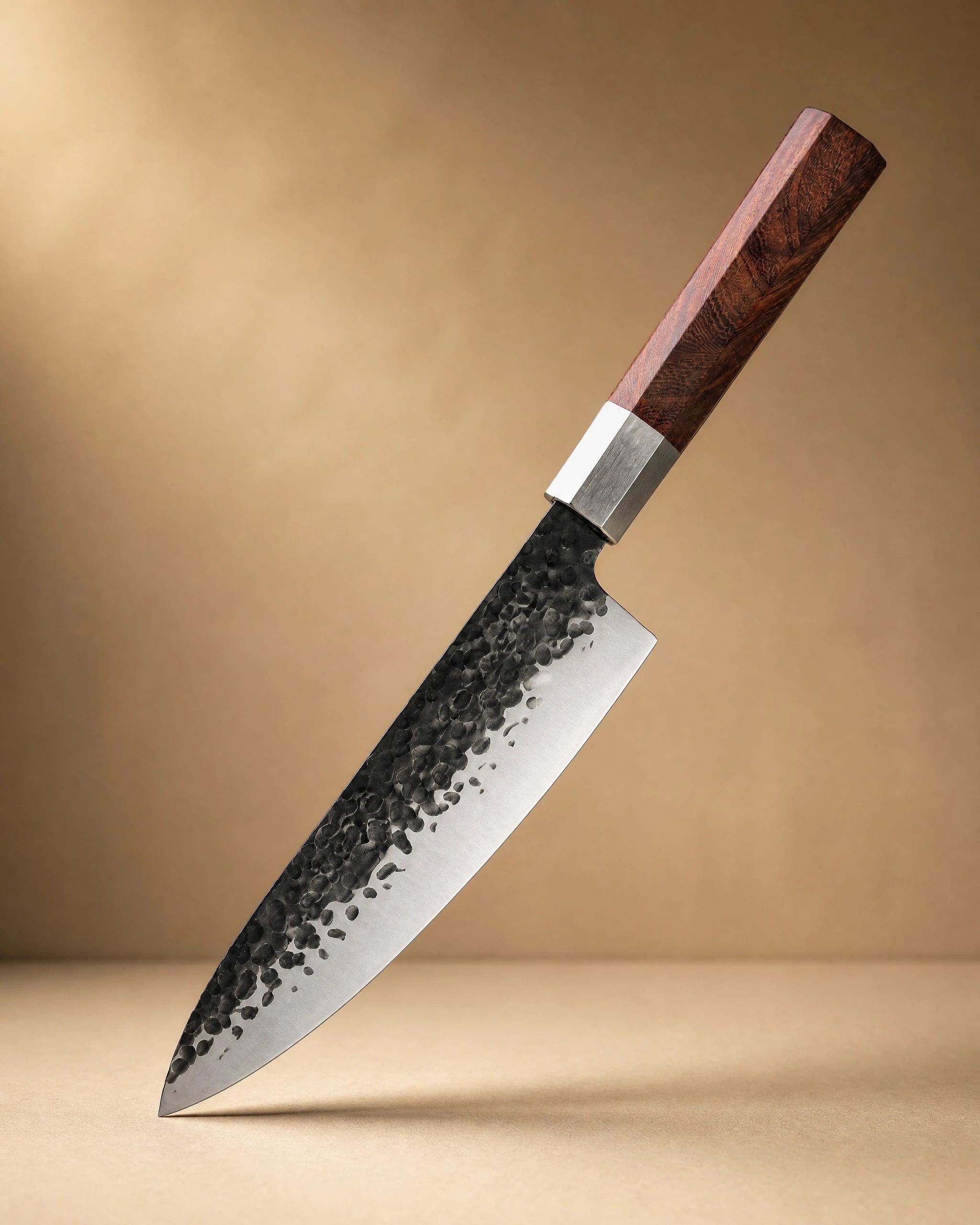 Sendai 8" Steel Gyuto Knife 牛刀$49.99View product → and
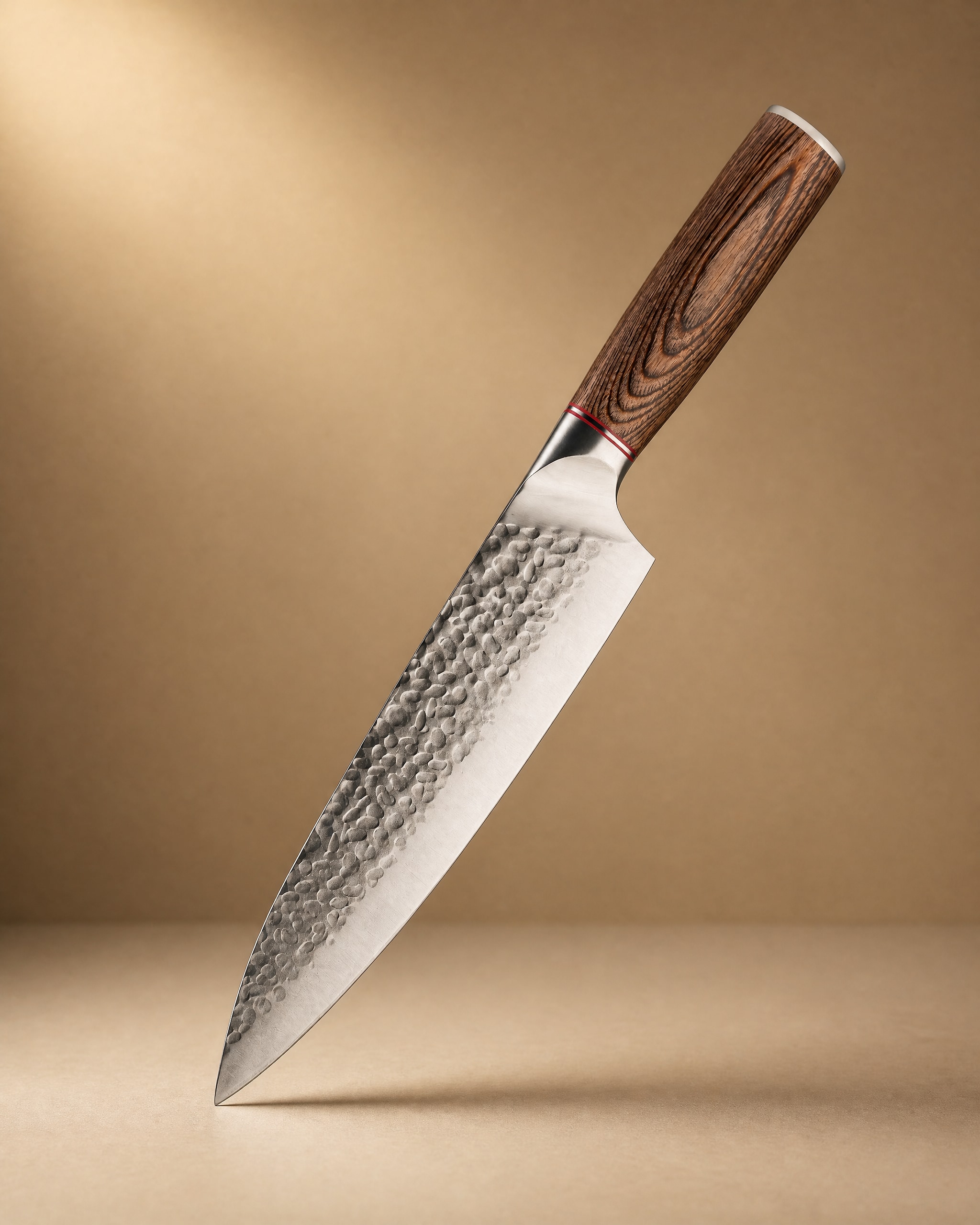 Akan 8'' Gyuto Knife 牛刀$49.99View product →. Both are 8 inch gyutos made for everyday prep, and either will slice a steak cleanly and do everything else you ask of it in the kitchen. The differences between them come down to finish and handle, which you can see on each card.
Use the gyuto on a board for the steak and you get the best of both worlds: a clean cut portion and no plate contact on the edge.
The Knife People Forget
A bread knife earns its place in a steak conversation more often than people expect. The same long, serrated blade that cuts through crusty sourdough also handles tomatoes, sandwiches, and anything with a tough exterior and a soft interior. In a small kitchen, one good serrated knife covers a lot of ground.
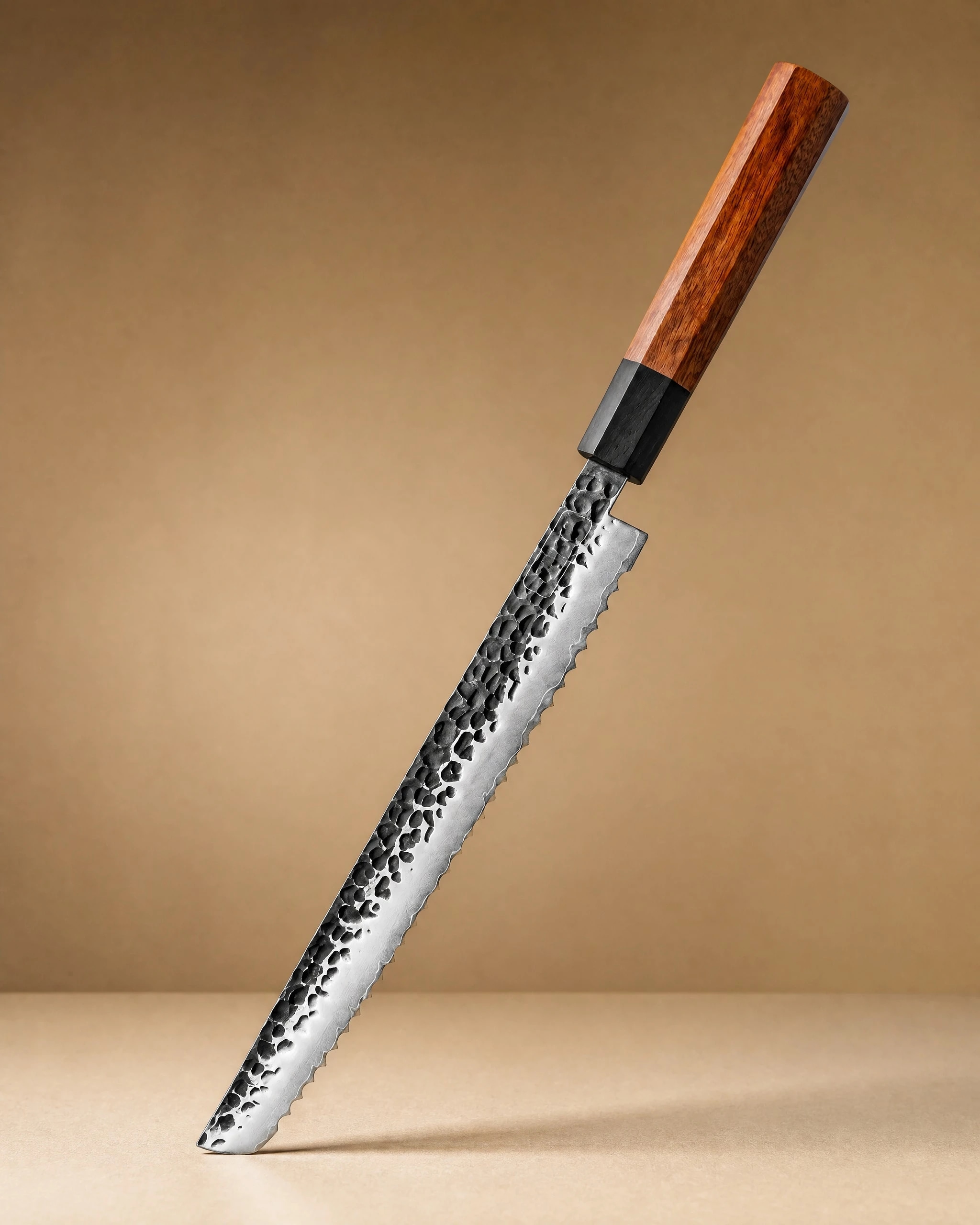 Rumoi 10" Japanese Bread Knife パン切りナイフ$59.99View product → is a 10 inch bread knife made for everyday prep. It is longer than a typical steak knife, which gives you a smoother stroke and less back and forth sawing. If you are assembling a set one piece at a time, this is the second knife to add after the gyuto.
When a Matched Set Makes Sense
Sets get a bad reputation, partly deserved. Many sets pad the count with knives nobody uses. A well chosen set is a different story, especially if you are outfitting a first kitchen, a rental, or a vacation house and you want one order to cover everything at once.
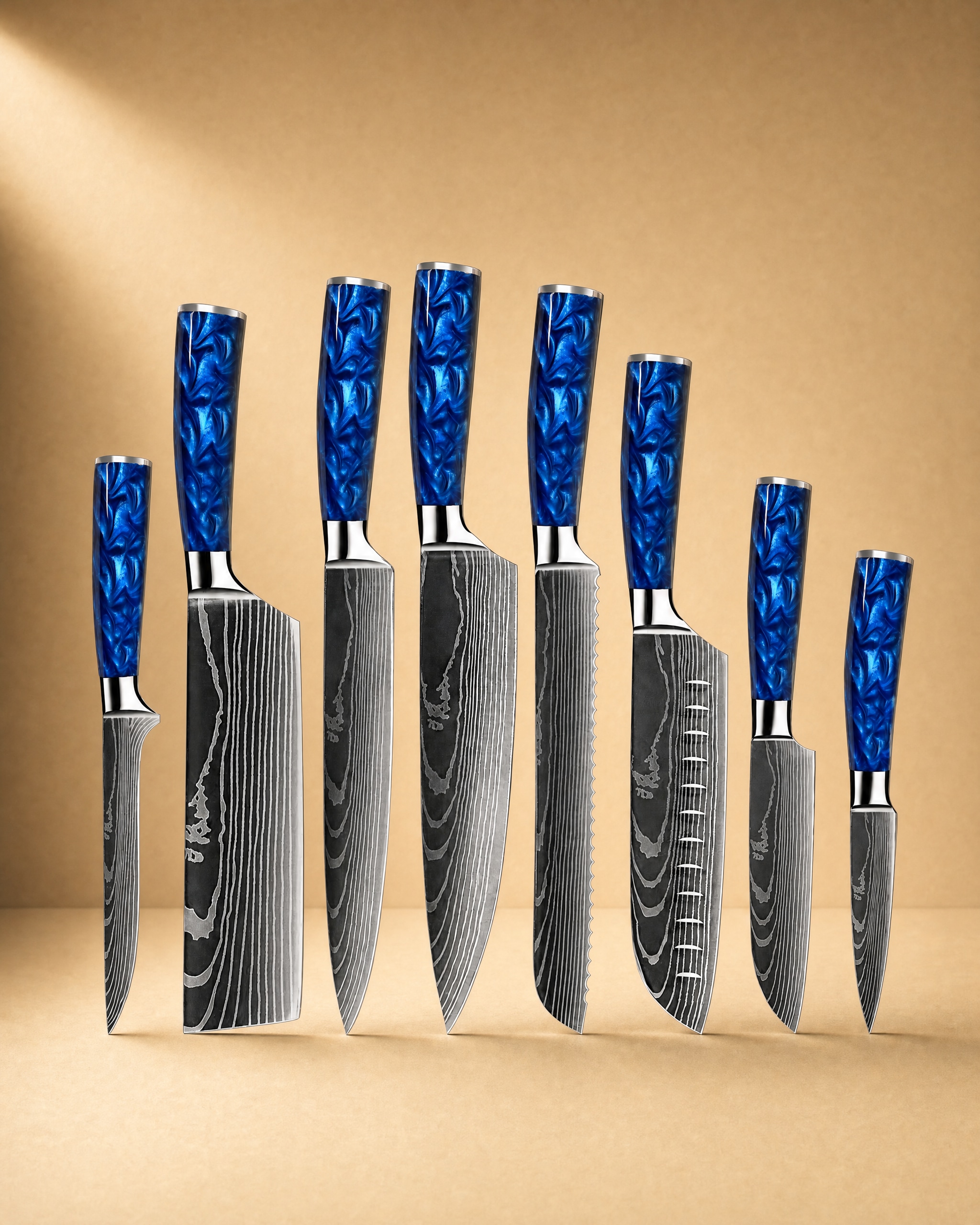 Shinano 信濃川 Damascus Pattern Stainless Steel Kitchen 8 Knife Set$149.99View product → is an eight piece set with a Damascus pattern stainless steel finish. It covers the core tasks in a single purchase, which is the case for it. If you would rather build slowly and pick each blade yourself, start with the gyuto and add pieces as you need them.
You can see individual knives and sets together at our knife shop.
Handles, Balance, and Fit
Handle material and shape get less attention than blade steel, and they affect daily use more. A handle that is too small for your hand makes a light knife feel unstable. A round handle rolls in the palm during long slicing sessions. A heavier handle shifts balance toward the back of the blade.
Handle materials on Japanese knives range from traditional wood to stabilized and synthetic options, and each has trade offs in grip, moisture resistance, and how the knife feels when wet. Check the handle spec on the product card before you buy, and if you can hold one in person first, do that. The knife you enjoy holding is the knife you will actually use.
Care: What Keeps a Set Alive
Japanese knives reward a short, boring routine. Wash by hand in warm water with a little dish soap. Dry immediately with a towel rather than letting the blade air dry. Store it on a magnetic strip, in a saya, or in a drawer with a blade guard.
A few rules worth following:
- No dishwasher, ever. Heat, moisture, and rattling against other items will damage the edge and the handle.
- No cutting on glass, ceramic, or stone. Those surfaces chip or roll a thin edge quickly.
- Hone or sharpen on a schedule rather than waiting until the knife is dull. A few light passes keep a good edge good.
- Skip pull through sharpeners on a thin Japanese blade. They remove more steel than necessary and can leave a rough edge.
Our knife care guide walks through sharpening angles, stones, and storage in more detail if you want to go deeper.
How to Choose in a Few Minutes
Work through three questions.
First, how often do you cook with a knife in hand? Daily users benefit most from a thin, hard Japanese blade because the difference shows up at every meal. Occasional cooks are usually better served by a couple of forgiving knives and less maintenance.
Second, who else uses the knives? If family members or guests will grab a steak knife and cut straight on the plate, plan for that. Either keep serrated knives for those occasions or choose a slightly more robust blade and accept the maintenance conversations.
Third, do you want to build or buy once? Building gets you better knives for the money and no filler pieces. Buying a set is faster and simpler. Neither choice is wrong.
Our knife guide covers blade shapes, lengths, and steel types in more depth if you want to think it through before ordering.
Honest Expectations
A Japanese steak knife will not make a mediocre steak taste better, and it will not survive treatment that a stamped serrated knife survives. What it will do is cut cleanly, hold an edge, and feel precise in the hand for years if you look after it.
If you want the short version: buy an 8 inch gyuto first, add a serrated bread knife second, and only buy a set if convenience matters more than picking every blade yourself. That order of operations gets most people to a better result than a block of six knives they never sharpen.
Photography: Richard Iwaki via Unsplash.


