
Japanese Bread Knife Buying Guide

A loaf of bread is the most honest test of a kitchen knife. Push a thin, hard blade through a crust that resists, then drag it through a soft, sticky crumb, and you learn quickly whether the edge was built for the job. Most home cooks reach for whatever knife is closest. That is why so many slices come out squashed, torn, and covered in crumbs.
A Japanese bread knife solves a specific problem. It is not a chef's knife with teeth bolted on. It is a blade designed to saw rather than push, to keep the crumb intact, and to feel light enough that you control the cut instead of the other way around. This guide covers what actually matters when you buy one, and where a bread knife fits into a larger Japanese knife setup.
Why Japanese Bread Knives Are Different
Japanese knife making is usually associated with thin blades, hard steel, and edges that cut through geometry rather than force. Bread knives are the exception that proves the rule. Bread is abrasive and unpredictable: a hard crust on the outside, a soft and sometimes sticky interior. A straight, razor thin edge grabs and tears. A serrated edge gives you a row of small starting points, each one biting into the crust and beginning a cut you can extend with a gentle sawing motion.
What separates a Japanese bread knife from a generic supermarket version is the refinement of the details. Blade stock tends to be thinner, teeth are usually cut with more consistent spacing, and the finish is cleaner. The result is less drag through the crumb and less force needed at the crust. On a dense sourdough or a crusty baguette, you notice the difference within a single slice.
It also helps to be clear about what a bread knife is not. It is not a substitute for a chef's knife or a gyuto. It is a single purpose tool, and it earns its place by doing that one job better than anything else in the drawer.
Serration Pattern: The Detail Most Buyers Ignore
Serrated edges are not all the same, and the pattern decides how the knife behaves on your counter.
Pointed or triangular teeth bite aggressively. They are excellent on very hard crusts and on bread with a thick, brittle shell, because each tooth concentrates pressure into a small area. The tradeoff is a slightly rougher cut on soft sandwich bread, where the points can catch and tear instead of gliding.
Scalloped or rounded teeth, sometimes described as a wave pattern, are gentler. They start the cut with less pressure, which makes them better on delicate crumb, cakes, and soft loaves. On a very hard crust you will saw a little more, but the cut quality is cleaner overall.
Tooth spacing matters too. Wider spacing clears crumbs more easily and handles thick, chewy bread. Narrower spacing produces a smoother slice but clogs faster in very soft bread. If you bake or buy a mix of breads, a moderate pattern with even spacing is the safer choice, and it is the reason a well made 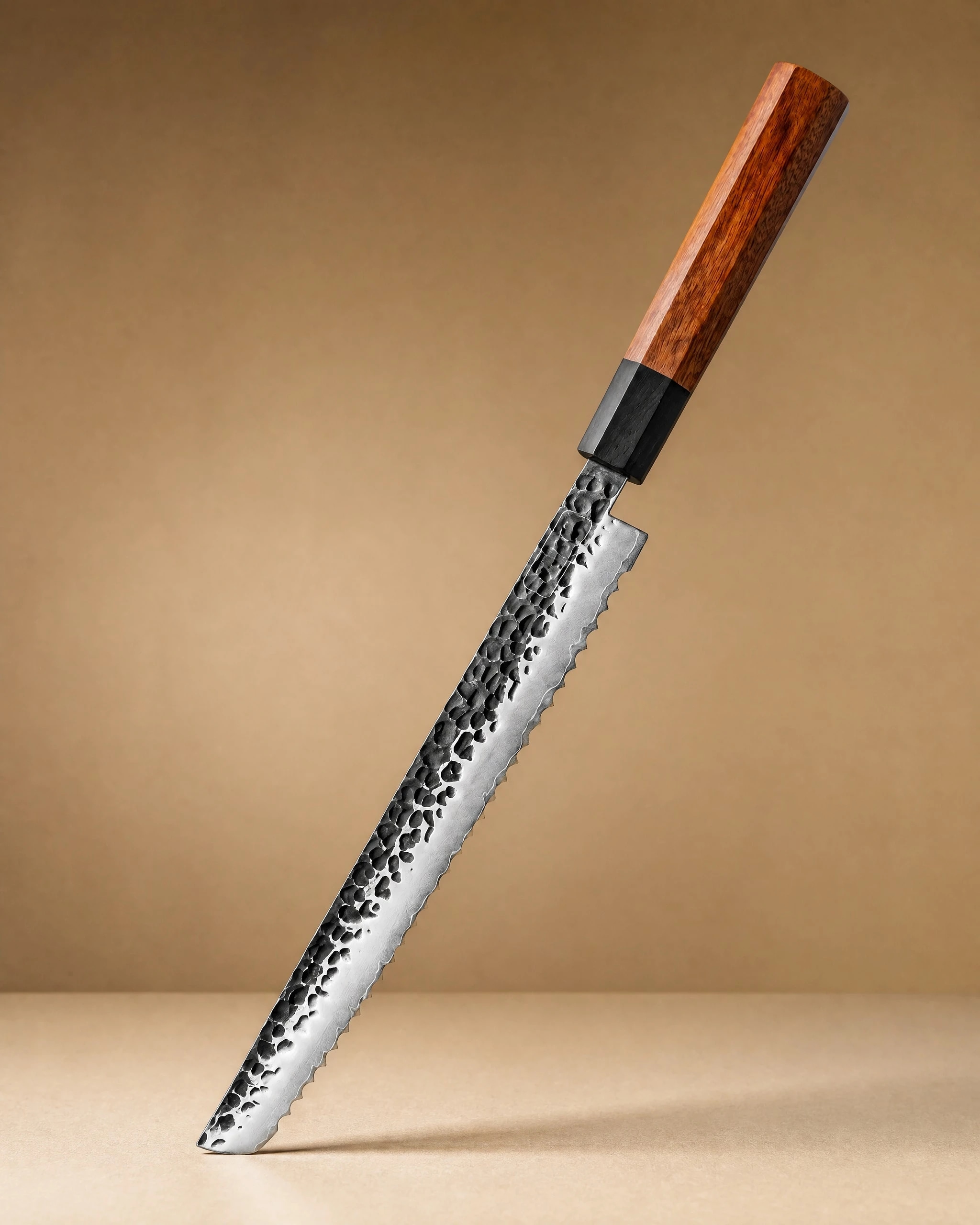 Rumoi 10" Japanese Bread Knife パン切りナイフ$59.99View product → covers so many loaves. Its longer blade gives you the reach to cut a wide boule in one steady pass rather than two or three.

Blade Length: Match It to the Loaf
Length is the specification you feel every time you use the knife, and it is the one most people get wrong.
Short blades, around 8 inches, are nimble and easy to store. They work well on baguettes, sandwich loaves, and smaller round breads. They struggle with a very wide boule, where you end up sawing from two directions and meeting in the middle, which rarely produces a level slice.
Long blades, around 10 inches, give you a single clean pass across a large loaf. If you bake sourdough, rye, or anything with a wide diameter, this is the length to buy. The extra reach also keeps your knuckles clear of the cutting board, a small comfort that matters more than you would expect.
A 10 inch bread knife is also genuinely useful for other tasks: slicing a whole watermelon, leveling a cake layer, cutting through a block of soft cheese, or carving a large roast. That versatility is why a long blade tends to earn its drawer space faster than a short one.
Steel, Edge Retention, and Realistic Expectations
Bread is abrasive. Crust contains hard, toasted starches that slowly wear down any edge, and sugar from the crumb leaves a residue that attracts moisture. Any bread knife, Japanese or otherwise, will dull with use.
Serrated blades have one advantage here. Because each tooth presents several cutting surfaces, a serrated edge keeps working for a long time after the points have worn. Even so, a worn serration cuts poorly and starts crushing crust instead of slicing it.
Sharpening serrations is a different skill from sharpening a plain edge. The common approach is to work only the beveled side of each tooth with a rod or a narrow stone, one tooth at a time, and to leave the flat back untouched. It is slow work. Many owners simply accept that a bread knife has a long service life rather than an indefinite one. If you want the broader maintenance picture, the knife care guide walks through the habits that keep edges working longer.
Handles: Wa and Western Styles
Japanese knives usually arrive with one of two handle types. A wa handle is the traditional Japanese style, often a lighter octagonal or rounded shape that shifts the balance point forward toward the blade. A Western handle is heavier, frequently riveted, and pushes the balance back toward your hand.
Neither is better. Wa handles suit cooks who pinch grip and want the blade to feel like an extension of the hand. Western handles suit cooks who hold further back or prefer a heavier, more familiar feel. If you already own a gyuto, match the handle style so both knives feel consistent when you switch between them.
Where a Bread Knife Fits in a Japanese Knife Collection
Most cooks do not need many knives. They need three or four that are genuinely good at their jobs.
The workhorse is a gyuto, the Japanese equivalent of a chef's knife, and it handles the vast majority of prep. The 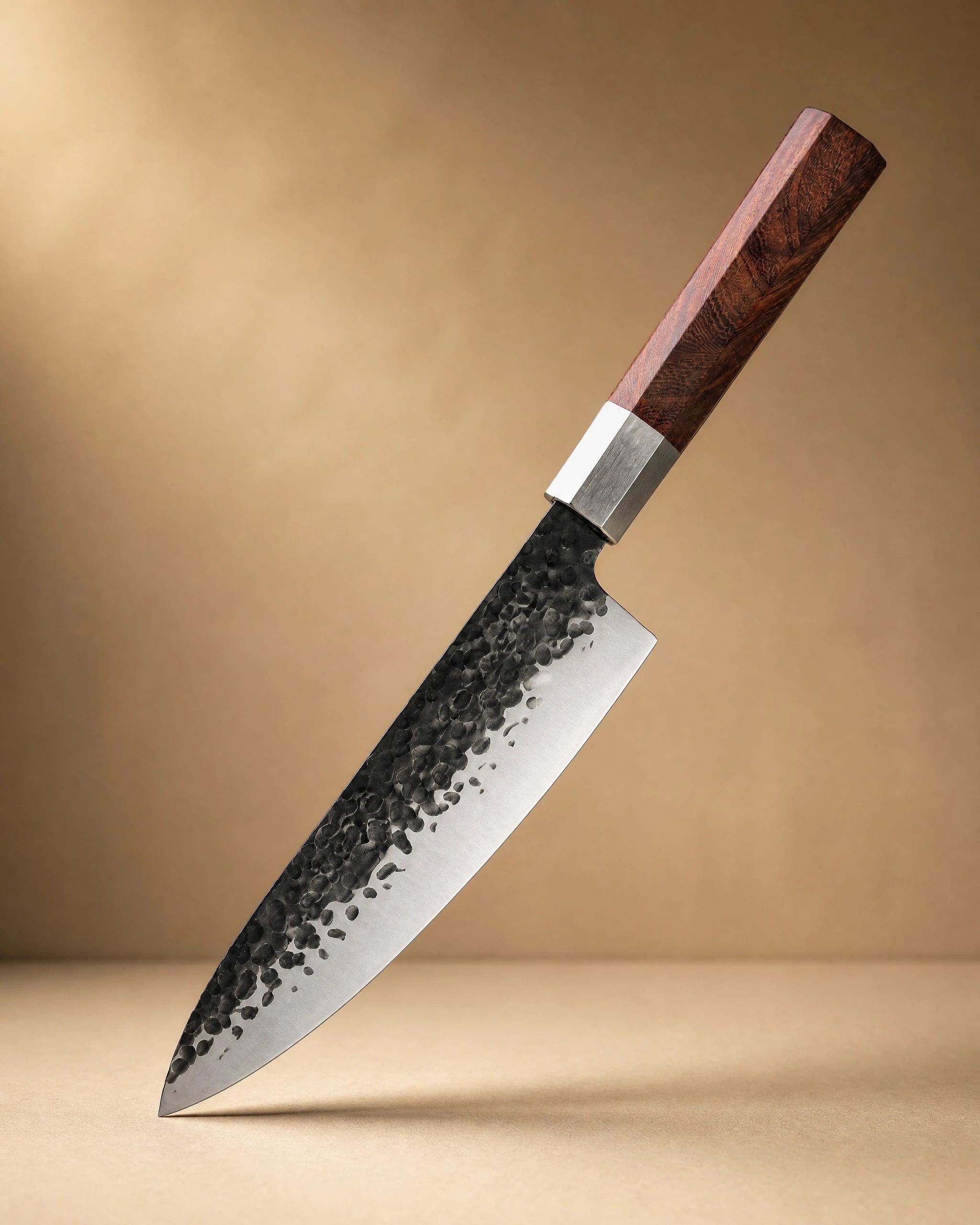 Sendai 8" Steel Gyuto Knife 牛刀$49.99View product → is an 8 inch steel gyuto built for exactly that role: vegetables, proteins, herbs, and general everyday cutting. Adding a second gyuto like the
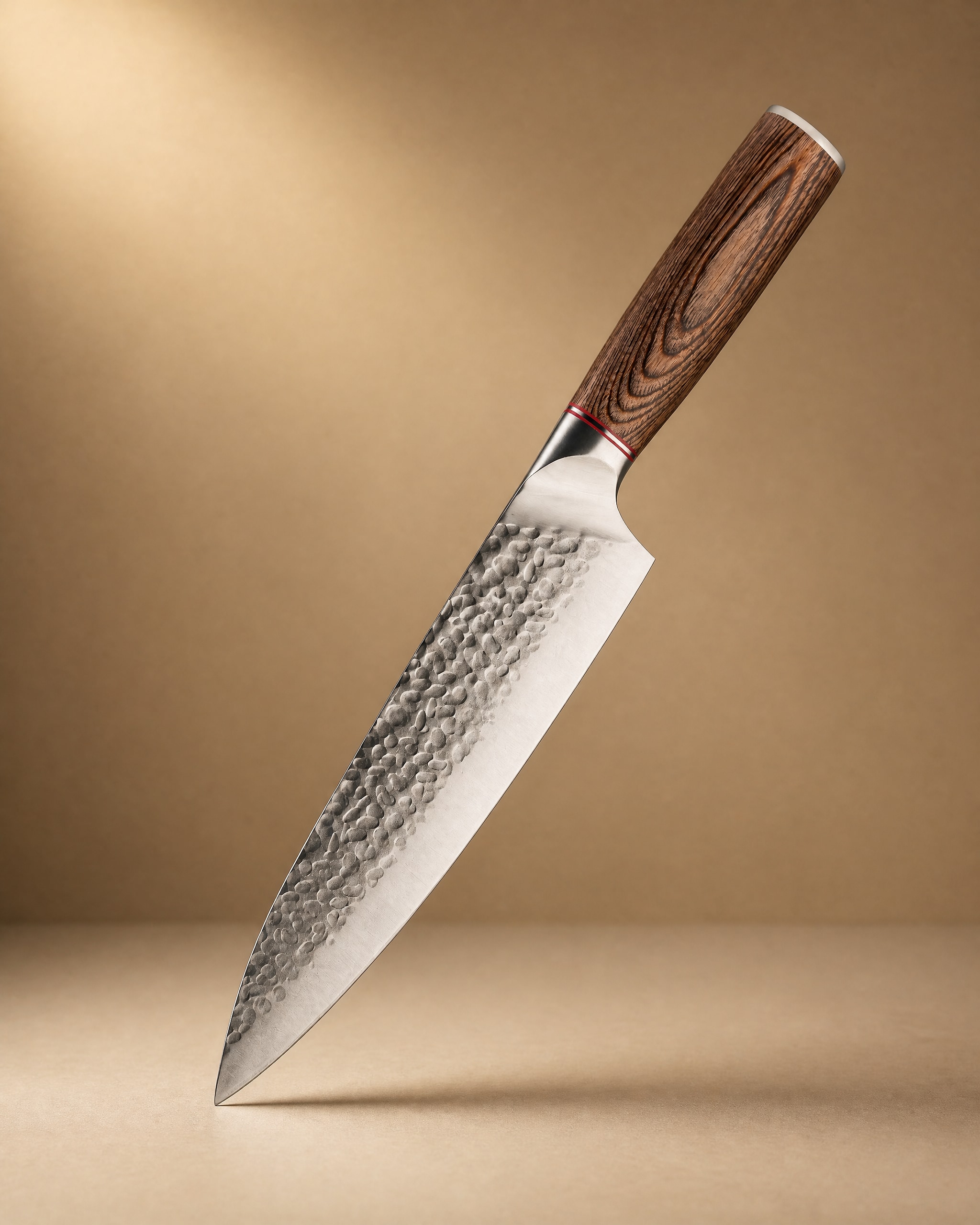 Akan 8'' Gyuto Knife 牛刀$49.99View product → gives you a backup or a slightly different feel in the hand, which matters if two people cook in the same kitchen.
A bread knife sits alongside the gyuto as a specialist. It takes over every task a gyuto handles badly, which means anything with a crust, a delicate crumb, or a soft interior that would collapse under a thin straight edge.
If you would rather build the whole set at once, the 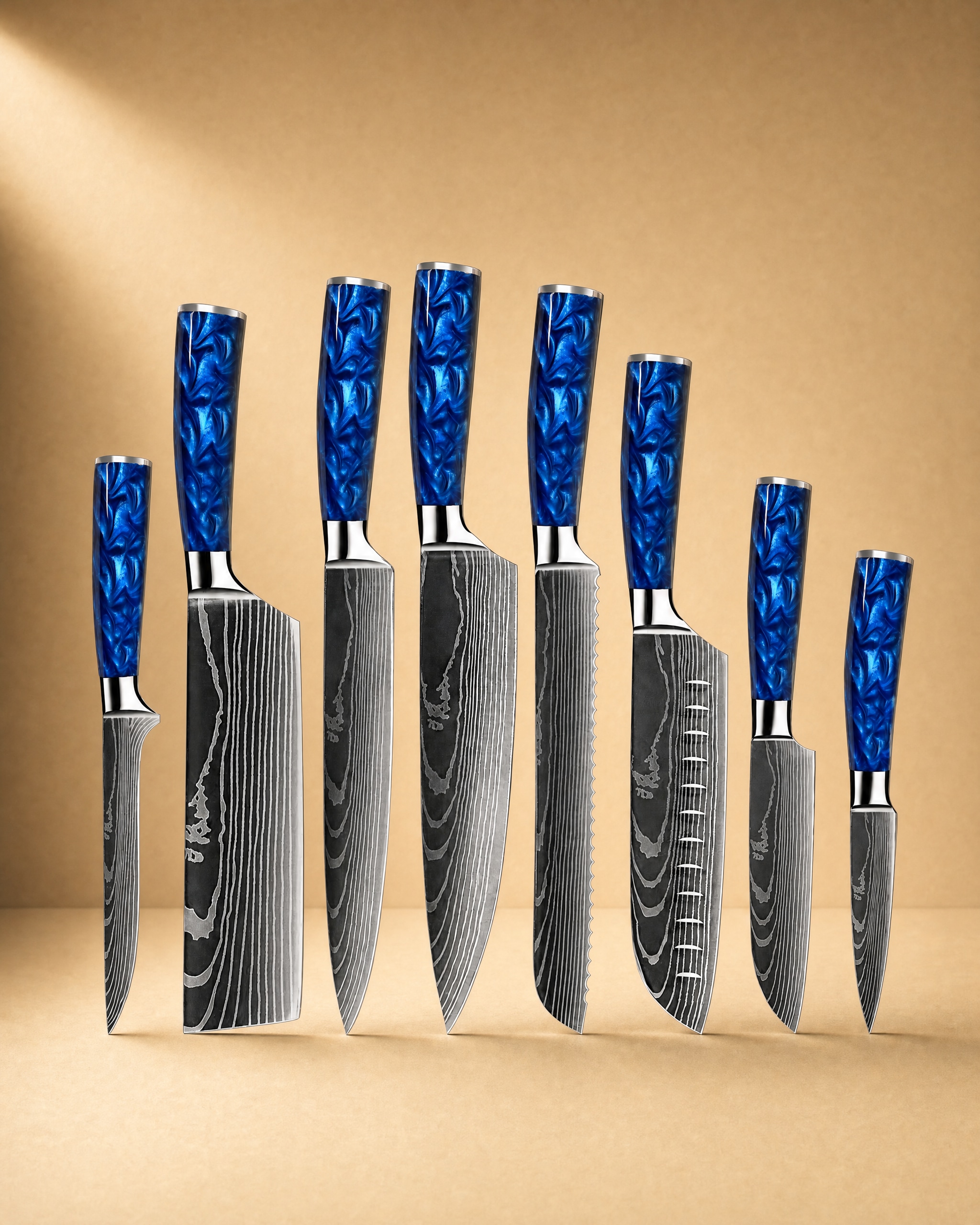 Shinano 信濃川 Damascus Pattern Stainless Steel Kitchen 8 Knife Set$149.99View product → bundles the core knives into a single purchase and covers the gaps one knife leaves behind. Buy it if you are starting from nothing. Buy one good gyuto and one good bread knife if you are building slowly and want each piece to be excellent.
How to Choose Without Overthinking It
- Blade length: 10 inches if you bake or buy wide, crusty loaves; 8 inches if your bread is mostly sandwich loaves and baguettes.
- Serration: pointed teeth for very hard crusts, scalloped or wave patterns for softer bread and cakes.
- Blade stock: thinner stock cuts with less resistance and feels lighter in the hand.
- Handle: match the style of the other Japanese knives you own so the balance stays consistent.
- Budget: spend on the blade, not the packaging. One well made bread knife outperforms a drawer full of mediocre ones.
Care Basics That Keep a Bread Knife Useful
Very little maintenance is required, but the small habits matter.
Hand wash and dry the knife right after use. Bread residue is sticky and slightly acidic, and leaving it on the blade overnight is the fastest way to dull the finish. Store it in a drawer with a blade guard, on a magnetic strip, or on a wall rack, never loose with other utensils where the teeth can chip against metal.
Use a wooden or soft plastic cutting board. Glass and stone boards are brutal on serrations and will roll the teeth over quickly. Avoid cutting on ceramic plates entirely. Finally, resist using a bread knife on frozen food or through bone. The teeth are thin and they chip.
A Simple Way to Decide
If you bake your own bread, or you buy loaves with a real crust, a long Japanese bread knife is one of the highest value tools you can add to a kitchen.
Browse the Japanese bread knife selection to see current options, or start with the knife buying guide if you are still mapping out what your kitchen needs. Everything else we carry lives in the full shop.
A good bread knife is not a luxury. It is the difference between a slice and a pile of crumbs.
Photography: Tommaso Urli via Unsplash.

