
Handmade Japanese Kitchen Knives Guide

A handmade Japanese knife is not one thing. The word covers a blacksmith forging a blade in a small workshop, a small factory in Seki running familiar profiles for decades, and a blade blank that was stamped by machine and then ground, sharpened, and finished entirely by hand. All of those knives get called handmade, and the difference between them matters far more than the label does.
What follows is a practical guide to handcrafted Japanese knives: what actually changes when you move up from a mass produced blade, which shapes earn their place in a home kitchen, and how to spend your money without buying something you will not use. We sell these knives, so treat the opinions as ours, and check the specifics on each product page.
What Handmade Usually Means in Practice
In Japan, the word usually translated as handmade more often means hand finished. A smith forges and heat treats the blade, or a mill stamps it from a roll of steel, and then a trained sharpener grinds the bevels, sets the edge, and finishes the blade against a series of stones. That last stage is where most of the character lives. A person with a water wheel and twenty years of practice produces a grind that a machine cannot quite match: thinner behind the edge, slightly asymmetric in a deliberate way, and easier to maintain later on a stone.
What handmade does not guarantee is uniformity. Two blades from the same workshop can differ in weight, in how evenly the bevel sits, and in how the handle is fitted. That is normal, and it is part of why these knives feel like individual tools rather than interchangeable ones. It also means you should buy from someone who will describe the actual knife in front of them rather than read a spec sheet back to you.
What it does not mean: magic steel, or an edge that never dulls. Every knife in this guide needs sharpening. A well made one simply holds its edge longer and comes back to life faster.
Steel, Heat Treatment, and the Grind That Matters
Most handmade Japanese kitchen knives fall into three groups. Carbon steel, often White or Blue paper steel, takes a very keen edge, sharpens easily, and rusts if you leave it wet. Stainless alloys hold up to a busy kitchen with far less worry, and modern heat treatment has closed much of the gap in edge quality. Then there is clad construction, a hard core sandwiched between softer layers, frequently with a Damascus pattern showing on the face of the blade.
The Damascus pattern you see on many blades is a byproduct of that cladding, layered steel folded and etched so the layers show. It is beautiful, and it is cosmetic. Do not pay extra for a pattern expecting it to cut better. Pay for it because you like looking at it, which is a perfectly good reason.
Hardness numbers get quoted constantly, and they matter less than the geometry. A thin blade at moderate hardness will outcut a thick blade at high hardness every time. The useful question is how thick the blade is right behind the edge, and how quickly the grind tapers from the spine down. That taper, not the steel name, is what you feel going through an onion.
The tradeoff is fragility. Hard, thin edges chip if you twist them against bone or scrape them across a board. Use wood or soft plastic to cut on, keep the edge out of the sink, and reach for a heavier knife when there is a bone in the way.
Shapes Worth Owning, and Shapes You Can Skip
Nearly every first purchase should be a gyuto, the Japanese chef's knife. It has enough flat section for push cutting and enough curve for rocking through herbs, and the profile runs from roughly 180mm up to 240mm. In a home kitchen, an 8 inch blade covers almost everything you cook, and it still fits on a crowded board next to a cutting board in a small apartment kitchen.
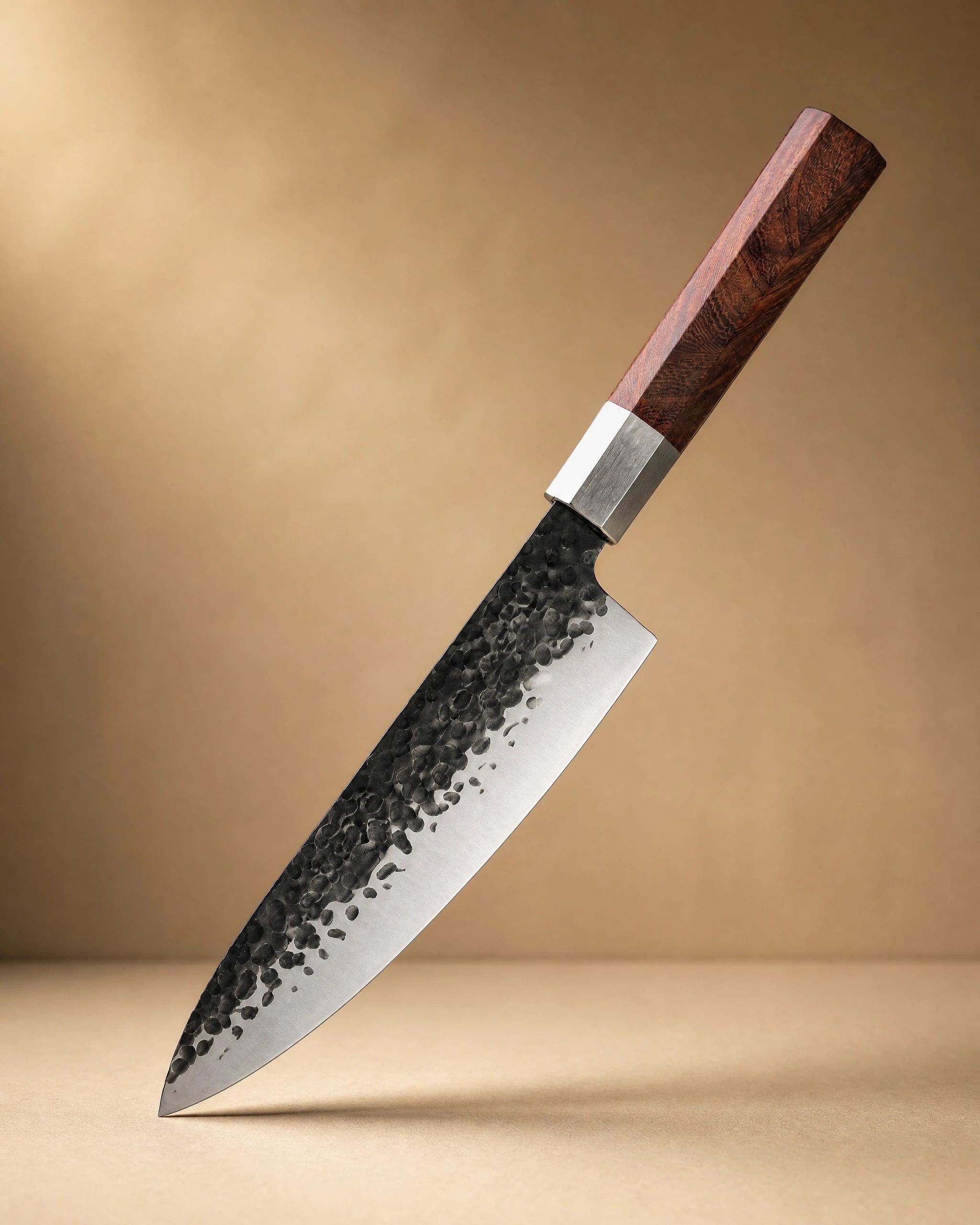 Sendai 8" Steel Gyuto Knife 牛刀$49.99View product → is a fair benchmark at that size: an 8 inch gyuto with an all purpose profile, the length most people reach for first thing in the morning.
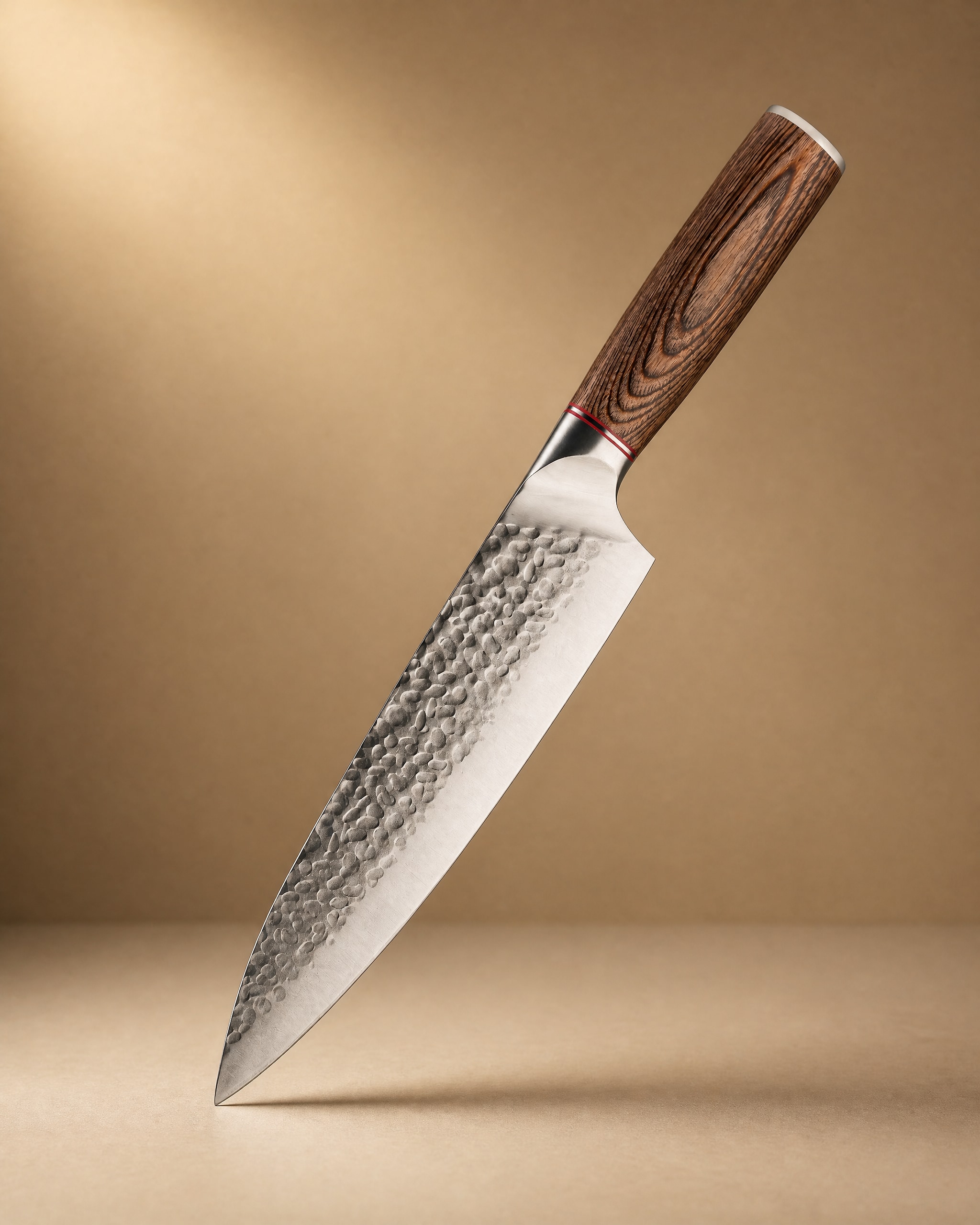 Akan 8'' Gyuto Knife 牛刀$49.99View product → is the same concept from a different workshop, and comparing the two is a useful exercise, because the real differences between two 8 inch gyutos live in the grind and the balance point, not the dimensions.

Specialty shapes come after. A nakiri makes vegetable prep genuinely pleasant. A petty handles small work and in hand cutting. A sujihiki slices roasts cleanly. None of them are necessary, and buying them early usually means they sit in the block. Add a shape when a specific task annoys you often enough to justify it.
Handles: Wa and Western
There are two handle families, and the choice is about balance more than looks. A Japanese wa handle is a light octagonal or oval piece, often ho wood with a horn ferrule, and it pushes the balance forward into the blade. A western style handle is heavier and often riveted, and it pulls the balance back into your palm. Neither is better. Cooks who choke up near the bolster tend to like the forward feel of a wa handle. Cooks who pinch far forward and work long shifts often appreciate the counterweight of a heavier handle.
Check the fit on any handmade knife. A small step where the ferrule meets the wood is common and harmless. A handle that moves, or a gap that catches water, is a defect and worth returning.
Bread Knives and Sets: Where They Fit
A bread knife is the one serrated knife worth the drawer space. 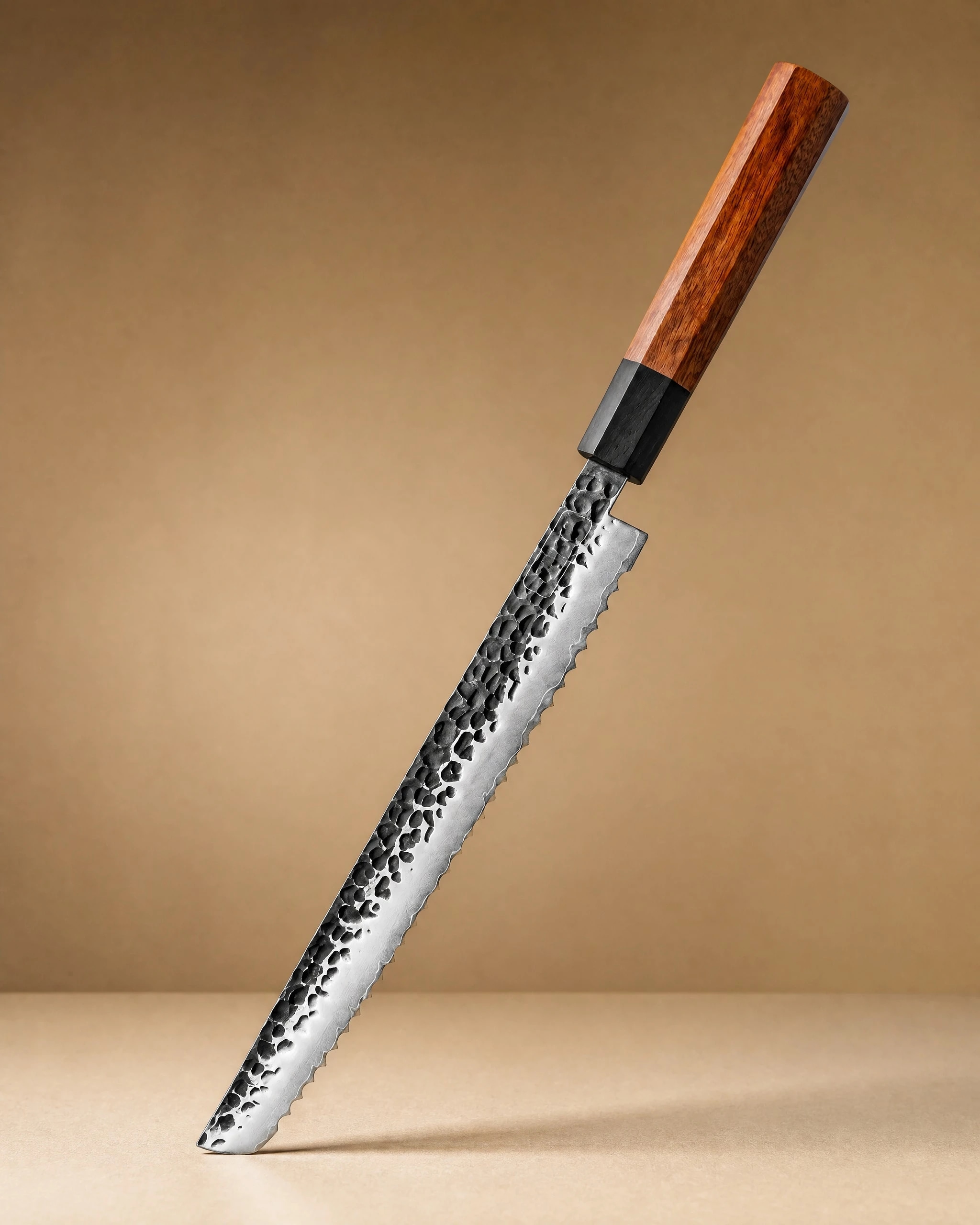 Rumoi 10" Japanese Bread Knife パン切りナイフ$59.99View product → handles crusty loaves, tomatoes, and delicate cakes without crushing them, and it is one of the few knives where the serrations do the work and a razor edge behind them matters less. Buy it when you bake or buy whole loaves, not before.
Sets are usually a poor first purchase, because they include knives you will never pick up. The exception is outfitting a kitchen from nothing, or buying for a household where more than one person cooks. 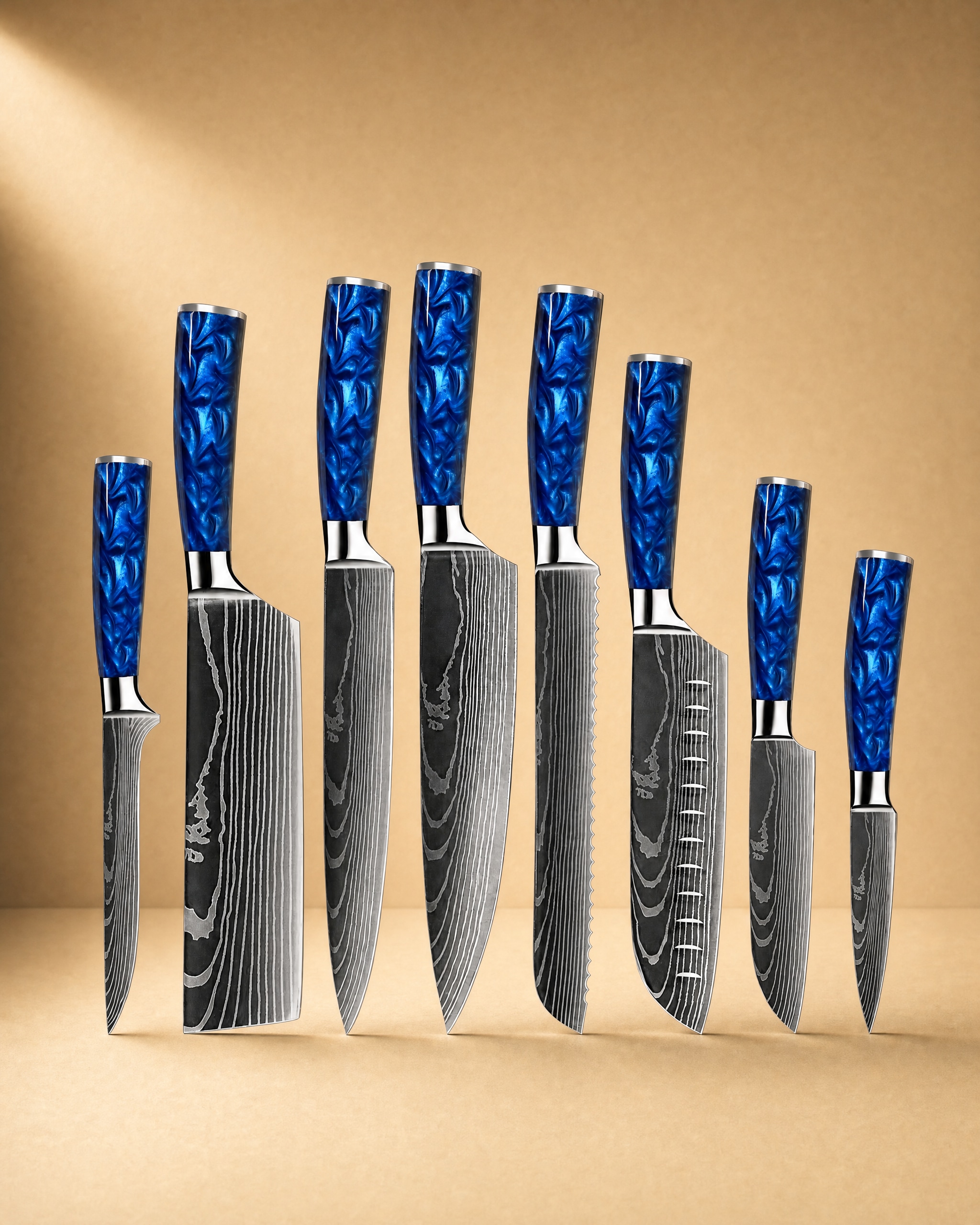 Shinano 信濃川 Damascus Pattern Stainless Steel Kitchen 8 Knife Set$149.99View product → is an eight piece set with Damascus pattern stainless steel blades, a sensible way to cover the basics in one go if you would rather not assemble a collection knife by knife.
Care, and the Sharpening Rhythm
Handmade knives are not high maintenance, but they do ask for a routine. Wash by hand, dry immediately, and put the knife away rather than leaving it in a rack wet. Wood and soft plastic boards are kind to edges. Glass and stone boards are not, no matter what the knife cost.
Storage matters too. A magnetic strip or a knife guard protects the edge from the drawer, and a hard edge that knocks against a steel utensil will chip long before it wears out from cutting. If you travel with a knife, a stiff blade guard is worth more than any case.
For sharpening, learn to hold a consistent angle on a water stone, or find someone local who will. A 1000 grit stone and a light touch will keep most home knives cutting well for years. Hones are for western knives with soft steel. A hard Japanese blade does not need one. Our knife care guide walks through the full routine, including what to do about small chips and rust spots before they become permanent.
How to Choose Without Overbuying
Start with the knife you will use daily, which almost always means a gyuto in the 8 inch range. Add a second knife when a real gap shows up, and let your board and your cooking decide what that is. Buy from a seller who lists the steel, the grind, and the handle honestly, and who will tell you when a knife is wrong for you.
If you would rather compare options in one place, browse the full knife shop and read the knife buying guide before you commit. A short list of things to check before you pay:
- Blade length and weight, and whether the balance sits where you grip.
- Steel type: carbon for edge quality and attention, stainless for low fuss.
- Grind and spine thickness, which decide how the knife moves through food.
- Handle fit, and whether the shape suits your grip over a long session.
A handmade Japanese knife is a long purchase, not a fast one. Buy one good gyuto, learn to keep it sharp, and the rest of the collection tends to sort itself out. The knives that stay in your kitchen are the ones that fit your hand and your cooking, not the ones with the longest spec sheet.
Photography: Richard Iwaki via Unsplash.

