
Choosing the Best Nakiri Knife for Vegetables

If you cut vegetables every day, a nakiri knife might be the most useful blade in your kitchen. It has a thin, flat blade made for the straight up and down motion cooks use when slicing onions, carrots, celery, and greens. The Japanese name literally means vegetable cutting blade, and that simple focus is why so many home cooks discover it after years of rocking a chef's knife. A nakiri Japanese knife is not meant to replace every knife you own. It is meant to make vegetable prep faster, cleaner, and less tiring. Once you pick one up, you may not reach for a heavy Western knife for prep again.
What Is a Nakiri Knife?
A nakiri is a double bevel blade with a straight edge and a flat profile. The edge has no belly curve, so it makes full contact with the cutting board along its length. Most nakiri knives have a tall blade, which lets you push through food without your knuckles scraping the board. The tip is usually square, but that is for function rather than looks. It keeps the blade stable and gives you a wide cutting surface.
The design comes from traditional Japanese kitchens, where vegetables are prepared with precise, deliberate cuts. A nakiri is not made for rocking. It is made for push cutting and pull cutting. You can slice an onion into thin rings by moving the blade straight down through the onion. You can chop herbs by tapping the blade on the board in a fast, controlled rhythm. Because the blade is thin, it creates less friction and splits food cleanly rather than crushing it.
This is the first thing to understand about nakiri knife use. The blade does the work because it is shaped for the task. Your wrist stays close to neutral, which is an advantage over a curved blade, and the edge line stays parallel to the board so you get consistent thickness without thinking about it.
Why Cooks Choose a Nakiri for Vegetables
Vegetables are some of the most demanding ingredients in a kitchen. Carrots are dense, onions are slippery, celery is juicy, and mushrooms can bruise. A chef's knife can handle all of them, but it asks you to compensate for the blade's curve. A nakiri is designed around the motion vegetables actually require.
When you use a nakiri knife, you push the edge straight down, then slide it forward and back slightly as needed. That is how Japanese cooks produce even slices of carrot for stock and fine shreds of cabbage for slaw. The tall blade also works like a bench scraper. You can use the flat side to scoop up chopped food and transfer it to the pan. That is a small detail, but after a heavy prep session it makes a noticeable difference.
There is also the weight. Most nakiri knives are lighter than many Western knives, so you can make repeated cuts without tiring your forearm. The exact weight varies by maker, but the overall balance favors the blade. That balance is easy to feel: the knife should fall into a natural forward angle when you hold it with a pinch grip, and the handle should not make you strain to keep the tip down.

What to Look For in a Nakiri Knife
Not all nakiri knives feel the same. Before you pick one, think about how you prep and how much maintenance you want. A few factors matter more than the brand name.
- Steel type and edge retention. Harder steel holds a sharp edge longer but can be more brittle. Stainless steel is easier to care for and resists rust from acidic vegetables like tomatoes or citrus. Carbon steel takes a very fine edge but needs more attention and drying.
- Blade length. A shorter nakiri feels nimble on a small board; a longer one gives more cutting surface and can suit larger hands.
- Height and profile. A taller blade gives knuckle clearance and keeps your fingers off the board. A flat profile is essential for clean push cuts.
- Handle comfort. The handle should feel secure in your grip, whether you use a pinch grip or a handle grip. Wooden handles are traditional; synthetic handles are easier to maintain. Choose the one that makes you want to use it.
If you are not sure where to start, a good rule is to choose the simplest well built knife that fits your hand. The category page for nakiri knives pulls together the models we carry, and it is a useful place to compare blade shapes and sizes without getting lost in marketing language.
Using a Nakiri Knife the Right Way
Using a nakiri knife is easier than using a Western chef's knife for most vegetable work because the technique is forgiving. Hold the knife with your thumb and index finger pinching the blade just above the handle, which gives you control. Rest your other fingers around the handle. Use a straight down motion from the blade's heel toward the tip, or rotate between two contact points to work through large ingredients.
For an onion, peel it and leave the root intact. Make horizontal and vertical cuts, then push the blade through from the root end toward the stem. The flat profile lets you keep the blade in full contact with the board as the onion is diced. For leafy greens, stack the leaves, roll them tight, and slice through with a gentle bouncing motion. For a melon or cabbage, start by tapping the tip into the dense surface, then push straight down through the body of the food.
The most common mistake is treating a nakiri like a rocking knife. Because the edge is flat, rocking on the tip can apply uneven pressure and twist the blade. Instead, lift the blade slightly between cuts and let the edge fall where it should. This is the heart of nakiri knife use, and once you practice it for a few sessions, it feels natural.
Caring for Your Nakiri Knife
A nakiri knife is a precision tool. It deserves a clean board and a dry place. Hand wash it with mild soap and warm water, then dry it immediately. Do not put it in the dishwasher. The heat, moisture, and sliding against other utensils will dull the edge and can damage the handle. Store it on a magnet rack or in a blade guard so the edge never bumps against metal or stone.
Regular sharpening is the best way to keep a nakiri Japanese knife working well. A few passes on a whetstone will restore a razor edge, and you do not need to be an expert to learn. If you prefer the convenience of a honing rod, use it gently and only on knives made for it. When in doubt, follow the simple steps in our knife care guide so your blade stays sharp and food-safe.
Which Nakiri Should You Choose?
For most cooks, the best nakiri is the one that fits the way you cut. If you want a simple, well balanced model for everyday prep, start with the Kiso. It is a nakiri with a straightforward design and a handle that feels sturdy in the hand. The flat profile gives you everything you expect from a nakiri, and it is easy to build a daily prep routine around it.
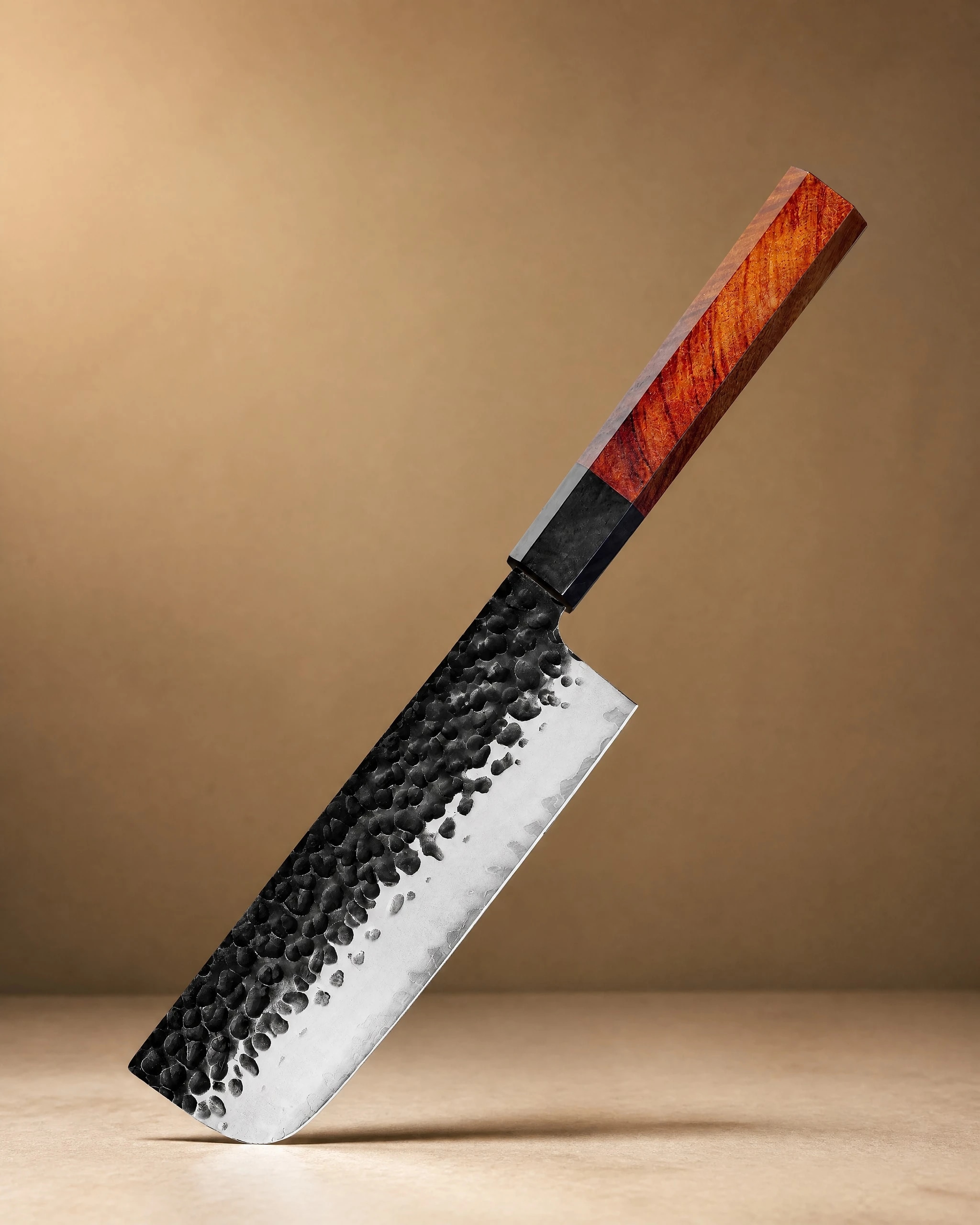 Kiso 7" Nakiri Knife 菜切り包丁$69.99 · currently out of stockView product →
This is the kind of knife that disappears in your hand. You stop thinking about the tool and start thinking about the cut. That is the real test of a nakiri knife. It does not need exotic features or a dramatic finish. It needs to be thin enough to glide through a pepper, tall enough to protect your knuckles, and flat enough to rest on the board.
Pairing a Nakiri With a Gyuto
A nakiri is a specialist. It is the best blade for vegetables, but it is not the best blade for boning a chicken or slicing a roast. If you cook across the whole animal, you will also want a gyuto. A gyuto is the Japanese take on a Western chef's knife, with a gentle curve and a pointed tip, and it can handle meat, fish, and larger prep work.
If your kitchen is built around vegetables with occasional meat, a nakiri plus a stainless gyuto covers almost everything. The Tenjin is a solid pair for that kind of cooking. It pairs well with a nakiri and covers the meat side without fuss. Use the nakiri for prep and the gyuto for proteins and you have a two knife setup that works.
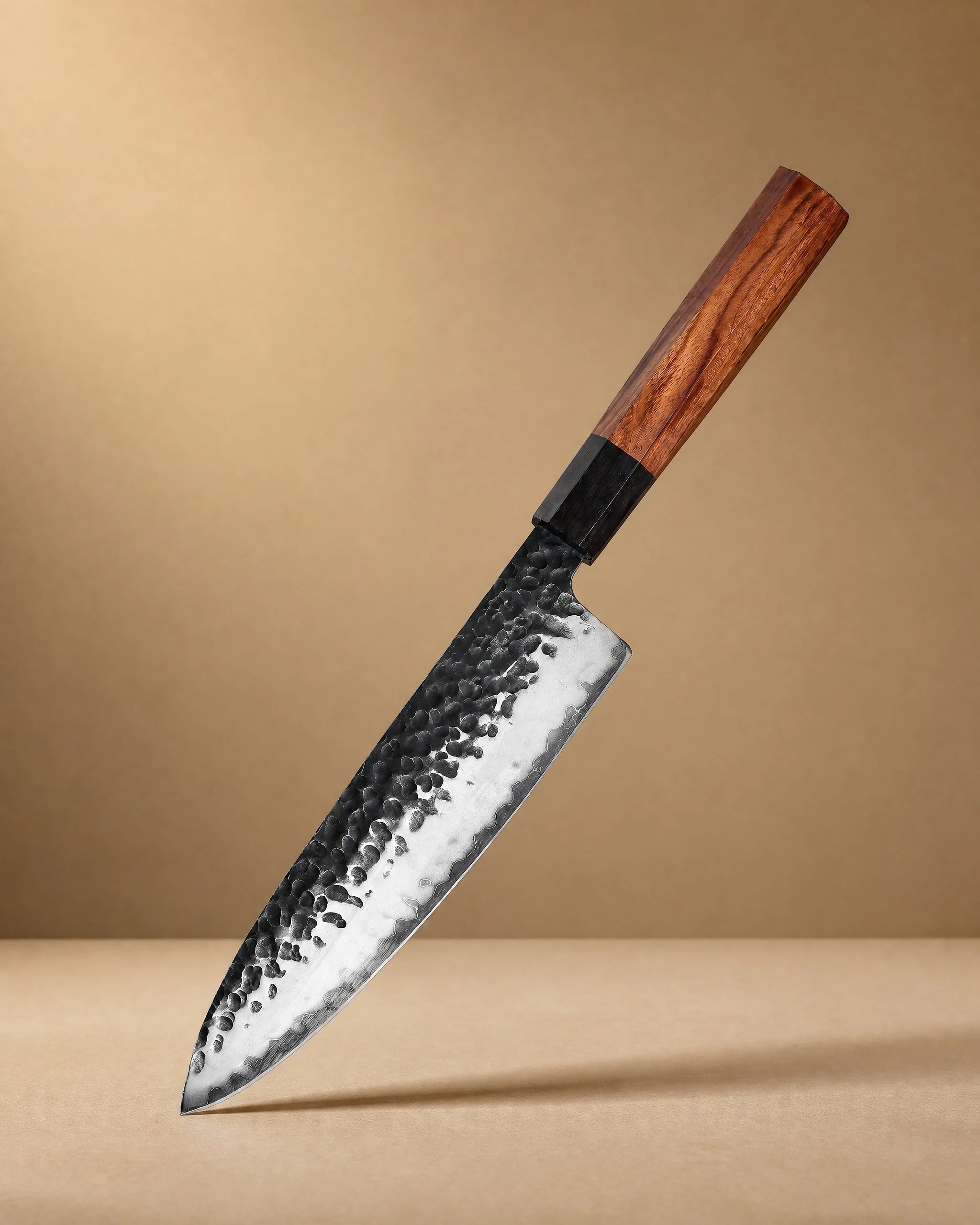 Tenjin 8" Stainless Steel Gyuto Knife 牛刀$69.99View product →
For someone who wants a more traditional look, a damascus gyuto is another popular choice. The layered steel gives the blade a visible pattern and many cooks enjoy the look. It is not necessary for good results, and you should choose one because you enjoy it, not because you think it will make you a better cook. If that describes you, the Sakawa is a beautiful companion to any nakiri.
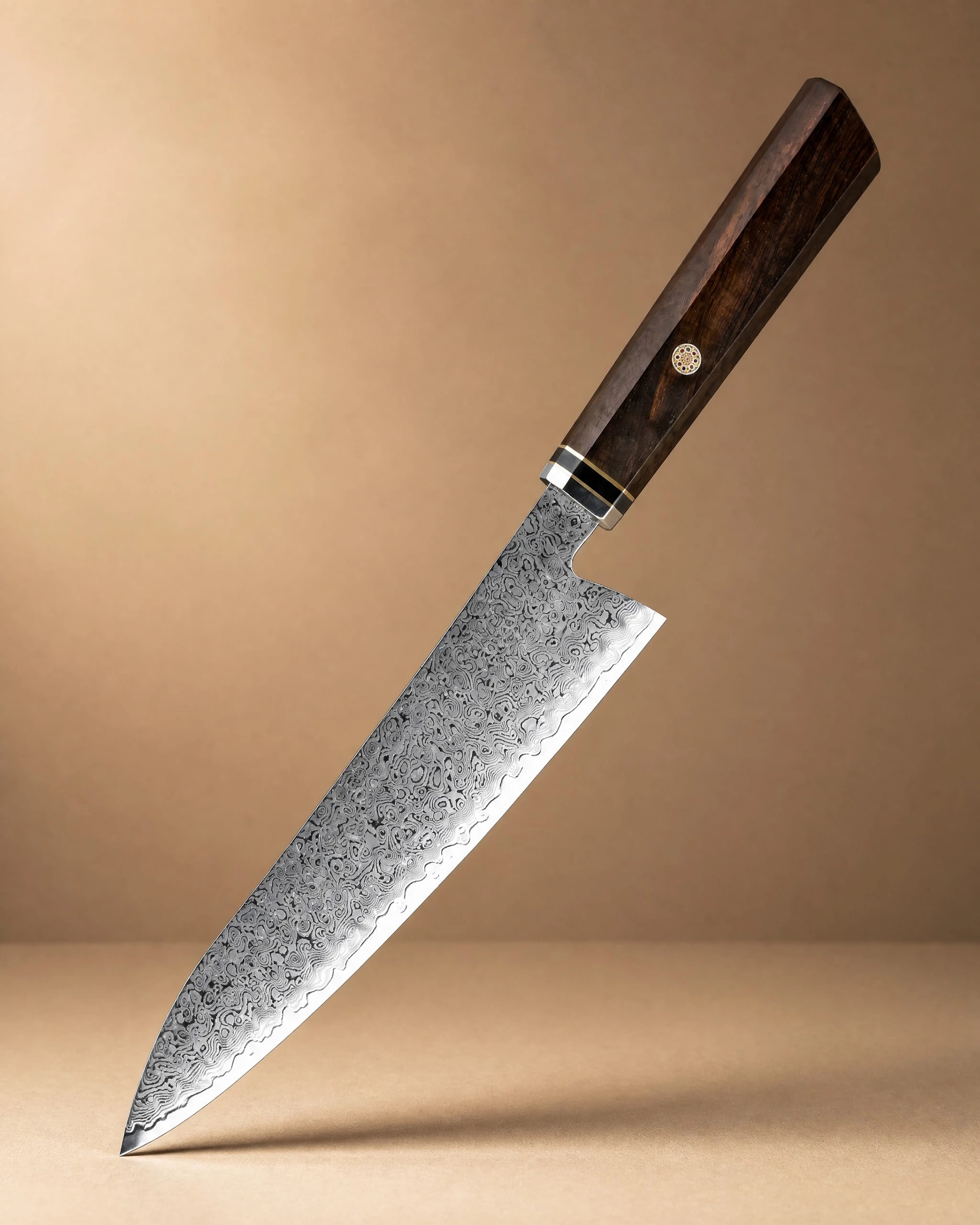 Sakawa 8.5" Damascus Steel Gyuto Knife 牛刀$94.99View product →
If you prefer a no-frills blade without the patterned finish, the Sendai is another solid gyuto for the same spot in your lineup.
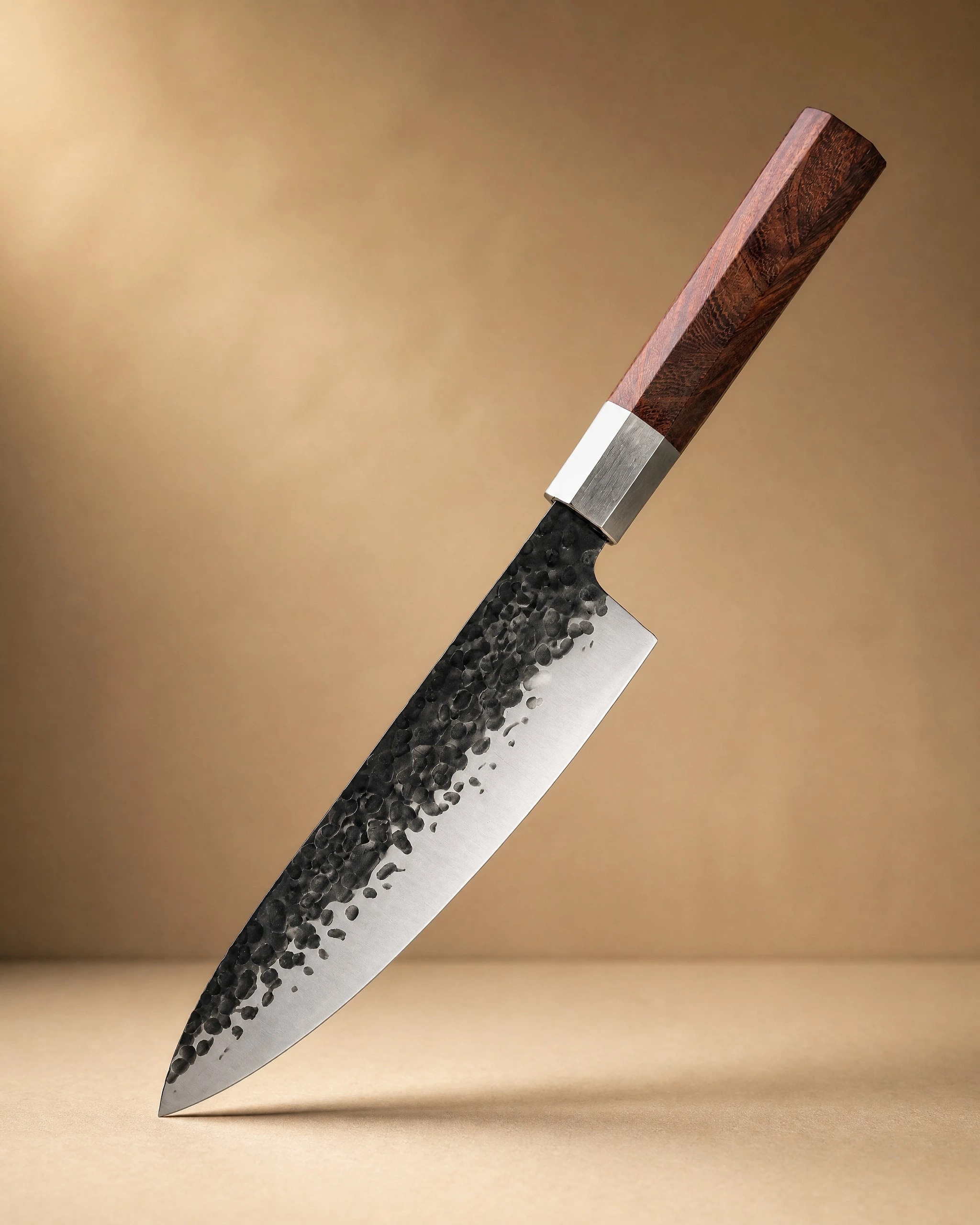 Sendai 8" Steel Gyuto Knife 牛刀$54.99View product →
The Simple Logic of a Nakiri
A nakiri knife is not complicated. It is a thin, flat blade designed for one task: cutting vegetables. Once you understand that, choosing the best nakiri knife for vegetables becomes simple. Decide what steel you want, find a blade that fits your hand, and choose a model you will actually reach for. A well made nakiri will serve you for years.
If you want to see the full range of knives we carry, take a look at the complete knife shop and our guide to choosing a knife. And if you cook mostly plants, do not feel pressured to buy a large set. A single nakiri might be the only knife you need.
Photography: Savernake Knives via Unsplash.


