
Choosing the Best Japanese Knives

A Japanese kitchen knife is not a collectible. It is a tool you pick up twice a day, and the difference between a blade that fights you and one that disappears into the work is mostly geometry, steel, and fit. The finest Japanese knives share a few traits: thin edges, hard steel, clean grinds, and handles that sit correctly in a hand. Everything else is preference.
This guide covers what actually matters when you are comparing Japanese kitchen knives for sale, how to think about price, and which shapes do the most work in a normal home kitchen. Along the way we point to specific knives so you can see the ideas applied to real options.
What Makes Japanese Kitchen Knives Different
Most Western chef's knives are ground thick and relatively soft. They tolerate bones, frozen food, and a little abuse. Traditional Japanese kitchen knives go the other direction. The blade is thinner behind the edge, the steel is harder, and the bevel is often flat or very slightly convex. That combination is what makes a good Japanese knife feel like it is slicing rather than splitting.
The trade-off is real. A thin, hard edge will chip if you twist it in a cut, hack through a chicken carcass, or leave it sitting wet. If you want a knife you can treat carelessly, a Japanese blade is not the right answer. If you want a knife that makes prep feel easy and you are willing to wash and dry it by hand, it is hard to go back.
You will also notice the weight. Japanese style knives tend to be lighter and more blade-forward than their German cousins, though not universally. An 8 inch gyuto from a good maker can weigh noticeably less than a comparable Western knife, which matters over a long prep session. The best knives from Japan are not one brand or one city, they are a set of habits about how steel is hardened and how thin a blade can be taken.
The Shapes That Earn Their Drawer Space
You do not need a dozen knives. Two or three well-chosen shapes cover nearly everything a home cook does.
The gyuto does the heavy lifting
A gyuto, sometimes called a Japanese steel chef's knife, is the all-purpose blade. Eight inches is the most useful length for most adults: long enough to break down a cabbage, short enough to trim a shallot. The profile is usually flatter than a Western chef's knife, with a gentle curve toward the tip and a straight rear section for push cutting.
The santoku is the compact alternative
A santoku is shorter and taller, with a flatter edge and a sheep's-foot tip. It shines on vegetables, and a 5 inch version suits smaller hands or a crowded cutting board. If you mostly cook vegetables and protein in modest quantities, a santoku may be all the knife you reach for.
Steel: The Part You Cannot Fix Later
Two broad families matter here: stainless and carbon. Stainless steels resist rust with minimal fuss, which is why they dominate home kitchens. Carbon steels take a finer edge more easily and sharpen quickly on a stone, but they discolor with use and will rust if left wet. Neither is better in the abstract. Pick based on how you actually behave in the kitchen.
Damascus steel is usually a cladding, not a performance upgrade. A Damascus pattern is layers of steel forged around a core, and the visible pattern is cosmetic. Cutting performance comes from the core steel and the grind. A Damascus knife can be excellent, but the pattern is not the reason.
Why Finest and Affordable Are Not Opposites
Price in Japanese cutlery knives comes from four things: the steel, the grind, the fit and finish, and the handle. A maker who spends thirty minutes on a blade instead of five charges more. That labor shows up in a thinner edge, a more even bevel, and a spine that has been rounded so it does not dig into your finger.
Affordable Japanese knives are genuinely good now. Inexpensive Japanese knives from a Japanese knives shop that checks its stock can cut as well as expensive ones on a weeknight. What you give up at the lower end is usually cosmetic: simpler handles, a less polished spine, no fancy cladding. What you should not accept is a thick grind. A thick knife is a dull knife no matter what the steel cost. Cheap Japanese kitchen knives are worth buying only when the geometry is right, and that is something you can often feel with a thumbnail test along the edge.
Four Knives Worth a Look
If you want concrete starting points, these four cover the most common needs. Each is a working knife, not a display piece.
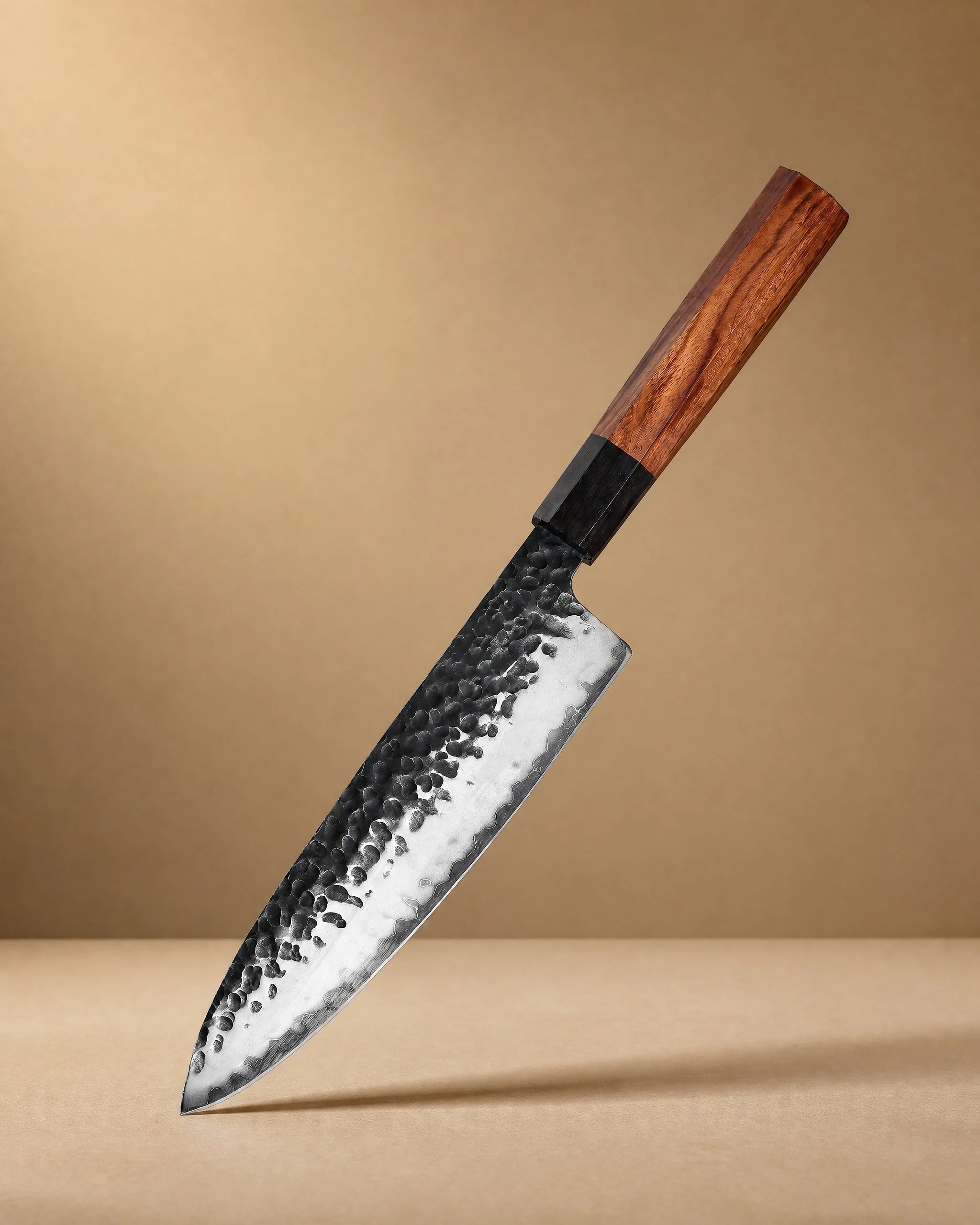 Tenjin 8" Stainless Steel Gyuto Knife 牛刀$69.99View product → The Tenjin is an 8 inch stainless steel gyuto, and stainless is the sensible choice if you want low maintenance without giving up a thin edge. It is sized for everyday prep: onions, chicken, herbs, and everything between.
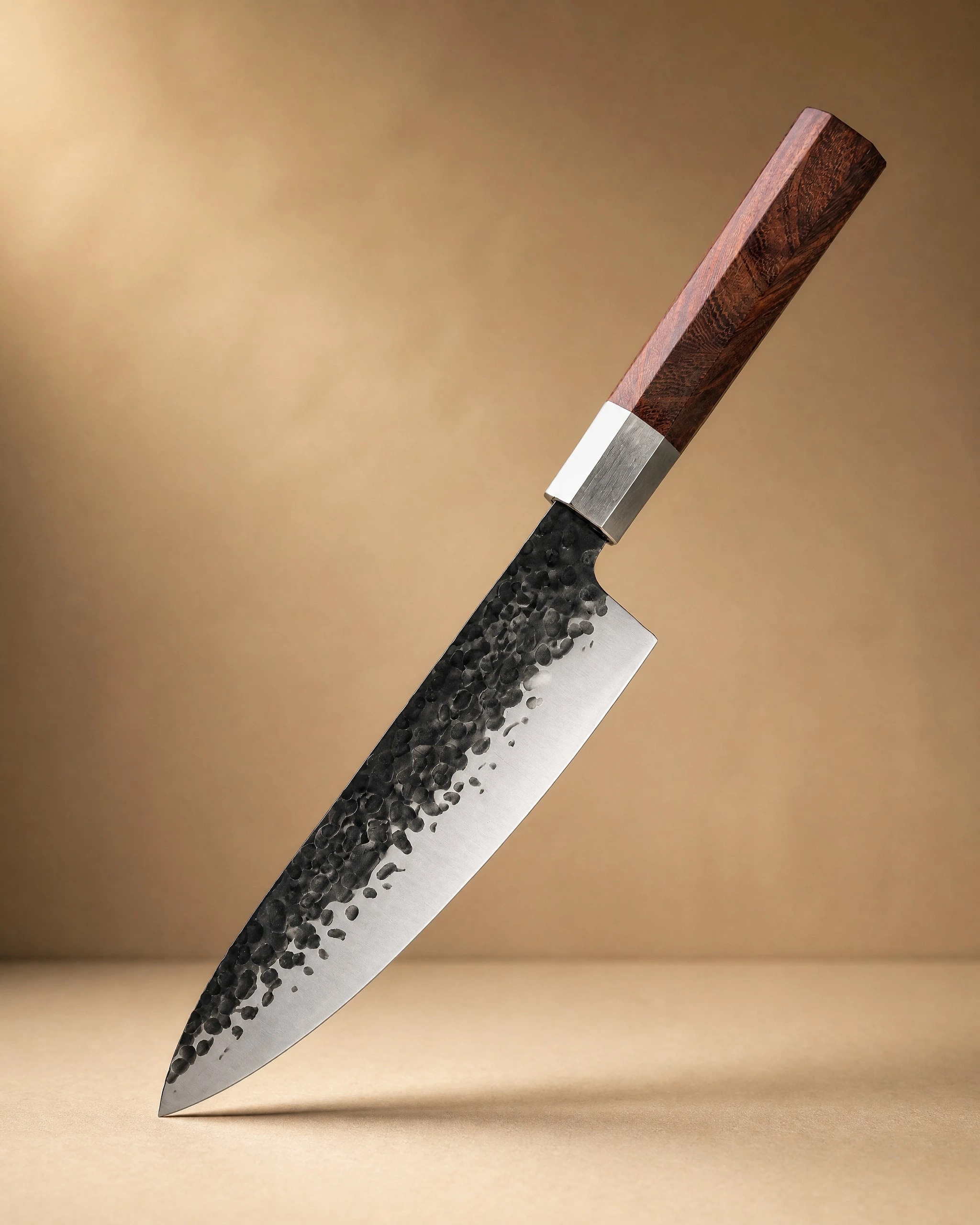 Sendai 8" Steel Gyuto Knife 牛刀$54.99View product → The Sendai is another 8 inch gyuto, also aimed at daily prep. Two gyutos in the same length are not redundant if they differ in steel and feel, and holding both is the fastest way to learn what you prefer.

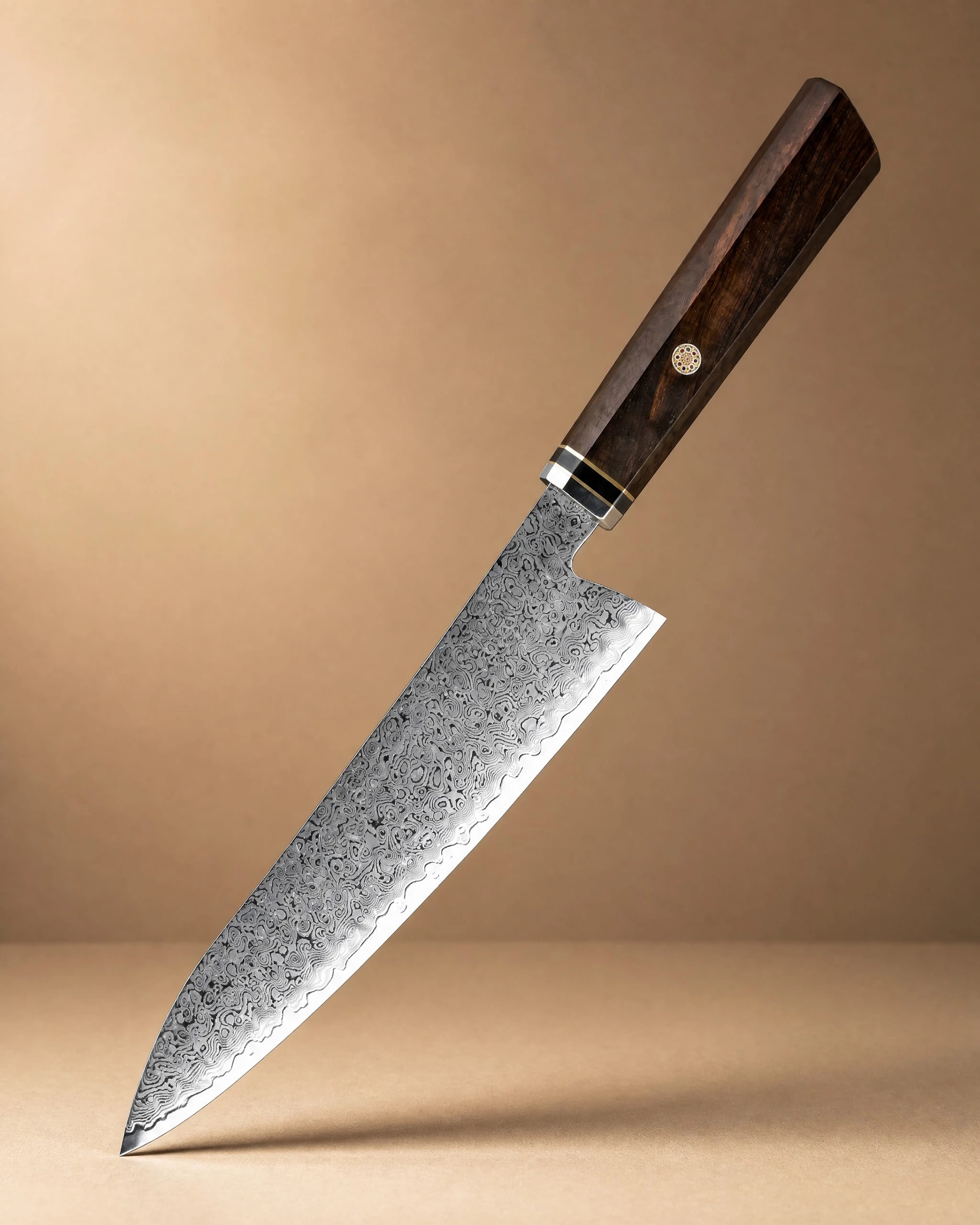 Sakawa 8.5" Damascus Steel Gyuto Knife 牛刀$94.99View product → The Sakawa is a longer 8.5 inch Damascus steel gyuto. The extra half inch helps on larger vegetables and longer slicing strokes, and the Damascus cladding gives it a look many cooks enjoy. The core steel and the grind are what make it cut.
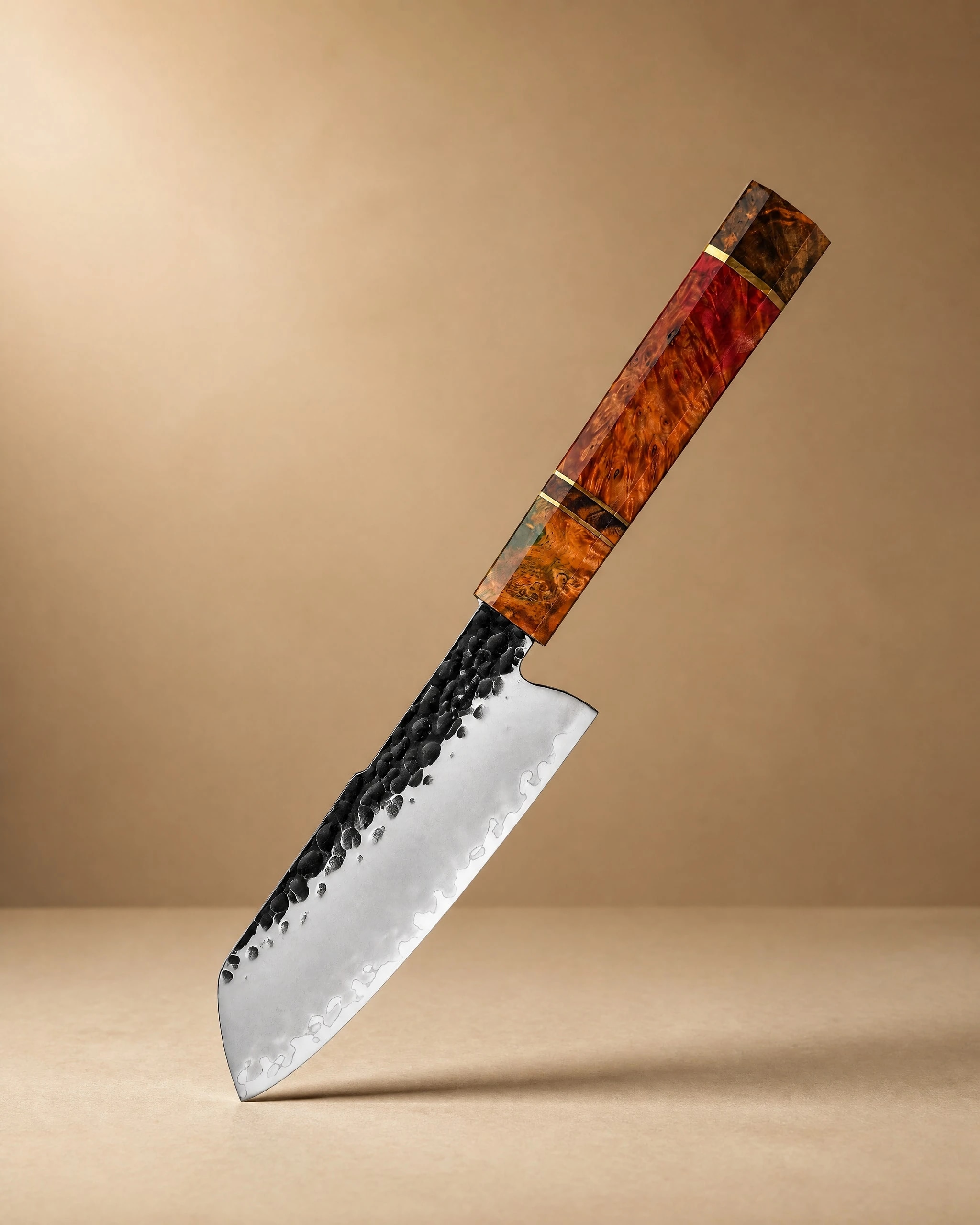 Ishikari 5" Santoku Knife 三徳包丁$79.99View product → The Ishikari is a 5 inch santoku, the compact option for smaller hands, tighter kitchens, and vegetable-forward cooking. If a full 8 inch blade feels like too much knife, start here.
Handle and Balance Matter More Than You Think
Handles fall into two camps: traditional Japanese handles, often called wa handles, and Western-style riveted handles. A wa handle is typically lighter and shifts balance forward, toward the blade. A Western handle moves weight back into your palm. The right choice depends on your grip and the length of your fingers, which is why holding a knife before committing is worth the trip.
Balance point is a useful thing to check. Pinch the blade between thumb and forefinger just ahead of the handle and see where it settles. A knife that balances at the pinch point feels controlled. A knife that feels blade-heavy will tire your wrist faster.
Should You Buy a Set or Build One?
A best Japan knife set is appealing because it looks complete, but most sets include shapes people never use. A better approach for most homes is to start with one gyuto and add a smaller knife when you notice yourself reaching for one. If you do want a set, build it around the shapes you actually cook with, not the number on the box. A top rated Japanese knives list can narrow the field, but it cannot tell you whether an 8 inch gyuto or a 5 inch santoku fits your hand.
What to Check Before You Buy
Five things matter at the moment of purchase.
- Steel type: stainless for low maintenance, carbon if you will dry and oil it.
- Length: 8 inches for a gyuto, 5 inches for a compact santoku.
- Grind: thin behind the edge, with no thick shoulders above the bevel.
- Handle: comfortable in your grip, with no sharp corners or gaps.
- Support: a shop that will answer questions and stands behind the knife.
Our how to choose a knife guide walks through these points in more detail, and you can see the full range of Japanese knives we stock on the all products page. If you are replacing a worn knife, spend a few minutes comparing lengths and weights before you buy Japanese knives online.
Care That Keeps an Edge
A Japanese knife rewards a few simple habits. Wash it by hand and dry it immediately, especially carbon steel. Skip the dishwasher entirely. Use a wood or soft plastic board, since glass, ceramic, and bamboo composite boards kill edges. Store the knife on a magnetic strip or in a drawer guard, not loose among other utensils.
Honing rods do little for hard Japanese steel. A fine ceramic rod can realign a lightly rolled edge, but a thin, hard edge usually needs a light touch on a water stone. Learn to sharpen on a 1000 grit stone first, and keep the angle consistent. For a full walkthrough, see our knife care guide.
A Sensible Way to Decide
Pick a shape that matches your cooking. Pick a steel that matches your patience. Buy the thinnest grind you can afford, because geometry decides how a knife cuts far more than the name on the blade. Great Japanese knives are the ones you reach for without thinking, and that usually means one blade that fits your hand and your board.
Browse the shop when you are ready, and if you are unsure between two knives, ask. We would rather sell you one knife you use every day than four you do not.
Photography: Richard Iwaki via Unsplash.


