
Choosing a Damascus Kitchen Knife: What to Look For

A Damascus kitchen knife catches the eye. The layered pattern, the flowing lines, the contrast between light and dark steel. It looks like something a craftsman spent hours on, and often that is exactly what happened. But a knife is a tool first. The pattern is a bonus, not a guarantee of performance. If you are shopping for Japanese Damascus kitchen knives, the real question is not how many layers. It is what is the core steel, how is it ground, and does the handle and balance suit my hand.
This guide walks through what actually matters when you choose a Damascus kitchen knife. We will talk about steel, geometry, maintenance, and a few honest recommendations from our shop. No hype, no magic. Just the details that separate a knife you will reach for every day from one that stays in the drawer.
What Damascus Actually Means on a Kitchen Knife
Modern Damascus steel is not the same as the legendary wootz steel from centuries ago. The knives we sell today are pattern-welded. That means layers of steel are forge-welded together, folded, and manipulated to create a visible pattern. On most Japanese kitchen knives, the Damascus is a cladding. It wraps around a central core steel. The core is what forms the cutting edge. The cladding is there for looks, and sometimes for corrosion resistance.
This distinction matters. A beautiful Damascus pattern does not tell you how long the edge will last or how easily it sharpens. You need to know the core. Is it stainless or carbon? How hard is it? What kind of edge does it take? Those answers live in the core, not the pattern. So when you browse gyuto knives, start with the core steel and work outward.
Start With the Core Steel, Not the Pattern
Core steel determines the personality of a knife. A hard steel, typically above 60 HRC on the Rockwell scale, holds an edge for a long time. It also can be more brittle, so it rewards a careful technique. A softer steel dulls faster but is tougher and easier to sharpen. Stainless steels resist rust. Carbon steels can take a keener edge but require more attention.
For a Damascus knife, the core is often a high-carbon stainless steel like VG-10 or SG2, or a tool steel like Blue or White paper steel. Each has trade-offs. VG-10 is a common choice for everyday kitchen knives because it balances edge retention and corrosion resistance. SG2 is harder and holds an edge longer, but it can chip if you torque the blade. Carbon steels like White #2 take a beautiful edge but will rust if you leave them wet.
If you are new to Japanese knives, our knife guide explains these steel types in plain language. The short version: pick a core that matches your habits. If you rinse and dry your knife right after use, carbon is fine. If you sometimes leave a knife in the sink, go stainless. The Damascus cladding does not change that rule.

Reading the Damascus Pattern: Layers, Contrast, and Finish
Patterns vary widely. Some are tight and subtle, with dozens or hundreds of layers. Others are bold and dramatic. More layers generally mean a finer pattern, but they do not automatically mean better performance. The pattern is a result of folding and etching. It is cosmetic. A 64-layer Damascus and a 128-layer Damascus from the same maker will cut the same if the core and grind are identical.
What does matter is the finish. An etched finish brings out the contrast between layers. It can look stunning, but the etched surface is slightly textured. That texture can create a little drag when you cut through dense food. A polished finish is smoother and can feel more slippery with wet hands, but it glides through onions and potatoes with less resistance. Neither is better. It is a preference.
Also look at the pattern's consistency. On a well-made knife, the layers run evenly from heel to tip. If the pattern looks muddled or uneven near the edge, that can be a sign of sloppy forging. It will not affect cutting, but it tells you something about the maker's attention to detail.
Geometry and Grind: The Real Cutting Performance
Here is where a knife earns its keep. Geometry is the shape of the blade in cross-section. A thin blade behind the edge cuts effortlessly. A thick blade is stronger but wedges in dense food. Damascus cladding adds a little thickness, but a good maker keeps the overall geometry thin. Look for a blade that tapers from spine to edge and from heel to tip. That taper, called distal taper, makes the tip agile for detail work.
The grind matters too. A flat grind is common on Japanese knives. It is easy to sharpen and slices cleanly. A convex grind is stronger and can be more forgiving. A concave grind, sometimes called a hollow grind, is rare on kitchen knives because it is thin and fragile. Most gyuto knives use a flat or slightly convex grind. If you can, hold the knife and look down the edge. You want a straight line with no waves or thick spots.
Handle and Balance
The handle is not just a grip. It affects the balance of the whole knife. A heavy handle pulls the balance back toward your hand. A light handle pushes it forward toward the blade. For most cooks, a balanced knife feels neutral right at the pinch grip, where your thumb and forefinger meet the blade. That is where you want the weight.
Japanese knives often use a wa handle, which is a simple stick tang. It is light and easy to replace. Western handles are usually heavier and provide a full grip. Neither is superior. A well-made wa handle in ho wood or magnolia is comfortable and traditional. A Western handle in pakkawood or stabilized wood is durable and familiar. The key is that the handle feels secure in your hand and does not twist when you cut.
Maintenance and Care for Damascus Knives
Damascus cladding can be reactive, especially if it is carbon steel. Even stainless Damascus can stain if you leave acidic food on it. The care routine is simple: rinse and dry the knife by hand after every use. Do not put it in the dishwasher. Do not let it soak. A few seconds with a towel is all it takes.
Sharpening a Damascus knife is a little different. You sharpen the core steel, not the cladding. Over time, repeated sharpening and thinning will wear away the cladding and the pattern near the edge. That is normal. A professional sharpener can preserve the pattern by focusing on the edge and using minimal pressure. For home sharpening, a whetstone is the best choice. Our knife care guide covers angles, stones, and storage in detail.
Matching the Knife to Your Cooking
Most people shopping for a Damascus knife want a gyuto. It is the Japanese equivalent of a chef's knife. An 8-inch gyuto, about 210mm, is the sweet spot for most home cooks. It is long enough to handle cabbage and roasts, but short enough for shallots and herbs. You can see our full selection of gyuto knives here, and browse all knives at our shop.
If you cook mostly vegetables, a thinner, lighter gyuto feels nimble. If you break down chickens or squash, a slightly heavier blade gives you confidence. The Damascus pattern does not change these fundamentals. Pick the size and weight that match your board and your hand.
A Few Honest Recommendations
We carry several 8-inch gyuto knives that fit the Damascus theme or offer a similar everyday versatility. Here are four to consider, each with its own character.
If you want a stainless steel gyuto that handles daily prep without fuss, the 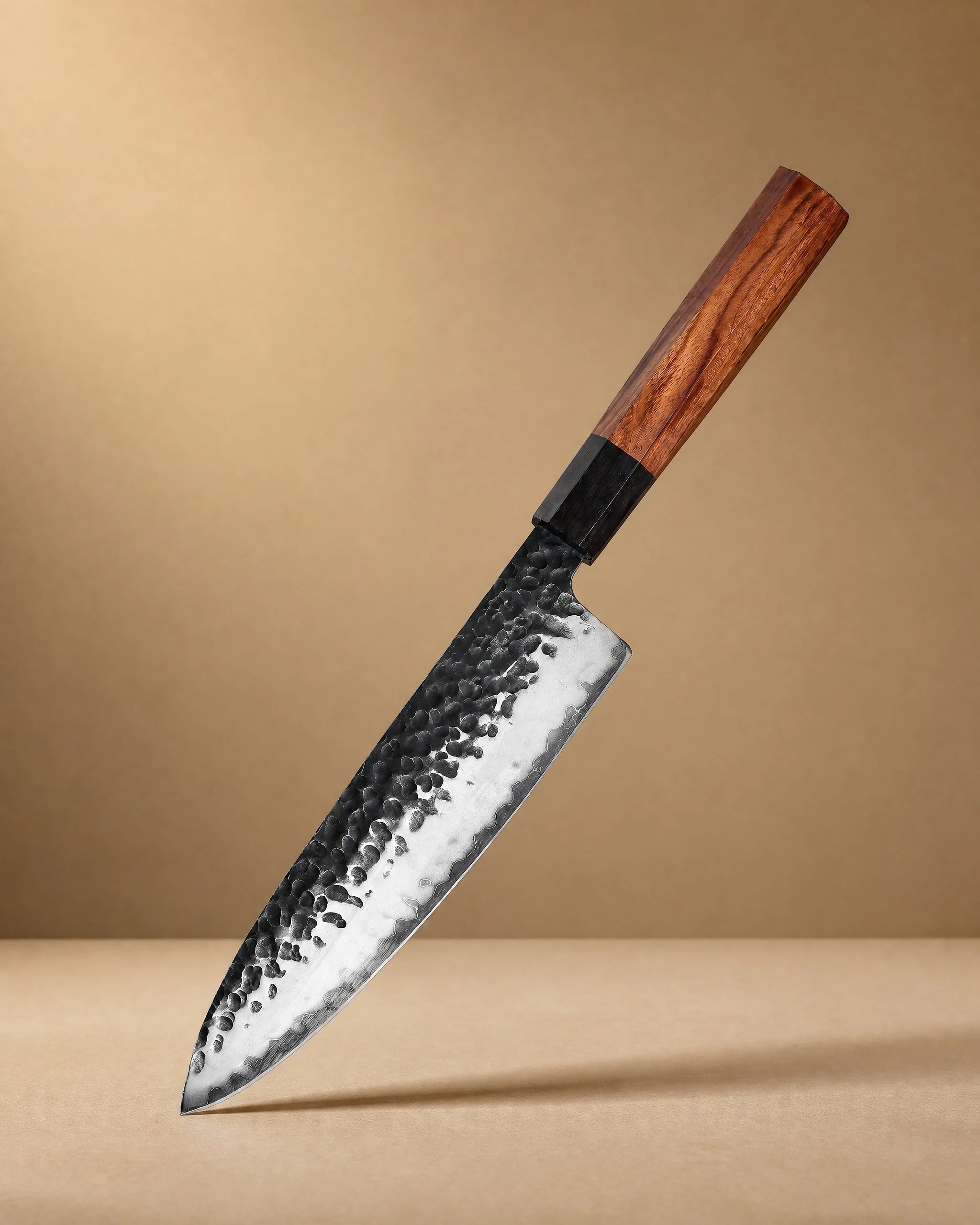 Tenjin 8" Stainless Steel Gyuto Knife 牛刀$69.99View product → is a solid choice. It is an 8-inch knife designed for the cutting board, not the display case.
For the Damascus look with a core that suits regular cooking, consider the 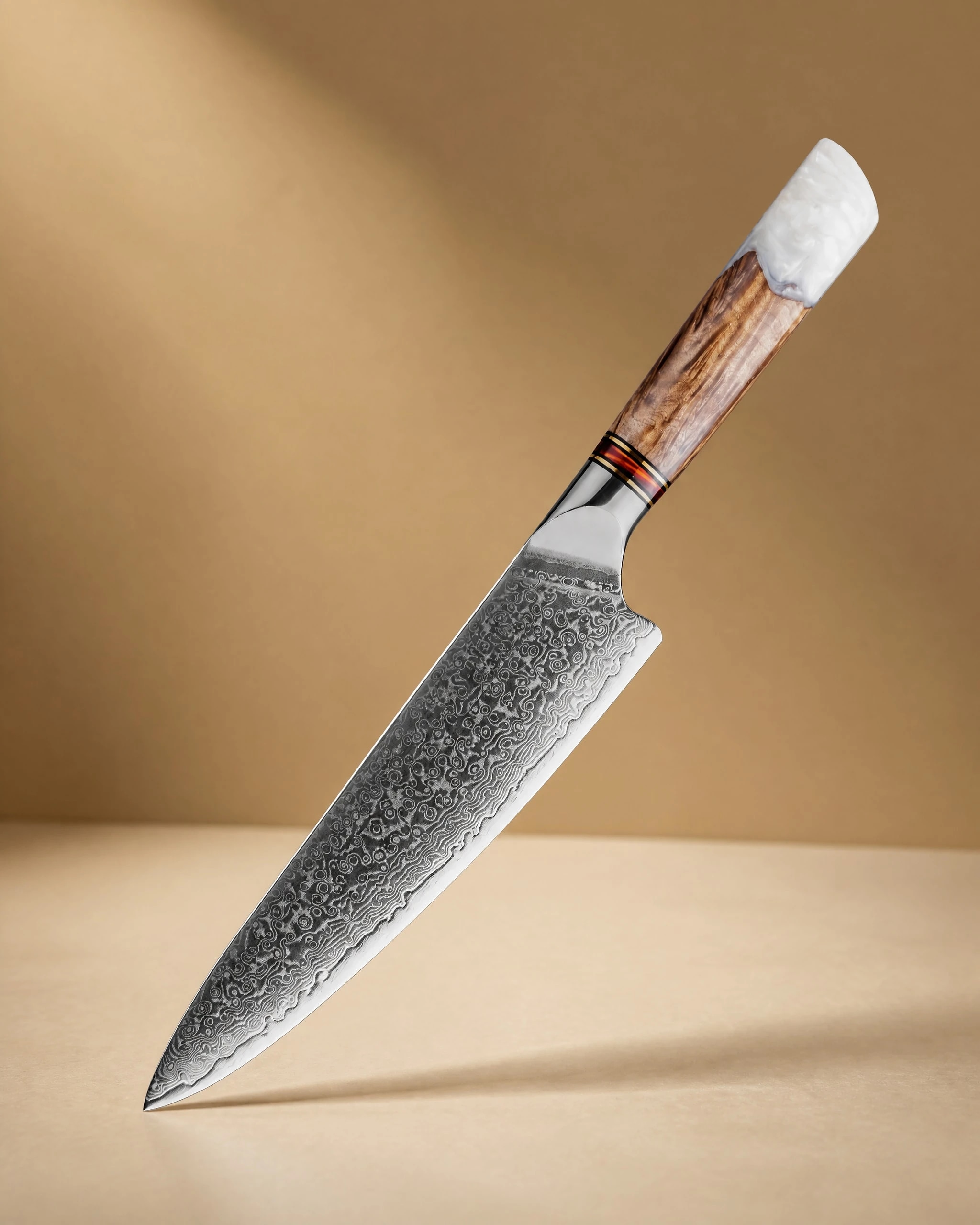 Shirakawa 白川 8" Damascus Steel Gyuto Knife 牛刀$94.99View product →. It is an 8-inch Damascus steel gyuto, and it brings the layered pattern to a workhorse profile.
The 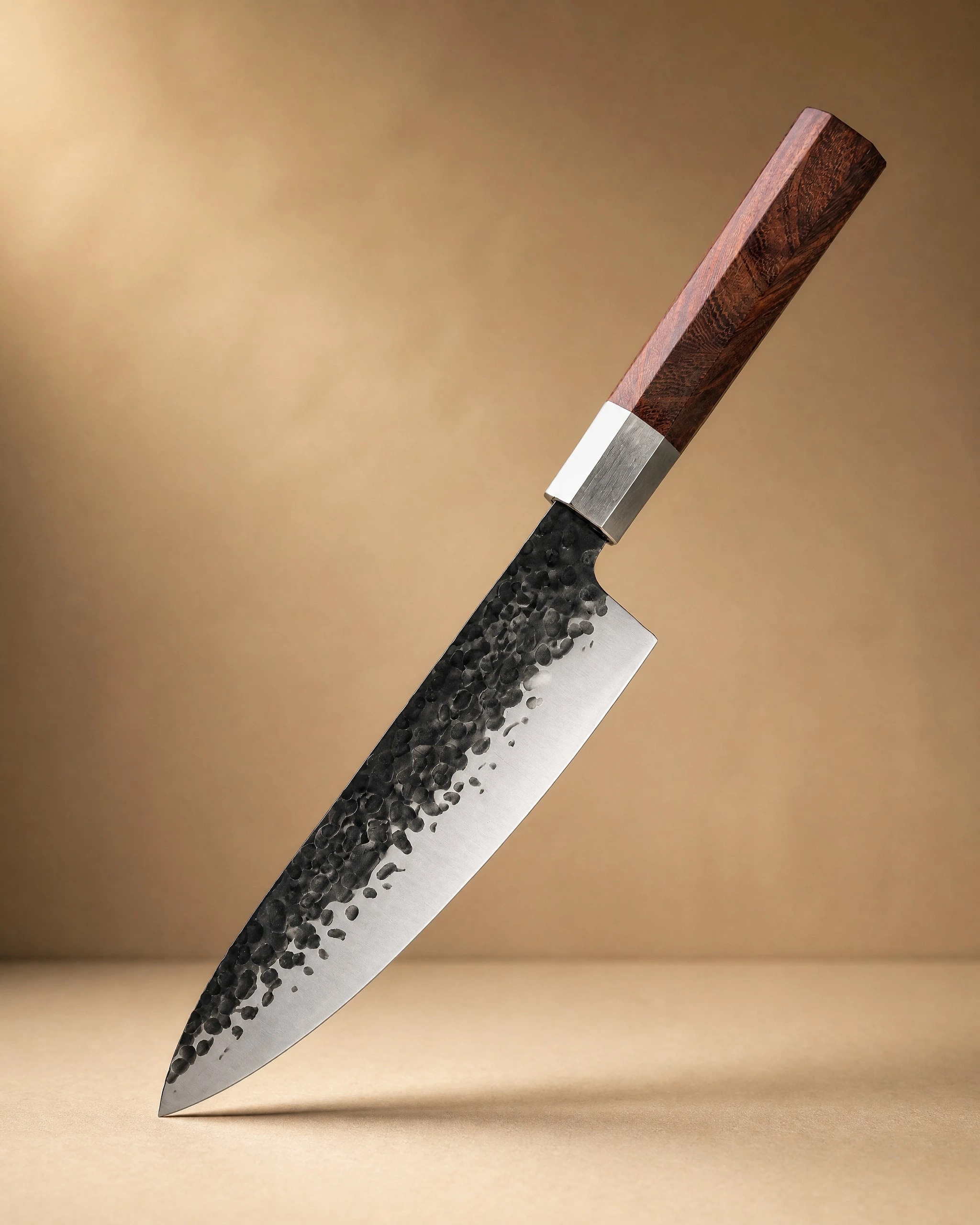 Sendai 8" Steel Gyuto Knife 牛刀$54.99View product → is another 8-inch gyuto, built for everyday prep. It keeps things simple and focused on performance.
And the 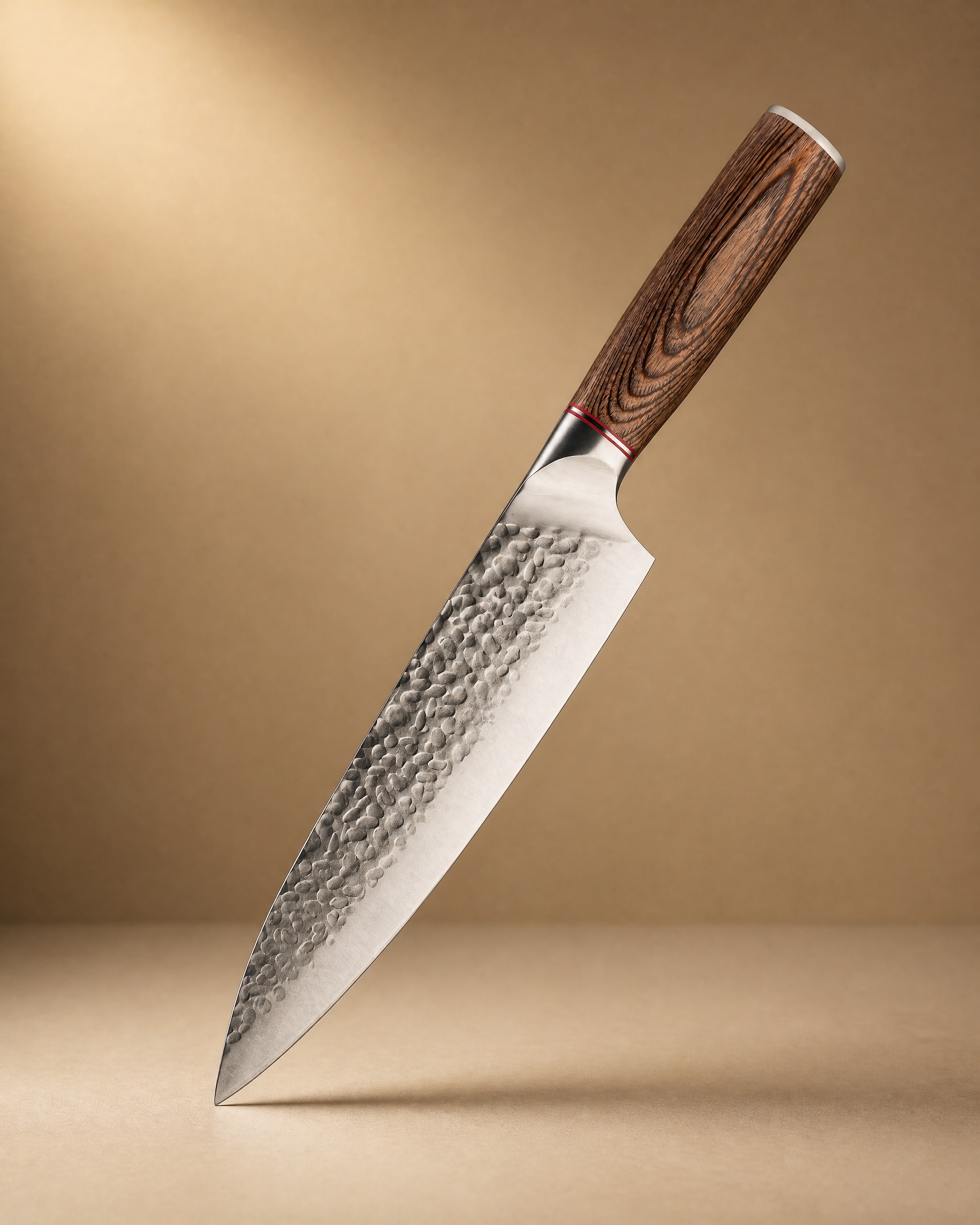 Akan 8'' Gyuto Knife 牛刀$54.99View product → is an 8-inch gyuto as well, a straightforward knife for cooks who want a reliable blade without extra ornament.
Each of these is a gyuto, so they share a versatile shape. The differences come down to steel, finish, and handle. If you are unsure, start with the one that matches your maintenance habits and your budget. You can also compare them side by side on our gyuto category page.
A Practical Checklist Before You Buy
- Core steel: stainless for low maintenance, carbon for edge quality and character.
- Geometry: thin behind the edge, with distal taper toward the tip.
- Grind: flat or convex, straight edge line, no thick spots.
- Balance: neutral at the pinch grip, comfortable in your hand.
- Handle: secure, smooth, and appropriate for your grip style.
- Maintenance: you will hand wash and dry it every time.
- Pattern: choose what you like, but remember it is cosmetic.
Buying a Damascus kitchen knife should be enjoyable. The pattern is part of the pleasure. Just do not let it distract you from the fundamentals. A great knife cuts well because of its core, grind, and balance. The Damascus is the finish, not the foundation. If you keep that in mind, you will end up with a knife that looks good and works even better.
Photography: Richard Iwaki via Unsplash.


