
Best Solid Wood Chopping Boards for Your Kitchen

Why Your Cutting Board Matters More Than You Think
Every good kitchen setup starts with the surface you cut on. You can own a beautiful knife, but if you slice on glass, stone, or a worn plastic board, you are doing more damage than you realize. A solid wood chopping board protects your blade, gives you a stable work surface, and lasts for years when you treat it right.
This guide covers the best wood cutting board options for everyday cooking. We will talk about wood species, grain direction, board construction, and how to pair your board with the right knife. If you are unsure what to buy, you will finish this article with a clear idea of the best chopping board for your routine.
What Makes a Good Chopping Board?
A good chopping board should do three things. First, it needs to be kind to your knife edge. A slightly forgiving surface allows the edge to bite in rather than scrape along a hard material. Second, it needs to be stable. A board that slides around the counter is a safety problem. Third, it needs to be practical to clean and maintain.
Wood checks all three boxes better than most materials. Plastic boards are easy to clean but dull edges quickly and develop deep grooves that trap bacteria. Bamboo is often advertised as wood, but it is actually a grass, and the dense silica content makes it very hard on knives. Glass and stone are the worst offenders. They look clean, but they roll and chip your edge instantly.
For most home cooks, wood is the best cutting board material by a wide margin. It is the best chopping board material for daily prep because it offers the right balance of hardness, grip, and maintenance. It also happens to look far better on a counter than a scuffed plastic sheet.
The Best Hardwood Cutting Board: Wood Species Explained
Not all wood boards behave the same way. The best hardwood cutting board for your kitchen will depend on how much you cook and how much you want to maintain it. Here are the most common wood species and what you can expect from each.
- Maple: the classic choice. Dense, tight grained, and affordable, it resists deep knife marks and is easy to keep clean.
- Walnut: slightly softer than maple, which makes it more forgiving on a knife edge. It has a rich dark color and needs regular oiling.
- Cherry: a medium hard wood with a warm tone that deepens with age. It is gentle on edges and easy to maintain.
- Acacia and teak: harder, water resistant, and tough on edges. Good for outdoor kitchens or island prep stations.
- Oak and ash: strong but open pored. The pores trap food and require more diligent cleaning.
So what is the best wooden chopping board material? If you want the best all around performance, maple is the safest recommendation. If you want the most knife friendly surface, walnut is worth the extra care.
End Grain vs Edge Grain vs Face Grain
This is the most technical part of choosing a wood board, and it is worth understanding before you spend money.
Edge grain boards are the most common. The wood fibers run vertically through the board, and you cut across them. They are affordable, stable, and perfectly fine for daily use. They will show knife marks over time, but those marks are cosmetic.
End grain boards are made by gluing blocks of wood together with the end grain facing up. This is the classic butcher block style. When you cut, the knife edge falls between the fibers instead of across them, which makes end grain the most knife friendly option. The fibers also close back up after the blade passes, so the surface heals better than edge grain.
Face grain is the cheapest style, made from a single slab. It works for light prep but is more prone to warping and scratches. The best type of cutting board for someone who cares about their knives is end grain. The tradeoff is that end grain boards cost more and need more oil. If you are on a budget, a good edge grain wood board is still a major upgrade over plastic.

The Best Cutting Board for Meat
Many home cooks wonder whether they need a separate wood board for meat. The short answer is that wood is safe for raw meat as long as you clean it properly. You do not need a plastic board to be food safe.
Solid hardwoods like maple and walnut have a tight structure that does not harbor bacteria the way plastic grooves do. When you wash a wood board with hot soapy water and dry it immediately, the wood draws moisture out of the surface and any lingering bacteria die off as the board dries. This has been confirmed by multiple studies over the years, and it is why professional kitchens have trusted wood surfaces for centuries.
For meat preparation, choose a dedicated wood board if you can. Assign one board for raw meat and another for vegetables. The best cutting board for meat is a dense hardwood like maple, because it resists deep scoring from bones and holds up under heavy use. End grain is also excellent for carving.
If you cook a lot of meat, pair your board with a knife that can handle repetitive work. The Sendai 8" Steel Gyuto Knife 牛刀 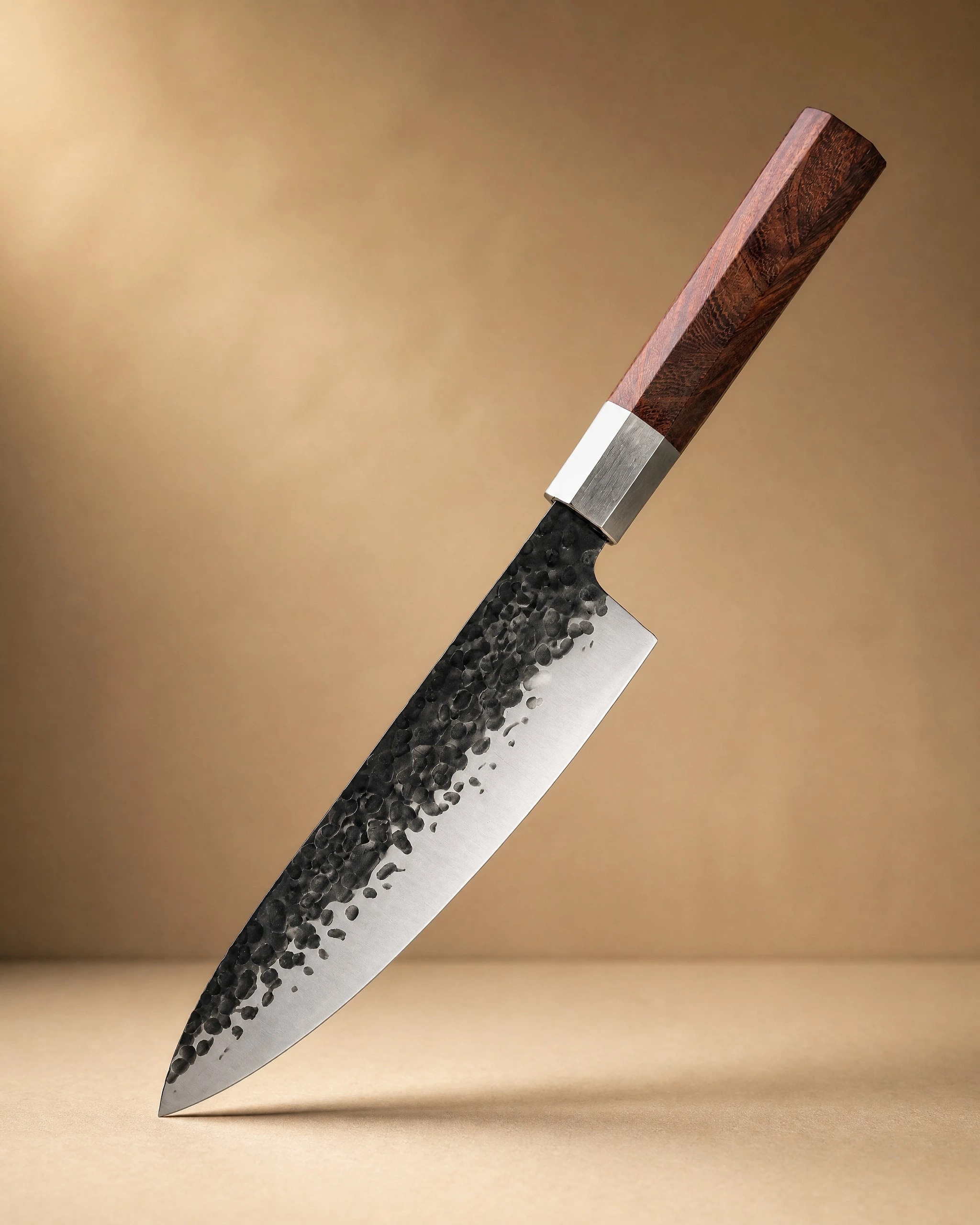 Sendai 8" Steel Gyuto Knife 牛刀$54.99View product → is best for everyday prep, and the long gyuto blade gives you smooth slicing strokes across a sturdy board. A solid board like a thick maple edge grain will take the impact while the knife does the cutting.
How to Match Your Board With Your Knife
The best board in the world only matters if your knife is up to the task. A wood board will not fix a neglected edge. Think of the board and knife as one system. The board cushions the blade, and the knife should be sharp enough to cut without heavy pressure.
If you prep mostly vegetables and want a low maintenance everyday knife, the Tenjin 8" Stainless Steel Gyuto Knife 牛刀 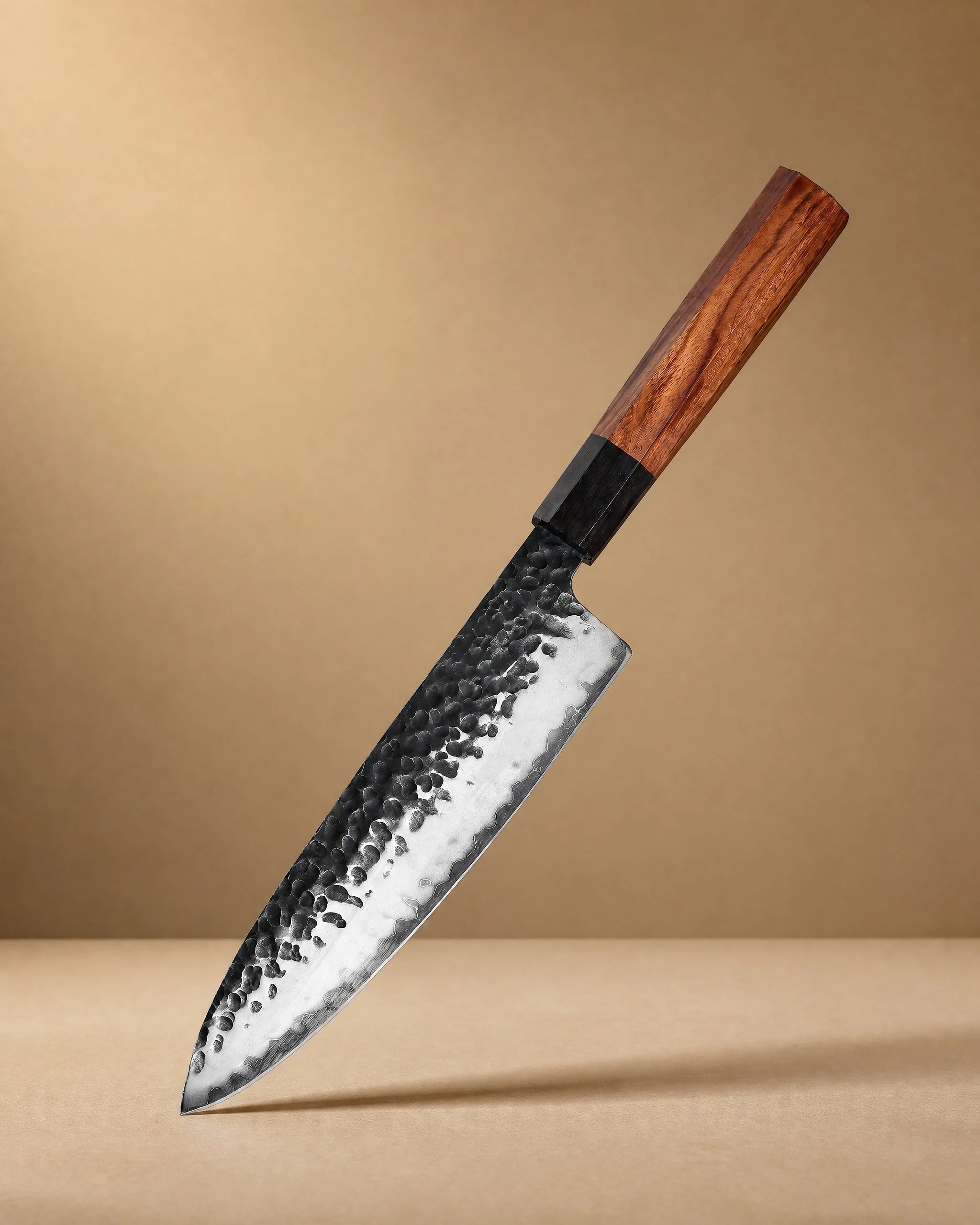 Tenjin 8" Stainless Steel Gyuto Knife 牛刀$69.99View product → is a practical choice. It is best for everyday prep, and a stainless blade suits a cook who wants to grab one knife and go. Pair it with a maple edge grain board and you have a simple, reliable setup.
If you want something with more presence and you are willing to put in a little extra care, the Sakawa 8.5" Damascus Steel Gyuto Knife 牛刀 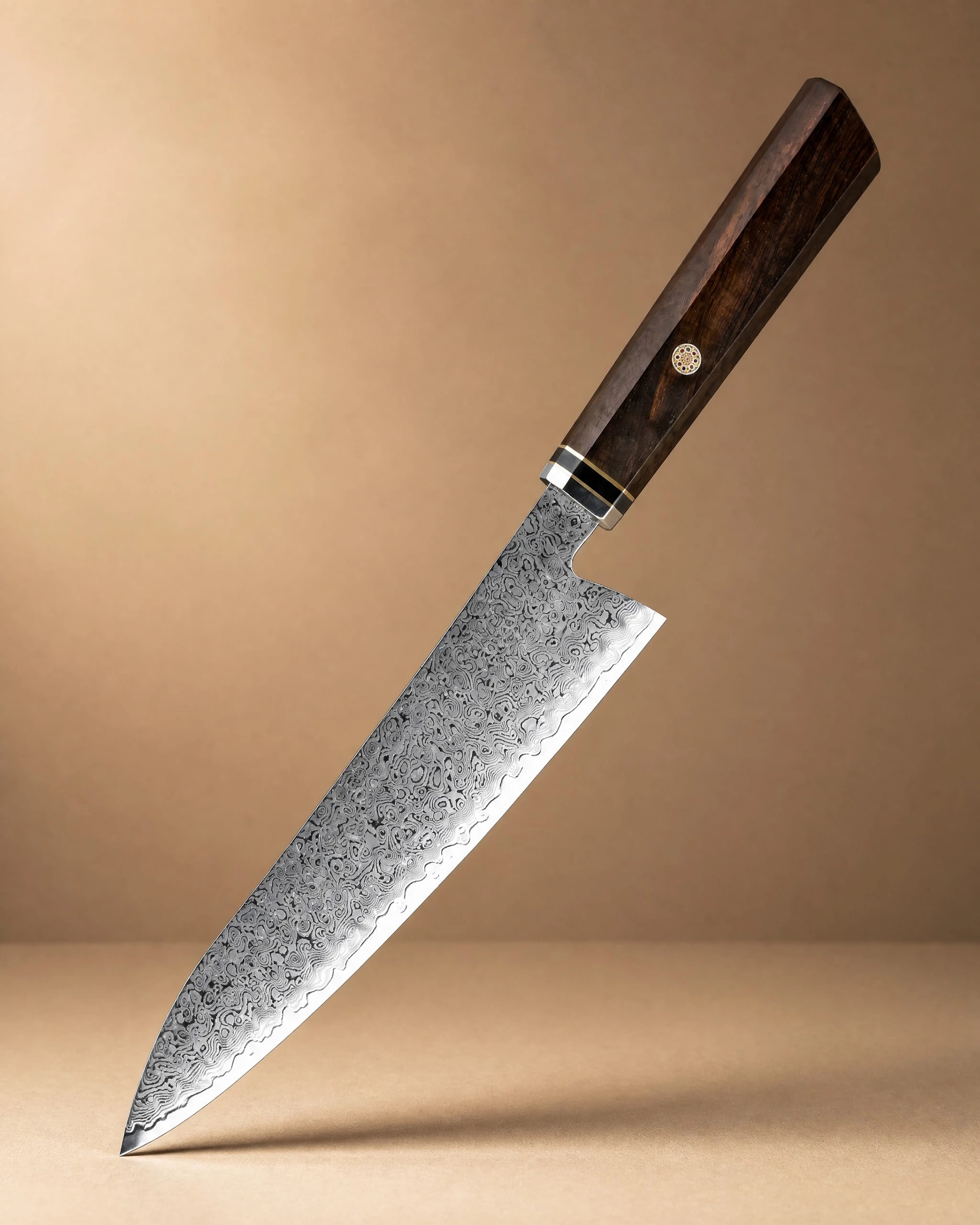 Sakawa 8.5" Damascus Steel Gyuto Knife 牛刀$94.99View product → is another strong option. It is also best for everyday prep. This is a knife that deserves an end grain board, since the forgiving surface helps preserve a finely tuned edge.
If you prefer a shorter blade for tighter work, the Ishikari 5" Santoku Knife 三徳包丁 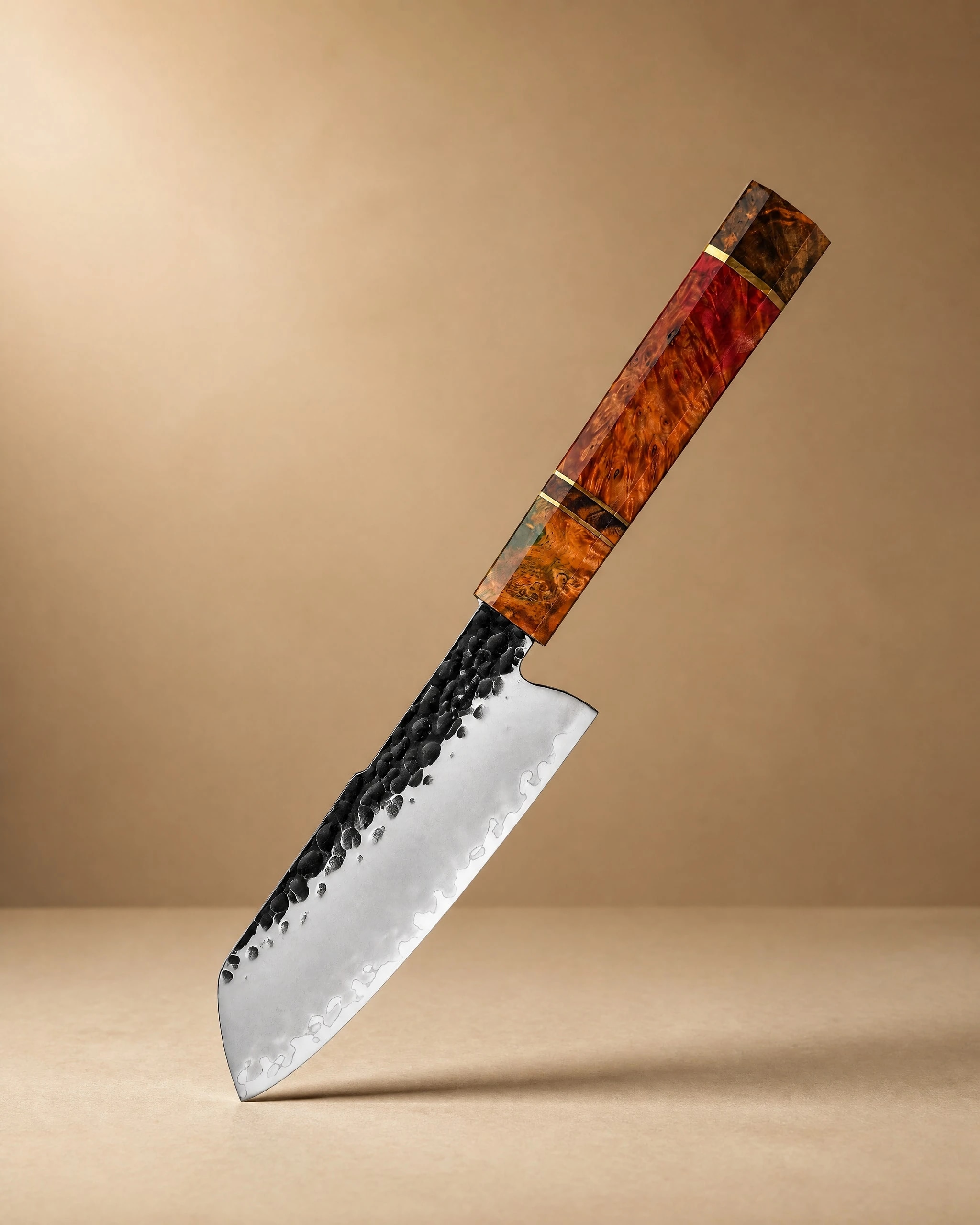 Ishikari 5" Santoku Knife 三徳包丁$79.99View product → is best for everyday prep as well. A santoku works beautifully on a medium size board around 12 by 18 inches, because the shorter blade makes quick work of vegetables without feeling cramped.
If you are uncertain about which knife shape fits your style, our knife guide can help you narrow things down. You can also browse the full range of blades in the shop.
Caring for Your Solid Wood Board
Buying the best wood cutting board is only the first step. A solid wood board is a piece of functional furniture. It needs food safe mineral oil and a little routine care to stay flat and crack free.
Wash the board by hand with hot soapy water right after use. Do not soak it. Do not put it in the dishwasher. The heat and moisture will split the wood and destroy the glue lines. Dry it with a towel and let it finish air drying before you put it away.
Once a month, or whenever the wood looks dry, rub a generous coat of food safe mineral oil across the surface. Let it sit overnight and wipe off the excess. A paste wax is optional but nice for end grain boards.
The same philosophy applies to your knives. A good knife needs regular attention. Our knife care guide covers cleaning, storage, and edge maintenance, and it is a good companion to this article. The better you maintain both your board and your blade, the longer they will serve you.
How Big Should Your Board Be?
Size is a practical detail that people often get wrong. A board that is too small forces you to crowd your ingredients and move food around constantly. A board that is too big takes over your counter and becomes awkward to store. For general home cooking, choose a board that is at least 12 by 16 inches. For a busy family kitchen or for meat prep, step up to 15 by 20 inches or larger.
Thickness also matters. A thin board, anything under one inch, tends to warp and slide. A thick board, at least 1.5 inches, feels substantial and stays put because of its weight. If you have a small kitchen and limited storage, a single good edge grain board is the best chopping board for most people. If you have room, add a dedicated end grain board for your good knives and a smaller utility board for quick tasks.
What Is the Best Type of Cutting Board for Your Kitchen?
At this point you have seen the main factors: wood species, grain direction, size, and maintenance level. Let us bring it all together.
The best wood cutting board for a beginner is a maple edge grain board. It is affordable, neutral in color, and easy to care for. The best wooden chopping board for someone who owns high end knives is an end grain walnut or hard maple board. The best cutting board for meat is a thick, dense hardwood board, preferably dedicated to raw proteins only.
There is also a strong argument for choosing the best chopping board based on how you cook. If you are hands on with your tools, an end grain board and a carbon steel knife make a satisfying combination. If you prefer lower maintenance, a stainless knife with a simple oiled edge grain board keeps your routine short and easy.
A wood board is not the cheapest item in the kitchen, but it is one of the few things you will still own in twenty years. The same is true of a good knife. When you build your setup around a solid wood board and a sharp blade, every meal becomes a little more pleasant. Start with the surface, and then make sure the knife on top of it is one you look forward to using every day.
Photography: Mathew Schwartz via Unsplash.


