
Best Nakiri Knife Reviews

Most cooks meet the nakiri knife on social media and assume it is a specialty gadget for someone else. The straight blade looks unusual next to a Western chef's knife, and the squared-off nose seems impractical at first. Then they try one on a bin of onions or a head of cabbage, and the logic becomes clear. A nakiri is purpose-built for vegetables. The name comes from the Japanese words for vegetable and to cut, and that is exactly what the blade does.
This review covers what a good nakiri knife should do, why blade profile and steel matter, and which Japanese knives in our shop make sense for a cook who wants efficient vegetable prep. If you are still deciding between a nakiri and another kitchen blade, keep reading. The goal is to help you choose the right knife for your hand, your cutting style, and the food you actually cook.
What Is a Nakiri Knife?
A nakiri japanese knife has a thin blade, a straight edge, and a flat profile from the heel to the front. The tip is usually square, or close to it, with no dramatic point. That geometry is designed for vertical cutting motions. You bring the blade straight down through the vegetable, then lift and repeat. The motion is sometimes called a push cut, and it is remarkably efficient once you let the blade do the work.
The straight edge does something important. It touches the cutting board along its full length at the same time. On a curved chef's knife, only a small part of the edge meets the board in a chopping motion unless you roll the blade. With a nakiri, you can set a large flat section of the blade over the vegetable and make clean cuts without using much wrist movement. That is a real advantage for anyone who prepares vegetables in volume.
There is also a tactile side to the design. Because there is no tip to worry about and no rocking motion, the wrist stays in a more neutral position. Cooks who spend a long time chopping vegetables often find a nakiri more comfortable than a heavier curved knife. The blade guides you into a simple, repeatable cutting rhythm.
We should be honest about what a nakiri is not. It is not a general-purpose boning, slicing, or cleaver knife. The flat edge is not made for rocking on garlic or herbs the way you might with a Western chef's knife. And while you can use it for soft fruits and cooked meat, most cooks keep one for vegetable work and use a gyuto or petty knife for the rest of the meal.
How We Review a Nakiri Knife
The phrase best nakiri knife shows up in a lot of search results, but the honest answer is rarely a single model. A blade that feels great in one hand may feel wrong in another because of grip, strength, and kitchen routines. When we review a Japanese vegetable knife, we look at profile, grind, steel, handle feel, balance, and maintenance.
Profile and grind dictate how the blade moves through dense vegetables. Steel dictates how long the edge lasts and how easy it is to sharpen. Handle feel and balance determine whether you want to use the knife all day. Maintenance determines whether the knife stays in good shape after months of home cooking.
That set of criteria is why we do not recommend a knife based only on blade length or price. A cheap, thick nakiri can feel more like a cleaver and wedge through potatoes. A well-ground nakiri will glide through the same potato with little downward pressure. Since grind and steel affect this behavior, check the product details before you buy. Our knife guide walks through those comparisons in more depth.
Blade Profile and Cutting Style
The most misunderstood part of a nakiri knife is the flat edge. Many cooks new to Japanese knives think flat means inefficient or awkward. In practice, flat gives you maximum contact with the board. You can line up a row of sliced green beans and cut across all of them with one motion. You can slice cabbage into fine ribbons without rocking the knife sideways.
A straight edge also protects your wrist from unnecessary movement. A push cut sends the blade straight down, so the force travels through the vegetable and into the cutting board. A rocking motion, by contrast, sends the blade forward and backward at the same time. That extra motion can fatigue the forearm during a long prep session.
If you have never used a straight blade before, there is a short learning curve. You may find yourself trying to rock the knife out of habit. Give it a few days and let the blade stay flat on the board. The cutting style becomes natural quickly, and many cooks notice that their knife control improves because they are no longer relying on the tip to do small jobs.
Steel Choices for a Nakiri Knife
Steel matters more in a vegetable knife than many cooks expect. A nakiri spends most of its time on onions, carrots, sweet potatoes, and squash. Those foods are not as hard as bone, but they still create constant contact with the cutting board. The edge needs to hold up through a long prep and still feel sharp when you reach the last pepper.
Japanese kitchen knives are made from a range of steels. Stainless steel resists corrosion and needs less attention, which is why it is a practical choice for home cooks who do not want to change their routine. Other steels can take a very fine edge but need more care, including wiping during use and careful drying after every session. There is no perfect steel, only the right trade-off for your kitchen. A knife that matches your sharpening habits will serve you better than one with an impressive name that you are afraid to maintain.
For anyone buying a first nakiri, the most important thing is to choose a blade from a maker who grinds it properly. A good grind makes vegetables feel easy to cut. A poor grind makes even premium steel feel dull and heavy. That is why we look at the whole knife, not just the steel type, when deciding what to stock.

Handle Comfort and Balance
Blade profile gets most of the attention in nakiri reviews, but handle feel matters just as much. A vegetable knife should feel balanced in your hand because you will use it in a simple up-and-down motion for long stretches. If the handle is too thick, the grip may feel clumsy. If it is too thin, your hand may cramp. If the knife is too handle-heavy, the blade will not feel precise over the board.
Japanese wa handles are often octagonal or D-shaped. Octagonal handles work well for both left-handed and right-handed cooks because each flat face gives the fingers a stable reference point. D-shaped handles are shaped for the right hand unless the maker specifies otherwise. Handle material also affects grip, especially when your hands are wet or slightly oily. Wood handles look classic and are easy to maintain with oil. Synthetic handles can be more resistant to moisture but may feel different in the hand. Choose the grip that feels natural when you hold the knife with a relaxed hand.
Balance is closely linked to where you hold the blade. A pinch grip, with your thumb and forefinger gripping the heel of the blade, is the standard technique for Japanese knives. A knife that feels well balanced in a pinch grip will feel more secure and less tiring than one that is heavy toward the butt of the handle. If you can hold a knife in a shop, do it. If you are buying online, read the dimensions and the handle description carefully.
Everyday Prep Options in Our Current Lineup
Many of our customers come to us looking for a nakiri because they want faster, cleaner vegetable prep. After a conversation about their cooking, some still choose a true nakiri. Others realize they need one knife that handles vegetables and protein without switching tools. There is nothing wrong with that trade-off. Our current lineup includes Japanese knives made for everyday prep, and those are the blades we recommend below.
If you want the closest family member to a nakiri, start with a santoku. The Ishikari is our santoku option, and it gives you a shorter, more manageable blade with a gentle curve that still works well for push cuts. It is not a true nakiri because it has a pointed tip and a slightly curved belly, but it covers a large share of the same vegetable work. If you want a knife that feels natural over a cutting board without moving too far from familiar shapes, the Ishikari is the one to consider. 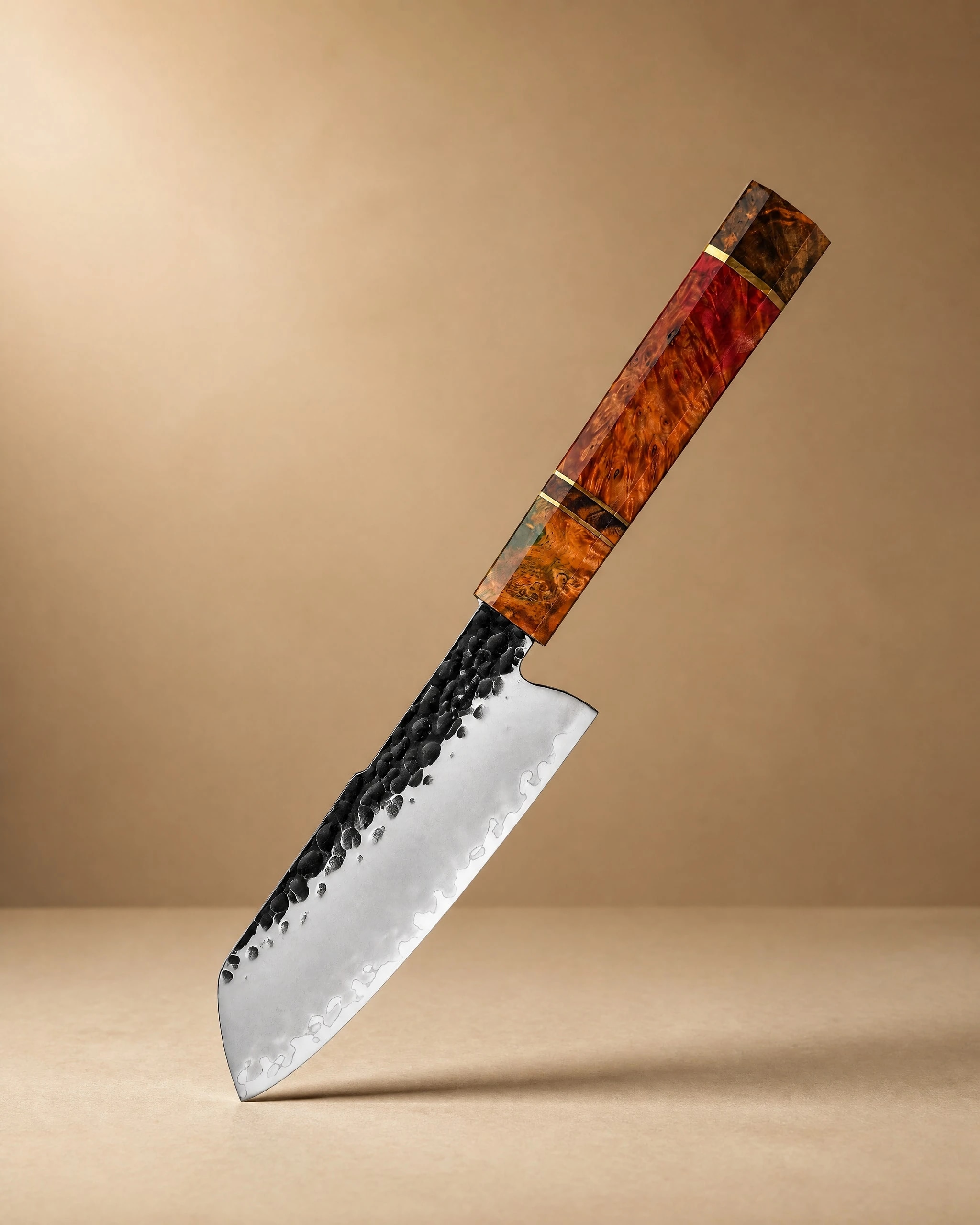 Ishikari 5" Santoku Knife 三徳包丁$79.99View product →
If you want a longer blade and a pointed tip for moving from vegetables to proteins, the Tenjin is a strong everyday option. It is a gyuto, so it behaves more like a Western chef's knife, but the Japanese geometry keeps it light and precise over the board. For a cook who wants one reliable knife for most of the day's prep, this is where we point people who are not set on the squared nose of a nakiri. 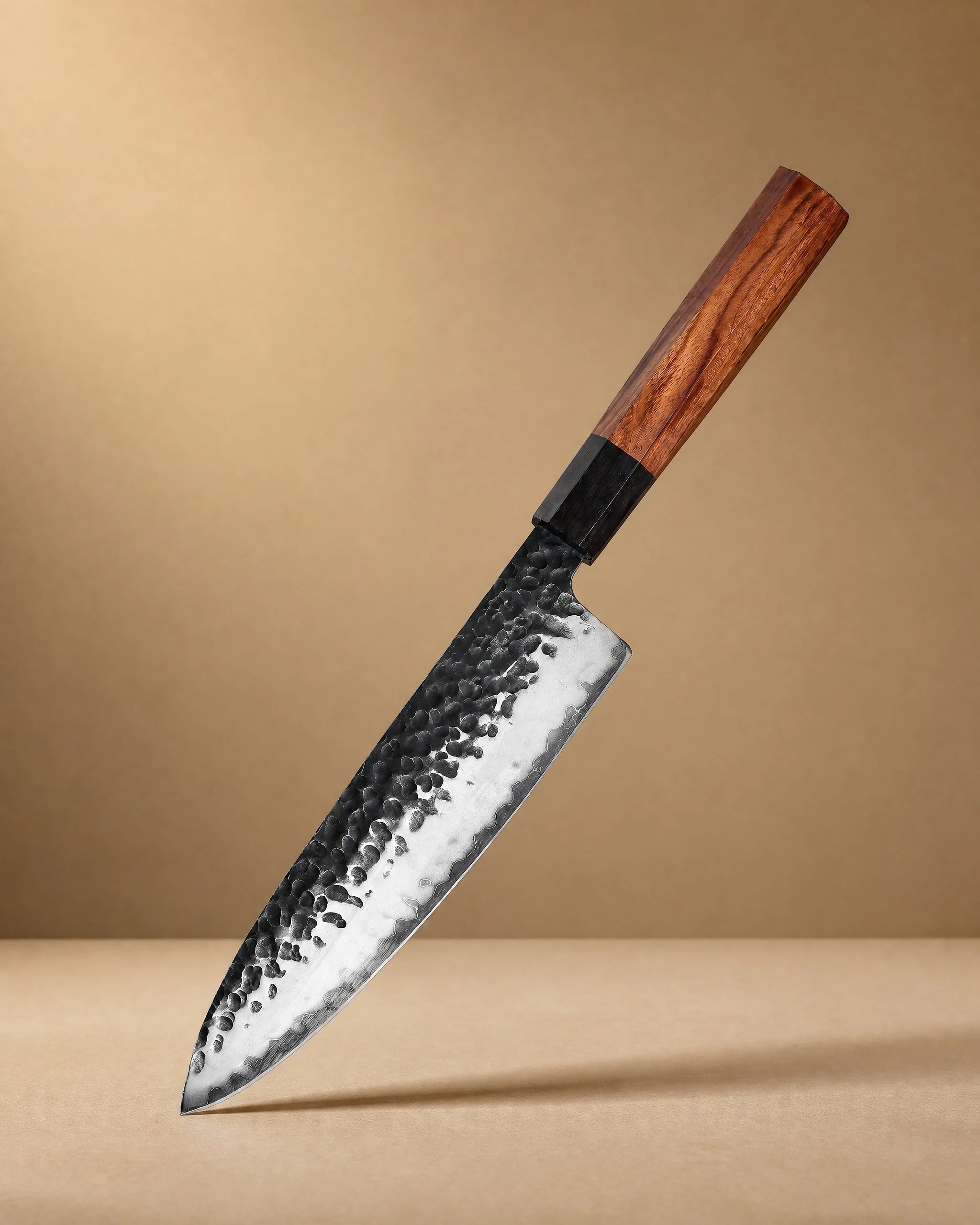 Tenjin 8" Stainless Steel Gyuto Knife 牛刀$69.99View product →
The Sendai is another everyday prep gyuto in our lineup. It fits the same general role as the Tenjin and works well for cooks who want a hard-working Japanese knife without a steep learning curve. If you already use a chef's knife and want to move toward Japanese blades, the Sendai is worth a closer look. 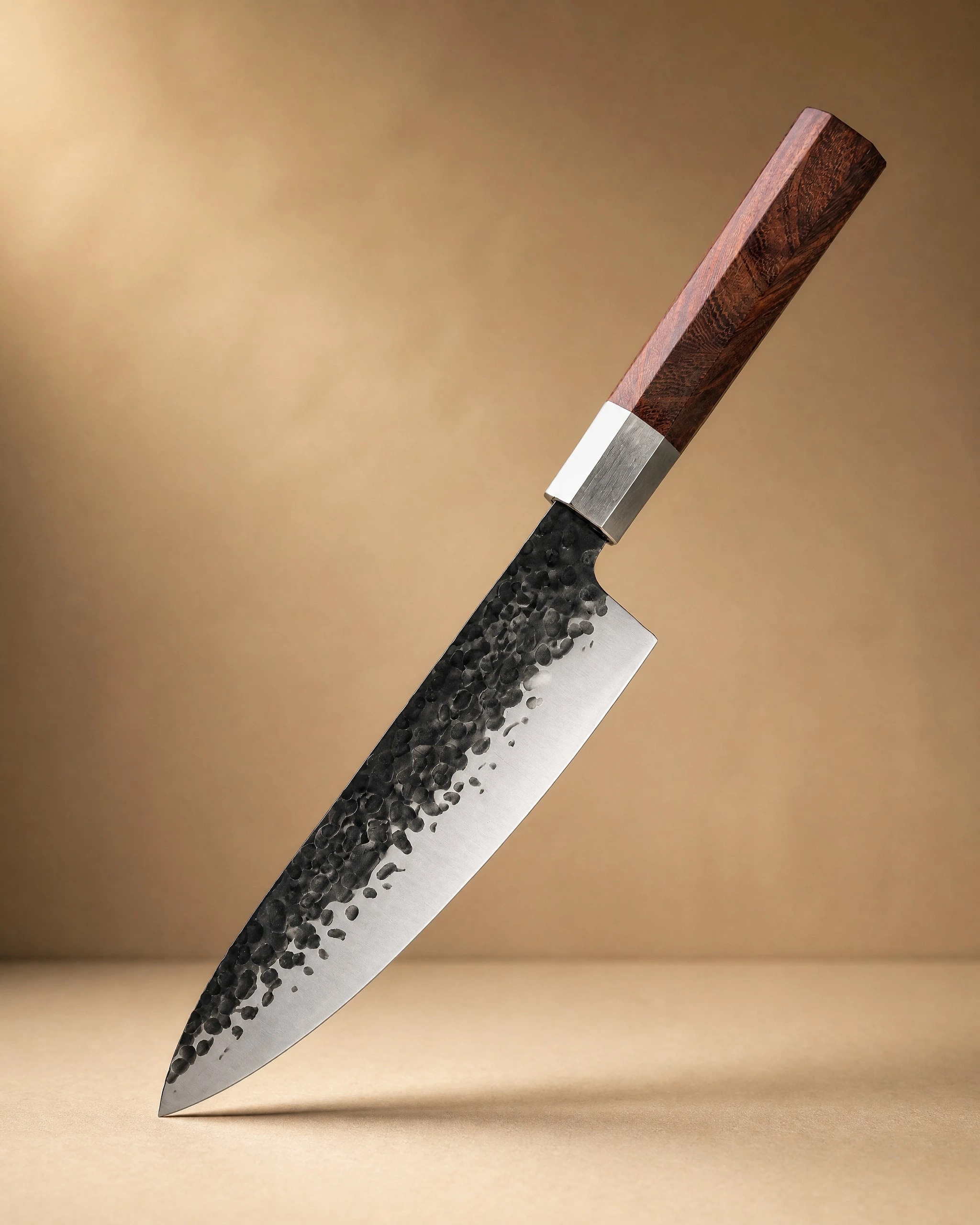 Sendai 8" Steel Gyuto Knife 牛刀$54.99View product →
If the phrase nakiri knife damascus is what brought you here, the Sakawa is the model to see. A Damascus finish gives a blade a layered, flowing pattern that looks different from every angle. It is a popular search term because the pattern is striking, but remember that a patterned blade still needs a good grind and proper care. The Sakawa is our Damascus steel choice in the everyday prep group. It is a gyuto rather than a nakiri, so it gives you the fine steel and the visual detail in a more general-purpose shape. 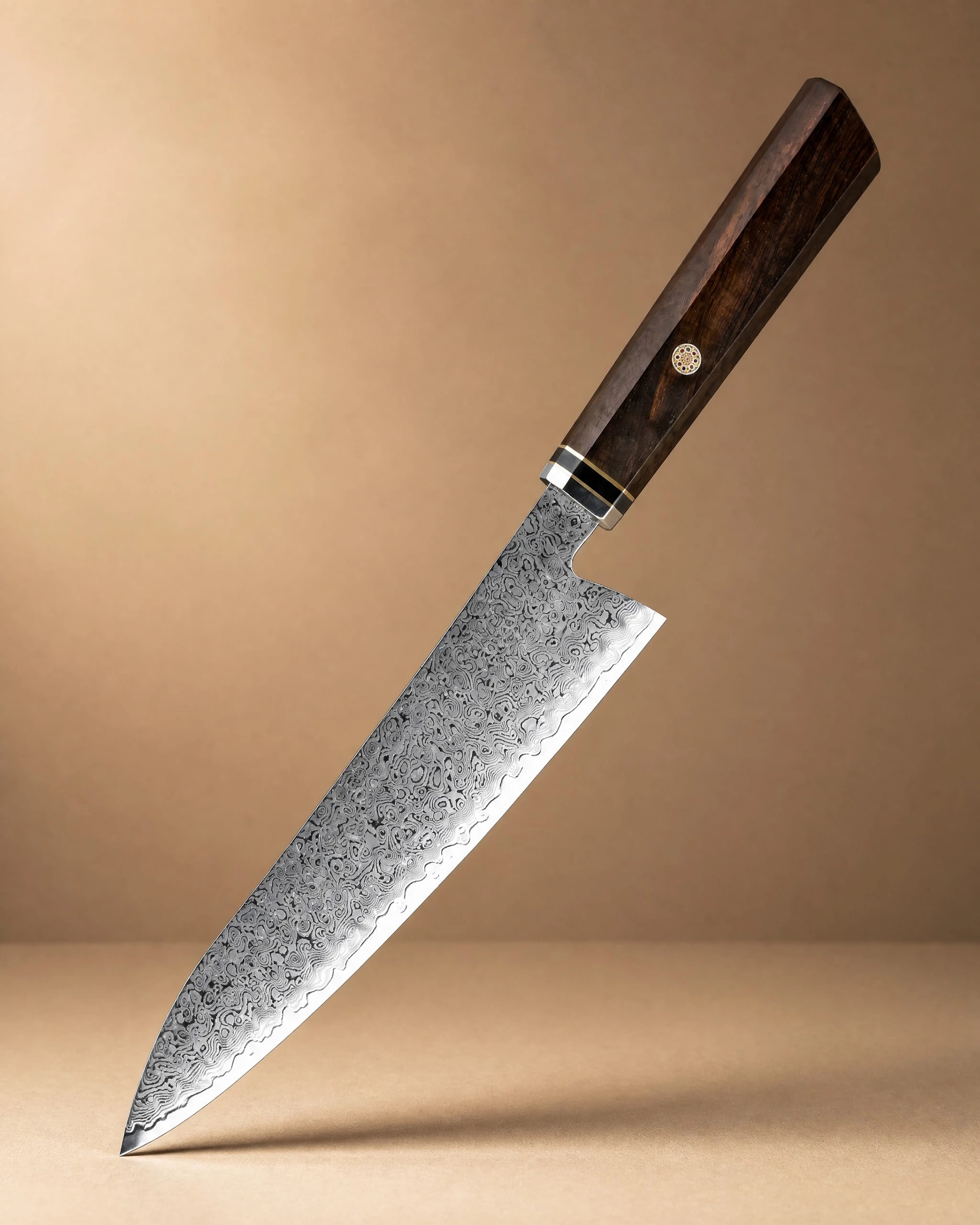 Sakawa 8.5" Damascus Steel Gyuto Knife 牛刀$94.99View product →
Damascus Steel and the Nakiri Look
Damascus steel deserves a honest explanation. The pattern comes from folding and layering different steels during the forging process. That patterned surface is beautiful, but it is not a guarantee that the knife will outperform a plain steel blade. A well-ground plain steel knife can cut just as well as a Damascus knife, and in some cases better, because the edge depends on the core steel and the grind rather than the decorative layers.
If you love the Damascus look, choose a knife from a maker you trust and pay attention to the blade geometry. The Sakawa is the Damascus option in our current everyday prep lineup. The product card above shows the current version of that blade. It is a good place to start if you want a knife that looks as special as it performs.
Caring for a Japanese Vegetable Knife
Because a nakiri is used almost exclusively on vegetables, cutting board contact is constant. Use a wooden or plastic cutting board and avoid glass, stone, or ceramic. A hard board will dull even the finest Japanese edge quickly. Soft woods like cedar, hinoki, maple, and walnut are easier on an edge than bamboo or composite boards, though a smooth end-grain board is always a good choice.
Wash the knife by hand with mild soap and water, then dry it immediately. Do not put Japanese knives in a dishwasher. High heat, harsh detergent, and metal-to-metal contact are the fastest ways to damage the edge and the handle. Hang the knife on a magnetic strip or store it in a blade guard. Never leave it loose in a drawer where it can knock against other tools.
For sharpening, use whetstones rather than pull-through sharpeners. A fine stone will bring back a vegetable knife edge in a few minutes once you learn the basic motion. If you are new to whetstones, read our knife care guide first. It covers the simple habits that keep Japanese knives sharp for years.
Your Next Step
Start by thinking about your most common prep. If you cut vegetables at least a few times a week and want a knife that makes those sessions more comfortable, a nakiri is worth serious consideration. If you also trim meat, slice cooked proteins, or use your knife for many different tasks, plan to keep a gyuto or a santoku nearby. The best setup might be one good Japanese vegetable knife plus one general-purpose knife.
The best nakiri knife for you is not necessarily the most expensive one. It is the knife whose profile, steel, and handle make you look forward to cutting vegetables. To see the dedicated nakiri models we currently stock, visit the nakiri category page. You can also browse the full collection on our product page and compare everyday prep options alongside the more specialized blades. The right knife is the one that fits your hand and your cooking. That is the standard we use in every review we write.
Photography: Savernake Knives via Unsplash.


