
Best Cutting Board for Meat and Poultry

Most home cooks spend their knife budget on the knife and almost nothing on what sits under it. That is a mistake. A board that is too hard dulls an edge, a board that is too soft harbors bacteria, and a board that slides while you break down a chicken is how fingers get cut. If you cook meat and poultry regularly, the board is not an accessory. It is half of the cutting system.
This guide covers what actually matters for boards used with raw meat, poultry, and cooked roasts, and it points out where the marketing gets ahead of the science.
Why the board matters as much as the knife
Two things happen every time a blade meets a board: the food separates, and something absorbs energy. If the board is glass, stone, or a hard composite, the edge takes that energy and rolls or chips. If the board is a soft wood or a quality polymer, the board gives slightly and the edge survives. Over a year of daily cooking, the difference is not subtle. A gyuto that stays sharp for weeks instead of days is usually paired with a forgiving board.
The second issue is biology. Raw poultry routinely carries campylobacter and salmonella. Raw pork and beef can carry E. coli, listeria, and other pathogens. These organisms do not care whether your board is pretty. They care whether there are scratches deep enough to hold moisture and food particles, and whether the surface can be cleaned thoroughly between uses.
That combination, edge preservation plus cleanability, is the entire argument. Everything else is preference.
Wood, plastic, bamboo, and composite: an honest comparison
Hardwood boards, typically maple, walnut, cherry, or teak, are the traditional answer and still the best for most people. Maple is dense but still softer than the steel edge, so knives last. Wood also has natural antibacterial properties that have been studied repeatedly: bacteria applied to a clean wood surface tend to die off rather than multiply, which is the opposite of what people assume. The catch is maintenance. Wood needs oiling, it should never sit in a sink of water, and it should never go in a dishwasher.
Plastic and high-density polyethylene boards are cheap, dishwasher safe, and easy to sanitize. They are also the standard in commercial kitchens for raw meat, partly because they can be run through a hot wash and partly because they can be color coded. The weakness is the knife edge. Plastic is harder than most people expect, and a thin Japanese blade used on plastic every day will dull faster than the same blade used on end grain wood. Plastic also develops deep grooves over time, and those grooves are where bacteria hide once the surface is scored.
Bamboo is often sold as an eco-friendly middle ground. It is grass, not wood, and it is denser and harder than maple. That hardness is not kind to a thin edge. Good bamboo boards exist, but a cheap bamboo board is one of the fastest ways to dull a knife.
Composite and rubber boards, sometimes sold under brand names, sit between plastic and wood. They are gentle on edges, resistant to deep scoring, and often dishwasher safe. They cost more and can be heavy. For someone who wants one board that handles raw chicken without fuss, they are a reasonable pick.
End grain versus edge grain
Edge grain boards are made from strips laid side by side, so the knife meets the long side of the fibers. End grain boards are made from blocks stood on end, so the knife meets the ends of the fibers. End grain is more forgiving and self-healing, and it is the better choice if you use thin, hard Japanese knives. It costs more, weighs more, and needs more oil. Edge grain is perfectly adequate for most households and easier to maintain.
What to look for in a board for raw meat and poultry
- Size: at least 18 by 12 inches for breaking down a chicken, larger for a whole brisket or a rib roast. A cramped board makes you work near the edge.
- Thickness: 1 to 1.5 inches for wood, enough mass that the board does not walk across the counter.
- A juice groove: useful for carving cooked meat, less so for raw. It traps liquid away from the cutting surface, but it is also the hardest part to scrub.
- Feet or a non-slip base: the single most underrated safety feature. A board that moves is a board that hurts you.
- A dedicated raw meat board: keep one board for raw poultry and meat and a separate one for produce and cooked food. This is the simplest food safety habit you can build.

Matching the board to the job
Raw chicken and turkey: a large, medium-hard wood board or a dedicated plastic board used only for raw poultry. You are cutting through skin, jointing wings, and butterflying breasts, so you want surface area and a stable base. Joints require a firm push, and a board that absorbs the impact without chipping the edge makes that work easier.
Red meat and trimming: a heavier board helps. Trimming silverskin and portioning steaks involves long draw cuts, and a board with enough friction to hold the meat still is worth the weight.
Carving cooked roasts: a juice groove earns its place here. A carved chicken or a rested rib roast releases a surprising amount of liquid, and a grooved board keeps it off the counter and out of your lap. Let the roast rest before carving, then slice against the grain on a board large enough to hold the whole piece.
Grinding, pounding, and cleaving: avoid thin, delicate boards. If you use a cleaver or a meat mallet, choose a thick end grain block or a heavy butcher block that can take impact.
The knife side of the equation
A board is half the system. The other half is the blade doing the work.
For breaking down poultry, trimming, and general prep, an 8 inch gyuto is the practical default. The 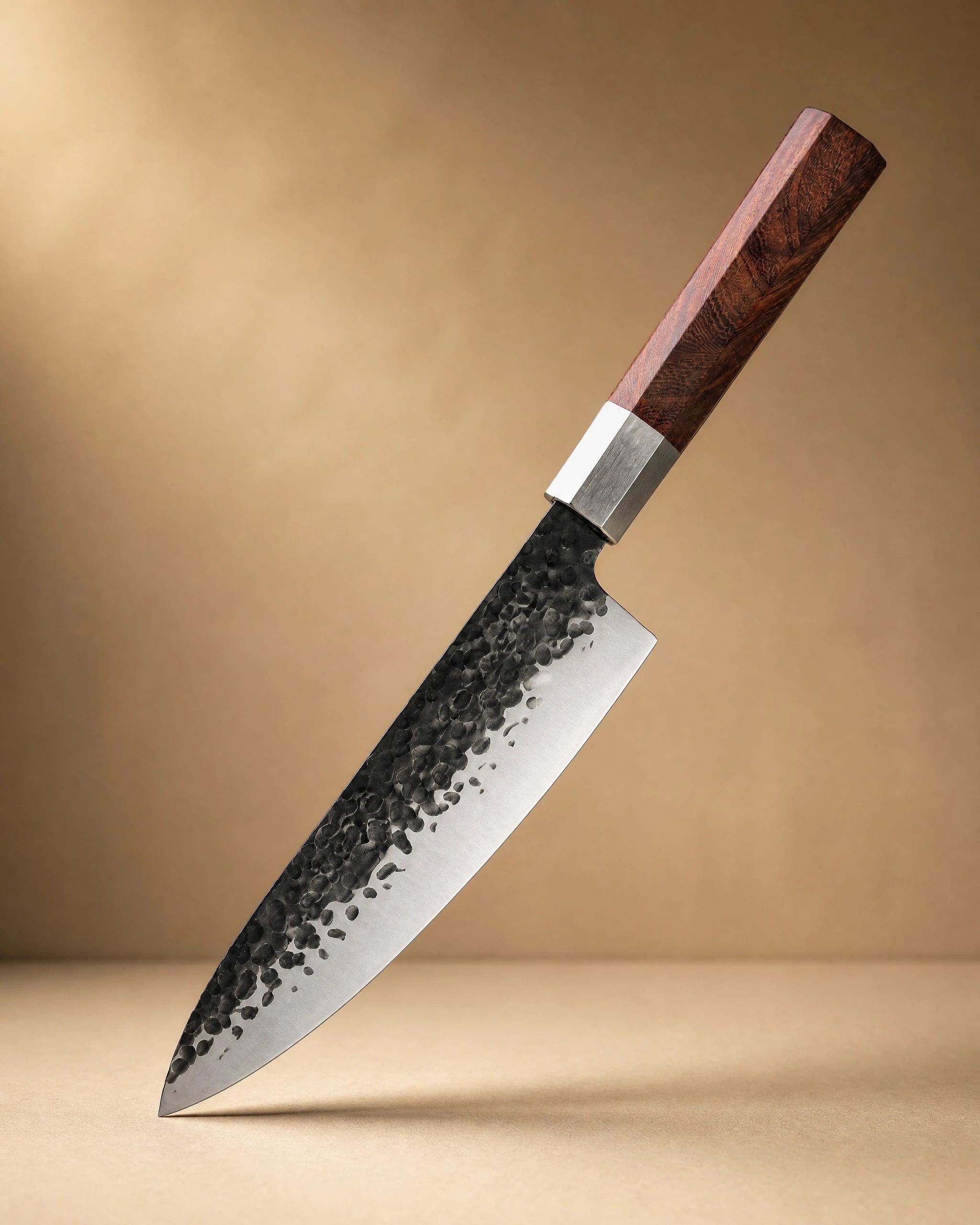 Sendai 8" Steel Gyuto Knife 牛刀$49.99View product → is a solid everyday choice: thin enough for detail work, stiff enough to push through a chicken breast without wandering. If you prefer a slightly different feel in hand, the
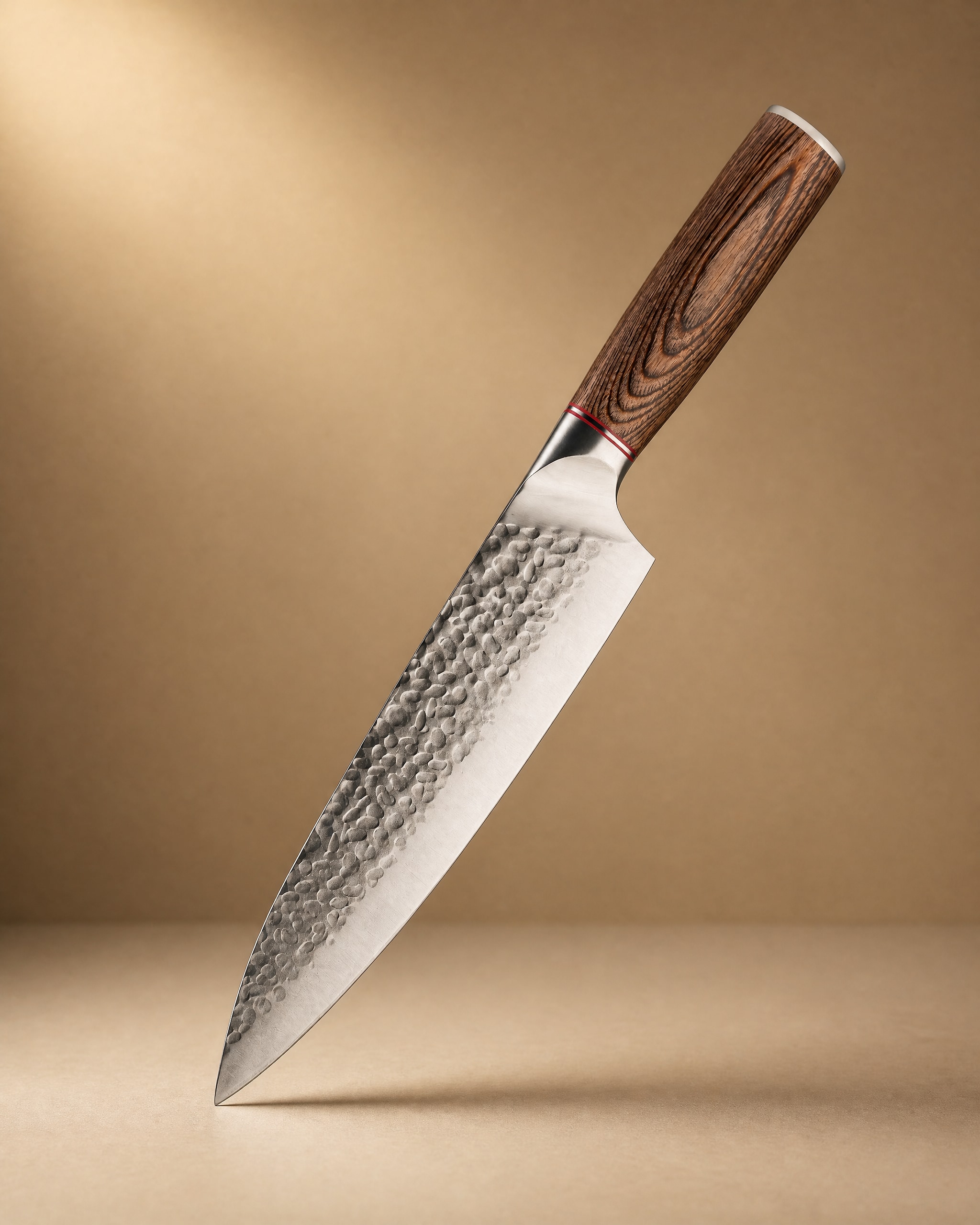 Akan 8'' Gyuto Knife 牛刀$49.99View product → covers the same role with its own profile and balance.
If you are starting from zero or replacing a tired block, the 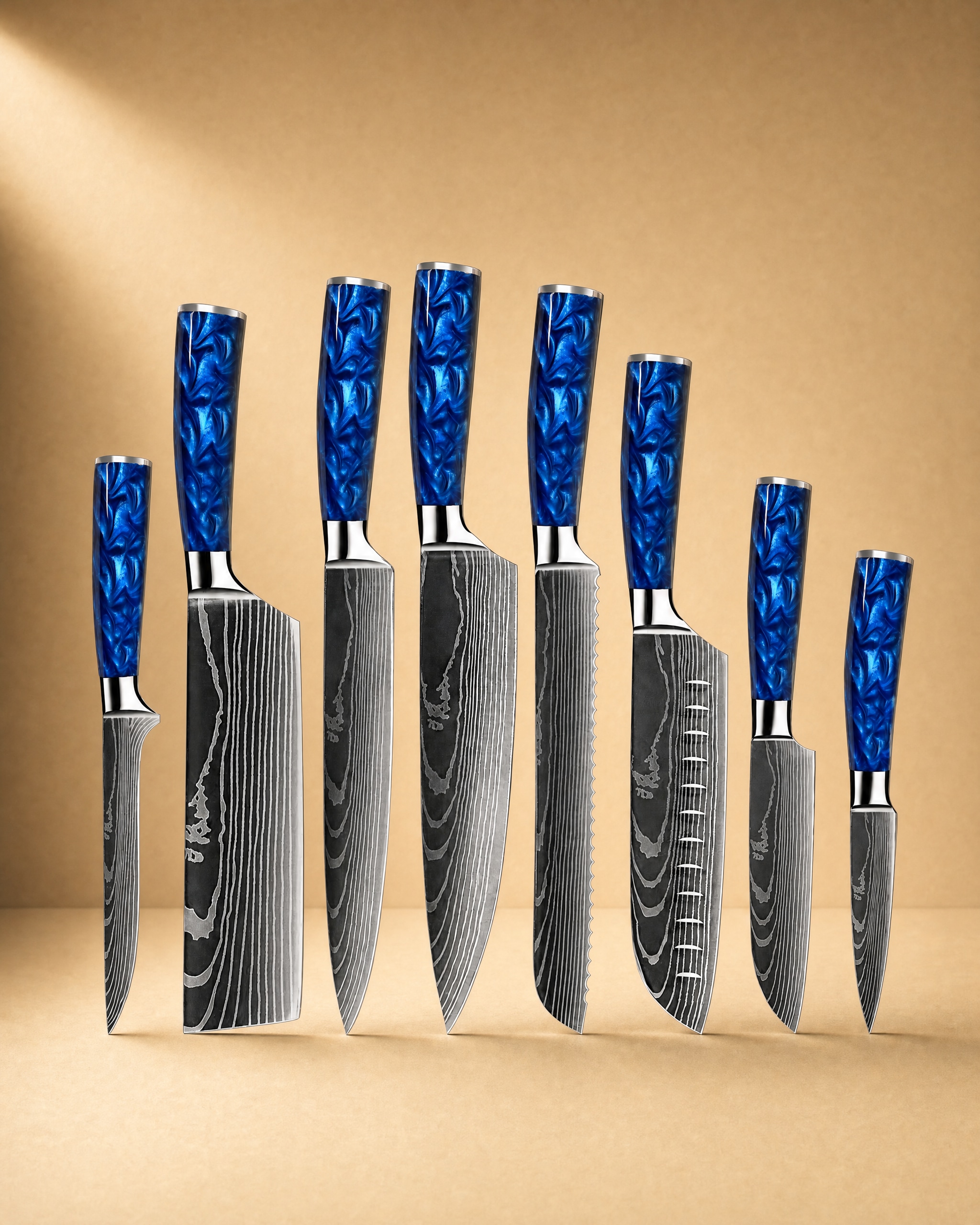 Shinano 信濃川 Damascus Pattern Stainless Steel Kitchen 8 Knife Set$149.99View product → outfits a kitchen in one step and gives you a dedicated knife for poultry, a slicer for roasts, and the smaller blades you reach for constantly. For crusty bread, tomatoes, and cooked proteins with a firm crust, the
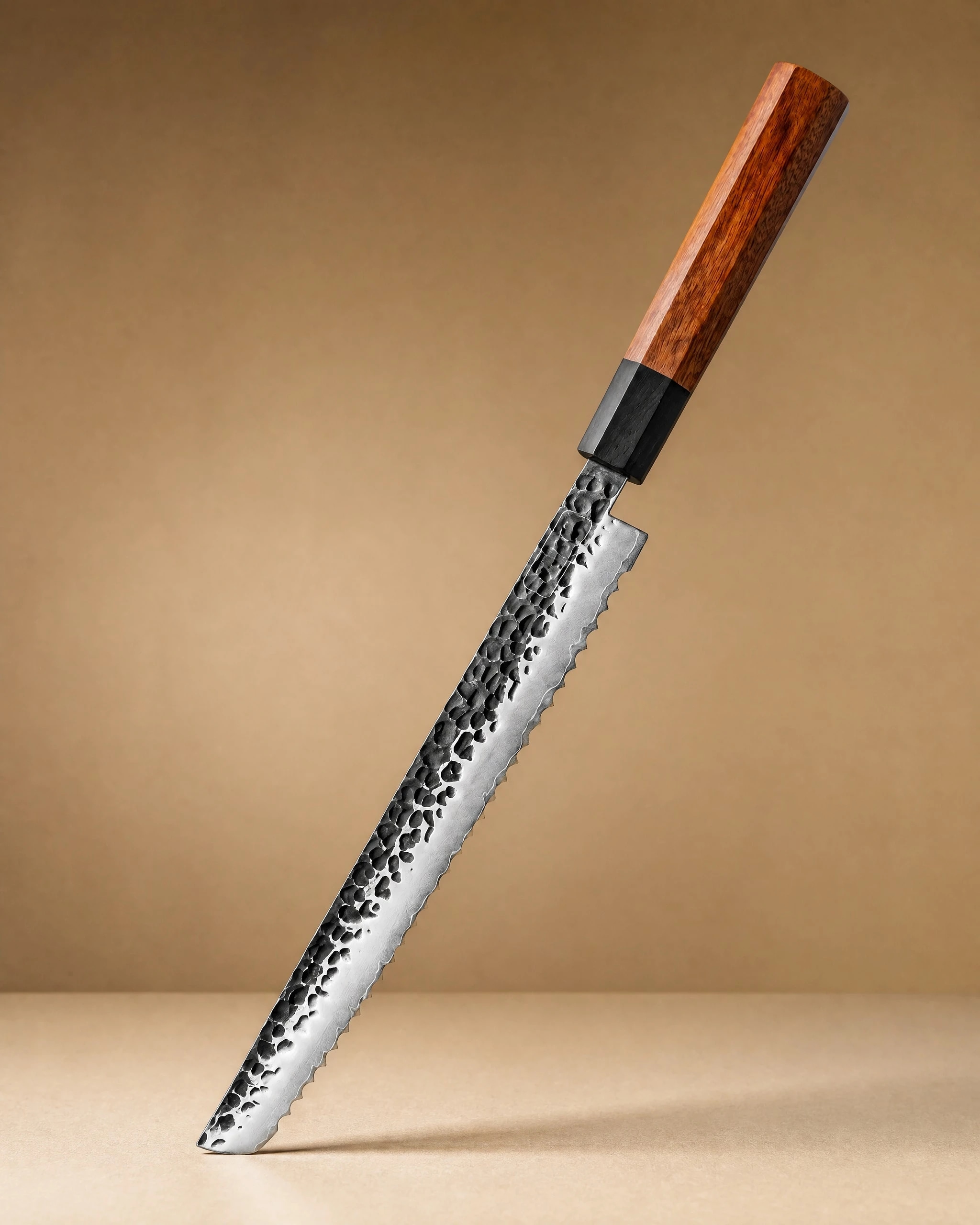 Rumoi 10" Japanese Bread Knife パン切りナイフ$59.99View product → handles the jobs a plain edge struggles with. Keep serrated blades off raw meat and poultry, since the teeth trap juices and are tedious to clean properly.
Whatever you choose, match the knife to the board. Thin Japanese edges reward a soft surface. A hard, glassy board will undo good steel in a few months.
Cleaning and care for meat boards
Wood: wash with hot water and a little dish soap, scrub both sides, dry immediately with a towel, and let it air dry standing on edge. Do not soak it. Re-oil with food safe mineral oil when the surface looks dry, typically once a month with regular use. A board conditioner with beeswax adds a little water resistance.
Plastic and composite: dishwasher safe in most cases, which is a real advantage with raw poultry. Inspect for deep cuts. Once a board is scored heavily, replace it. No amount of sanitizing reaches the bottom of a deep groove.
Sanitizing after raw meat: wash first, then apply a dilute bleach solution or a food safe sanitizer, let it sit, and rinse. Vinegar and hydrogen peroxide are popular alternatives, but do not mix them in one bottle. For everyday use, hot soapy water and thorough drying is enough on a clean board.
Knives need the same discipline. Rinse and dry after contact with meat, and do not leave a blade sitting in the sink. Our knife care guide covers daily habits that keep an edge working, from drying technique to safe storage.
Building a setup that lasts
One good board, one dedicated raw meat board, and two or three knives you actually use will outperform a drawer full of gadgets. If you are still deciding what to buy, the how to choose a knife guide walks through blade shapes, steel types, and handle styles, and the full range is on our product page.
Buy the board for the work you do. If you roast a chicken every Sunday, spend on a grooved carving board. If you break down birds weekly, spend on a large, stable, medium-hard surface. If you mostly sear steaks and slice them, a smaller end grain board is plenty.
Two mistakes worth avoiding
The first is using one board for everything. Cross contamination is the most common serious error in home kitchens, and a second board costs less than a bad week.
The second is buying a board that is harder than your knife. Glass, marble, and cheap bamboo are the usual offenders. They look fine and they quietly ruin edges.
Get the board right, keep it clean, and your knives will hold an edge longer, your prep will be faster, and the raw chicken on your counter will stay where it belongs.
Photography: Sergey Kotenev via Unsplash.