Types of Japanese Kitchen Knives Explained

A Japanese knife is not one thing. It is a family of blades, each shaped around a specific task, and the differences between them are practical rather than decorative. A gyuto and a santoku can look like cousins in a product photo and still feel completely different in the hand. Understanding the categories makes it easier to buy well, sharpen sensibly, and stop reaching for the wrong tool halfway through dinner.
What Makes a Japanese Knife Different
Most Japanese kitchen knives share a set of design priorities: a thin blade, hard steel, light weight, and a grind tuned for clean slicing. Western knives often go the other direction, with thicker stock and softer steel that tolerates rough handling. Neither approach is better in the abstract. They are different answers to different questions.
Harder steel holds an edge longer but chips more easily if you twist the blade or cut through bone. Thinner geometry glides through an onion but expects you to let the knife do the work. If you are coming from a heavy German chef's knife, give yourself a few weeks to adjust. The payoff is precision and less fatigue at the end of a long prep.
The Main Types of Japanese Kitchen Knives
Here is the short version before we get into the shapes that matter most at home.
- Gyuto: the Japanese chef's knife, an all purpose blade for meat, fish and vegetables.
- Santoku: shorter and taller, with a flat profile built for push cutting.
- Nakiri: a tall, rectangular vegetable knife.
- Petty: a small utility knife for trimming and detail work.
- Sujihiki: a long, narrow slicer for clean cuts of protein.
- Yanagiba: a single bevel slicer for raw fish.
- Deba: a heavy single bevel knife for whole fish.
- Honesuki: a stiff, triangular blade for poultry.
Gyuto: The One Knife Most People Actually Need
If you buy a single Japanese knife, make it a gyuto. The shape descends from the French chef's knife, but the blade is thinner and the profile is usually flatter through the middle, which makes it efficient for slicing and push cutting. Proteins, aromatics, herbs and most vegetables are all fair game.
An 8 inch gyuto is the sweet spot for most cooks: long enough to break down a cabbage, short enough to trim a shallot. The 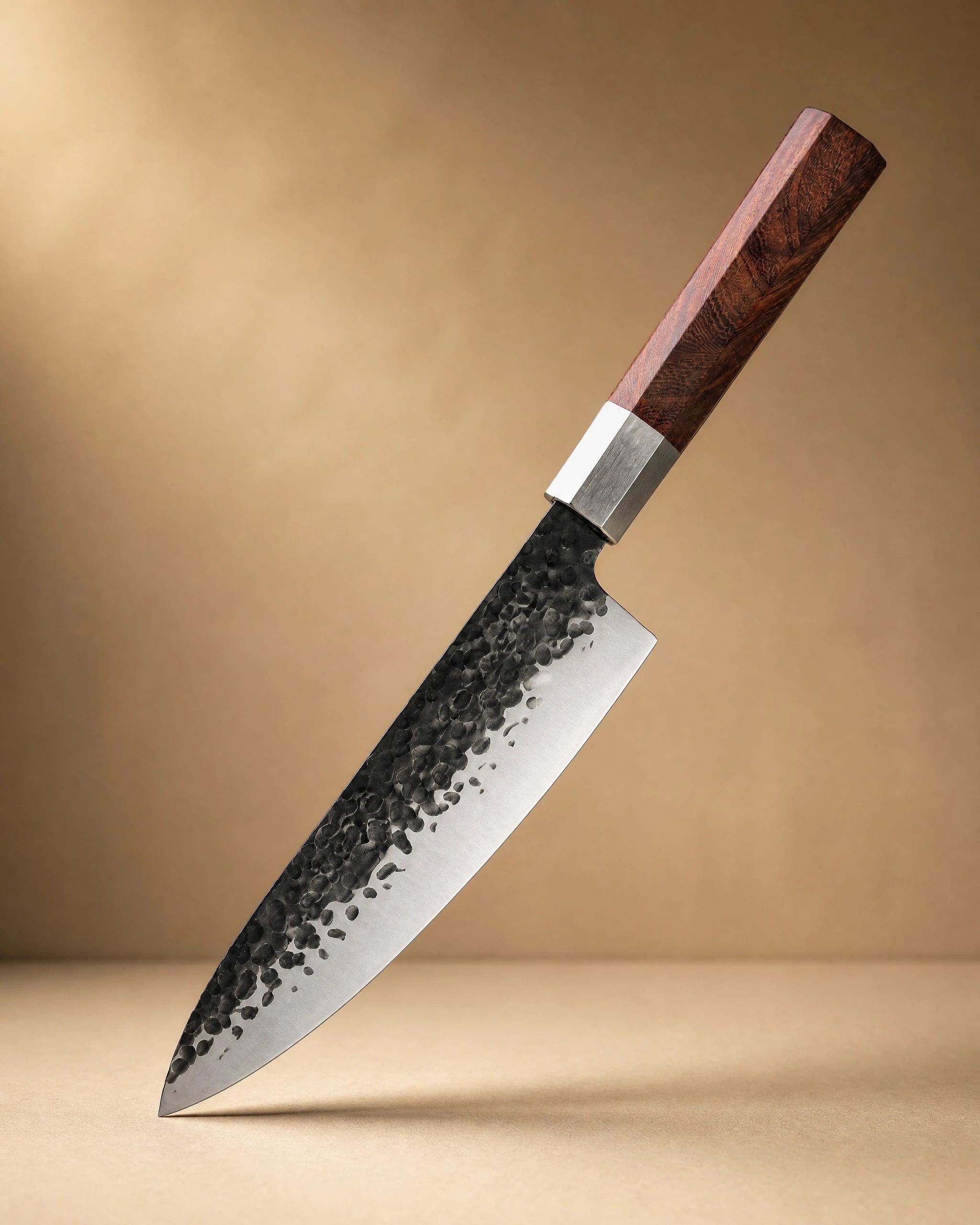 Sendai 8" Steel Gyuto Knife 牛刀$49.99View product → covers everyday prep in exactly that role, and the
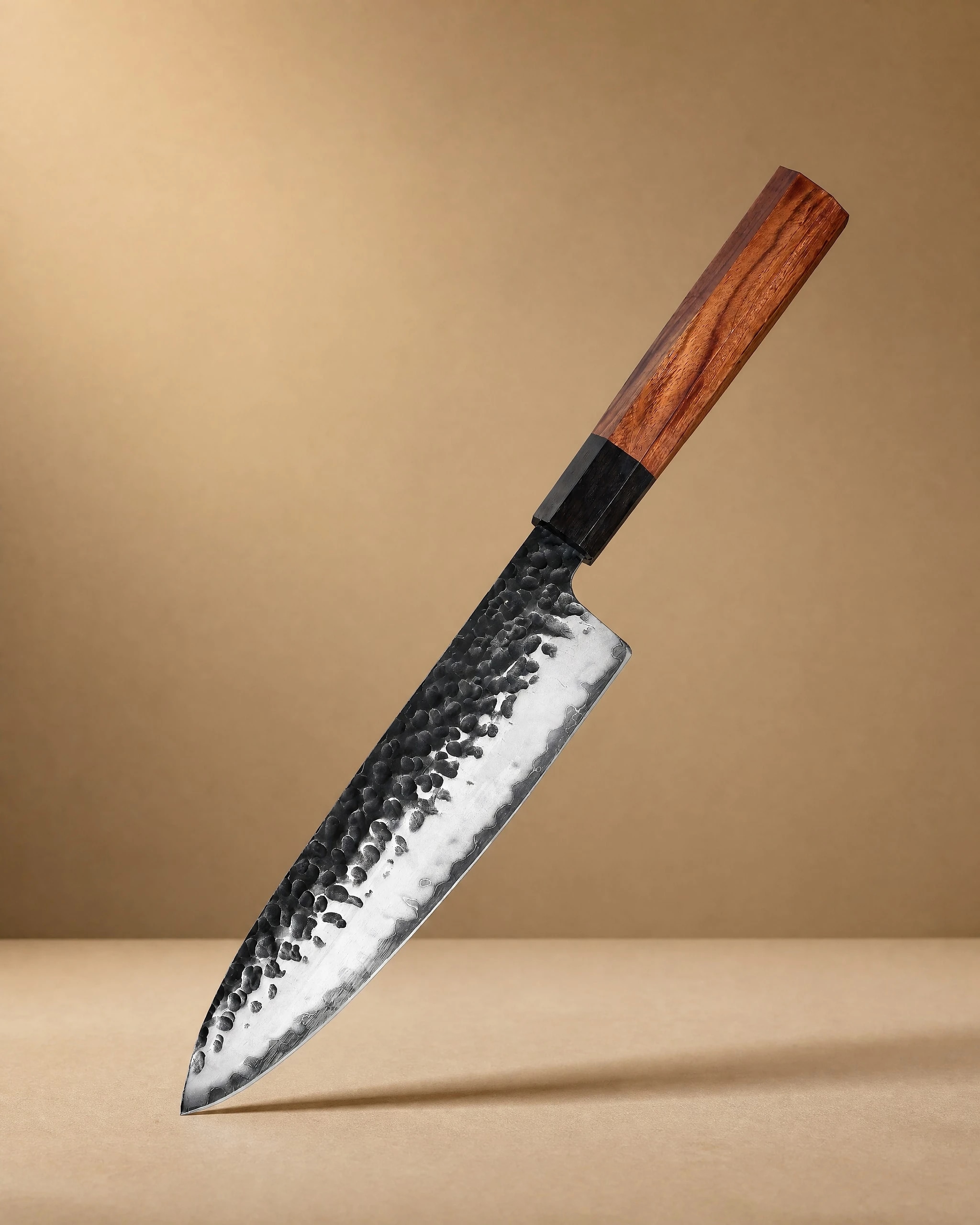 Tenjin 8" Stainless Steel Gyuto Knife 牛刀$59.99View product → sits in the same category if you prefer a different balance or finish. Both are double bevel, and both are built to be used daily.
Where a gyuto struggles is bone, frozen food and anything that needs a heavy, stiff blade. Reach for a cleaver or a honesuki there and your edge will last longer.
Santoku: Shorter, Taller, Built for the Board
The santoku is the home cook's knife in Japan and just as common in American kitchens now. It is typically shorter than a gyuto with a taller profile, a flatter edge and a spine that drops toward the tip. That shape encourages a straight up and down push cut rather than a rock.
The tradeoff is the tip. A santoku has a low, blunt point, so it is not the tool for fine tip work. If your cooking is mostly vegetables, chicken and weeknight stir fries, that rarely matters. The 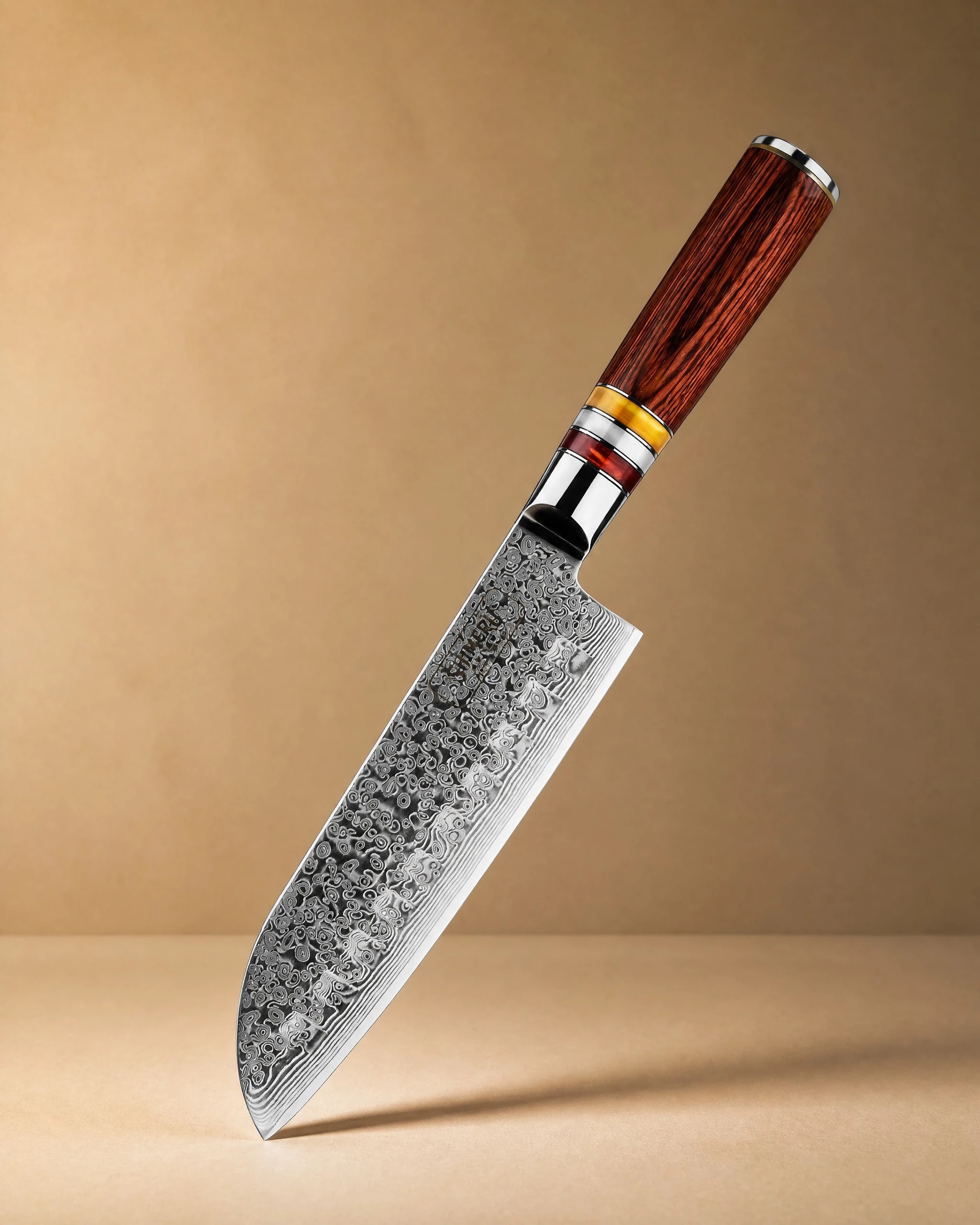 Hikari 光 7" Damacus Steel Professional Santoku Knife 三徳包丁$74.99View product → is a good example of the pattern: a board friendly blade with a Damascus finish that resists staining.
Nakiri, Petty and Sujihiki: The Supporting Cast
Once you own a gyuto or a santoku, the next additions are about specialization.
A nakiri is a tall, rectangular vegetable knife with a flat edge. It chops and slices with almost no rocking, which many cooks find faster and more controlled on onions, carrots and cabbage.
A petty is a scaled down utility blade, usually 4 to 6 inches, for shallots, garlic, trimming silverskin and any job where a full size knife feels clumsy. Most cooks use one more often than they expect.
A sujihiki is a long, narrow slicer. The length lets you cut a roast or a fillet in one clean draw, which matters for both presentation and texture.
Yanagiba, Deba and Honesuki: Traditional Single Purpose Blades
These three belong to professional and serious home kitchens, and each has a narrow job.
A yanagiba is a single bevel slicer for raw fish. The long, thin blade and flat back let you draw through a fillet and leave a glossy surface.
A deba is a thick, heavy single bevel knife for breaking down whole fish: taking off the head, splitting the body, working around bones. It is not a general purpose chopper.
A honesuki is a stiff, triangular poultry knife for working around joints. The pointed tip slips into a socket and the firm blade does not flex under pressure.

Single Bevel Versus Double Bevel
This distinction trips up most people new to Japanese knives.
A double bevel knife is ground on both sides with a symmetric edge. It steers straight, sharpens easily on a standard stone, and works for left and right handed cooks. Gyuto, santoku, nakiri, petty and sujihiki are all double bevel.
A single bevel knife is ground on one side with a hollow ground back. It cuts with a slight steering tendency that experienced users learn to use, needs a different sharpening routine, and comes in right or left handed versions. Yanagiba, deba and honesuki are traditional single bevel shapes. Unless you break down fish regularly, you can postpone this part of the hobby.
Steel and Hardness: What the Numbers Mean
Steel choice affects how a knife feels on the stone and how long it holds an edge. Carbon steel takes a keen edge easily and sharpens fast, but it rusts if left wet and develops a patina over time. Stainless steel, including the Damascus pattern steels used on many modern blades, resists corrosion and shrugs off a busy kitchen. The pattern is a visual layer, not a performance claim.
Hardness is measured on the Rockwell C scale. A higher number means better edge retention and a more brittle edge. Kitchen knives commonly land in the high fifties to low sixties. Do not chase the highest number you can find. A slightly softer blade you can sharpen confidently will outperform a fragile one you are afraid to use.
Handles: Western Versus Wa
Western handles are shaped and riveted, usually with a full tang running through the handle. They feel familiar and offer plenty of grip options.
Wa handles are the traditional Japanese style: lightweight, often octagonal or oval, frequently in ho wood or magnolia, sometimes with a buffalo horn ferrule. They shift the balance forward toward the blade, which many cooks prefer for slicing. An octagonal handle also gives you clear reference points for where the edge is pointing.
Neither is better. Handle shape is about hand size, grip style and the cutting you do most.
Buy a Set or Build One Blade at a Time?
Buying one knife at a time lets you learn what you actually reach for and spreads the cost. The risk is ending up with three knives that overlap and none that fill the gap.
A set solves the planning problem. You get the core shapes in matching steel and handles, which makes storage and maintenance simpler. The 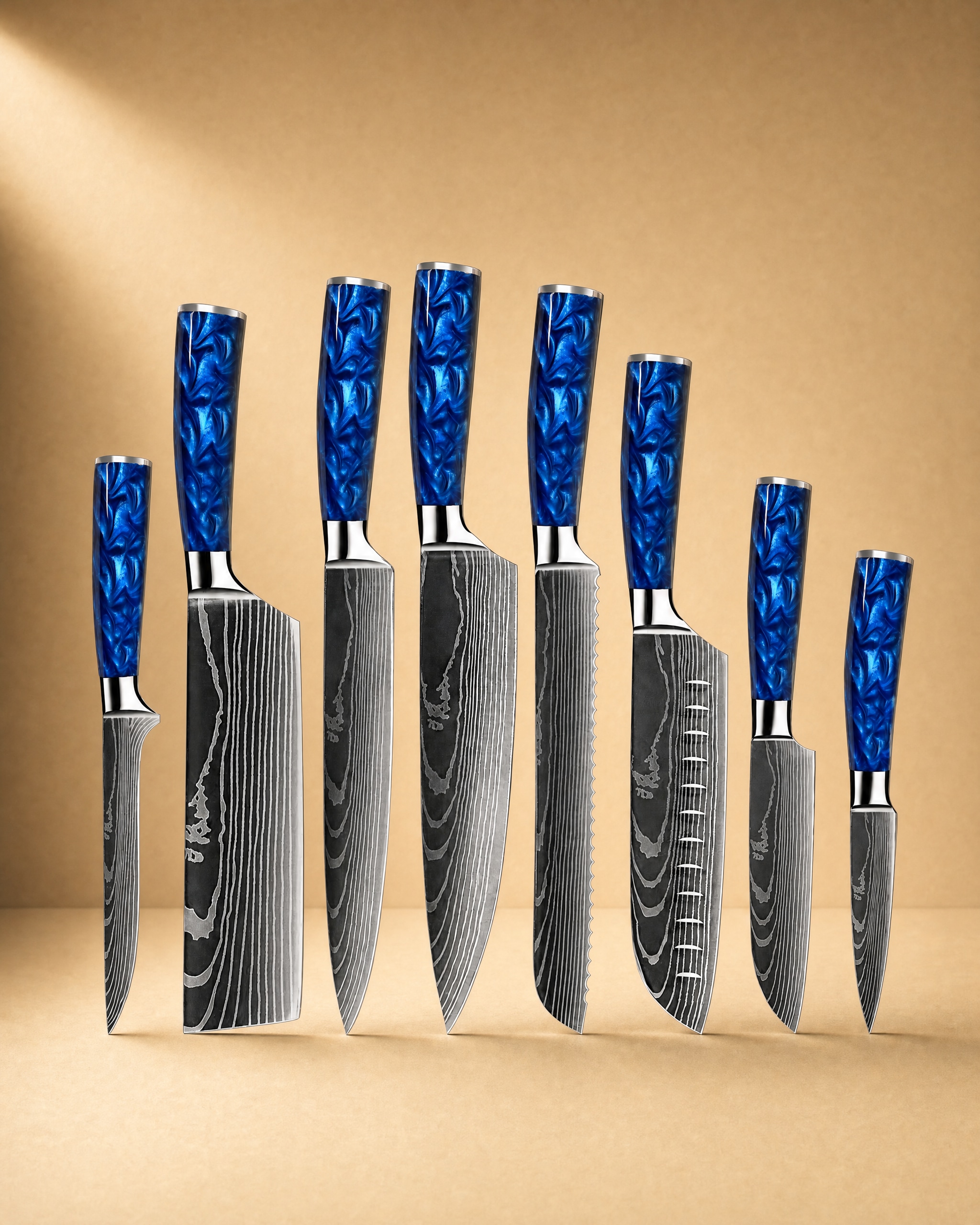 Shinano 信濃川 Damascus Pattern Stainless Steel Kitchen 8 Knife Set$149.99View product → is built around a single Damascus pattern, so the pieces feel like a family rather than a pile of separate purchases. If you are outfitting a kitchen from scratch or replacing a worn block, that is the more efficient path. If you already own a gyuto you like, add a petty and a sujihiki instead.
How to Start
Three questions narrow the choice faster than any spec sheet.
What do you cook most? Vegetables and chicken point to a santoku or a gyuto. Fish points to a sujihiki or a yanagiba. Whole birds point to a honesuki.
How much maintenance do you want? Carbon steel rewards attention. Stainless and Damascus steels tolerate a rinse and a dry.
What does your hand want? A heavier Western handle and a light wa handle feel very different after an hour of prep. Hold both if you can.
For a deeper walkthrough, the knife guide covers blade length, geometry and matching a knife to your cutting style. Once you have chosen, the knife care guide covers the daily habits and sharpening routine that keep an edge working for years. You can browse every blade we carry at our shop.
Keep It Simple
Most home cooks do not need eight knives. A gyuto, a petty and one specialty blade handle the overwhelming majority of cooking, and a sharp knife of any shape beats a dull one of the right shape every time. Buy for the food you actually make, learn to sharpen, dry your blades after washing, and the type of Japanese knife you choose matters far less than how well you care for it.
Photography: EMANUELE Ricciardi via Unsplash.


