
Stainless Steel Cutting Boards: Worth It or Not?

Stainless steel cutting boards show up in searches for good reason. They look indestructible, they promise easy cleanup, and they never absorb garlic, raw chicken juice, or beet juice. If you are shopping for the best stainless steel cutting board, the honest answer is less simple than the marketing. A metal board can be useful in a kitchen, but it is rarely the best surface for actual chopping, especially if you cook with good knives.
This is a metal cutting board review from the perspective of knife care, not a lab test. We sell Japanese kitchen knives, and we care about what happens to an edge after repeated contact with a surface. Stainless steel is durable. So is a knife edge, until it meets something harder and less forgiving. Here is where a stainless steel chopping board earns its place, where it does not, and how to decide.
What a Stainless Steel Cutting Board Actually Is
Most boards sold under this name are flat sheets of stainless steel, sometimes with a folded edge, a core, or small feet. The appeal is the surface: nonabsorbent, easy to wipe, and resistant to stains and odors. Unlike wood or plastic, it does not take on the smell of onions or fish. That is a real advantage for certain tasks.
It is also a hard surface. That single fact matters more than any marketing claim. A knife edge is thin steel. When it strikes a hard, unyielding board, the edge has nowhere to go. It rolls, dulls, or chips depending on the steel, the angle, and the force. A metal board does not cushion the edge. It does the opposite.
The Real Advantages of Metal Boards
The strongest case for a stainless steel chopping board is hygiene and cleanup. The surface does not absorb liquids, so raw meat juices, marinades, and fruit stains stay on top. You can wash it with hot soapy water, and if the manufacturer says it is dishwasher safe, you can put it in the machine. For cooks who are nervous about cross contamination, that is appealing.
Metal boards also handle heat and heavy use without warping the way thin plastic can. They do not harbor deep scratches the way soft plastic does. They are stable if the board has enough weight or feet, and they can be scrubbed aggressively. If you need a surface for staging raw ingredients, resting a hot tray, or prepping foods that stain, a metal board is practical.
Notice what is missing from that list: comfortable knife work. That is not an accident.
The Edge Problem: What Steel Does to Knives
A cutting board should be softer than the knife edge. Wood and soft plastic give slightly under the edge, which helps the edge last. Stainless steel does not give. Every chop, slice, and rock cut sends a small shock through the edge. Over time, you feel it. The knife starts to skate on tomato skins. It hesitates on peppers. You reach for the honing rod more often, and eventually the sharpener.
This matters even more with hard, thin Japanese knives. A hard, thin gyuto 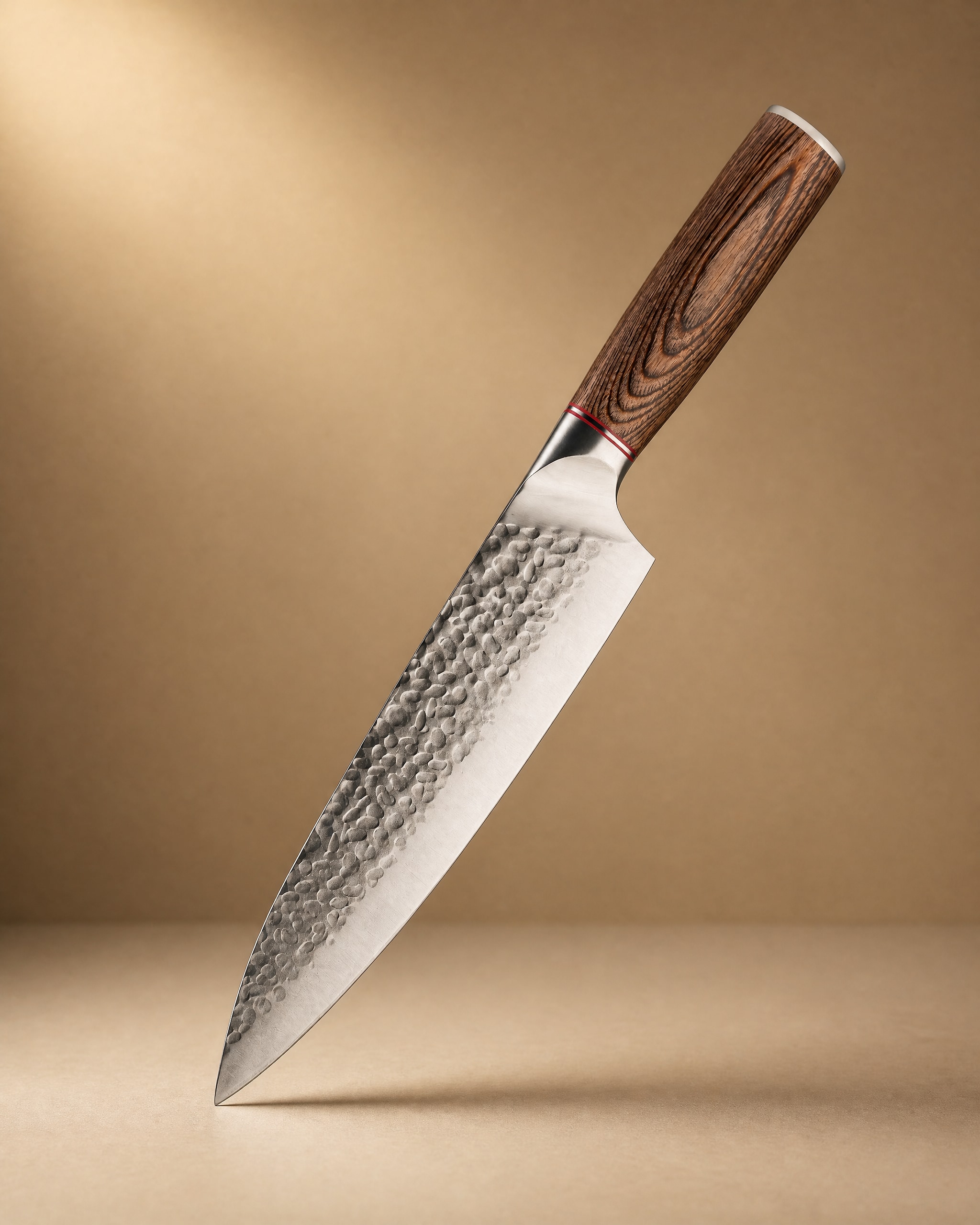 Akan 8'' Gyuto Knife 牛刀$64.99View product → is built for clean slicing and everyday prep. It rewards a soft board and good technique. Putting it on a metal board is like driving a good car on a rough road every day. It will work, but you are adding wear for no benefit. If you already own a gyuto, read our knife care guide before you change boards.
Serrated knives are not exempt. A long bread knife 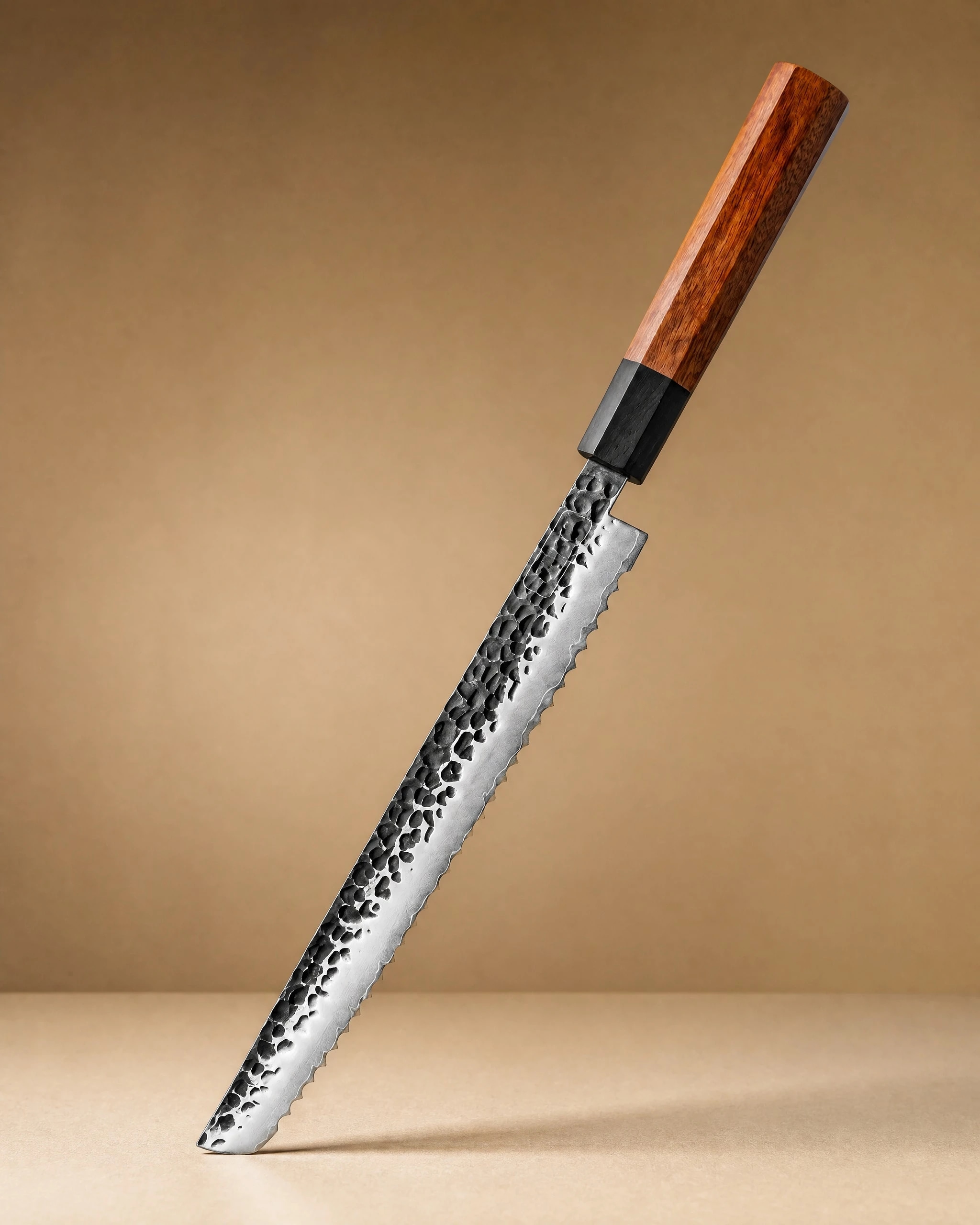 Rumoi 10" Japanese Bread Knife パン切りナイフ$79.99View product → has points that do the cutting. Those points can dull or deform against metal, and the long sawing motion gives more opportunities for contact. Bread wants a gentle board, not a sheet of steel.
Where a Metal Board Makes Sense
There are legitimate uses for a stainless steel chopping board, just not as the primary surface for knife work. Think of it as a sanitary tray or a prep station. You can use it to hold raw meat before cooking, to catch trimmed fat, or to stage vegetables that have already been cut on another board. You can use it under a cutting board as a drip tray, or as a clean surface for tasks that do not involve a knife edge.
It also makes sense for people who prioritize sanitizing over edge retention. If you cook a lot of raw proteins and want a surface you can scrub hard, a metal board can play a role. Use a cheap knife for that work, or cut on a plastic board and transfer to metal. Do not treat the metal board as a do everything chopping surface.
- Use it for staging, not chopping.
- Keep a wood or soft plastic board for knife work.
- Check the manufacturer's care instructions before dishwashing.
- Use dedicated boards for raw meat and ready to eat foods.
How to Judge a Metal Cutting Board Review
Most metal cutting board reviews focus on cleanliness, rust resistance, and value. Those are fair points, but they often skip the knife. When you read a review of a stainless steel chopping board, ask what the reviewer cut on it and with what knife. A board can be easy to clean and still be bad for your edges. Those two facts can be true at once.
If you still want one, buy for stability and finish. A board that slides is dangerous. A thin sheet that flexes under a knife is worse than a rigid board. Look for a size that fits your counter and a surface that does not trap water at the edges. Follow the maker's instructions for cleaning. And keep your good knives off it. For a broader look at matching knives to tasks, see our knife guide.

A Better Strategy: Match the Board to the Task
The most useful kitchen setup is not one board for everything. It is a small collection with clear jobs. A wood board for vegetables, bread, and general prep. A plastic board for raw meat that you can sanitize or replace. A metal tray for staging and cleanup. That setup protects your knives and keeps raw juices contained.
If you are building a knife setup, put more of your budget into the knives and a good soft board, not into a metal chopping surface. A full knife set 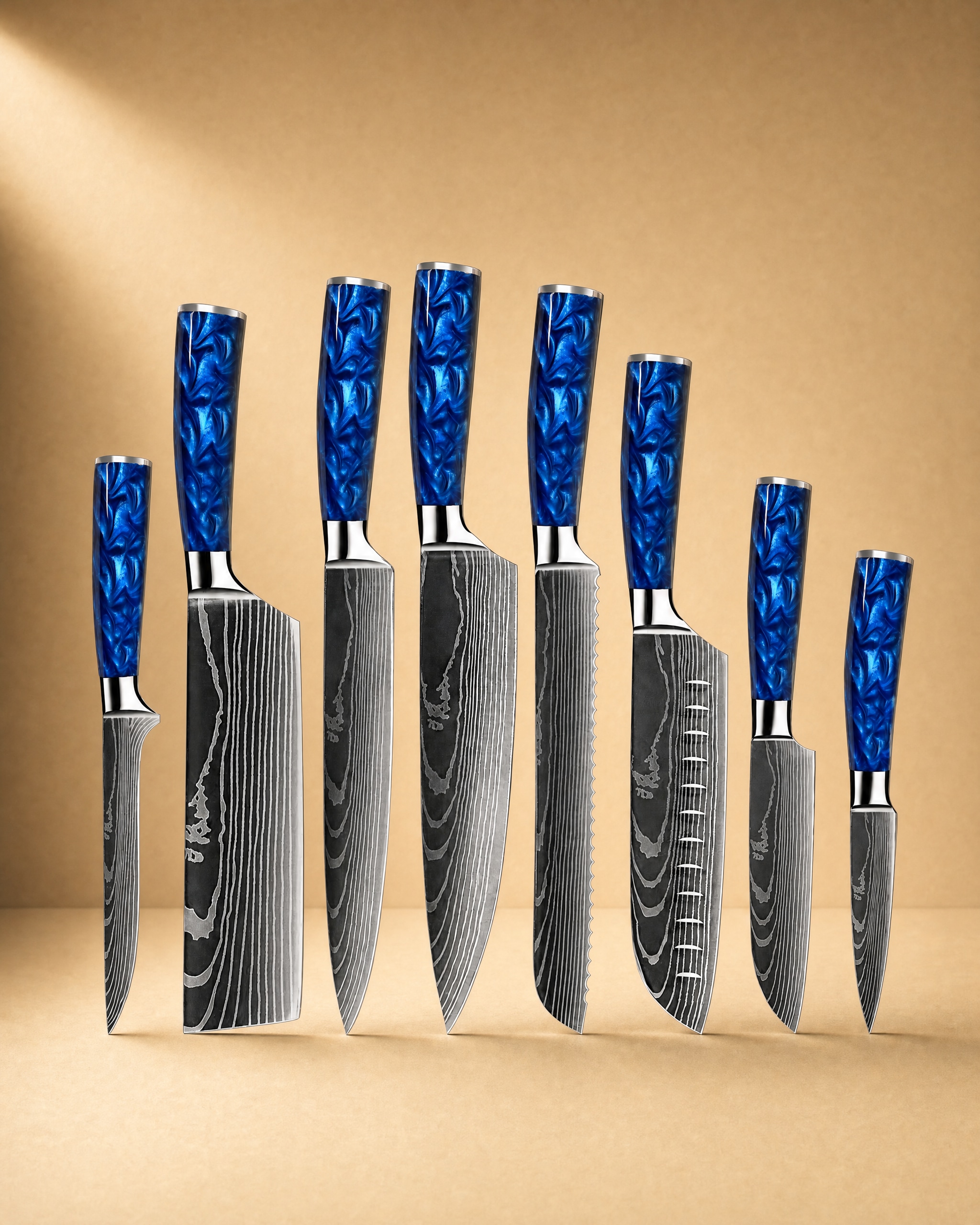 Shinano 信濃川 Damascus Pattern Stainless Steel Kitchen 8 Knife Set$199.99View product → is a set you would want to keep on wood or soft plastic. A metal board would undercut the edge you paid for. The same is true for a santoku. A santoku
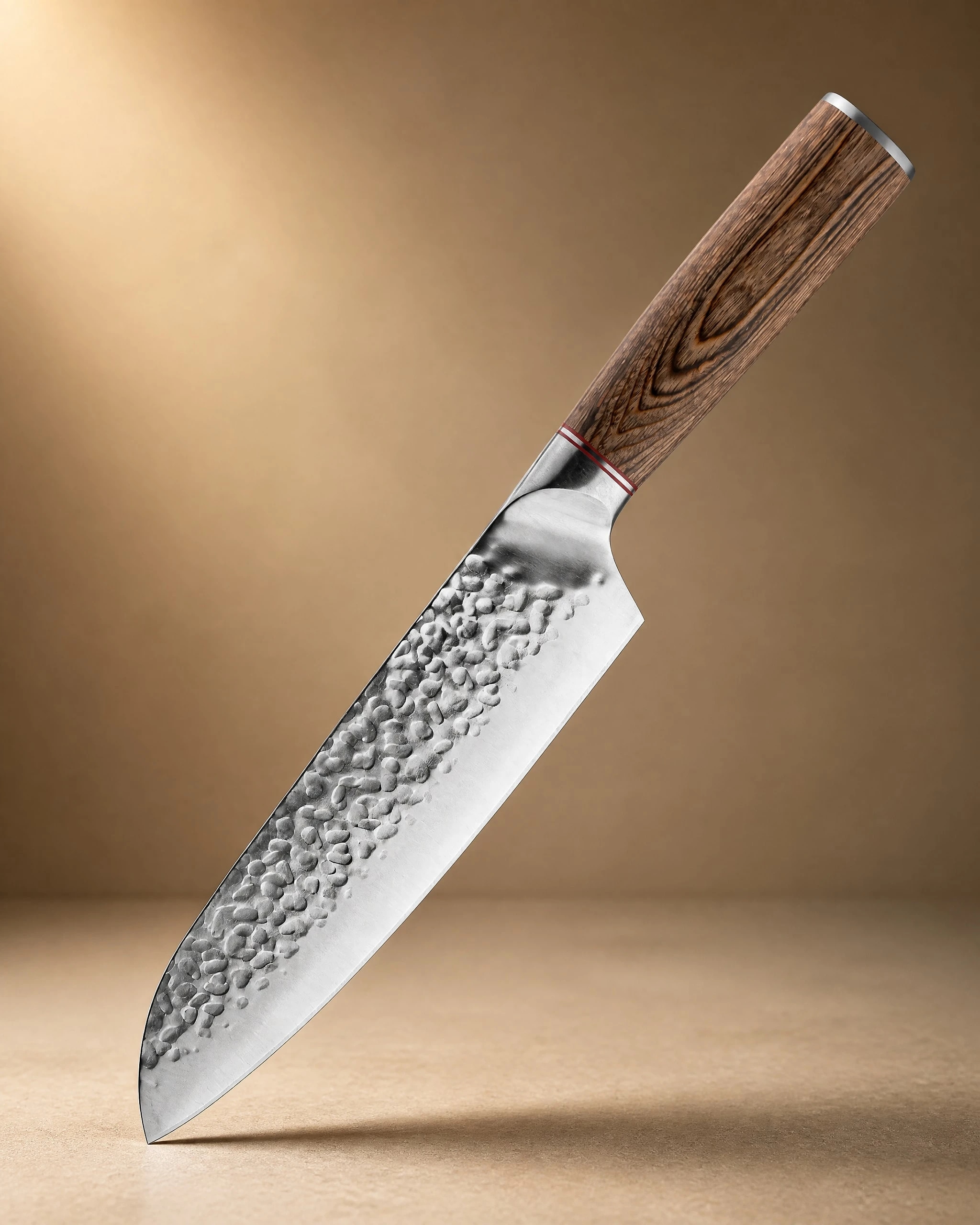 Raikou 6.5" Santoku Knife 三徳包丁$64.99View product → is a knife for daily prep, and daily prep means repeated board contact. Give it a surface that respects the edge.
This is also where a stainless steel cutting board can fit without doing harm. Use it as a landing zone for prepped ingredients, a tray for raw protein, or a clean surface for assembling. Then do the cutting on a board that gives. You get the hygiene benefit and you keep the edge.
Caring for Knives If You Use a Metal Board
If you already use a metal board, adjust your routine. Expect to sharpen more often. Honing can realign an edge, but it cannot restore steel that has been worn away. Learn the difference between honing and sharpening, and do not overdo either. Wash and dry knives promptly, especially carbon steel, and store them so the edges are protected.
Watch for chips. A hard board plus a hard knife plus a little lateral force can chip a thin edge. If you see a bright spot or a small nick, stop using that board for that knife. A metal board is not a place to practice rock chopping or to force a cut through something frozen. Use the right board and the right knife, and your edges will last longer. For more on daily care, the knife care guide covers washing, drying, and storage.
The Verdict: Worth It or Not?
For most home cooks, a stainless steel cutting board is not worth it as a primary cutting surface. It is hard on knives, it is loud, and it does not offer the slight give that makes chopping comfortable. If you own Japanese knives, or you are considering a set from our knife shop, keep the metal board away from the edge.
It can be worth it as a supplemental tray. If you want a nonabsorbent surface for raw meat, staining foods, or staging, a metal board earns a place. Buy a stable one, read the care instructions, and use it for what it is good at. Do not expect it to replace wood or soft plastic for chopping.
The best stainless steel cutting board is the one that matches a real job in your kitchen, not the one that promises to do every job. If that job is chopping, choose a softer board and keep your knives sharp. If that job is cleanup and containment, a metal board can help. Be honest about which job you need, and your knives will thank you.
Photography: Dithira Hettiarachchi via Unsplash.


