
Knife Hollow Edge and Granton Blades Explained

A hollow edge knife looks distinctive at first glance. Instead of a flat blade face, it has a row of oval or round scoops running just above the cutting edge. The knife hollow edge pattern is easy to spot once you know what to look for. The design shows up on santoku knives, bread knives, cheese knives, slicers, and some specialty blades. Cooks often call it a Granton edge, though the word is used loosely in kitchen knife marketing. The real question is simple: does the hollow edge help you cut, or is it mostly visual? The honest answer is that it helps in specific jobs and matters less in others.
This guide explains what a hollow edge is, how Granton scallops work, and where the hollow edge blade benefits are real. It also covers the limits, so you can choose a knife because it fits your prep rather than because the blade face looks technical.
What a hollow edge actually is
A hollow edge has shallow indentations ground or stamped into the side of the blade. The cutting edge itself is still a continuous edge. The scallops sit behind the edge and do not sharpen it. This is the key point. A hollow edge knife is not the same as a serrated knife, even though both have a patterned look. Serrations are cut into the edge. Hollows are cut into the face.
On a true hollow edge, the scoops are intended to reduce contact between the blade and the food. As the knife moves through a potato, cucumber, or cooked roast, the food touches less steel. The small gaps can also break suction that makes wet slices cling to a flat blade. That is the mechanical idea. It is not a gimmick, but it is also not a force field. A sharp edge, good technique, and a thin blade still do most of the work.
How Granton scallops work
“Granton” is a term many cooks use for the oval scallops found on a hollow edge blade. In everyday knife talk, a granton edge knife and a hollow edge knife usually mean the same thing: a blade with scoops on the face. The name gets attached to santoku knives, carving knives, and bread knives, even when the maker does not use the word Granton.
The scallops are meant to create tiny air pockets and reduce surface contact. On moist foods, that can mean less sticking. On starchy foods, it can mean fewer slices clinging to the blade and tearing as you lift them. On a granton blade santoku, the pattern often runs from the heel toward the tip, with the scallops ending before the tip so the front of the blade stays clean for detail work. The exact layout varies by maker, and the layout affects how the knife feels in use.

It is helpful to think of the hollows as release features, not cutting features. They do not make the edge sharper. They do not make a soft tomato firmer. They can make the blade easier to wipe and less likely to drag in a slice, but the edge does the cutting.
Where hollow edge blade benefits are real
A hollow edge earns its place when food tends to stick or when you slice a lot of moist product. The benefits are easiest to notice with cucumbers, zucchini, potatoes, carrots, cooked meats, and soft cheeses. The scoops give the slice somewhere to release instead of sealing against flat steel. For a home cook who preps vegetables every day, that small difference can make the cutting board feel less messy.
There are practical benefits beyond sticking:
- Less drag on moist foods, so slices release more cleanly.
- Less suction on wet vegetables and cooked proteins.
- A lighter feel in the cut when the blade face is not pressing on the food.
- Useful visual guide for aligning slices on some santoku and slicer blades.
These are modest advantages, and they depend on the food. A hollow edge is not a replacement for a sharp knife, and it will not fix a dull edge. If the blade is not sharp, the scallops cannot rescue the cut.
Where a hollow edge matters less
For dense, dry foods, a hollow edge often makes little difference. Cutting through hard cheese, crusty bread, or a thick carrot may feel almost the same as using a flat blade. The scallops can even catch on very sticky or fibrous foods if the pattern is deep and the food is soft enough to press into the hollows. This is one reason some cooks prefer a flat blade for clean, precise work.
Hollow edges also add a little cleaning work. Food can collect in the scoops, especially with dough, mashed potatoes, or sticky marinades. A quick rinse and a brush along the scallops is usually enough, but it is one more step. On a knife that will see heavy daily use, that matters. A simple flat blade is easier to wipe down.
Hollow edge versus serrated edge
These two features are often confused. A serrated edge has teeth that cut into the food. A hollow edge has scoops on the blade face. A bread knife is usually serrated because the teeth saw through crust without crushing the crumb. Some bread knives also have scallops on the face, but the scallops are not the serrations. If you run a finger along the cutting edge, a serrated knife feels toothed. A hollow edge knife feels like a normal edge with dips on the side.
This distinction matters when you shop. A granton edge knife is not automatically a bread knife. A santoku with a hollow face is still a santoku. It cuts with its edge, and the scallops help release the food. If you need to cut crusty bread, buy a bread knife for the edge. If you need to slice vegetables and cooked proteins with less sticking, a hollow edge can help.
Choosing a Granton edge knife
The first question is not whether the blade has scallops. It is whether the knife fits your hand, your board, and the food you cook. A hollow edge is a secondary feature. It should not push you toward a blade that is too long, too heavy, or too curved for your style. Start with the shape and size you will actually use, then decide whether the hollow edge is worth having.
For a vegetable-focused cook, a santoku is a natural place to look. The Raikou santoku 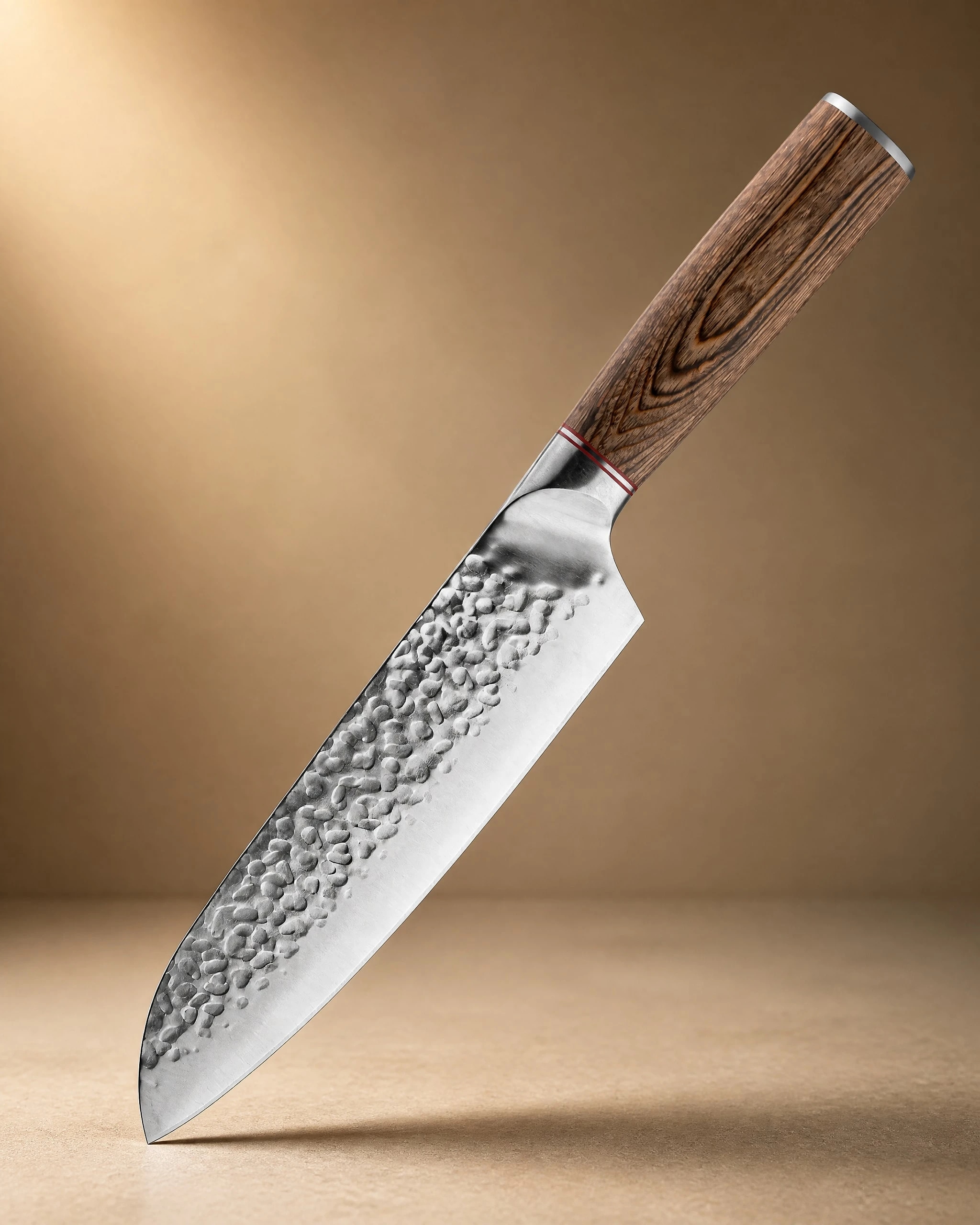 Raikou 6.5" Santoku Knife 三徳包丁$64.99View product → is one option in that shape, and the product card shows the current details. If you want a conventional all-purpose knife instead, the Akan gyuto
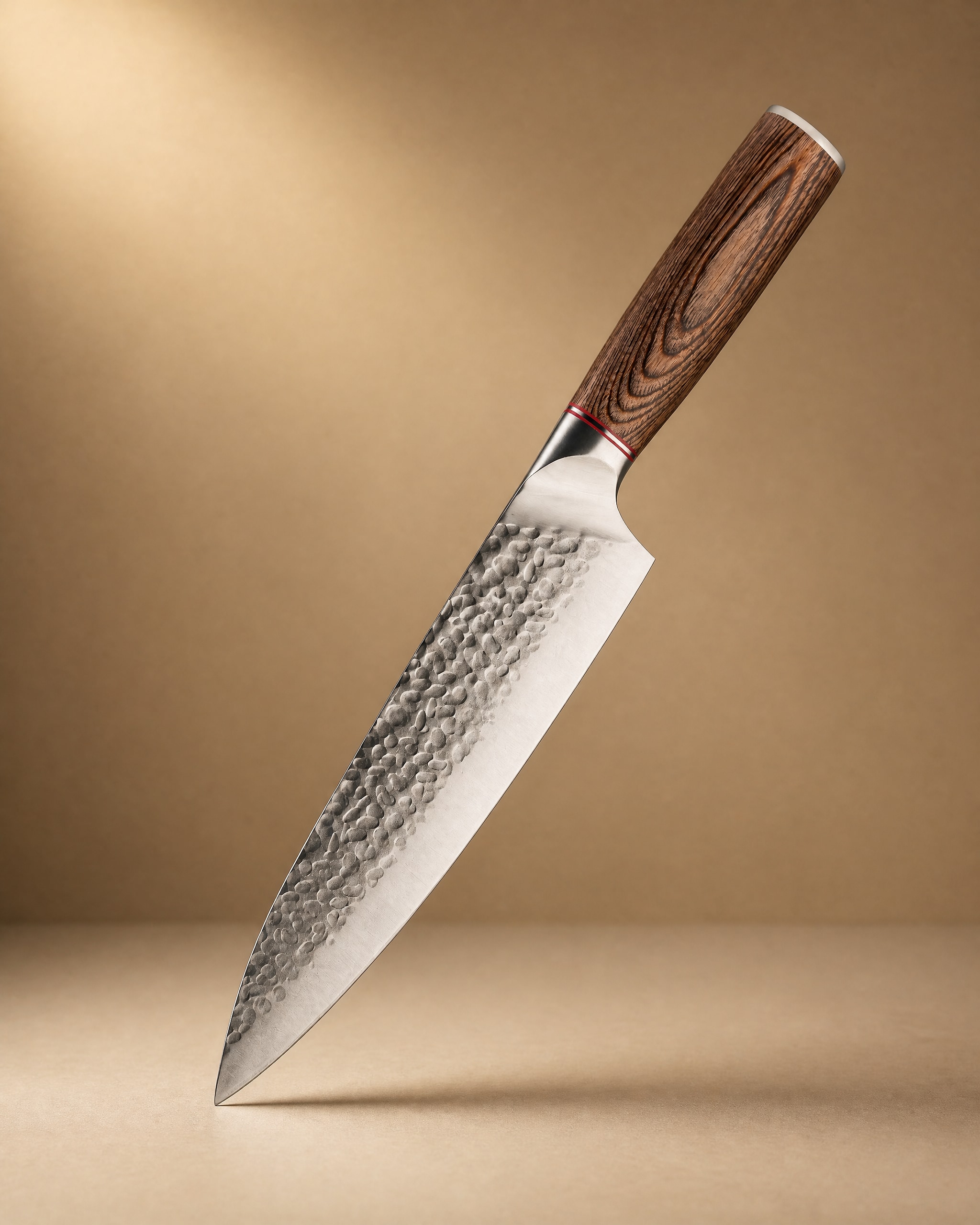 Akan 8'' Gyuto Knife 牛刀$64.99View product → is the more familiar choice. A gyuto can handle meat, fish, and vegetables, and it does not need scallops to be useful. Choose the hollow edge only if sticking is a real problem in your prep.
For bread, the edge matters more than the face. The Rumoi bread knife 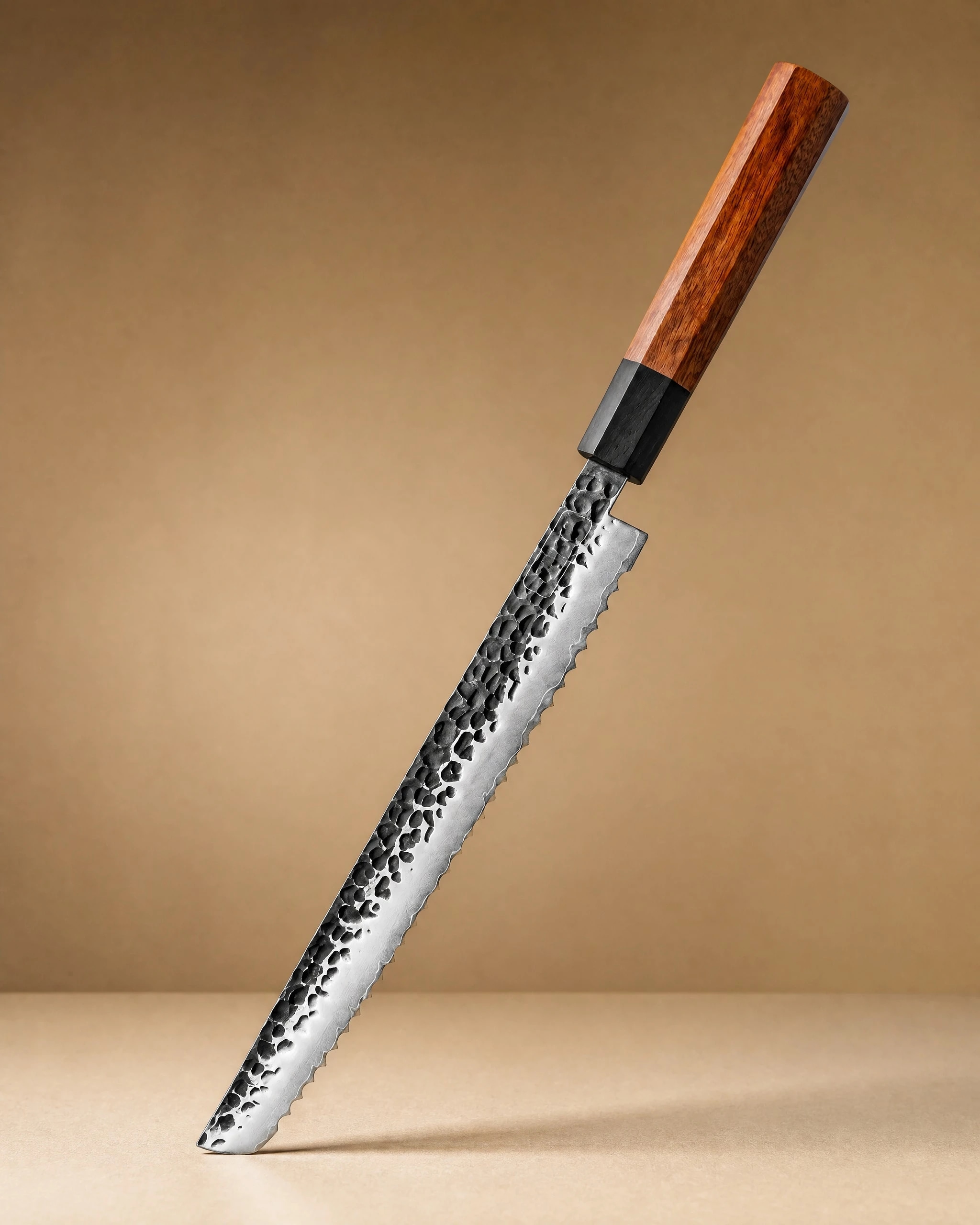 Rumoi 10" Japanese Bread Knife パン切りナイフ$79.99View product → is the everyday bread option in this lineup, and it is a sensible choice if crusty loaves are part of your routine. If you are outfitting a kitchen from scratch, the Shinano set
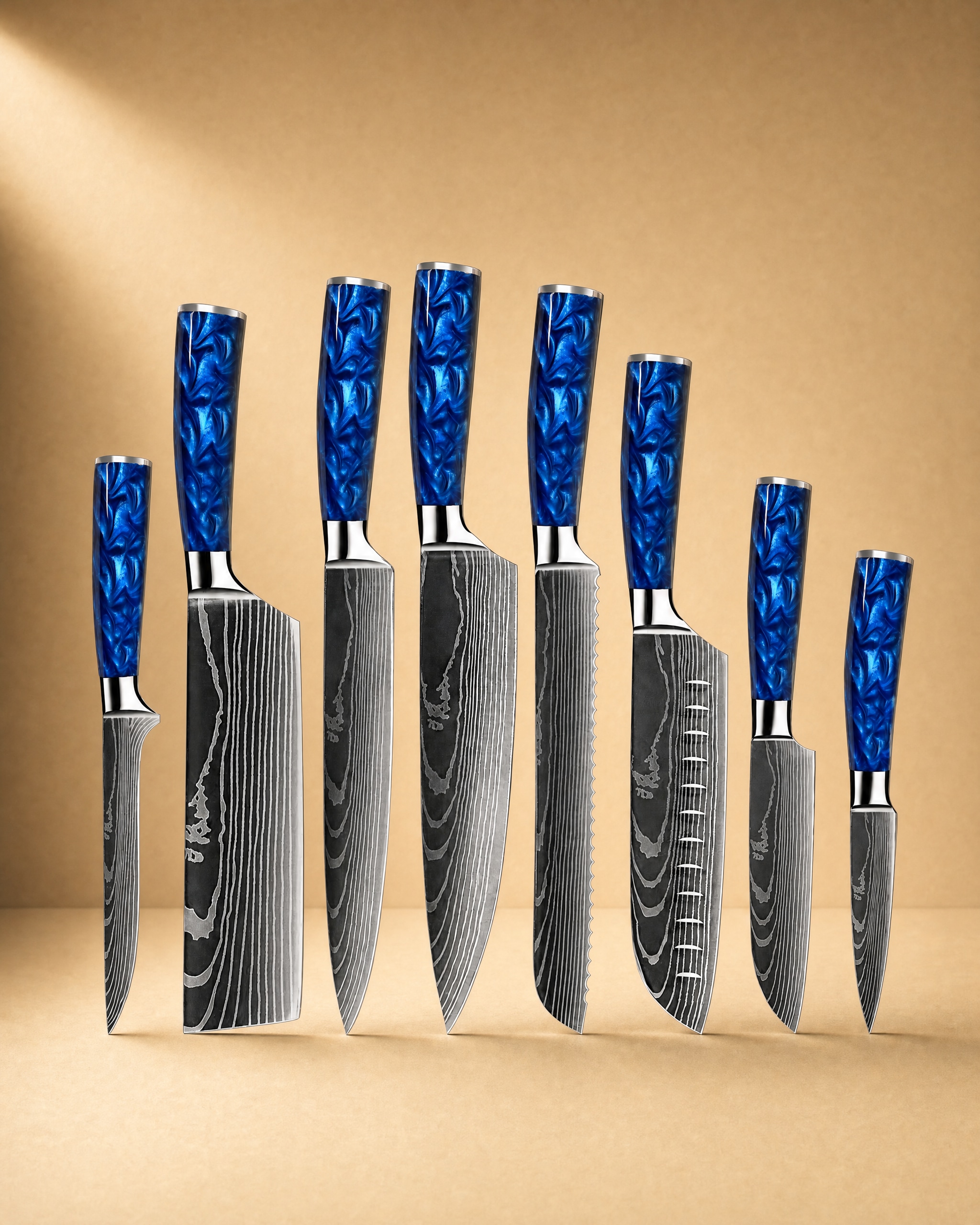 Shinano 信濃川 Damascus Pattern Stainless Steel Kitchen 8 Knife Set$199.99View product → covers core tasks in one purchase. Check each blade in the set for the edge style you want, because a set can mix flat, serrated, and hollow edge blades.
You can browse the full knife shop to compare shapes, or read the knife guide if you are still deciding between a santoku, gyuto, and bread knife. The right answer depends on your cooking, not on the number of features on the blade.
Sharpening and care for a hollow edge
A hollow edge is sharpened like a normal knife along the cutting edge. The scallops are not sharpened. If you use a whetstone, keep the angle consistent and do not try to grind the hollows. If you use a honing rod, use light strokes and avoid dragging the rod through the scoops. A dull hollow edge knife is still a dull knife, and the scallops will not hide it.
Clean the blade after use, dry it fully, and store it so the edge is protected. Food trapped in the scallops can dry hard, so a quick rinse before the residue sets saves effort. For general maintenance, the knife care guide covers washing, drying, and storage without guesswork. Do not put a fine kitchen knife in the dishwasher, and do not leave it soaking in the sink.
Is a hollow edge worth it?
A hollow edge is worth it if you slice a lot of moist vegetables, cooked meats, or soft cheese and you notice food clinging to your current blade. It is less important if you mostly chop dry ingredients, if you prefer a simple flat blade, or if you want the easiest possible cleanup. The feature is real, but it is modest. It works best as part of a well-made knife with a good edge, a comfortable handle, and a shape that suits your hand.
Do not buy a granton edge knife because the scallops look advanced. Buy it because the knife fits your prep and the hollow edge solves a small, repeated annoyance. That is the honest case for a hollow edge blade. It can make slicing smoother and release cleaner, but it will not replace sharpening, technique, or a knife that feels right.
Photography: Octavian-Dan Craciun via Unsplash.


