
The Art and Obsession of Japanese Chef Knives
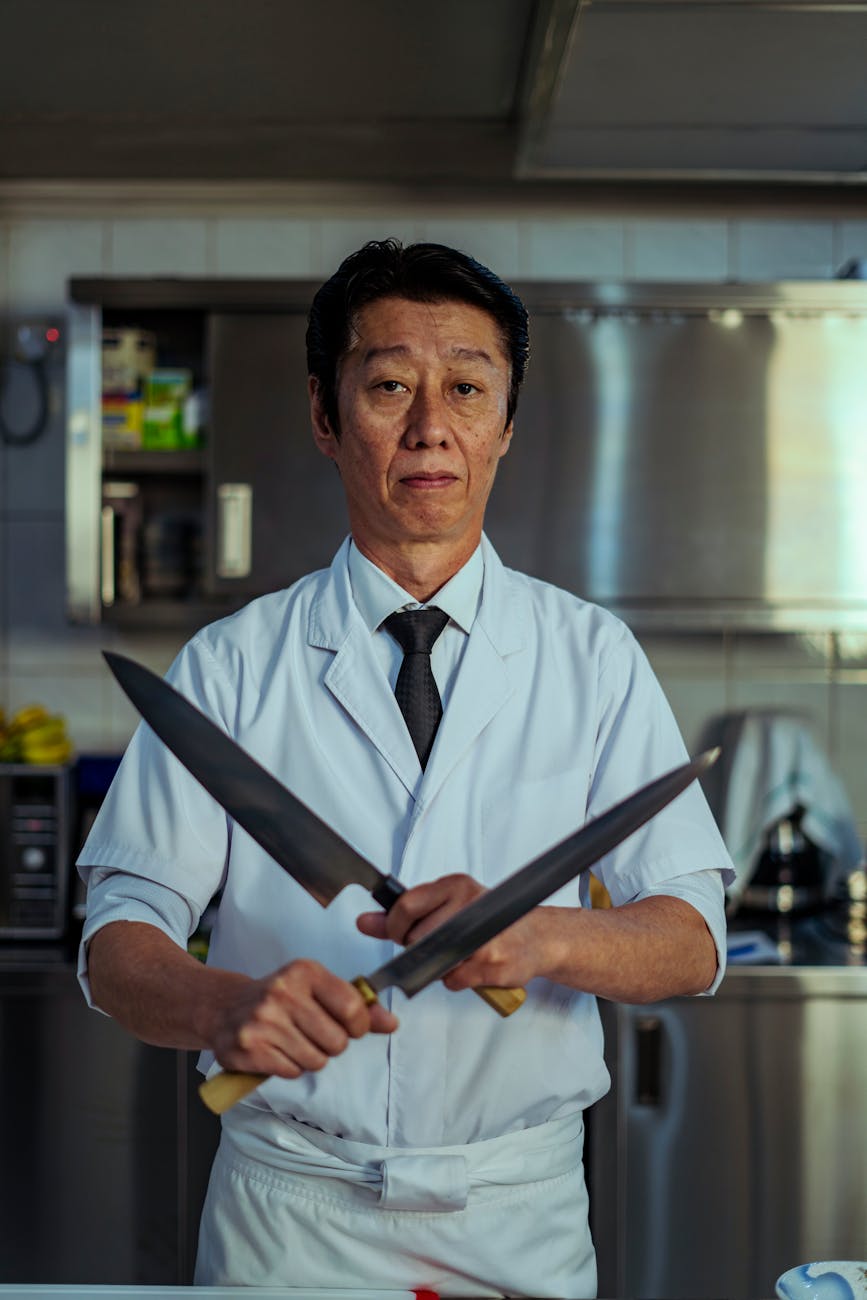
In the deliberate choreography of a professional kitchen, few tools command the respect and obsession garnered by Japanese chef knives. Their reputation, burnished by centuries of tradition and relentless technological refinement, has spread from hallowed sushi counters in Tokyo to the countertops of ambitious home cooks around the world. If Western knives conjure images of brash utility, their Japanese counterparts evoke something closer to artistry: exquisite instruments honed not only for cutting, but for transforming ingredients—and, by extension, dining experiences themselves.
At the heart of this reverence lies an interplay of craft, culture, and culinary philosophy. The blades wend a path through Japanese history, shaped by swordsmithing genius and a gastronomic devotion to precision and purity. To grasp what makes Japanese chef knives so distinctive is to glimpse a world where utility and artistry are inseparable—and where the very act of preparing food becomes an elevated ritual.
While the Western chef’s knife remains the familiar workhorse, often a German-style all-purpose blade with a pronounced curve and a certain reassuring heft, Japanese chef knives unfold in a far more specialized spectrum. This diversity is rooted in the country’s regional cooking traditions and its reverence for seasonal produce, fish, and rice. Rather than relying on a single knife for a multitude of tasks, Japanese kitchens typically deploy a range of blades, each exquisitely tailored to its purpose.
Take the santoku, literally “three virtues.” This beloved multi-purpose knife, often mistaken as Japan’s answer to the Western chef’s knife, actually emerged as a postwar domestic innovation. It owes its name to its purported mastery over slicing, dicing, and mincing, or alternately, meat, fish, and vegetables. Compact, with a flatter edge than its Euro-American cousin, the santoku glides easily through quick, precise cuts, favoring a chopping motion over a rock-back technique.
Yet, consider the gyuto, the closest Japan comes to a Western chef’s knife, both in silhouette and function. Gyuto means “beef-sword,” reflecting Japan’s late-19th-century embrace of Western cuisine. At first glance, it resembles the Western staple, but usually boasts a leaner, thinner blade and steel of greater hardness. The harder steel enables it to take on a razor-thin edge, accounting for the legendary sharpness and surgical precision of Japanese blades.
Further along the spectrum, the kiritsuke retains a mythic aura, often reserved for executive chefs in Japanese restaurants. Its hybrid profile combines the slicing power of a yanagiba (a long, single-beveled sashimi knife) with gyuto-like versatility. Its pointed tip and long blade demand exceptional skill, rewarding the adept with unmatched grace and efficiency in slicing fish and vegetables with finesse.
Specialization reaches an apex with single-purpose knives like the yanagiba, deba, and usuba. The yanagiba resembles a slender katana for fish, designed for single, unbroken sashimi slices that highlight precise knife-work and preserve the integrity of the flesh. The deba, robust and thick-spined, tackles the rigors of fish butchery, including breaking down and filleting while navigating bone and cartilage. Vegetarians might favor the usuba, whose super-thin blade is optimized for peeling and making ultra-fine cuts on vegetables—a silent testament to the high-stakes knife skills Japanese cuisine demands.
This dazzling diversity of forms is inseparable from material culture. Japanese blades are forged using techniques descended from samurai swordsmithing, blending aesthetic beauty with remarkable mechanical performance. Carbon steel, the traditional choice, confers phenomenal hardness and edge retention, though it demands religious care to ward off rust and chips. Modern incarnations often use high-carbon stainless alloys, balancing ease of maintenance with superlative sharpness. The steel is typically laminated, sandwiching a hard core with softer outer layers to provide resilience, while the edge itself is often ground at a steeper angle than Western knives, yielding a finer, more acute cutting face.
There is also the matter of bevels. Many classic Japanese knives, especially those made for professional kitchens, are single-beveled, meaning that one side is ground to a sharp angle while the other remains flat or slightly concave. This enables incredible sharpness and control, especially for intricate tasks like slicing sashimi. Yet it also introduces handling quirks and challenges, especially for left-handed users, as the blade’s geometry subtly pulls food away from the flat side. In contrast, most Western and increasingly common Japanese knives favor a double bevel, which is more versatile and forgiving, though purists might argue it surrenders some measure of cutting purity.
Beneath the beauty and performance, Japanese chef knives are not without their challenges. Their superior hardness can make them brittle, vulnerable to chipping when tasked with inappropriate jobs such as prying bones or cutting through frozen foods. The acute edge angle, while astonishingly sharp, requires regular maintenance and adept sharpening, preferably on whetstones. Many Western users have found themselves dismayed as prized Japanese knives dull or chip under less careful hands, a reminder that these tools demand respect and understanding.
Still, for those willing to learn, Japanese knives open up opportunities rarely found elsewhere. Their exquisite balance and delicate edge turn everyday prep into acts of precision and joy, encouraging cooks to refine their skills and savor the nuances of each ingredient. For professionals, a tailored set of Japanese knives becomes an extension of identity, a personal arsenal honed for specific kitchen tasks. Even for home cooks, investing in a single high-quality Japanese knife can reshape the entire cooking experience, fostering confidence and engagement where there was once drudgery.
As Japanese culinary philosophy entwines ever more closely with global food culture, so too does the fascination with these blades deepen. Concerns about authenticity and cultural appropriation inevitably arise, and knife makers both within and outside Japan now engage in spirited debate about standards, materials, and methods. What separates a true Japanese knife from a mere facsimile is not just origin or branding, but a spirit of craftsmanship and a devotion to performance that transcends borders.
For anyone eager to step beyond the ordinary, Japanese chef knives offer lessons far beyond the kitchen. They invite users to slow down, to observe, and to hone not only blades but also themselves. In an age of disposable tools and quick fixes, the Japanese knife endures as a symbol of enduring value—proof that, sometimes, true excellence lies not in doing everything, but in doing one thing exceptionally well.


