
Gyuto vs. Santoku: Choosing the Right Japanese Knife for Your Kitchen
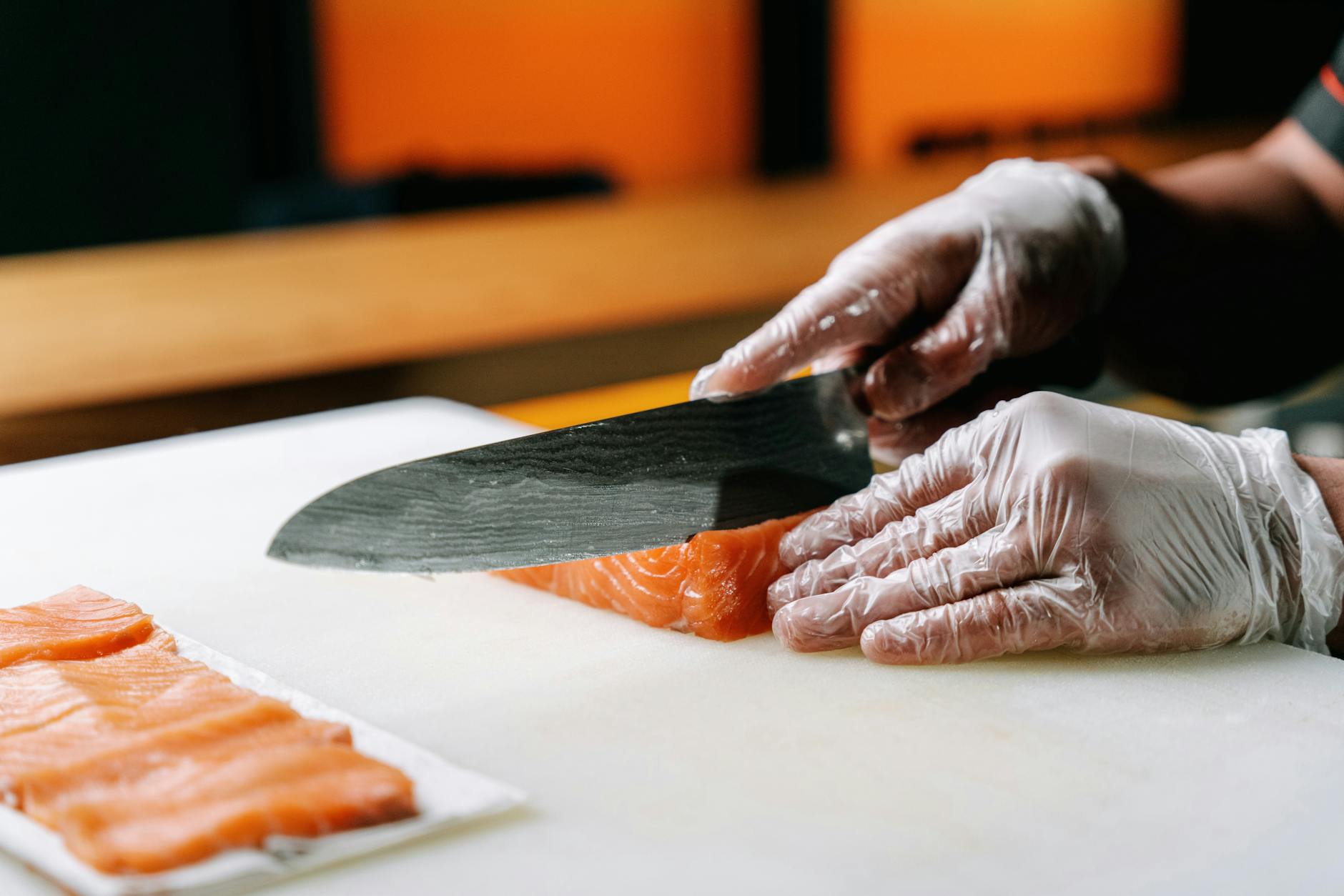
In kitchens from Paris to Kyoto, few tools are as universally respected—or as passionately debated—as the chef’s knife. Among enthusiasts, professionals, and home cooks alike, the showdown between Japanese designs has become particularly fierce. The Gyuto and Santoku knives, both now staples far beyond their homeland, represent two philosophies in culinary craftsmanship. Choosing between them is not just a matter of shape or sharpness; it is a reflection of how we cook, and perhaps, how we think about food preparation at its most fundamental level.
The Gyuto, which translates to “beef sword,” is Japan’s answer to the Western chef’s knife. Originally developed in the late nineteenth century as culinary tastes in Japan began to incorporate more Western dishes—especially beef and other meats—the Gyuto adapted the classic French or German chef’s knife to Japanese sensibilities. Typically, the Gyuto boasts a gently curved blade, often between 210 and 270 millimeters, with a slightly pointed tip. Its thinness and hardness derive from Japan’s history of sword-making, resulting in a blade that can take a razor-sharp edge and make precise, fluid cuts.
In contrast, the Santoku knife, meaning “three virtues” or “three uses,” emerged in postwar Japan during the 1940s, as home cooking needed a more adaptable, general-purpose knife. The Santoku’s signature boxier profile, with a straighter edge and a rounded sheepsfoot tip, is shorter, generally 165 to 180 millimeters. Its blade is thinner than its Western counterparts, but the profile encourages a chopping motion, making it exceptionally well-suited for slicing, dicing, and mincing vegetables, fish, and boneless meats.
Superficially, these might seem like subtle differences. After all, both knives are engineered for multitasking. Yet, as any experienced cook will attest, even the slightest variation in balance, weight, and blade geometry can transform the tactile experience of food prep and the end results. The key is understanding how these knives respond to different tasks and what that reveals about changing culinary norms.
At the heart of the Gyuto’s appeal is its versatility born of movement. Professional chefs often gravitate toward the Gyuto because its curved belly enables the rocking motion preferred in Western techniques. Its acute tip allows for precision work—mincing herbs, segmenting citrus, or delicately scoring fish skin. Because of its longer reach, the Gyuto excels in slicing roasts, breaking down poultry, and tackling larger produce, from sprawling squashes to hefty cabbages. Its blade, hard enough to hold an extraordinary edge, can be sharpened to effectively glide through tomatoes or onions with little resistance. For those who cook across cuisines—and who appreciate the nuances of both French batonnet and Japanese katsura-muki cuts—the Gyuto becomes an invaluable ally.
Yet, that same power can be a double-edged sword. The Gyuto’s length and pointed tip require confidence and skill. In smaller kitchens or for those with smaller hands, its size can feel unwieldy or even intimidating. Its sharper tip, a boon for some, becomes a liability in hurried or crowded spaces, where accidents are more likely. Maintenance is also not trivial: Japanese steel, prized for its hardness, can be brittle, requiring delicate honing and careful storage.
Enter the Santoku, designed with the domestic environment in mind. Its shorter, wider blade nurtures a sense of control, making it ideal for quick, up-and-down chopping. Home cooks who primarily prepare vegetables will appreciate how the blade’s shape encourages uniform, even cuts with less wrist strain. The blunt tip adds a margin of safety, and because the knife’s handle often sits higher above the cutting board, knuckle clearance is improved for smaller hands. Furthermore, the Santoku’s compactness suits cluttered home counters and tight storage spaces.
The simplicity of the Santoku, however, can belie its limitations. Its reduced length makes it less effective as a slicer for larger proteins or for rapid dicing at volume. Its flatter edge, while great for chopping, can falter when faced with curved motion techniques or specialty Western cuts. Overzealous use on bones or firm-root vegetables risks chipping the finely honed blade.
As Japanese knives conquer Western markets, a deeper trend emerges—culinary globalization is shaping not just what we eat, but the physical implements we use. The Gyuto, once a Japanese interpretation of a European tool, is now manufactured by German, American, and even Swedish companies attuned to global hybrid tastes. Santoku knives, on the other hand, can be found hanging in big-box stores alongside traditional chef’s knives, often reimagined in cheaper alloys with softer steel to withstand the less meticulous sharpening habits of average consumers. This democratization offers more choice, yet presents its own challenges. The flood of inexpensive mass-produced “Japanese-style” knives can obscure the craftsmanship and attention to metallurgy that separates a sublime cutting experience from one that disappoints after a few uses.
For consumers, the choice between the Gyuto and Santoku is rarely just technical. Lifestyle, experience, and cooking repertoire all shape which knife will ultimately feel best. If your culinary ambitions include elaborate holiday roasts, delicate fish fillets, or you aspire to master a variety of cutting styles, the Gyuto’s versatility and edge retention will likely reward your investment. If, in contrast, you find satisfaction in nightly vegetable-forward meals, and appreciate a forgiving, manageable tool, the Santoku makes an ideal companion.
Yet perhaps the most siginificant lesson is not which knife is objectively superior, but how the “right” knife can subtly transform both process and pleasure. A knife’s feel, its balance and feedback, can change the rhythm of kitchen work, coaxing creativity or encouraging mindfulness. In an age where food is sometimes more photographed than savored, rediscovering the tactile joys of good knife work can connect us to the centuries-old continuum of craft. Whether Gyuto or Santoku, a thoughtfully chosen blade invites us to slow down, savor, and appreciate not just what we prepare, but how we do it—a sharp reminder that in both cooking and technology, the tools we choose matter just as much as the final result.


