
7 Best Japanese Chef Knives for Beginners
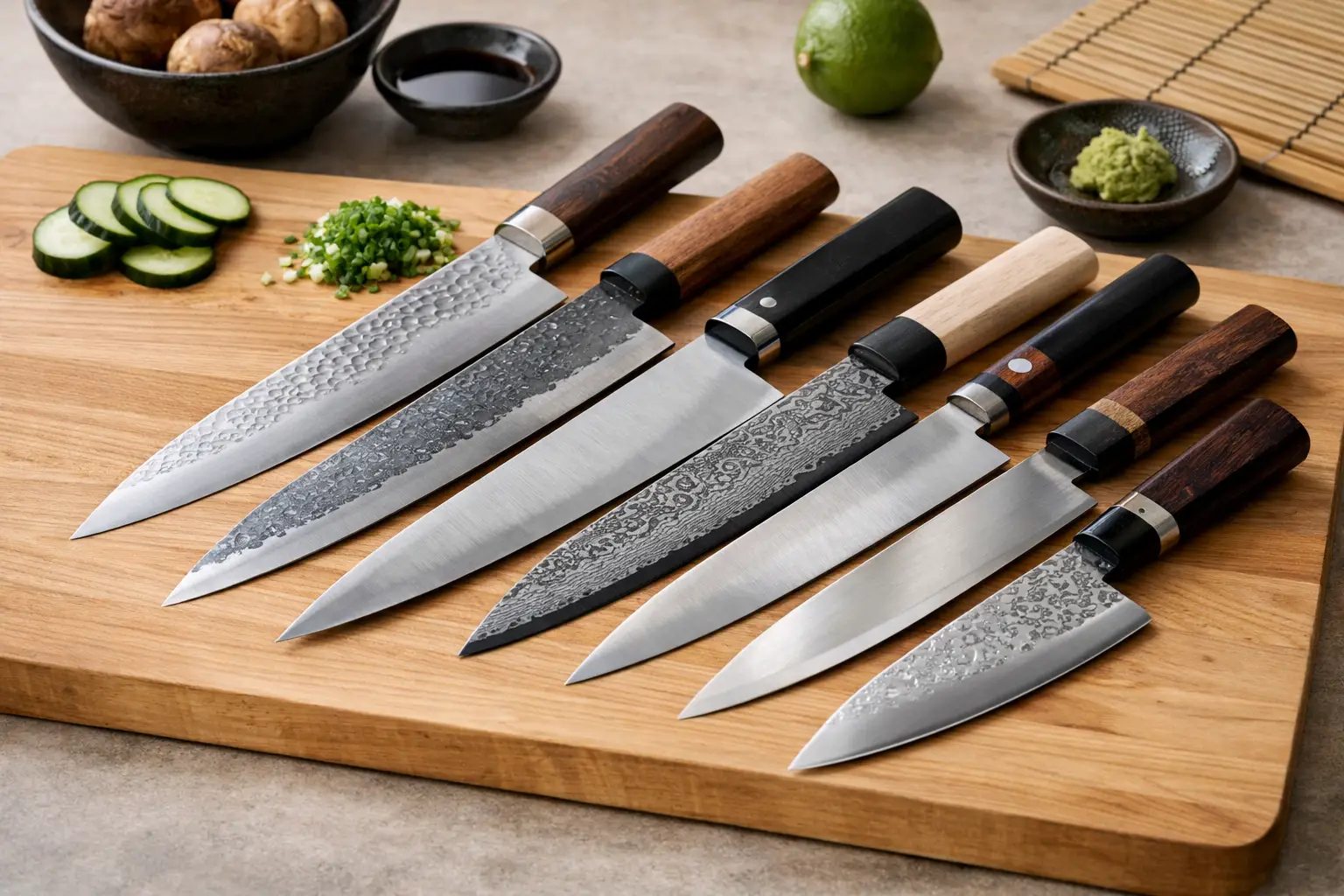
Most people start looking for the best Japanese chef knives for beginners after one small kitchen annoyance becomes a daily one - tomatoes squashed instead of sliced, onions slipping under the blade, herbs bruising rather than cutting cleanly. A better knife changes that immediately. The challenge is that Japanese knives can look more complicated than they really are.
For a beginner, the right knife is not the most expensive, the hardest steel, or the one with the most dramatic finish. It is the one that feels balanced in the hand, stays sharp for real home cooking, and makes prep feel easier from the first use. That usually means keeping things simple: one versatile blade shape, sensible steel, and a size you will actually enjoy using every day.
What beginners should look for first
Japanese knives earn their reputation through precision, lightness and edge quality. Compared with many Western chef knives, they often feel slimmer, sharper and more agile. That is exactly why home cooks notice the upgrade so quickly.
Still, there is a trade-off. The very qualities that make Japanese-style knives feel so good can also make some models less forgiving if you treat them like a heavy German workhorse. A beginner does not need a delicate specialist blade. They need a knife that brings Japanese performance into everyday cooking without demanding professional technique.
Start with four things: blade shape, size, steel and handle feel. Blade shape affects what the knife does best. Size affects confidence and control. Steel influences sharpness and edge retention, but also how much care the knife needs. Handle shape and balance decide whether the knife feels natural or awkward after ten minutes at the chopping board.
Best Japanese chef knives for beginners - the blade shapes that make sense
If you are buying your first serious Japanese knife, three shapes stand out.
Gyuto
The Gyuto is the closest Japanese equivalent to a Western chef knife, and for many people it is the best place to start. It is versatile, nimble and suited to almost everything a home cook does - slicing onions, dicing vegetables, portioning meat, chopping herbs and preparing fish.
A beginner-friendly Gyuto usually sits around 180mm to 210mm. At 210mm, you get excellent versatility and cleaner slicing through larger ingredients. At 180mm, the knife feels slightly more compact and less intimidating. If your kitchen is small or your chopping style is cautious, 180mm is often the easier first step.
Santoku
The Santoku has become a favourite for good reason. It is shorter than many Gyutos, easy to control and particularly comfortable for everyday prep. The flatter edge works beautifully for vegetables, boneless proteins and general slicing.
For beginners who want one knife that feels straightforward from day one, a Santoku is often the safest choice. It lacks a little of the reach and tip work of a Gyuto, but many home cooks never miss that. If your meals are vegetable-heavy and you prefer a compact blade, this shape is hard to beat.
Bunka or Nakiri
These can be brilliant knives, but they are not always the best first and only purchase. A Bunka offers excellent precision with a more pronounced tip, while a Nakiri is superb for vegetables thanks to its flat edge and generous blade height. If you already know you cook mostly veg, a Nakiri can be a joy. If you want maximum versatility, start with a Gyuto or Santoku instead.
The best size for a first Japanese knife
The best beginner knife is often not the one with the biggest specification sheet. It is the one you reach for every evening.
For most home cooks, 180mm to 210mm is the sweet spot. Below that, the knife can start to feel limited for larger ingredients. Above that, it may feel harder to control unless you are already comfortable with longer blades.
A 180mm Santoku suits cooks who value ease, compact storage and everyday control. A 210mm Gyuto suits those who want a true all-rounder with a bit more slicing power. There is no universal winner. It depends on your board space, hand size and cooking style.
Steel matters, but not in the way most beginners think
Steel is where many first-time buyers get lost. VG-10, AUS-10, SG2, carbon steel, Damascus cladding - the language can make knife buying feel more technical than it needs to be.
For beginners, the aim is simple: choose a steel that takes a keen edge, holds it well, and does not ask for fussy maintenance. Stainless or stainless-clad steels are usually the smart option. They give you the clean, sharp feeling Japanese knives are known for, without the worry of rust or immediate patina.
VG-10 and similar premium stainless steels are especially beginner-friendly. They offer very good edge retention, strong sharpness and practical day-to-day care. Higher-end powder steels can hold an edge even longer, but they often cost more and are not essential for a first upgrade.
Pure carbon steel is wonderful in the right hands, but for a beginner it can be a commitment. It reacts to moisture and acidic ingredients, needs prompt drying, and rewards careful ownership. If that sounds appealing, fine - but most people buying their first Japanese knife want performance without extra stress.
What makes a knife feel good in use
Sharpness gets the headlines, but balance is what builds confidence. A well-balanced knife feels controlled through the cut rather than heavy at the handle or blade. You should feel guided by it, not dragged by it.
Weight matters too. Many Japanese knives are lighter than Western equivalents, and that lighter feel is part of their appeal. Less weight can mean less fatigue and more precision, especially during longer prep sessions. If you are used to a chunky household knife, the first impression may be that a Japanese blade feels almost too light. Give it a few meals. That agility quickly starts to feel like an advantage.
Handle style comes down to preference. Western handles often feel familiar and reassuring. Japanese wa handles are usually lighter and can shift the balance slightly forward, which many cooks love. Neither is automatically better for beginners. Comfort is better than theory.
The buying mistakes beginners make
The most common mistake is buying for appearance before function. Hammered finishes, layered patterns and dramatic profiles are attractive, but they should come after basics like shape, steel and size. A beautiful knife that does not suit your cooking habits will spend more time in a drawer than on a board.
The second mistake is choosing a specialist blade too early. Single-bevel knives, very hard carbon steels and extra-long profiles can be superb, but they are rarely the easiest entry point. Your first Japanese knife should build skill and enjoyment, not demand adaptation in every task.
The third mistake is underestimating care. Even beginner-friendly Japanese knives deserve proper treatment. No dishwasher, no scraping food from the board with the edge, no twisting through hard squash or frozen food. Use a wooden or quality synthetic board, wash the knife by hand, dry it straight away and store it safely. That is not preciousness. It is simply how you protect the edge that you paid for.
So which knife is best for most people?
If there were one safest answer, it would be a 180mm Santoku or a 210mm Gyuto in a quality stainless steel. Those two options cover the widest range of beginner needs without feeling limiting six months later.
Choose a Santoku if you want compact confidence, quick everyday prep and a knife that feels easy from the first chop. Choose a Gyuto if you want greater range, a more classic chef-knife feel and a blade that can grow with your skills.
For many home cooks, that is the real decision. Not whether one obscure steel is two points harder on a scale, or whether the finish is hand-hammered. Just Santoku or Gyuto, compact or slightly longer, familiar or more versatile.
That is also where a well-guided brand makes a difference. Shimeru Knives, for example, focuses on bringing Japanese-steel performance into everyday cooking rather than treating knife buying like a collectors' hobby. That is exactly the right approach for beginners: better tools, clear choices, no unnecessary theatre.
Best Japanese chef knives for beginners who want value, not guesswork
A good beginner knife should feel like an upgrade you understand immediately. Cleaner cuts. Better control. Less effort during prep. More pleasure in cooking dinner on an ordinary Tuesday.
You do not need to spend collector money to get there. You do need to buy with purpose. Prioritise a versatile shape, a manageable size, stainless steel and balanced handling. If the knife makes you want to cook more often, you chose well.
The best first Japanese knife is not the one with the most mystique. It is the one that earns a permanent place beside your chopping board.