
Japanese Knife Steel Guide for Home Cooks
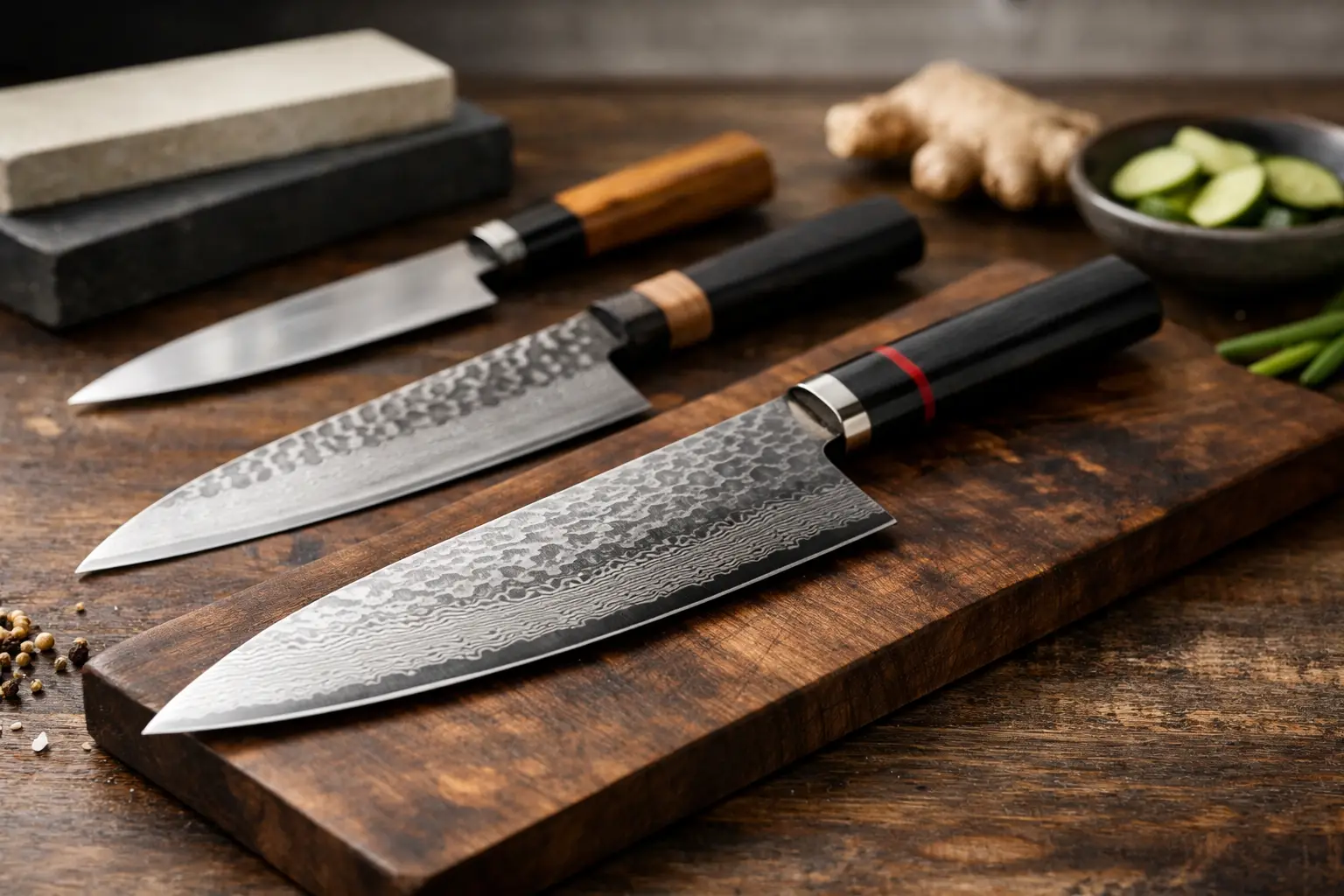
A knife can look beautiful on the counter and still feel wrong the moment it hits an onion. What separates a knife you admire from one you reach for every night often comes down to steel. This japanese knife steel guide is built for home cooks who want better cuts, better balance, and a smarter upgrade without getting buried in metallurgy.
If you have been comparing Japanese knives, you have probably seen steel names like VG-10, AUS-10, and SG2 attached to price differences that seem larger than a handle or finish can explain. That difference is usually performance. Steel affects how sharp a knife feels, how long it stays that way, how easy it is to maintain, and how forgiving it will be in a real home kitchen.
Why steel matters more than most buyers expect
Blade shape gets attention first. A Gyuto looks different from a Santoku, and that matters. But steel is what gives the knife its working character. It shapes the edge's potential, not just on day one, but over months and years of cooking.
A harder steel can usually take a finer edge and hold it longer. That means cleaner slices through tomatoes, herbs, and proteins with less drag. The trade-off is that harder steels are often less forgiving if used carelessly. Twist the blade through a squash seed, scrape the board with the edge, or leave it wet in the sink, and the knife may chip or stain more easily than a softer Western-style blade.
For most home cooks, the goal is not to chase the hardest steel available. It is to find the right balance of sharpness, edge retention, toughness, and maintenance. The best steel is the one that fits how you cook, not the one with the most impressive spec sheet.
A practical japanese knife steel guide
When people talk about knife steel, they often mix together several ideas: hardness, stainless vs carbon, edge retention, and sharpening feel. It helps to separate them.
Hardness is commonly measured on the Rockwell scale, shown as HRC. In simple terms, higher hardness often means better edge retention and finer sharpness potential. It can also mean greater brittleness. Stainless steel resists rust and discoloration better, while carbon steel is loved for its sharpness and sharpening ease but demands more care.
Then there is carbide structure, which sounds technical because it is. In practice, finer carbides usually support a smoother, more refined edge, while larger carbide structures can affect sharpening feel and edge behavior. For an everyday cook, this matters less than choosing a reputable steel from a well-made knife. Heat treatment and grind quality still decide a great deal of real-world performance.
Stainless Japanese steels: the easiest place to start
For most home kitchens, stainless Japanese steel is the sweet spot. It gives you the crisp, precise cutting feel Japanese knives are known for without asking for specialist care.
VG-10 is one of the best-known options for good reason. It offers strong edge retention, takes a very sharp edge, and resists corrosion well enough for busy weekday cooking. It is often the steel people step up to when they want a clear performance improvement over entry-level Western knives. If treated properly, it feels refined and reliable. If abused, it can chip more easily than softer European steel, so technique matters.
AUS-10 sits in a similar lane, often with a slightly tougher, approachable feel depending on the maker's heat treatment. It can be an excellent choice for buyers who want stainless convenience and strong performance without jumping to the highest price bracket. In a well-ground blade, it delivers the clean cutting experience people expect from Japanese knives while staying practical for daily use.
SG2, sometimes labeled R2, is a powder stainless steel and usually a more premium proposition. Powder steels are prized for combining high hardness with impressive wear resistance and a refined edge. In the kitchen, that often translates to excellent sharpness and edge retention. If you cook often and want your knife to stay performing longer between sharpening sessions, SG2 is compelling. The trade-off is price, and for some users, a slightly slower sharpening process compared with simpler steels.
Carbon steels: brilliant performance, more responsibility
Carbon steel has a devoted following because it feels alive on the board. It sharpens beautifully, often takes a screaming edge, and develops a patina over time that many cooks find deeply satisfying. Steels like White Steel and Blue Steel are classic examples in Japanese knife making.
White Steel is known for purity and ease of sharpening. It can feel incredibly keen in use, especially for precise slicing and detail work. But it is reactive. Leave moisture or acidic food on the blade, and it can discolor quickly. That is not necessarily damage, but it does mean you need to wipe it down and store it dry.
Blue Steel adds alloying elements that improve edge retention and wear resistance while keeping much of carbon steel's sharpness appeal. For cooks who want a traditional carbon experience with a bit more staying power, it can be a smart middle ground.
Still, carbon steel is not the default recommendation for every home cook. If you want low-stress ownership, stainless is usually the better fit. If you enjoy caring for your tools and like the idea of a blade that develops character with use, carbon becomes much more attractive.
VG-10 vs AUS-10 vs SG2
This is often the comparison that matters most to buyers moving into premium Japanese knives.
VG-10 is a strong all-around choice. It suits home cooks who want noticeable sharpness, a polished feel, and dependable stainless performance. It is popular because it earns its place - not because it is trendy.
AUS-10 is often a practical value pick. It can deliver a lot of the same everyday benefits with a slightly more forgiving personality, depending on the knife. If you want a serious upgrade without overthinking every technical detail, it makes sense.
SG2 is the performance-led option. It tends to appeal to enthusiastic home cooks who prep often, care about edge retention, and are ready to pay more for a finer steel. You are not just buying longer sharpness. You are usually stepping into a more premium overall knife experience.
None of these steels is universally best. If you cook three nights a week and want easy ownership, VG-10 or AUS-10 may be ideal. If cooking is your hobby and your knife sees daily use, SG2 starts to justify its price.
What steel feels like in actual cooking
A good steel does not just show up in lab numbers. You feel it when a knife glides through bell pepper skin instead of crushing it. You see it when herbs stay bright instead of bruised. You notice it during long prep sessions, when a lighter Japanese knife paired with a hard, keen edge feels more precise and less tiring.
This is where many home cooks suddenly understand the appeal. Japanese steel performance is not about showing off. It is about less resistance, more control, and a knife that responds cleanly to your hand.
The trade-off is that technique matters more. Japanese knives reward slicing and push cutting. They do not love twisting, prying, frozen food, or hard contact with bones. If you treat them like a heavy German chef's knife, even great steel will not save the edge.
How to choose the right steel for your kitchen
If this is your first serious upgrade, stainless is usually the right call. It offers the benefits most buyers want immediately: sharper edges, lighter feel, and easier maintenance. Within that category, VG-10 and AUS-10 are excellent starting points, while SG2 makes sense if you want a more premium long-term tool.
If you enjoy ritual and do not mind wiping your blade during prep, carbon steel can be immensely satisfying. It is especially appealing to cooks who value sharpening feel and traditional craftsmanship as much as convenience.
Budget matters, but so does cooking frequency. A more advanced steel can be worth it if your knife is in constant rotation. If you cook occasionally, a well-made knife in VG-10 may deliver everything you need without paying for performance you will rarely notice.
Care matters as much as steel
Even the best steel will disappoint if the knife is treated casually. Hand wash it. Dry it right away. Use a wood or soft synthetic cutting board. Avoid dishwashers, glass boards, and scraping ingredients off the board with the edge.
Sharpening also shapes your experience. A premium steel with a dull edge is still a dull knife. The good news is that a quality Japanese knife usually responds beautifully to proper sharpening, whether you learn with whetstones or start with professional service.
That is why the best buying decision is rarely about chasing the hardest steel or the rarest name. It is about choosing a knife you will use confidently, care for properly, and enjoy every day. For most home cooks, that sweet spot is where Japanese knife steel proves its value - not as technical trivia, but as the reason prep starts feeling smoother, faster, and far more satisfying.